
Reviewed · WALKING TOURS
Kamakura 6hr Private Walking Tour with Government-Licensed Guide
Kamakura’s Great Buddha is only part of the story. This former samurai capital packs grand shrines, quiet Zen temples, wooded hills, a bamboo grove, and ocean views into a compact day trip from Yokohama. With a private guide, you choose three or four sights instead of racing through every famous stop.
I like the custom route, which lets you focus on major landmarks or quieter temples. I also like the practical help with trains and buses. Guides such as Shinji, Masa, Takako, Koba, and Noripy have helped visitors navigate public transport, adjust walking distances, and find time for lunch or shopping.
The catch is simple: six hours goes quickly, and transportation and entrance fees are extra. You will walk a lot, even when trains or buses are part of the plan, so this is not the right choice if you want a vehicle waiting at every stop.
In This Review
- Key points before you book
- Why a private day in Kamakura works
- Tsurugaoka Hachimangu, Kamakura’s grand starting point
- Kotoku-in and the Great Buddha
- Hasedera for gardens, Kannon, and the sea
- Hokoku-ji and the small bamboo grove
- The five great Zen temples
- Zeniarai Benten and the money-washing tradition
- Meigetsuin, hydrangeas, and seasonal timing
- Enoshima as a coastal add-on
- Quieter temples for repeat visitors
- What six hours really means
- Is the $155.22 price good value?
- Who will enjoy this tour most?
- My call: book it if flexibility matters
- FAQ
- How long is the Kamakura private walking tour?
- How many sights can I visit?
- Is the tour private?
- Is hotel or port pickup included?
- Are trains and buses included in the price?
- Are temple admission fees included?
- Can I cancel for a full refund?
Key points before you book
- Choose three to four sights: You can build the day around the Great Buddha, major temples, bamboo, shrines, or quieter corners of Kamakura.
- Public transport is part of the experience: Trains and buses are included in the flow of the tour, but you pay the fares yourself.
- A private guide adjusts the pace: Guides have changed routes for visitors with knee problems, older companions, or a preference for shorter walks.
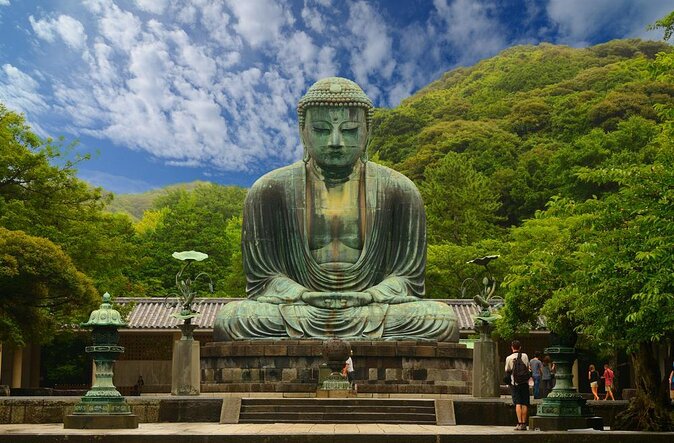
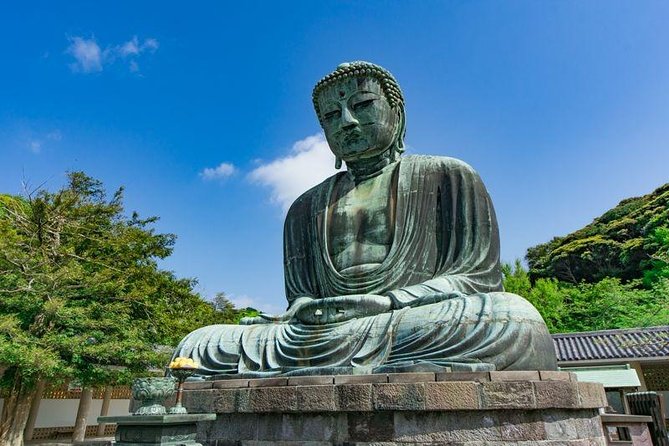
- The Great Buddha is a highlight: The 11.4-meter bronze Amida Buddha at Kotoku-in is one of Kamakura’s essential sights.
- Hasedera adds gardens and ocean views: Its hillside setting gives you more than a temple visit.
- Plan for extra costs: Temple admissions, transportation, lunch, and personal purchases are not included in the $155.22 price.
Why a private day in Kamakura works
Kamakura is close to Yokohama, but it does not feel like a simple city extension. Its temples and shrines are spread across a town of narrow streets, wooded slopes, and rail lines. A first visit can easily become a puzzle of station exits, bus stops, opening hours, and competing sights.
This private tour solves the puzzle without locking you into a fixed sightseeing march. After booking, your guide contacts you to shape the day. You can request famous landmarks, quieter temples, food, shopping, or a route that avoids especially long walks.
The guide meets you on foot within the designated Kamakura or Yokohama area. Pickup does not mean a private car. It means you meet your guide at a suitable point and continue by walking and public transport.
That arrangement is useful if you are arriving from a Yokohama cruise terminal or hotel. Guides such as Sam and Kenzo have met visitors at Yokohama’s Osanbashi cruise terminal and led them through the public transportation system to Kamakura. If you are uneasy about Japanese trains and buses, this support may be worth more than the cost of a standard group excursion.
More Private Tours in Kamakura
- Private Car Tour to see Highlights of Kamakura, Enoshima, Yokohama from Tokyo
★ 5.0 · 48 reviews - Private Kamakura plus Yokohama Tour – English Speaking Driver
★ 4.5 · 28 reviews - Tokyo: Kamakura and Yokohama Private Day Trip with Guide
★ 4.6 · 27 reviews
Tsurugaoka Hachimangu, Kamakura’s grand starting point
Tsurugaoka Hachimangu is the natural introduction to Kamakura. The shrine honors Hachiman, associated with Emperor Ojin and revered as the patron deity of the Minamoto family and the samurai.
The setting gives you a quick lesson in how power and religion were linked in medieval Japan. The approach, broad grounds, shrine buildings, and ceremonial spaces feel more formal and open than many of Kamakura’s smaller temples.
The suggested visit is short, about 15 minutes, but your private format means you can request more time if the shrine is a priority. I would not treat the listed time as a strict limit. It is better understood as a sample stop within a six-hour plan.
If this is your first visit, Tsurugaoka Hachimangu pairs well with Komachi Street. After the shrine, you can browse the old shopping street and try Hatosabure, a dove-shaped biscuit associated with Kamakura. The combination gives you both sacred architecture and an easy taste of local shopping culture.
Kotoku-in and the Great Buddha
The Great Buddha at Kotoku-in is Kamakura’s most famous image. The bronze Amida Buddha measures 11.4 meters tall and sits in the temple grounds, where its scale is easy to appreciate even during a brief visit.
The tour allows roughly 15 minutes here, with admission extra. That is enough for a focused look and photographs, but you may want to spend longer if you care about the statue’s construction, the temple setting, or the chance to enter the interior if available on the day.
The Great Buddha is often the one sight people refuse to skip. I understand why, but it should not consume the whole day. Kamakura is most rewarding when you combine this major landmark with a garden temple, a shrine, or a quieter hillside stop.
A guide adds useful context on the spot. The statue becomes more than a large bronze figure when you understand its place in Kamakura’s Buddhist tradition and the city’s samurai-era story.
Hasedera for gardens, Kannon, and the sea
Hasedera is one of the strongest choices for a first-time route. The temple is known for its 9.18-meter gilded wooden statue of Kannon, the eleven-headed goddess of mercy. The grounds also rise up the hillside, giving you views toward the ocean from a high point in the temple complex.
The suggested visit is 30 minutes, and that is a sensible minimum. You need time to move through the grounds, take in the gardens, and reach the elevated viewing area. If your day includes only three or four stops, Hasedera gives you several kinds of scenery in one place.
The hillside also brings a practical warning. This is a walking tour, and temple grounds can include slopes, steps, and uneven paths. A guide can adjust the route, but you should still wear shoes suited to a full day on foot.
Hasedera works especially well with the Great Buddha because both are in the same general part of Kamakura. That pairing reduces backtracking and leaves room for a shrine or lunch.
More Private Tours in Yokohama
- Daikoku & Tokyo Private JDM Tour by 700HP R34 GT-R
★ 4.9 · 101 reviews - Tokyo 8hr Private Tour with Licensed Guide from Yokohama
★ 5.0 · 94 reviews - R34Skyline Daikoku PA Fast & Furious Private Experience
★ 5.0 · 63 reviews - Yokohama 4hr Private Tour with Government-Licensed Guide
★ 5.0 · 34 reviews
Hokoku-ji and the small bamboo grove
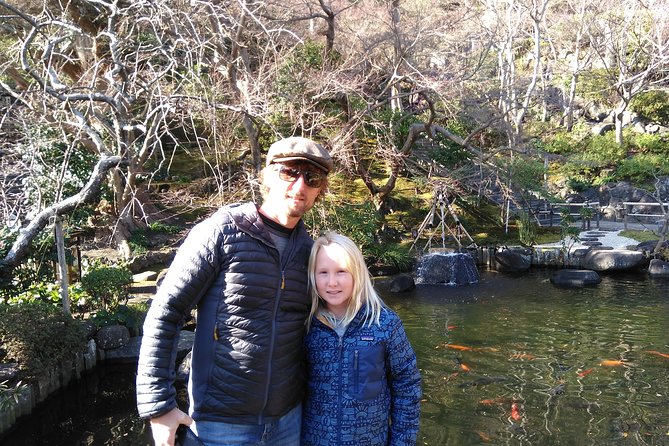
Hokoku-ji is best known for its bamboo grove, where more than 2,000 dark green stalks grow behind the main hall. Narrow paths lead through the grove, creating a calm pause from the more heavily visited central sights.
The suggested stop is 15 minutes, though the experience may feel rushed if you want to linger or include the temple’s garden details. Admission is extra.
This is a good choice if you want something visually different from the Great Buddha and Tsurugaoka Hachimangu. It is also a useful reminder that Kamakura is not only about monumental buildings. Some of its best moments come from a short path, filtered light, and quiet surroundings.
Hokoku-ji is not the most convenient sight to combine with every other stop. Your guide can decide if the bus connection and walking time make sense on your chosen day. Since transportation time counts toward the six hours, a distant stop may mean giving up another temple.
The five great Zen temples
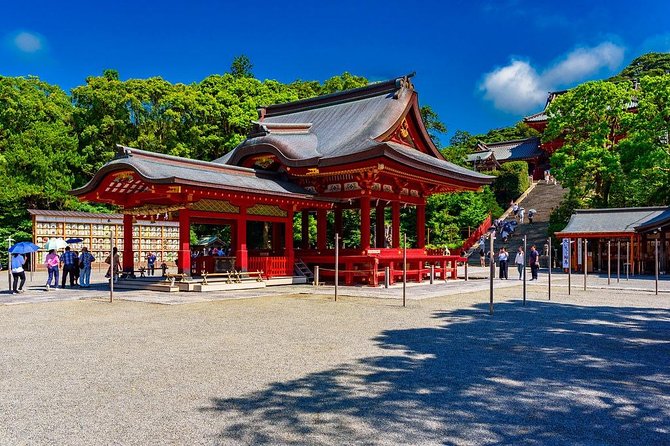
Kamakura has a group of major Zen temples, each with its own character. You will not realistically explore all of them in depth during a six-hour tour, so your guide’s choices matter.
Engaku-ji is ranked number two among Kamakura’s five great Zen temples. Regent Hojo Tokimune founded it in 1282. The temple is a strong pick if you want a major Zen complex with a long connection to Kamakura’s religious and political past. Allow about 30 minutes, with admission extra.
Kencho-ji ranks first among the five and is described as the oldest Zen temple in Kamakura. It was founded in 1253 by Regent Hojo Tokiyori. Its importance makes it an excellent choice for visitors who want historical context rather than a quick photo stop.
Jufuku-ji ranks third and belongs to the Rinzai tradition’s Kencho-ji school. The suggested visit is 15 minutes. Jochi-ji, ranked fourth, is linked to Engaku-ji and also fits a short Zen-temple route.
Jomyo-ji ranks fifth and sits in the eastern hills. It was founded by the Ashikaga family. The site may suit you if you want a quieter setting, though reaching eastern Kamakura can increase transit time.
These temples are not interchangeable. If you have a particular interest in Zen Buddhism, ask for Kencho-ji and Engaku-ji. If you want a less crowded feel and more time for contemplation, your guide might suggest Jochi-ji, Jomyo-ji, or another smaller temple.
Zeniarai Benten and the money-washing tradition
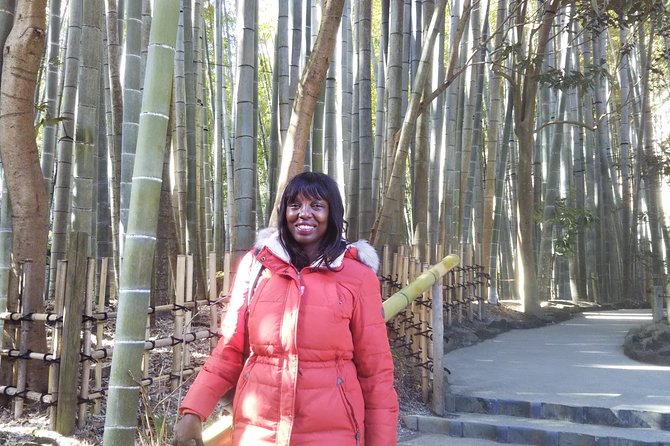
Zeniarai Benten is one of Kamakura’s more unusual shrines. Visitors wash money in the shrine’s spring because tradition says that money cleaned there will multiply.
The suggested visit is 30 minutes, and admission is free. This is a good stop if you enjoy local customs that invite participation rather than passive sightseeing. The ritual is simple, but it gives you a memorable connection to the place.
Zeniarai Benten is in western Kamakura and can involve a walk through the hills. It is not the best match for a route designed to minimize walking. Ask your guide to explain the access conditions when you plan the day.
Meigetsuin, hydrangeas, and seasonal timing
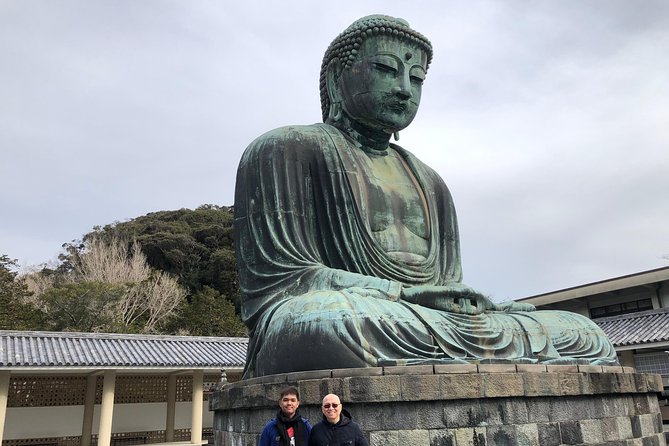
Meigetsuin is also called Hydrangea Temple because hydrangeas bloom heavily on its grounds. It is a Rinzai Zen temple founded in 1160, and the garden setting changes with the seasons.
If you visit during hydrangea season, this may be one of your most attractive choices. Outside that period, the temple still offers a quieter garden setting, but its seasonal reputation may be less important to you.
The suggested time is 30 minutes, and admission is extra. Tell your guide if flowers are a priority. The custom route is most useful when you share that kind of preference in advance.
Enoshima as a coastal add-on
Enoshima is a small island west of Kamakura, connected to the mainland by a bridge and reached by a short train ride from Kamakura. It has shrines and other attractions, along with a more commercial seaside atmosphere.
The island is not a temple-only experience. Choose it if you want a change of pace, coastal views, food, and a little tourist infrastructure. Skip it if your main goal is to explore Kamakura’s Zen temples.
A 15-minute visit would only provide a taste of Enoshima. Because the train ride counts within the six-hour tour, a meaningful island visit may require sacrificing another stop. Confirm the plan with your guide rather than trying to squeeze in every location.
Quieter temples for repeat visitors
Kamakura offers many smaller temples that make sense when you have already seen the headline sights.
Ankokuron-ji is a Nichiren temple in the southeastern hills, connected with Nichiren’s arrival in Kamakura around 1253. The listed visit is 30 minutes.
Myohon-ji is another Nichiren temple in the southeast, founded in 1260 by Hiki Yoshimoto. It may suit you if you want a less standard route.
Zuisen-ji sits at the back of a narrow valley surrounded by wooded hills. It is a branch temple of Engaku-ji and takes about 30 minutes in the suggested schedule. It is also one of the stops that can involve more walking and a longer ride from the central sights.
Tokei-ji is a small Rinzai temple near Engaku-ji. Eisho-ji is the only surviving nunnery in Kamakura, founded in the early Edo period by a woman connected with the Tokugawa family. Both are listed as 15-minute stops and can add variety to a Zen-focused route.
These smaller temples are where a private guide has the greatest value. A standard excursion tends to favor famous names. You can use this tour to build a day around the kind of place you actually want to see.
What six hours really means
Six hours sounds generous until you add train rides, buses, station walks, temple entrances, photographs, and lunch. The tour lets you see three to four sights, not all 17 locations listed as possible choices.
A sensible first visit might include Tsurugaoka Hachimangu, the Great Buddha, Hasedera, and either Hokoku-ji or Komachi Street. A Zen-focused day could use Kencho-ji, Engaku-ji, Jochi-ji, and one smaller temple.
Transportation time is included, and transportation fees are not. Entrance fees are also separate. Lunch and personal purchases, including snacks such as Hatosabure, are on your own.
Guides have helped visitors use trains, buses, taxis, and even find a local tempura restaurant. Still, do not assume taxis or meals are built into the price. Discuss them as part of your plan and budget for them separately.
Is the $155.22 price good value?
At $155.22 per person, this is not the cheapest way to see Kamakura. The value depends heavily on group size and your comfort with public transport.
For one or two people, the cost is substantial. For a family or small private group, the price may compare more favorably with paying for several separate services, especially if a guide saves you from wrong trains, missed stops, or an inefficient route.
You are paying for a licensed local English-speaking guide, a private experience, route planning, and flexibility. You are not paying for a private vehicle, admission, transportation fares, or lunch.
The tour is often booked about 82 days ahead, so reserve early if your Yokohama visit falls on a fixed cruise or holiday schedule. Free cancellation is available up to 24 hours before the start time. Changes or cancellations inside that window are not refunded.
Who will enjoy this tour most?
I would choose this experience if you want history explained while you look at the buildings, rather than reading short signs after the fact. It also fits first-time visitors who feel uncertain about Japanese public transport.
It is a particularly good match for:
- Families or friends who want a private pace
- Cruise passengers arriving in Yokohama
- Visitors who want to combine famous sights with one quieter temple
- People interested in samurai history, Buddhism, gardens, or local food
- Groups with different walking speeds or mobility concerns
Several guides have adjusted routes for older companions or visitors with knee problems. That does not make the tour effortless. It remains a walking day, and the guide’s ability to modify the route cannot remove every slope, stairway, or station transfer.
My call: book it if flexibility matters
Book this Kamakura tour if you want a guide who can make public transportation manageable and shape the day around your interests. The strongest plan is three or four carefully chosen sights, not a frantic attempt to cover the entire menu.
For a first visit, I would ask about Tsurugaoka Hachimangu, the Great Buddha, Hasedera, and either Hokoku-ji or Komachi Street. For a second visit, I would lean toward Kencho-ji, Engaku-ji, Zuisen-ji, or the smaller Nichiren temples.
Skip it if you want an all-inclusive vehicle tour or a fixed low price. Choose it if personal guidance, local context, and a route that changes with your group are worth paying for.
FAQ
How long is the Kamakura private walking tour?
The tour lasts approximately six hours, including transportation time.
How many sights can I visit?
The tour is designed around three to four sights chosen from the available Kamakura locations.
Is the tour private?
Yes. Only your group participates, and separate tour groups cannot be combined.
Is hotel or port pickup included?
A guide can meet you on foot within the designated Kamakura or Yokohama area. The experience does not include a private vehicle.
Are trains and buses included in the price?
No. The guide accompanies you using public transportation, but transportation fees are not included.
Are temple admission fees included?
No. Entrance fees are generally extra. Guide entry fees are covered only for sights listed under the tour’s expected locations.
Can I cancel for a full refund?
Yes, if you cancel at least 24 hours before the experience start time. Cancellations or changes made less than 24 hours before the start time are not refunded or accepted.
More Walking Tours in Yokohama
- Yokohama Half Day Walking Tour with an Expert Local Guide
★ 4.5 · 22 reviews - Yokohama: Create Your Own Cup Noodles & Chinatown Walk
★ 5.0 · 6 reviews - Yokohama Full Day Walking Tour with an Expert Local
★ 4.5 · 5 reviews
More Walking Tours in Kamakura
- Kamakura Historical Walking Tour with the Great Buddha
★ 5.0 · 129 reviews - Kamakura Walking Tour – The City of Shogun
★ 5.0 · 100 reviews - Kamakura 8 hr Private Walking Tour with Licensed Guide from Tokyo
★ 5.0 · 80 reviews - Kamakura: Private Guided Walking Tour with Local Guide
★ 4.8 · 60 reviews
New on our Yokohama list
- Yokohama and Kamakura 6hr Private Trip Government-Licensed Guide★ 5.0 · 25 reviews
- Tokyo Full Day Tour with Licensed Guide and Vehicle from Yokohama★ 5.0 · 26 reviews
- Daikoku & Tokyo JDM Night Tour in R34 or TopSecret R35 GT-R★ 4.8 · 27 reviews
- Yokohama: Guided Cup Noodles Museum Tour & Make Your Own Cup★ 4.9 · 27 reviews
- Tokyo: Kamakura and Yokohama Private Day Trip with Guide★ 4.6 · 27 reviews
- Private Kamakura plus Yokohama Tour – English Speaking Driver★ 4.5 · 28 reviews
- Japanese Tea Ceremony at Private Home in Yokohama, suburban Tokyo★ 5.0 · 32 reviews
- Yokohama 4hr Private Tour with Government-Licensed Guide★ 5.0 · 34 reviews
Walking Tours, compared.
Tokyo Tsukiji Fish Market Food and Culture Walking Tour
Read our review →
Imperial Palace and Shogun Historical Walking Tour
Read our review →
Shinjuku Local Bar and Izakaya Guided Walking Tour
Read our review →
Asakusa Walking Tour with Sensoji Temple Visit
Read our review →
Tokyo Castle & Imperial PalaceーShogun Walking Tour
Read our review →
Browse the lists this tour appears in