
Reviewed · WALKING TOURS
Kamakura Walking Tour – The City of Shogun
Kamakura’s best sights form a satisfying story: a grand Shinto shrine, a lively shopping street, Japan’s famous bronze Buddha, and a hillside temple with sea views. This three-and-a-half-hour walking tour links them without asking you to figure out Kamakura’s roads, rail connections, or religious customs on your own.
I like the personal scale, with no more than 10 people, and I like the way guides such as Maki, Midori, and Miyu explain both Buddhist temples and Shinto shrines. The main drawback is that the $35 price does not cover transportation or admissions, which add up to 1,200 yen. You also need good weather, and the route involves a fair amount of walking.
In This Review
- Key points at a glance
- Why Kamakura works so well in one morning
- Tsurugaoka Hachimangu: Kamakura’s grand opening scene
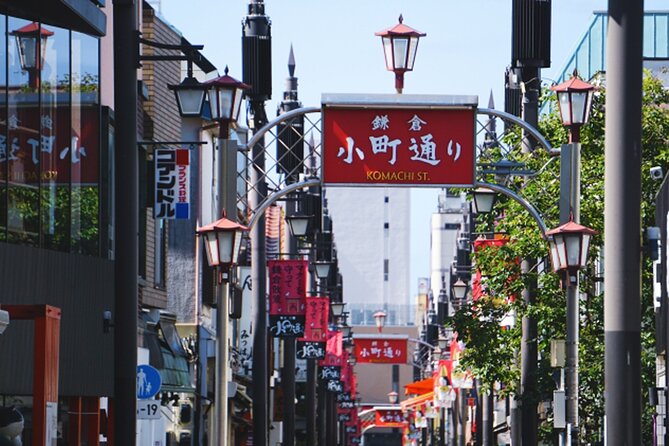
- Komachi Street: A short taste of modern Kamakura
- The Enoden ride and the Great Buddha
- Hasedera Temple: The most complete final stop
- What the guides add to the experience
- How much value do you get for $35?
- Who should book this walk?
- Practical details before you go
- My booking verdict
- FAQ
- Where does the Kamakura walking tour start?
- What time does the tour begin?
- Where does the tour end?
- How long does the experience last?
- What sights are included?
- Is the Great Buddha admission included?
- Is transportation included?
- How many people can join the tour?
- Is the tour available with a mobile ticket?
- What happens if the weather is poor?
Key points at a glance
- Four classic Kamakura stops: See Tsurugaoka Hachimangu, Komachi Street, the Great Buddha, and Hasedera in one morning.
- A small group capped at 10: The format gives you a better chance to ask questions and hear the guide clearly.
- Useful religious context: Guides explain how Buddhist temples and Shinto shrines differ, including customs still practiced today.
- The Enoden adds local character: The tour includes a ride on Kamakura’s charming local train as you move toward Hase.
- A smart half-day plan: You finish at Hase Station with time left for your own afternoon plans.
- Budget for 1,200 yen extra: Transportation and admission fees are separate from the $35 tour price.
Why Kamakura works so well in one morning
Kamakura is easy to underestimate. It is close enough to Tokyo for a day trip, yet its temples, shrines, old streets, and ocean setting feel far removed from the capital. The city served as the seat of Japan’s first military government under Minamoto no Yoritomo, and the monuments here still reflect that era.
The route gives you a useful progression. You begin with the formal approach to Tsurugaoka Hachimangu, pass through the everyday energy of Komachi Street, then switch to the giant Buddha and the wooded grounds of Hasedera. That mix is better than spending three hours at only one temple complex.
I especially value the explanations of religious practice. Without help, it is easy to treat every Japanese religious site as simply another beautiful place with a gate and a statue. A guide can show you what belongs to Shinto tradition, what belongs to Buddhism, and how modern Japanese people continue these customs.
The tour starts at 10:00 at the Kamakura City Tourist Information Center near Kamakura Station. That is a practical meeting place, especially if you are arriving from Tokyo by train. The tour ends at Hase Station, so you do not need to retrace your steps to the starting point.
More Walking Tours in Kamakura
- Kamakura Historical Walking Tour with the Great Buddha
★ 5.0 · 129 reviews - Kamakura 8 hr Private Walking Tour with Licensed Guide from Tokyo
★ 5.0 · 80 reviews - Kamakura: Private Guided Walking Tour with Local Guide
★ 4.8 · 60 reviews
Tsurugaoka Hachimangu: Kamakura’s grand opening scene
The first stop is Tsurugaoka Hachimangu, Kamakura’s central Shinto shrine. Minamoto no Yoritomo founded it in the 12th century and dedicated it to Hachiman, the Shinto god associated with the samurai tradition.
Allow about 30 minutes here. That is enough for the guide to explain the shrine’s role and point out the main visual details, but it is not enough for a slow, private exploration of every corner. If you like taking photographs or reading every sign, you may want to return later.
The shrine makes a strong beginning because its scale gives you an immediate sense of Kamakura’s political importance. The approach leads you into a ceremonial setting rather than straight into a quiet garden. Your guide can also explain basic shrine behavior, which makes the visit more meaningful than simply walking through the entrance and snapping a picture.
Pay attention to the difference between a Shinto shrine and the Buddhist sites later in the morning. That contrast is one of the tour’s most useful features. Guides including Maki and Miyu have been praised for making these ideas easy to follow, including the way Japanese customs continue in daily life.
Komachi Street: A short taste of modern Kamakura
From the shrine, the group moves to Komachi Street, a pedestrian shopping road in the center of Kamakura. The stop lasts about 20 minutes, so think of it as a quick introduction, not a full food tour.
Komachi Street is named after the celebrated poet Ono no Komachi. Today, it gives you a chance to see the more commercial side of Kamakura, with places to browse and local food to consider. The tour description includes local cuisine and lesser-known food stops as part of the wider experience, but no specific restaurant or tasting is promised, so you should not book this expecting a sit-down meal.
This is also the point where a guide can help you avoid wandering without a plan. A short explanation of what to look for, and suggestions for the afternoon, can save time later. One guide gave a visitor extra ideas for places to visit after the scheduled walk, which is particularly useful if Kamakura is your only day in town.
The trade-off is pace. Twenty minutes passes quickly, especially if you want to shop or sample several foods. Treat this stop as a preview. If something catches your eye, note it and return after the tour.
The Enoden ride and the Great Buddha
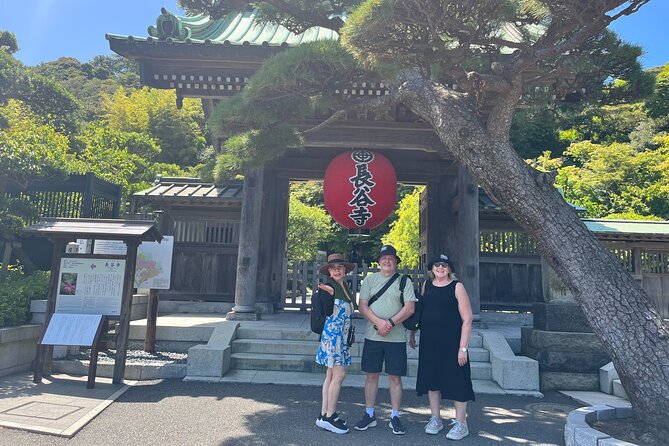
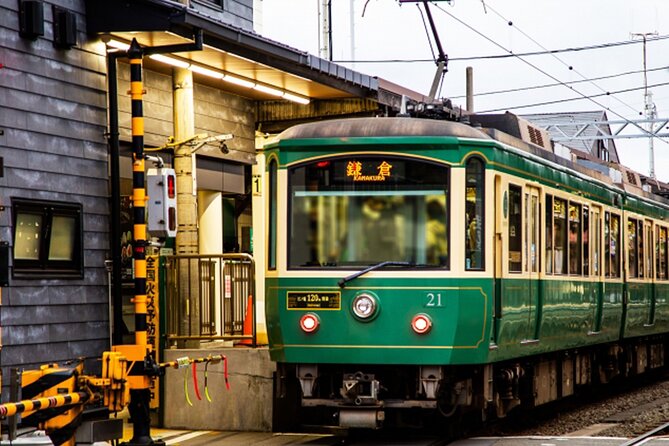
The route includes riding the Enoden train toward Hase. This local railway is part of the pleasure of moving around Kamakura, and it breaks up the walking with a short piece of ordinary local transport. Transportation is not included in the tour price, so keep the separate 1,200-yen total in mind for the train and admissions.
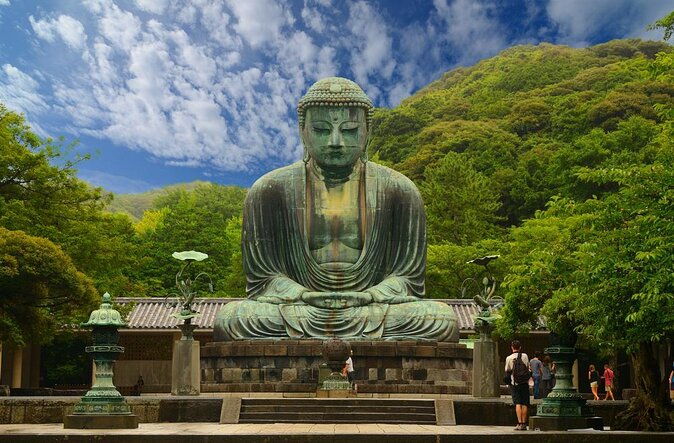
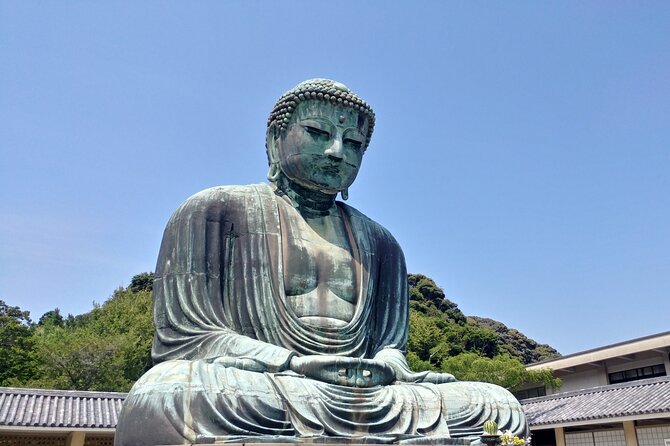
The next major stop is Kotoku-in, home of the Great Buddha of Kamakura. The bronze statue is about 13.35 meters tall, or roughly 44 feet. It dates from the 13th century and is one of Japan’s most recognizable religious monuments.
You have about 30 minutes here. That should give you time to approach the statue, take in its size, and hear the basic story behind it. Admission is not included, so you will pay separately as part of the stated 1,200-yen total.
The Great Buddha is impressive, but its appeal is not only physical size. It represents the more restrained Buddhist atmosphere that follows the large Shinto shrine earlier in the route. I find that the statue makes more sense after a guide has explained the religious setting and the role of Kamakura’s temples.
The short visit may feel rushed if you want to linger. You might also want more time for photographs, especially if the grounds are busy. Still, the tour’s purpose is to give you a clear first look at Kamakura’s main sights, not to replace an entire afternoon of independent exploring.
More Kamakura and Enoshima days:
- Tokyo: Kamakura & Enoshima Day Trip including Temple Tickets
★ 4.5 · 1,375 reviews - Tokyo: Mt. Fuji, Kamakura, Big Buddha, & Lake Ashi Day Trip
★ 4.5 · 867 reviews - From Tokyo: Kamakura & Enoshima 1-Day Bus Tour
★ 4.5 · 189 reviews - Kamakura Private Tour: Temples, Nature, and the Great Buddha
★ 5.0 · 121 reviews
Hasedera Temple: The most complete final stop
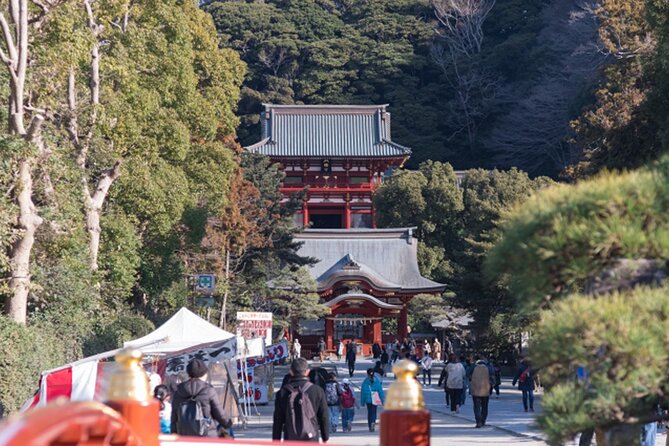
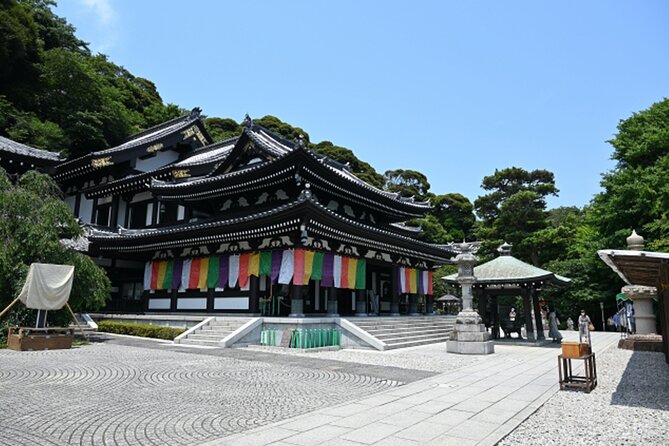
Hasedera, also called Hase Kannon Temple, receives the longest scheduled visit, about 40 minutes. That extra time matters because the temple offers more than one object or building to see. It is known for peaceful grounds, gardens, and a large wooden statue of Kannon, the Buddhist figure associated with compassion.
The setting also brings in Kamakura’s natural side. The tour includes coastal views, and Hasedera is one of the places where the city’s hills and proximity to the sea become part of the experience. The views are a welcome change after the formal shrine grounds and the enclosed feel of the Great Buddha site.
This is where the tour’s pacing works best. You have enough time to listen, look around, and take photographs without feeling that every minute is accounted for. Guides have also shown scenic viewpoints and helped take pictures, a useful touch if you are traveling with family or want a group photo.
Admission is separate here as well. As with Kotoku-in, the extra cost is modest, but it is better to know about it before booking. Hasedera can also be more physically demanding than a flat street walk because of its temple grounds and hillside setting. The tour states that most people can participate, but you should still be comfortable walking for several hours.
What the guides add to the experience
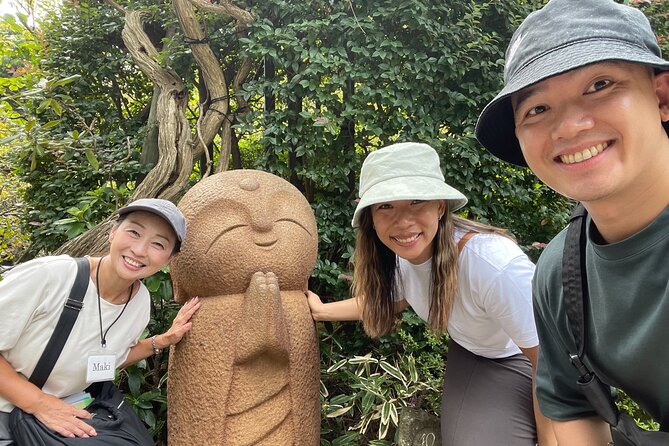
The strongest part of this tour is the guide. Maki, Midori, and Miyu are named in the available feedback, and each is described as friendly, clear, and energetic. The repeated praise is not just for knowing dates and names. The guides explain the difference between shrines and temples, connect old customs with present-day life, and answer questions along the way.
Miyu is noted for making the tour both informative and relaxed. Midori is particularly praised for showing enjoyable spots between the major sights and for taking photographs. Maki is described as warm, personal, and good with families, with children enjoying the visit as much as adults.
That matters in Kamakura because the sights can blur together without context. A guide helps you understand why a shrine is connected to samurai leaders, why the Great Buddha is bronze, and why Hasedera feels different from Tsurugaoka Hachimangu.
The small group also improves the experience. With a maximum of 10 people, you are not standing at the back of a large crowd trying to hear a lecture. The exact guide is not guaranteed, but the named guides give you a reasonable sense of the style to expect: personable, patient, and focused on making the history understandable.
How much value do you get for $35?
At $35 per person, this is a fairly priced introduction to Kamakura. You are paying for a guide, route planning, local explanations, and the convenience of covering the major sights in one organized morning.
The price looks better if you are visiting Kamakura for the first time or have limited time. On your own, you would need to plan the order of the sights, work out the Enoden connection, and learn the religious background as you go. The tour removes that planning burden.
The value is less clear if you already know Kamakura well or prefer long, unhurried visits. The schedule gives you a taste of four places, but not hours at each one. You will still want time after the tour for shopping, food, or returning to the temple that interested you most.
Remember the added 1,200 yen for transportation and admissions. That makes the total cost higher than the headline price, but the extra charge is clearly stated and covers the practical costs of the route. Bring additional money if you want to eat or shop on Komachi Street.
Who should book this walk?
I would recommend this tour to first-time visitors who want the main Kamakura sights explained in plain language. It is also a good fit for families, couples, and solo visitors who would rather have a local person set the pace and answer questions.
It suits you particularly well if you want to leave the afternoon open. Finishing at Hase Station makes it easy to continue exploring the Hase area or make your own plans after the scheduled portion.
The tour may not suit you if you dislike fixed schedules, want extensive time at each temple, or are looking for a dedicated food tour. Komachi Street is included, but the experience is built around history, religion, and major sights rather than a long meal.
Wear comfortable shoes and prepare for several hours on foot. Good weather is required, and the experience may be moved or refunded if conditions are poor. Service animals are allowed, the meeting point is near public transportation, and most people can participate.
Practical details before you go
You receive confirmation when you book, and the ticket is mobile, so you do not need to print anything. Meet at the Kamakura City Tourist Information Center at 10:00 am, located at 1-chōme-1-1 Komachi.
The end point is Hase Station, at 2 Chome-14 Hase. This one-way design is helpful because you can continue from Hase instead of walking back toward Kamakura Station.
The tour has free cancellation up to 24 hours before the start time for a full refund. Cancellations or changes made less than 24 hours before the local start time are not accepted for a refund. If bad weather cancels the tour, you are offered another date or a full refund.
My booking verdict
Book this if you want a well-planned first look at Kamakura with clear explanations and a small group. The combination of Tsurugaoka Hachimangu, Komachi Street, the Great Buddha, Hasedera, and the Enoden ride gives you a strong sense of the city in one morning.
I would especially choose it early in a Kamakura visit. The guide’s explanation of Buddhist and Shinto customs will make later temple visits easier to understand, and the suggestions for the afternoon can help you use the rest of your day well.
Skip it if your ideal Kamakura visit means lingering quietly at one temple or shopping and eating at your own speed. For most first-time visitors, though, $35 plus the stated 1,200 yen in transport and admissions is a sensible price for a compact, personal introduction to the City of Shogun.
FAQ
Where does the Kamakura walking tour start?
The tour starts at the Kamakura City Tourist Information Center at 1-chōme-1-1 Komachi, Kamakura, near Kamakura Station.
What time does the tour begin?
The scheduled start time is 10:00 am.
Where does the tour end?
The tour ends at Hase Station, at 2 Chome-14 Hase, Kamakura.
How long does the experience last?
The tour lasts approximately 3 hours and 30 minutes.
What sights are included?
The route includes Tsurugaoka Hachimangu Shrine, Komachi Street, Kotoku-in and the Great Buddha of Kamakura, and Hasedera Temple.
Is the Great Buddha admission included?
No. Admission fees are not included in the tour price.
Is transportation included?
No. Transportation is separate. The stated combined transportation and admission cost is 1,200 yen.
How many people can join the tour?
The group has a maximum of 10 participants.
Is the tour available with a mobile ticket?
Yes. A mobile ticket is available, and confirmation is received when you book.
What happens if the weather is poor?
The experience requires good weather. If it is canceled because of poor weather, you are offered a different date or a full refund.
New on our Kamakura list
- Buddha, Bamboo & Zen – Bespoke Kamakura Private Walking Tours★ 5.0 · 25 reviews
- Yokohama and Kamakura 6hr Private Trip Government-Licensed Guide★ 5.0 · 25 reviews
- Tokyo: Kamakura and Yokohama Private Day Trip with Guide★ 4.6 · 27 reviews
- Private Kamakura plus Yokohama Tour – English Speaking Driver★ 4.5 · 28 reviews
- Day Trip to Kamakura & Enoshima: Shrines, Seaside, Temples & Tea★ 5.0 · 32 reviews
- Kamakura: A Journey Through Medieval Japan★ 4.9 · 32 reviews
- From Tokyo: Kamakura Private Customize Tour by Luxury Van★ 4.6 · 38 reviews
- Exciting Kamakura – One Day Tour from Tokyo★ 5.0 · 40 reviews
Walking Tours, compared.
Tokyo Tsukiji Fish Market Food and Culture Walking Tour
Read our review →
Imperial Palace and Shogun Historical Walking Tour
Read our review →
Shinjuku Local Bar and Izakaya Guided Walking Tour
Read our review →
Asakusa Walking Tour with Sensoji Temple Visit
Read our review →
Tokyo Castle & Imperial PalaceーShogun Walking Tour
Read our review →
Browse the lists this tour appears in