
Reviewed · KAMAKURA TOURS
From Tokyo: Kamakura & Enoshima 1-Day Bus Tour
Kamakura gives you samurai-era Japan, while Enoshima adds sea air, island shrines, shops, and wide views. This tour links the two in one long day, with Tsurugaoka Hachimangu, the Great Buddha, Hasedera Temple, and Enoshima all on the route. You get a useful first look at a famous coastal region without changing trains or working out the connections yourself.
I like two things here. First, the route packs in several major sights for $66.05, including admission to Kōtoku-in and Hasedera. Second, you get a good mix of guided context and free time, so you can follow the guide or wander through Komachi Street and Enoshima at your own pace. The tradeoff is the clock: traffic can stretch the return, and Enoshima’s stairs require real energy.
In This Review
- Key points to know before you book
- Why this makes a smart escape from Tokyo
- Starting at Tsurugaoka Hachimangu
- Walking Komachi Street for snacks and small purchases
- Meeting the Great Buddha at Kōtoku-in
- Finding quiet corners at Hasedera Temple
- Spending two hours on Enoshima Island
- What the guides add to the day
- The bus, group size, and long return
- Who should book this Kamakura day trip?
- Should you book it?
- FAQ
- How long does the Kamakura and Enoshima tour last?
- Where does the tour begin?
- Where does the tour end?
- Is lunch included?
- Are temple admissions included?
- What languages are available?
- How much luggage can I bring?
- Is Enoshima difficult to walk around?
- What happens if I arrive late?
- Can I cancel for a refund?
Key points to know before you book
- Four major stops in one day: Visit Tsurugaoka Hachimangu, Kōtoku-in, Hasedera, and Enoshima without arranging separate transport.
- Samurai-era Kamakura: Learn why Kamakura became the center of Japan’s first warrior government.
- Enoshima has the best breathing room: Two hours here allow time for shrines, food, shops, and ocean views.
- Helpful guides can shape the day: Omar, Yuki, Chen, Mitsuko, Koji, and others have been praised for warmth, clear directions, and historical commentary.
- Bring patience for traffic: The return to Tokyo may be slow, especially on a busy day.
- Wear shoes for steps: Enoshima includes steep streets and many stairs, particularly if you continue toward the caves or lighthouse.
Why this makes a smart escape from Tokyo
Tokyo can be thrilling, but after several days of crossings, crowds, and neon, a day near the sea is a welcome change. Kamakura has temples and shrines with a slower rhythm, while Enoshima gives the outing a coastal finish.
This is not a quiet private excursion. The vehicle can carry up to 90 people, and the guide may provide English and Chinese commentary on the same bus. Still, several parts of the experience are designed well for a group tour. You have a fixed route, return transport, included entry fees, and clear meeting instructions.
The price is fair for what is covered. At $66.05 per person, you are paying for a full day of transport from Tokyo, a guide, taxes, and entry to two paid temple sites. Lunch is not included, but that is useful rather than troublesome because Enoshima has food choices and free time built into the day.
The biggest value comes from efficiency. Kamakura and Enoshima are easy to visit by public transport, but fitting both into one day takes planning. This bus handles the long-distance movement and gives you a practical introduction to the area. If you want to study one temple in depth, or set your own pace, use the train instead.
More Kamakura and Enoshima days:
- Tokyo: Kamakura & Enoshima Day Trip including Temple Tickets
★ 4.5 · 1,375 reviews - Tokyo: Mt. Fuji, Kamakura, Big Buddha, & Lake Ashi Day Trip
★ 4.5 · 867 reviews - Kamakura Historical Walking Tour with the Great Buddha
★ 5.0 · 129 reviews
Starting at Tsurugaoka Hachimangu
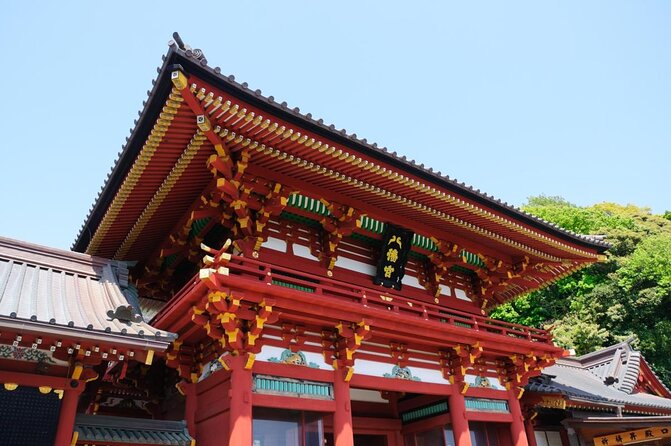
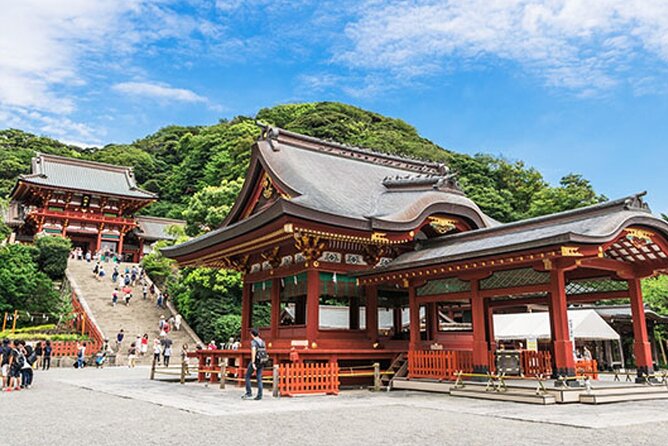
The day begins at Tsurugaoka Hachimangu, Kamakura’s main Shinto shrine and its spiritual center. You enter through a grand torii gate and walk toward grounds with ponds, koi, trees, and shrine buildings. Allow yourself time to notice the contrast between the formal approach and the lively town just outside.
The shrine matters because Kamakura became the seat of the warrior government founded by Minamoto no Yoritomo. The site connects religious practice with the rise of the samurai class, which gives the rest of the day a useful historical frame.
You have about two hours here, including time around nearby Komachi Street. That is generous compared with some of the later stops. You can explore the shrine, take photographs, browse small shops, and find a snack without sprinting back to the bus.
The grounds include several related sites, such as Shirahata Shrine beside Yanagihara Pond and a shrine on a small hill west of the main complex. The route also includes references to Wakamiya Shrine and the history of Minamoto no Yoritomo. You do not need to visit every corner to enjoy Tsurugaoka Hachimangu, but the longer opening stop gives you room to choose.
One practical note: the first stop may feel long if you are mainly eager to see the Great Buddha. Some travelers have found that they had extra time here, while later stops felt tighter. Use this time for the shrine and shopping, rather than assuming it is only a quick photo stop.
Walking Komachi Street for snacks and small purchases
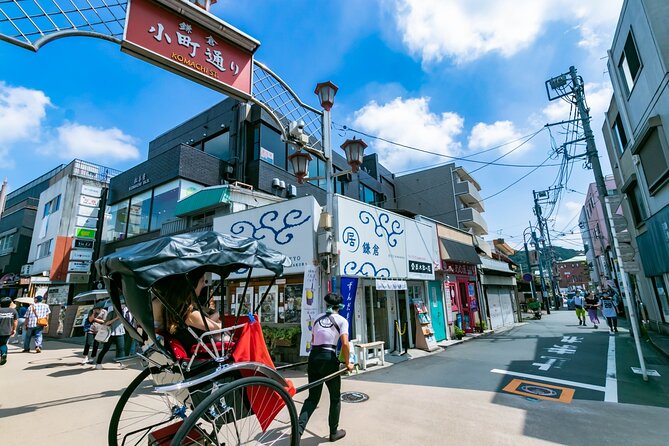
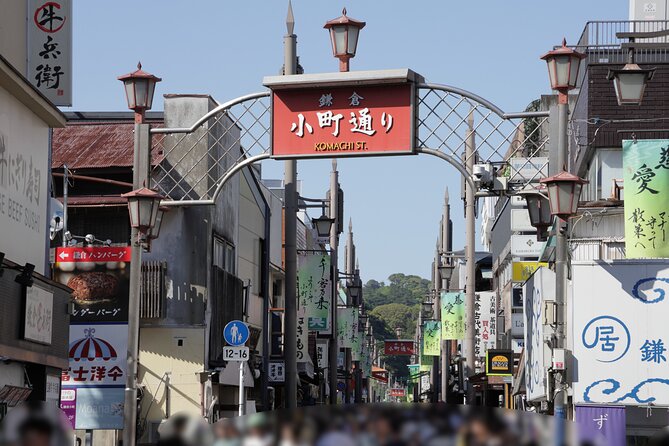
Komachi Street runs toward Tsurugaoka Hachimangu and offers the day’s easiest chance to browse. You will find snacks, Kamakura souvenirs, handmade crafts, restaurants, and shops aimed at both local and visiting customers.
I like this part because it gives you a taste of Kamakura beyond temple gates. Try a small snack, look for a practical souvenir, or simply use the street to get a feel for the town. You might also find a coffee stop nearby, including the Banyan Tree Coffee House, which has been singled out as a pleasant place not far from the first temple.
The street can be busy, and you need to watch the meeting time. The tour does not include lunch, so this is a possible place to eat, but Enoshima generally offers more room for a proper meal. If your guide gives food suggestions, listen closely, since the schedule is fixed and a long restaurant stop may not fit.
Meeting the Great Buddha at Kōtoku-in
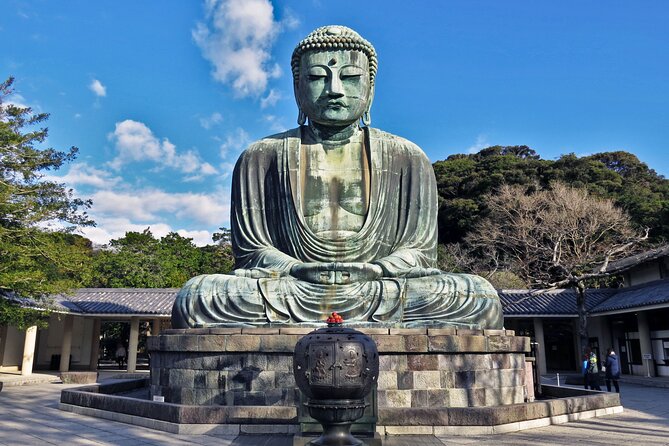
Kōtoku-in is home to Kamakura’s bronze Great Buddha, one of the region’s essential sights. The Amida Buddha has sat outdoors for centuries, and its scale becomes clear as soon as you reach the open courtyard.
The visit lasts about 30 minutes, with admission included. That is enough to see the statue, take photographs, and absorb the setting. It is not enough for an unhurried temple study, so follow the guide’s directions and keep an eye on the time.
An optional detail is the chance to enter the rear of the statue for a small additional fee of 50 yen. Bring coins if this interests you. On crowded days, the wait for this extra visit can be long, and you may need to choose between seeing the interior and spending more time elsewhere.
The Great Buddha stop is short by design. The tour is trying to show you several places rather than keep you at one site. I would treat the bronze figure as a focused visit, not a full afternoon at Kōtoku-in.
More day trips out of Kamakura:
- Exciting Kamakura – One Day Tour from Tokyo
★ 5.0 · 40 reviews - Day Trip to Kamakura & Enoshima: Shrines, Seaside, Temples & Tea
★ 5.0 · 32 reviews - Tokyo: Kamakura and Yokohama Private Day Trip with Guide
★ 4.6 · 27 reviews - Mt Fuji and Hakone 1-Day Bus Tour Return by Bullet Train
★ 5.0 · 26,383 reviews
Finding quiet corners at Hasedera Temple
Hasedera receives about 50 minutes, and for many people it is the most satisfying temple stop. It is known for an eleven-headed wooden statue of Kannon, the Goddess of Mercy, and for carefully arranged grounds on a hillside.
The temple gives you more than a single landmark. You can look through the buildings, gardens, and elevated parts of the grounds, while your guide explains the religious meaning and local history. The hillside setting also makes this a more active stop than the Great Buddha.
Fifty minutes can work well if you move steadily. It can feel rushed if you want to inspect every feature or stop for long photographs. Wear shoes with a good grip and expect steps.
This is also where the tour’s pacing becomes important. Some visitors have felt that the second temple deserved more time, especially if lunch was also part of the same section of the day. If Hasedera is high on your list, stay focused and do not spend too long in the first shops you pass.
Spending two hours on Enoshima Island
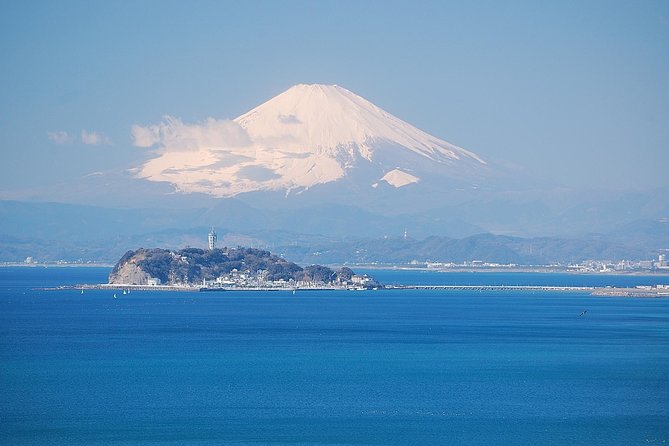
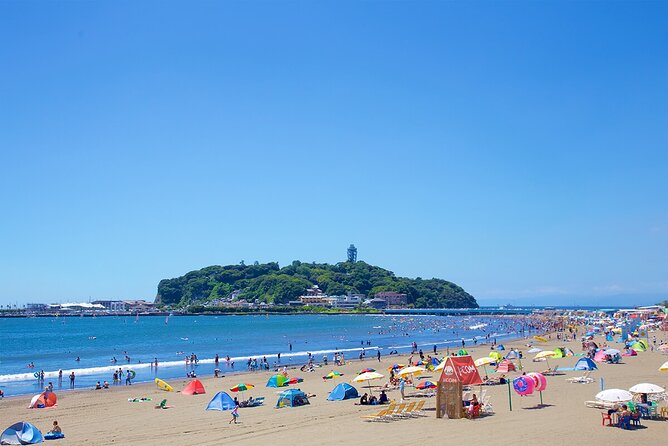
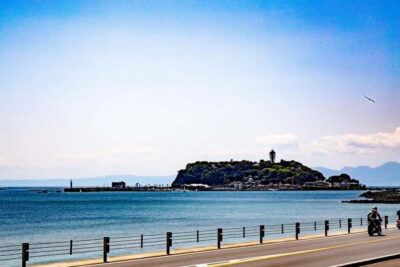
Enoshima is the final major stop and receives roughly two hours. This island is the tour’s change of mood: instead of inland shrine grounds, you get narrow shopping lanes, seafood, shrine buildings, gardens, and views over the water.
The island’s shrine complex is dedicated to Benzaiten, associated with music, wealth, and wisdom. It includes three shrines, Hetsu-no-miya, Nakatsu-no-miya, and another shrine farther along the route. The complex spreads across the island rather than sitting in one compact courtyard, so a map and careful timekeeping help.
The narrow shopping street after the bronze torii has restaurants and souvenir shops. Enoshima is a good place to eat, and several guides have offered practical suggestions about food. Plan your meal early enough to leave time for the island itself. On one altered schedule, lunch fell around 11 a.m., when some places were not yet open, so the exact meal timing can change if traffic or road conditions force the guide to reverse the route.
The island is beautiful, but it is not flat. You may climb hundreds of steps if you explore beyond the easiest route, especially toward the caves or upper areas. Paid escalators can save some effort, but they do not remove every stair, and you still need to get back to the meeting point.
The Samuel Cocking Garden and its observation lighthouse offer higher views. The lighthouse rises 59.8 meters, reaching 119.6 meters above sea level. On a clear day, you might see Mount Fuji in the distance, though weather decides whether that view appears.
You do not have to attempt everything. If stairs are a concern, stay near the lower shopping street and shrine area, or ask the guide for the simplest route. If you want the caves and lighthouse, leave enough time for the return walk and do not assume every path is obvious.
What the guides add to the day
The guide can make this tour either a moving history lesson or simply a transport service. The strongest experiences come when the guide explains why the shrines matter, points out useful food and shopping areas, and gives clear return instructions.
Omar has been praised for being funny, friendly, and strong on the history of the sites. Yuki has earned appreciation for clear English, quick thinking, and close attention to practical needs. Chen has been described as friendly and easy to understand, while Mitsuko has helped people move smoothly between the four main stops.
Other guides, including Koji, Eric, and Mits, have received positive comments for friendliness, though the clarity of commentary can vary. One disappointing experience included almost no historical explanation, with the guide focusing mainly on logistics. That is a fair concern, since the value of Kamakura lies not only in seeing buildings but in understanding the link between religion, warrior government, and local tradition.
The format may combine English and Chinese commentary on the same bus. If you need detailed English interpretation at every stop, ask about the language arrangement before booking. The tour is strongest for a broad introduction, not specialist-level guiding.
The bus, group size, and long return
Roundtrip transport is the main practical reason to choose this experience. The bus is air-conditioned, and several departures have used modern, clean vehicles with USB charging ports. Conditions can vary, though, and one group found its vehicle old and uncomfortable at the start.
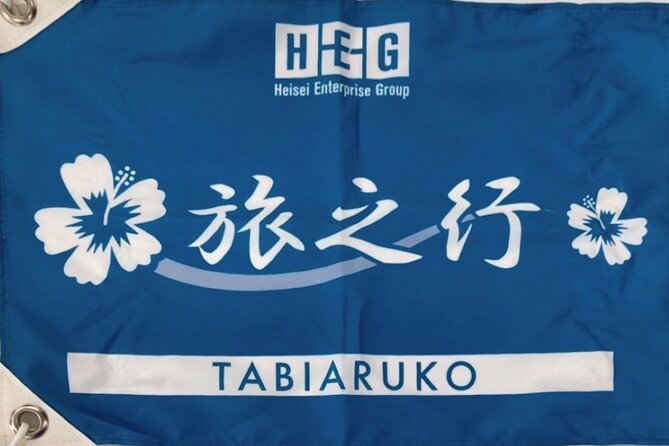
You will return to the Shinjuku area, near the West Exit, and not to Ikebukuro. The only listed meeting point is Shinjuku Post Office, at 1-chōme-8-8 Nishishinjuku. Look for the guide holding a pale blue flag and arrive at least 10 minutes early.
This is not a bus that waits for late arrivals. The operator gives strict warnings about arriving at the correct place and on time, and missing the departure can mean no refund. Check the Google Maps location and the product photo before the morning of the tour.
The drive back can be long because of Tokyo-area traffic. A 9 to 10-hour advertised day may stretch if roads are crowded or if weather causes delays. Bring water, a small snack, and something to occupy you during the return. You can bring one piece of luggage per person, but trunk luggage cannot be reached between stops. The maximum trunk size is 155 centimeters combined across height, width, and depth.
Who should book this Kamakura day trip?
I would choose this tour if you want to see the main Kamakura sights and Enoshima in one organized day. It suits first-time visitors, families, and anyone who prefers a guide, fixed transport, and a broad sample over independent planning.
It also works well after several Tokyo days, when you want temples, sea air, shopping, and a change of pace. The free time is important. You are not required to walk beside the guide for every minute, and you can break away to browse or eat as long as you return on time.
I would hesitate if you dislike group schedules, have trouble with stairs, or want a slow visit to each temple. Enoshima is especially demanding if you try to include the upper shrine areas, lighthouse, and caves in one short visit. The route is efficient, but efficiency means compromises.
The experience requires a minimum of 10 participants and may be canceled if that number is not reached. Free cancellation is available up to 24 hours before departure, but late cancellations and changes are not refunded.
Should you book it?
Book this tour if the idea of four major sights without transport planning appeals to you. At $66.05, the included vehicle, guide, taxes, and two temple admissions make it a solid value for a full day outside Tokyo.
Go in with realistic expectations. Traffic may steal time, the bus quality can vary, and Enoshima demands more walking than its island postcard suggests. Arrive early, wear comfortable shoes, carry coins, and treat the day as an overview. For that purpose, this is a practical and enjoyable way to meet Kamakura and Enoshima in one outing.
FAQ
How long does the Kamakura and Enoshima tour last?
The tour lasts approximately 9 to 10 hours. Traffic, weather, and other road conditions can affect the schedule and may delay the return.
Where does the tour begin?
The listed meeting point is Shinjuku Post Office at 1-chōme-8-8 Nishishinjuku, Shinjuku City, Tokyo. Look for a guide holding a pale blue flag.
Where does the tour end?
The tour has one drop-off point near Shinjuku Station’s West Exit. It does not return to Ikebukuro.
Is lunch included?
No. Lunch is not included, but you have food options during the day, particularly around Komachi Street and Enoshima.
Are temple admissions included?
Yes. Admission fees for Hase-dera and Kōtoku-in are included. Entry to Tsurugaoka Hachimangu and Enoshima is listed as free.
What languages are available?
The tour includes an English or Chinese-speaking guide. Depending on group size, English and Chinese commentary may be provided on the same bus.
How much luggage can I bring?
You may bring one piece of luggage per person. Luggage stored in the trunk must not exceed 155 centimeters when height, width, and depth are added together.
Is Enoshima difficult to walk around?
Enoshima includes hills and many stairs. If you visit the caves, upper shrine areas, or lighthouse, you should allow extra time and be prepared for substantial climbing.
What happens if I arrive late?
The bus departs on time and cannot wait for late arrivals. Arriving at the wrong meeting point or missing the departure may mean that you receive no refund.
Can I cancel for a refund?
You can cancel at least 24 hours before the start time for a full refund. Cancellations or changes made less than 24 hours before departure are not accepted for a refund.
New on our Kamakura list
- Buddha, Bamboo & Zen – Bespoke Kamakura Private Walking Tours★ 5.0 · 25 reviews
- Yokohama and Kamakura 6hr Private Trip Government-Licensed Guide★ 5.0 · 25 reviews
- Tokyo: Kamakura and Yokohama Private Day Trip with Guide★ 4.6 · 27 reviews
- Private Kamakura plus Yokohama Tour – English Speaking Driver★ 4.5 · 28 reviews
- Day Trip to Kamakura & Enoshima: Shrines, Seaside, Temples & Tea★ 5.0 · 32 reviews
- Kamakura: A Journey Through Medieval Japan★ 4.9 · 32 reviews
- From Tokyo: Kamakura Private Customize Tour by Luxury Van★ 4.6 · 38 reviews
- Exciting Kamakura – One Day Tour from Tokyo★ 5.0 · 40 reviews
Kamakura Tours, compared.
Kamakura & Enoshima Day Trip including Temple Tickets
Read our review →
Mt. Fuji, Kamakura, Big Buddha, & Lake Ashi Day Trip
Read our review →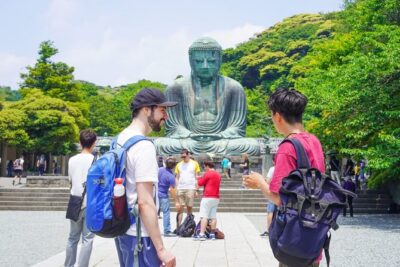
Kamakura Historical Walking Tour with the Great Buddha
Read our review →
Kamakura Private Tour: Temples, Nature, and the Great Buddha
Read our review →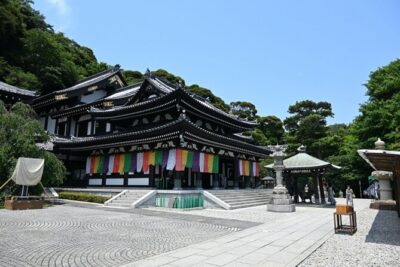
Sea of Mount Fuji, Hakone Ropeway, Ōwakudani, Enoshima
Read our review →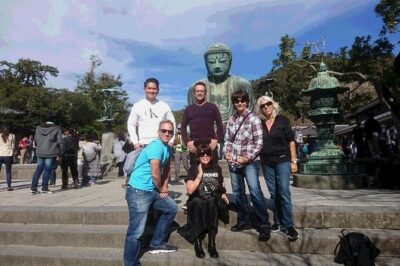
Kamakura 8 hr Private Walking Tour with Licensed Guide from Tokyo
Read our review →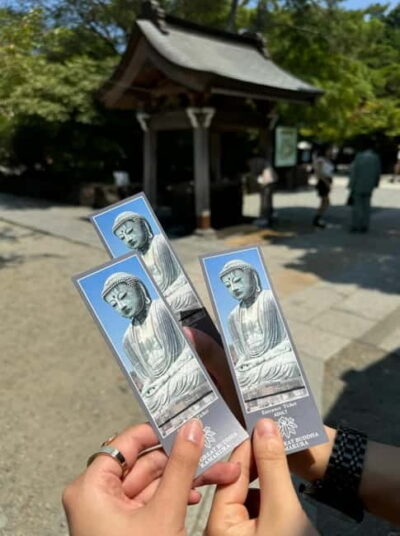
Kamakura & Enoshima Day Tour with Pickup & Train Ride
Read our review →Browse the lists this tour appears in