
Reviewed · CYCLING TOURS
2.5 Hour-Guided Cycle Tour in the Central Tokyo
Tokyo’s best moments are not always found on its grandest streets. This gentle ride takes you through quiet residential lanes, riverside paths, and old shopping streets, linking Asakusa temples with views of Tokyo Skytree. You get a look at daily life that is easy to miss from a train or tour bus.
I like the mix of cycling and short sightseeing stops, especially Senso-ji, Imado Shrine, and the traditional Amezaiku candy shop. I also like the small group size, the provided helmet, and the care shown by guide Takeshi, who has helped riders through cold and wet weather and sent photos after the tour.
The main consideration is the compact folding bike. It suits people from about 140 to 180 centimeters tall, so taller riders should contact the operator in advance. The ride is gentle, but you still need to feel comfortable cycling in city streets.
In This Review
- Key Points Before You Book
- Starting Near Hikifune Station
- A Gentle Ride Along the Sumida River
- Honryuin Matsuchiyama Shoden and Its Radish Symbols
- Imado Shrine, Cats, and Good Fortune
- Senso-ji, Tokyo’s Big Classical Stop
- Watching Candy Take Shape at Ameshin
- Crossing the Sumida River Beneath Tokyo Skytree
- Kyojima Minami Park and Everyday Neighborhood Tokyo
- How Difficult Is the Cycling?
- Guide Style and Weather Planning
- Is $50.08 a Good Value?
- Who Should Book This Ride?
- Booking Timing and Cancellation
- My Take: Book It for the Neighborhoods
- FAQ
- Where does the Tokyo cycle tour start?
- Where does the tour finish?
- How long does the cycling tour last?
- How many people can join the tour?
- What type of bicycles are provided?
- What happens if the weather is poor?
Key Points Before You Book
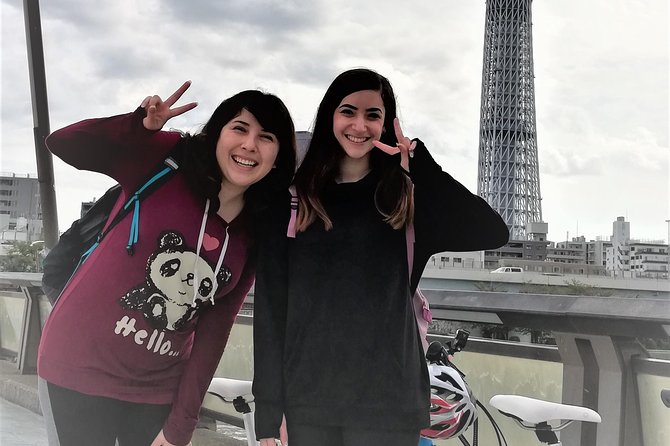
- Ride beneath Tokyo Skytree: The route gives you several changing views of the tower, including a memorable cycle beneath it.
- Visit quieter religious sites: Honryuin Matsuchiyama Shoden and Imado Shrine offer a calmer counterpoint to Senso-ji.
- See Tokyo at street level: Riverside paths, residential lanes, and Kyojima Minami Park show ordinary neighborhood life.
- Expect an easy pace: The ride suits recreational cyclists and families with older children more than serious cycling enthusiasts.
- Use a small folding bike: Bikes have 14 to 20 inch wheels and fit riders around 140 to 180 centimeters tall.
- Plan around 2.5 hours: The tour returns to its starting point, leaving most of the day free for other plans.
Starting Near Hikifune Station
The meeting point is at Tokyo Backstreets Bike Tour, inside the Synapse shared office at 2-chome 24-14 Higashimukojima, Sumida City. The closest meeting point is Hikifune Station, which makes this an easy start if you are staying in eastern Tokyo or planning to visit Asakusa afterward.
Give yourself enough time to find the office. The address is not a grand storefront on a main avenue, but an office location within the neighborhood. Your guide will fit you to a folding bike and provide a helmet before setting off.
The tour has a maximum of six people. It is described as a private experience for you and your group, so the small format should feel more personal than a large city ride. Confirm the exact arrangements for your booking if you are traveling as a mixed group.
A few more Tokyo bookings worth comparing
- Tokyo Guided Small-Group Biking Tour
★ 5.0 · 1,250 reviews - Tokyo Great Cycling Tour
★ 5.0 · 811 reviews - Tokyo Top Highlights 3h Guided E-bike Tour
★ 5.0 · 714 reviews
A Gentle Ride Along the Sumida River
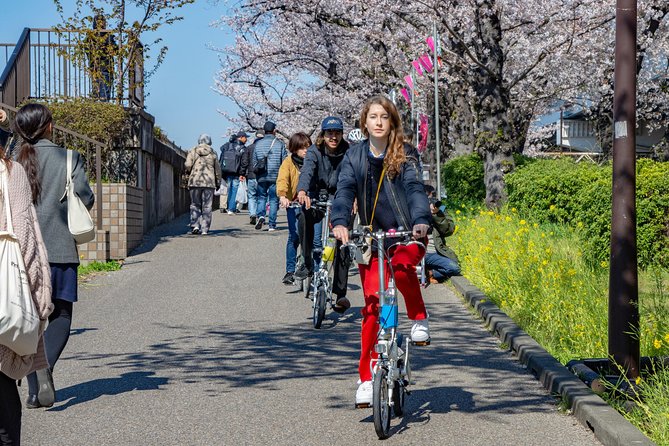
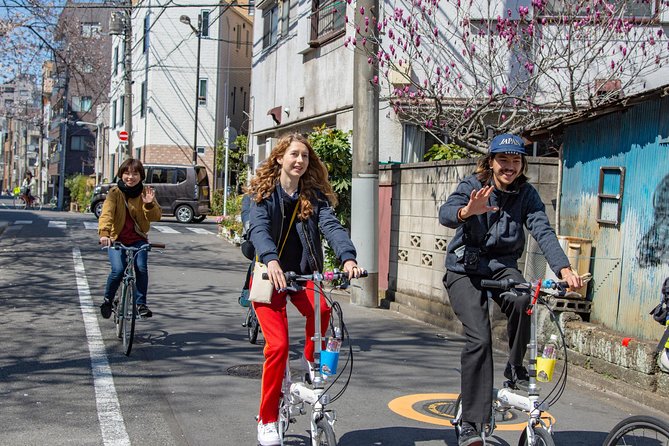
One of the first pleasures is simply getting onto a bicycle. Tokyo can feel large and crowded when you move through it by rail, but a bike lets you notice narrow streets, small homes, shop fronts, and the changing rhythm of the neighborhood.
The route includes cycling along the bank of the Sumida River. In spring, this area is known for cherry blossoms, making the riverside especially attractive during the flowering season. The timing of blossoms is not guaranteed, of course, but the river ride remains a useful way to connect the different parts of the route.
Do not expect a demanding athletic outing. The ride is described as gentle, and it has worked well for recreational riders and families with children aged 13 and 16. You will stop often, so the main challenge is staying comfortable on the bike rather than covering a long distance.
Honryuin Matsuchiyama Shoden and Its Radish Symbols
The first temple stop is Honryuin Matsuchiyama Shoden, a temple connected with Senso-ji and dating from 595. You have about 20 minutes here, with no separate admission charge listed.
The temple’s most unusual detail is its repeated use of images of daikon, the Japanese radish, along with small pouches. The radish represents the human mind caught in ignorance and its poisonous effects. The pouches represent the wish for wealth and good fortune.
This is the kind of stop that benefits from a guide. On your own, you might notice the radish decorations without understanding why they appear. Takeshi’s explanations give the symbols a place in Buddhist thought and make the visit more than a quick photograph.
The temple is also a useful contrast to Senso-ji. It is smaller and quieter, with more room to pause and look. If you want grand halls and large crowds, this is not the main event. If you want a less hurried religious site, it is one of the strongest parts of the ride.
Imado Shrine, Cats, and Good Fortune
The ride continues to Imado Shrine, founded in 1063. You have around 15 minutes to visit, and admission is free.
Imado is known as a power spot, a sacred place associated with wishes for love and marriage. That gives the shrine a different mood from the nearby Buddhist temple. Here, the focus is less on temple symbols and more on personal hopes and good fortune.
The stop is brief, so you should expect a compact introduction rather than a long religious tour. Still, it adds another layer to the morning or afternoon. You see how different sacred places in Tokyo can serve different purposes, even when they are close together.
I like this pairing with Honryuin Matsuchiyama because it keeps the sightseeing varied. You are not stopping at several sites that all look and feel alike.
Same corner of Tokyo, a completely different plan:
- Mt Fuji and Hakone 1-Day Bus Tour Return by Bullet Train
★ 5.0 · 26,383 reviews - 1-Day Tokyo Bus Tour
★ 5.0 · 14,250 reviews - Tokyo: TOKYO SKYTREE® Admission ticket
★ 4.5 · 11,192 reviews - Tokyo: teamLab Planets TOKYO Digital Art Museum Entry Ticket
★ 4.6 · 9,779 reviews
Senso-ji, Tokyo’s Big Classical Stop
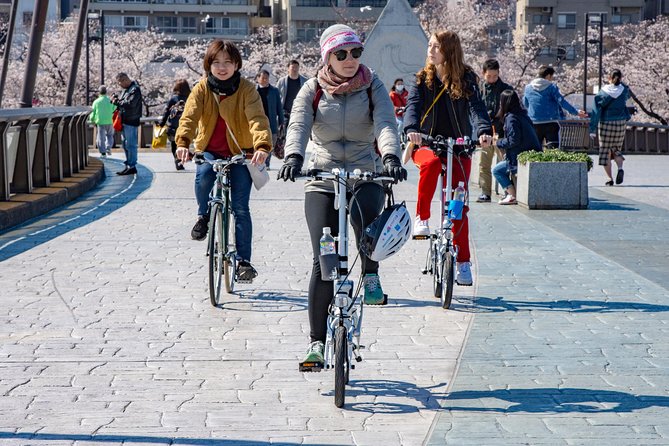
At Senso-ji, the bikes are parked so you can walk around the temple grounds. The visit lasts about 30 minutes, making it the longest stop on the route.
Senso-ji is one of Tokyo’s essential sights, with its imposing entrance, temple buildings, and busy approach. This is the point where the ride connects its quieter neighborhood character with one of the city’s best-known places.
The advantage of arriving by bike is the change of pace. You have already passed through residential streets and smaller sacred sites, so Senso-ji feels like part of a larger neighborhood story rather than an isolated attraction. The drawback is that 30 minutes is not enough for a slow, detailed exploration of every corner.
Use the time wisely. Stay with your guide, listen to the explanation, and save a longer return visit for another part of your Tokyo schedule if you want to explore the temple area at length. Since the tour ends back at Hikifune, you can also plan a separate visit to Asakusa later.
Watching Candy Take Shape at Ameshin
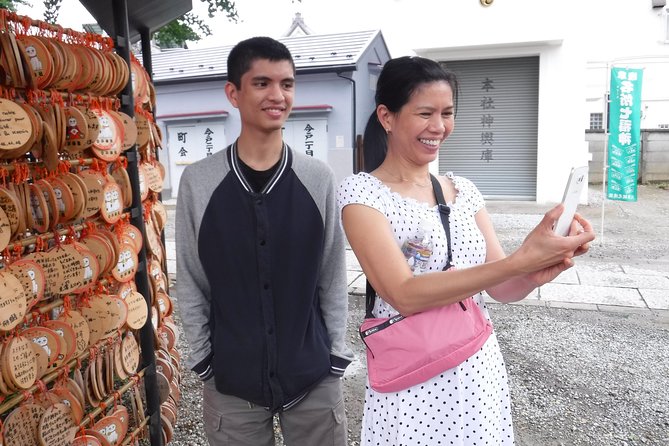
The stop at Asakusa Amezaiku Ameshin adds a hands-on craft element to the route. Amezaiku is the Japanese art of shaping heated candy into small, detailed figures.
You spend about 15 minutes at the shop, where you can watch the candy being made. The craft is quick and precise, and it gives you something very different from temples and city views.
This stop is short, so treat it as a demonstration rather than a full workshop. The supplied information does not state that a tasting or hands-on lesson is included, so check before booking if that is important to you.
For many people, this will be one of the most memorable stops because it shows a traditional skill in action. It also gives the ride a nice change of texture: after cycling and walking, you pause to watch an artisan work.
Crossing the Sumida River Beneath Tokyo Skytree
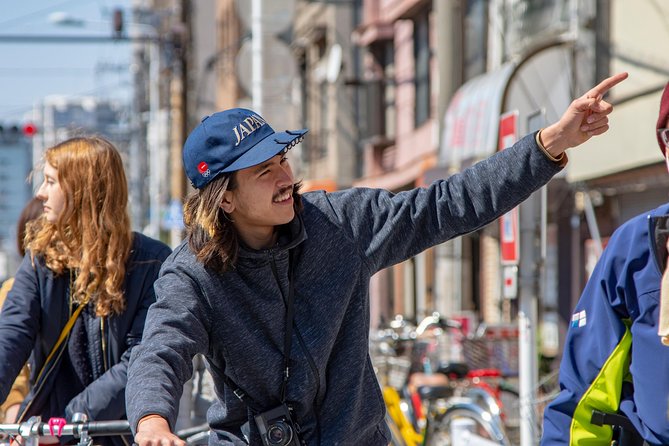
The route then crosses the Sumida River, with views across the water and toward the city. This is a good point to slow down and take photographs, especially if you enjoy seeing famous buildings from less common angles.
The cycle continues beneath Tokyo Skytree. Rather than viewing the tower only from a distant observation point, you experience its scale from street level. The tower appears and disappears as you move through the neighborhood, which makes the route feel more like a visual walk through eastern Tokyo than a single photo stop.
The guide also takes photographs during the ride. That is useful if you are cycling alone or if your group wants a picture with Skytree in the background. Takeshi has been especially attentive about capturing photos for solo riders and sending them by email after the tour.
Kyojima Minami Park and Everyday Neighborhood Tokyo
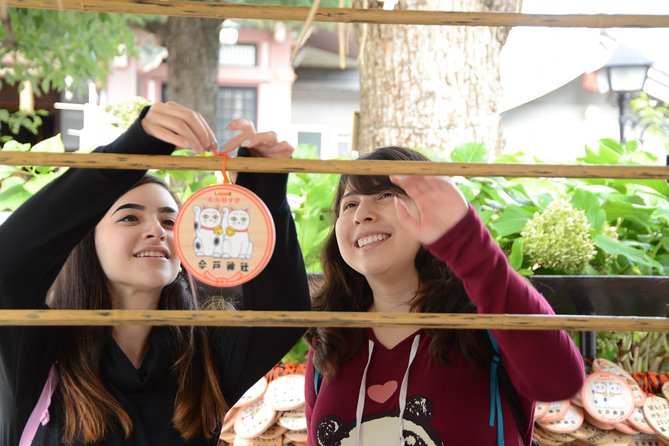
The final listed stop is Kyojima Minami Park, where you spend about 20 minutes. The area includes an old-fashioned shopping mall and offers a look at ordinary Japanese daily life.
This is not a polished sightseeing district built around major attractions. That is precisely why it matters. You get a sense of the local neighborhood, where shopping and routine errands continue under the shadow of one of Tokyo’s most famous towers.
The contrast is the point. Senso-ji shows you Tokyo’s major religious draw. Kyojima shows you a more ordinary side of the city. Between them, you pass through streets that most first-time visitors would never think to explore.
Keep your expectations realistic. The shopping area is included for its atmosphere and local character, not for a long shopping session or a list of major stores. You have around 20 minutes, so look around, take in the street scene, and follow your guide’s explanation.
How Difficult Is the Cycling?
This is a good choice if you are comfortable on a bicycle but do not want a strenuous day. The ride has been suitable for recreational cyclists and teenagers, and the route is broken up by temple, shrine, craft, and photo stops.
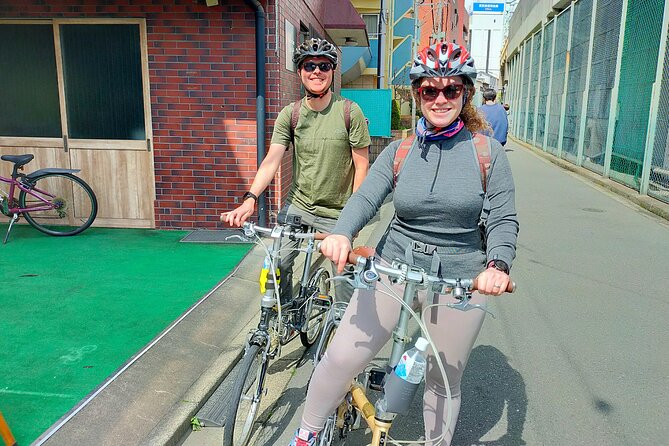
Tokyo is still a major city, so you should be alert around streets, crossings, and other road users. The guide keeps safety in focus, provides helmets, and has adapted well to difficult weather. On one rainy, cold outing, Takeshi supplied raincoats and took care to keep the group safe.
The folding bikes have 14 to 20 inch wheels and are intended for people between 140 and 180 centimeters tall. If you are over 180 centimeters, tell the operator before the tour. If you want to use a tandem bike, you must request it at least three days before your booked date.
The small wheels make the bikes convenient and easy to store, but they may not feel like a full-size touring bicycle. Strong cyclists who want speed and distance may find the pace too modest. Families, casual riders, and people who value sightseeing over exercise are a better match.
Guide Style and Weather Planning
Guide Takeshi is a major part of the experience. He explains local places in a friendly way, watches the group’s safety, and adjusts his care to the conditions. He has also contacted participants when rain was forecast to ask about changing the cycling date.
That flexibility matters because this is an outdoor activity. The tour requires good weather. If poor conditions force a cancellation, you can choose another date or receive a full refund.
Bring clothing suited to the season. In cooler or wet weather, extra layers and rain protection will make the ride more pleasant, even though the guide has provided raincoats on at least one outing. In spring, the Sumida River route may be particularly appealing because of its cherry blossoms.
Is $50.08 a Good Value?
At $50.08 per person, this is not the cheapest way to move around Tokyo. You are paying for a guide, a bike, a helmet, a carefully linked route, and local context rather than simply renting a bicycle.
The value is strongest for first-time visitors who want to see Asakusa and Skytree while also reaching streets that are difficult to find on foot. A normal sightseeing route might give you Senso-ji, but it is less likely to include Honryuin Matsuchiyama, Imado Shrine, a candy-making demonstration, the river crossing, and Kyojima in a single short outing.
The tour also takes only about 2.5 hours and ends where it begins. That leaves the rest of your day open. You can schedule it in the morning before a longer Asakusa visit, or use it as an afternoon introduction to the area.
Group discounts are available, though the exact savings are not specified. Since the tour accommodates no more than six people, ask about the discount before booking if you are traveling with a larger family or group.
Who Should Book This Ride?
I would choose this tour if you want a gentle introduction to eastern Tokyo and prefer local streets to a checklist of major sights. It is especially suitable for:
- Families with older children and teenagers
- Solo riders who want a guide and help with photos
- Couples interested in shrines, temples, and local customs
- Casual cyclists who prefer frequent stops
- Repeat Tokyo visitors looking for a different side of the city
You may want another type of tour if you dislike bicycles, want a serious workout, or need a full-size bike. The compact bikes may not suit tall riders, and the 2.5-hour format does not allow extended time at each attraction.
Most people can participate, and the activity is near public transportation. Still, tell the operator in advance about your height or any need for a tandem bike. Small details like these can make the difference between a comfortable ride and an awkward one.
Booking Timing and Cancellation
This experience is commonly booked about 36 days ahead, which suggests that popular dates can fill early. That is worth noting if your Tokyo schedule is fixed, particularly during pleasant weather or cherry blossom season.
You can cancel up to 24 hours before the start time for a full refund. Changes or cancellations made less than 24 hours before the start are not accepted for a refund. The tour also requires a minimum number of participants, so a cancellation caused by low enrollment may result in another date, another experience, or a full refund.
My Take: Book It for the Neighborhoods
You should book this cycle tour if you want Tokyo to feel less like a collection of major stations and more like a series of lived-in neighborhoods. The temples, shrine, candy craft, river views, and Skytree provide plenty to see, but the real appeal is the easy movement between them.
The strongest reasons to go are the gentle pace, small group, and personal guidance from Takeshi. The main limits are the short visit times, compact folding bikes, and dependence on good weather.
For a first visit, this is a smart way to spend half a day before returning to Asakusa on your own. For a repeat visit, it offers a fresh route through Sumida and Kyojima. If that sounds more appealing than another ride on the subway between famous sights, this is a worthwhile booking.
FAQ
Where does the Tokyo cycle tour start?
The tour starts at Tokyo Backstreets Bike Tour inside the Synapse shared office at 2-chome 24-14 Higashimukojima, Sumida City, near Hikifune Station.
Where does the tour finish?
The activity ends back at the original meeting point.
How long does the cycling tour last?
The tour lasts approximately 2 hours and 30 minutes.
How many people can join the tour?
The maximum group size is six people.
What type of bicycles are provided?
The rental bicycles are folding bikes with 14 to 20 inch wheels. They are suitable for people between 140 and 180 centimeters tall. You should inform the operator in advance if you are over 180 centimeters tall.
What happens if the weather is poor?
The tour requires good weather. If it is canceled because of poor conditions, you will be offered another date or a full refund.
New on our Tokyo list
- From Tokyo: Mount Fuji & Hakone Full Day Private Tour★ 4.9 · 25 reviews
- Tokyo Spectacular View Day-Cruise in 90 Minutes★ 5.0 · 25 reviews
- Real Tokyo Runner Club : Daikoku Car Meet Night Tour with JDM Car★ 5.0 · 25 reviews
- [Self-Drive] Tokyo & Daikoku Custom Car Driving Tour★ 4.9 · 25 reviews
- Tokyo: 2-Hour Night Bike Tour of the City’s Hidden Gems★ 4.9 · 25 reviews
- Ramen Making from Scratch +Akihabara Tour –Cooking Class★ 5.0 · 25 reviews
- Samurai themed Entertainment show in Shinjuku★ 4.5 · 25 reviews
- Tokyo: Mt. Fuji, Owakudani, Hakone Shrine, & Open-Air Museum★ 4.7 · 25 reviews
Cycling Tours, compared.
3h Tokyo E-Bike Tour: Hidden Gems, and Local Life with guide
Read our review →
3-hour Guided E-Bike Tour of the City’s Hidden Gems
Read our review →
3-Hour Bike/E-Bike Tour of the City’s Highlights
Read our review →Browse the lists this tour appears in