
Reviewed · CYCLING TOURS
3-Hour Tokyo Private E-Bike Tour Starting from Your Hotel
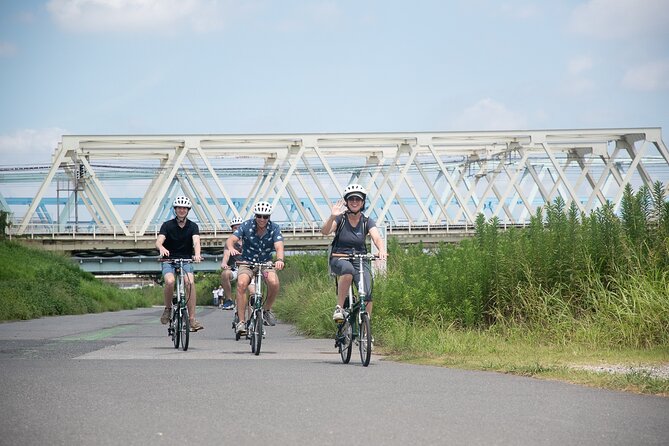
Tokyo is easier to understand from a bicycle seat. With guide Kazuma Naoi leading the way, you can move from the Imperial Palace to Tokyo Tower, then slip into quiet streets and local neighborhoods that are easy to miss on a train. The e-bike gives you extra power without turning the outing into hard exercise.
I like the private, flexible route, since you can request sights, skip places that do not interest you, and choose your pace. I also like the practical start at your hotel, especially if you are new to Tokyo and want to get your bearings fast. The main drawback is that three hours is short for a city this large, and the advertised stops are possibilities rather than a guaranteed checklist.
In This Review
- Key points to know before you book
- Why a bicycle works so well in Tokyo
- Starting at your hotel with Kazuma
- What you may see in three hours
- Tokyo Tower and Zojoji Temple
- Imperial Palace, Hibiya Park, and Kasumigaseki
- Yoyogi Park and Shibuya Crossing
- Ueno Park and Kanda Shrine
- Tsukishima Monja Street and Tsukuda
- Shioiri Park, Asakusa, and Kaminarimon Gate
- Tokyo Metropolitan Government Buildings
- The private format is the main advantage
- Safety, clothing, and riding comfort
- Is $145.35 per person a fair price?
- Who should book this ride?
- The bottom line: book it for a flexible city introduction
- FAQ
- Is hotel pickup and drop-off included?
- How long does the e-bike tour last?
- Will I visit every stop listed?
- Can I request specific Tokyo sights?
- What is included in the price?
- What should I wear and bring?
- What happens if the weather is poor or I need to cancel?
Key points to know before you book
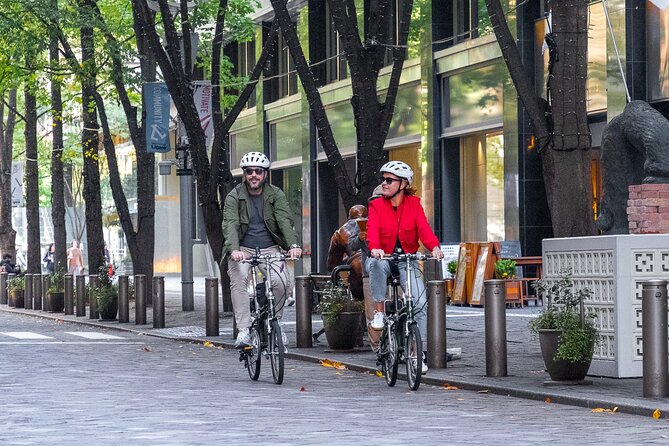
- Kazuma meets you at your hotel, brings the bikes, explains Japanese road rules, and handles the route.
- The route is customized, so you may see major landmarks, quiet backstreets, parks, shrines, and food neighborhoods in one ride.
- E-bike assistance makes hills and longer distances manageable, but you still pedal and must ride attentively.
- A private group means useful flexibility, including breaks, photo stops, and changes in sightseeing priorities.
- Tokyo’s busiest roads require care, and the tour bans smartphone use, wireless earphones, sandals, skirts, and loose flared trousers.
- The $145.35 per-person price buys more than a bicycle, since it includes hotel service, equipment, insurance, and an English-speaking local guide.
Why a bicycle works so well in Tokyo
Tokyo can make a short sightseeing day feel scattered. The city is enormous, train stations are often large and confusing, and a ride between two interesting areas may involve several transfers. On an e-bike, you see the transition between districts instead of disappearing underground.
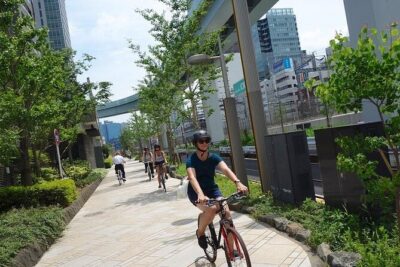
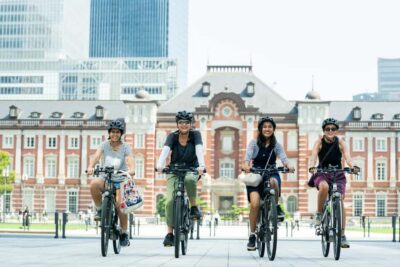
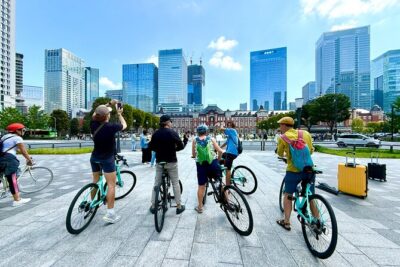
That transition is the real attraction. You might pedal beside the formal walls and moats around the Imperial Palace, then pass government offices, embassy-lined streets, a park, a temple, and a residential lane. The route itself becomes part of the sightseeing.
You do not simply pedal from one famous photo stop to another. Kazuma’s role is to choose streets that suit the group, explain what you are seeing, and keep an eye on road safety. His clear English and habit of explaining the plan at the start are useful on a first day in Tokyo.
The electric assistance matters. You still pedal, but the motor helps on inclines and makes a long three-hour ride less tiring. That is especially helpful in warm weather, when moving air can feel better than walking between distant sights. Still, do not mistake the tour for a passive vehicle ride. You need to control the bike, follow instructions, and stay alert around traffic and pedestrians.
A few more Tokyo bookings worth comparing
- Tokyo Guided Small-Group Biking Tour
★ 5.0 · 1,250 reviews - Tokyo Great Cycling Tour
★ 5.0 · 811 reviews - Tokyo Top Highlights 3h Guided E-bike Tour
★ 5.0 · 714 reviews
Starting at your hotel with Kazuma
Hotel pickup and drop-off simplify the outing. You do not need to find a bike shop in an unfamiliar district or work out how to reach a meeting point with a helmet and cycling clothes. Kazuma can meet you at the hotel, including one located away from the usual tourist center, according to the booking information.
The route depends heavily on where your hotel is. A starting point in western Tokyo may make Yoyogi Park, Shibuya, and the Tokyo Metropolitan Government Buildings more practical. A hotel farther east may point the ride toward Ueno, Asakusa, Kanda Shrine, Tsukishima, or Shioiri Park.
You can request preferred sights when booking. Starting or ending at a different time or place is possible, but extra charges may apply. Ask about this before paying, since the route and price can change with special arrangements.
At the beginning, you receive a bike, helmet, insurance, and a short explanation of road rules in Japan. This briefing is not a formality. Tokyo traffic can be calm on one street and busy on the next, so listen closely and stay behind your guide.
What you may see in three hours
The stops below are the possible building blocks of the ride. You will not visit all ten in a single three-hour outing. Your hotel location, requested sights, riding pace, weather, and time spent at stops determine the final route.
Tokyo Tower and Zojoji Temple
Tokyo Tower is one of the easiest landmarks to recognize, but the best part of seeing it by bike may be the approach. Kazuma can use familiar photo locations as well as less obvious viewing points, depending on the route.
A ride around this area may also include Zojoji Temple, a useful pairing because it places a modern city symbol beside a major Buddhist site. One particularly flexible outing included a visit to the Tokyo Tower Main Deck. That sort of change is possible because this is a private ride, though admission to paid attractions is not included.
Plan on a short photo and orientation stop rather than a full tower visit unless you specifically arrange more time. If Tokyo Tower is your top priority, say so at booking.
Same corner of Tokyo, a completely different plan:
- Mt Fuji and Hakone 1-Day Bus Tour Return by Bullet Train
★ 5.0 · 26,383 reviews - 1-Day Tokyo Bus Tour
★ 5.0 · 14,250 reviews - Tokyo: TOKYO SKYTREE® Admission ticket
★ 4.5 · 11,192 reviews - Tokyo: teamLab Planets TOKYO Digital Art Museum Entry Ticket
★ 4.6 · 9,779 reviews
Imperial Palace, Hibiya Park, and Kasumigaseki
The Imperial Palace area gives the tour a strong historical starting point. You can cycle along portions of the former moats and pause at well-known points while Kazuma explains how the area fits into Japan’s past.
The route may continue through Hibiya Park and Kasumigaseki, the government district. This section is valuable because you see Tokyo as a working capital, not only as a collection of attractions. The ministries, broad streets, and formal surroundings contrast with the small lanes found elsewhere.
The palace grounds are extensive, so do not expect to explore every section in ten minutes. The point is to gain a sense of the perimeter and the city’s structure while staying on the move.
Yoyogi Park and Shibuya Crossing
Yoyogi Park provides a welcome break from pavement and traffic. You can ride through or beside a large green space, enjoy the breeze, and see how Tokyo preserves open areas within a dense city.
Shibuya Crossing offers the opposite mood. The junction is famous for its waves of pedestrians and giant urban displays. Approaching it by bicycle lets you understand its scale from street level, but do not expect to cycle through the pedestrian scramble itself as though you were another walker. Your guide will decide where it is safe and sensible to ride, stop, or take photos.
If you want both places, allow for a quick visit to each. Shibuya can absorb as much time as you give it, and the three-hour limit means you may need to choose between a longer stop and more neighborhoods.
Ueno Park and Kanda Shrine
Ueno Park is one of Tokyo’s major public spaces and a useful east-side counterpoint to Yoyogi Park. A bicycle makes it easier to cover more of the park’s broad area while learning why it matters to the city.
Kanda Shrine offers a more focused cultural stop. Kazuma can explain the shrine’s religious role and everyday importance, giving you a look at how spiritual practice fits into modern Tokyo. The visit is free, but respectful behavior still matters. Keep your voice low, follow signs, and do not treat the shrine as a simple photo set.
These eastern stops work well for you if you have already seen the bright commercial side of Tokyo and want more parks, temples, and local context.
Tsukishima Monja Street and Tsukuda
Tsukishima is associated with monja, a Tokyo-style savory dish cooked on a hot griddle. The ride may include Monja Street and the nearby Tsukuda area, where the setting shifts toward older local streets and residential scenery.
This is one of the tour’s most useful food-focused sections, but lunch and snacks are not included. You can ask about a food stop, convenience-store break, coffee, or tea during the ride, yet plan to pay for anything you consume.
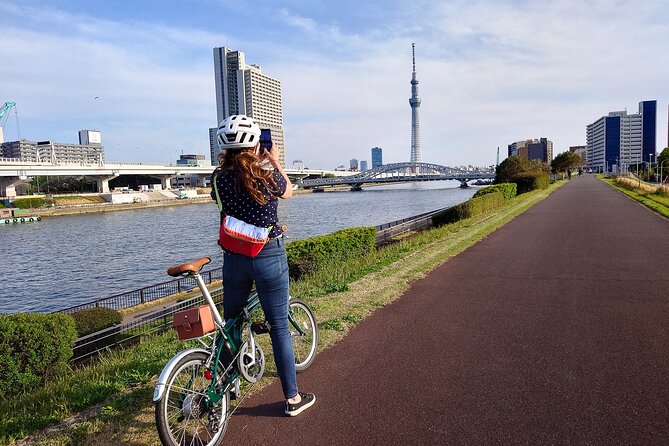
One outing included a stop at a Japanese sweets shop and a view toward Tokyo Skytree from Chuo Bridge. Those details show how the route can include small local discoveries rather than only headline sights. They are possibilities, not promises, so mention food and Skytree when you make your request.
Shioiri Park, Asakusa, and Kaminarimon Gate
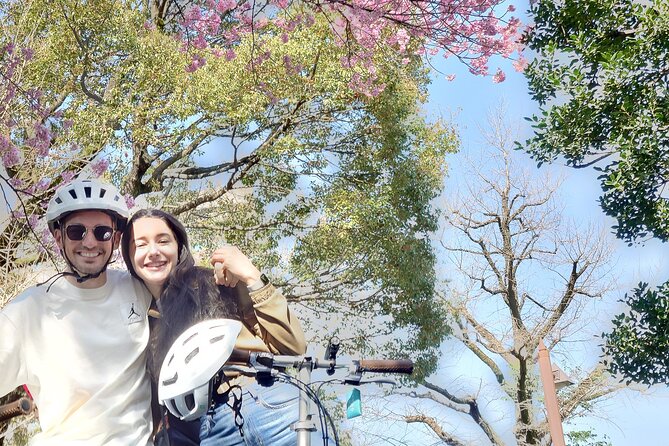
Shioiri Park is known for attractive cherry blossom views. In blossom season, it can be a pleasant choice for a slower ride and photos. Outside that period, the park may appeal more for its open views and quieter pace.
At the eastern end, Kaminarimon Gate marks the entrance to Senso-ji in Asakusa. The giant red lantern is one of Tokyo’s most recognizable photo subjects. A bicycle gets you close to the district, but crowded temple approaches may require you to dismount and walk.
Asakusa is worth more than a quick photograph if you have never seen it, yet three hours forces a choice. You may get a strong introduction to the gate and surrounding area, but a full visit to Senso-ji, nearby lanes, and shops belongs on another part of your schedule.
Tokyo Metropolitan Government Buildings
The twin-tower government buildings in Shinjuku provide a different view of the city. The best viewing point depends on the route, and you may see the buildings from outside rather than go up to an observation floor.
This stop pairs naturally with Yoyogi Park and Shibuya if your hotel is in western Tokyo. It is less practical to combine with every eastern stop in one short ride. Be realistic about geography. A private tour gives you choice, not the ability to erase Tokyo’s distances.
The private format is the main advantage
A fixed group tour has to keep everyone moving at one speed. Here, the group is only yours, so you can tell Kazuma what matters most. You might ask for architecture, local neighborhoods, temples, photo stops, food, or a broad first-day overview.
The flexibility also helps families. Parents can request a slower rhythm, a break at a convenience store, or a route with fewer demanding stretches. Teenagers may prefer Shibuya and Tokyo Tower, while adults may want the Imperial Palace, shrines, and older streets.
The guide can also take photos of your group and share them afterward. That is a practical touch when everyone wants to be in the picture.
The tradeoff is that a customized route requires some decisions. If you arrive without preferences, Kazuma can suggest options, but you should not expect every possible landmark. Send your priorities in advance and treat the tour as an introduction rather than a complete survey of Tokyo.
Safety, clothing, and riding comfort
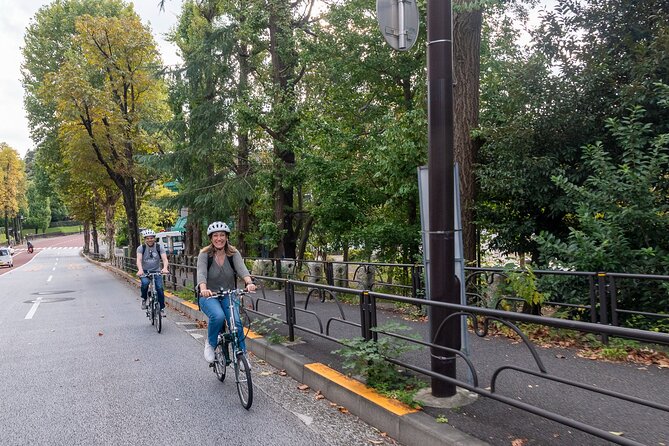
Safety receives strong attention throughout the experience. Kazuma explains basic Japanese road regulations, uses maintained e-bikes, and leads the group through the city. You must still ride responsibly and obey instructions.
The rules are clear:
- No smartphone use while cycling
- No wireless earphones
- No alcohol before or during the ride
- No smoking
- No sandals or flip-flops
- No skirts or high-heeled shoes
- No wide or flared trousers
The recommended height range is 145 to 185 centimeters, or about 4 feet 9 inches to 6 feet 1 inch. The weight limit is less than 100 kilograms, or 220 pounds. The ideal age is 10 and older, and most people who meet these guidelines can participate.
Wear secure shoes and clothes that will not catch in the bike. Bring water, since bottled water is not included. Tokyo heat can be serious, and a three-hour ride is more pleasant when you start hydrated.
The tour requires good weather. If poor weather cancels the experience, you are offered another date or a full refund. You can cancel for a full refund up to 24 hours before the start time, but changes or cancellations inside that window are not accepted.
Is $145.35 per person a fair price?
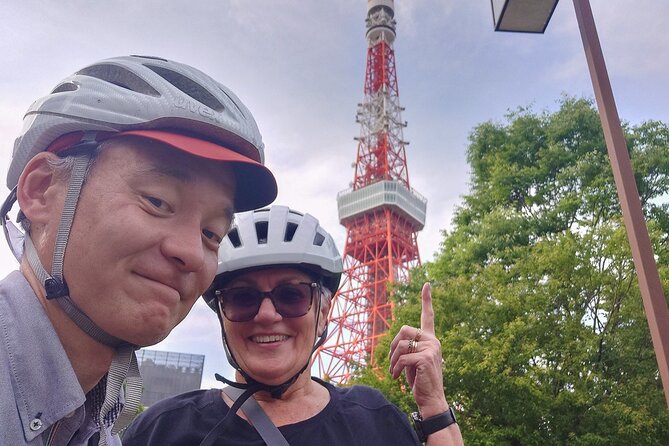
At $145.35 per person, this is not the cheapest way to rent a bicycle in Tokyo. It is also not simply a rental. The price covers the e-bike, helmet, insurance, hotel pickup and drop-off, an English-speaking guide, route planning, and help with road rules.
The value is strongest for a first day in Tokyo. You can cover several districts, note places you want to revisit, and receive local context while avoiding the stress of planning a complicated route. A couple or small family may find the private format worth the extra cost, especially with limited time.
The value is weaker if you already know Tokyo well, prefer slow independent sightseeing, or want to spend an hour inside one museum or temple. You are paying for movement and guidance, not extended admission time. Lunch, drinks, coffee, tea, snacks, and paid attractions cost extra.
Group discounts are offered, so check the final price for your party. The tour has had more than five bookings in the past month and a five-star rating from 117 reviews, with 100 percent recommending it. Those figures suggest steady interest and a very strong satisfaction record, but the best match still depends on your comfort with city cycling.
Who should book this ride?
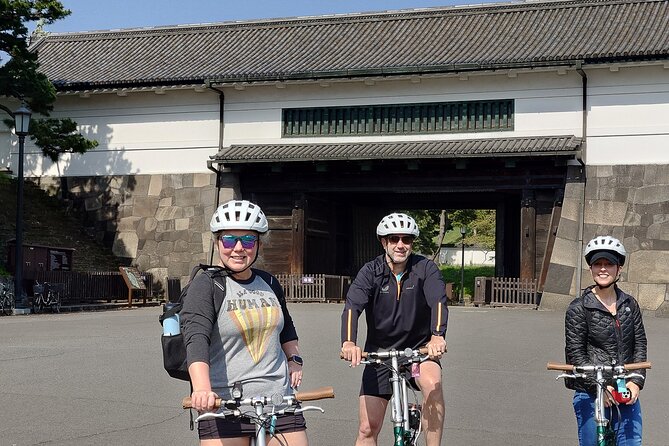
I would choose this tour for a first or second day in Tokyo, when you want a city overview without spending the morning studying train maps. It suits couples, families with teenagers, and small private groups that want to set the pace.
It is also a good fit if you enjoy the spaces between attractions. You will see ordinary streets, government districts, parks, residential areas, bridges, and convenience stores along with famous landmarks. That mix gives you a more useful sense of how Tokyo connects.
I would think twice if you dislike traffic, have limited cycling experience, cannot meet the clothing and size guidelines, or need a fully indoor plan. Heat, rain, and crowded areas can affect the ride. Three hours also means you must accept quick stops and a selective route.
The bottom line: book it for a flexible city introduction
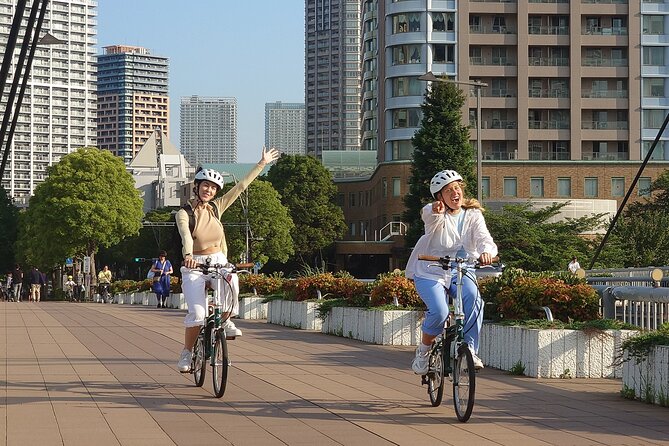
Book this private e-bike tour if you want to cover ground, ride with a local guide, and see Tokyo beyond the usual station-to-station routine. Kazuma’s hotel pickup, safety briefing, strong English, and willingness to adjust the route are the practical strengths.
Before booking, send a short wish list with your top three priorities. Ask for Tokyo Tower, the Imperial Palace, Shibuya, Asakusa, or a food district by name, and understand that the starting hotel determines what fits. If you want a relaxed, personal introduction to Tokyo and are comfortable on a bicycle, the price is reasonable for what is included.
FAQ
Is hotel pickup and drop-off included?
Yes. The tour starts and ends at your hotel, though changing the starting or ending place may result in an additional charge.
How long does the e-bike tour last?
The tour lasts approximately three hours.
Will I visit every stop listed?
No. The route is customized according to your starting and ending points, requests, pace, and available time. Each listed sight is subject to the route.
Can I request specific Tokyo sights?
Yes. You can request places you want to visit when booking. Route changes may result in additional charges.
What is included in the price?
The price includes use of an e-bike, a helmet, insurance, brief instructions about Japanese road regulations, and an in-person English-speaking guide.
What should I wear and bring?
Wear proper shoes and clothing suitable for cycling. Sandals, flip-flops, skirts, high heels, wide or flared trousers, wireless earphones, and smartphone use while cycling are not allowed. Bottled water and food are not included, so bring or purchase what you need.
What happens if the weather is poor or I need to cancel?
The experience requires good weather. If the operator cancels because of poor weather, you can choose another date or receive a full refund. You can cancel at least 24 hours before the start time for a full refund.
More 3-Hour Experiences in Tokyo
- 3h Tokyo E-Bike Tour: Hidden Gems, and Local Life with guide
★ 5.0 · 670 reviews - Tokyo: 3-Hour Bike or E-Bike City Highlights Tour
★ 4.8 · 435 reviews - Tokyo: 3-hour Guided E-Bike Tour of the City’s Hidden Gems
★ 4.8 · 251 reviews - 3-Hour Tokyo Pub Crawl Nightlife Welcome Guided Tour in Shibuya
★ 5.0 · 209 reviews
New on our Tokyo list
- From Tokyo: Mount Fuji & Hakone Full Day Private Tour★ 4.9 · 25 reviews
- Tokyo Spectacular View Day-Cruise in 90 Minutes★ 5.0 · 25 reviews
- Real Tokyo Runner Club : Daikoku Car Meet Night Tour with JDM Car★ 5.0 · 25 reviews
- 2.5 Hour-Guided Cycle Tour in the Central Tokyo★ 5.0 · 25 reviews
- Ramen Making from Scratch +Akihabara Tour –Cooking Class★ 5.0 · 25 reviews
- [Self-Drive] Tokyo & Daikoku Custom Car Driving Tour★ 4.9 · 25 reviews
- Tokyo: 2-Hour Night Bike Tour of the City’s Hidden Gems★ 4.9 · 25 reviews
- Samurai themed Entertainment show in Shinjuku★ 4.5 · 25 reviews
Cycling Tours, compared.
3h Tokyo E-Bike Tour: Hidden Gems, and Local Life with guide
Read our review →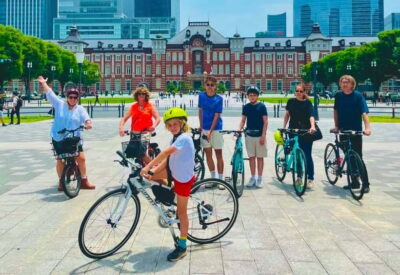
3-hour Guided E-Bike Tour of the City’s Hidden Gems
Read our review →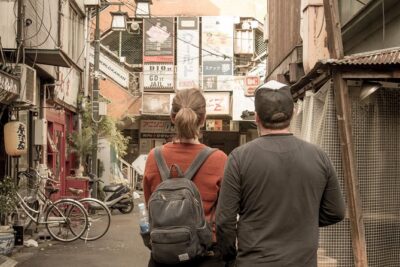
3-Hour Bike/E-Bike Tour of the City’s Highlights
Read our review →Browse the lists this tour appears in