Reviewed · GUIDED
8-hour Tokyo tour by qualified tour guide using public transport
Tokyo is easier to understand when someone shows you how its shrines, markets, gardens, and train lines fit together. This private eight-hour tour, led by a government-licensed guide such as Nobu Sato, links major sights by public transport and can be adjusted to match your interests.
I like the chance to learn the subway while you use it, not just ride in a car past the city. I also like the flexible schedule and private format. The trade-off is clear: this is a high-step-count day, with one guide reporting an average of about 25,000 steps and another visitor logging 26,000.
In This Review
- Key points at a glance
- A useful first day in Tokyo
- Meiji Jingu, Tokyo’s green opening
- Takeshita Street and youth culture
- Two hours in Asakusa
- Hama Rikyu Gardens beside Tokyo Bay
- Tokyo Tower from 150 meters
- Tsukiji Jogai Market for food culture
- The Imperial Palace’s Eastern Gyoen and Gaien
- Public transport is part of the lesson
- Walking, stamina, and the real pace
- Guide quality and the value of a private day
- How the flexible plan works for you
- Who should book this Tokyo tour?
- Should you book it?
- FAQ
- How long does the Tokyo tour last?
- Is the tour private?
- Can the start time and destinations be changed?
- Does the tour use public transportation?
- Is hotel pickup included?
- Are lunch, transport, and entrance fees included?
- How much walking should I expect?
Key points at a glance
- Private and adjustable: Only your group takes part, and the route and start time can be changed to suit your interests.
- Public transport practice: You learn how to move around Tokyo by train and subway, a useful skill for the rest of your stay.
- Major Tokyo contrasts: The route can take you from Meiji Shrine and Sensoji Temple to modern Tokyo views from Tokyo Tower.
- A full eight-hour day: The listed stops add up to a busy schedule, with Asakusa receiving the most time.
- Walking matters: Expect long walks, station connections, stairs, and a fast pace across several parts of the city.
- Extra costs are separate: Lunch, transport, Hama Rikyu Garden, and Tokyo Tower admission are not included.
A useful first day in Tokyo
I see this experience as a practical orientation day as much as a sightseeing tour. Tokyo can feel confusing at first because its districts are far apart, and its rail system has several operators and lines. Traveling with a guide lets you see major places while learning how to get between them.
The private format is a real advantage. You are not tied to a fixed group pace, and the guide can change the plan according to your interests. If shrines and gardens matter most to you, the day can lean that way. If you want pop culture, markets, and modern views, the route can be adjusted.
The schedule is ambitious. Meiji Jingu, Takeshita Street, Asakusa, Hama Rikyu Gardens, Tokyo Tower, Tsukiji Jogai Market, and the Imperial Palace are a lot to cover in eight hours. The time listed for each stop leaves little room for lingering, meals, or delays, so you should expect an efficient day rather than a slow, relaxed stroll.
A few more Tokyo bookings worth comparing
- Mt Fuji and Hakone 1-Day Bus Tour Return by Bullet Train
★ 5.0 · 26,383 reviews - 1-Day Tokyo Bus Tour
★ 5.0 · 14,250 reviews - Tokyo: TOKYO SKYTREE® Admission ticket
★ 4.5 · 11,192 reviews
Meiji Jingu, Tokyo’s green opening
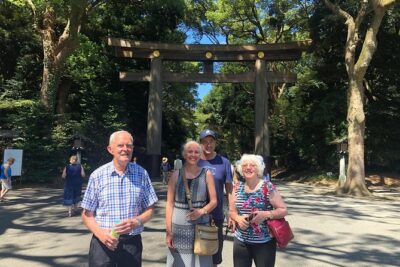
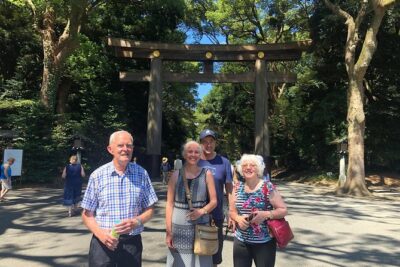
The day may begin at Meiji Jingu, one of Tokyo’s best-known Shinto shrines. It is dedicated to the spirits of Emperor Meiji and Empress Shoken, and it is especially famous for the huge New Year visits during the first three days of January.
The shrine gives you an early look at Japanese religious customs and the contrast between central Tokyo and a wooded shrine setting. The admission charge is free, which keeps the first stop simple. Your guide can explain the role of the shrine and help you understand what you are seeing rather than treating it as a quick photo stop.
You have about an hour here. That is enough for a meaningful visit, but not necessarily for a slow walk through every path. If you want extra time for quiet reflection or photographs, tell the guide early so the rest of the route can be adjusted.
Takeshita Street and youth culture
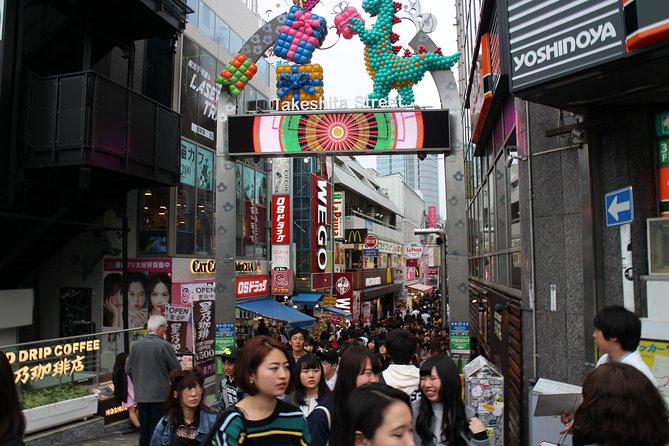
From the calm of Meiji Jingu, the tour moves to Takeshita Street. This popular shopping street is associated with young people, tourists, and Japanese pop culture.
The pairing works well. In a short distance, you move from a major shrine to a commercial street filled with fashion, shops, and snack stops. It is a useful reminder that Tokyo is not one single kind of city. Tradition and contemporary youth culture sit close together.
The scheduled hour gives you time to walk the street and get a feel for its character. It is not a shopping expedition with unlimited browsing, so you may need to choose between shopping, people-watching, and a quick snack. The area can also feel crowded, and the guide’s role is most useful here when you want help with language or context.
Two hours in Asakusa
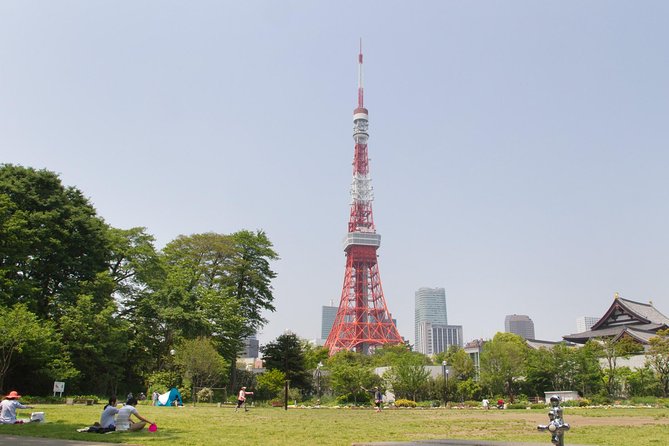
Asakusa receives the longest stop, and that makes sense. This is one of Tokyo’s essential sightseeing districts, centered on Sensoji Temple, which was built in 628 and is described as the oldest temple in Tokyo.
The approach to the temple runs along Nakamise-dori, one of Japan’s oldest shopping streets. The street leads you through shops selling souvenirs and traditional goods before you reach the temple precinct. You get both a major religious site and a historic shopping route in one visit.
Two hours gives you more breathing room than the other stops. You can look around Sensoji, walk Nakamise-dori, and ask questions about the temple and the customs connected with it. It is still worth keeping an eye on the clock, since the day includes several more districts.
I especially like Asakusa for first-time visitors because it gives the day a strong sense of place. Meiji Jingu introduces Shinto, while Sensoji offers a different religious setting and a more traditional street atmosphere. The guide can help explain the difference without turning the visit into a lecture.
Same corner of Tokyo, a completely different plan:
- Tokyo: teamLab Planets TOKYO Digital Art Museum Entry Ticket
★ 4.6 · 9,779 reviews - Mt Fuji & Hakone Cruise, Drum Show Bullet Train 1 Day from Tokyo
★ 4.0 · 7,413 reviews - Tokyo: Sumo Show Experience with Chicken Hot Pot and a Photo
★ 4.8 · 6,678 reviews - Tokyo: Shinjuku Food Tour (13 Dishes at 4 Local Eateries)
★ 5.0 · 6,603 reviews
Hama Rikyu Gardens beside Tokyo Bay
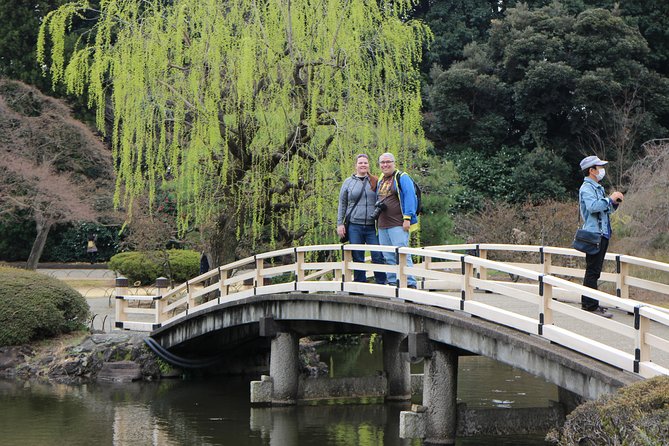
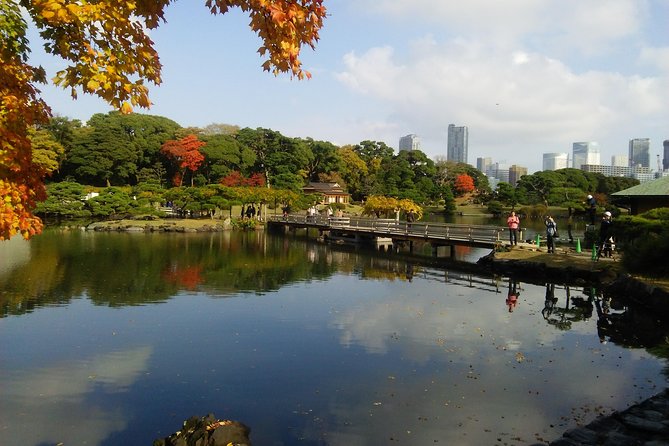
Hama Rikyu is a circuit-style Japanese garden on Tokyo Bay. Its ponds, bridges, trees, and carefully arranged views present an older idea of beauty, while the surrounding city supplies a sharp modern contrast.
You can see elements associated with a Buddhist vision of paradise, along with views toward newer Tokyo structures such as Rainbow Bridge and tall buildings. This mix is one of the most appealing parts of the route. You are not looking at a garden in isolation. You are seeing traditional design framed by a modern city.
The garden admission fee is not included. You should also remember that the stop is scheduled for about an hour, so this is a sample of Hama Rikyu rather than a long garden visit. If gardens are a main reason for booking, ask about giving this stop more time and trimming another part of the route.
Tokyo Tower from 150 meters
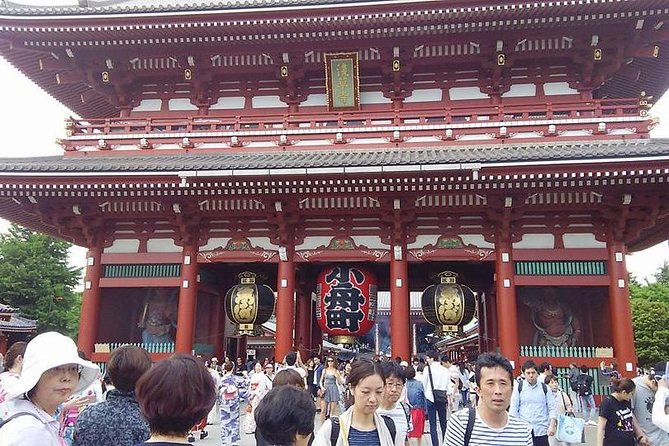
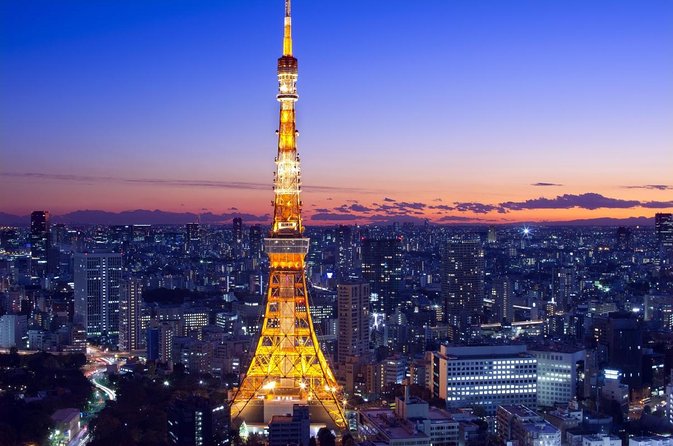
Tokyo Tower provides the day’s elevated view, with the tour taking you to the 150-meter level. It remains popular even after Tokyo Skytree changed the city’s skyline options.
The appeal here is straightforward: after spending much of the day at street level, you get a broad view of Tokyo. It also gives you a chance to connect the neighborhoods you have visited with the larger city around them.
Admission is not included, so budget for it in addition to the tour price. The visit is listed as one hour. That may include entry, viewing time, and moving on, so you should not expect an extended observatory session unless the schedule is changed.
Tokyo Tower is a sensible final major sight because it gives the day a clear visual finish. You can look back across the city after seeing its religious sites, shopping streets, market district, and garden.
Tsukiji Jogai Market for food culture
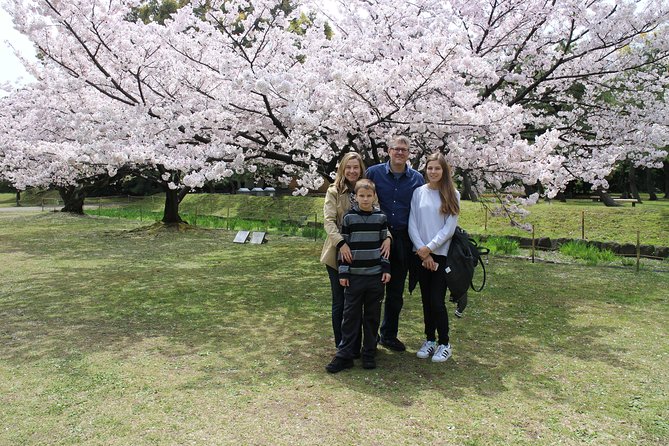
The Tsukiji Jogai Market stop focuses on the outside market area. It is listed as a one-hour visit with no admission fee.
This is a good place to add a food and shopping angle to a day otherwise weighted toward temples, shrines, gardens, and city views. You can walk through the market area, see its shops, and ask the guide about what you are looking at. Lunch itself is not included, though the guide can help you choose a place to eat, and one visitor specifically noted finding a very good lunch during the day.
Keep the timing in mind. One hour is enough to sample the area, but it may not allow for a long meal and a careful market browse. Since lunch is an extra cost for both you and the guide, clarify the plan at the start of the day.
The Imperial Palace’s Eastern Gyoen and Gaien
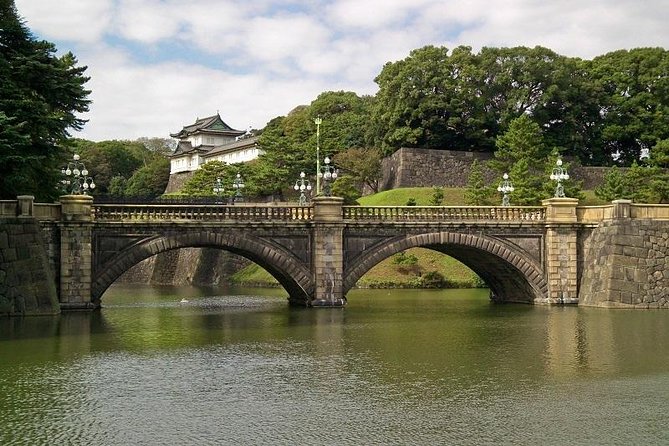
The Imperial Palace portion includes the Eastern Gyoen and Gaien areas. The stop is free, and it adds a major piece of Tokyo’s political and historical identity to the route.
This part of the city offers a different setting from Asakusa and Meiji Jingu. You move through palace grounds and surrounding open areas rather than a temple approach or a narrow shopping street. It is a useful stop if you want a wider view of Tokyo’s past and present.
The route description allows an hour here, but the exact experience depends on how the customized day is arranged. Since the tour has seven named stops, your guide may need to shorten or reorder places to keep the day manageable. Discuss your priorities before setting out.
Public transport is part of the lesson
This is not a sightseeing tour where transportation happens behind closed doors. You move around by public transport, with your guide showing you how Tokyo’s system works.
That matters because the city is much easier to explore after you have learned the basics in real conditions. One of the strongest practical benefits is help with navigation and translation. You also get a chance to become more comfortable with the subway rather than relying on taxis for every outing.
Transport costs are extra for you and the guide. The exact amount is not stated, so allow room in your budget for rail fares across a full day. The tour provider can arrange a private car separately for an additional charge, but that changes the nature of the experience. The public transport option is better if you want to learn the city’s everyday travel system.
The private arrangement also helps with pace. If you need a shorter walking day, say so. The guide has specifically indicated that shorter courses are available, while the standard route can be demanding.
Walking, stamina, and the real pace
You should book this only if you are comfortable walking for much of the day. The most useful warning is the step count: around 25,000 steps is given as an average for guides on this tour, and one full day reached 26,000 steps.
That number includes walking through shrine grounds, temple precincts, shopping streets, gardens, markets, and station areas. It also likely includes the movement needed to connect one neighborhood to the next. Even if you are used to city walking, eight hours at this pace can be tiring.
Wear comfortable shoes and think carefully about your priorities. A private tour gives you the chance to cut a stop or reduce the pace. It does not remove the basic walking involved in Tokyo’s rail stations and large sightseeing areas.
The tour is suitable for most participants, but that broad wording should not replace an honest self-check. If your group includes someone who cannot manage a long walking day, ask for a shorter route before booking.
Guide quality and the value of a private day
The guide fee and hotel pickup are included. Lunch, transport, and entrance fees are not.
At $225.36 per person, the value depends heavily on group size and your need for help. For a private group, the price buys an eight-hour day with a licensed guide, route changes, hotel pickup, translation help, and practical instruction in using public transport. For a solo visitor or couple, that can be a significant expense. For a larger private group, the per-person cost may feel more reasonable.
The guide is the main reason to choose this experience over arranging the same stops alone. Nobu Sato is identified as one of the guides, and the guide feedback points to clear English, flexibility, and help with the subway. The guide can also explain Japanese history, religion, and current economic conditions as you move through the city.
That kind of context is hard to build from a map alone. You can reach Meiji Jingu, Asakusa, and Tokyo Tower independently, but you will spend time planning routes, checking directions, and handling language questions. The tour’s value lies in combining sightseeing with orientation.
How the flexible plan works for you
The start time is flexible, and the places you visit can change according to your interests. That is important because the full route is too busy for every person.
You might prefer to focus on cultural sites by giving more time to Meiji Jingu, Asakusa, Hama Rikyu, and the Imperial Palace. Another group might care more about Tokyo’s youth culture, the Tsukiji market, and the city view from Tokyo Tower.
Before the day begins, decide what matters most. I would place your top two or three stops first, then treat the rest as optional. That gives the guide a clear target and protects you from rushing through every location simply because it appears on the route.
Hotel pickup is offered, which removes one early navigation problem. The tour is private, so only your group participates. Confirmation is provided at booking, and the meeting area is near public transportation.
Who should book this Tokyo tour?
I would recommend it most strongly to first-time visitors with a single full day in Tokyo, especially those arriving by cruise ship or staying only briefly. The route covers several major districts and helps you understand how to move between them.
It also suits families or couples who want a private plan rather than a fixed group schedule. The ability to change the course is useful when your interests do not match a standard sightseeing route.
You may want a different option if you prefer slow meals, long museum visits, or unhurried photography. The tour’s strength is breadth, practical guidance, and efficient movement. Its weakness is the amount of ground covered and the extra costs for transport, lunch, and admissions.
The weather policy is worth noting. The experience requires good weather, and if poor conditions cause cancellation, you are offered another date or a full refund. You can cancel for a full refund up to 24 hours before the start time. Cancellations or changes made later are not accepted for a refund.
Should you book it?
Book this tour if you want a private introduction to Tokyo that combines famous sights with real public transport practice. Nobu Sato and the other guides can help you navigate, translate, explain customs, and adjust the route to your interests.
Do not book it expecting a leisurely day. The route is long, the step count can reach 25,000 or more, and several costs sit outside the tour price.
For a first day in Tokyo, the mix is strong: Meiji Jingu for tradition, Takeshita Street for pop culture, Asakusa for temple life, Hama Rikyu for garden design, Tsukiji for food culture, the Imperial Palace for national history, and Tokyo Tower for the view. Just set your priorities, wear good shoes, and tell the guide if the full route is too much.
FAQ
How long does the Tokyo tour last?
The tour lasts approximately eight hours.
Is the tour private?
Yes. Only your group participates in the activity.
Can the start time and destinations be changed?
Yes. The start time is flexible, and the places visited can be changed according to your interests.
Does the tour use public transportation?
Yes. The tour uses public transportation to connect the sights. A private car can be arranged separately for an additional charge.
Is hotel pickup included?
Yes. Hotel pickup is included.
Are lunch, transport, and entrance fees included?
No. Lunch, transportation expenses, Hama Rikyu Garden admission, Tokyo Tower admission, and other entrance fees are not included.
How much walking should I expect?
You should expect a demanding walking day. The guide’s stated average is about 25,000 steps, and one full tour reached 26,000 steps. Shorter courses are available if arranged with the guide.
New on our Tokyo list
- Sumi-e Experience in a relaxing green tea shop in Tokyo★ 5.0 · 3 reviews
- Tokyo : Kamikaze Street Drift Ride★ 5.0 · 3 reviews
- Private Zen Meditation in English in Shinjuku, Tokyo★ 5.0 · 3 reviews
- Onsen Spa in Tokyo and Asakusa Bar Hopping with Local Guide★ 5.0 · 3 reviews
- Easy for everyone! Now you can play handmade mini shamisen and show off to everyone! Musical instruments, sweets and live music★ 5.0 · 3 reviews
- Tokyo: Private Tsukiji Street Food & Sake with Local Guide★ 5.0 · 3 reviews
- Mt Fuji Exploration Tour with Free Japanese Kusa Mochi from Tokyo★ 4.5 · 3 reviews
- Tokyo Tsukiji Fish Market Walking and Exploring Hidden Gems Tour★ 5.0 · 3 reviews
Guided, compared.
Tokyo 6hr Private Tour with Government-Licensed Guide
Read our review →
Shinjuku Local Bar and Izakaya Guided Walking Tour
Read our review →
Private City Highlights Tour with Local Guide
Read our review →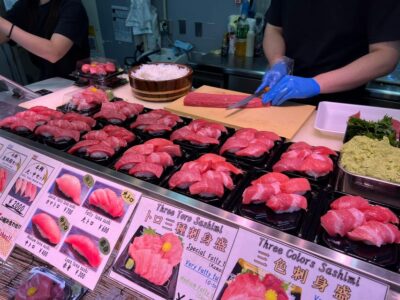
Tokyo 4hr Private Tour with Government-Licensed Guide
Read our review →
Samurai Ninja Museum Guided tour and Experience
Read our review →