
Reviewed · JAPANESE CALLIGRAPHY CLASSES
Asakusa:Japanese Calligraphy & Make your original folding fan!
The best part of this Asakusa activity is that you do not simply watch a cultural demonstration. You learn the basics of Japanese calligraphy, practice on paper, then put your chosen word or name on a folding fan you can take home. I especially like the short introduction to kanji and the generous practice time before you face the final fan. The main point to consider is the short one-hour format, which leaves little time for anything beyond the lesson and fan.
I also like that this is a private activity for your group, rather than a large class where you wait for a turn. Instructor Mana has been praised for her patience, friendly manner, and English skills. You can also ask for your name to be written in Japanese and hear what it means. The finished fan should be treated as a personal keepsake, not a flawless work of art, though the practice sheets make it easier to produce something you will be proud to carry home.
In This Review
- Key points at a glance
- A hands-on look at Japanese calligraphy
- Practicing the brush before the final fan
- Choosing the word that goes on your fan
- Creating the original folding fan
- How Senso-ji and Asakusa fit the experience
- Who will get the most from this class
- Is $43 a fair price?
- Small details that make the class better
- Should you book the Asakusa calligraphy and fan class?
- FAQ
- Where does the calligraphy and folding fan activity take place?
- How long does the experience last?
- Where does the activity end?
- Is this a private activity?
- Do I need previous calligraphy experience?
- What can I write on the folding fan?
- Is there an option to put the design on clothing?
- Can I cancel for a full refund?
Key points at a glance
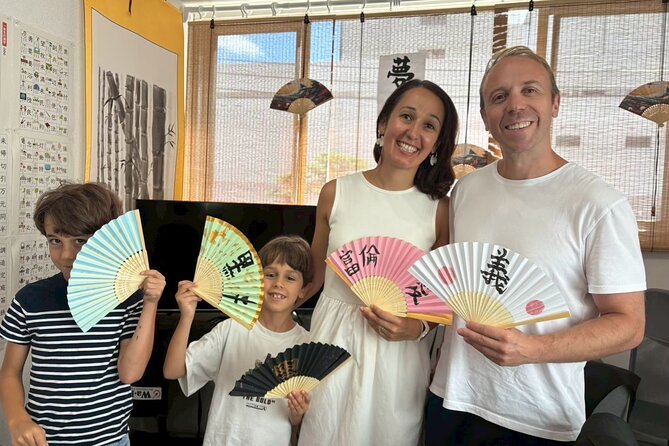
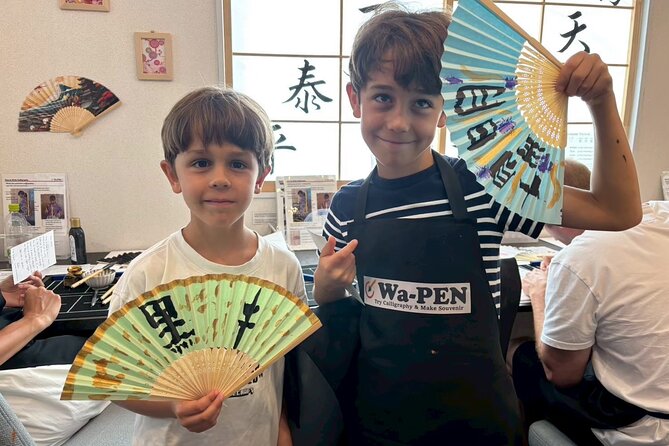
- Make a real folding-fan souvenir: Your calligraphy is transferred onto an original fan you create during the session.
- Learn before you write: A short video explains Japanese language and calligraphy, followed by instruction in posture, brush handling, ink, and the eight basic strokes.
- Choose your own design: Write a favorite kanji, a Japanese word, or your name in Japanese.
- Private one-hour format: Only your group takes part, making this a good fit for couples, families, or friends.
- Useful Asakusa location: The studio is near public transportation and close to Senso-ji and the wider Asakusa area.
- Optional clothing design: You may be able to print your characters on clothes as an extra option.
A hands-on look at Japanese calligraphy
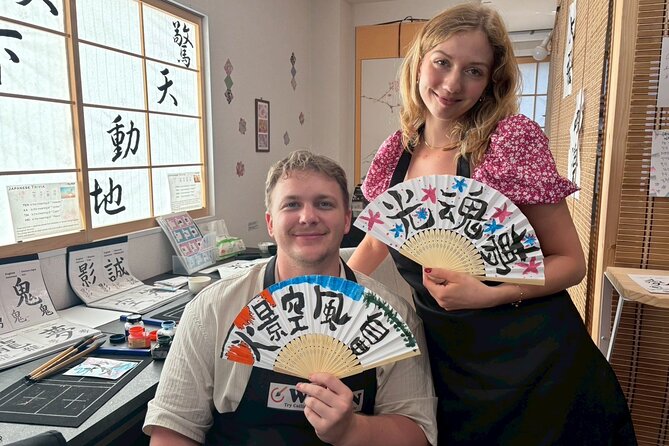
Calligraphy can look intimidating when you first see the precise black strokes on a white page. This experience sensibly starts with the foundations. You watch a short video about the Japanese language and the development of calligraphy, then move into the practical work of holding the brush, sitting or standing with proper posture, and controlling the ink.
That order matters. You get some cultural context before being asked to copy a character, so the activity feels like more than a craft project. You also learn why brush angle, pressure, and stroke order affect the final shape.
The lesson covers the basic eight strokes. These are useful building blocks for beginners because they let you focus on movement instead of trying to memorize a full writing system. You do not need to arrive knowing kanji. The instructor helps you select and write a Japanese word or your name.
More calligraphy tables:
- Tokyo: Calligraphy on Kanji Fan & Scroll with Drink
★ 5.0 · 210 reviews - Let’s experience calligraphy in YANAKA, Taito-ku, TOKYO !!
★ 5.0 · 127 reviews - Tokyo: Calligraphy Workshop & Original T-Shirt Creation
★ 4.9 · 105 reviews
Practicing the brush before the final fan
The practice stage is where the activity earns much of its value. You receive sheets on which to repeat different characters and test your brush control. I would use this time freely rather than rushing toward the folding fan. Calligraphy rewards steady movement, and the first attempt rarely looks like the final one.
You also learn how the ink is prepared. One detailed account of the session describes instruction on creating the ink, holding the brush, and performing different strokes. Those small steps give you a better sense of the work behind Japanese calligraphy, even in a short class.
The staff support you as you practice, which is useful if your first lines wobble or your character looks uneven. Mana has been singled out for being patient, friendly, and clear in English. That matters here because a beginner needs quick corrections while the brush is still in hand, not a long explanation after the mark is already on the page.
The tone appears calm rather than competitive. You can take your time with the practice sheets, and the activity has been described as relaxing. If you want a fast-moving attraction with lots of sightseeing, this is not that. If you like quiet, focused activities, the brushwork provides a welcome change from Tokyo’s busy streets.
Choosing the word that goes on your fan
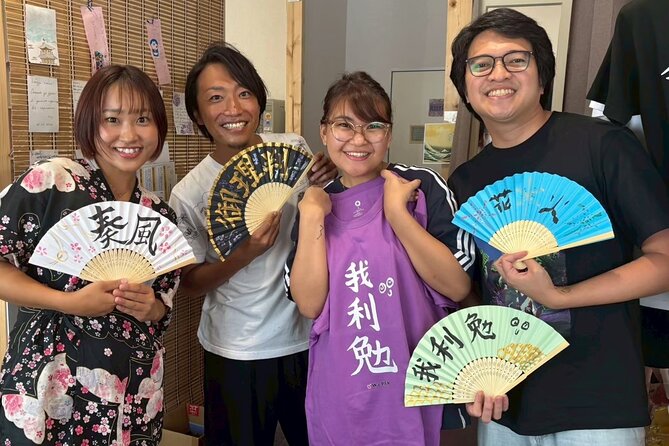
You choose the character, word, or name for your design. You might select a favorite kanji, ask for your name in Japanese, or use a word with personal meaning. The instructor can write names in Japanese and explain their meaning, which adds a personal touch to the finished souvenir.
Take care with this choice. A fan gives you limited space, so a simple character or short word is likely to work better than a long phrase. The supplied information does not specify a fixed menu of words, so you should ask the instructor what will fit best before making your final choice.
This is also the point where the cultural lesson becomes personal. Instead of buying a mass-produced fan from a shop, you create one linked to your own visit. The result may have small imperfections, but that is part of its appeal. It records your first attempt at the art rather than pretending you are a trained calligrapher.
Creating the original folding fan
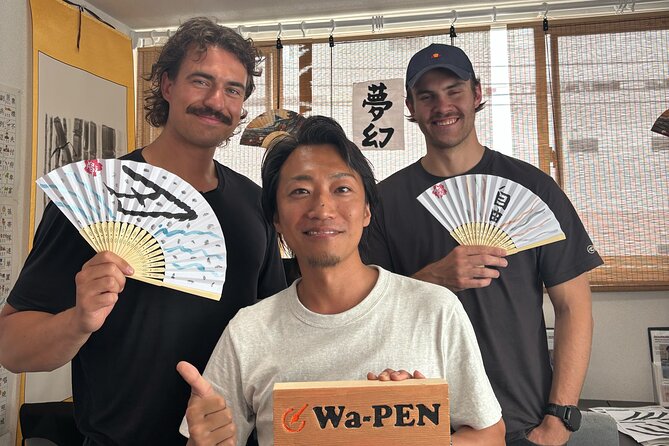
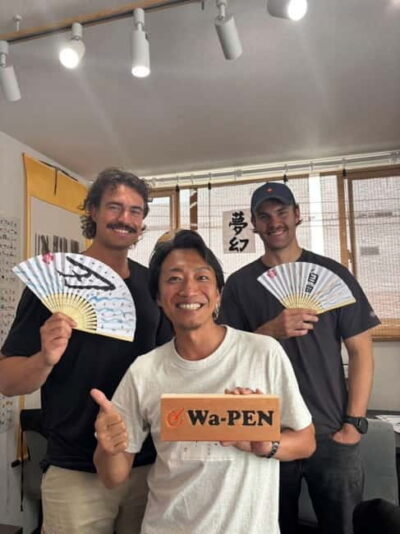
After practice, you write your chosen design onto the folding fan. This is the main payoff of the session, and it gives the class a clear purpose. You are not practicing characters on disposable paper only to leave them behind. You take the completed fan with you as a physical reminder of your time in Japan.
The fan is a practical souvenir in another way: it is light and easy to pack. That makes it more convenient than a large craft item or fragile decorative piece. You will still want to protect it in your luggage, but it should be a manageable keepsake for the journey home.
Your final design will depend on how much care you put into the practice stage. Do not expect a perfect professional piece after one hour. The appeal is the chance to make something yourself with guidance from an instructor who can help you avoid the most common beginner mistakes.
There is also an option to print the characters you create on clothing. The available information does not give the additional price or the exact clothing choices, so ask about that option before committing. For many people, the fan is enough. If you want a wearable reminder of the trip, the clothing add-on may be worth considering.
More Asakusa visits:
- Tokyo: Japanese Dance Cabaret Theater Asakusa-Kaguwa Ticket
★ 4.8 · 2,270 reviews - Tokyo: Meiji Shrine, Asakusa, Skytree Bus Tour and Cruise
★ 4.7 · 1,986 reviews - Tokyo: Roll and Authentic Sushi Making Class in Asakusa
★ 4.9 · 1,957 reviews - Tokyo: Asakusa Walking Tour with Sensoji Temple Visit
★ 4.8 · 1,583 reviews
How Senso-ji and Asakusa fit the experience
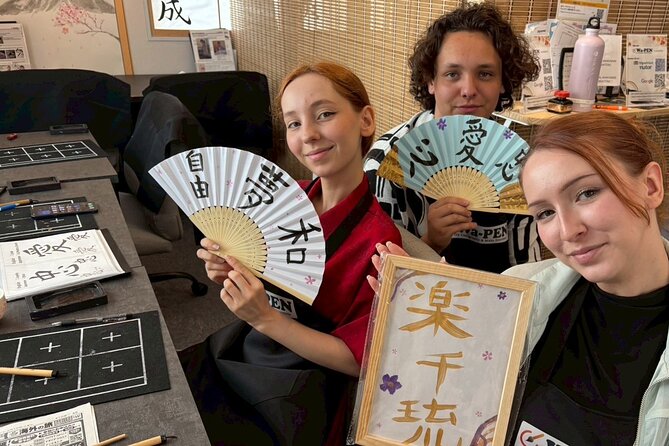
The itinerary lists Senso-ji Temple and Asakusa, but this is primarily a studio activity rather than a temple tour. You should think of Senso-ji and Asakusa as the surrounding area and cultural setting, not as a guided sightseeing program with a long list of temple stops.
Senso-ji is one of Asakusa’s best-known places, so scheduling this class around a visit there makes practical sense. You can see the temple and explore the neighborhood before or after your calligraphy lesson. The activity itself begins and ends at the Wa-PEN Calligraphy Attractions and Make Design Clothes Japan studio.
The address is 3F, San-Chome Building, 3-27-2 Nishiasakusa, Taito City, Tokyo 111-0035. Since the meeting point is on the third floor, check the building details carefully and allow enough time to find the entrance. The studio is near public transportation, which helps if you are fitting the class into a wider Asakusa plan.
Because the session lasts about an hour, it can fit into a morning or afternoon without taking over your day. The short duration is convenient, but it also means you should not expect a full historical tour of Japanese writing or a lengthy lesson in temple culture.
Who will get the most from this class
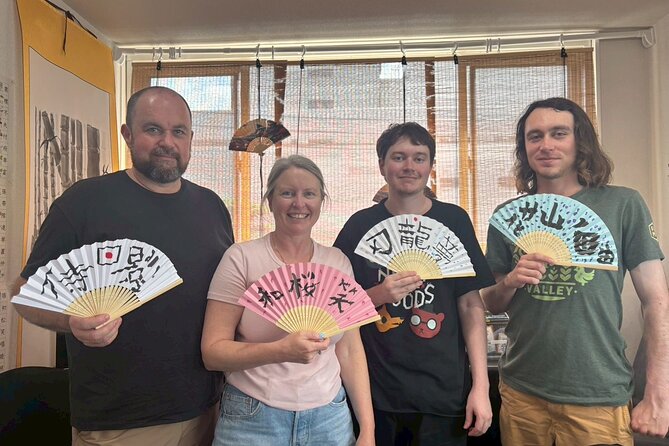
I would recommend this experience to anyone who wants a souvenir with a personal story. Couples can make matching or complementary fans, families can choose words connected to each person, and friends can compare their finished designs without needing any previous art experience.
It also suits people who prefer doing something rather than only looking. You handle the brush, make the ink, practice the strokes, and complete the final design. That active role makes the class more memorable than simply purchasing calligraphy from a shop.
The activity can work well for first-time visitors who are curious about Japanese writing but do not know where to begin. The video and basic-stroke lesson provide an easy entry point. It is also a reasonable choice for return visitors who have already seen Asakusa’s major sights and want a quieter cultural activity.
Children and adults may both be able to take part, since the additional information says most people can participate. However, no specific minimum age or child program is provided. If you are booking for young children, confirm that the format suits them before paying.
This is less suitable if you want a long class, advanced instruction, or a formal qualification. The session is built around an introduction, practice, and a finished fan. It gives you a taste of calligraphy, not a complete course.
Is $43 a fair price?
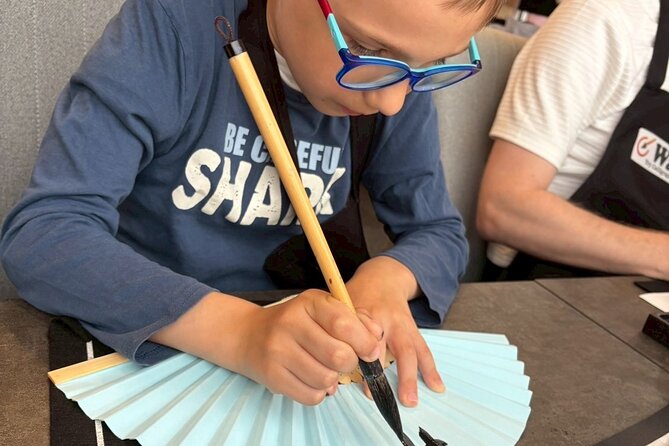
At $43 per person, the value depends on what you want from a Tokyo activity. You are paying for a private, guided cultural lesson, practice materials, help with your chosen design, and an original folding fan. That is a stronger proposition than paying only for a short demonstration because you leave with something you made yourself.
The one-hour duration keeps the total cost from becoming a major time commitment. You can combine it with Senso-ji, Asakusa shopping, or a meal nearby. If you measure value by hours of entertainment, the price may seem high for a single hour. If you value personal instruction and a portable souvenir, it becomes easier to justify.
The private format is important. Only your group participates, so you are not sharing the lesson with a room full of strangers. That can make the instruction feel more personal and lets you choose a design suited to your group.
The activity is commonly reserved about 17 days ahead, so it is sensible to book before your Asakusa day fills up. Free cancellation is available if you cancel at least 24 hours before the local start time. Changes or cancellations inside that window are not accepted for a refund.
Small details that make the class better
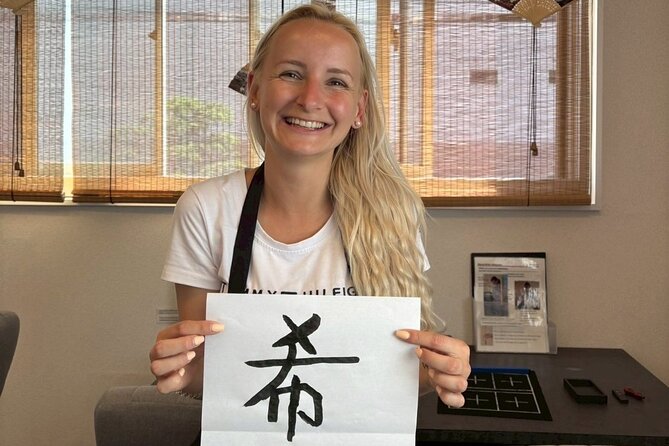
Bring a little patience. Your first brush strokes may not behave as expected, and the best part of the class is learning how to improve them. Use the practice sheets to test the character several times before moving to the fan.
If you want your name in Japanese, have it ready as a starting point, but let the instructor guide the final form. Mana has written names for participants and explained their meanings, so this can become part of the lesson rather than a simple translation request.
A small serving of green tea has also been offered during the experience. It is a pleasant touch, though it should not be the reason you book. The central experience is the calligraphy lesson and the handmade fan.
You receive a mobile ticket, and confirmation is provided when you book. Keep the meeting address available on your phone, especially because the studio is upstairs in the San-Chome Building.
Should you book the Asakusa calligraphy and fan class?
Book it if you want a calm, personal activity that teaches you something and gives you a useful souvenir. The strongest reasons are the private format, patient instruction, practice time, and the chance to write a word or name that means something to you.
Skip it if you are looking for a full afternoon tour, an advanced art workshop, or an activity packed with sightseeing. The class is short and focused. Its value comes from the hands-on work, not from the number of places visited.
For most people planning time in Asakusa, I think this is a good add-on to Senso-ji and the surrounding neighborhood. You get a small lesson in Japanese writing, a quiet break from the city, and a fan that carries your own mark. That is a fair exchange for an hour and $43, especially if ordinary souvenirs do not interest you.
FAQ
Where does the calligraphy and folding fan activity take place?
The activity takes place at Wa-PEN Calligraphy Attractions and Make Design Clothes Japan, 3F, San-Chome Building, 3-27-2 Nishiasakusa, Taito City, Tokyo 111-0035.
How long does the experience last?
The activity lasts approximately one hour.
Where does the activity end?
It ends back at the meeting point.
Is this a private activity?
Yes. Only your group participates in the activity.
Do I need previous calligraphy experience?
No previous experience is stated as a requirement. The session teaches brush handling, posture, writing style, ink preparation, and the eight basic strokes before you create your fan.
What can I write on the folding fan?
You can choose a Japanese word, a favorite kanji, or your name in Japanese. The instructor can help with names and explain their meaning.
Is there an option to put the design on clothing?
Yes. The characters you write can also be printed on clothes as an optional extra.
Can I cancel for a full refund?
Yes, if you cancel at least 24 hours before the experience start time. Cancellations or changes made less than 24 hours before the start time are not refunded or accepted.
New on our Tokyo list
- Sumi-e Experience in a relaxing green tea shop in Tokyo★ 5.0 · 3 reviews
- Tokyo : Kamikaze Street Drift Ride★ 5.0 · 3 reviews
- Private Zen Meditation in English in Shinjuku, Tokyo★ 5.0 · 3 reviews
- Easy for everyone! Now you can play handmade mini shamisen and show off to everyone! Musical instruments, sweets and live music★ 5.0 · 3 reviews
- Onsen Spa in Tokyo and Asakusa Bar Hopping with Local Guide★ 5.0 · 3 reviews
- Tokyo: Private Tsukiji Street Food & Sake with Local Guide★ 5.0 · 3 reviews
- Mt Fuji Exploration Tour with Free Japanese Kusa Mochi from Tokyo★ 4.5 · 3 reviews
- Tokyo Tsukiji Fish Market Walking and Exploring Hidden Gems Tour★ 5.0 · 3 reviews
Japanese Calligraphy Classes, compared.
Let’s experience calligraphy in YANAKA, Taito-ku, TOKYO !!
Read our review →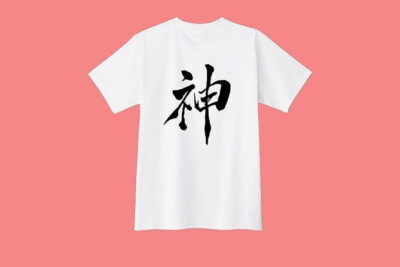
Calligraphy Workshop & Original T-Shirt Creation
Read our review →
Calligraphy Workshop & Original T-Shirt Creation
Read our review →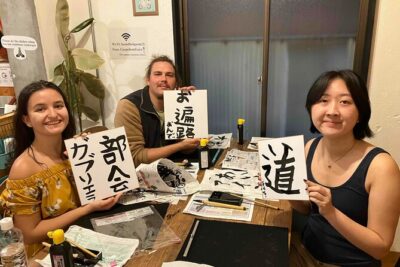
Calligraphy &Make your original folding fan in Asakusa
Read our review →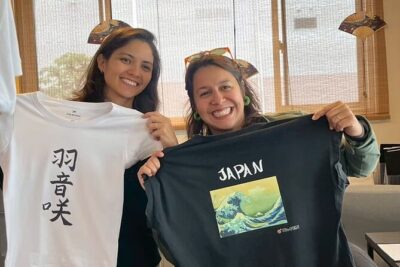
Tokyo Asakusa:Calligraphy & Make T-shirt Activity
Read our review →Browse the lists this tour appears in