Reviewed · GUIDED
Discover the hidden gems of Tokyo:Private Tour with a Local Guide
Tokyo reveals itself best in its older eastern districts, where a single walk can move from incense at Senso-ji to knife shops, shrine courtyards, sushi counters, or the neon world of Akihabara. This private, customizable tour lets you choose three stops from a long menu, with guide Kazuo Hirose among the guides who may lead the day. I like the chance to shape the route around your interests, and I like that the conversation can cover customs, food, shopping, and ordinary life rather than only famous sights.
The main trade-off is that the advertised price covers guiding and walking, not lunch, transport, shopping, or paid entries. The meeting point is fixed at Kaminarimon, and the tour may last anywhere from two hours to a full day, so you should settle your three choices and expected pace before setting out.
In This Review
- Key details before you book
- A private way to meet Tokyo on your terms
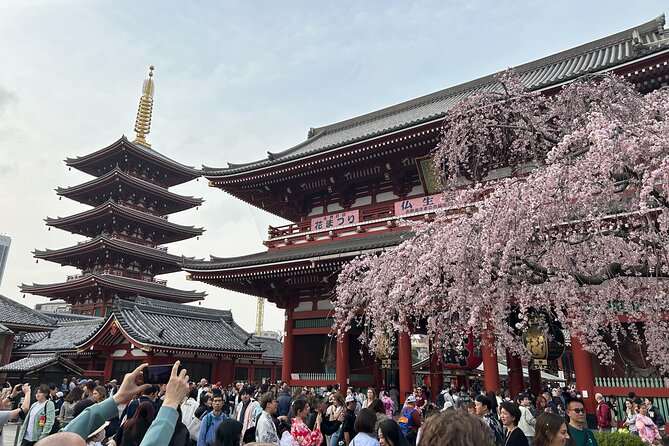
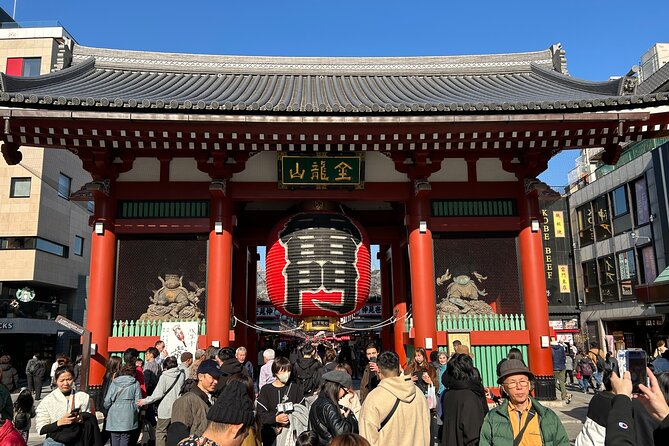
- Starting at Kaminarimon and Senso-ji
- Food, knives, and everyday Asakusa
- Ueno, shrines, and the Ameyoko market
- Akihabara beyond the giant signs
- Nihombashi, Ginza, and the polished center
- Tokyo’s past at the Imperial Palace and Kabukiza
- Tokyo Skytree and the Sumida side
- What the $65.15 price really covers
- Pace, fitness, and practical planning
- Who should book this Tokyo walk?
- Should you book it?
- FAQ
- How much does the private Tokyo tour cost?
- How long does the experience last?
- How many places can I choose?
- Where does the tour begin?
- Where does the tour end?
- Is this a private tour?
- Is transportation included?
- Are meals included?
- Are admission tickets included?
- What is the cancellation policy?
Key details before you book
- Choose three stops: Build your route around temples, shrines, markets, food, electronics, manga and anime, department stores, or modern Tokyo.
- Meet at Kaminarimon: The tour begins at 2-chome 3-1 Asakusa, close to Senso-ji and public transport.
- Private attention: Only your group takes part, making it easier to adjust the pace and ask questions.
- Kazuo Hirose may guide you: His tours are described as warm, personal, and well adapted to different interests.
- Walking is central: You pay your own transport costs, meals, shopping bills, and entrance fees.
- Book ahead: The experience is booked about 51 days in advance on average, a useful sign that popular dates can fill early.
A private way to meet Tokyo on your terms
This is not a fixed sightseeing circuit. You select three places from a broad list, then walk with a local guide who can connect them into a half-day plan or a longer outing.
That flexibility matters in Tokyo. You may want old temples and food stalls, while someone else in your group wants manga, appliances, or Japanese stationery. A private guide can keep the day from becoming a compromise between unrelated interests.
The tour description says the experience can last from two hours to one day. That is a wide range, so do not treat every listed location as part of one standard route. The list is a menu. You choose three stops, and the practical route depends on where they are and how much time you have.
The strongest reason to book is the conversation. Guide Kazuo Hirose has led private walks for solo visitors, friends, and families, adapting plans to likes and dislikes. His approach, as described in the tour material, includes explaining both the sights and the customs behind them. That can make a shrine, market, or department store easier to understand than it would be on your own.
A few more Tokyo bookings worth comparing
- Mt Fuji and Hakone 1-Day Bus Tour Return by Bullet Train
★ 5.0 · 26,383 reviews - 1-Day Tokyo Bus Tour
★ 5.0 · 14,250 reviews - Tokyo: TOKYO SKYTREE® Admission ticket
★ 4.5 · 11,192 reviews
Starting at Kaminarimon and Senso-ji
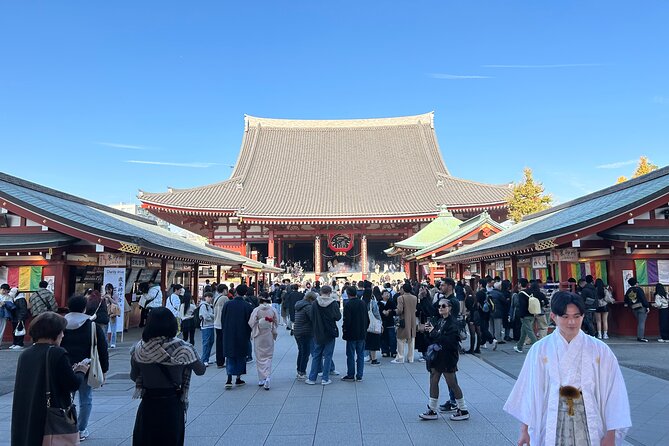
You meet at Kaminarimon in Asakusa, at 2-chome 3-1 Asakusa, Taito City. This is a useful starting place because Asakusa gives you an immediate sense of traditional Tokyo without requiring a long journey from the city center.
Senso-ji is the headline sight. The temple is tied to the story of two fishermen who found a Kannon statue, and the guide can explain how that story connects with the development of Asakusa and the Sanja Festival. A good explanation here turns a famous photo stop into a lesson in local belief and neighborhood identity.
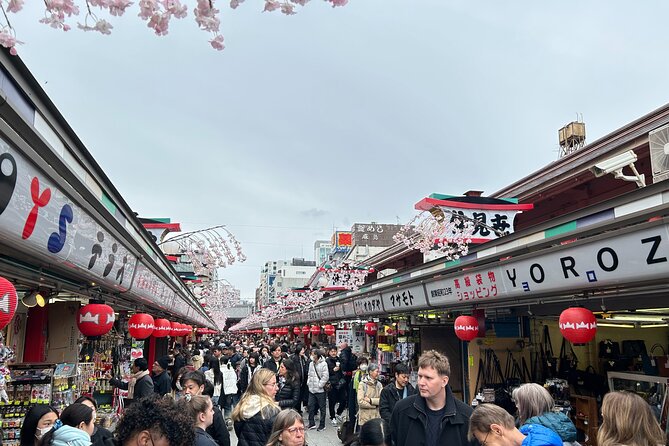
Nakamise Shopping Street leads toward the temple and is one of Japan’s oldest shopping streets. It is lined with shops selling souvenirs, snacks, and traditional goods. You can browse here, but remember that shopping is not included in the tour price.
Asakusa Shrine sits near Senso-ji and offers a useful contrast. Senso-ji is Buddhist, while Asakusa Shrine is a Shinto site. The guide can explain Shinto ideas, including belief in many gods and the role of a shrine as a guardian place for the local community.
I like this pairing for a first visit. In a short walk, you see two major Japanese religious traditions beside one another. If your tour lasts only two hours, Senso-ji and Asakusa Shrine form one of the clearest choices.
Food, knives, and everyday Asakusa
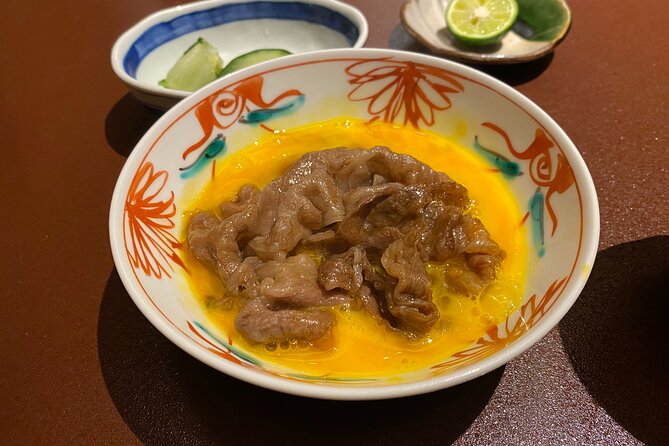
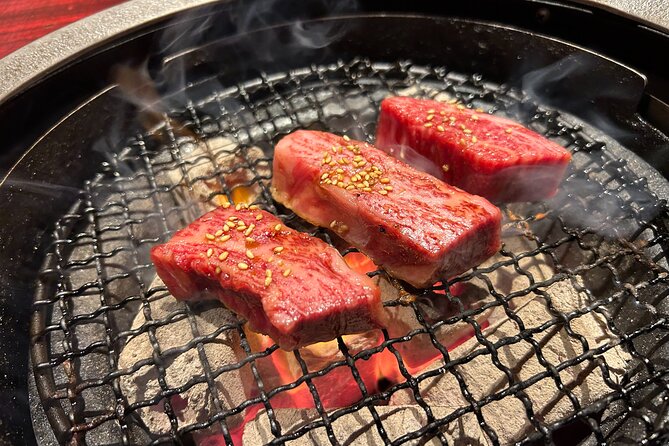
Asakusa gives you more than temples. Imahan Honten is a long-established restaurant serving carefully selected Kuroge Wagyu beef, often associated with sukiyaki. The meal is not included, and you should expect the restaurant visit to use a meaningful part of your tour time.
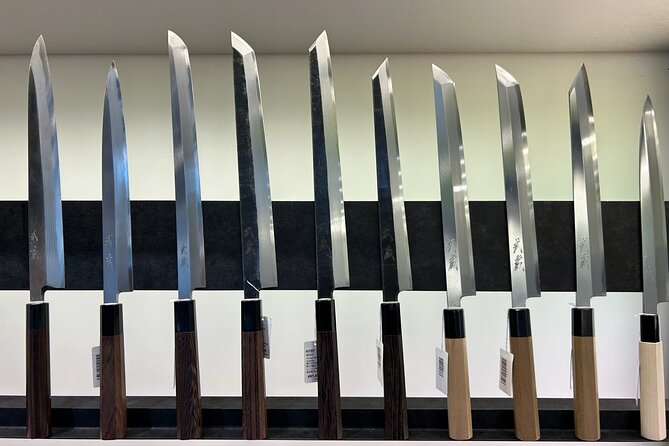
Tsubaya Knives offers a different kind of cultural lesson. Japanese knife-making is linked here with sword techniques once used by samurai. The shop also explains honyaki knives, made from a single piece of steel. This is a particularly good pick if you enjoy cooking, crafts, or objects with a clear connection to Japanese workmanship.
There is also a soba option, described as a restaurant with a main store dating to 1922. Its theme is soba that connects people, served in a quieter space for adults. Again, food costs are yours, but a local guide can help you decide if the stop fits your budget and interests.
These food and shopping choices make the tour more personal than a standard temple walk. The drawback is simple: a meal, knife, or shopping stop can reduce the number of sights you see. That may be a fair trade if eating or buying something useful matters more to you than collecting photographs.
Ueno, shrines, and the Ameyoko market
Ueno Park is a strong choice for anyone who wants museums, open space, or a break from dense city streets. The park contains the Tokyo National Museum, the National Museum of Western Art, and Ueno Zoo, identified as Japan’s first zoo.
The tour includes the park itself, but entrance fees for attractions are not included. If you choose Ueno, clarify whether you want a general walk or time connected with one of the museums. A one-hour stop can introduce the area, but it is not enough for a full museum visit.
Nearby Ameyoko Shopping Street is known for good-value food and goods. It is a lively commercial area with a very different feel from polished Ginza. I would choose it if you want to see where Tokyo shoppers look for bargains and casual food rather than luxury brands.
Yushima Tenmangu is dedicated to Sugawara no Michizane, widely known as a god of learning. Students visit to pray for success in exams, but the shrine’s blessings are not limited to school tests. This can be a meaningful stop if you are interested in how Japanese religious customs connect with everyday hopes.
Imado Shrine is associated with the origin of maneki-neko, the beckoning cat figure. Cats appear around the shrine, which gives the visit a clear visual theme. It is a good pick for visitors who want a smaller shrine with a distinctive local story.
Same corner of Tokyo, a completely different plan:
- Tokyo: teamLab Planets TOKYO Digital Art Museum Entry Ticket
★ 4.6 · 9,779 reviews - Mt Fuji & Hakone Cruise, Drum Show Bullet Train 1 Day from Tokyo
★ 4.0 · 7,413 reviews - Tokyo: Sumo Show Experience with Chicken Hot Pot and a Photo
★ 4.8 · 6,678 reviews - Tokyo: Shinjuku Food Tour (13 Dishes at 4 Local Eateries)
★ 5.0 · 6,603 reviews
Akihabara beyond the giant signs
Akihabara offers several choices, and they are not all the same. Akihabara Junk Street focuses on backstreet shops selling PC peripherals. It gives you a look at the practical side of Tokyo’s electronics culture, rather than only its major stores.
Yodobashi Akiba is a huge consumer electronics retailer with a large sales floor. You can browse home appliances and Japanese-made devices, but purchases are not included. If you are comparing products, ask the guide in advance how much shopping time you want.
The wider Akihabara district is associated with manga, anime, electronics, and maid cafes. Kanda Myojin, a nearby shrine, adds another layer. It is linked with the Kanda Festival, one of the major festivals of Edo-era Tokyo, and is also known as a place to pray for victory and finding a partner.
I like Akihabara for visitors who want to understand modern Japanese popular culture, not just photograph it. You should also know that the district can be highly specialized. If anime and electronics do not interest you, choose Asakusa, Ueno, or a market instead.
Nihombashi, Ginza, and the polished center
COREDO Muromachi 1 introduces Nihombashi, an area where older businesses and new commercial buildings sit together. The complex contains shops, restaurants, and a cinema, while nearby Nihombashi Mitsukoshi is the site of Japan’s oldest department store.
Mitsukoshi is especially useful for seeing Japanese department-store culture. Its basement food hall has more than 70 shops selling Japanese, Western, and Chinese food, along with bento boxes and sweets. You do not need to buy anything to appreciate the presentation, but any purchases come out of your pocket.
Ginza offers a sharper contrast. The district developed on the site of an Edo-period silver coin foundry and is now known for department stores, luxury shopping, and the broad Chuo-dori avenue. Wako’s clock tower at the Ginza 4-Chome intersection remains one of the area’s familiar symbols. The building was renamed Seiko House Ginza in 2022.
Ginza Itoya is a fine stop if you like paper, pens, design, or small practical gifts. The red paperclip sign marks a stationery store founded in 1904. Its main building and annex spread across many floors, giving you plenty to browse.
Uniqlo Ginza is another shopping choice. It is the brand’s global flagship, occupying floors one through twelve and offering a very large selection. This is useful if you want to see how a Japanese clothing brand presents itself at full scale, but it is not a cultural sight in the same way as a temple or shrine.
Tokyo’s past at the Imperial Palace and Kabukiza
The East Gardens of the Imperial Palace occupy part of the former Edo Castle site. This is one of the better choices if you want a calm walk with historical context. The gardens let you connect present-day Tokyo with the castle town that shaped the capital.
The gardens are free to enter according to the tour information, while any personal transport costs remain your responsibility. They also suit visitors who prefer scenery and open space over shopping.
Kabukiza Theater introduces kabuki, a Japanese performing art with more than 400 years of history and UNESCO intangible cultural heritage status. A visit can explain the form and setting, but a performance or paid entry is not included. If you want to attend a show, treat that as a separate expense and confirm how it fits with the walking schedule.
Tokyo Station is another possible endpoint or nearby sight. It is a major terminal for JR trains and the Shinkansen. The station is useful for understanding Tokyo’s transport system, though the tour does not include private transport.
Tokyo Skytree and the Sumida side
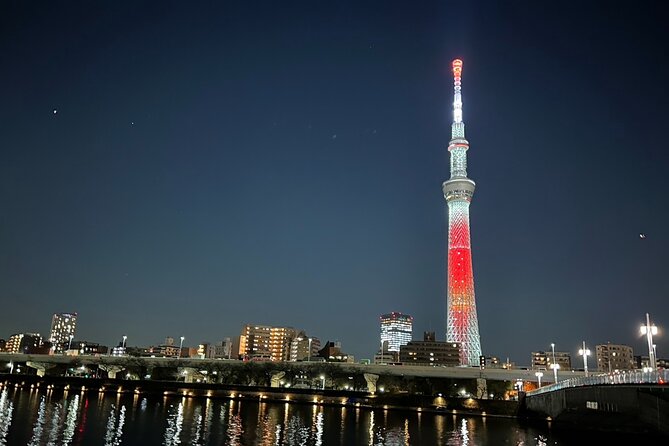
Tokyo Skytree reaches 634 meters and is described as the world’s tallest freestanding radio tower. Its Tembo Deck and Tembo Galleria offer views over downtown Tokyo, but admission is not included.
Choose Skytree if you want a broad view and a modern landmark. Keep in mind that visibility affects the payoff, and the tower visit may take more time than a shrine courtyard or shopping street. The tour price does not cover the observation decks.
Mimeguri Shrine, in Sumida Ward, gives you a smaller and more spiritual option. It is associated with the Sumida River Seven Lucky Gods route and is known as a place connected with financial luck and business success.
These two stops can work well together if you want to pair a major modern structure with a quieter local shrine. They are less suitable if your priority is food or shopping in central Tokyo.
What the $65.15 price really covers
At $65.15 per person, the tour can offer good value if you want personal planning and direct guidance rather than a large group outing. The price includes a tour guide and a walking tour covering areas such as Asakusa, Ueno, Akihabara, Nihombashi, and Ginza.
It does not include private transport, local transportation fares, lunch, shopping, personal costs, or entrance fees. The wording also lists private transportation as not included twice, so you should plan to use public transport or walk at your own expense if the selected stops are far apart.
The value improves for a group that shares the same interests and wants help making decisions. It is less attractive if you only want to visit one famous temple and can manage that on your own. The private format is the real product here: you are paying for flexibility, explanations, and a route shaped around your group.
Pace, fitness, and practical planning
You should expect a moderate level of physical activity. The experience is primarily a walking tour, and Tokyo’s large districts can cover considerable ground even when the route looks simple on a map.
Wear comfortable shoes and tell the guide what matters most before the day begins. If your group includes people with different interests, agree on the three stops in advance. Otherwise, time can disappear in discussion, shops, and transport.
The tour operates from 9:30 AM to 5:00 PM, Monday through Sunday, during the stated operating period of March 20, 2025 through December 7, 2026. Confirmation is provided at booking, and the meeting area is near public transportation.
Free cancellation is available up to 24 hours before the start time. Cancellations or changes made within 24 hours are not accepted for a refund.
Who should book this Tokyo walk?
I would recommend this experience to first-time visitors who want help choosing between Tokyo’s many districts. It also suits repeat visitors who have seen the headline sights and now want a guide to food, shrines, stationery, electronics, or neighborhood customs.
Families and small groups may appreciate the private format, especially if they can agree on three stops. Solo visitors can also gain value from the focused attention, though the per-person price may feel higher than a self-guided morning.
I would be more cautious if you need a tightly timed sightseeing schedule with several admissions included. This is not a ticket bundle, and it is not a fixed route. It works best when you accept that conversation, walking, and local context are central to the day.
Should you book it?
Book this private Tokyo tour if you want to shape the day around your interests and learn from a guide such as Kazuo Hirose, whose style is described as warm, flexible, and personal. Pick Asakusa and its two shrines for tradition, Akihabara for electronics and pop culture, Ueno and Ameyoko for museums and value shopping, or Ginza and Nihombashi for polished city life.
Skip it if you want all transport, meals, and attraction tickets bundled into one price. Before booking, decide on three stops, check the extra costs, and leave room for walking. Done that way, the $65.15 fee buys something useful: a local point of view and a Tokyo day that feels chosen rather than generic.
FAQ
How much does the private Tokyo tour cost?
The listed price is $65.15 per person.
How long does the experience last?
The tour lasts approximately two hours to one full day, depending on the plan selected.
How many places can I choose?
You can choose three must-visit stops from the available selection.
Where does the tour begin?
The meeting point is Kaminarimon, at 2-chome 3-1 Asakusa, Taito City, Tokyo 111-0032, Japan.
Where does the tour end?
The activity ends at a different location, with the exact end point depending on the selected route.
Is this a private tour?
Yes. Only your group participates in the private activity.
Is transportation included?
No. Private transportation and your own transportation fees are not included.
Are meals included?
No. Lunch and other personal food costs are not included.
Are admission tickets included?
Admission fees for yourself are not included. Several listed locations, including Senso-ji, Asakusa Shrine, Ueno Park, and the East Gardens, are described with free admission, while places such as Tokyo Skytree, Kabukiza Theater, Imahan Honten, and Sushi Dai may involve personal costs.
What is the cancellation policy?
You can cancel up to 24 hours before the start time for a full refund. Cancellations or changes made less than 24 hours before the experience are not refunded or accepted.
New on our Tokyo list
- Private Zen Meditation in English in Shinjuku, Tokyo★ 5.0 · 3 reviews
- Sumi-e Experience in a relaxing green tea shop in Tokyo★ 5.0 · 3 reviews
- Tokyo : Kamikaze Street Drift Ride★ 5.0 · 3 reviews
- Onsen Spa in Tokyo and Asakusa Bar Hopping with Local Guide★ 5.0 · 3 reviews
- Easy for everyone! Now you can play handmade mini shamisen and show off to everyone! Musical instruments, sweets and live music★ 5.0 · 3 reviews
- Tokyo: Private Tsukiji Street Food & Sake with Local Guide★ 5.0 · 3 reviews
- Mt Fuji Exploration Tour with Free Japanese Kusa Mochi from Tokyo★ 4.5 · 3 reviews
- Tokyo Tsukiji Fish Market Walking and Exploring Hidden Gems Tour★ 5.0 · 3 reviews
Guided, compared.
Tokyo 6hr Private Tour with Government-Licensed Guide
Read our review →
Shinjuku Local Bar and Izakaya Guided Walking Tour
Read our review →
Private City Highlights Tour with Local Guide
Read our review →
Tokyo 4hr Private Tour with Government-Licensed Guide
Read our review →
Samurai Ninja Museum Guided tour and Experience
Read our review →