Reviewed · GUIDED
Edo Tokyo & Japanese Culture Tour with Government Licensed Guide
Tokyo can feel like a wall of glass, trains, and neon until someone shows you where Edo still survives. This private tour connects the Imperial Palace, old Nihonbashi, sumo country in Ryogoku, and museums that explain how Tokyo was built, damaged, and rebuilt. The guide may also help you handle the local transit system, a useful skill for the rest of your trip.
I like the private format, because you can choose three or four places instead of following a fixed bus route. I also like the practical side: guides such as Shinji, Kei-san, Andy, and Sho have helped visitors with train travel, IC cards, photos, and questions that continued after the tour.
The main catch is distance. Tokyo’s historic sights are spread across the city, and trying to cover too many can turn six hours into a long, rushed day. Admission tickets, lunch, and transport are extra, and the Imperial Palace stop does not include entry inside the palace grounds.
In This Review
- Key points to know before booking
- Why this tour works for understanding old Tokyo
- The Imperial Palace and the former Edo Castle
- Ryogoku, where sumo is part of the neighborhood
- Hokusai and the art of the floating world
- The Great Kanto earthquake and Tokyo’s rebuilding
- Lunch at Ryogoku Edo Noren
- Nihonbashi and the old center of commerce
- The Sumida River and Tokyo’s waterway
- Two Edo museums, and why you probably should not choose both
- Walking, trains, and the real shape of the day
- The private guide experience
- Who should book this Tokyo history tour
- Should you book it?
- FAQ
- How long does the tour last?
- Is this a private tour?
- How many sites can I choose?
- Is hotel pickup included?
- Can I enter the Imperial Palace?
- Are entrance fees included?
- Is lunch included?
- Are transportation costs included?
- Do I need cash?
- Can I cancel for a full refund?
Key points to know before booking
- Choose only three or four sites: The tour is customizable, but Tokyo distances make a focused plan much better than an ambitious checklist.
- Expect walking and public transport: Pickup means meeting your guide on foot within the designated Tokyo area. There is no private vehicle.
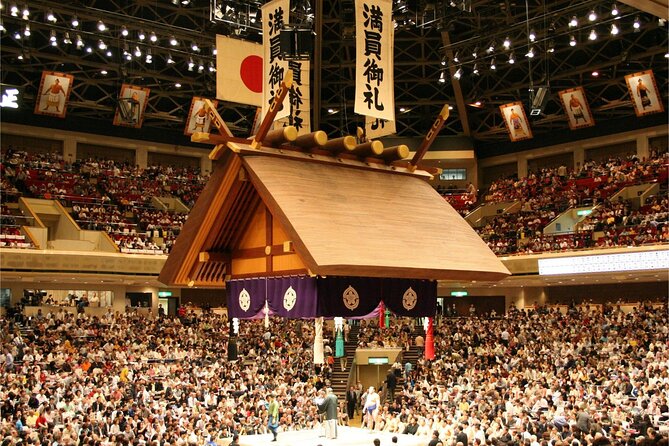
- Ryogoku gives the tour its cultural punch: Sumo, chanko restaurants, the Kokugikan, and Edo-style food all come together here.
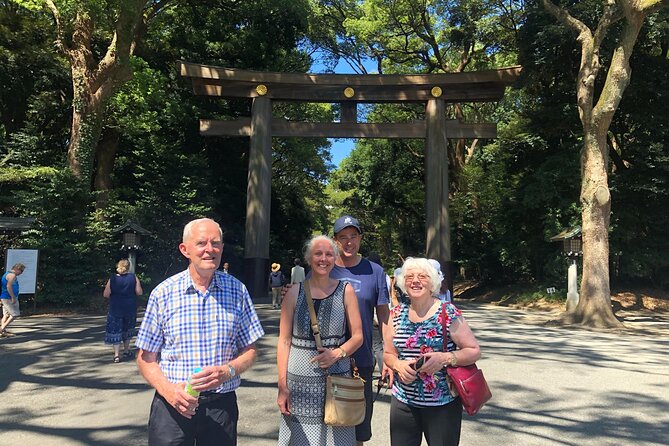
- The Imperial Palace is an outside visit: You see the former Edo Castle site, moats, and park area, but not the inside of the palace.
- Cash planning matters: Transport and many small purchases require local money, so carry yen even if you normally rely on cards.
- The guide is the real value: The best part is not simply seeing a museum. It is learning how the places fit together and how to move around Tokyo with less guesswork.
Why this tour works for understanding old Tokyo
The strongest part of this experience is its link between history and daily life. You are not only looking at a castle site or a museum display. You are tracing the growth of Edo, the city that became Tokyo, through government, commerce, religion, entertainment, disasters, art, food, and transport.
A private licensed English-speaking guide can adjust the day to your interests. If you care about architecture, Kei-san has been praised for his eye for buildings and aesthetics. If you need help with trains, IC cards, and station routines, Sho and other guides have spent time teaching those basics rather than simply leading from one landmark to the next.
That personal approach is useful in Tokyo because the city does not present its past in one neat historic center. One stop may be beside an office district, another near a railway station, and another in a residential area. A guide gives you the connections that signs alone may not provide.
The tour is listed at $154.37 per person. That is not a bargain if you want nothing more than a few exterior views. It can be good value if you want a private day, clear English explanations, help with public transport, and an itinerary built around your interests. Since you pay your own transport, meals, and entrance fees, budget for those separately.
A few more Tokyo bookings worth comparing
- Mt Fuji and Hakone 1-Day Bus Tour Return by Bullet Train
★ 5.0 · 26,383 reviews - 1-Day Tokyo Bus Tour
★ 5.0 · 14,250 reviews - Tokyo: TOKYO SKYTREE® Admission ticket
★ 4.5 · 11,192 reviews
The Imperial Palace and the former Edo Castle
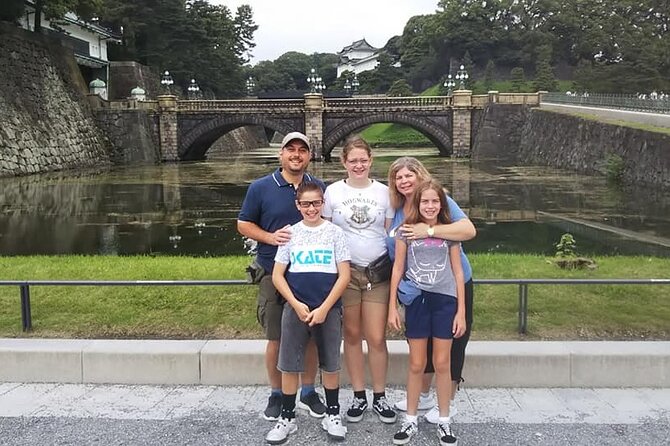
The Imperial Palace is a sensible opening point because it puts modern Tokyo on top of its political past. The current palace sits on the former site of Edo Castle, a huge fortified area marked by moats and broad parkland.
You should set your expectations carefully. This tour does not take you inside the Imperial Palace. The stop is about the outer setting and the former castle site, not a palace-room visit. The planned time is about one hour, though the exact visit can change depending on the route you choose.
I like this stop most when you want an introduction to Tokyo’s changing identity. Edo was shaped by the castle and the ruling system around it. Tokyo later became the seat of the modern Japanese government. Seeing the grounds helps you grasp that long shift without needing a full day of formal museum displays.
The drawback is simple: if you expect an ornate palace interior, this may disappoint. Ask your guide to explain exactly which areas you will see before committing one of your three or four choices to it.
Ryogoku, where sumo is part of the neighborhood
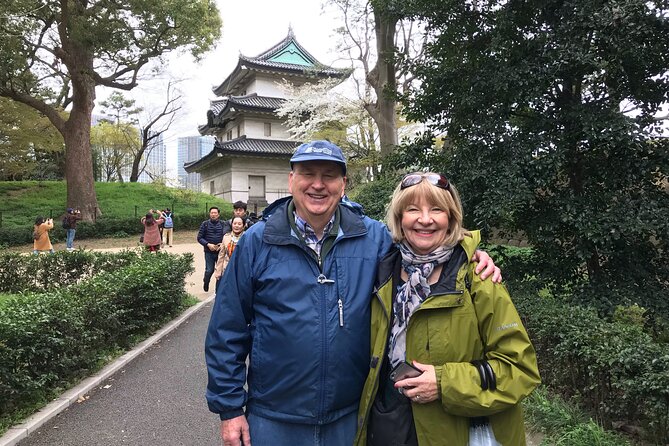
Ryogoku is Tokyo’s sumo district, and it offers a different view of Japanese culture from the official world of palaces and government. The area includes the Ryogoku Kokugikan stadium, sumo stables, chanko restaurants, and other places tied to the sport.
The planned stop at the Kokugikan lasts about 30 minutes and has no admission charge listed. That short visit is enough to place sumo in its neighborhood, but it is not a tournament ticket or a full behind-the-scenes stable visit. Sumo events take place at specific times, so do not assume one will be running during your tour.
Ryogoku pairs well with the nearby Sumida Hokusai Museum and the Edo-style food court at Ryogoku Edo Noren. Together, they give you sport, art, and food within the same general area. That makes the district a smart choice if you want to reduce time spent crossing Tokyo.
Hokusai and the art of the floating world
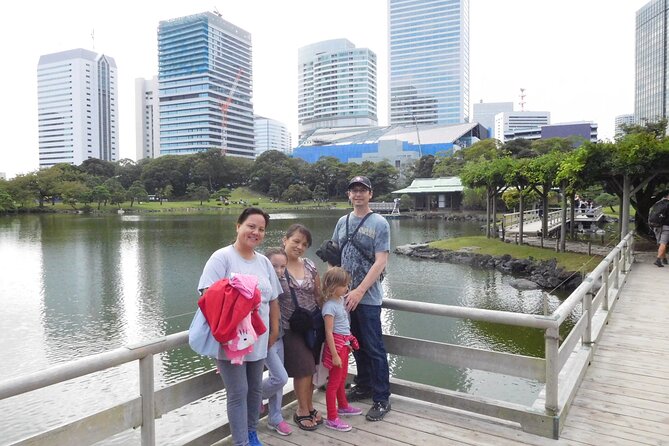
The Sumida Hokusai Museum is devoted to Katsushika Hokusai, the ukiyo-e artist best known internationally for works such as The Great Wave. The museum stop is planned for about 30 minutes, and admission is extra.
Thirty minutes is a compact visit. You will not have time to study every display slowly, so tell your guide if Hokusai is a main reason for choosing this stop. The guide can help frame what you are seeing and explain why Hokusai matters within Edo-period art.
This museum also adds balance to the tour. Tokyo’s past was not only castles and samurai administration. It included print culture, city entertainment, commercial art, and images that circulated widely. If you enjoy visual culture, this is one of the more distinctive choices on the menu.
Same corner of Tokyo, a completely different plan:
- Tokyo: teamLab Planets TOKYO Digital Art Museum Entry Ticket
★ 4.6 · 9,779 reviews - Mt Fuji & Hakone Cruise, Drum Show Bullet Train 1 Day from Tokyo
★ 4.0 · 7,413 reviews - Tokyo: Sumo Show Experience with Chicken Hot Pot and a Photo
★ 4.8 · 6,678 reviews - Tokyo: Shinjuku Food Tour (13 Dishes at 4 Local Eateries)
★ 5.0 · 6,603 reviews
The Great Kanto earthquake and Tokyo’s rebuilding
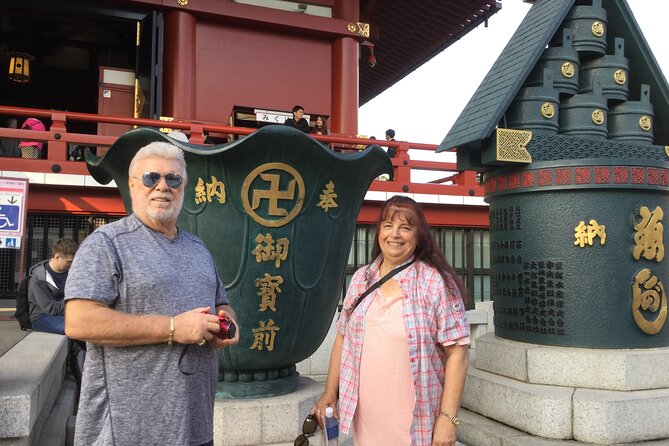
The Kanto Earthquake Memorial Museum offers one of the tour’s most serious stops. You spend about an hour learning about the Great Kanto earthquake and how Tokyo rebuilt afterward.
That subject matters because Tokyo’s appearance is the result of repeated rebuilding. The museum gives you a way to understand the city’s vulnerability and its ability to reorganize after disaster. It also prevents the tour from presenting Edo and Tokyo as a simple, unbroken story.
I would choose this stop if you want more than pretty streets and famous names. It provides context for the city you see today. The admission fee is not included, so check the cost when planning your route. Since the visit takes about an hour, it is best paired with nearby Ryogoku stops rather than distant sites.
Lunch at Ryogoku Edo Noren
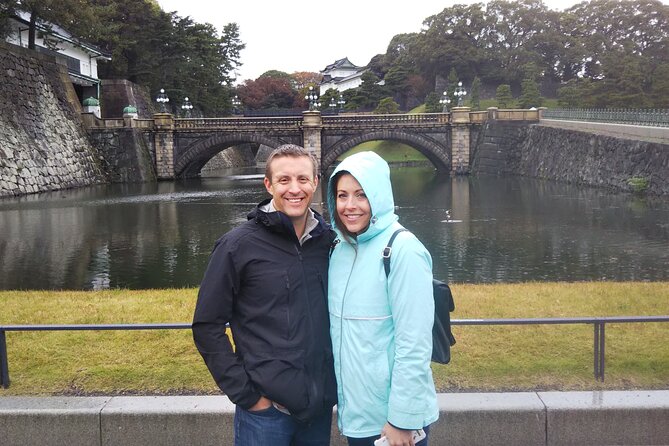
Ryogoku Edo Noren is a food court designed to resemble Edo-period Japan. The planned stop lasts about 45 minutes, with food purchased separately.
This is not a formal cooking class or a meal included in the tour price. Think of it as a convenient way to eat Tokyo-style dishes while keeping the historical theme going. The food court can also make practical sense on a walking day, since you do not need to spend a long time searching for lunch.
Your guide may help you choose a suitable restaurant. One past itinerary included lunch at an appropriate place for the group, which points to the benefit of explaining your food needs early. Still, meals are personal expenses, so allow time and money for your own order.
Nihonbashi and the old center of commerce
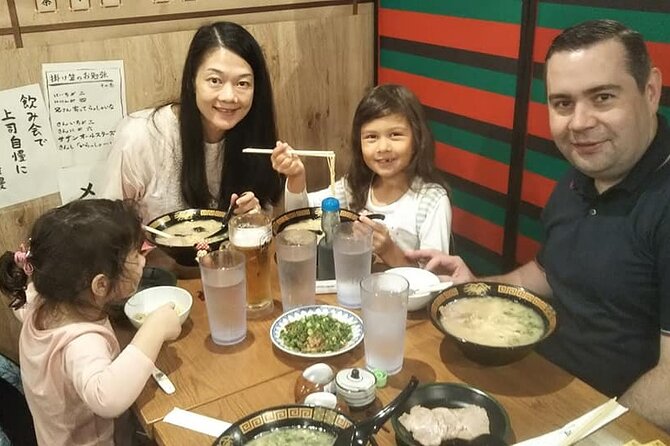
Nihonbashi was once the starting point for five major roads crossing Japan. It became the commercial center of Edo, and the district still offers a more traditional feel than Tokyo’s newer business areas.
The stop has no listed duration, so this is one place where your guide’s planning matters. You might use it as a short walk between other sites, or spend longer if streets, bridges, and the city’s trading past interest you.
I like Nihonbashi because it helps explain how Tokyo functioned as a city, not only as the seat of a ruler. Roads, river traffic, shops, and markets made Edo work. It is also a useful contrast with the Imperial Palace: one stop shows political power, the other shows movement and commerce.
The Sumida River and Tokyo’s waterway
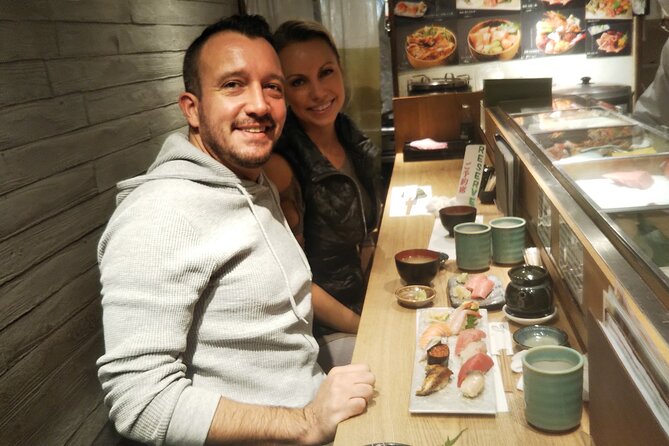
The Sumida River is one of Tokyo’s main rivers and a familiar waterway for people exploring the eastern part of the city. It begins north of Tokyo and runs eastward through the city.
The river is included as a possible place to see rather than a separately timed attraction. Its value comes from the way it ties several stops together. Ryogoku, Nihonbashi, and older commercial districts make more sense when you consider the river as a route for people, goods, and city growth.
Do not expect a dedicated river cruise from the details provided. You are using the river as part of a walking and sightseeing route, with the guide explaining its place in Tokyo.
Two Edo museums, and why you probably should not choose both
The Edo-Tokyo Open Air Architectural Museum is in western Tokyo and presents historic buildings in an open-air setting. The museum was established by the Tokyo Metropolitan Government in 1993. The suggested visit here is only 15 minutes, and admission is extra.
That timing is unusually short for an open-air museum. If historic buildings are your main interest, ask whether more time can be allowed. The museum is also far from the eastern Tokyo stops, so adding it to a route with Ryogoku, Nihonbashi, and Fukagawa may create too much transit.
The Fukagawa Edo Museum offers a different format. It recreates an Edo-era neighborhood with streets, houses, and shops, giving you a sense of ordinary urban life rather than only major landmarks. The planned visit is about 30 minutes, with admission extra.
Between the two, Fukagawa may fit better if you want a compact look at daily life during the Edo period. The open-air museum may suit you better if architecture is your priority and you are willing to devote more of the day to western Tokyo. With only three or four sites, choosing both is likely to make the schedule harder to manage.
Walking, trains, and the real shape of the day
This is primarily a walking tour. You meet your guide on foot within the designated Tokyo area, and you may use public transport between stops. There is no private vehicle, and you pay the transport costs yourself.
That arrangement is both a limitation and a useful lesson. Tokyo’s train and subway systems can seem confusing at first, but learning to use an IC card and navigate local transport can save you time for the rest of your visit. Sho helped explain those basics during one tour, and other guides have assisted with local transit as part of the day.
Carry local money. Japan remains cash-based in many situations, and the supplied information specifically warns that transit may not accept credit cards. ATM access can also be difficult depending on your card and location. An IC card is useful, but you still need yen for meals, admissions, and personal expenses.
Plan for comfortable walking and flexible timing. Weather can affect an outdoor route, and the tour may need adjustment. A previous group chose sites far apart and ended up with a major overrun, so distance is not a minor detail. Give your guide a short list of priorities, not a wish list of every stop.
The private guide experience
Only your group participates, which makes it easier to ask questions and change the pace. You can discuss history, architecture, food, sumo, or transport without waiting for a large group to catch up.
The guide names connected with past bookings include Shinji, Kei-san, Andy, and Sho. Their strengths described in the supplied material are practical and personal: Shinji communicated before the tour and shaped the day to the group’s interests; Kei-san brought special attention to architecture and philosophy; Andy answered questions during and after the tour, researching answers when needed; and Sho helped with IC cards and public transport.
Do not treat those names as a guarantee that you will receive a particular guide. They do show the kind of service this tour is built to provide. Some guides have also taken group photos and sent them afterward, which can be a nice extra on a long sightseeing day.
English ability is important for a history-focused tour, and the information provided describes the guides as English-speaking and licensed. Still, the quality of your day will depend partly on how clearly you state your interests before meeting.
Who should book this Tokyo history tour
I would recommend it to first-time visitors who want Tokyo’s past explained in plain English, couples or families who prefer a private guide, and anyone interested in linking several historical subjects in one day. It is also a good choice if you feel uneasy about Tokyo’s public transport and want help learning the system.
History fans should choose their stops carefully. The earthquake museum, Fukagawa Edo Museum, Nihonbashi, and the Imperial Palace offer more historical context. Art lovers should consider Hokusai. Sumo fans should give Ryogoku priority.
I would be cautious if you want a relaxed day with little walking, a private car, included entrance tickets, or a tour that guarantees access inside the Imperial Palace. You should also reconsider if you plan to cross the entire city repeatedly. Six hours disappears quickly in Tokyo.
Free cancellation is available up to 24 hours before the start time. Changes or cancellations inside that window are not accepted for a refund. Most people can participate, and service animals are allowed, but the activity remains a walking tour.
Should you book it?
Book this tour if you value a private guide who can turn scattered Tokyo sights into a connected story. The best value comes from the explanations, route planning, and help with public transport, not from the number of places you can squeeze into six hours.
Choose three or four nearby sites, carry yen, and confirm which admissions you will pay. For the strongest day, pair one major historical stop with one museum and one neighborhood or food stop. If you plan that way, the tour can give you both an understanding of Edo and a more confident way to explore modern Tokyo on your own.
FAQ
How long does the tour last?
The tour lasts approximately six hours.
Is this a private tour?
Yes. Only your group participates in the activity.
How many sites can I choose?
The tour includes a customizable selection of three to four sites from the available options.
Is hotel pickup included?
Pickup is offered on foot within the designated area of Tokyo. There is no private vehicle.
Can I enter the Imperial Palace?
No. The tour does not include access inside the Imperial Palace. The visit focuses on the former Edo Castle site, surrounding moats, and park area.
Are entrance fees included?
No. Entrance fees are extra. Guide entry fees are covered only for sights listed under the tour’s available stops.
Is lunch included?
No. Lunch is not included, and you pay for your own food.
Are transportation costs included?
No. You pay public transport fares yourself. The tour does not include a private vehicle.
Do I need cash?
You should carry local money for transport and personal expenses. Japan remains cash-based in many situations, and some transit systems may not accept credit cards.
Can I cancel for a full refund?
Yes, if you cancel at least 24 hours before the experience start time. Cancellations or changes made less than 24 hours in advance are not refunded.
New on our Tokyo list
- Sumi-e Experience in a relaxing green tea shop in Tokyo★ 5.0 · 3 reviews
- Tokyo : Kamikaze Street Drift Ride★ 5.0 · 3 reviews
- Private Zen Meditation in English in Shinjuku, Tokyo★ 5.0 · 3 reviews
- Onsen Spa in Tokyo and Asakusa Bar Hopping with Local Guide★ 5.0 · 3 reviews
- Easy for everyone! Now you can play handmade mini shamisen and show off to everyone! Musical instruments, sweets and live music★ 5.0 · 3 reviews
- Tokyo: Private Tsukiji Street Food & Sake with Local Guide★ 5.0 · 3 reviews
- Mt Fuji Exploration Tour with Free Japanese Kusa Mochi from Tokyo★ 4.5 · 3 reviews
- Tokyo Tsukiji Fish Market Walking and Exploring Hidden Gems Tour★ 5.0 · 3 reviews
Guided, compared.
Tokyo 6hr Private Tour with Government-Licensed Guide
Read our review →
Shinjuku Local Bar and Izakaya Guided Walking Tour
Read our review →
Private City Highlights Tour with Local Guide
Read our review →
Tokyo 4hr Private Tour with Government-Licensed Guide
Read our review →
Samurai Ninja Museum Guided tour and Experience
Read our review →