
Reviewed · HISTORICAL TOURS
Explore Asakusa’s historic landmarks
Asakusa gives you old Tokyo in a compact package: a giant red lantern, a temple founded centuries ago, snack stalls, local pubs, and streets that still carry a post-war feel. This tour puts those pieces together with a local guide, so you get more than a few quick photos at Senso-ji.
I like the small group size of eight and the guide’s practical help with temple manners, fortunes, photos, shopping, and food. I also like the route beyond the famous gate, especially Hanayashikidori and Hoppy Street, where Asakusa feels less polished and more local.
The main drawback is time. The core walk is only about 90 minutes, so the temple explanations and side streets move at a brisk pace. You will get a useful introduction, not a slow, in-depth study of every corner.
In This Review
- Key points to know before booking
- Why this Asakusa walk works well on your first day
- Kaminarimon Gate and the first Tokyo photo
- Nakamise-dori, snacks, and souvenir decisions
- Senso-ji and the manners that make the visit better
- Hanayashikidori and old Tokyo atmosphere
- Hoppy Street and Asakusa after dark
- The guides make the practical difference
- What the $35 price really covers
- Timing, walking, and group size
- Who should book this experience
- Should you book the Asakusa historic landmarks tour?
- FAQ
- Where does the Asakusa tour begin?
- Where does the activity end?
- How long does the walking tour last?
- What sights are included?
- Is admission included?
- How many people can join the tour?
- Is a sushi-making class available?
- What times is the sushi class offered?
- Can I cancel for a full refund?
Key points to know before booking
- Kaminarimon Gate begins the story: Get the classic Asakusa photograph beneath its enormous red lantern.
- Senso-ji comes with cultural guidance: Learn how to approach the temple, pray, and use fortunes respectfully.
- The route goes beyond the postcard sights: Hanayashikidori and Hoppy Street add old-fashioned streets, food, and nightlife character.
- Guides help with more than facts: Sachi, Andy, Kayoko, Sunny, Chiharu, and Yoshiko have helped visitors with photos, shopping areas, souvenirs, and local questions.
- The group is capped at eight: That makes it easier to ask questions and keep the walk personal.
- A sushi class can extend the outing: Add one hour at either 12:30 to 13:30 or 15:30 to 16:30.
Why this Asakusa walk works well on your first day
Asakusa is one of Tokyo’s easiest districts to understand on foot, but it can still feel confusing at first. The streets around Senso-ji mix temple grounds, souvenir shops, snack counters, restaurants, amusement history, and narrow lanes filled with small pubs. A guide gives you a useful framework before you explore alone.
The meeting point is the Asakusa Culture Tourist Information Center at 2-chōme-18-9 Kaminarimon, near the famous gate. That is a sensible starting point because you are close to public transportation and already positioned beside the district’s main entrance.
The walk lasts about 90 minutes in its basic form. The published overall duration can range from 1 hour 30 minutes to 3 hours 30 minutes, depending on the option selected. If you add the sushi-making class, allow another hour and check the class time carefully before booking.
I see this as an orientation tour rather than a full-day cultural program. You get the key sights, a local explanation, and a few useful ideas for returning later. That is especially handy if you have just arrived in Tokyo and want to understand where to eat, shop, and wander next.
More Asakusa visits:
- Tokyo: Japanese Dance Cabaret Theater Asakusa-Kaguwa Ticket
★ 4.8 · 2,270 reviews - Tokyo: Meiji Shrine, Asakusa, Skytree Bus Tour and Cruise
★ 4.7 · 1,986 reviews - Tokyo: Roll and Authentic Sushi Making Class in Asakusa
★ 4.9 · 1,957 reviews
Kaminarimon Gate and the first Tokyo photo
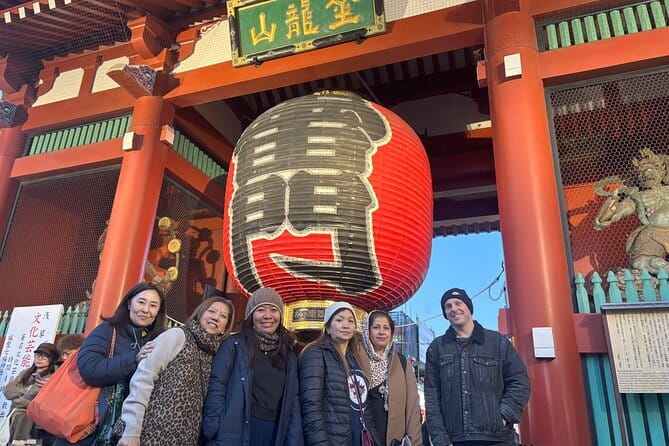
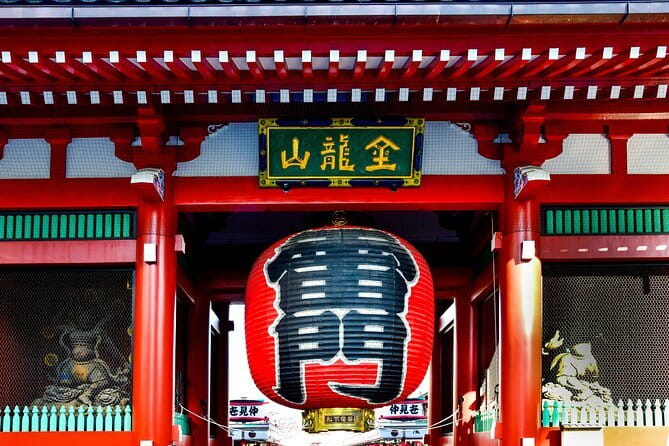
Kaminarimon means Thunder Gate, and it is the visual front door to Senso-ji. The huge red lantern hangs in the center, with statues of Fujin, the wind god, and Raijin, the thunder god, on either side.
Your guide uses this first stop to explain what you are looking at rather than rushing you through for a photograph. You have about 10 minutes here, and admission is free.
The gate is one of those Tokyo sights that can feel familiar before you arrive. It appears in countless photographs, but the scale is better understood in person. The lantern gives you a clear meeting landmark, and the surrounding street quickly shows how heavily visited this part of Asakusa can be.
Bring a phone or camera, but do not expect an empty frame. The gate is a popular photo spot. A guide can help you get a picture, which is useful if you are traveling alone or with a small family group.
Nakamise-dori, snacks, and souvenir decisions
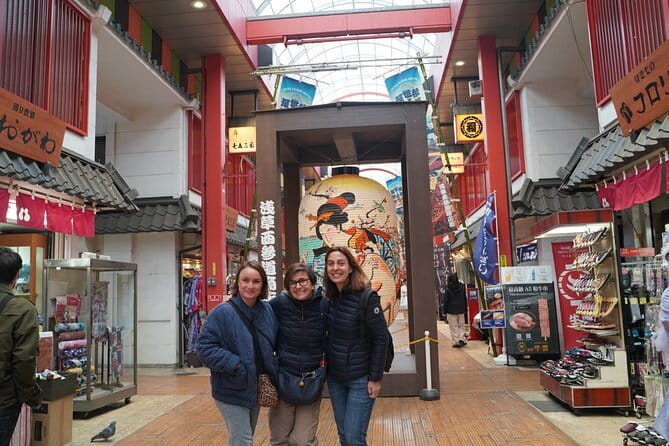
From Kaminarimon, you move along Nakamise-dori, the shopping street leading toward Senso-ji. The route is lined with shops selling Japanese snacks, crafts, and souvenirs.
The scheduled stop is about 10 minutes, so this is more of a guided introduction than a serious shopping session. You will have a chance to see what is available and note places to revisit after the tour.
This is where a local guide can save you time. Andy has helped people find specific shopping areas and recommended shops after the walk. Yoshiko has explained the meaning and purpose behind Japanese souvenirs, which is more useful than simply pointing at attractive objects.
If you want gifts, resist the urge to buy everything immediately. Use this first pass to compare styles and prices, then return after the tour if you need more time. The short stop keeps the group moving, but it also means serious shoppers should plan to stay in Asakusa afterward.
Senso-ji and the manners that make the visit better
Senso-ji is Tokyo’s oldest temple and the central sight of the tour. It is dedicated to Kannon, the Buddhist goddess of mercy. You have around 30 minutes here, the longest scheduled stop on the route.
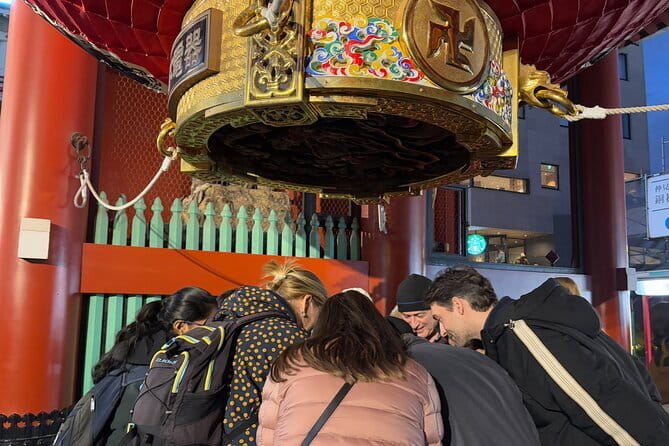
The value of a guide is clearest at this point. Sachi has answered questions about the shrine and temple, while Kayoko has shown visitors how to pray properly and draw fortunes. Those small instructions can make a temple visit feel less like a photo stop and more like a respectful encounter with a living place of worship.
You can ask about the meaning of the rituals, the architecture, and the temple’s role in Asakusa. The supplied details do not promise a private ceremony or special access, so think of this as guided interpretation in a public temple setting.
The temple is free to enter, which helps keep the $35 price focused on the guide rather than admission fees. You should still allow for crowds and ordinary city noise around the approach. The tour gives you a clear introduction, but it cannot control how busy Senso-ji is on the day you visit.
A useful approach is to listen first, then return later if you want quiet time for your own photographs or prayer. The guide can show you the proper sequence, while a second visit lets you move at your own pace.
A few more Tokyo bookings worth comparing
- Tokyo: Imperial Palace and Shogun Historical Walking Tour
★ 5.0 · 2,251 reviews - Tokyo: Imperial Palace Japanese History Walking Tour
★ 4.9 · 987 reviews - Tokyo: Shinjuku Historical Walking Tour & Secret Backstreets
★ 5.0 · 530 reviews - Yanaka Walking Tour: Historic and Traditional District of Tokyo
★ 5.0 · 530 reviews
Hanayashikidori and old Tokyo atmosphere
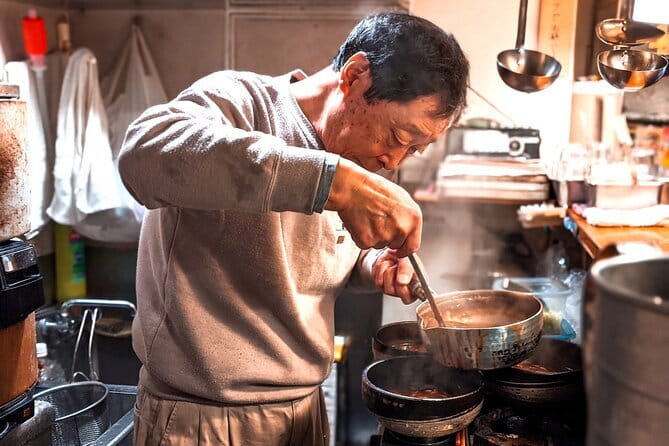
After Senso-ji, the route turns toward Hanayashikidori for about 20 minutes. The street takes its name from Hanayashiki, Japan’s oldest amusement park, located nearby.
This section helps break up the standard temple route. You see shops, restaurants, cafés, snacks, souvenirs, and local food in a setting linked to old Tokyo entertainment. The appeal is less about one major monument and more about the feel of the street.
I like this part because it gives you context for Asakusa as a neighborhood, not just as the address of Senso-ji. The district has long mixed worship, shopping, eating, and entertainment. Your guide can point out details you might otherwise walk past.
Do not expect a long stop at the amusement park itself. The provided route describes the nearby street, not an admission visit or ride. If Hanayashiki interests you, ask the guide for advice about returning on your own.
Hoppy Street and Asakusa after dark
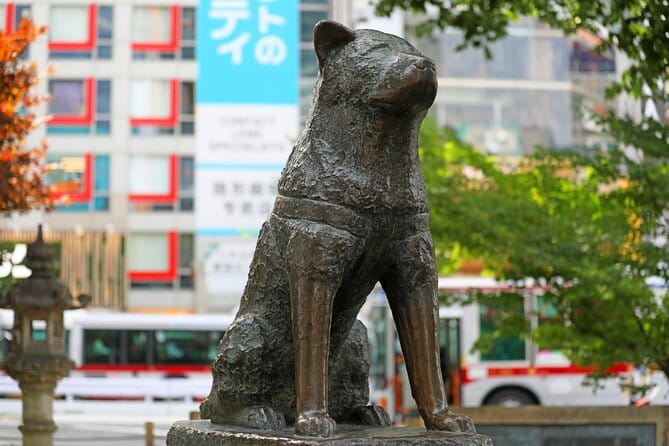
Hoppy Street is the tour’s most local-feeling stop. You spend about 20 minutes among izakayas, or Japanese pubs, serving Hoppy along with food such as yakitori and oden.
Hoppy is a local drink associated with Asakusa’s post-war drinking culture. The street retains that older atmosphere, with compact pubs and a relaxed social mood. Your guide shares historical anecdotes about why locals have liked the area for so long.
This is not a scheduled tasting or dinner. The tour gives you an introduction to the street and its food culture, but the supplied details do not include food or drink in the $35 price. Plan to return later if you want to sit down and eat.
Hoppy Street can also be more interesting after the main sightseeing hours, when the izakayas are active. The tour itself may take place earlier, depending on your booking, so think of the guide’s explanation as a preview for an evening visit.
For many people, this stop makes the tour worth choosing over a simple Kaminarimon and Senso-ji walk. You get a glimpse of how Asakusa works as a neighborhood, not only how it appears in guidebooks.
The guides make the practical difference
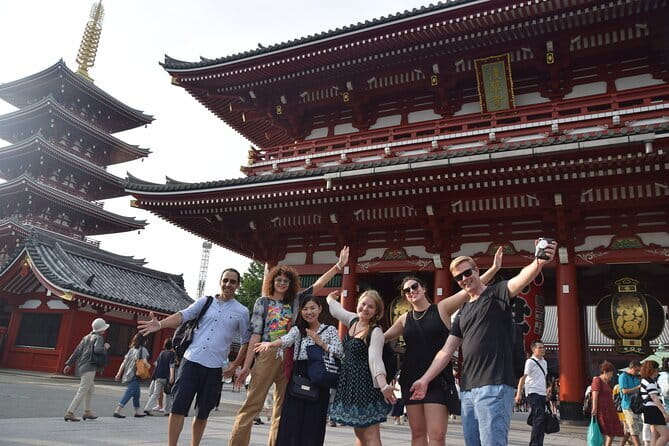
The provider assigns local guides, and the named guides associated with this experience include Sachi, Andy, Kayoko, Sunny, Chiharu, and Yoshiko. You may not be able to select a particular person, so treat those names as examples of the guiding style you can expect rather than a guarantee.
The strongest pattern in the available feedback is personal attention. Sachi is described as kind and attentive, with the ability to answer questions about both temple and shrine traditions. Andy has helped with shopping plans after the walk. Kayoko has explained prayer and fortune customs.
Sunny, also identified as Chiharu, has guided people through Senso-ji and surrounding shopping districts, including places for lunch, dinner, desserts, and snacks. Yoshiko has taken photos and explained the background of local souvenirs.
That range matters. You are not only paying for a memorized speech at five fixed stops. You can ask about what catches your eye, request a photo, and get ideas for the rest of your Asakusa visit.
The tour also allows for some improvised conversation and small changes in emphasis. The exact experience will depend on your guide and the questions you bring, but the small group limit gives you a better chance to speak up than a large coach tour.
What the $35 price really covers
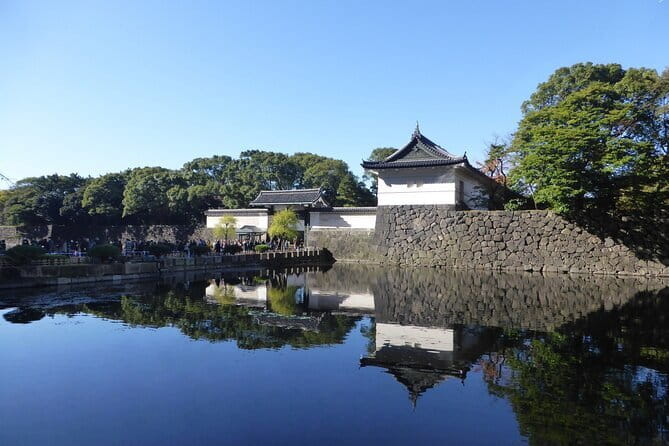
At $35 per person, this is reasonably priced if you want a local introduction and have limited time. The stops themselves are free, so the fee mainly pays for the guide’s time, explanations, route planning, and local recommendations.
The value is strongest for first-time visitors. You receive a simple route through the district, help with temple etiquette, historical background, photo assistance, and suggestions for shopping and eating. Those services can prevent a common first visit from becoming a quick walk from gate to temple and back.
The value is weaker if you already know Asakusa well or prefer to explore without a schedule. You can walk around Kaminarimon, Nakamise-dori, Senso-ji, Hanayashikidori, and Hoppy Street without an admission ticket. The tour earns its price through interpretation and personal help, not access to places you could not otherwise enter.
The optional sushi class changes the calculation. It adds one hour after the 1.5-hour walking tour, with class times at 12:30 to 13:30 or 15:30 to 16:30. Choose it if you want an activity as well as sightseeing. Skip it if your priority is a short orientation and flexible time for shopping.
Timing, walking, and group size
The meeting point is near public transportation, and the activity ends back there. That makes the tour easy to fit into a day built around Asakusa.
You should have a moderate level of physical fitness. The route includes several walking sections through temple approaches and shopping streets. No special athletic ability is suggested, but you will be on your feet and moving through public areas.
The maximum group size is eight. That is small enough for questions and photos without making the guide repeat every point to a crowd. It also means the pace may feel more personal than a standard sightseeing group.
Because the basic tour is short, wear comfortable shoes and arrive ready to walk. The route includes free public areas rather than reserved indoor attractions, so the experience depends on the streets, temple grounds, and the guide’s explanations.
You receive confirmation at booking, and the ticket is mobile. Free cancellation is available up to 24 hours before the local start time. Cancellations or changes made later are not accepted for a refund.
Who should book this experience
I would choose this tour for a first visit to Tokyo, especially if Asakusa is on your first or second day. It helps you learn the basic customs, identify the key streets, and decide where you want to return.
It also suits solo visitors and small groups who want help with photographs, shopping, and questions. The guide’s assistance with fortunes, prayer, and souvenir meanings adds value that a self-guided walk may not provide.
Families can benefit from the short format, though the pace and walking requirement still matter. Food-minded visitors should pay close attention to Hoppy Street and consider the sushi option.
I would be less likely to book it for a repeat visitor who already understands Senso-ji and the surrounding streets. In that case, you may prefer to spend the $35 on food, return to Hoppy Street at your own pace, or choose a tour focused on a different part of Tokyo.
Should you book the Asakusa historic landmarks tour?
Book it if you want a friendly, compact introduction to Asakusa with real help on temple manners, photos, shopping, and local food streets. The strongest reasons are the small group, the route beyond Senso-ji, and the guides’ practical approach.
Skip it if you want long, quiet visits at each sight or if you already know the district. The walk is short, and the main sights are free to visit alone.
For a first-time visitor, though, $35 is a fair price for getting your bearings without wasting half a day. Add the sushi class if you want a more hands-on finish, and keep extra time afterward for Nakamise-dori, Hoppy Street, and any shop your guide recommends.
FAQ
Where does the Asakusa tour begin?
It begins at the Asakusa Culture Tourist Information Center, located at 2-chōme-18-9 Kaminarimon, Taito City, Tokyo 111-0034, Japan.
Where does the activity end?
The activity ends back at the meeting point.
How long does the walking tour last?
The basic Asakusa walking tour lasts about 1 hour 30 minutes. The overall published duration ranges from 1 hour 30 minutes to 3 hours 30 minutes, depending on the option selected.
What sights are included?
The route includes Kaminarimon Gate, Nakamise Shopping Street, Senso-ji Temple, Hanayashikidori, and Hoppy Street.
Is admission included?
The listed stops have no admission charge. The $35 price covers the guided experience, while the supplied details do not state that food, drinks, or other purchases are included.
How many people can join the tour?
The activity has a maximum of eight travelers.
Is a sushi-making class available?
Yes. You can add a one-hour sushi-making class after the 1.5-hour walking tour.
What times is the sushi class offered?
The stated class times are 12:30 to 13:30 and 15:30 to 16:30.
Can I cancel for a full refund?
Yes. You can cancel at least 24 hours before the experience start time for a full refund. Cancellations or changes made less than 24 hours before the start time are not accepted for a refund.
New on our Tokyo list
- Tokyo : Kamikaze Street Drift Ride★ 5.0 · 3 reviews
- Private Zen Meditation in English in Shinjuku, Tokyo★ 5.0 · 3 reviews
- Sumi-e Experience in a relaxing green tea shop in Tokyo★ 5.0 · 3 reviews
- Onsen Spa in Tokyo and Asakusa Bar Hopping with Local Guide★ 5.0 · 3 reviews
- Easy for everyone! Now you can play handmade mini shamisen and show off to everyone! Musical instruments, sweets and live music★ 5.0 · 3 reviews
- Tokyo: Private Tsukiji Street Food & Sake with Local Guide★ 5.0 · 3 reviews
- Mt Fuji Exploration Tour with Free Japanese Kusa Mochi from Tokyo★ 4.5 · 3 reviews
- Tokyo Tsukiji Fish Market Walking and Exploring Hidden Gems Tour★ 5.0 · 3 reviews
Historical Tours, compared.

Imperial Palace and Shogun Historical Walking Tour
Read our review →
Yanaka Walking Tour: Historic and Traditional District of Tokyo
Read our review →
Shinjuku Historical Walking Tour & Secret Backstreets
Read our review →
Mt. Fuji Heritage Tour: Traditional Villages, Lakes & Shrine
Read our review →
The Best of Izakaya in Shinjuku Food & Cultural Tour
Read our review →
Yanaka Historical Walking Tour in Tokyo’s Old Town
Read our review →Browse the lists this tour appears in