
Reviewed · ASAKUSA TOURS
Hand-carved stamps made with craftsmen in Asakusa, Tokyo
The most memorable part of this Asakusa workshop is that you do not simply buy a Japanese souvenir. You carve your own Hanko, a traditional name seal, into a small piece of natural wood. An artisan guides your hand, helps shape the design, and lets you take home the finished mark.
I like the personal instruction and the small, meaningful result. I also like that the wood may come from sakura or sansho branches, giving each seal a natural shape rather than a factory-made finish. The main drawback is price: at $93.33 per person, the workshop can feel costly if you finish in about an hour instead of using the full 90 to 120 minutes.
In This Review
- Key points to know
- Making a Hanko in Asakusa
- The tools and the carving process
- Why the artisan’s guidance matters
- A private activity for your group
- What you take home
- The location in Taito City
- Timing, age limits, and practical comfort
- Is $93.33 a fair price?
- How this compares with a standard Tokyo souvenir stop
- Who should book this workshop?
- Booking and planning advice
- Should you book the Asakusa Hanko workshop?
- FAQ
- How long does the Hanko-making experience last?
- Where does the workshop take place?
- Is the experience private?
- What is included in the price?
- Can children participate?
- Do I need to bring anything?
Key points to know
- You make the seal yourself: Carve a name or simple original pattern into natural wood with traditional hand tools.
- Private instruction: Only your group participates, with an English interpreter included.
- A personal Japanese keepsake: Your finished Hanko and a vermilion inkpad go home with you.
- Asakusa location: The workshop is in Taito City, near public transportation and a short walk from a public restroom.
- Allow up to two hours: The usual estimate is 90 to 120 minutes, though some people finish sooner.
- Best for ages 10 and up: Younger children need separate confirmation, and carving requires patience and care.
Making a Hanko in Asakusa
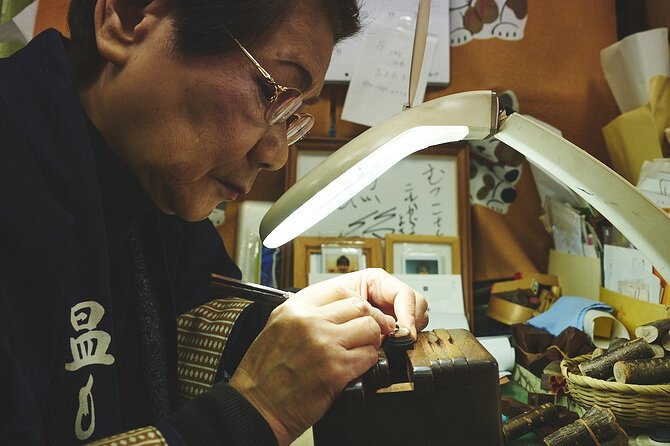
A Hanko is a personal seal used in Japan in place of, or alongside, a handwritten signature. In this workshop, you make a small artistic version rather than a formal seal for official documents. That distinction matters: you are creating a cultural keepsake, not preparing paperwork for a Japanese bank account.
The workshop takes place at Ito Inbo, at 1-chome-19-4 Senzoku in Taito City. The address is in the wider Asakusa area, so it fits well into a day spent exploring old Tokyo streets, temples, and small craft shops. The experience itself ends where it begins, which keeps the plan simple.
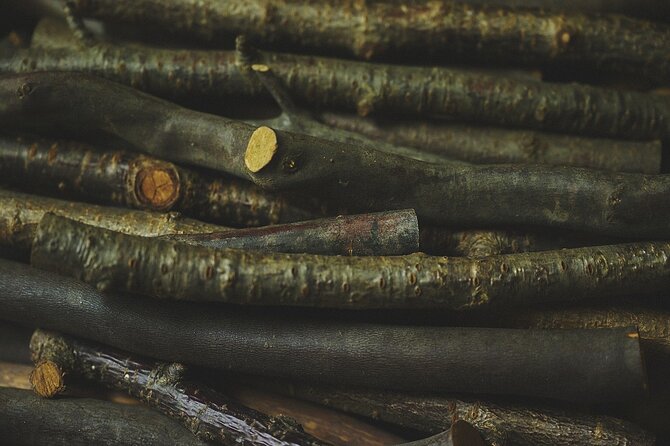
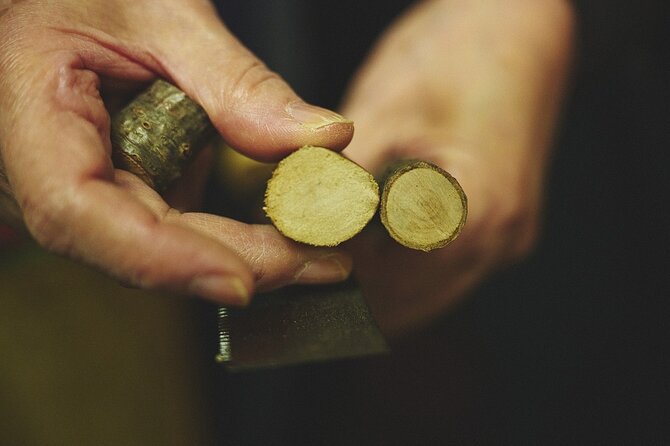
Your seal starts as a short piece of natural wood, roughly 10 centimeters long. Sakura and sansho wood may be used. The branch shape and grain give your finished Hanko a handmade look that you will not get from a mass-produced souvenir.
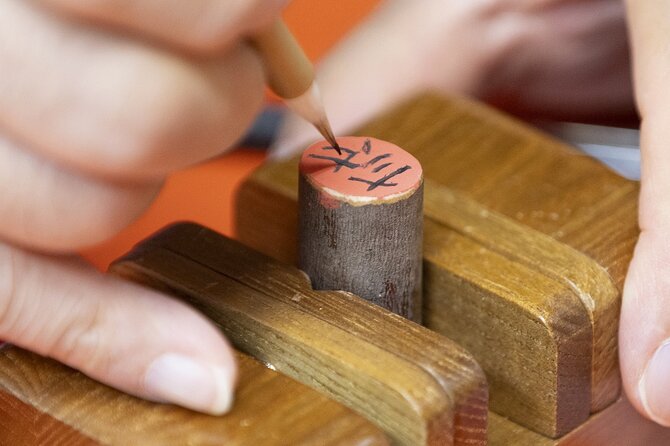
You choose a name or a small design. The artisan then helps you work out what can reasonably fit on the seal. This is important because a complex pattern may be difficult to carve within the time available. A simple mark often makes a better finished product than an ambitious design packed with tiny details.
More Asakusa visits:
- Tokyo: Japanese Dance Cabaret Theater Asakusa-Kaguwa Ticket
★ 4.8 · 2,270 reviews - Tokyo: Meiji Shrine, Asakusa, Skytree Bus Tour and Cruise
★ 4.7 · 1,986 reviews - Tokyo: Roll and Authentic Sushi Making Class in Asakusa
★ 4.9 · 1,957 reviews
The tools and the carving process
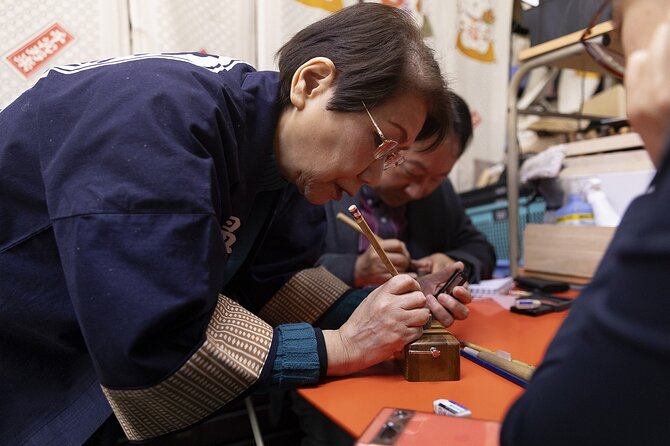
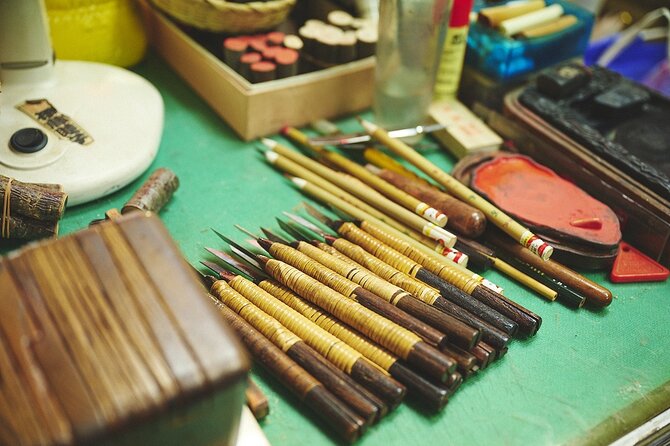
The craft is hands-on from the start. You use carving tools to remove wood and form the design on the end of the seal. The work requires some control, but you do not need previous carving experience. The artisan gives thorough guidance and helps when your design or technique becomes difficult.
That personal help is one of the strongest reasons to choose this activity. You are not left alone with a sharp tool and a vague set of instructions. You can ask for assistance as you shape the mark, and the artisan can explain how to approach the wood without rushing.
I would arrive ready to work slowly. Small errors are part of handmade carving, but rushing can make them harder to correct. Keep the design bold and clear, especially if you are making a seal with letters from a language that does not normally use Japanese characters.
The workshop provides the tools and materials, so you do not need to pack anything special. Wear casual clothes. If you are concerned about bits of wood falling onto your clothing, bring an apron. No apron is supplied as part of the activity.
Why the artisan’s guidance matters
The craft becomes more interesting when you understand that the seal is not just a block with a picture cut into it. The design must be planned in reverse so that the inked image appears correctly when pressed onto paper. That basic challenge gives the activity more substance than a simple souvenir-making session.
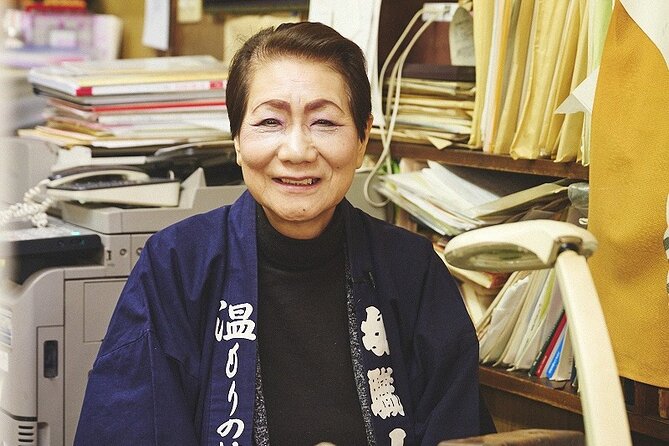
The artisan also brings a personal connection to the work. The host is described as one of the first female Hanko craftsmen, with an inspiring story and a kind teaching style. The English interpreter helps you follow the instruction and cultural explanation, so language should not prevent you from taking part.
The cultural explanation may be brief rather than a formal lecture. One participant found the craft enjoyable but wanted more history during a shorter-than-expected session. If learning about the background of Hanko is your main reason for booking, keep your expectations measured. This is chiefly a making workshop, with cultural context added around the practical work.
That balance works well for many people. You learn through your hands instead of sitting through a long talk. By the time you finish, you have a better sense of why a small seal takes care and skill to produce.
A private activity for your group
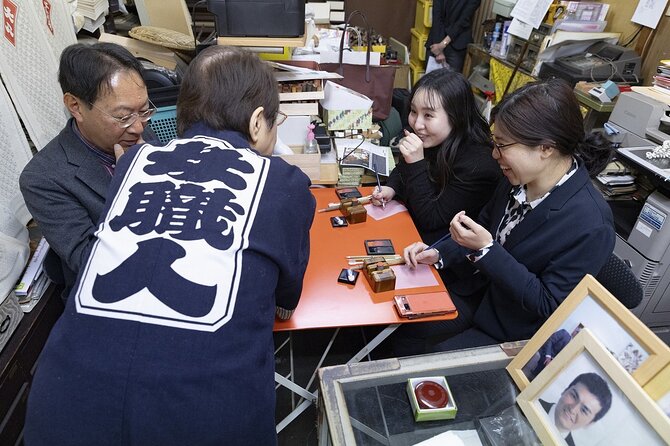
This is a private experience, so only your own group participates. That makes a difference if you want to ask questions, need extra help, or are traveling with children and want a quieter setting.
Private instruction also gives the activity a more personal pace. One person may understand the tools quickly, while another may need repeated help with the carving angle or design. A shared class can force everyone to move together. Here, the artisan can respond to your group.
The private format does not guarantee a longer session. The stated duration is about 90 to 120 minutes, but the actual time varies by participant. Some people complete their seal in about one hour. If you work quickly, you may not receive two full hours of activity.
That shorter finish is the clearest value concern. At $93.33 per person, you are paying for private instruction, an interpreter, the wood, the tools, the finished Hanko, and the inkpad. You are also paying for access to a specialist craft rather than simply purchasing a finished stamp. Still, the cost may feel high if you judge it only by minutes spent at the workbench.
A few more Tokyo bookings worth comparing
- Mt Fuji and Hakone 1-Day Bus Tour Return by Bullet Train
★ 5.0 · 26,383 reviews - 1-Day Tokyo Bus Tour
★ 5.0 · 14,250 reviews - Tokyo: TOKYO SKYTREE® Admission ticket
★ 4.5 · 11,192 reviews - Tokyo: teamLab Planets TOKYO Digital Art Museum Entry Ticket
★ 4.6 · 9,779 reviews
What you take home
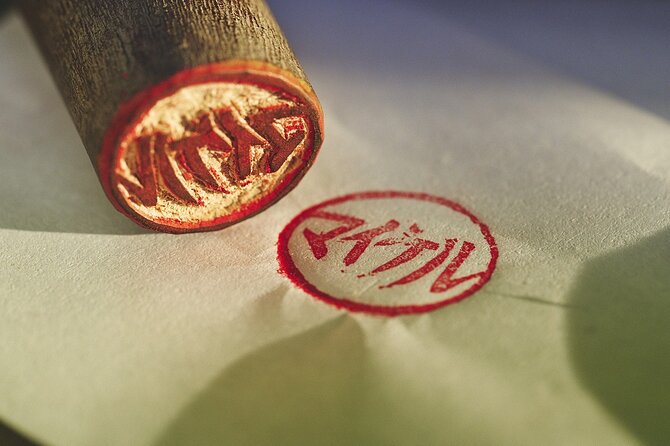
Your completed Hanko is the main souvenir. Because you carve the design yourself, it carries a personal connection to your time in Tokyo. It can be used as a stamp for cards, notebooks, letters, or craft projects, though the activity does not describe it as an official personal seal.
A vermilion inkpad is included. The bright red color is strongly associated with Japanese seals and makes the finished piece ready to use when you leave. Materials, tools, the experience fee, and English interpretation are also included.
Additional souvenirs are available at the workshop, but they are not included in the price. Transportation is also not included. Plan your route to the meeting point before you leave for the session, especially if you are fitting it between other Asakusa plans.
The natural wood makes each finished stamp slightly different. The shape may not be perfectly uniform, and the pattern may not match the example image shown when booking. That variation is part of the appeal, but you should not expect a polished, identical product from one participant to the next.
The location in Taito City
The meeting point is Ito Inbo, 1-chome-19-4 Senzoku, Taito City, Tokyo 111-0031. The experience is near public transportation, though the activity does not include transportation costs or a guided neighborhood walk.
This is useful to know when planning your day. The workshop is not a sightseeing tour of Asakusa. You will need to arrange your own route and allow enough time to find the address. Once you arrive, the activity returns to the same meeting point.
There is no toilet at the workshop. Use the restroom before you arrive. A public restroom is about a one-minute walk away, which helps, but it is still better not to begin the session in a hurry.
The location makes the workshop easy to pair with other time in Taito. You can plan the carving as one focused stop rather than committing an entire day. Just leave enough room before and after the session for local transportation and finding the entrance.
Timing, age limits, and practical comfort
The advertised duration is approximately two hours, with the actual experience lasting about 90 to 120 minutes. Your pace, design, and comfort with the carving tools all affect the finish time.
Participants must generally be over 10 years old. Children under 10 may be accepted, but separate confirmation is required. Since the work involves carving tools and small design details, older children and teenagers are likely to get more from the activity than very young children.
Adults should not assume that this is only for children. The craft has enough detail to keep grown-ups interested, especially if you enjoy Japanese design, woodwork, stationery, or handmade objects. The private setting also makes it easier for a mixed-age family group to work at different speeds.
You do not need to bring supplies. Casual clothing is recommended, and an apron is sensible if you want to protect your clothes from carving debris. There are no stated special participation requirements for most people.
Is $93.33 a fair price?
The answer depends on what you want from a souvenir. If you want the cheapest small gift from Tokyo, this is not it. You can find inexpensive manufactured souvenirs elsewhere for much less.
If you value instruction and the chance to make something under an artisan’s direction, the price is easier to understand. You receive a private session, an English interpreter, natural wood, use of the tools, your completed Hanko, and a vermilion inkpad. The finished piece is also more personal than a souvenir chosen from a shelf.
I would book it for someone who values the process as much as the result. The activity gives you a story to attach to the seal: where you made it, how you designed it, and which parts required help. If you only want a finished Hanko and do not care who made it, the price will probably feel less appealing.
Group discounts may be available, which can improve the value for families or small groups. The activity is private, so you are not paying for a crowded class, but you should still check the final group price before booking.
How this compares with a standard Tokyo souvenir stop
A normal souvenir shop lets you browse quickly and leave with something polished. This workshop asks you to slow down and accept the uneven parts of handwork.
That tradeoff is worthwhile if you want a direct connection with a Japanese craft. The finished seal may show small variations, and your pattern may not look exactly like the example. Those are not defects in the usual sense. They show that you made it yourself.
The session also suits a trip that already includes plenty of major sights. After several temples, observation decks, and busy shopping areas, a quiet practical activity can give your day a different rhythm. You are still learning about Japan, but through a task rather than another viewing stop.
Do not book it expecting a full two-hour lecture on Hanko tradition. Book it for the carving, the artisan’s help, and the handmade result. The cultural background adds meaning, but the workbench is the center of the experience.
Who should book this workshop?
I would recommend it to adults, older children, couples, families, and small private groups who enjoy making things. It is especially suitable if you want a souvenir that carries your own mark instead of a standard Tokyo logo.
It is also a good choice for anyone curious about Japanese names, seals, and traditional craft. The English interpreter makes the activity more approachable, and the private format gives you room to ask questions without holding up a large class.
I would be more cautious if your budget is tight or your schedule is packed. The non-refundable booking policy means you should be confident about your plans before paying. You also need to accept that the activity may finish sooner than the maximum two-hour estimate.
People who dislike fine handwork may find the carving frustrating. The artisan provides help, but the process still requires patience. A simple design and a relaxed attitude will make the session easier and produce a stronger result.
Booking and planning advice
The experience is subject to reservation availability, and confirmation is sent within 48 hours of booking if the request can be accepted. Depending on availability and participant numbers, an alternative date may be offered.
Because the activity cannot be refunded or changed after booking, check your Tokyo schedule carefully first. This is especially important if you are booking it far in advance. The average booking lead time is 38 days, so planning ahead is common.
Arrive in casual clothes and use a restroom before the session. You need no special equipment. Bring an apron only if wood shavings on your clothes would bother you.
For the design, choose something simple enough to carve clearly. An original pattern is possible with the artisan’s help, but complex patterns may not fit the time or the size of the wood. A bold initial, short name, or uncomplicated symbol is a sensible starting point.
Should you book the Asakusa Hanko workshop?
Book this experience if you want a private, hands-on Japanese craft session and are happy to pay for instruction as well as the souvenir. The kind artisan, English interpretation, natural wood, and personal finished seal give it more meaning than a quick purchase in a shop.
Think twice if you expect a guaranteed two-hour program or want extensive cultural instruction. Some people finish in about an hour, and the history portion may be limited. At $93.33 per person, the value rests on enjoying the making process.
For the right person, this is a fine Asakusa memory: small, useful, personal, and made by your own hands.
FAQ
How long does the Hanko-making experience last?
The activity usually lasts 90 to 120 minutes, though the actual time depends on your pace and design. Some participants may finish in about one hour.
Where does the workshop take place?
The meeting point is Ito Inbo, 1-chome-19-4 Senzoku, Taito City, Tokyo 111-0031, Japan. The activity begins and ends at this location.
Is the experience private?
Yes. Only your group participates in the activity.
What is included in the price?
The price includes the experience fee, carving tools, natural wood materials, your completed Hanko, an English interpreter, and a vermilion inkpad.
Can children participate?
Participants must generally be over 10 years old. Children under 10 require separate confirmation.
Do I need to bring anything?
You do not need to bring supplies. Wear casual clothes, and bring an apron if you are concerned about carving debris. Use a restroom before arriving because there is no toilet at the workshop, though a public restroom is about one minute away.
New on our Tokyo list
- Sumi-e Experience in a relaxing green tea shop in Tokyo★ 5.0 · 3 reviews
- Tokyo : Kamikaze Street Drift Ride★ 5.0 · 3 reviews
- Private Zen Meditation in English in Shinjuku, Tokyo★ 5.0 · 3 reviews
- Onsen Spa in Tokyo and Asakusa Bar Hopping with Local Guide★ 5.0 · 3 reviews
- Easy for everyone! Now you can play handmade mini shamisen and show off to everyone! Musical instruments, sweets and live music★ 5.0 · 3 reviews
- Tokyo: Private Tsukiji Street Food & Sake with Local Guide★ 5.0 · 3 reviews
- Mt Fuji Exploration Tour with Free Japanese Kusa Mochi from Tokyo★ 4.5 · 3 reviews
- Tokyo Tsukiji Fish Market Walking and Exploring Hidden Gems Tour★ 5.0 · 3 reviews
Asakusa Tours, compared.

Japanese Dance Cabaret Theater Asakusa-Kaguwa Ticket
Read our review →
Meiji Shrine, Asakusa, Skytree Bus Tour and Cruise
Read our review →
Roll and Authentic Sushi Making Class in Asakusa
Read our review →
Asakusa Walking Tour with Sensoji Temple Visit
Read our review →
Tokyo Panoramic 1 Day: Meiji Shrine, Asakusa, Odaiba and SKYTREE®
Read our review →
Tokyo Go Kart: Asakusa, Skytree, and Akihabara **IDP MUST**
Read our review →
Asakusa, Skytree & Akhihabara Go-Kart City Experience
Read our review →Browse the lists this tour appears in