
Reviewed · HISTORICAL TOURS
Imperial Palace to Tokyo Station Historical Walking Tour
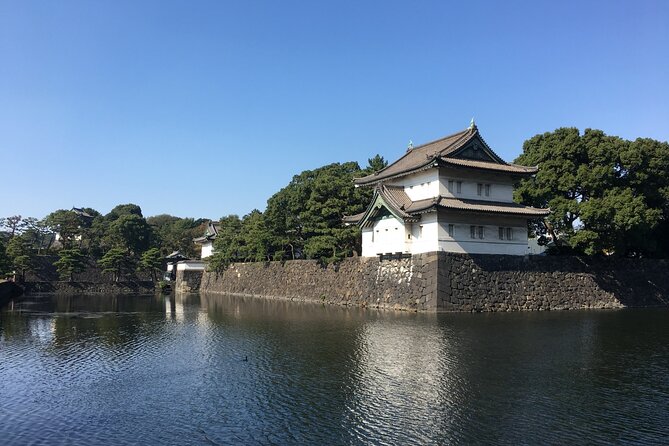
Tokyo’s past and present meet on this walk. You begin with Edo Castle ruins and samurai guardhouses, then cross into Marunouchi, where polished office towers lead you to the red-brick façade of Tokyo Station. It is a smart route for seeing several sides of central Tokyo without spending a full day on your feet.
I like the peaceful Ninomaru Garden and the chance to see the enormous stone base of Edo Castle’s lost main tower. I also like the finish at Tokyo Station, where you can continue by train, stop for food, or explore the surrounding shops. The main consideration is that this is an outdoor walking tour, and the Inner Palace itself is not included.
In This Review
- Key points to know before booking
- Why this Imperial Palace walk works so well
- Starting at Wadakura Fountain Park
- Entering the East Gardens through Otemon Gate
- Samurai order at Hyakunin Bansho
- A quiet pause in Ninomaru Garden
- Plum trees, castle foundations, and Fujimi-yagura
- Honmaru and the former centre of power
- Palace views at Kokyo Gaien
- From imperial grounds to Marunouchi towers
- Finishing inside red-brick Tokyo Station
- Who should book this walk
- Practical details that affect your choice
- Should you book the Imperial Palace to Tokyo Station walk?
- FAQ
- How long does the Imperial Palace to Tokyo Station tour last?
- Where does the tour start?
- Where does the tour end?
- Is admission included?
- Does the tour enter the Inner Palace?
- How many people can join the tour?
- Can I cancel for a full refund?
Key points to know before booking
- Edo Castle remains are the main attraction: See gates, stone walls, a guardhouse, watchtower, and the former keep site.
- The route connects old and new Tokyo: Move from gardens and moats to Marunouchi skyscrapers and Tokyo Station.
- The tour lasts about 2 hours 30 minutes: The schedule includes many short stops, so expect a steady walk rather than long visits at each site.
- Groups are capped at 12 people: That is small enough to hear the guide and ask questions.
- Guide quality is a major part of the value: Naoki, Futami, Masa-san, and Mitsuko Shirai are among the guides associated with the tour.
- The Inner Palace is not part of the visit: You explore the East Gardens and exterior areas, not the private imperial compound.
Why this Imperial Palace walk works so well
At $39.09 per person, this is not a bargain if you only want a stroll through a public garden. The gardens themselves do not charge admission. You are paying for the guide’s interpretation, the carefully arranged route, and the connection between several sites that are easy to see but harder to understand on your own.
That guide service matters here. A stone foundation can look like just another wall until you learn how it fitted into Edo Castle’s defensive plan. A quiet garden becomes more meaningful when you understand its place within the former castle grounds. Guide feedback describes Naoki as patient, Futami as friendly and engaging, and Masa-san as especially effective with families and teenagers. Mitsuko Shirai, also called Mitsi, is described as kind and well informed.
The group limit of 12 helps keep the walk personal. It is not a private tour, so you will not set every stop or pause whenever you wish. Still, the size should make it easier to hear explanations and ask about Japanese architecture, imperial customs, or the Tokugawa shogunate.
The tour is often booked about 23 days ahead, which is a useful planning clue. If your Tokyo schedule is fixed, reserving ahead makes sense. You receive a mobile ticket, and free cancellation is available up to 24 hours before the start time.
A few more Tokyo bookings worth comparing
- Tokyo: Imperial Palace and Shogun Historical Walking Tour
★ 5.0 · 2,251 reviews - Tokyo: Imperial Palace Japanese History Walking Tour
★ 4.9 · 987 reviews - Tokyo: Shinjuku Historical Walking Tour & Secret Backstreets
★ 5.0 · 530 reviews
Starting at Wadakura Fountain Park
Meet at the Starbucks near Wadakura Fountain Park in Kokyo Gaien. This is a practical starting point because you are already beside the Imperial Palace grounds, with open space and water features nearby.
The park dates from 1961 and was created to mark the marriage of Emperor Akihito. Its fountains give the first few minutes a calm tone before the tour turns toward castle walls and gates. The scheduled stop is only five minutes, so think of it as a meeting and orientation point rather than a full garden visit.
Arrive ready to walk. The route includes gardens, paved plazas, historic stones, and several short climbs or changes in direction. Food and drinks are not included, so buy anything you need before setting off or plan to eat later around Tokyo Station.
Entering the East Gardens through Otemon Gate
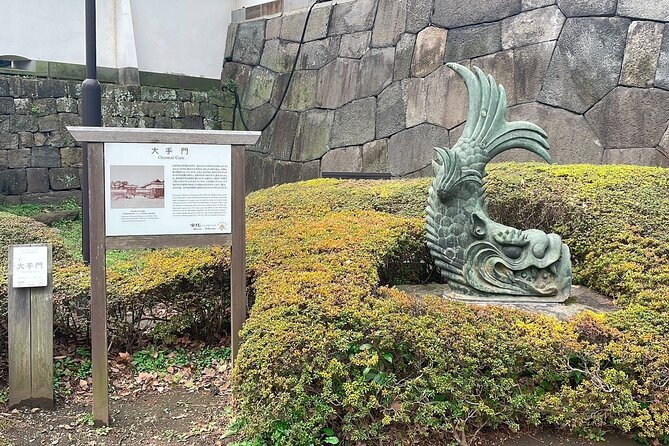
Otemon Gate was the principal entrance to the East Gardens when this area formed part of Edo Castle. The gate’s heavy construction gives you an immediate sense of how carefully access to the shogun’s seat was controlled.
Your guide can help you read the site as more than an impressive entrance. The castle was a political and military centre, and its gates were part of a layered security system. The ten-minute stop should give you time to inspect the approach and hear how the gate related to the castle compound.
Nearby, the Ote-San’no Gate ruins add another piece to that defensive story. Only remnants remain, but the location helps explain how movement through the castle was managed. This is one of the tour’s strengths: the route does not rely only on grand surviving buildings. It also uses fragments and foundations to show what disappeared.
Samurai order at Hyakunin Bansho
The Hyakunin Bansho Guardhouse is one of the most memorable stops for visitors interested in the Edo period. Its name refers to the hundred samurai assigned to guard the castle’s inner sections.
The ten-minute visit gives you a useful link between architecture and daily authority. The guardhouse was not simply a decorative building. It belonged to a strict system of watchfulness, rank, and controlled access.
This is also where a guide can add the detail you would probably miss alone. You can ask about the samurai who served there, the function of the surrounding gates, and how the castle’s inner areas were separated from its outer zones. The stop is short, but the subject has enough substance to reward questions.
More walking routes in Tokyo:
- Tokyo Tsukiji Fish Market Food and Culture Walking Tour
★ 5.0 · 3,184 reviews - Tokyo: Shinjuku Local Bar and Izakaya Guided Walking Tour
★ 4.9 · 1,794 reviews - Tokyo: Tsukiji Fish Market Food and Walking tour
★ 5.0 · 1,724 reviews - Tokyo: Asakusa Walking Tour with Sensoji Temple Visit
★ 4.8 · 1,583 reviews
A quiet pause in Ninomaru Garden
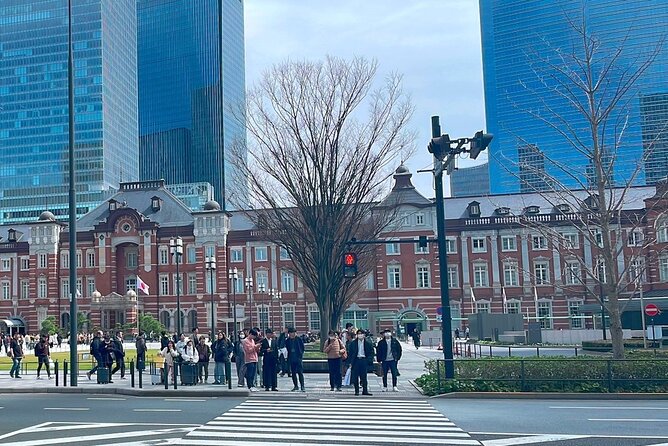
Ninomaru Garden changes the mood completely. After the gates and defensive remains, you enter a carefully arranged Japanese garden with seasonal plants, winding paths, and water features.
I especially like this part of the route because it keeps the tour from becoming a nonstop lesson in military architecture. You get a few quiet minutes to notice the design, take photographs, and see how Japanese gardens use space and movement to create calm.
The visit is scheduled for ten minutes, so you should not expect a long, unhurried garden session. If gardens are your main reason for visiting the palace area, you may want extra time before or after the tour, assuming access and opening arrangements fit your schedule. On this walk, the garden is one chapter in a larger story.
Suwa-no-chaya, a historic teahouse, adds another cultural detail. The teahouse is not operating, so do not plan on having tea there. Its value is visual and historical, a reminder of the role of tea culture within the wider world of the former castle.
Plum trees, castle foundations, and Fujimi-yagura
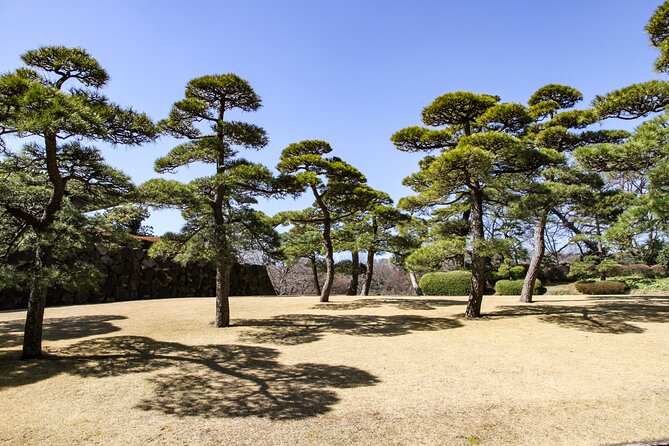
Bairinzaka, or Plum Tree Hill, is a pleasant seasonal stop. Plum trees bloom there, and the area can be especially appealing when the flowers are out. Outside that period, it is still part of the garden route, but the floral display will naturally be less striking.
The walk then reaches the former Edo Castle main keep site. The original keep is gone, but its stone foundations and walls show the scale of the Tokugawa stronghold. This is where the tour’s historical interpretation earns its fee. You are not looking at a reconstructed fantasy castle. You are looking at what survived and using it to picture what once occupied the site.
A scale model of the original keep helps fill in the gaps. Based on historical records and drawings, it gives you a clearer idea of the structure that once dominated the castle grounds. The model is only a short stop, yet it makes the nearby foundations easier to understand.
Fujimi-yagura is one of the remaining watchtowers from Edo Castle. Its former role involved surveillance and defense, and its design gives you a look at the practical side of castle architecture. The ten-minute stop should suit anyone who likes buildings with a job to do, not just buildings made for display.
Honmaru and the former centre of power
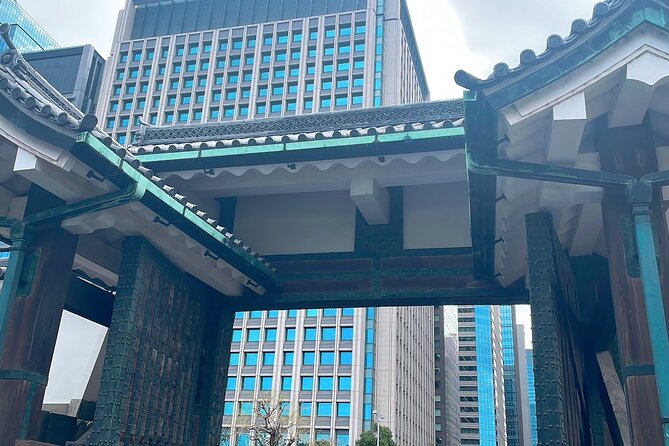
The Honmaru area was the central compound of Edo Castle. It served as the residence and political headquarters of the Tokugawa shogunate, so this is one of the most important locations on the route even though much of the original complex is no longer there.
The site rewards imagination, but the guide keeps that imagination tied to evidence. You can connect the open grounds, foundations, gates, and model to the political system that governed Japan during the Edo period.
The East Gardens section includes many stops, but each one is brief. That pacing is good for a first introduction, especially if you want a broad view of the palace grounds. It is less ideal if you prefer to linger at one site, sketch, photograph, or read every sign at your own speed.
Palace views at Kokyo Gaien
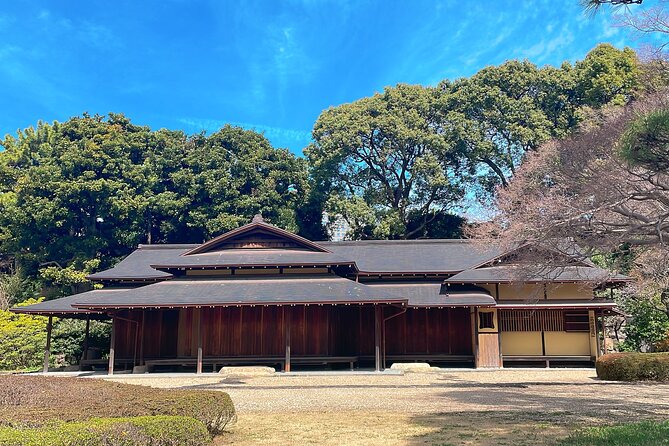
After leaving the East Gardens, the route reaches Kokyo Gaien National Garden. This broad open area offers views toward the palace’s outer structures and Nijubashi Bridge.
It is a good place for photographs because the space opens up after the more enclosed garden paths. The bridge is one of Tokyo’s best-known imperial sights, though the tour does not take you into the Inner Palace. Keep that distinction clear when booking: you see the palace from public areas, not the private compound.
A holiday or special closure can affect what you can access. Guide feedback describes one occasion when the Inner Palace could not be entered because of a holiday, but that area is not included in the advertised tour in any case. The East Gardens and exterior views are the core of this walk.
From imperial grounds to Marunouchi towers
The transition into Marunouchi is part of the appeal. You leave moats, gardens, and castle stones behind and enter one of Tokyo’s leading business districts.
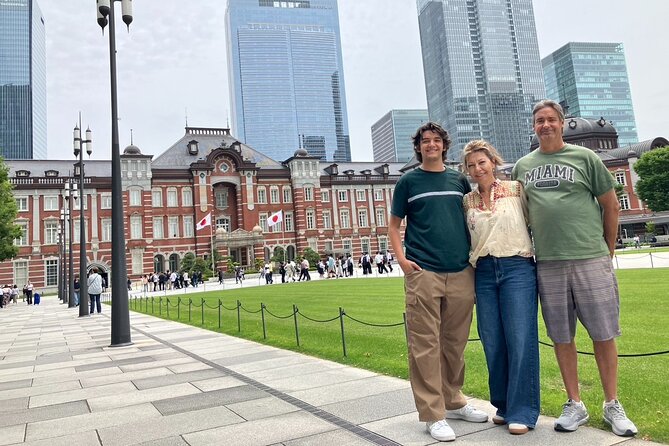
Modern office towers, upscale shops, restaurants, and art installations fill this section. The contrast is not forced. Central Tokyo really does place old power beside modern finance, and the walk lets you see that change on foot instead of treating the palace and station as isolated attractions.
The information provided does not assign a fixed time to the Marunouchi portion, so the exact pace may depend on the guide and group. You should expect an outdoor walk through the district rather than a series of formal building entrances. If you enjoy architecture, this is a chance to ask about the older structures and newer towers as the group moves toward the station.
Finishing inside red-brick Tokyo Station
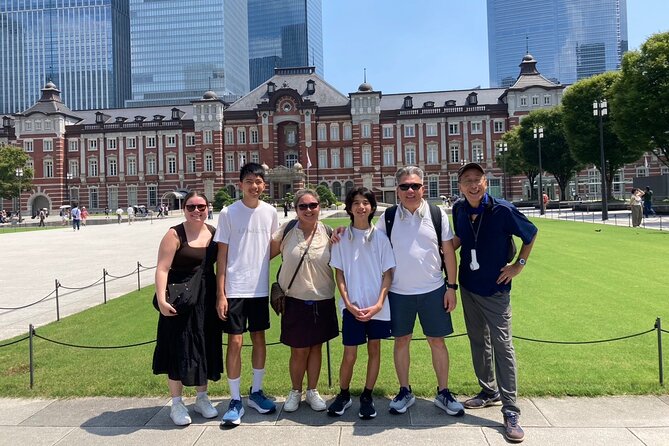
Tokyo Station is the natural finale. Its red-brick exterior was restored to its 1914 appearance, giving the station a strong visual link with the city’s early modern period.
The station is still a working transport hub, not a museum frozen in time. Inside, you will find shops, restaurants, and places to continue your day. The listed stop lasts about 20 minutes, enough for an introduction and orientation, though not enough to explore every corridor.
Ending here adds real practical value. You can catch a train, find a meal, shop, or ask the guide for directions and suggestions. It also makes the tour easy to fit into a larger Tokyo plan. Start with the palace in the morning, or schedule this walk before an afternoon departure from central Tokyo.
Who should book this walk
I would recommend it to first-time visitors who want a clear introduction to Tokyo’s imperial and shogunal past without committing to a full-day tour. It also suits families, since the route mixes open spaces, castle stories, gardens, architecture, and a memorable station finish. Masa-san’s approach worked particularly well for a family with teenage boys, who enjoyed the historical and architectural explanations.
History fans will get the most from the gates, guardhouse, castle foundations, watchtower, and keep model. Architecture lovers will appreciate the shift from Edo Castle remains to Marunouchi buildings and Tokyo Station.
You should think twice if you want a slow photography walk or a long garden visit. The tour covers many stops in 2.5 hours, and the schedule leaves only five or ten minutes at most locations. It is also not the right choice if entering the Inner Palace is your main goal.
Practical details that affect your choice
The tour costs $39.09 per person and includes a local guide. Admission to the listed sites is free, but lunch, drinks, and any personal purchases are your responsibility.
Most participants can take part, and service animals are allowed. The tour is near public transportation and ends at Tokyo Station. Since the route remains outdoors and includes steady walking, comfortable shoes are the sensible choice, though no special fitness requirement is given.
The maximum group size is 12. Guide assignments vary, but names connected with this experience include Naoki, Futami, Masa-san, and Mitsuko Shirai. The most important quality to look for is the guide’s ability to explain the connection between scattered remains. The operator is Reelu Inc., and confirmation arrives at booking.
You can cancel for a full refund up to 24 hours before the start time. Changes or cancellations inside that window are not accepted for a refund, based on local Tokyo time.
Should you book the Imperial Palace to Tokyo Station walk?
Book it if you want context, not just views. The East Gardens are free, but a good guide turns gates, stones, gardens, and watchtowers into a readable story. The route also gives you a satisfying view of Tokyo’s transformation, ending at a station that is both historic and useful.
At $39.09, the value depends on how much you want explanation. You can walk around the palace area on your own for less, but you will likely miss the meaning behind the castle remains and the relationship between imperial grounds, Marunouchi, and Tokyo Station.
I would choose this tour early in a Tokyo visit, especially if you like to get your bearings through history. Skip it only if you need a private pace, a longer garden visit, or access to the Inner Palace. For most visitors seeking a compact, guided introduction to central Tokyo, it is a well-shaped half-day outing.
FAQ
How long does the Imperial Palace to Tokyo Station tour last?
The walking tour lasts approximately 2 hours and 30 minutes.
Where does the tour start?
It starts at Starbucks Coffee near Kokyo Gaien Wadakura Fountain Park, at 3-1 Kōkyogaien, Chiyoda City, Tokyo 100-0002, Japan.
Where does the tour end?
The tour ends at Tokyo Station at 1 Chome-9 Marunouchi, Chiyoda City, Tokyo 100-0005, Japan.
Is admission included?
The tour includes a local guide, and the listed stops have no admission charge. Lunch, food, and drinks are not included.
Does the tour enter the Inner Palace?
No. Access to the Inner Palace is not included and the area is not open to the public as part of this tour.
How many people can join the tour?
The maximum group size is 12 travelers.
Can I cancel for a full refund?
Yes. You can cancel at least 24 hours before the experience start time for a full refund. Cancellations or changes made less than 24 hours before the start time are not accepted for a refund.
New on our Tokyo list
- Tokyo : Kamikaze Street Drift Ride★ 5.0 · 3 reviews
- Private Zen Meditation in English in Shinjuku, Tokyo★ 5.0 · 3 reviews
- Sumi-e Experience in a relaxing green tea shop in Tokyo★ 5.0 · 3 reviews
- Onsen Spa in Tokyo and Asakusa Bar Hopping with Local Guide★ 5.0 · 3 reviews
- Easy for everyone! Now you can play handmade mini shamisen and show off to everyone! Musical instruments, sweets and live music★ 5.0 · 3 reviews
- Tokyo: Private Tsukiji Street Food & Sake with Local Guide★ 5.0 · 3 reviews
- Mt Fuji Exploration Tour with Free Japanese Kusa Mochi from Tokyo★ 4.5 · 3 reviews
- Tokyo Tsukiji Fish Market Walking and Exploring Hidden Gems Tour★ 5.0 · 3 reviews
Historical Tours, compared.

Imperial Palace and Shogun Historical Walking Tour
Read our review →
Yanaka Walking Tour: Historic and Traditional District of Tokyo
Read our review →
Shinjuku Historical Walking Tour & Secret Backstreets
Read our review →
Mt. Fuji Heritage Tour: Traditional Villages, Lakes & Shrine
Read our review →

The Best of Izakaya in Shinjuku Food & Cultural Tour
Read our review →
Yanaka Historical Walking Tour in Tokyo’s Old Town
Read our review →Browse the lists this tour appears in