
Reviewed · SHOPPING TOURS
Kappabashi Knife Shopping Tour with Government-Licensed Guide
Kappabashi is Tokyo’s answer to the question, Where do restaurants get all that excellent equipment? This four-hour private tour takes you from Tsukiji Outer Market to the knife and kitchenware shops of Kappabashi, with Asakusa added for temples, shopping streets, and old Tokyo atmosphere.
I like two things here. First, you get help sorting through Japanese knife types instead of guessing from a wall of gleaming blades. Second, the tour uses walking and trains, so you see how these districts fit together rather than spending the day sealed in a vehicle. The catch is that this is a walking tour, and the $107.50 price does not include transport, meals, purchases, or Skytree fees.
In This Review
- Key points at a glance
- Why knife shoppers should start in Tsukiji
- Reading the knife shops without buying the wrong blade
- Kappabashi Dougu Street, Tokyo’s kitchenware corridor
- The plastic food displays that make Kappabashi fun
- Asakusa adds temples and old Tokyo streets
- Walking, trains, and the real pace of the day
- What the $107.50 price really buys you
- Who will get the most from this private tour
- Smart ways to prepare before you go
- Should you book the Kappabashi knife tour?
- FAQ
- How long does the tour last?
- Which places does the tour visit?
- Is the tour private?
- Is transportation included?
- Is a guide included?
- Are Tokyo Skytree entrance fees included?
- Can I cancel for a full refund?
Key points at a glance
- Knife shopping with context: Learn about different Japanese cooking knives while visiting well-known shops in Tsukiji and Kappabashi.
- Three distinct Tokyo districts: See Tsukiji’s food trade, Kappabashi’s restaurant suppliers, and Asakusa’s traditional streets in one outing.
- Private group format: Only your group participates, with a licensed local English-speaking guide.
- Practical train and walking route: Follow the guide’s instructions as you move between areas on foot and by train.
- Plastic food displays included: Kappabashi is famous for the remarkably lifelike dishes displayed outside Japanese restaurants.
- Flexible finish: You may end near Tokyo Skytree, but entry costs for both you and the guide are extra.
Why knife shoppers should start in Tsukiji
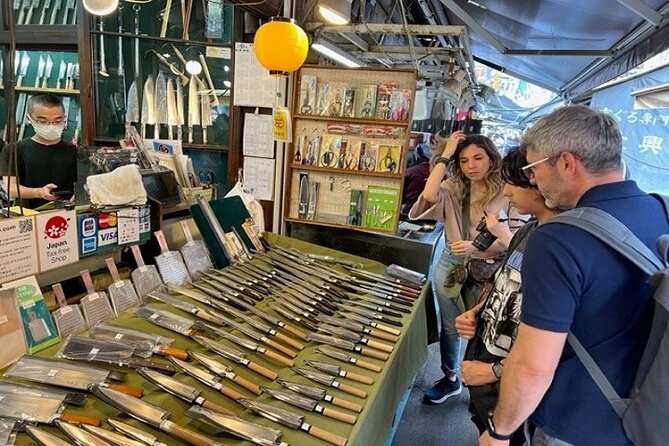
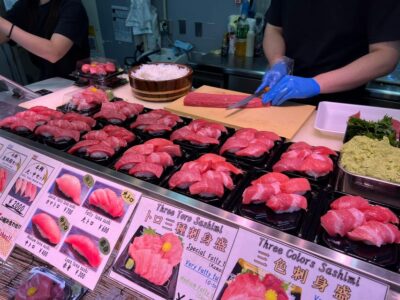
Tsukiji Outer Market is a useful first stop because it puts Japanese knives in their working setting. This is not simply a sightseeing market with a few souvenir stalls. Around 400 shops are packed into an area roughly 400 meters long, serving retailers, restaurants, and other buyers.
Your guide can explain why chefs come here for fresh ingredients and kitchen tools. That connection matters. A Japanese knife is not just a pretty object in a wooden box. Its shape reflects a particular job, from preparing fish to handling vegetables or general kitchen work. The tour is designed to help you understand those differences before you buy.
You have about one hour at Tsukiji. That is enough time for an introduction to the market and a look at knife shops, but not enough for a leisurely crawl through every lane. If you want to eat your way through the area, you should keep your expectations in check. Lunch is not included, and the schedule places more weight on shopping and orientation than on a long meal.
I like the order of the day. Starting in Tsukiji gives you a taste of Tokyo’s food culture before you reach the more specialized stores on Kappabashi Street. It also lets you ask early questions about knife styles, steel, maintenance, and intended use, as long as those details are available from the shop and guide during your visit.
A few more Tokyo bookings worth comparing
- Tokyo Tsukiji Fish Market Food and Culture Walking Tour
★ 5.0 · 3,184 reviews - Tokyo: Tsukiji Fish Market Food and Walking tour
★ 5.0 · 1,724 reviews - Tokyo: Tsukiji Fish Market Guided Walking Tour
★ 4.9 · 1,397 reviews
Reading the knife shops without buying the wrong blade
Japanese kitchen knives can look similar at first glance. The useful part of having a guide is getting a plain explanation of what separates one type from another and how each fits Japanese cooking.
You should arrive with a rough idea of what you want to cook and how often you use a knife. A home cook may want one versatile blade, while someone focused on fish or fine vegetable work may be looking for something more specialized. The guide can help you compare options, but the final purchase remains your responsibility.
Do not assume the most expensive knife is automatically the best choice for you. A high-quality Japanese knife may require more careful handling and maintenance than a basic Western-style kitchen knife. Ask about sharpening, cleaning, storage, and whether the blade suits your experience level before handing over your money.
The tour price does not cover your purchases, so budget separately for the knife itself and any accessories. Kappabashi is known for reasonable prices, but that does not mean every item is inexpensive. A guided visit is most useful if you want to make a considered purchase rather than simply collect a souvenir.
One practical point: check your airline and baggage arrangements before buying a large or valuable knife. The tour information does not provide packing or shipping details, so ask the shop directly about the best way to take your purchase home.
Kappabashi Dougu Street, Tokyo’s kitchenware corridor
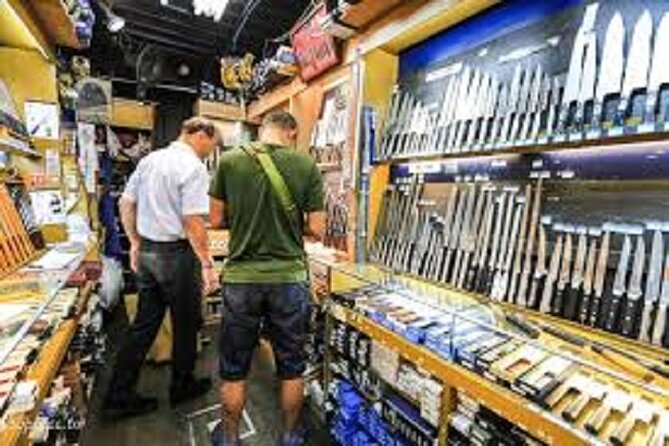
Kappabashi Dougu Street is the heart of this experience. It lies in Taito City between Ueno and Asakusa, along the west side of Asakusa’s main entertainment district. The street has long supplied the food and beverage trade, and its shops sell far more than knives.
You can browse Japanese kitchenware, restaurant tools, dishes, cookware, and other equipment. The selection is aimed at working food businesses, which gives the street a practical character. Even if you do not buy a knife, you might find a tool or serving item that is hard to locate elsewhere.
You have about one hour here. That time goes quickly. Kappabashi is the place to focus your shopping, compare prices, and return to a shop after you have looked around. If you are serious about buying a knife, tell the guide early so the visit does not become a rushed walk past the stores.
The guide’s role is especially useful here because a street built around restaurant supplies can feel confusing. You may see unfamiliar knife shapes, Japanese labels, and displays aimed at professional cooks. A licensed English-speaking guide can give you a starting point and help you use the visit well.
The private format is another advantage. Only your group participates, so the pace can be more personal than a large group outing. You still need to be realistic about the four-hour limit. Private does not mean unlimited time in each shop, and the tour includes three major areas.
The plastic food displays that make Kappabashi fun
Kappabashi’s plastic food shops are one of the most entertaining parts of the route. Japanese restaurants often display highly realistic models of their dishes outside, and Kappabashi is a place to see how those displays are made and sold.
These replicas help you understand a small but memorable part of Japanese dining culture. Before walking into a restaurant, you can often see a model of the meal, its portion, and its presentation. For a visitor who cannot read every menu, the display is also practical.
You might find models that are amusing, strange, or surprisingly convincing. They make a good break from comparing knife handles and blades, especially if someone in your group is less interested in kitchen equipment. The tour specifically includes a chance to stop at these shops, so you do not need to treat them as an accidental extra.
Keep in mind that shopping is optional throughout the tour. You can enjoy the design and craft of the displays without buying one. Personal expenses are not included, so any food model, cookware, knife, or other item comes at your own cost.
Same corner of Tokyo, a completely different plan:
- Mt Fuji and Hakone 1-Day Bus Tour Return by Bullet Train
★ 5.0 · 26,383 reviews - 1-Day Tokyo Bus Tour
★ 5.0 · 14,250 reviews - Tokyo: TOKYO SKYTREE® Admission ticket
★ 4.5 · 11,192 reviews - Tokyo: teamLab Planets TOKYO Digital Art Museum Entry Ticket
★ 4.6 · 9,779 reviews
Asakusa adds temples and old Tokyo streets
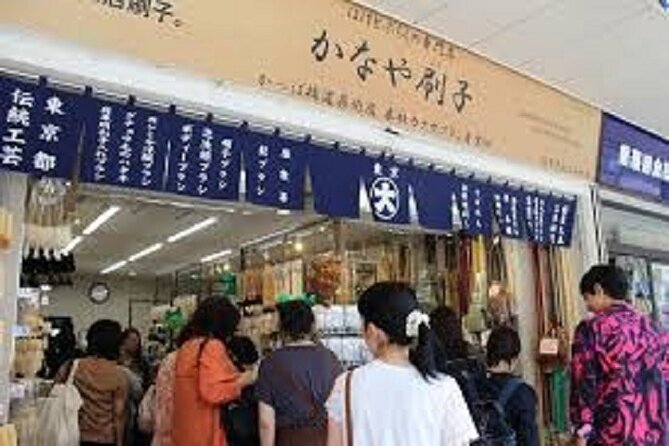
After Tsukiji and Kappabashi, the route continues to Asakusa. This gives the tour a welcome change of mood. Instead of focusing mainly on food trade and equipment, you move into one of Tokyo’s best-known traditional sightseeing areas.
The stated stop includes Nakamise-dori, the shopping street leading from Kaminarimon Gate to Senso-ji Temple. Asakusa also has many smaller and larger retro shopping streets and alleys. You have roughly one hour to take in the area.
This portion is not a separate temple tour with an entrance ticket included. It is a guided stop in a district where you can see major sights, browse shops, and get your bearings. Admission to the listed stops is free, but personal purchases and any paid activities remain your responsibility.
I see Asakusa as a useful finish for two reasons. First, it gives you a broader sense of Tokyo beyond kitchen tools. Second, it leaves you in a district where you can continue sightseeing after the official tour ends. The guide may also direct you toward Tokyo Skytree, another possible place to finish the day.
The tradeoff is time. If Asakusa is your main priority, one hour may feel short. If knives are your main reason for booking, the stop is a pleasant cultural add-on rather than the central event.
Walking, trains, and the real pace of the day
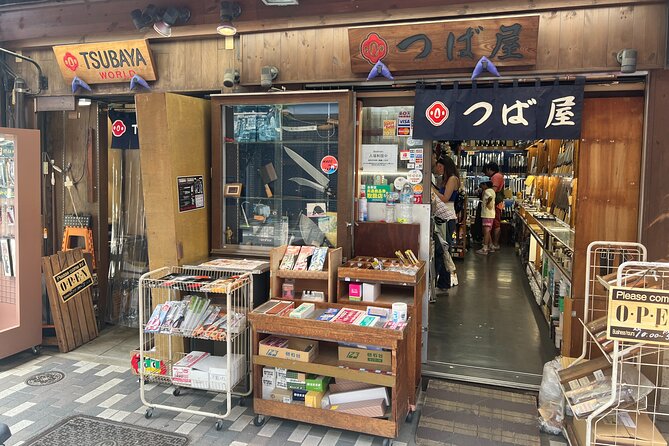
This is advertised as a four-hour experience, but it is not four hours of stationary shopping. You meet the licensed guide on foot within the designated Tokyo area, walk through market and shopping districts, and use trains as needed.
Transportation fees are not included. That means you should carry a little extra money for the train portion, in addition to your shopping and meal budget. The guide can explain how to move between the stops, but you pay your own fares.
One past participant described following the guide’s instructions through the walking and train portions, with the guide making sure the transition after the tour was handled well. That detail points to the practical value of this experience: you are not left to work out every connection alone.
Still, plan for a full morning or afternoon on your feet. The tour information specifically warns that pickup is on foot. Wear comfortable shoes, carry water, and allow room in your schedule for market crowds, shopping decisions, and train movement.
Weather matters too. Tsukiji and Kappabashi are not indoor attractions from start to finish, and the pace may feel tiring in heat, rain, or cold. Most people can participate, and service animals are allowed, but anyone with limited stamina should think carefully about the walking demands.
What the $107.50 price really buys you
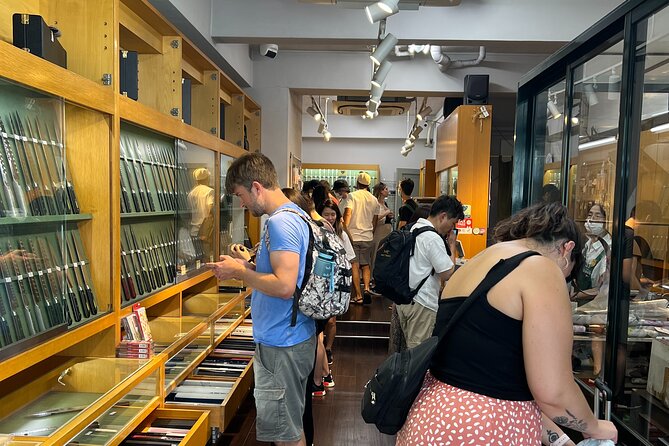
At $107.50 per person, this is not the cheapest way to stroll through Kappabashi. You can visit Tsukiji, Kappabashi, and Asakusa on your own, and admission to the main stops is free.
The price makes more sense if you want help with the knife-shopping part. A guide can explain the purpose of different knives, point out the relevant shops, and help you use a limited shopping window efficiently. You are also paying for a private experience, not a seat in a large mixed group.
The value depends heavily on your goal. If you are only curious about Kappabashi and do not plan to buy anything, the cost may feel high. If you have been hoping to purchase a Japanese kitchen knife but worry about choosing poorly, the guidance may justify the fee.
You should add the cost of trains, lunch, and purchases when planning your budget. Tokyo Skytree is optional, and neither your admission nor the guide’s admission is covered. You can also skip that expense and remain in Asakusa after the tour.
Group discounts are available, which may improve the per-person value for a larger party. The activity is private, but separate tour groups cannot be combined. Confirmation is provided at booking, and free cancellation is available up to 24 hours before the start time.
Who will get the most from this private tour
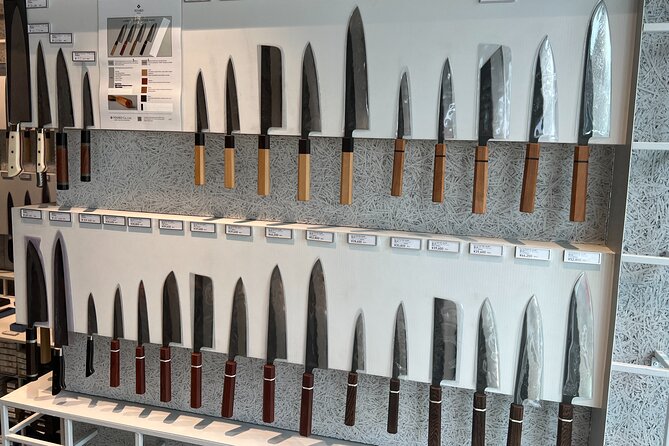
I would recommend this experience most strongly to home cooks, food lovers, and visitors who want a useful Japanese souvenir rather than another generic keepsake. It also suits anyone who likes local shopping but wants a guide to explain what they are seeing.
It works well for a small private group with mixed interests. The knife shopper gets specialized time in Tsukiji and Kappabashi, while other members can enjoy the food market, plastic displays, Asakusa streets, and the option of continuing toward Skytree.
You should be comfortable with walking and trains. This is not a private car tour, and no vehicle is provided. It is also not a long food tasting tour, so choose it for the combination of markets, knife shopping, and neighborhood sightseeing.
The tour may be less suitable if you need a slow pace, want a full day at Tsukiji, or plan to spend hours comparing knives in several stores. Four hours gives you a useful introduction, but serious shoppers may wish they had more time.
Smart ways to prepare before you go
Think about your knife needs before meeting the guide. Decide if you want an all-purpose knife, a blade for vegetables, or something designed for a particular style of cooking. You do not need to know the Japanese names in advance, but a clear purpose will make the shopping conversation more useful.
Set a spending limit and leave room for related kitchen tools. Kappabashi offers plenty of distractions, and a fixed budget helps you enjoy the browsing without making an impulse purchase.
Wear shoes suitable for several hours of walking. Bring a payment method you are comfortable using in shops, though the available payment options are not specified. If you want to eat at Tsukiji, plan for lunch separately since it is not included.
Finally, keep your afternoon open after the tour. You can stay in Asakusa or continue toward Tokyo Skytree at your own pace. That flexibility is one of the better features of the route, especially if you do not want to rush straight back to your hotel.
Should you book the Kappabashi knife tour?
Book it if Japanese knives are a real interest, you want a private English-speaking guide, and you like the idea of combining practical shopping with Tsukiji and Asakusa. The strongest part is the connection between Tokyo’s food trade and the tools used in Japanese kitchens.
Skip it if you mainly want a cheap market visit or a long, relaxed food crawl. The price is a premium for guidance and convenience, while transport, meals, purchases, and Skytree admission remain extra.
For the right person, this is a focused way to turn knife shopping into a fuller Tokyo outing. You get useful buying context, three different neighborhoods, and the freedom to continue sightseeing once the four hours are over.
FAQ
How long does the tour last?
The experience lasts approximately four hours.
Which places does the tour visit?
The route includes Tsukiji Outer Market, Kappabashi Dougu Street, and Asakusa. You may also finish near Tokyo Skytree.
Is the tour private?
Yes. Only your group participates, and separate tour groups cannot be combined.
Is transportation included?
No. The tour uses walking and trains, but transportation fees are not included. Pickup is on foot within the designated Tokyo area.
Is a guide included?
Yes. The tour includes a licensed local English-speaking guide.
Are Tokyo Skytree entrance fees included?
No. Entry fees for both you and the guide are not covered if you visit Skytree.
Can I cancel for a full refund?
Yes. You can cancel at least 24 hours before the experience start time for a full refund. Changes or cancellations made less than 24 hours before the start time are not accepted for a refund.
New on our Tokyo list
- Sumi-e Experience in a relaxing green tea shop in Tokyo★ 5.0 · 3 reviews
- Tokyo : Kamikaze Street Drift Ride★ 5.0 · 3 reviews
- Private Zen Meditation in English in Shinjuku, Tokyo★ 5.0 · 3 reviews
- Onsen Spa in Tokyo and Asakusa Bar Hopping with Local Guide★ 5.0 · 3 reviews
- Easy for everyone! Now you can play handmade mini shamisen and show off to everyone! Musical instruments, sweets and live music★ 5.0 · 3 reviews
- Tokyo: Private Tsukiji Street Food & Sake with Local Guide★ 5.0 · 3 reviews
- Mt Fuji Exploration Tour with Free Japanese Kusa Mochi from Tokyo★ 4.5 · 3 reviews
- Tokyo Tsukiji Fish Market Walking and Exploring Hidden Gems Tour★ 5.0 · 3 reviews
Shopping Tours, compared.

Tokyo Tsukiji Fish Market Food and Culture Walking Tour
Read our review →
Tsukiji Fish Market Guided Tour and Sushi Making with Pro Chef
Read our review →Tsukiji Fish Market Food and Culture Walking Tour
Read our review →
Tsukiji Fish Market: Street Food & Culture Walking Tour
Read our review →
Tsukiji Fish Market Small-Group Food Walking Tour
Read our review →
Tsukiji Fish Market Sushi Making Class with Pro Chef
Read our review →Browse the lists this tour appears in