Reviewed · GUIDED
Kawagoe 6hr Private Tour with Licensed Guide (Tokyo/Kawagoe dep)
Kawagoe gives you a taste of old Japan only about 30 minutes from Tokyo, and this private tour lets you shape the day around your interests. Choose three or four stops with your licensed guide, then let the guide handle train routes, local buses, translation, and the small details that can slow you down.
I like the one-group format, which makes it easier to set a comfortable pace, and I like the chance to meet the guide at your hotel or another agreed spot in Tokyo or Kawagoe. Guides named Taka, Isao, and Show have led past tours, with Isao taking special care to avoid stairs for guests with limited mobility.
The main catch is cost and flexibility. At about $153 per person, the tour is good value for a couple or small group that wants help with transport and context, but less so if you only want to stroll the old street on your own. Weekend crowds can also take some shine off Kawagoe.
In This Review
- Key points to know before you book
- Why Kawagoe works as a half-day escape from Tokyo
- Meeting your guide and getting around
- Starting with the Bell of Time
- Eating around Koedo Yokocho
- Reading Kawagoe’s warehouse streets
- Seeing the castle at Naka no Mon and Honmaru Palace
- Choosing between the city museums
- Visiting Kitain Temple
- Visiting Hikawa Shrine for a different mood
- Adding Kawagoe Onsen to the day
- What the $153 price means
- Timing, crowds, and walking
- Who will get the most from this tour
- Should you book the Kawagoe private tour?
- FAQ
- How long does the Kawagoe private tour last?
- Where does the tour begin?
- Is hotel pickup available?
- Is transportation included?
- How many sights can I choose?
- Is the tour private?
- Are admission fees included?
- Is lunch included?
- Can I cancel for a full refund?
Key points to know before you book
- Pick three or four sights: You are not expected to complete all ten listed stops in six hours.
- Meet in Tokyo or Kawagoe: Pickup is on foot, with no private vehicle included.
- Public transport is part of the day: Train and local transport fees are extra, but your guide helps with the routes.
- The best mix includes old streets and one major interior: Pair Kurazukuri warehouses with Kitain Temple, the castle palace, or the city museums.
- Saturday can be crowded: Visit on a weekday if you want a calmer look at Kawagoe’s historic center.
- Onsen is an option, not a free extra: Kawagoe Onsen admission and personal costs are not included.
Why Kawagoe works as a half-day escape from Tokyo
Kawagoe is known as Little Edo because it preserves the look and feel of a historic castle town. The old warehouses, temples, shrine grounds, food shops, and castle remains offer a change of pace from Tokyo’s tall buildings and packed rail lines.
The six-hour length is useful because Kawagoe is easy to reach but not always easy to plan. You need to watch train and bus connections, decide which sights are open, and judge how much time to spend walking between them. A private guide removes much of that guesswork.
You will not visit every place listed in one outing. The experience is built around selecting three or four priorities, so your day could focus on architecture and temples, local food, a traditional bath, or a mix of all three.
That choice matters. If you try to squeeze in every temple, museum, palace, and shopping street, you will spend too much time moving and not enough time looking. I would choose one broad theme, then add a contrasting stop.
A few more Tokyo bookings worth comparing
- Mt Fuji and Hakone 1-Day Bus Tour Return by Bullet Train
★ 5.0 · 26,383 reviews - 1-Day Tokyo Bus Tour
★ 5.0 · 14,250 reviews - Tokyo: TOKYO SKYTREE® Admission ticket
★ 4.5 · 11,192 reviews
Meeting your guide and getting around
The guide meets you on foot at an agreed location within the designated Tokyo or Kawagoe area. The tour does not include a private car, so you should expect trains, local transport, and walking.
For many visitors, that is a feature rather than a flaw. Getting to Kawagoe by public transport gives you a small slice of everyday Japanese travel, and the guide can help with the parts that are less clear when you cannot read the signs. One past guide, Taka, met guests at their hotel and accompanied them by train to Kawagoe.
Do remember that transport fees are extra. The same applies to entrance fees, lunch, and personal purchases. Guide entry fees are covered only for the sights included in the expected tour options, so confirm the plan before you set out.
The tour is private, which means you are not waiting for strangers or adjusting your pace to a large group. You can spend longer at a temple, shorten a museum visit, or stop for food if that suits your group.
Starting with the Bell of Time
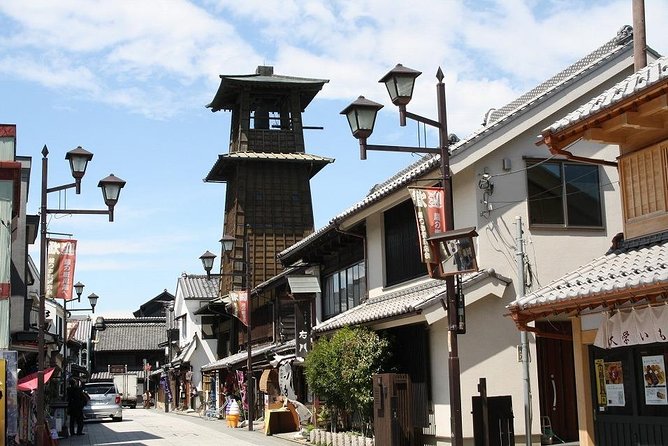
The Bell of Time, or Toki no Kane, is one of Kawagoe’s best-known landmarks. The wooden bell tower once marked the hours in a town without clocks, and it still rings at set times, including 6 a.m., noon, and 3 p.m.
The planned stop is brief, around five minutes, so think of it as a landmark and orientation point rather than a major visit. Your guide can explain how the bell fits into the old town before you continue along the warehouse district.
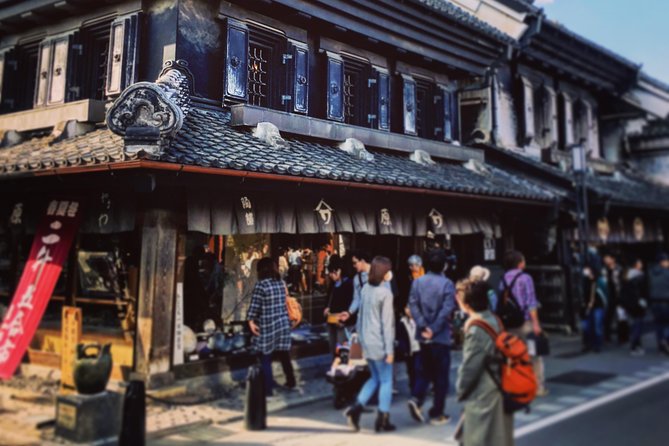
The surrounding streets are often more important than the tower alone. Look up at the dark wooden and plaster facades, then notice how many of the old commercial buildings now hold shops and restaurants. That mix is part of Kawagoe’s appeal, but it also explains why the area can feel more commercial than preserved.
Eating around Koedo Yokocho
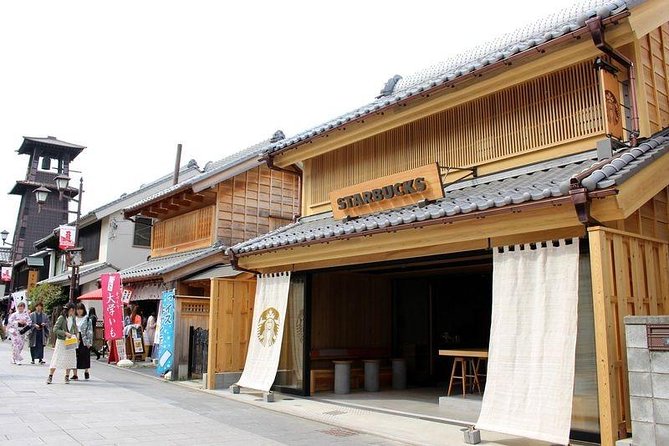
Koedo Yokocho is a practical food stop in a warehouse-style building. Restaurants serve dishes such as kamameshi, a rice meal cooked with meat and vegetables in a small pot, along with ramen and other Japanese food.
You get about 30 minutes here, enough for a quick meal or a look around, but not necessarily enough for a leisurely lunch if the area is busy. There is also a free rest area, which helps if you need a seat between sightseeing stops.
Food is one of the strongest reasons to include this part of the tour. A past itinerary included handmade udon that proved memorable enough to make the trip worthwhile for one guest. Your guide can help with ordering and explain local choices, but lunch itself is not included in the price.
If food is a priority, tell the guide at the beginning. Otherwise, the six-hour schedule may favor sightseeing, leaving only a short pause for eating.
Same corner of Tokyo, a completely different plan:
- Tokyo: teamLab Planets TOKYO Digital Art Museum Entry Ticket
★ 4.6 · 9,779 reviews - Mt Fuji & Hakone Cruise, Drum Show Bullet Train 1 Day from Tokyo
★ 4.0 · 7,413 reviews - Tokyo: Sumo Show Experience with Chicken Hot Pot and a Photo
★ 4.8 · 6,678 reviews - Tokyo: Shinjuku Food Tour (13 Dishes at 4 Local Eateries)
★ 5.0 · 6,603 reviews
Reading Kawagoe’s warehouse streets
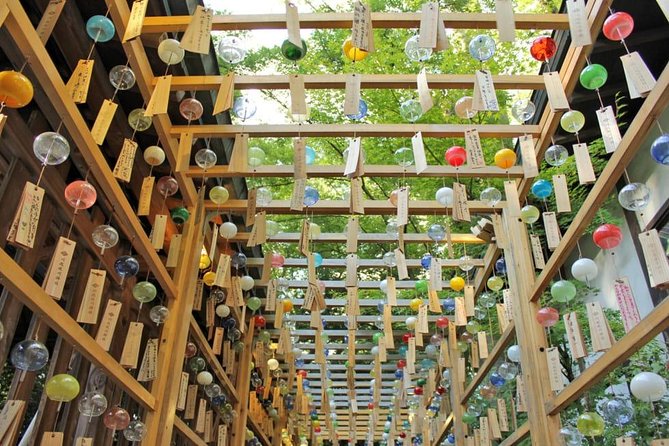
The Kawagoe Kurazukuri Museum explains the warehouse architecture that gives the old center its distinctive look. Kawagoe grew as a castle town, and wealthy merchants built fire-resistant storehouses with thick walls and heavy construction.
The museum stop lasts about 30 minutes. That is enough for a focused visit, especially if you want the basic story behind the streets rather than a long museum session. Admission is extra.
The old buildings are attractive, but you should set your expectations correctly. Many now operate as shops, cafes, and restaurants. That keeps the district lively, yet it can make the experience feel less like an untouched historic quarter and more like a preserved shopping area.
I would still include the museum if you care about architecture. It gives meaning to the facades you see outside, and the guide can point out what you might otherwise walk past.
Seeing the castle at Naka no Mon and Honmaru Palace
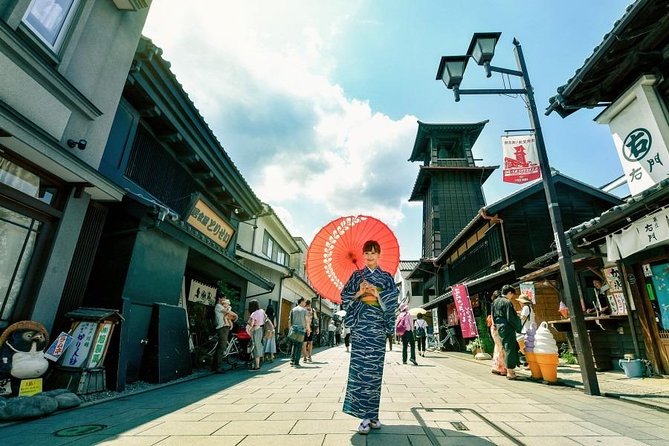
Kawagoe was once a castle town, though most of Kawagoe Castle no longer survives. The Naka no Mon remains and the Kawagoe Castle Honmaru Palace provide a useful look at what remains of that past.
The Naka no Mon stop is listed at about 30 minutes. You can see the surviving entrance area and a few rooms open to the public, with admission extra. It is not a grand castle complex, so this stop suits you if you value fragments and setting rather than a full reconstructed fortress.
Honmaru Palace offers a more substantial castle-related visit. Japanese castle buildings appeal because they connect you with political and social life from earlier centuries, but this palace is not the same as touring a complete castle keep. Again, entry fees are not included.
I would choose one castle stop if your group has limited time. Pick both only if you are especially interested in Japanese castle history and are willing to give less time to the temple or shrine stops.
Choosing between the city museums
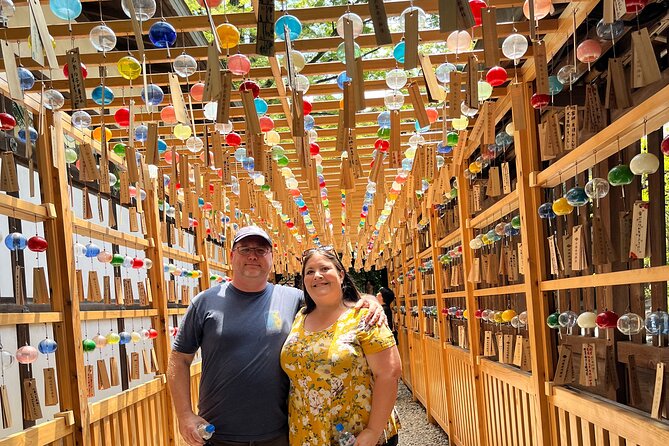
Kawagoe City Museum is another way to understand why the town is called Little Edo. It focuses on the city’s buildings and past, giving you context for the streets, castle connection, and merchant culture.
The planned visit is around 30 minutes, with admission extra. That short slot works best when you want a compact introduction. If you prefer displays and explanations to outdoor sightseeing, ask your guide to give the museum a larger share of the day.
Kawagoe Matsuri Kaikan takes a different approach. It presents the city’s festival tradition and gives you a look at the floats and local customs connected with the Kawagoe Festival.
This is a smart choice if your trip does not line up with a festival or you want more than temples and old shops. It may be less appealing if your main goal is architecture, food, or a bath. The private format helps here because you can choose the museum that fits your interests instead of following a fixed group route.
Visiting Kitain Temple
Kitain is one of the strongest cultural stops on the list. The Buddhist temple has been associated with Kawagoe for about 1,200 years, and its grounds offer a quieter contrast to the commercial center.
The scheduled visit is about 30 minutes, and admission is listed as free. That makes it an easy addition when you want a meaningful site without adding another ticket to the day.
Allow yourself time to look closely. Temple visits are not just about taking a photograph at the gate. Notice the layout, the wooden details, the atmosphere of the grounds, and the way the temple fits into the surrounding city.
Kitain is also a good choice for groups with mixed interests. Someone who likes history can focus on the temple’s long past, while someone less interested in museums can enjoy the setting and architecture.
Visiting Hikawa Shrine for a different mood
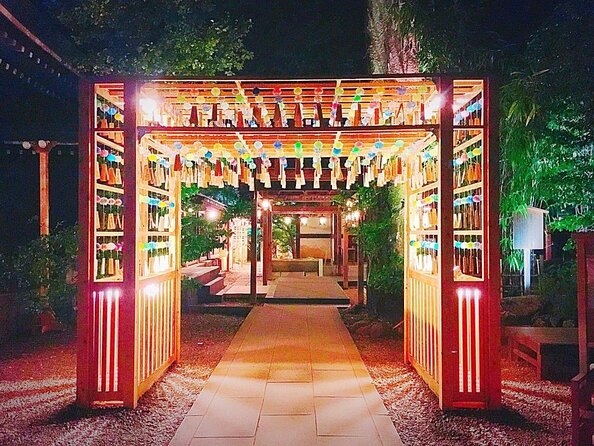
Kawagoe Hikawa Shrine is associated with love and good relationships. Its Enmusubi dama, described as a lucky stone connected with successful relationships, is one reason the shrine draws so much attention.
The visit takes about 30 minutes and admission is free. This stop feels different from Kitain. A Buddhist temple and a Shinto shrine offer two distinct sides of Japanese religious culture, and seeing both helps you understand the variety of sites in Kawagoe.
You do not need to be seeking a romantic blessing to enjoy the shrine. The site works well for anyone interested in local customs, charms, and the everyday role of shrines. Ask your guide to explain how people use the shrine and its amulets.
If you want a day with a softer, more personal feel, pair Hikawa Shrine with the old streets and a food stop. If you want a more formal historical route, choose the shrine with Kitain and one of the museums.
Adding Kawagoe Onsen to the day
Kawagoe Onsen gives the tour a different rhythm. The facility offers natural hot spring bathing along with several wood and stone baths.
Admission is extra, and you should allow enough time for the visit to be worthwhile. A 30-minute stop may introduce the facility, but it does not leave much room for changing, bathing, and relaxing. Discuss the timing with your guide before choosing it.
Onsen etiquette is another reason the private format can help. An English-speaking guide can explain what to expect and help you avoid confusion, though the guide’s entry fee is covered only for sights listed in the expected tour options. Confirm the exact arrangements before booking this option.
I would choose the onsen only if you want the bath to be a real part of the day. It is a poor choice if you are trying to rush through several historic sites.
What the $153 price means
At about $153 per person, this is not the cheapest way to see Kawagoe. You still pay for transportation, lunch, entrance fees, and other personal expenses, and there is no private vehicle.
The price makes more sense for a small group that values time and help. A guide can meet you at a Tokyo location, manage the route, translate, and adjust the day around your interests. Those services are especially useful when you want to combine several kinds of stops without spending your own time planning every connection.
Group discounts may improve the value for larger private parties. Since the activity is limited to your own group, you also get more control than you would on a standard shared excursion.
I would not book it simply to see the Bell of Time and walk one shopping street. You can do that with less expense. I would book it when you want three or four sites, a guide’s explanations, and help getting from Tokyo into Kawagoe and back.
Timing, crowds, and walking
The tour lasts about six hours, but the actual sightseeing time depends on transport, meal stops, and your chosen sites. Several listed stops are set at 30 minutes, so your guide will need to keep the schedule moving.
Weekends deserve caution. Kawagoe’s central streets can become very crowded on Saturdays, making it harder to appreciate the old buildings and slower to move between stops. A weekday is the better choice if you can arrange one.
This is a walking tour, with pickup on foot. Most people can take part, and service animals are allowed, but you should be clear about mobility needs before the day begins. Isao has accommodated guests with limited mobility by walking slowly and avoiding stairs with elevators and escalators where possible.
That does not turn the tour into a fully accessible experience, since the route and selected sights may differ. It does show why you should discuss pace and stairs in advance.
Who will get the most from this tour
I would recommend this experience to first-time visitors to Japan who want a manageable day outside Tokyo without planning every detail. It also suits families, couples, and small groups with different interests because you can choose the stops together.
It is a particularly good match if you want to use public transport but feel unsure about routes, ticketing, or language. The guide makes that part less stressful while still letting you experience the train journey rather than hiding you inside a tour vehicle.
History fans should choose Kitain, the castle remains, and either the Kurazukuri Museum or Kawagoe City Museum. Food-focused groups should reserve time for Koedo Yokocho and ask about local noodles or kamameshi.
I would be more cautious if you dislike shopping streets, crowds, or structured timing. Kawagoe’s old center includes plenty of commercial activity, and the tour’s six-hour window means you cannot linger everywhere.
Should you book the Kawagoe private tour?
Book it if you want a tailored introduction to Kawagoe and value a guide who can manage public transport, translation, and timing. The chance to meet in Tokyo, travel by train, and choose your own three or four sights is the main strength.
Choose a weekday, discuss mobility needs, and decide in advance if food, temples, museums, the castle, or onsen matters most. At $153 per person before transport and entry fees, it earns its price when you use the guide’s help for a full, well-planned day.
Skip it if your plan is only to wander the warehouse streets for an hour or two. For that simpler outing, independent travel may offer better value.
FAQ
How long does the Kawagoe private tour last?
The tour lasts approximately six hours.
Where does the tour begin?
You meet the licensed guide on foot at an agreed location within the designated area of Tokyo or Kawagoe.
Is hotel pickup available?
The guide can meet you at a Tokyo or Kawagoe location of your choice within the designated area. Pickup is on foot, and no private vehicle is included.
Is transportation included?
No. Train and other transportation fees are not included, though the guide helps you navigate public transport.
How many sights can I choose?
You can choose three or four sites from the available options.
Is the tour private?
Yes. Only your own group participates, and separate tour groups cannot be combined.
Are admission fees included?
No. Entrance fees are generally extra. Guide entry fees are covered only for sights included in the listed tour options.
Is lunch included?
No. Lunch and other personal expenses are not included.
Can I cancel for a full refund?
Yes. You can cancel at least 24 hours before the experience start time for a full refund. Cancellations or changes made less than 24 hours before the start time are not accepted for a refund.
New on our Tokyo list
- Sumi-e Experience in a relaxing green tea shop in Tokyo★ 5.0 · 3 reviews
- Tokyo : Kamikaze Street Drift Ride★ 5.0 · 3 reviews
- Private Zen Meditation in English in Shinjuku, Tokyo★ 5.0 · 3 reviews
- Onsen Spa in Tokyo and Asakusa Bar Hopping with Local Guide★ 5.0 · 3 reviews
- Easy for everyone! Now you can play handmade mini shamisen and show off to everyone! Musical instruments, sweets and live music★ 5.0 · 3 reviews
- Mt Fuji Exploration Tour with Free Japanese Kusa Mochi from Tokyo★ 4.5 · 3 reviews
- Tokyo Tsukiji Fish Market Walking and Exploring Hidden Gems Tour★ 5.0 · 3 reviews
- Tokyo: Private Tsukiji Street Food & Sake with Local Guide★ 5.0 · 3 reviews
Guided, compared.
Tokyo 6hr Private Tour with Government-Licensed Guide
Read our review →
Shinjuku Local Bar and Izakaya Guided Walking Tour
Read our review →
Private City Highlights Tour with Local Guide
Read our review →
Tokyo 4hr Private Tour with Government-Licensed Guide
Read our review →
Samurai Ninja Museum Guided tour and Experience
Read our review →