
Reviewed · CYCLING TOURS
Little Adventure with Cycling in Tokyo No. 1 Crystal Clear River
Tokyo is not only neon streets and packed train platforms. About an hour by train from central Tokyo, the Akigawa Valley offers forest roads, clear river water, old temples, and mountain villages. This six-hour tour links them by electric bicycle, then adds a river walk, a waterfall, lunch by the water, and a hot-spring footbath.
I like two things here. First, the e-bikes let you cover enough ground to see several parts of the valley without turning the day into a hard cycling workout. Second, the small group, limited to six people, gives the outing a personal feel. Guide Kenji is praised for being kind and accommodating, including when rain forced a change of plan.
The main consideration is weather. The river trekking depends on suitable conditions, and the tour can be canceled for poor weather. You also need to be comfortable cycling, walking through a river in waterproof gear, and spending much of the day outdoors.
In This Review
- Key points to know before you book
- Why this feels like a different Tokyo day
- Starting at Tokyo Urayama Base
- Kotokuji Temple and the old valley
- E-biking past bridges, gardens, and cafés
- Riverside lunch with a Cuba sandwich box
- River trekking to a waterfall
- Cycling back toward Seoto no Yu
- Finishing with a hot-spring footbath
- What the $143.34 price represents
- Weather, fitness, and what to bring
- Who will enjoy this Akigawa Valley outing
- Should you book it?
- FAQ
- Where does the tour start?
- What time does the activity begin?
- Where does the tour finish?
- How long does the tour last?
- How many people can join?
- Is lunch included?
- Does the tour include a hot spring?
- What happens if the weather is poor?
Key points to know before you book
- Six hours in the Akigawa Valley: You leave the city behind without committing to an overnight stay.
- Electric bikes do the heavy work: The ride includes scenic bridges, temples, gardens, and valley views.
- Water trekking is the day’s unusual highlight: Waterproof equipment is used for a walk through the river to a waterfall.
- Lunch is served outdoors by the river: The included meal is a special Cuba sandwich lunchbox.
- A hot-spring footbath closes the outing: You can rest your legs and browse for souvenirs at Seoto no Yu.
- Small groups make a difference: The maximum of six people suits anyone who prefers a quieter, more flexible tour.
Why this feels like a different Tokyo day
The trip begins at Tokyo Urayama Base in Akiruno, west of central Tokyo. The setting changes quickly. Instead of city blocks and department stores, you get the upper Tama and Akigawa Rivers, wooded slopes, bridges, and traces of older village life.
This area also helps explain a less familiar part of Tokyo’s past. Forestry and charcoal production once connected these mountain communities with Edo, the old name for Tokyo. You are not simply being taken to a pretty river. You are seeing the natural area that helped supply the historic capital.
That context gives the ride more meaning. A bridge or temple is not just a photo stop. The guide can explain how the valley fits into the story of Tokyo, while you see the forests and waterways that made this region useful long before modern tourism.
I would choose this tour if you have already seen the main central districts and want a day with more space, fresh air, and local character. It is also a good choice if you want to see rural scenery without arranging trains, bike rental, meals, and a hot spring on your own.
A few more Tokyo bookings worth comparing
- Tokyo Guided Small-Group Biking Tour
★ 5.0 · 1,250 reviews - Tokyo Great Cycling Tour
★ 5.0 · 811 reviews - Tokyo Top Highlights 3h Guided E-bike Tour
★ 5.0 · 714 reviews
Starting at Tokyo Urayama Base
The meeting point is Tokyo Urayama Base, at 219-7 Tateya, Akiruno, Tokyo 190-0163. The start time is 10:00 in the morning, and the activity ends back at the same meeting point.
The tour is near public transportation, which matters because this is not a private-car excursion. The supplied details describe the area as roughly an hour by train from central Tokyo, so you can make it a day trip rather than booking a room in the valley.
Give yourself enough time to reach the meeting point. The tour begins with preparation and an introduction to the electric bicycles, so arriving rushed could make the first part less pleasant. The bikes are one of the practical strengths of the outing, but you still need to be ready for a day of movement.
The maximum group size is six. That is small enough for the guide to keep an eye on the group during cycling and the river walk. It also avoids the feel of a large coach excursion, where you spend more time waiting for people than enjoying the scenery.
Kotokuji Temple and the old valley
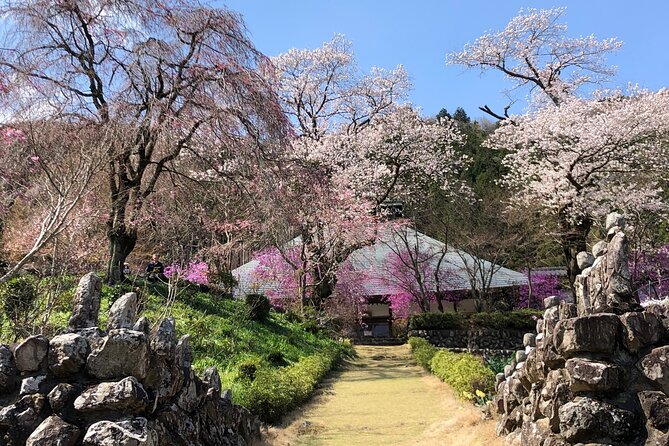
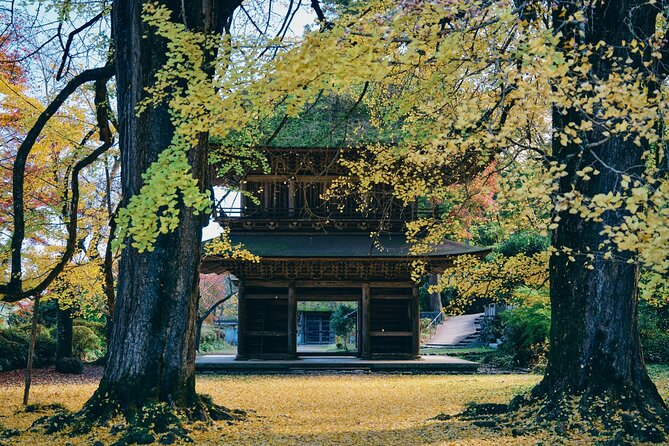
The first stop is Kotokuji Temple. You pass through a striking thatched gate, see a giant ginkgo tree, and hear about the temple’s history. The stop lasts about 30 minutes and admission is free.
This is a good opening because it slows the pace before the cycling begins. The gate and ginkgo tree provide an immediate sense of place, and the temple helps connect the present-day valley with older Japanese customs and buildings.
Do not expect a huge temple complex with rows of souvenir shops. The appeal is the setting and the quiet detail. You are taking in a local religious site rather than checking off one of Tokyo’s famous landmarks.
The temple stop also gives you a chance to ask questions before heading out. If you are interested in the relationship between the valley, forestry, and Edo, this is a useful moment to get the historical background in place.
E-biking past bridges, gardens, and cafés
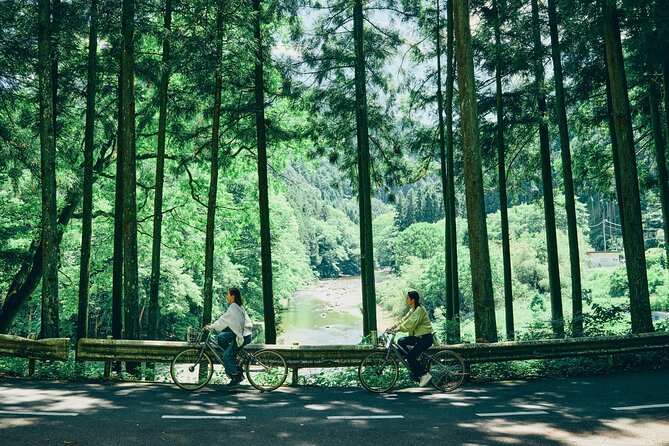
After preparing at Kurochaya, you ride an electric bicycle with the guide during the first half of the tour. The route includes scenic bridges, old temples, Japanese gardens, and cafés with terraces looking over the valley.
The electric assist is important. It lets you travel farther than you could on foot and makes the day accessible to most people who can ride a bicycle, without requiring a serious level of fitness. You still pedal, but the motor helps reduce the strain.
I like the way this part combines movement with short scenic stops. You are not locked into one viewpoint. The route lets you see the river from bridges, pass through older parts of the valley, and pause at places where the guide can point out details you might miss on your own.
The pace should suit people who want to look around rather than race. Still, cycling is an active part of the outing, and the exact road conditions or pace are not specified. If you rarely ride a bike, tell the guide early so you can ask about the route and get comfortable with the e-bike before setting off.
The cafés and gardens add variety, but they are part of the route rather than a promise of a long café break. The focus remains on seeing the valley by bicycle. If you want a full café-hopping day, this is not the right tour. If you like having a few scenic pauses within a larger outdoor trip, it fits well.
Same corner of Tokyo, a completely different plan:
- Mt Fuji and Hakone 1-Day Bus Tour Return by Bullet Train
★ 5.0 · 26,383 reviews - 1-Day Tokyo Bus Tour
★ 5.0 · 14,250 reviews - Tokyo: TOKYO SKYTREE® Admission ticket
★ 4.5 · 11,192 reviews - Tokyo: teamLab Planets TOKYO Digital Art Museum Entry Ticket
★ 4.6 · 9,779 reviews
Riverside lunch with a Cuba sandwich box
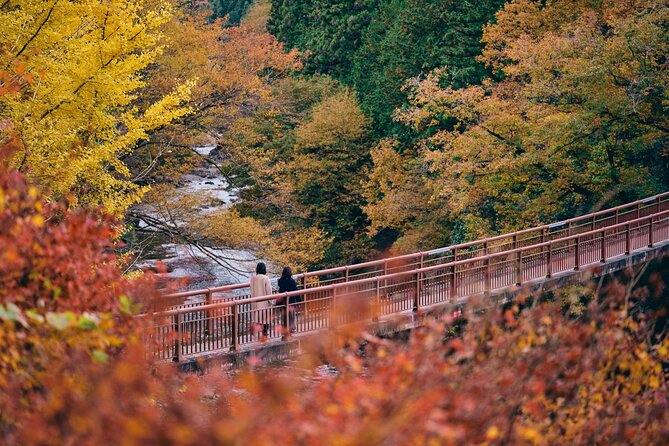
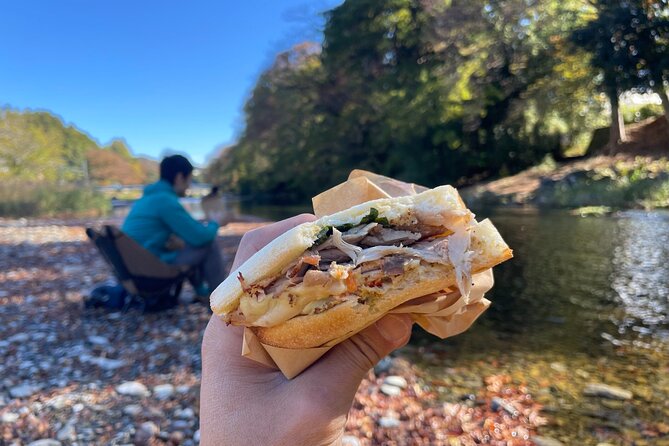
The schedule places lunch beside the Akigawa River from noon until 1:00 p.m. Outdoor chairs are set up at a special riverside spot, and the meal is a Cuba sandwich lunchbox.
This is one of the small touches that makes the trip feel different from a standard sightseeing route. You are eating outdoors beside the water instead of stopping at a generic restaurant near a station. The setting is part of the meal.
The lunch has a fixed format, so you should not book this expecting a restaurant menu or a long food-focused experience. The Cuba sandwich is a specific meal, and the available details do not list substitutions or dietary arrangements. If you have food restrictions, ask the operator before booking.
The timing is sensible. A noon meal gives you a break before the river trekking section, and the chairs mean you are not expected to eat while standing or balancing food on a rock. The river setting can also make this the most memorable meal of your Tokyo visit, especially if you have spent the rest of your trip eating indoors.
River trekking to a waterfall
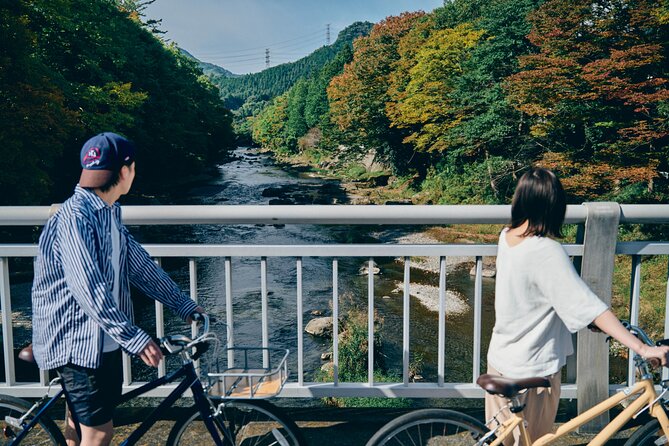
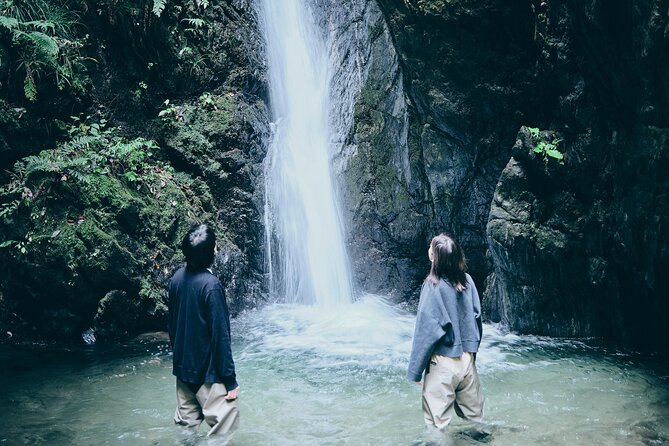
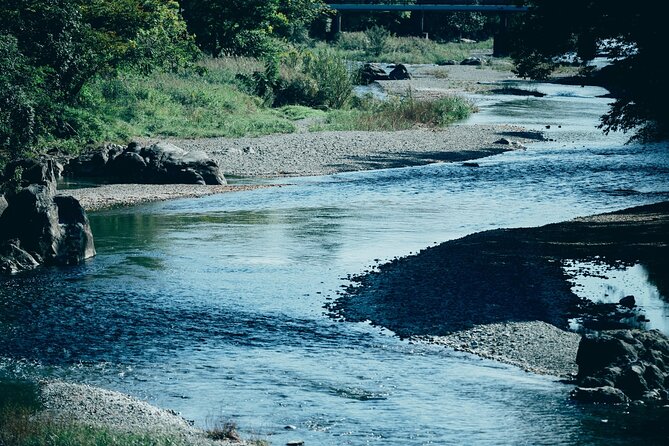
From 1:00 to 2:00 p.m., the tour changes from cycling to river trekking. You put on waterproof gear and walk through the river toward a waterfall.
This is the most distinctive part of the experience. Many Tokyo day trips stop at an overlook or walk a paved trail. Here, you enter the water itself. The combination of clear river water, forest, and a waterfall gives the afternoon a playful quality that you will not find in a normal city tour.
You should treat the word trekking seriously, even if the route is designed for general participation. You will be outdoors, wearing waterproof equipment, and walking through a river. The details do not state how deep the water gets or exactly how strenuous the walk is, so ask the operator if you have concerns about balance, mobility, or cold water.
The weather policy matters most here. This section cannot simply continue in every condition. Poor weather may lead to cancellation, a different date, or a full refund. Rain may also require an adjusted itinerary, as happened on one outing, so you should be ready for the river portion to change.
The payoff is a close look at the valley’s natural side. You are not merely photographing the waterfall from a distance. The walk makes the river the center of the experience, and the waterproof gear lets you enjoy that without worrying about ordinary clothing getting soaked.
Cycling back toward Seoto no Yu
After the river walk, you ride the electric bicycles again from 2:00 to 2:40 p.m. This second cycling section leads toward Seoto no Yu, a hot-spring facility in the Akigawa Valley.
Splitting the ride into two parts works well. You experience the valley on the bike before lunch, then return to cycling after the river activity. The ride gives you time to dry off, look around, and shift from the active river section toward a slower finish.
The route includes a suspension bridge. Crossing it adds another change of viewpoint, with the valley opening below you. It also gives the last part of the outing a clear sense of progress rather than simply retracing the morning.
The supplied timing places the suspension bridge and hot-spring visit from about 2:40 to 3:30. Since the tour lasts around six hours overall, the listed stops do not account for every minute of the day. That likely includes preparation, riding between stops, and transitions, but you should allow the full tour window rather than planning another appointment too closely afterward.
Finishing with a hot-spring footbath
At Seoto no Yu, you get a footbath and time for souvenir shopping. This is not presented as a full hot-spring bathing session. The experience specifically includes a footbath, which is a useful distinction when deciding what to pack and what to expect.
A footbath is a smart ending after cycling and river walking. You can warm and rest your feet without adding another long activity to a day that already includes several moving parts. It also gives you a quiet pause before returning to the meeting point.
The souvenir stop adds a practical local touch. You can browse for something from the valley, though no specific products or shopping allowance are listed. Think of it as a short final stop rather than a dedicated shopping excursion.
The hot spring also reinforces the regional character of the day. In central Tokyo, relaxation often means a café, department store, or spa. Here, the finish ties the outing to a traditional Japanese bathing culture and to the mountain setting you have just explored.
What the $143.34 price represents
At $143.34 per person, this is not the cheapest way to spend six hours outside Tokyo. The value depends on how many parts of the day you would otherwise have to arrange yourself.
The price brings together an electric bicycle, a guide, temple and valley visits, a riverside lunch, waterproof equipment for the river walk, the waterfall experience, and the hot-spring footbath stop. The advantage is not just transport. You get a planned route through several locations and a guide who can explain the area’s connection with Edo, forestry, and charcoal burning.
A self-guided version could cost less, especially if you already have a bicycle and know the area. But arranging a suitable e-bike, finding a safe river route, locating a waterfall, carrying lunch, and coordinating the hot spring would take time. You would also lose the local interpretation and the small-group support.
I see the price as reasonable for someone who values convenience and an unusual day outside the city. It is less compelling if you only want a short scenic ride or if you would rather spend the same money on a longer restaurant meal or a major Tokyo attraction.
The experience is booked, on average, 46 days ahead. That suggests you should not leave it until the last moment if your dates are fixed, especially with a group limit of six.
Weather, fitness, and what to bring
The tour requires good weather. If conditions are poor, the operator may offer another date or a full refund. The minimum group size also matters, since the activity can be canceled if that minimum is not reached, with another date, another experience, or a full refund offered.
Most people can participate, according to the supplied information. Still, the day includes cycling, a river walk in waterproof gear, a suspension bridge, and outdoor seating. You should be comfortable with those activities before booking.
Wear clothing suitable for moving around outdoors. Bring anything you normally need for a six-hour active day, while remembering that waterproof equipment is used for the river section. The available information does not specify whether you need to bring a towel, a change of clothes, or particular footwear, so ask Tokyo Urayama Base before departure.
The tour uses a mobile ticket, and confirmation is received at booking. Keep the ticket accessible on your phone, and plan your train journey carefully so you reach the Akiruno meeting point by 10:00 a.m.
Who will enjoy this Akigawa Valley outing
I would recommend this tour to you if you want a less crowded side of Tokyo and enjoy mixing gentle activity with scenery. It works especially well for visitors who have already seen the major city sights and want a day that feels more local and rural.
It also suits couples, friends, and solo visitors who like small groups. With no more than six people, the guide can offer a more personal experience, and the format leaves room for questions and adjustments. Kenji is described as kind and accommodating, which is useful when weather changes the plan.
Families may find it appealing if everyone can manage the cycling and river walking. The supplied details say most people can participate, but they do not give a minimum age or child-specific rules. Confirm those points before booking with young children.
You may want to skip it if you dislike getting wet, cannot comfortably ride a bicycle, or want a relaxed day with little physical activity. It is also not the best pick if your Tokyo schedule leaves no room for a weather-related change.
Should you book it?
Book this tour if you want nature, local history, and hands-on activity in one day, and if the idea of walking through a river to a waterfall sounds better than another museum. The e-bike makes the valley reachable, the group stays small, and the footbath gives the day a pleasant finish.
Skip it if you need a guaranteed itinerary in all weather, a full hot-spring bathing experience, or a food tour with several meal choices. For everyone else, the $143.34 cost buys a carefully connected day that shows how close Tokyo’s mountain country is to the city.
FAQ
Where does the tour start?
The tour starts at Tokyo Urayama Base, 219-7 Tateya, Akiruno, Tokyo 190-0163, Japan.
What time does the activity begin?
The start time is 10:00 a.m.
Where does the tour finish?
The activity ends back at the meeting point, Tokyo Urayama Base.
How long does the tour last?
The tour lasts approximately six hours.
How many people can join?
The maximum group size is six people.
Is lunch included?
Yes. Lunch is served outdoors beside the river and is described as a special Cuba sandwich lunchbox.
Does the tour include a hot spring?
The tour includes a footbath at Seoto no Yu, along with time for souvenir shopping. The information provided does not describe a full hot-spring bathing session.
What happens if the weather is poor?
The experience requires good weather. If it is canceled because of poor weather, you can be offered a different date or a full refund.
New on our Tokyo list
- Sumi-e Experience in a relaxing green tea shop in Tokyo★ 5.0 · 3 reviews
- Tokyo : Kamikaze Street Drift Ride★ 5.0 · 3 reviews
- Private Zen Meditation in English in Shinjuku, Tokyo★ 5.0 · 3 reviews
- Onsen Spa in Tokyo and Asakusa Bar Hopping with Local Guide★ 5.0 · 3 reviews
- Easy for everyone! Now you can play handmade mini shamisen and show off to everyone! Musical instruments, sweets and live music★ 5.0 · 3 reviews
- Tokyo: Private Tsukiji Street Food & Sake with Local Guide★ 5.0 · 3 reviews
- Mt Fuji Exploration Tour with Free Japanese Kusa Mochi from Tokyo★ 4.5 · 3 reviews
- Tokyo Tsukiji Fish Market Walking and Exploring Hidden Gems Tour★ 5.0 · 3 reviews
Cycling Tours, compared.
3h Tokyo E-Bike Tour: Hidden Gems, and Local Life with guide
Read our review →
3-hour Guided E-Bike Tour of the City’s Hidden Gems
Read our review →
3-Hour Bike/E-Bike Tour of the City’s Highlights
Read our review →Browse the lists this tour appears in