
Reviewed · TOKYO FOOD TOURS
Private Tokyo food scene 6 hour experience: Depatika, street food, izakaya
Tokyo’s food scene gets much more interesting once you leave the famous restaurant streets. This six-hour private tour moves from Ikebukuro department-store food halls to Jujo’s old-school shopping arcade, then finishes in Akabane’s lantern-lit izakaya lanes. It is a full afternoon and evening of eating, drinking, and walking.
I like the range of the route, and I like that the price includes dinner, snacks, and alcoholic drinks rather than leaving you to keep reaching for your wallet. Simon, the guide named in the tour details, brings a friendly, personal feel. The main caution is simple: six hours on foot and several food stops can be tiring, especially if you prefer a slow, seated meal.
In This Review
- Key points
- Why this route works for curious eaters
- Ikebukuro’s department-store food halls
- Jujo Ginza and the old shopping arcade
- Akabane’s lantern-lit drinking lanes
- What the private format adds
- Walking, timing, and meeting details
- Food restrictions and drinking rules
- Who will enjoy this six-hour food walk?
- Should you book Tokyo Memories?
- FAQ
- How long does the Tokyo food tour last?
- Where does the tour start?
- Where does the tour end?
- Which neighborhoods does the tour visit?
- Are food and drinks included?
- Is the tour private?
- Is there much walking?
Key points
- Three very different neighborhoods: Start in Ikebukuro, shop and snack in Jujo, and end among Akabane’s small bars.
- A private experience with Simon: Your group receives personal attention, with room to shape the food walk around your interests.
- Food and drinks are included: Dinner, street snacks, department-store samples, and alcoholic beverages are covered.
- A useful introduction to Japanese food culture: The opening department-store stop shows how food shopping and gift-giving work in Japan.
- A local-feeling route: Jujo and Akabane offer a quieter change from Tokyo’s best-known visitor districts.
- Plan for walking: Comfortable shoes matter, and the tour is not a good fit for anyone seeking a mostly seated tasting.
Why this route works for curious eaters
This is not a single-neighborhood food crawl. It is a moving picture of Tokyo eating, with each stop doing a different job.
Ikebukuro gives you a polished introduction. Jujo brings you down to street level, where small shops and food stalls line an old shopping arcade. Akabane finishes the day with the intimate bar culture that many visitors never see.
I like that progression. You begin with variety and visual appeal, then move toward everyday shopping and finally into the social world of local drinking. You also avoid spending six hours on one crowded tourist street.
The route is especially useful if you are still finding your way around Japanese food. A department-store food hall can look confusing at first, with beautifully packed sweets, prepared dishes, seafood, pickles, and gift boxes all competing for your attention. Having a guide explain what you are seeing gives the food context instead of turning the first stop into a guessing game.
The private format matters here. You are not trying to keep up with a large group while deciding what you can eat. Simon can give your party more direct help, answer questions, and adjust the experience within the available time. The description also calls the tour customizable, so tell the operator about food preferences and dietary needs when booking.
More Tokyo food crawls:
- Tokyo: Shinjuku Food Tour (13 Dishes at 4 Local Eateries)
★ 5.0 · 6,603 reviews - Tokyo: Shinjuku Food Tour (15 Dishes and 4 Eateries)
★ 4.9 · 2,033 reviews - Best of Shinjuku: Izakaya Food Tour (4 Stops, 14+ Tastings)
★ 5.0 · 1,863 reviews
Ikebukuro’s department-store food halls
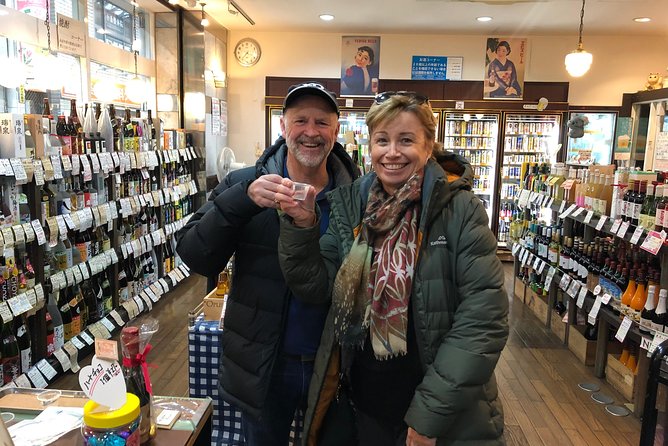
The tour starts at Seibu Ikebukuro Main Store near Ikebukuro Station. You spend about 45 minutes exploring two of Tokyo’s major department-store food halls, with admission included.
This is a smart first stop because Japanese department-store food floors are more than places to grab a quick lunch. They show how carefully food is presented, packaged, and sold. You might see high-end treats meant for gifts, prepared foods for home meals, and small portions that make sampling easier.
The stop also helps explain Japan’s gift-giving culture. A beautifully boxed food item can be as important as the food itself, and the guide can point out details that are easy to miss when you are simply browsing. The experience gives you a useful vocabulary for later food shopping during your stay.
Do not expect the department store to feel rustic or informal. This is the most polished part of the day, and some people may find it less exciting than eating in a tiny neighborhood shop. I see it as orientation: you get a broad look at Japanese food before moving into Jujo’s more traditional shopping streets.
The 45-minute timing is also worth noting. You will sample and inspect rather than sit down for a long meal. That is helpful because the day still has several hours ahead, but it also means you should not treat the opening stop as breakfast or lunch replacement unless you have eaten lightly.
Jujo Ginza and the old shopping arcade
The second stop lasts about two hours in Jujo Ginza Shopping Arcade. Jujo is known for its old-style shoutengai, a covered shopping street where local shops serve the neighborhood.
This is where the tour shifts from department-store presentation to everyday Tokyo. The arcade is a good setting for street food because you can browse at walking speed, pause for small bites, and see how a local shopping district works. The appeal is not one grand attraction. It is the steady run of ordinary shops, food counters, and neighborhood life.
You should expect the guide to choose several things to taste rather than send you to one formal restaurant. That makes the food experience varied, but it also means the exact menu can change. The tour is designed around the area and your group, not around a fixed printed tasting list.
I like this part for two reasons. First, it gives you a chance to eat foods that may not appear on a standard sightseeing route. Second, it lets you see Tokyo as a city of small commercial neighborhoods, not just major stations and famous districts.
There is a practical tradeoff. Shopping arcades can involve standing, walking, and eating in small portions rather than relaxing at a table. If you need a long break, tell Simon early. The private arrangement should make that easier than on a large scheduled group tour, but the overall pace remains active.
The two-hour visit is long enough to feel the place rather than rush through it. You can ask about ingredients, watch how the neighborhood shops operate, and leave room for the evening meal in Akabane. Come hungry, but not empty. You will enjoy the snacks more if you have enough energy for the full route.
Akabane’s lantern-lit drinking lanes
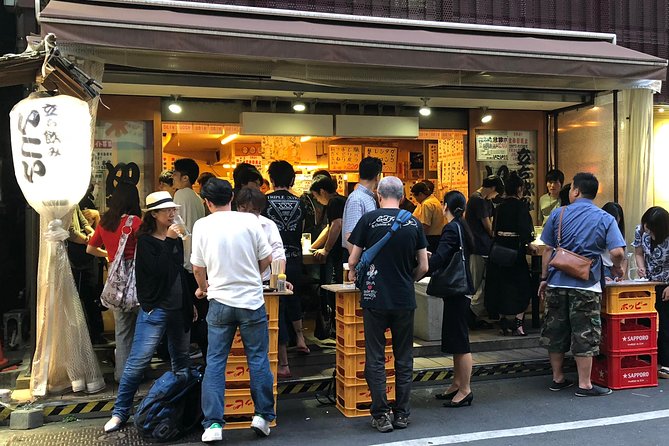
The final three hours take place around Akabane Ichiban-gai Shopping District. This is the evening centerpiece, with narrow lanes, small bars, and izakayas.
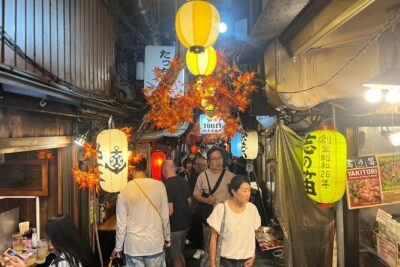
Akabane offers a different side of Tokyo from the sleek department stores and well-known central districts. The area is described as retro, with lantern-lit alleys and compact drinking spots. The setting is part of the experience. You are not simply being served dinner in a large restaurant. You are getting a look at a local entertainment district where food and conversation go together.
Dinner and alcoholic beverages are included. That is important because izakaya dining often works through several shared dishes, drinks, and small orders. With the cost included, you can focus on trying the food rather than calculating every extra charge.
The three-hour timing gives the guide room to settle into the evening. You might visit a local bar or izakaya, sample several dishes, and learn how this style of dining differs from a standard restaurant meal. The exact choices are not specified, so you should ask about any firm dietary restrictions before the tour begins.
This is also the part that requires the most personal comfort. Smoking is allowed in bars and restaurants in Japan, and the operator does not recommend the tour for pregnant women for that reason. If smoke bothers you, ask about the planned venues before committing. Alcohol is included for those aged 20 and over. Anyone under 20 receives soft drinks instead.
I like ending in Akabane because the route builds toward a social meal. By then, you have already sampled food in two other settings, and the final stop can feel less like a lesson and more like an evening out. Still, it is not the right choice if you want a quiet, smoke-free dinner in a spacious room.
More Tokyo nights out:
- Tokyo Bar Hopping Tour in Shinjuku (All-You-Can-Drink + Dinner)
★ 5.0 · 3,587 reviews - Tokyo: Shinjuku Local Bar and Izakaya Guided Walking Tour
★ 4.9 · 1,794 reviews - Shibuya Meltdown Nightlife Tour: All-You-Can-Drink Bar Hopping
★ 5.0 · 1,058 reviews - Tokyo: Pub Crawl and Bar Tour
★ 4.5 · 951 reviews
What the private format adds
A private tour costs $247.45 per person, which is a serious price for a six-hour food experience. The value depends on how much you want guidance and how many food and drink stops you would normally manage on your own.
The price includes a private walking guide, snacks, dinner, and alcoholic beverages. It also covers a route through three areas, including transportation between them as part of the guided movement, though your transportation to the starting point and away from the finish is not included. Since the tour begins at Ikebukuro Station and ends at JR Akabane Station, you need to handle your own trip to Ikebukuro and your onward journey from Akabane.
For a private group that plans to eat and drink throughout the afternoon and evening, the package can make sense. You are paying not only for dishes, but for local navigation, ordering help, neighborhood choice, and someone who can connect the stops. The cost is harder to justify if you mainly want a cheap introduction to Japanese snacks or are comfortable choosing restaurants independently.
The private format is particularly useful for food questions. You can explain what you normally eat, ask about unfamiliar ingredients, and let the guide know if you want more emphasis on street food, drinks, or local dining. The tour is described as customizable, but it is wise to be specific when booking rather than assume every preference can be handled on the day.
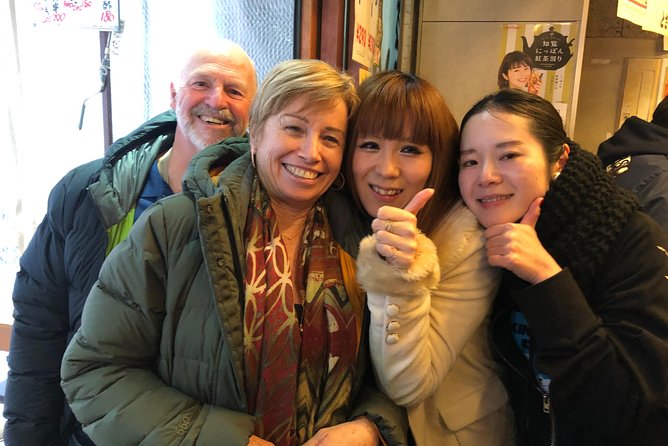
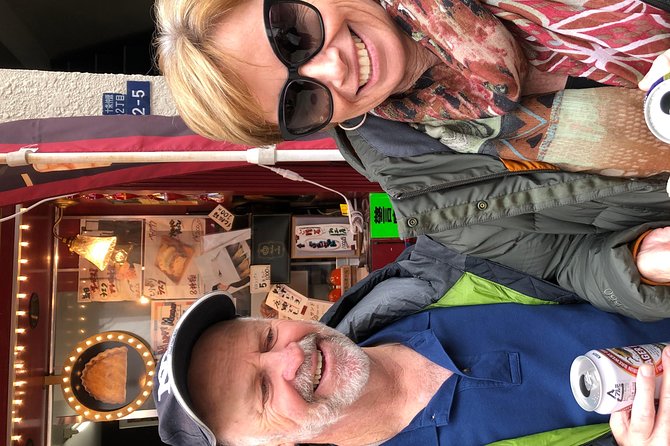
The small-group setting also gives the experience a social feel without the awkwardness of a large tour. One review described Simon as feeling like a friend showing someone around, and that matches the design of the experience: a personal walk through places that are not built around sightseeing crowds.
Walking, timing, and meeting details
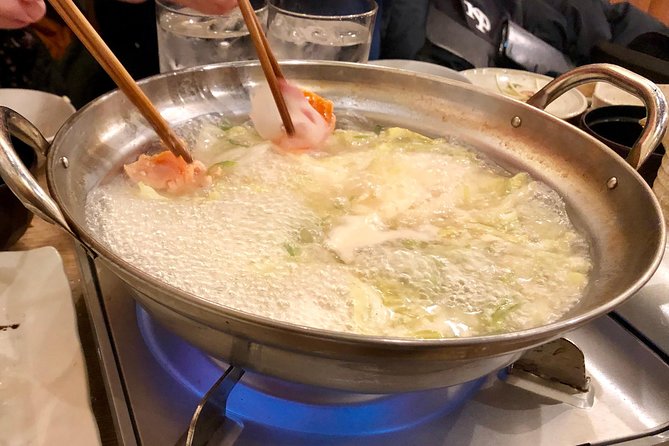
The tour lasts about six hours and is listed for Mondays from noon to 6 p.m. The meeting point is Ikebukuro Station at 1 Chome-28 Minamiikebukuro, Toshima City. Your guide drops you at JR Akabane Station at the end.
That start and finish are useful because you do not need to return to Ikebukuro after dinner. They also mean you should plan your Tokyo day around the route. Avoid scheduling a major attraction immediately before the meeting point if you dislike rushing through stations.
A moderate amount of walking is involved, and the itinerary keeps moving across three neighborhoods. Wear comfortable shoes. You will also want enough energy for the late part of the tour, since Akabane takes up the final three hours.
The tour is near public transportation, and most people can participate. No hotel pickup or drop-off is included. You need to get yourself to the station at the start and arrange your own return after the guide leaves you at Akabane Station.
The 40-day average advance booking figure suggests that planning ahead is sensible, especially if you are visiting on a tight schedule and need a Monday departure. Confirmation is provided at booking, and free cancellation is available up to 24 hours before the start time. Changes or cancellations inside that window are not accepted for a refund.
Food restrictions and drinking rules
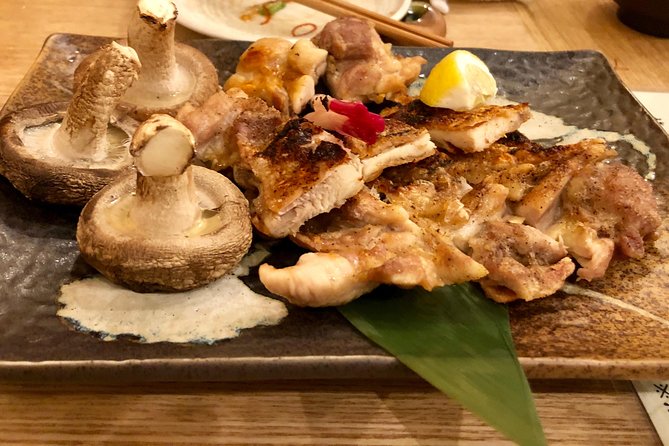
Tell the operator about dietary requirements when you book. The experience moves through department-store foods, street snacks, izakaya dishes, and drinks, so early notice gives the guide a chance to plan around your needs.
The provided details do not promise a vegetarian, vegan, gluten-free, or allergy-specific menu. You should not assume that every stop can accommodate a restriction without advance discussion. If your diet is strict, ask exactly what can be arranged before paying.
Alcoholic drinks are included for people aged 20 and over, which is Japan’s legal drinking age. Those under 20 receive soft drinks instead. That makes the tour possible for mixed-age groups, although the evening portion is clearly built around bar and izakaya culture.
Smoking is allowed in bars and restaurants in Japan, and the tour is not recommended for pregnant women because of that setting. This is not a small footnote. Akabane’s drinking venues are a central part of the final stop, so anyone sensitive to smoke should treat it as a deciding factor.
Who will enjoy this six-hour food walk?
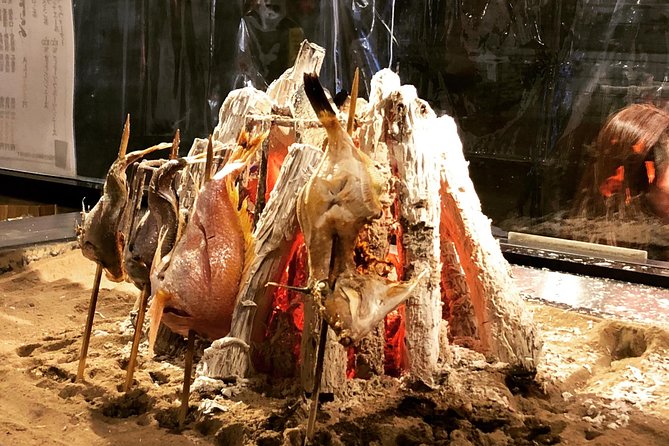
I would choose this tour if you want Tokyo food to come with neighborhood context. It suits people who enjoy trying several small bites, walking between stops, and letting a guide make the ordering decisions easier.
It is also a good match for a first visit if you want more than the usual central Tokyo circuit. Ikebukuro, Jujo, and Akabane give you three different moods without asking you to spend the whole day researching restaurants and train connections.
You will get the most from it if you:
- Enjoy street food and shared dishes
- Want dinner and drinks included in one price
- Prefer a private guide to a large group
- Are comfortable walking for much of the afternoon
- Like local bars and casual evening dining
- Want to ask food questions as you go
I would hesitate if you want a fixed menu, a short tasting, a smoke-free evening, or a formal sit-down dinner. The route is broad and active. It favors discovery over control.
Should you book Tokyo Memories?
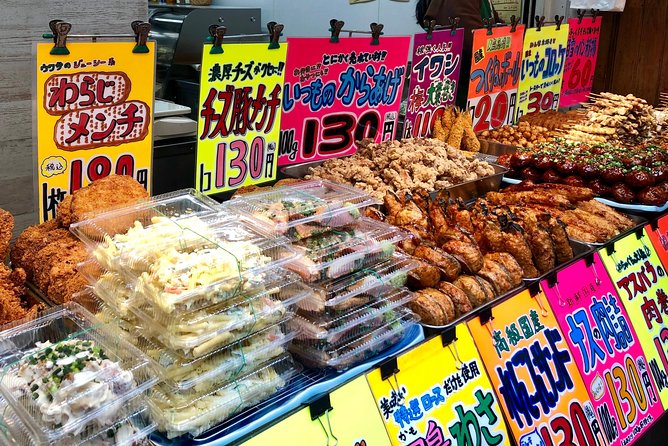
Book it if you want a personal food day that moves beyond famous visitor districts. The combination of department-store food halls, Jujo street snacks, and Akabane izakayas gives you a useful range, and the included meals and drinks help explain the relatively high price.
I especially like the way the day changes character. You begin with food as presentation and gift culture, continue with food as neighborhood shopping, and finish with food as a reason to gather and drink. That is a better introduction to Tokyo’s everyday eating habits than one isolated restaurant reservation.
Skip it if the walking, smoking, Monday timing, or private-tour price does not fit your plans. For everyone else, this is a strong choice for an active foodie afternoon, provided you arrive ready to eat and leave room for a late evening in Akabane.
FAQ
How long does the Tokyo food tour last?
The experience lasts approximately six hours, from 12 p.m. to 6 p.m. on the listed Monday schedule.
Where does the tour start?
It starts at Ikebukuro Station, at 1 Chome-28 Minamiikebukuro, Toshima City, Tokyo 171-0022.
Where does the tour end?
The guide drops you at JR Akabane Station, at 1 Chome-1 Akabane, Kita City, Tokyo 115-0045.
Which neighborhoods does the tour visit?
The route includes Ikebukuro, Jujo, and Akabane.
Are food and drinks included?
Yes. Dinner, snacks, and alcoholic beverages are included. Soft drinks are served to participants under 20.
Is the tour private?
Yes. Only your group participates, and the experience offers personalized attention on a customizable private tour.
Is there much walking?
A moderate amount of walking is involved, so comfortable footwear is recommended. The tour moves through three neighborhoods over six hours.
More Drinking Tours in Tokyo
- Tokyo: Shinjuku Local Bar & Izakaya Crawl Tour
★ 5.0 · 890 reviews - Tokyo: Shinjuku Bar Hopping with All-You-Can-Drink & Dinner
★ 4.9 · 440 reviews - Shibuya: Local Bar & Izakaya Crawl
★ 4.9 · 354 reviews - Ramen and Sushi Cooking Class with Sake Pairing Set in Tokyo
★ 5.0 · 291 reviews
New on our Tokyo list
- Sumi-e Experience in a relaxing green tea shop in Tokyo★ 5.0 · 3 reviews
- Tokyo : Kamikaze Street Drift Ride★ 5.0 · 3 reviews
- Private Zen Meditation in English in Shinjuku, Tokyo★ 5.0 · 3 reviews
- Onsen Spa in Tokyo and Asakusa Bar Hopping with Local Guide★ 5.0 · 3 reviews
- Easy for everyone! Now you can play handmade mini shamisen and show off to everyone! Musical instruments, sweets and live music★ 5.0 · 3 reviews
- Tokyo: Private Tsukiji Street Food & Sake with Local Guide★ 5.0 · 3 reviews
- Mt Fuji Exploration Tour with Free Japanese Kusa Mochi from Tokyo★ 4.5 · 3 reviews
- Tokyo Tsukiji Fish Market Walking and Exploring Hidden Gems Tour★ 5.0 · 3 reviews
Tokyo Food Tours, compared.
Shinjuku Food Tour (13 Dishes at 4 Local Eateries)
Read our review →
Shinjuku Food Tour (15 Dishes and 4 Eateries)
Read our review →
Best of Shinjuku: Izakaya Food Tour (4 Stops, 14+ Tastings)
Read our review →
Tokyo Night Foodie Tour in Shinjuku – Seasonal Sushi, Wagyu Beef
Read our review →
Eat and Drink Like a Local: Tokyo Ueno Food Tour-Taverns&Ramen
Read our review →
Tsukiji Fish Market: Street Food & Culture Walking Tour
Read our review →Shinjuku Food Tour – 15 Dishes, 3 Drinks, 4 Eateries
Read our review →Browse the lists this tour appears in