
Reviewed · TOKYO FOOD TOURS
Private Tokyo Food Tour – A Journey Through Time Through Food
Tokyo’s food story is the real star here. In five and a half hours, you move from Edo-era Nihonbashi to the railway bars of postwar Ginza, then finish with futuristic sweets in Akihabara. The meal becomes a history lesson, but thankfully, one you can eat.
I like the private format, which lets your guide adjust the pace and explain unfamiliar foods without rushing you. I also like the range: 14 tastings include humble fish cake, fermented rice drink, yakitori, curry udon, fruit sandwiches, and fusion desserts. The drawback is the price, $327.75 per person, plus two subway fares, so this works best when you value personal guiding as much as the food.
In This Review
- Key things to know before booking
- Tokyo’s past arrives on a plate
- Nihonbashi: fish cake, amazake, and old-fashioned sweets
- Fukutoku Shrine: a short cultural pause
- Ginza and Yurakucho: eating like a salaryman
- Tokyo International Forum and Marunouchi: a change of pace
- Tokyo Station: commuter food with a sweet twist
- Akihabara: Pokémon taiyaki and food’s modern direction
- What the private format changes
- Is $327.75 a fair price?
- Who will enjoy this most?
- Booking details worth checking
- Should you book this Tokyo food tour?
- FAQ
- How long does the private Tokyo food tour last?
- How many food tastings are included?
- Which Tokyo districts does the tour visit?
- Is hotel pickup available?
- Are subway fares included?
- Is alcohol included?
- Where does the tour end?
Key things to know before booking
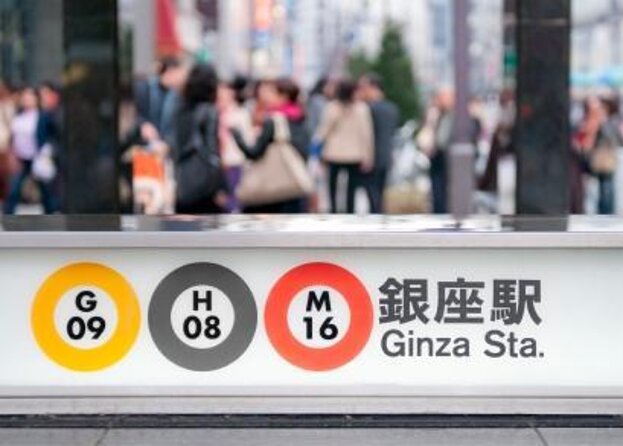
- Three districts, three eras: Nihonbashi presents traditional ingredients, Ginza and Yurakucho show working-class city food, and Akihabara looks toward Japan’s food future.
- Fourteen tastings: Come hungry, though this is a series of small portions rather than one large restaurant meal.
- A truly private outing: Only your party takes part, making it useful for families, couples, or groups with different interests.
- Strong guide-led experience: Guides including Yasu, Miko, Keiko, Rohan, Paiva, and others have been praised for humor, organization, cultural insight, and help with Tokyo’s rail system.
- Two short subway rides: Transport is not included, so carry an IC card or budget separately for the fares.
- Starts in Nihonbashi and ends in Akihabara: You finish near Akihabara Station, not back at your hotel.
Tokyo’s past arrives on a plate
Many Tokyo food tours focus on fashionable restaurants or famous market stalls. This one takes a broader route. It asks how Japanese food developed, then uses each stop to make the answer practical.
You begin in Nihonbashi, one of the city’s key historic districts. The opening lesson concerns dashi, the stock that supports much of Japanese cooking. You’ll look at katsuobushi, dried and smoked bonito, and kombu, the kelp that gives broth its savory depth.
That lesson matters because dashi can seem invisible when you first eat Japanese food. It appears in noodle soup, simmered dishes, sauces, and many home-cooked meals. Here, you get a chance to understand the ingredients before tasting dishes that depend on them.
The experience also visits shops more than 100 years old, with several dating to the Edo period. The point is not simply to admire old storefronts. You get to taste the sort of snacks that have lasted across generations.
More Tokyo food crawls:
- Tokyo: Shinjuku Food Tour (13 Dishes at 4 Local Eateries)
★ 5.0 · 6,603 reviews - Tokyo: Shinjuku Food Tour (15 Dishes and 4 Eateries)
★ 4.9 · 2,033 reviews - Best of Shinjuku: Izakaya Food Tour (4 Stops, 14+ Tastings)
★ 5.0 · 1,863 reviews
Nihonbashi: fish cake, amazake, and old-fashioned sweets
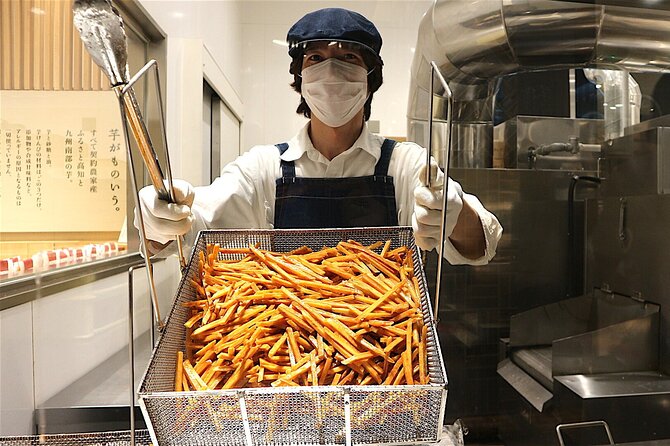
The Nihonbashi portion lasts about 90 minutes. It is the most traditional part of the day and sets up the food history that follows.
Your tastings include satsuma-age, a fried fish cake with a soft, springy texture. You’ll also try amazake, a fermented rice drink often served as a nourishing sweet beverage. Despite its name, amazake is not always alcoholic, and the version here is presented as a traditional healthful drink.
Imo kenpi brings a different texture. These are crisp sweet-potato strips, lightly sweet and easy to snack on as you walk. Daifuku, or possibly dorayaki, supplies the soft dessert course. Daifuku wraps a sweet filling in sticky rice mochi, while dorayaki sandwiches filling between two small pancakes.
This section is especially useful if Japanese sweets are new to you. You can compare chewy, crisp, fermented, and cake-like textures instead of ordering one unfamiliar item and hoping for the best.
Nihonbashi Bridge is also included as a stopping point. It gives your guide a natural place to connect commerce, transport, and food. You are not just sampling snacks in isolation. You are learning why this district became such an important setting for them.
Fukutoku Shrine: a short cultural pause
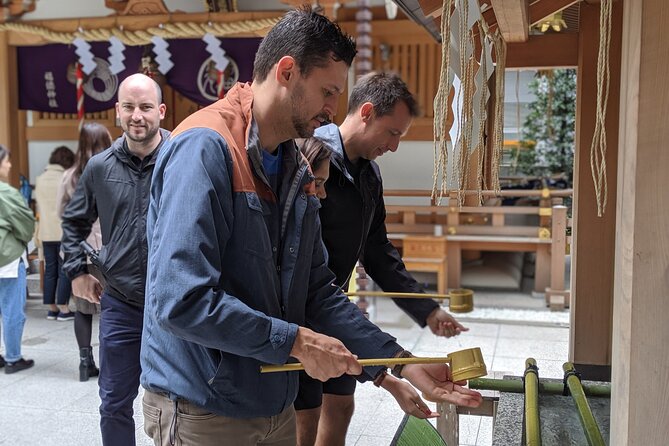
A ten-minute stop at Fukutoku Shrine breaks up the food tasting. Your guide explains the difference between a Shinto shrine and a Buddhist temple, then shows you how to cleanse yourself and pray at a shrine.
This is brief, but it adds useful context. Tokyo has shrines and temples throughout the city, and knowing the basic customs makes later sightseeing less confusing. You should not expect a long religious tour here. Think of it as a compact introduction between food stops.
The walking route includes several different neighborhoods, so comfortable shoes are sensible. You also need to be ready to eat at a steady pace. The tour is not a slow café crawl with long rests.
Ginza and Yurakucho: eating like a salaryman
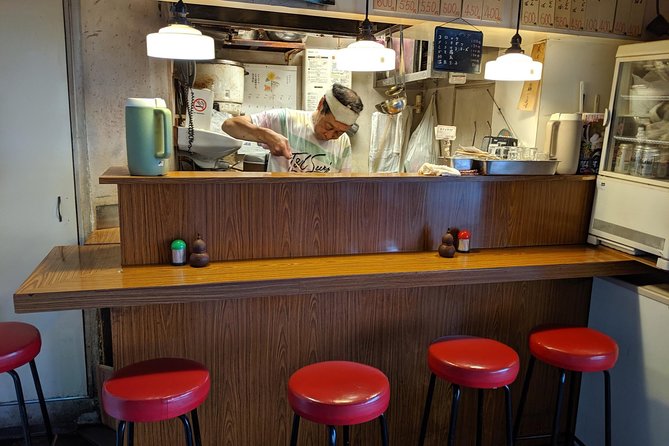
The middle section moves into Ginza and Yurakucho, where the focus shifts to Japan’s postwar industrial growth. Your guide explains the rise of the salaryman and the small restaurants built beneath railway tracks, known as gado shita.
These under-track spots were practical places for workers to eat and drink before heading home. Their appeal is not polished dining-room service. It is quick food, close quarters, and a direct link to the daily rhythm of working Tokyo.
You’ll eat at an izakaya and a noodle stall. The menu includes yakitori, a lemon sour, and either tempura soba or curry udon. Yakitori gives you grilled meat on skewers, while the lemon sour is a Japanese alcoholic drink with a refreshing citrus profile.
The noodle choice offers two different experiences. Tempura soba combines buckwheat noodles, broth, and fried tempura. Curry udon is thicker and more strongly seasoned, with noodles in a curry-based soup. One guide-led outing received special praise for the curry udon, so if that option is available, it may be the dish to watch for.
This is the closest thing to a conventional lunch on the tour, although you are still sampling several foods rather than sitting down for one formal meal. The alcoholic drink is included, but you can ask your guide about alternatives if you do not drink. The supplied details do not specify a substitute, so confirm on the day.
A few more Tokyo bookings worth comparing
- Mt Fuji and Hakone 1-Day Bus Tour Return by Bullet Train
★ 5.0 · 26,383 reviews - 1-Day Tokyo Bus Tour
★ 5.0 · 14,250 reviews - Tokyo: TOKYO SKYTREE® Admission ticket
★ 4.5 · 11,192 reviews - Tokyo: teamLab Planets TOKYO Digital Art Museum Entry Ticket
★ 4.6 · 9,779 reviews
Tokyo International Forum and Marunouchi: a change of pace
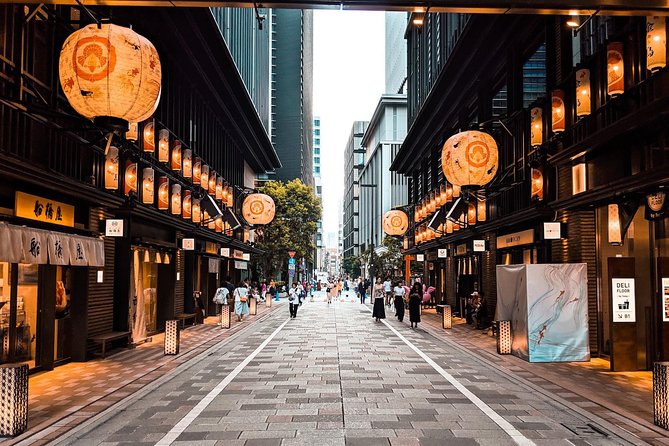
After eating around the railway tracks, you walk toward Tokyo Station. The route includes the Tokyo International Forum, an impressive modern building, and the Kitte Marunouchi building.
These stops are short, about 15 minutes at the forum and 10 minutes at Kitte. They are not major food sessions. Their value is the change in setting. You move from narrow restaurant spaces and railway infrastructure into the broad civic and commercial area around Tokyo Station.
That contrast supports the tour’s larger idea. Tokyo’s food culture is shaped by old shops, commuter habits, modern architecture, and changing urban districts. The walk also gives you a little room between tastings, which you may appreciate by this point.
Tokyo Station: commuter food with a sweet twist
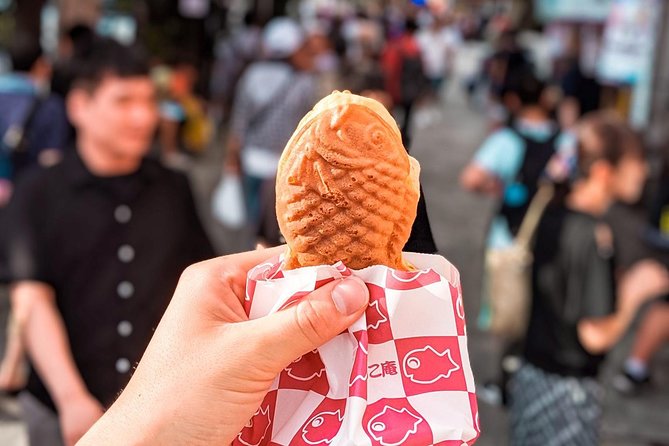
At Tokyo Station Marunouchi Ekimae Hiroba and Daimaru Tokyo, you try foods associated with eating on the way home.
Tamagoyaki is Japanese rolled omelette, made by layering seasoned egg into a soft, compact roll. It is simple food, but the texture and gentle sweetness show how much care can go into an everyday item.
The more playful tasting is the fruit sando, a Japanese milk-bread sandwich filled with fresh fruit and whipped cream. It looks like dessert, yet it fits the commuter theme because department-store food halls and station shops make portable food a central part of city life.
The two Tokyo Station stops are listed at about 20 minutes each. You should not expect a long department-store shopping session. The purpose is to taste a few foods and understand how Japanese convenience can still be precise and visually appealing.
Akihabara: Pokémon taiyaki and food’s modern direction
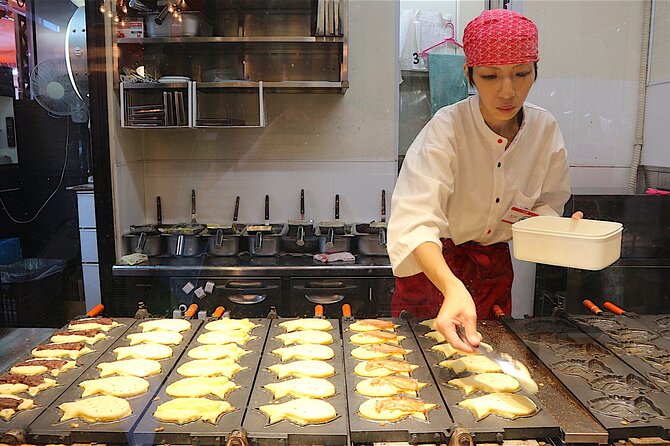
The final district is Akihabara, famous for electronics, maid cafés, anime culture, and new subcultures. Here, the subject changes from established tradition to experimentation.
You’ll try modern desserts that combine traditional Japanese flavors with contemporary formats. The included foods list mentions Pokémon taiyaki and matcha bubble tea or matcha ice cream, along with three fusion desserts.
Taiyaki is a fish-shaped cake traditionally filled with sweet bean paste. The Pokémon version gives the familiar snack a character-driven, modern identity. Matcha appears in a newer dessert and drink setting, showing how an old tea flavor has moved into youth culture and international food trends.
This section is not a full tour of Akihabara’s pop-culture attractions. Instead, the neighborhood becomes a backdrop for discussing technology, new ideas, and the future of Japanese food. That makes the final stop a clever counterpoint to the old shops of Nihonbashi.
The 45-minute Akihabara segment may be the most appealing part for families and younger visitors. One family specifically used the tour as a first-day activity for children aged 11 and 9, and the private format can make trying unfamiliar foods less intimidating.
What the private format changes
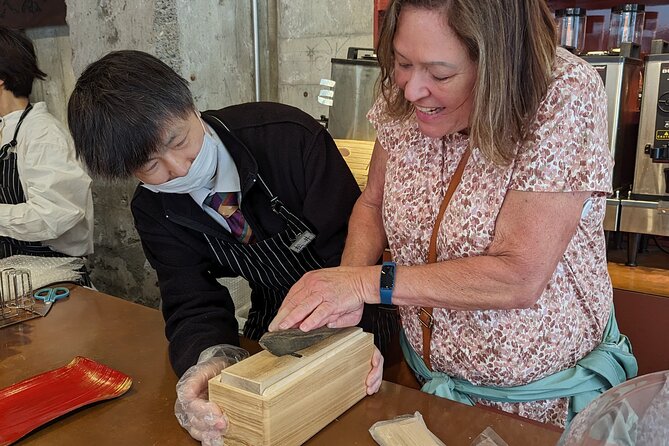
A private tour is a meaningful advantage here. You are not joining a large group with strangers who may eat at a different speed or want a different level of explanation.
If someone in your party is unsure about fermented drinks, fish cake, mochi, or strong flavors, your guide can explain what to expect. If your children need a pause, or your group wants more help with the train system, the format allows for a more personal exchange.
The guides named in the feedback include Yasu, Miko, Keiko, Rohan, and Paiva. Yasu was praised for being funny and for finding places a first-time visitor might miss. Paiva was described as prompt, organized, and pleasant. Miko even changed a tour date after a flight delay, though you should not assume every last-minute change will be possible.
Keiko helped one group with the train system, which points to a practical bonus. Tokyo’s rail network can be confusing at first, and learning a little while moving between neighborhoods may help you during the rest of your stay.
The private setup also explains part of the price. At $327.75 per person, this is not a budget food walk. You are paying for a half-day guide, a carefully connected route, 14 tastings, cultural explanation, and the ability to keep the experience focused on your group.
Is $327.75 a fair price?
The value depends on what you want from a Tokyo food outing. If you only want the cheapest way to eat yakitori and noodles, this costs far more than doing it alone. You can also find many Tokyo food experiences at a lower price if you are happy with a larger group.
I see better value for a first visit, a family group, or anyone who wants food and orientation together. You cover Nihonbashi, Ginza, Yurakucho, Marunouchi, Tokyo Station, and Akihabara in one organized route. You also get a built-in introduction to shrine customs, dashi, commuter food, izakaya culture, and modern Japanese desserts.
The 14 tastings help justify the cost, but appetite matters. This is a long series of samples, not a single large lunch. Eat lightly beforehand, but do not arrive so hungry that you rush through the early sweets and snacks.
Remember that transport costs are separate. The tour uses two short subway rides, and you pay those fares yourself. Pickup from your Tokyo accommodation is offered, but the published start point is the Nihonbashi 1-chome Mitsui Building. Confirm the exact pickup plan when booking.
Who will enjoy this most?
I would recommend this outing to first-time Tokyo visitors who want help understanding the city as they eat through it. It is also a good match for people who like trying many small portions rather than choosing one safe dish.
Families can benefit from the private setup, especially if children enjoy Japanese food, sweets, anime, or Pokémon. Couples and small groups may like having one guide connect the historical and modern parts of Tokyo without needing to plan several districts themselves.
Food-focused visitors should know that this is not a specialist restaurant tour. You will not spend hours at one famous counter, and the tour does not promise premium sushi or a dedicated fish-market visit. Its strength is range and explanation.
You should also think about mobility and timing. Most people can take part, and the route uses public transport and walking between stops. The schedule runs for about five and a half hours, so allow enough energy for a full half-day on your feet.
Booking details worth checking
Confirmation is issued when you book, and the meeting points are near public transportation. The planned endpoint is Akihabara Station at 1 Chome Sotokanda, so arrange your next activity from there rather than expecting a return to your accommodation.
The cancellation information supplied with the experience is inconsistent. One section describes partial or full refunds based on advance notice, while another says the experience is non-refundable and cannot be changed. Check the current terms at checkout and treat the strictest policy as the safer assumption.
The tour is private, so only your group participates. Group discounts may be available, which could improve the per-person value for a larger party. A mobile ticket is offered, making the practical side fairly simple once the start time and pickup details are confirmed.
Should you book this Tokyo food tour?
Book it if you want a guided introduction to Tokyo that uses food to explain time, work, religion, transport, and pop culture. The best parts are the old Nihonbashi food shops, the under-track eating in Yurakucho, and the sharp turn toward fusion sweets in Akihabara.
Skip it if your main goal is a low-cost meal, a sushi specialty tour, or a relaxed afternoon in one neighborhood. At $327.75 per person, the price only makes sense when you value a private guide and a wide range of tastings.
For a first day in Tokyo, the route has another advantage: it helps you get your bearings. You finish knowing more about dashi, shrine etiquette, commuter food, station snacks, and the city’s rail system. Just arrive hungry, wear good shoes, and confirm the cancellation terms before paying.
FAQ
How long does the private Tokyo food tour last?
The tour lasts approximately 5 hours and 30 minutes.
How many food tastings are included?
The experience includes 14 tastings, ranging from traditional snacks and ingredients to lunch items and modern desserts.
Which Tokyo districts does the tour visit?
The route includes Nihonbashi, Ginza, Yurakucho, Marunouchi and Tokyo Station, and Akihabara.
Is hotel pickup available?
Pickup from your Tokyo accommodation is offered. The listed starting point is the Nihonbashi 1-chome Mitsui Building, so confirm the exact pickup arrangement when booking.
Are subway fares included?
No. You take two short subway rides during the tour, and those transport costs are payable separately.
Is alcohol included?
Yes. A lemon sour, a Japanese alcoholic drink, is included among the tastings.
Where does the tour end?
The tour ends at Akihabara Station, at 1 Chome Sotokanda in Chiyoda City, Tokyo.
New on our Tokyo list
- From Tokyo: Mount Fuji & Hakone Full Day Private Tour★ 4.9 · 25 reviews
- Tokyo Spectacular View Day-Cruise in 90 Minutes★ 5.0 · 25 reviews
- Real Tokyo Runner Club : Daikoku Car Meet Night Tour with JDM Car★ 5.0 · 25 reviews
- 2.5 Hour-Guided Cycle Tour in the Central Tokyo★ 5.0 · 25 reviews
- Ramen Making from Scratch +Akihabara Tour –Cooking Class★ 5.0 · 25 reviews
- [Self-Drive] Tokyo & Daikoku Custom Car Driving Tour★ 4.9 · 25 reviews
- Tokyo: 2-Hour Night Bike Tour of the City’s Hidden Gems★ 4.9 · 25 reviews
- Samurai themed Entertainment show in Shinjuku★ 4.5 · 25 reviews
Tokyo Food Tours, compared.
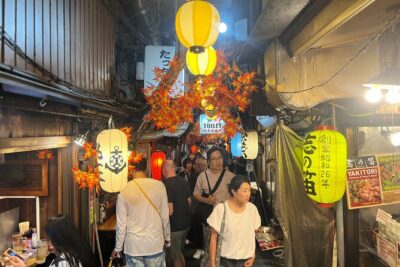
Shinjuku Food Tour (13 Dishes at 4 Local Eateries)
Read our review →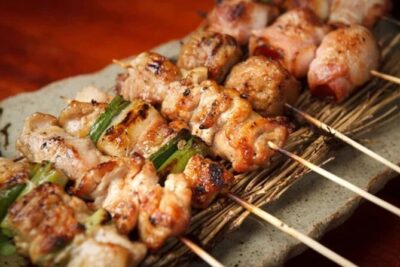
Shinjuku Food Tour (15 Dishes and 4 Eateries)
Read our review →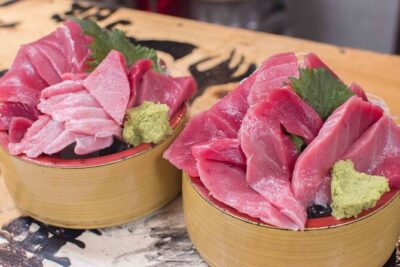
Best of Shinjuku: Izakaya Food Tour (4 Stops, 14+ Tastings)
Read our review →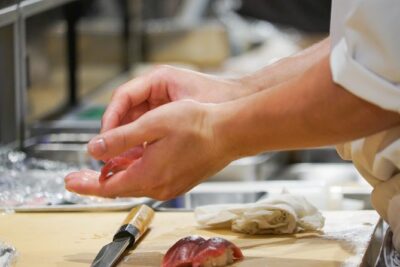
Tokyo Night Foodie Tour in Shinjuku – Seasonal Sushi, Wagyu Beef
Read our review →
Eat and Drink Like a Local: Tokyo Ueno Food Tour-Taverns&Ramen
Read our review →
Tsukiji Fish Market: Street Food & Culture Walking Tour
Read our review →Shinjuku Food Tour – 15 Dishes, 3 Drinks, 4 Eateries
Read our review →Browse the lists this tour appears in