Reviewed · GUIDED
Private Tokyo Tour with Licensed Guide & Vehicle (Max 15 persons)
Tokyo is easiest to understand when you connect its very different neighborhoods. This private tour lets you move from the Imperial Palace to Senso-ji, from Harajuku fashion to Tsukiji food stalls, without mastering the city’s huge rail network first. The custom route is the main attraction.
I like the hotel pickup and private car, especially for families, older adults, or anyone with only one day in town. I also like the chance to shape the day around food, shopping, history, anime, or a mix of all four. The catch is simple: six hours is short for Tokyo, so trying to see every listed stop will leave you rushing.
In This Review
- Key points to know before booking
- Why a private car makes sense in Tokyo
- How to use six hours wisely
- Imperial Palace: Edo history in central Tokyo
- Takeshita Street and Meiji Jingu: Two faces of Harajuku
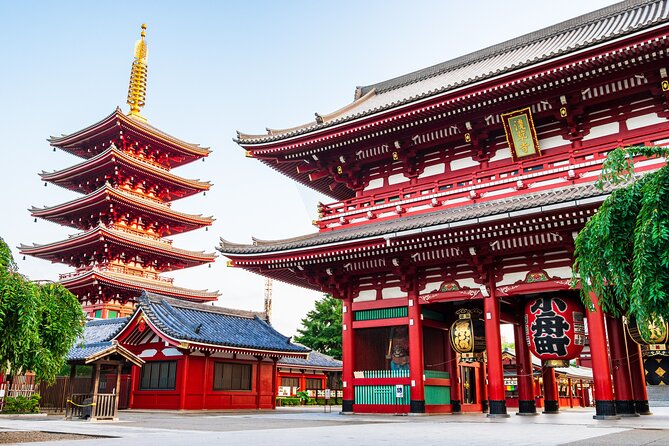
- Senso-ji and Asakusa: Tokyo’s best quick taste of old Japan
- Kappabashi and Tsukiji: Two excellent food-focused choices
- Tsukishima Monjya Street and Ginza shopping
- Shibuya Crossing and Tokyo Tower
- Akihabara, Yanaka Ginza, and Ueno Park
- Guides, drivers, and the human side of the day
- Is $553.58 good value for Tokyo?
- Who should book this six-hour Tokyo tour?
- FAQ
- What is included in the private Tokyo tour?
- How long does the tour last?
- How many people can join?
- Is hotel pickup available?
- Can I choose the places I visit?
- Are meals included?
- Are admission fees included?
- Are child car seats available?
- What is the cancellation policy?
Key points to know before booking
- Choose only three or four sites: The tour offers a menu of destinations, not a promise to visit every place listed.
- Travel door to door: A private vehicle and driver reduce walking and remove the stress of Tokyo’s rail connections.
- Use the guide’s local advice: Guides including Yoshi, Koji, Sam, Taku, Lily, and Fumiko have helped shape routes around food, history, shopping, children, and mobility needs.
- Expect short visits: Most suggested stops allow about 30 minutes, which works for an introduction and photos but not full museum visits or long shopping sessions.
- Plan around crowds: An early start helps at Senso-ji, and Shibuya Crossing is best treated as a quick experience rather than a lengthy stop.
- Budget for extras: Lunch, personal purchases, and some admission fees are not included.
Why a private car makes sense in Tokyo
Tokyo’s train system is excellent, but the city is spread out. A route linking the Imperial Palace, Asakusa, Harajuku, Ginza, and Tokyo Tower can involve several rail lines, station walks, and careful timing. A car will not erase traffic, but it lets you move directly between neighborhoods and return to the vehicle close to the next entrance.
That matters most when your group has children, older relatives, or limited mobility. One family traveling with a wheelchair received drop-offs near accessible entrances, help with tickets and vendors, and assistance getting the wheelchair in and out of the car. The vehicle was described as clean and roomy, and drivers handled narrow streets and crowded roads carefully.
You travel only with your own party. The maximum group size is 15, though the advertised price of $553.58 covers a group of up to four. For five or more people, confirm the exact price and vehicle arrangement before paying. A larger group can be a good value when divided among several people, but a small party will pay a premium for privacy and door-to-door service.
The guide and driver are separate roles. That is useful. Your guide can walk with you, explain a shrine, help with food orders, or adjust the plan while the driver handles Tokyo traffic. Several guides also communicate before the tour, which gives you a chance to list must-see places and physical limits in advance.
A few more Tokyo bookings worth comparing
- Mt Fuji and Hakone 1-Day Bus Tour Return by Bullet Train
★ 5.0 · 26,383 reviews - 1-Day Tokyo Bus Tour
★ 5.0 · 14,250 reviews - Tokyo: TOKYO SKYTREE® Admission ticket
★ 4.5 · 11,192 reviews
How to use six hours wisely
The most important choice is not which sights are famous. It is how many you can enjoy without turning the day into a windshield tour.
The operator suggests selecting three or four places from a longer list. That is the right approach. A 30-minute visit can work at a viewpoint, temple courtyard, shopping street, or photo stop. It is not enough for a major museum, a full shopping expedition, a long meal, and several distant neighborhoods.
If you want history, choose the Imperial Palace, Meiji Jingu Shrine, and Senso-ji. If you want food, consider Tsukiji, Kappabashi, and Tsukishima Monjya Street. For modern Tokyo, combine Shibuya, Harajuku, Ginza, and Akihabara, but accept that each will be a brief taste.
I would start early if Senso-ji is important. One family found the temple much easier before 9:30, while later crowds made wheelchair movement difficult. An early start can also make the day feel less hurried, though the tour does not promise a specific departure time in the supplied details.
Tell the guide what you want before the day begins. One guide, Taku, sent a planned schedule with descriptions and start times, then added a requested site. Another guide, Mari, helped arrange a tonkatsu lunch that suited dietary needs and explained the sauces and side dishes. Those details show the value of planning clearly rather than arriving with a vague wish to see everything.
Imperial Palace: Edo history in central Tokyo
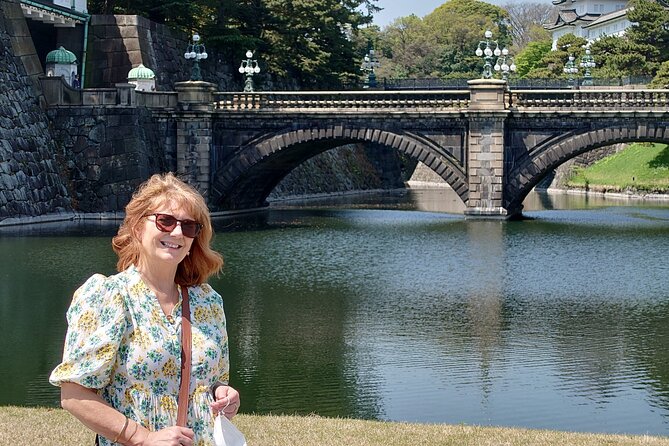
The Imperial Palace area gives you a quick introduction to Tokyo’s political past and the world of the shoguns. The grounds include historic remains, open spaces, and gardens in the middle of the modern city.
The suggested visit is 30 minutes, with no admission charge listed. That makes it a useful first stop for photographs and orientation. Your guide can provide context about the Edo period and the palace’s place in Tokyo today.
Do not expect a full palace tour in half an hour. Treat this as an outdoor visit. If gardens matter more to you than palace views, tell your guide in advance, since the exact area visited may depend on the route and available time.
Takeshita Street and Meiji Jingu: Two faces of Harajuku
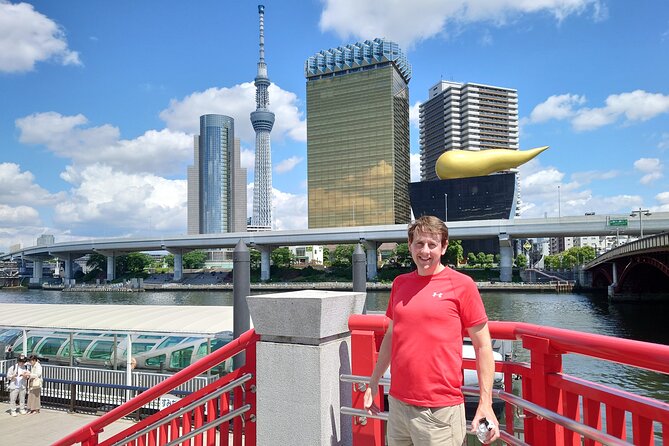
Takeshita Street shows Tokyo’s youthful side. It is associated with kawaii fashion, unusual clothing, and shops selling items that are hard to find outside Japan. Thirty minutes lets you walk, browse, and take in the visual energy, but serious shopping will require more time.
This is a better choice for visitors who want fashion, snacks, or a fun stop for teenagers. One family used the area for a dog cafe and an otter cafe, though the tour does not guarantee any particular business visit. If you have a specific shop in mind, name it when arranging the route.
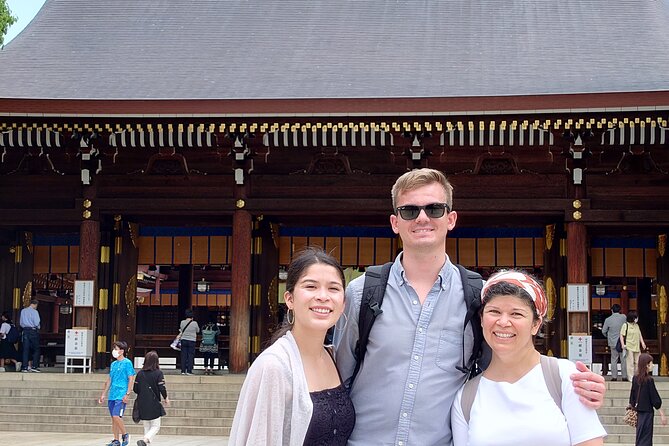
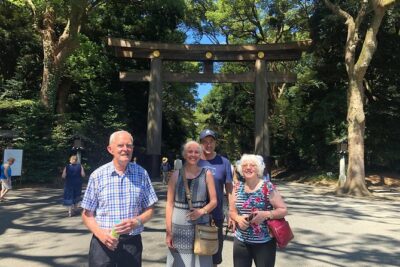
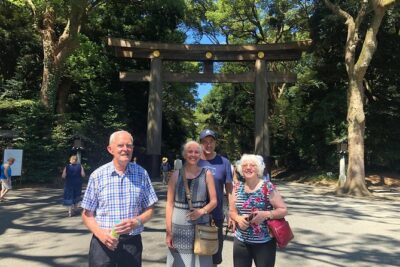
Meiji Jingu offers a sharp change of mood. Ancient trees and a broad shrine setting give you a quiet break from city streets. The visit is also a chance to learn about Shinto practices, rather than simply photograph a traditional building.
The shrine requires no admission fee according to the supplied details, though personal purchases are extra. One guide used charts and photos to explain Japanese history and religion, a useful touch if you want more than a quick walk through the grounds. I would pair Meiji Jingu with Takeshita Street because they are natural contrasts: youth culture on one side, Shinto tradition on the other.
Same corner of Tokyo, a completely different plan:
- Tokyo: teamLab Planets TOKYO Digital Art Museum Entry Ticket
★ 4.6 · 9,779 reviews - Mt Fuji & Hakone Cruise, Drum Show Bullet Train 1 Day from Tokyo
★ 4.0 · 7,413 reviews - Tokyo: Sumo Show Experience with Chicken Hot Pot and a Photo
★ 4.8 · 6,678 reviews - Tokyo: Shinjuku Food Tour (13 Dishes at 4 Local Eateries)
★ 5.0 · 6,603 reviews
Senso-ji and Asakusa: Tokyo’s best quick taste of old Japan
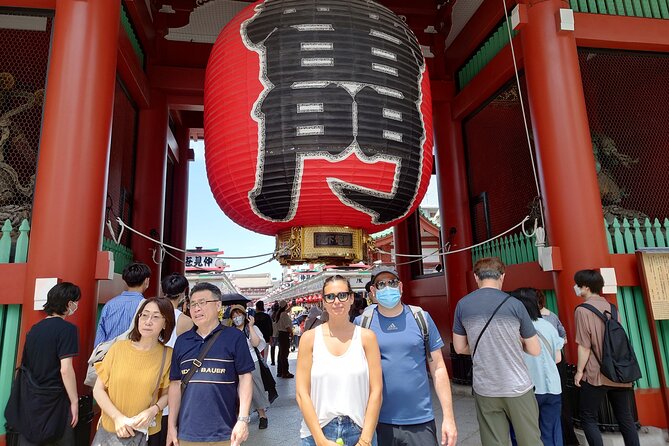
Senso-ji is one of Tokyo’s major temples and one of the most rewarding stops for a first visit. The surrounding Asakusa area gives you a feel for older Tokyo, with a busy approach lined with food stalls and souvenir shops.
Try dango, small mochi balls, or agemanjū, a deep-fried sweet bean-filled mochi. You can also browse for souvenirs, including traditional clothing. One guide pointed out a haori with a Tokugawa family crest, showing how a shopping stop can become a short lesson in Japanese history.
The suggested time is 30 minutes, and admission is free. That is enough for an introduction, a few photographs, and a snack. It is not enough for a leisurely temple visit, extended shopping, or a careful look at every lane around Asakusa.
Timing matters here more than at many other stops. The area can become extremely crowded, and wheelchair users may find the approach difficult later in the morning. If Senso-ji is a priority, request it early and consider using this tour to learn the setting, then return independently when you have more time.
Kappabashi and Tsukiji: Two excellent food-focused choices
Kappabashi Dogugai is a shopping street for cooking tools, restaurant supplies, and the wonderfully odd plastic food models seen outside Japanese restaurants. A miniature food-model keychain makes a memorable souvenir, especially if you want something less ordinary than a temple charm.
The stop is free to enter and suits cooks, food lovers, and shoppers hunting for practical Japanese goods. Half an hour may be enough for browsing, but not for comparing knives, ceramics, or kitchenware across many shops.
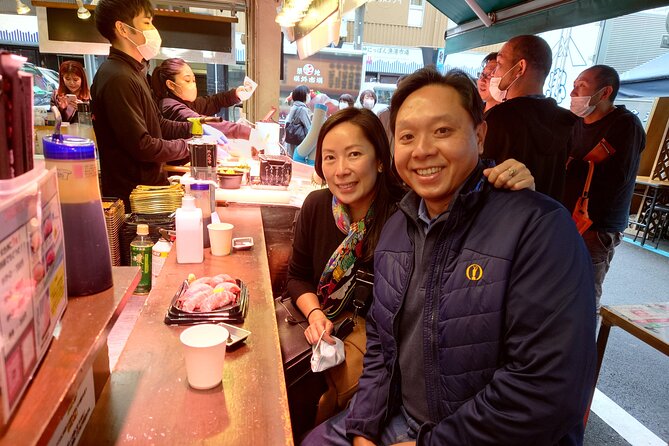
Tsukiji is the former wholesale fish-market district, now known for its outer-market food stalls and small shops. You can look for seafood and other Japanese foods, then buy something to support local businesses. The supplied route does not include lunch, so purchases and meals come from your own budget.
Tsukiji is a good choice if food is your main interest. It is less useful if you only want a quick photograph, since tasting and browsing are the point. Ask your guide for help choosing what to try, especially if you have dietary restrictions.
Tsukishima Monjya Street and Ginza shopping
Tsukishima offers a distinctly Tokyo food experience: monjayaki, a savory dish cooked at the table. The area has many monja restaurants, and the suggested stop lets you sample this local specialty.
A meal can quickly consume more than the planned 30 minutes, so decide before the tour whether this is a tasting stop or your main lunch. Lunch is not included. If you want a relaxed meal, you may need to reduce the number of other stops.
Ginza is the choice for polished department stores, luxury brands, pearls, and high-end shopping. Mikimoto is specifically noted for pearls, while the department stores offer a broad range of Japanese and international goods.
Ginza makes sense for a focused shopping request, not for a hurried walk past expensive storefronts. One family used Matsuya department store as part of a short customized route. Tell your guide which store or product matters to you so the stop has a clear purpose.
Shibuya Crossing and Tokyo Tower
Shibuya Crossing offers one of Tokyo’s famous urban scenes. From the crossing, you can watch people move in several directions at once, then look for the statue of Hachiko, the loyal Shiba dog.
This is a classic photo stop, but it does not need a long visit. I would combine Shibuya with Meiji Jingu or Takeshita Street, then spend the saved time on a temple, market, or meal. The route information lists Shibuya in the stop descriptions, but the exact selection remains flexible.
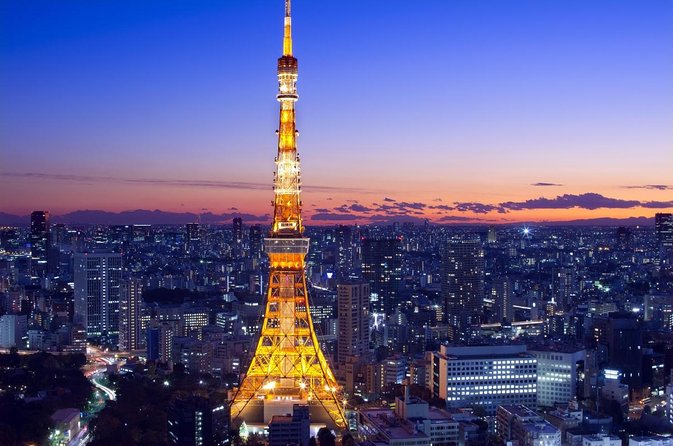
Tokyo Tower is a landmark and communications tower in the Shiba-koen district. The tour includes access only up to the main deck if you choose this stop. The top deck is not included, and admission is not included either.
Allow more time than a quick photo if you want to go up. Lines for elevators can make a tower visit last well beyond 30 minutes, especially when your day also includes distant neighborhoods. One family found that Tokyo Skytree was difficult to complete in under 90 minutes because of elevator lines. That advice applies to observation towers in general: choose one, and be realistic about the time.
Akihabara, Yanaka Ginza, and Ueno Park
Akihabara is for anime, electronics, gachapon machines, and Japanese pop culture. It is a strong choice for families with teenagers or anyone who wants a side of Tokyo that temples and gardens cannot provide.
Thirty minutes works for a look around and a few purchases. It will not cover every game store, anime shop, or capsule-toy machine. If you have a particular character, product, or shop in mind, give the guide a target.
Yanaka Ginza Shopping Street offers a more old-fashioned neighborhood feel, with small shops, croquettes, and the possibility of seeing the area’s famous stray cats. It is a pleasant alternative to Ginza’s luxury stores and Akihabara’s technology shops.
Ueno Park has museums, a zoo, Toshogu Shrine, and Shinobazu Pond. It is also a major cherry blossom picnic area. The listed visit is only 10 minutes, and admission is not included. That makes Ueno mainly a quick look or a photo stop, unless you specifically arrange more time and choose one attraction.
Guides, drivers, and the human side of the day
The strongest part of this experience is the guide’s ability to adjust the route. Guides named Yoshi, Koji, Hideki, Kazu, Lily, Taku, Mari, Fumiko, and others have worked with families, older adults, children, large groups, food restrictions, wheelchair users, and visitors focused on cherry blossoms.
Expect different guiding styles. Some guides use maps, photos, charts, or historical timelines. Others focus more on food, shopping, or practical advice for the rest of your Tokyo stay. If you want religious history, modern architecture, anime, or restaurants, say so early so the guide can prepare.
The driver matters just as much. You may be dropped near the most convenient entrance, rather than left at a station and asked to walk through several blocks. Several accounts describe clean vehicles, prompt pickups, and drivers who worked well with the guide.
The tour is not advertised as fully wheelchair accessible, and rear-facing car seats are not available. A limited number of forward-facing car seats and booster seats may be available, so contact the provider directly if you need one. Service animals are allowed, and most people can participate.
Is $553.58 good value for Tokyo?
At $553.58 per group of up to four, the price is not cheap, but it can make sense when you value time and personal attention. Split four ways, it is roughly $138 per person for six hours, including a private vehicle and licensed English-speaking guide. That compares differently from a shared bus tour because you are paying for flexibility, pickup, and a route built around your group.
The value is strongest on a first Tokyo visit, a short stop before a cruise, or a day when navigating trains would be tiring. It is also useful when one person in your party needs shorter walks or close vehicle access.
The value is weaker if you are comfortable with trains, enjoy slow neighborhood wandering, or want to spend hours inside museums and markets. Tokyo rewards unhurried exploration, and a six-hour car tour can only introduce a few pieces.
Free cancellation is available if you cancel at least 24 hours before the start time. Changes or cancellations inside that window are not accepted for a refund.
Who should book this six-hour Tokyo tour?
I would choose this experience for a first visit, a multigenerational family, a group with children, or anyone with a clear list of priorities. It is particularly useful if you want to connect far-flung areas in one day and learn enough context to explore independently afterward.
I would not choose it as your only Tokyo experience if you want slow meals, serious shopping, museums, or long temple visits. Book it as an orientation day, select three or four stops, and return later to the places that deserve more time.
Book it if convenience and customization matter more than lingering. Start early for Senso-ji, decide whether food or sightseeing comes first, and tell the guide your exact interests. Used that way, the private car becomes more than a ride: it gives you a clear first map of a very large city.
FAQ
What is included in the private Tokyo tour?
The price includes a licensed local English-speaking guide, a private vehicle, and a customizable route using three or four selected sites.
How long does the tour last?
The tour lasts approximately six hours.
How many people can join?
The activity is private and can accommodate groups of up to 15 people. The advertised price is for a group of up to four, so larger groups should confirm pricing and vehicle details directly.
Is hotel pickup available?
Yes. Hotel pickup and drop-off are offered in Tokyo.
Can I choose the places I visit?
Yes. The tour is customizable, and you select three or four sites from the available destinations based on your interests.
Are meals included?
No. Lunch and other personal expenses are not included. Food purchased at places such as Tsukiji or Tsukishima is paid for separately.
Are admission fees included?
Some outdoor stops are free, but admission is not included for places such as Meiji Jingu Shrine, Ueno Park attractions, and Tokyo Tower. Tokyo Tower access is limited to the main deck, and the top deck is excluded.
Are child car seats available?
Only a limited number of car seats and booster seats are available. Rear-facing car seats are not offered, so contact the provider directly if you need child seating.
What is the cancellation policy?
You can receive a full refund by canceling at least 24 hours before the experience start time. Cancellations or changes made less than 24 hours before the start time are not accepted for a refund.
New on our Tokyo list
- From Tokyo: Mount Fuji & Hakone Full Day Private Tour★ 4.9 · 25 reviews
- Tokyo Spectacular View Day-Cruise in 90 Minutes★ 5.0 · 25 reviews
- Real Tokyo Runner Club : Daikoku Car Meet Night Tour with JDM Car★ 5.0 · 25 reviews
- 2.5 Hour-Guided Cycle Tour in the Central Tokyo★ 5.0 · 25 reviews
- Ramen Making from Scratch +Akihabara Tour –Cooking Class★ 5.0 · 25 reviews
- [Self-Drive] Tokyo & Daikoku Custom Car Driving Tour★ 4.9 · 25 reviews
- Tokyo: 2-Hour Night Bike Tour of the City’s Hidden Gems★ 4.9 · 25 reviews
- Samurai themed Entertainment show in Shinjuku★ 4.5 · 25 reviews
Guided, compared.
Tokyo 6hr Private Tour with Government-Licensed Guide
Read our review →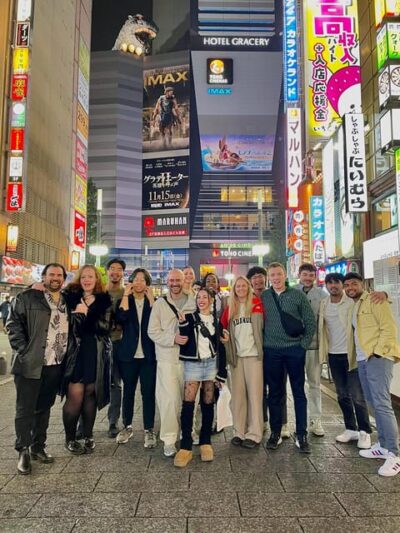
Shinjuku Local Bar and Izakaya Guided Walking Tour
Read our review →
Private City Highlights Tour with Local Guide
Read our review →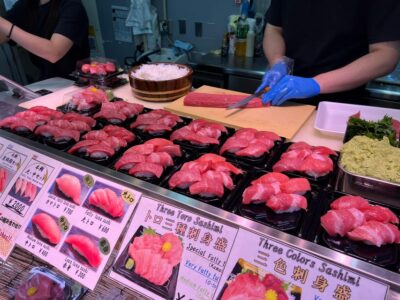
Tokyo 4hr Private Tour with Government-Licensed Guide
Read our review →
Samurai Ninja Museum Guided tour and Experience
Read our review →