
Reviewed · SAMURAI & NINJA EXPERIENCES
Samurai experience: art and soul of the sword
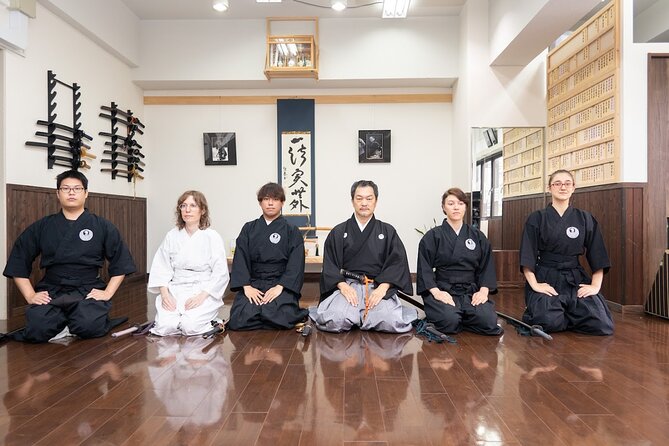
The most striking part of this Tokyo experience comes before any sword cutting. You first learn how a samurai handled the sword, why courtesy mattered, and how bushido shaped conduct. Only then do you practice Iaido, the controlled art of drawing and using the blade.
I like the small group, capped at 10, because you get close to the master’s demonstration and have room to follow corrections. I also like the balance between ideas and action: you learn about discipline, then change into samurai clothing and try the movements yourself. The main consideration is that the real sword option is only for adults, requires a waiver, and may feel too serious for anyone expecting a costume photo session.
In This Review
- Key points to know before booking
- Why the First Lesson Is About Respect
- Arriving at the Kuramae Dojo
- Changing Into Samurai Attire
- Learning Iaido Before Cutting Anything
- Your First Cut on a Cardboard Target
- The Optional Real Sword and Tatami Cut
- Watching the Master Work
- What the $216.86 Price Really Buys
- Who Will Get the Most From This Session
- Practical Details Before You Go
- Should You Book the Samurai Experience?
- FAQ
- Where does the samurai experience begin?
- What time does the activity start?
- How long does the experience last?
- What is the minimum age?
- Is real sword cutting included?
- Can I cancel for a full refund?
Key points to know before booking
- The lesson begins with etiquette: You learn how to show respect toward the sword before touching it.
- Iaido is controlled swordsmanship: The focus is on form, discipline, and precision rather than theatrical fighting.
- You wear samurai attire: After arriving at the dojo, you change clothes and receive a sword for the session.
- Cardboard cutting is included: You practice on a man-shaped cardboard target, while real tatami cutting is an optional adult upgrade.
- The master’s demonstration comes at the end: Watching a skilled solo performance makes more sense after you have tried the basics yourself.
- It is a short, focused Tokyo activity: The session lasts about 90 minutes, starts at 9:00 am, and ends back at the meeting point.
Why the First Lesson Is About Respect
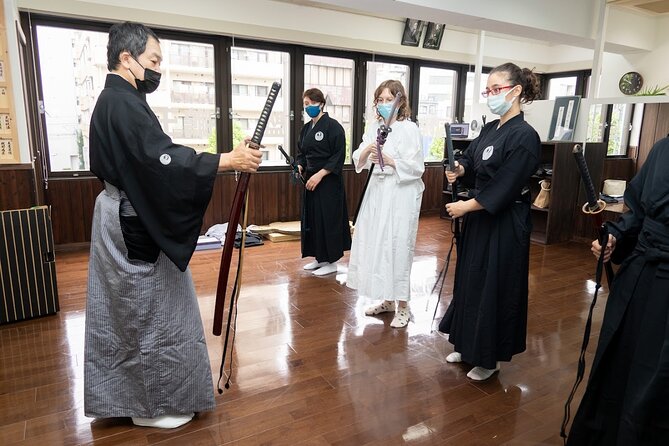
Many sword experiences begin with a dramatic pose or a quick demonstration. This one takes a quieter route. At the dojo, the master first explains proper etiquette toward the sword and the values connected with bushido, often translated as the way of the samurai.
That opening matters. A sword was not treated as a toy or a prop, and the lesson makes that clear from the start. You learn that drawing a sword or attacking someone was not a casual decision. A samurai’s strength included the ability to settle conflict through discussion, backed by the discipline and skill that made others think twice before starting trouble.
I find this a useful correction to the usual movie image. The experience is less about pretending to be an unstoppable warrior and more about understanding restraint, courtesy, and control. If you want a fast-paced fight show, this may feel too measured. If you want a closer look at the ideas behind samurai conduct, the introduction gives the session real purpose.
The samurai class ruled Japan for roughly seven centuries, ending about 160 years ago. You will not get a full political history lecture in 90 minutes, but the lesson gives you a compact way to connect the sword with the social rules and personal discipline of that class.
More samurai and ninja sessions:
- Tokyo: Samurai Ninja Museum Guided tour and Experience
★ 4.6 · 1,010 reviews - Tokyo: Samurai Sword & Archery Class from Samurai Descendant
★ 5.0 · 603 reviews - Best Samurai Experience in Tokyo
★ 5.0 · 458 reviews
Arriving at the Kuramae Dojo
The meeting point is by Kuramae Station at 2-chōme-3-1 Kuramae, in Taito City. The activity begins at 9:00 am and ends at the same meeting point, which makes it easy to fit into a morning in Tokyo.
I would allow enough time to find the station exit and reach the exact meeting place without rushing. The booking includes a mobile ticket, and confirmation is sent within 48 hours, subject to availability. The activity is near public transportation, but the information provided does not specify the exact station exit or walking time from the platform, so check your mobile confirmation before setting out.
The group size is limited to 10. That is a practical advantage here. Sword instruction depends on seeing the teacher’s hands, stance, and timing. In a large crowd, you would spend more time watching someone else practice. With a small group, you should have a better view and a more direct chance to follow the lesson.
The dojo setting also changes the mood. You are not simply being handed a sword in a sightseeing venue. You arrive at a place used for Iaido instruction, where etiquette and attention are part of the activity. That setting helps the experience feel like a lesson rather than a costume rental.
Changing Into Samurai Attire
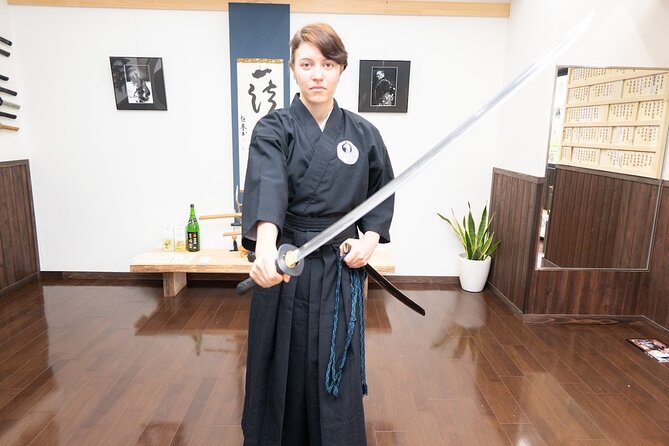
After you arrive, you change into samurai attire and receive a sword for the training portion. The clothing is not just for photographs. It helps mark the shift from ordinary sightseeing into a formal practice session.
You should expect to pay attention to how you stand, move, and handle the sword. The supplied information does not give details about changing-room arrangements or what clothing works best underneath, so wear something comfortable and easy to change out of. You also need a moderate level of physical fitness.
That fitness requirement should not scare off most people, but you should take it seriously. Iaido involves controlled movement, posture, and repeated practice. You may spend time standing, stepping, drawing, and returning the sword with care. The session is short, but it is not passive.
Children can participate from age five if they do not choose the real sword option. That makes the basic experience more flexible for families, though the master’s instructions and safety rules still matter at every age. Anyone joining should be ready to listen rather than fool around.
Learning Iaido Before Cutting Anything
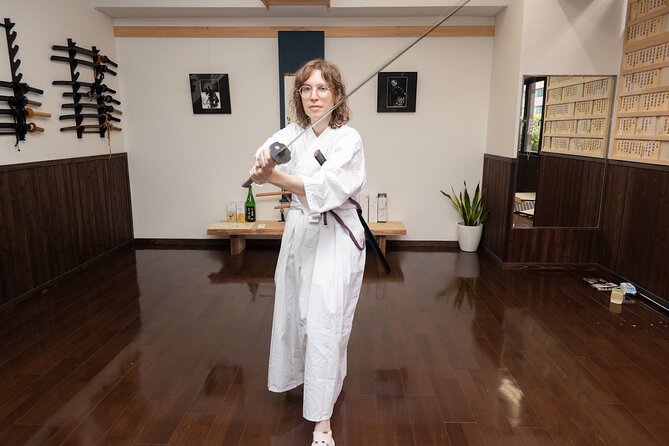
Iaido is a traditional art of swordsmanship focused on drawing the sword with speed and control. The session introduces the flow of the practice before asking you to attempt the more dramatic parts.
This is where the activity earns its price. You are not simply swinging a blade at a target. You learn why the sword is handled in a certain way, how the movement fits together, and why discipline comes before force.
The master explains what Iaido is and outlines how the experience will proceed. You then practice the basic actions under instruction. The wording of the activity emphasizes swift and deft cutting, but your own lesson is likely to focus just as much on safe handling and correct form.
I appreciate that order. The final demonstration can look almost effortless, but you will understand the work behind it only after trying to coordinate your own movements. Even a simple practice reveals how much control is required to keep the sword, body, and timing together.
You should not expect to become skilled in one session. Ninety minutes is enough for an introduction, a supervised attempt, and a better sense of the art. It is not enough for mastery. The value comes from direct contact with the discipline and from seeing a trained master perform it at close range.
A few more Tokyo bookings worth comparing
- Mt Fuji and Hakone 1-Day Bus Tour Return by Bullet Train
★ 5.0 · 26,383 reviews - 1-Day Tokyo Bus Tour
★ 5.0 · 14,250 reviews - Tokyo: TOKYO SKYTREE® Admission ticket
★ 4.5 · 11,192 reviews - Tokyo: teamLab Planets TOKYO Digital Art Museum Entry Ticket
★ 4.6 · 9,779 reviews
Your First Cut on a Cardboard Target
Once the basic instruction is underway, you use the sword to slash a man-shaped cardboard target. This gives you a clear goal and a memorable physical part of the lesson without immediately putting you into the more demanding real sword option.
The cardboard target also fits the experience’s broader message. You are practicing a formal movement, not staging a fight. You learn to direct the blade toward a target while following the dojo’s instructions.
Expect the master to control the pace. The safety rules are not decorative, and you must follow every instruction given at the dojo. This is especially important for anyone who has handled only theatrical or wooden swords before.
The activity does not promise that every cut will be perfect. You might find that the movement feels less natural than it looks during the demonstration. That is part of the appeal. A short attempt gives you a useful respect for the training required to make sword work appear smooth.
If you are booking for a child, the cardboard practice is the relevant option because the real sword choice is limited to adults. The minimum age for the non-real-sword version is five, but the child still needs to manage the instructions and the physical demands of the class.
The Optional Real Sword and Tatami Cut
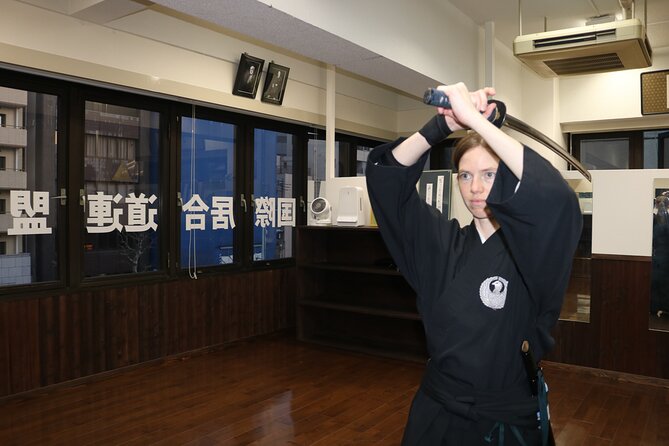
Adults who want a more advanced challenge can sign up to cut a rolled tatami mat with a real sword. This is an optional addition, not a requirement for taking part in the main experience.
You must be at least 18 on the date of the activity, sign a waiver, and obey the master’s directions. These conditions are important because real sword cutting brings a different level of responsibility. You should choose it only if you are comfortable with the safety rules and ready to treat the exercise as serious practice.
The rolled tatami gives you a more substantial target than cardboard and shows why alignment, angle, and follow-through matter. I would not choose this option simply because it sounds more exciting. The main lesson already provides an introduction to Iaido, and the real sword is best viewed as an added test of concentration.
The age restriction also means that families may need to split the experience conceptually. Children can join the basic session from age five, while only adults can take the tatami-cutting option. The available information does not state the separate price for that addition, so check the booking details before assuming it is included in the listed $216.86 cost.
Watching the Master Work
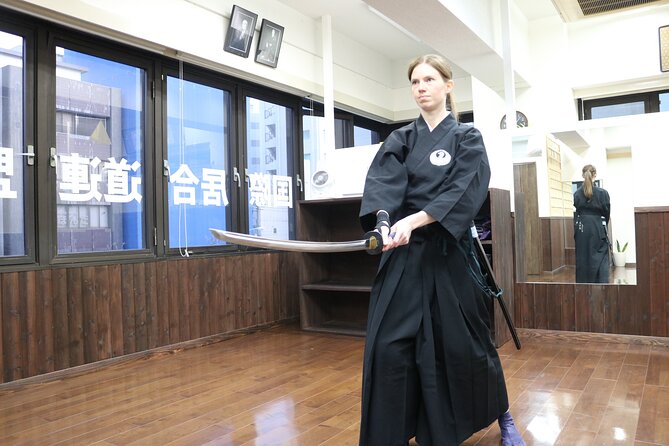
Near the end, the master gives a solo demonstration up close. This is likely to be the most visually impressive part, but I think it works best because it follows your own practice.
Before the lesson, a fast sword movement can look like simple athletic skill. After you have tried to coordinate your stance, hands, and timing, you can better appreciate the control in the master’s performance. The demonstration turns the session from a hands-on class into a short cultural presentation as well.
A teaching assistant also takes part in the demonstrations and training, according to the activity details. Specific names are not provided, so you should not expect a named celebrity instructor. The focus is on the dojo master, the instruction, and the close view of the technique.
The small group helps here again. A maximum of 10 people means you are not watching from the back of a crowded room. Since the session lasts about 90 minutes, the demonstration is part of a compact program rather than a long stage show.
What the $216.86 Price Really Buys
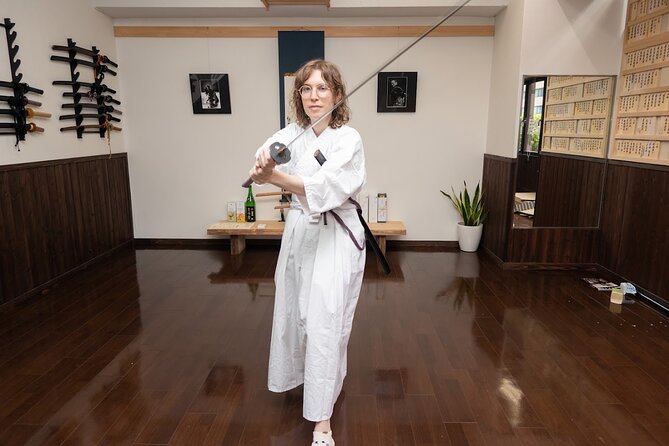
At $216.86 per person, this is not a cheap add-on between major Tokyo sights. The price makes more sense if you see it as a private-feeling cultural lesson with clothing, guided practice, a sword, a target exercise, and a master’s demonstration.
You are paying for access to a specialized activity, not just a short photo opportunity. The small group and close instruction add value, especially if you care about learning how the practice works. The certificate of completion at the end is a pleasant keepsake, though it should not be the main reason you book.
The optional tatami cutting may increase the total cost, and the supplied information does not state that amount. I would compare the final price with your priorities. If you want a genuine introduction to samurai etiquette and Iaido, the session offers more substance than a basic costume encounter. If you mainly want an inexpensive activity for photographs, the price may feel high.
The advance booking pattern is also worth noting. This experience is booked about 23 days ahead on average, so I would not leave it until the last morning of your Tokyo stay. Confirmation can take up to 48 hours and depends on availability.
Who Will Get the Most From This Session
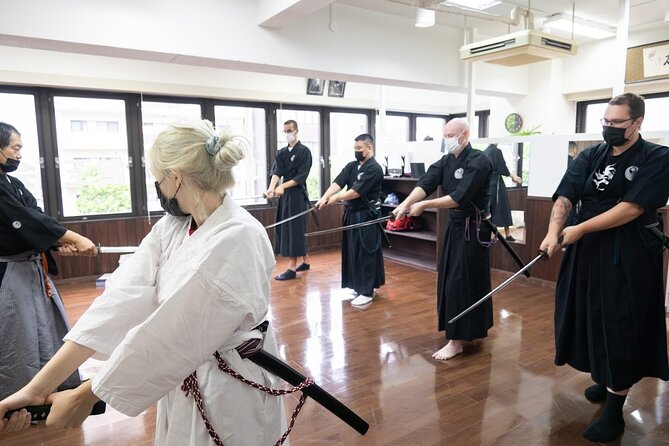
This experience fits you best if you enjoy learning a skill through close instruction and want a more thoughtful view of samurai culture. It suits solo visitors, couples, families with older children, and anyone who prefers a small group to a large performance.
You will get the most from it if you arrive ready to listen. The lesson treats the sword with respect, and the master’s authority shapes the pace. You should not expect to improvise, race other participants, or turn the dojo into a movie battle.
The basic option works for children from age five, but the real sword version is for adults 18 and older. You also need moderate physical fitness. If you have trouble standing or moving through repeated controlled actions, you may find the session tiring, though no specific accessibility details are provided.
This is also a good choice for repeat visitors to Tokyo who have already seen major temples, museums, and viewing decks. It gives you a different kind of cultural contact. You leave with an understanding of conduct and training, not just another photograph.
Practical Details Before You Go
The activity starts at 9:00 am at Kuramae Station and returns to the same meeting point. A morning time is useful because the session is finished after about an hour and a half, leaving the rest of your day open for Taito City or another part of Tokyo.
Bring your mobile ticket and arrive prepared to change into samurai attire. The exact clothing guidance is not provided, so comfortable clothes are the sensible choice. You must follow the master’s instructions throughout the session, and anyone choosing real sword cutting must sign the waiver.
The activity has free cancellation up to 24 hours before the start time for a full refund. Cancellations or changes made less than 24 hours before the local start time are not accepted for a refund.
The experience has a 5 out of 5 rating from 13 reviews, with 100 percent recommending it. That is a small sample, so I would treat the rating as encouraging rather than final proof. The strongest reason to book is the clear focus on etiquette, discipline, and instruction, not the score alone.
Should You Book the Samurai Experience?
Book it if you want more than samurai clothing and a staged pose. The lesson gives you a rare chance to learn sword etiquette, hear about bushido, practice Iaido, cut a cardboard target, and watch a master demonstrate the art at close range.
Think twice if you want a relaxed activity with little physical participation, or if the $216.86 price feels too high for a 90-minute session. The real sword option is serious, optional, and restricted to adults, so you do not need it to enjoy the main experience.
For the right person, the best part is the change in perspective. You begin with a familiar image of the samurai as a fearless fighter. You leave with a more useful idea: strength includes restraint, courtesy, and the skill to avoid drawing the sword unless there is no better choice.
FAQ
Where does the samurai experience begin?
It begins at Kuramae Station, at 2-chōme-3-1 Kuramae, Taito City, Tokyo 111-0051, Japan.
What time does the activity start?
The activity starts at 9:00 am.
How long does the experience last?
It lasts approximately 1 hour and 30 minutes.
What is the minimum age?
The minimum age is five for the standard experience. The real sword tatami-cutting option is limited to people who are at least 18 on the activity date.
Is real sword cutting included?
Real sword cutting is an optional part of the experience. Adults must sign a waiver and follow the master’s instructions to take part.
Can I cancel for a full refund?
Yes. You can cancel at least 24 hours before the local start time for a full refund. Cancellations or changes made less than 24 hours before the start time are not accepted for a refund.
New on our Tokyo list
- Sumi-e Experience in a relaxing green tea shop in Tokyo★ 5.0 · 3 reviews
- Tokyo : Kamikaze Street Drift Ride★ 5.0 · 3 reviews
- Private Zen Meditation in English in Shinjuku, Tokyo★ 5.0 · 3 reviews
- Onsen Spa in Tokyo and Asakusa Bar Hopping with Local Guide★ 5.0 · 3 reviews
- Easy for everyone! Now you can play handmade mini shamisen and show off to everyone! Musical instruments, sweets and live music★ 5.0 · 3 reviews
- Mt Fuji Exploration Tour with Free Japanese Kusa Mochi from Tokyo★ 4.5 · 3 reviews
- Tokyo Tsukiji Fish Market Walking and Exploring Hidden Gems Tour★ 5.0 · 3 reviews
- Tokyo: Private Tsukiji Street Food & Sake with Local Guide★ 5.0 · 3 reviews
Samurai & Ninja Experiences, compared.
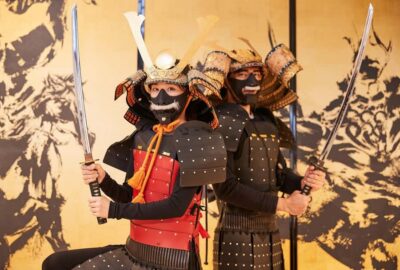
Samurai Ninja Museum Guided tour and Experience
Read our review →
Samurai Sword & Archery Class from Samurai Descendant
Read our review →
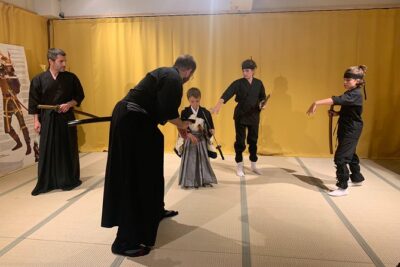
Ninja Experience (Family Friendly) at Samurai Ninja Museum TOKYO
Read our review →
Samurai Entertainment Night Show in Kanda Shrine
Read our review →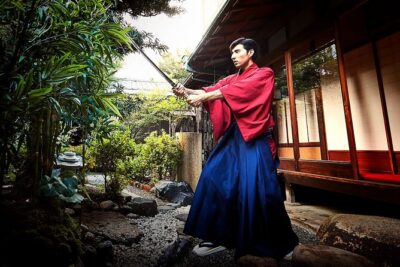
Tokyo Sword Experience – includes Museum Ticket/Ninja Experience
Read our review →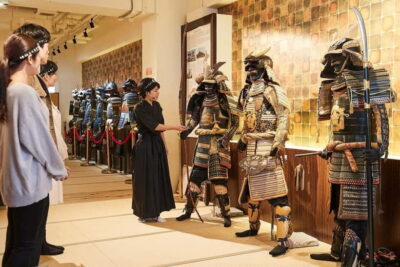
Samurai Ninja Museum Asakusa: Samurai Sword Lesson & Tour
Read our review →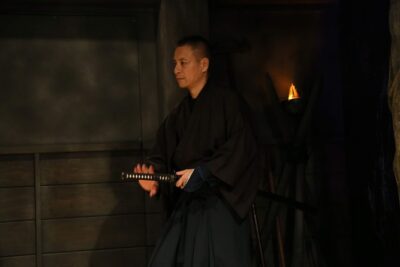
Ninja Samurai 2-hour hands-on lesson by Japanese master in Tokyo
Read our review →Browse the lists this tour appears in