
Reviewed · SAMURAI & NINJA EXPERIENCES
SAMURAI EXPERIENCE in Tokyo(Harajuku)【SAMURAI’ve】
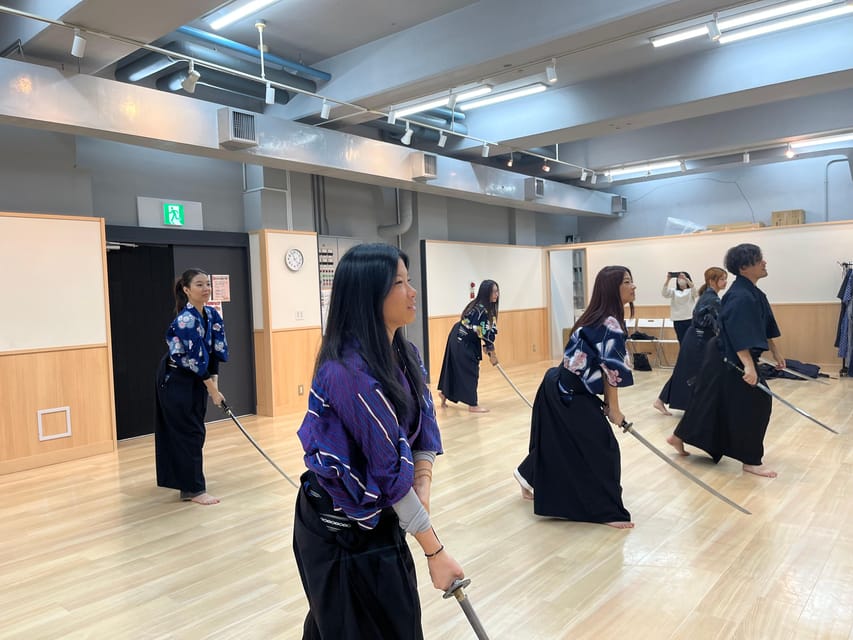
The most memorable part of this Tokyo activity is not simply holding a sword. You learn how a samurai should sit, move, and show respect before practicing basic fighting motions and stage-style Tachimawari. The class takes place in a dojo near Harajuku, with an instructor who also works in video and stage productions.
I like the small group of up to 10, since you should have room to follow the movements without feeling lost in a crowd. I also like the full costume element: you learn how to put on a kitsuke kimono, then finish with photos holding a sword. The main consideration is time. One hour goes quickly, so this is a playful introduction to samurai performance, not a full martial arts course.
In This Review
- Key points to know before you book
- Entering the Harajuku dojo
- Learning to dress in a kitsuke kimono
- Reigi sahou and the samurai way of moving
- Practicing basic sword movements
- Tachimawari brings the action to life
- Sword-in-hand photographs to finish
- What the one-hour format means
- Who will enjoy this samurai activity
- Is $70 a fair price in Tokyo?
- Practical tips for a smoother class
- Should you book SAMURAI’ve?
- FAQ
- Where does the samurai experience take place?
- How long does the activity last?
- Is the samurai kimono included?
- What languages are available?
- Can children join the activity?
- What should I bring?
- Can I cancel or pay later?
Key points to know before you book
- Samurai etiquette comes first: Learn Reigi sahou, the manners and conduct linked with samurai behavior.
- Kitsuke kimono included: You can dress in a traditional samurai-style kimono before the sword lesson.
- Stage combat, not weapon training: Tachimawari teaches stylized sword movements used in film and theater scenes.
- Convenient Harajuku setting: The dojo is about five minutes from Kitasandou Station and eight minutes from Harajuku Station.
- Photos finish the hour: You can pose in costume with a sword for a lasting souvenir.
- Good for families and mixed groups: Anyone age five or older can join, and instruction is offered in English, Japanese, and Chinese.
Entering the Harajuku dojo
The meeting point is easy to miss if you are watching the crowds instead of the buildings. Look for the red door, then go down to the second-floor basement area. From Kitasandou Station, allow about five minutes on foot. From Harajuku Station, the walk takes about eight minutes.
That short walk is useful when fitting the class between sightseeing stops. Harajuku can be busy, and you may arrive warm or carrying shopping bags, so plan a little extra time to find the entrance. Transportation is not included, and you make your own way to the dojo.
The setting matters here. You are not watching a performance from a theater seat. You enter a working practice space and meet an instructor involved in video and stage productions. That background fits the lesson well, especially once the class moves from formal manners to dramatic sword choreography.
The group limit is 10 people. That is small enough for a more personal lesson, but not necessarily private. If you want individual coaching at every moment, keep your expectations modest. The class is designed as a shared activity with room for instruction, practice, and photographs.
More samurai and ninja sessions:
- Tokyo: Samurai Ninja Museum Guided tour and Experience
★ 4.6 · 1,010 reviews - Tokyo: Samurai Sword & Archery Class from Samurai Descendant
★ 5.0 · 603 reviews - Best Samurai Experience in Tokyo
★ 5.0 · 458 reviews
Learning to dress in a kitsuke kimono
The activity begins with the practical business of putting on the samurai kimono. You are shown how to wear the kitsuke garment correctly, with the instructor helping you understand the basic arrangement rather than simply handing you a costume to pull on.
This part gives the experience a useful sense of order. The clothing is not just a photo prop. It sets the mood and helps you change from ordinary sightseeing mode into the role you are about to play. You also get a better idea of how much care goes into traditional dress.
Wear comfortable clothes underneath. You do not need to bring a kimono, sword, or special equipment, since the samurai kimono and sword experience are included. Food and drinks are not included, but the class lasts only one hour, so that should be easy to manage around a meal.
The costume section may take a meaningful share of the hour, especially with a group. That is worth knowing if your priority is sword practice. If your priority is a memorable family activity and good photographs, the dressing process is part of the appeal.
Reigi sahou and the samurai way of moving
Before you start swinging a sword, you learn Reigi sahou, the manners and etiquette associated with samurai conduct. This introduces the idea that samurai behavior was not only about combat. Respect, posture, and controlled movement are part of the lesson.
For you, this is likely to be one of the more distinctive parts of the class. Many sword-themed activities rush straight to action. Here, the etiquette lesson gives the movements some context and asks you to pay attention to how you stand and behave.
The instruction is available in English, Japanese, and Chinese. That makes the class practical for international visitors, and the activity can work for mixed-language groups. Still, sword choreography depends on watching as well as listening, so keep your eyes on the instructor and copy the movement carefully.
This is also where the class sets its tone. It is lively and approachable, but it asks you to take the role seriously for a moment. A little focus makes the later sword work more enjoyable and helps your photographs look less like random dress-up shots.
Practicing basic sword movements
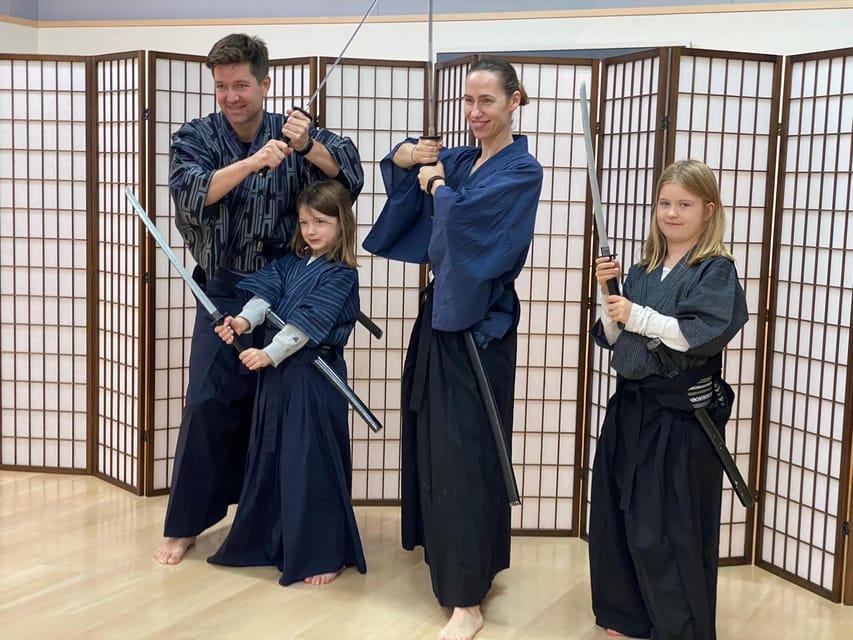
The next part introduces basic samurai sword fighting moves. You learn the motions step by step, then repeat them until they begin to feel natural. The goal is not to test your strength or put you into a real fight. It is to learn controlled movements that look convincing and can be safely practiced in the dojo.
That distinction is important. If you want formal instruction in Japanese martial arts, this one-hour class will be too short. If you want to learn a few recognizable movements, have fun with friends or family, and understand how sword scenes are shaped, the length works well.
The instructor’s stage and video experience is especially relevant here. The lesson includes Tachimawari, stylized movements used in sword-fighting scenes. You are learning performance as much as combat. Timing, position, and clear gestures help create the effect.
You may find that the simple movements are harder than they look. A sword pose can seem easy until you need to coordinate your feet, arms, posture, and expression. That is part of the fun, and the small group gives the instructor a chance to keep the class moving together.
More Harajuku wanders:
- Tokyo Go-Kart Tour Shibuya-Harajuku-Shinjuku (*IDP Required)
★ 5.0 · 217 reviews - Tokyo: Guided Go Kart Tour from Harajuku to Shibuya Crossing
★ 4.5 · 166 reviews - Shibuya & Harajuku: Hidden Gems & Highlights Private Tour
★ 4.7 · 139 reviews - Harajuku Kawaii Fashion and Pop-Culture Tour
★ 5.0 · 94 reviews
Tachimawari brings the action to life
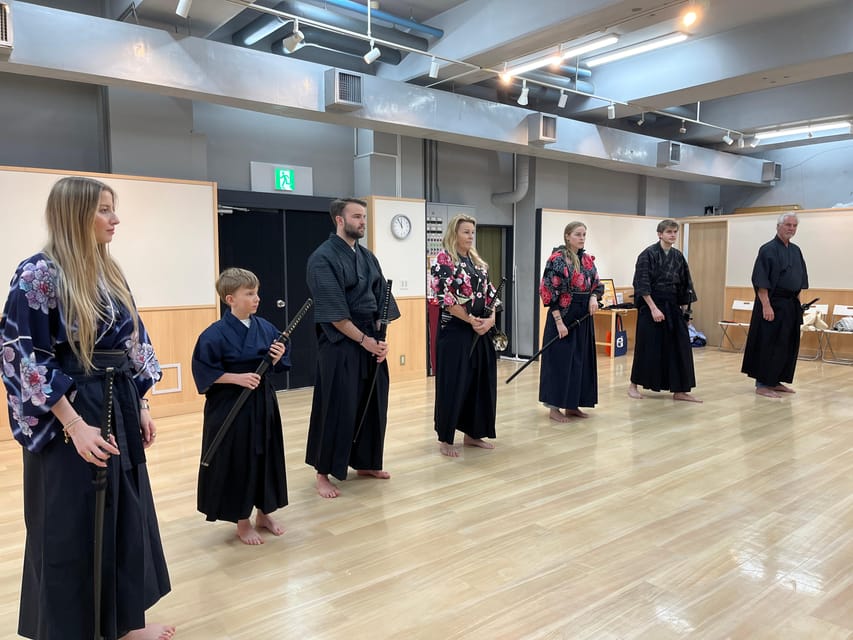
Tachimawari is the point where the workshop becomes most theatrical. These are choreographed sword-fighting motions used for stage and screen, so the emphasis is on form and presentation. You get to put the earlier instruction into a short sequence of stylized action.
This section gives the class its strongest sense of occasion. You are not only learning how to hold a sword. You are practicing the kind of movement that audiences recognize from samurai films and stage shows. It is a safe way to try the visual language of sword fighting without confusing it with actual combat instruction.
Pay attention to the instructor’s demonstrations. The most useful tip is to copy the shape and pace of each motion rather than rushing ahead. A big swing may look exciting, but controlled movement will usually look better in a photograph and help the group stay coordinated.
The class can be especially enjoyable for children and adults together. One family booking specifically described having a great time with the kids, and the activity allows anyone age five or older to take part, regardless of age or gender, as long as they bring the samurai spirit. Children under five cannot join.
Sword-in-hand photographs to finish
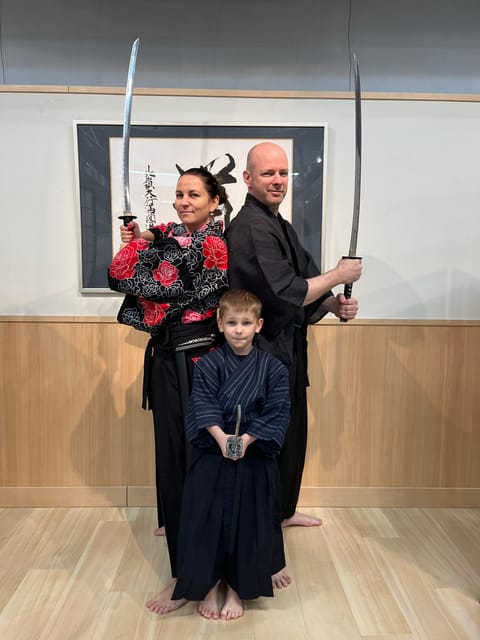
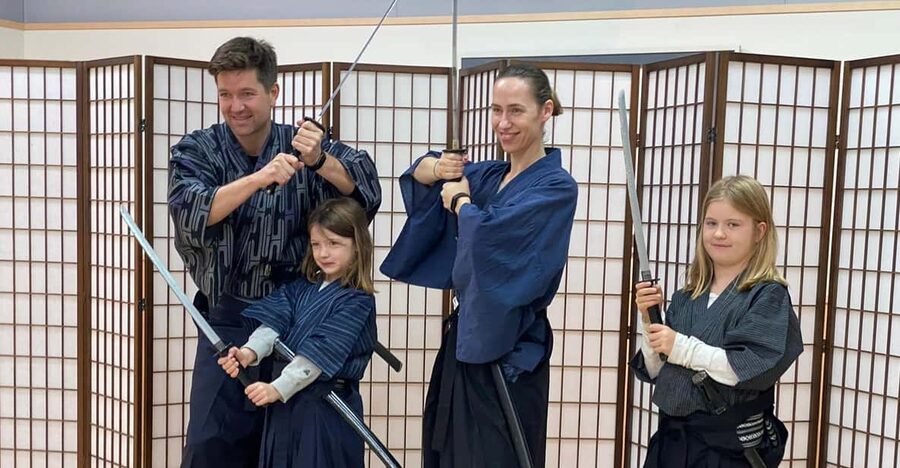
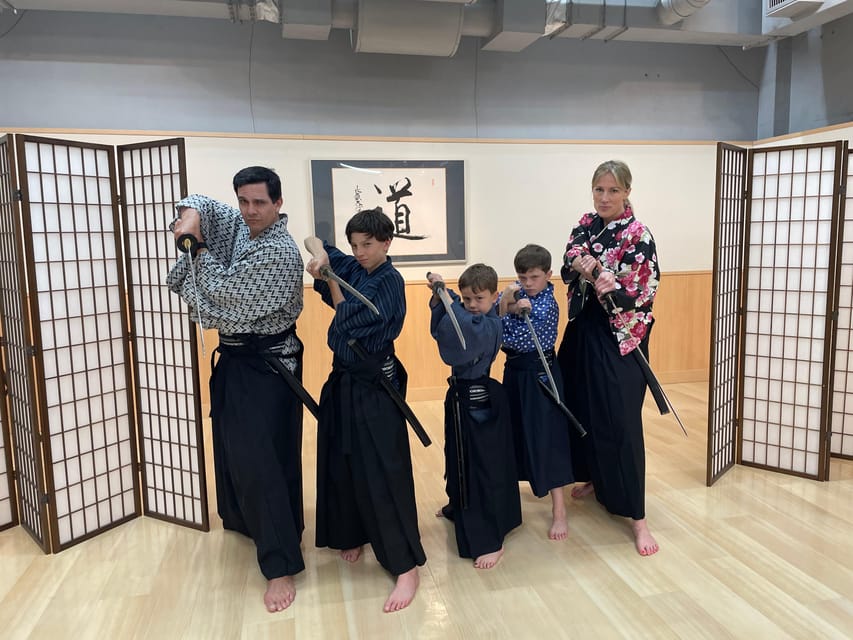
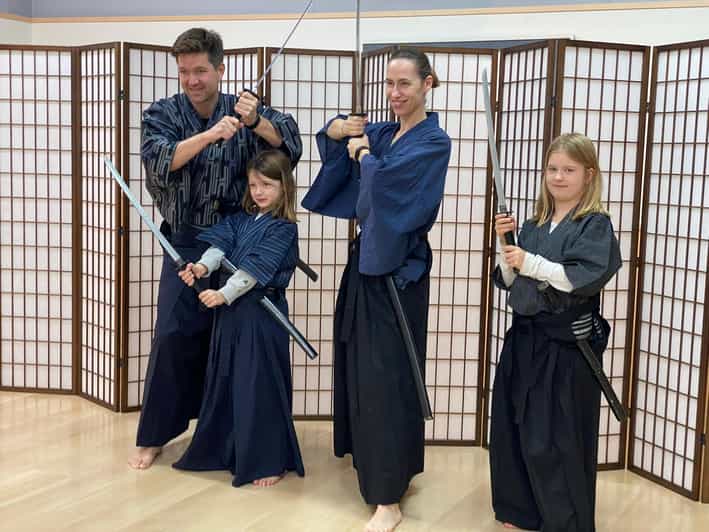
The workshop ends with a photo session in your kimono while holding a sword. This is not an afterthought. It gives you a clear finish to the activity and a chance to capture the costume, posture, and new movements in one frame.
You can use the photo time to try a few different expressions and stances. A calm, formal pose may fit the etiquette lesson, while a more dramatic position connects with the Tachimawari practice. Since the photoshoot is included, you do not need to arrange a separate photographer or pay an extra charge for the basic photo portion.
The pictures also help explain the value of the experience. At $70 per person, you are paying for a guided activity, the instructor, kimono use, etiquette teaching, sword practice, and the photoshoot. That is reasonable if you want a structured cultural activity with a strong souvenir element. It is less compelling if you only want to wear a costume for a quick picture.
I would treat the photos as a bonus rather than the only reason to book. The class earns its price through the sequence: dress, learn manners, practice movements, then pose. The pieces work better together than they would as separate attractions.
What the one-hour format means
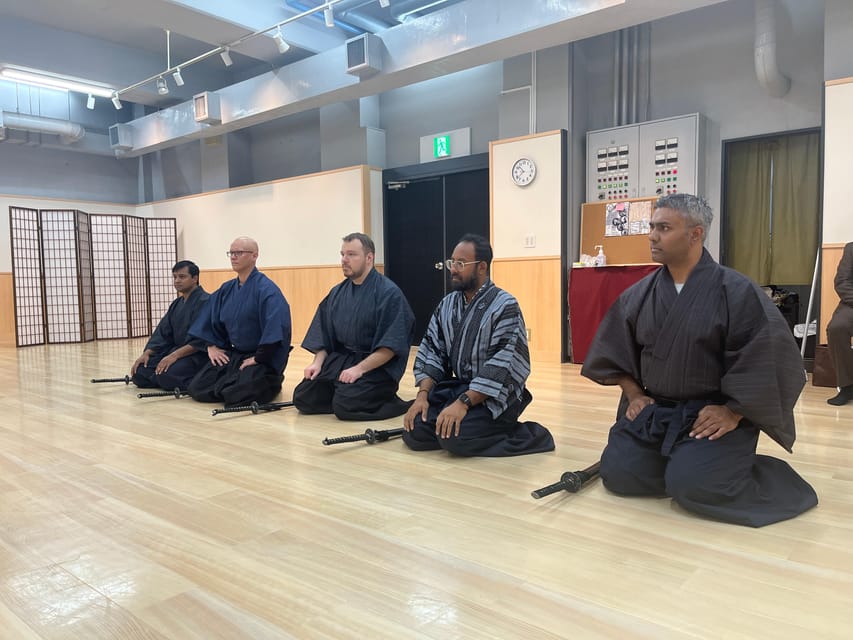
One hour is convenient in Tokyo. You can fit the workshop into a morning or afternoon without giving up a full day of sightseeing. It also suits children and anyone who prefers a short activity with a clear beginning and end.
The tradeoff is that there is no room for a long historical lecture or advanced sword practice. You will receive an introduction to samurai conduct and stage-style movement, not a detailed course in Japanese history or a belt-level martial arts lesson.
That short format can be a strength for a first visit to Tokyo. You get a focused activity, then return to Harajuku, Kitasandou, or the rest of the city with time left for other plans. I would avoid booking it immediately before a tightly timed reservation, though. Finding the red door and changing into the kimono may take a few extra minutes around the scheduled start.
The provider offers free cancellation up to 24 hours before the activity for a full refund. You can also reserve now and pay later, which is helpful when your Tokyo schedule is still changing. Check the available start times when booking, since the one-hour duration does not mean every time of day is offered.
Who will enjoy this samurai activity
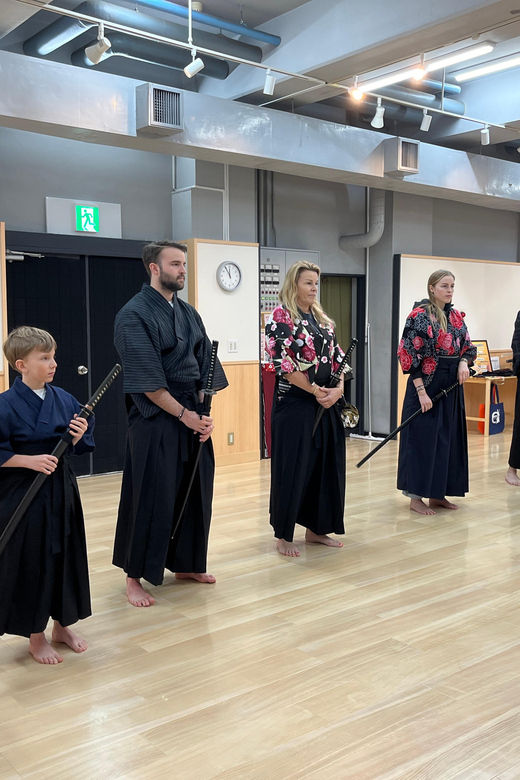
I would recommend this class to families with children age five and older, couples looking for a playful Tokyo memory, and friends who want something more active than a museum visit. It also works well for people who enjoy film, stage combat, costumes, or Japanese cultural traditions.
The language options make it approachable for many international visitors. Instruction is offered in English, Japanese, and Chinese. The positive comments from English and French speakers point to a welcoming teaching style, and the instructors are described as friendly and clear when explaining the movements.
You should also consider it if you want an activity that produces photographs without needing to plan a separate portrait session. The kimono and sword make the result more distinctive than an ordinary souvenir photo.
I would not choose it for serious martial arts training. You should also think twice if you dislike changing clothes, group activities, or staged movement. The experience asks you to participate, copy the instructor, and pose. It is not a passive demonstration.
Wheelchair users cannot join, and the class is not suitable for children under five. Those limits are important because the dojo is a practice setting, and the activity requires movement and costume changes.
Is $70 a fair price in Tokyo?
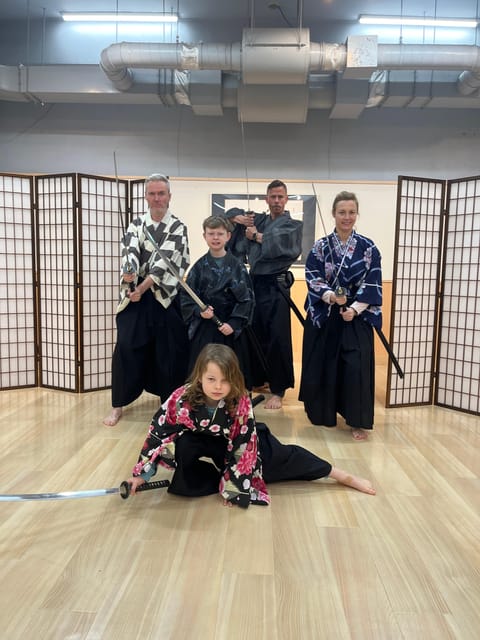
At $70 per person, the activity sits in the midrange for a short Tokyo experience. The value depends on how much you use each part. If you only care about sword handling, the price may feel high for a one-hour introduction. If you want instruction, costume, etiquette, stage-style movements, and photos in one compact visit, the package makes more sense.
The small group helps support the price. A maximum of 10 people is more manageable than a large tourist class, and you should have a better chance of seeing the instructor clearly. You are also not paying separately for the kimono, the sword activity, or the photoshoot.
I especially like that the activity has a real teaching structure. It does not begin and end with dressing up. You learn Reigi sahou, practice basic movements, and then use Tachimawari to understand how sword scenes are performed. That progression gives you something to talk about after the photos are done.
Still, keep your expectations matched to the cost. This is an entertaining cultural workshop, not a full day at a samurai school. Its best value comes from the combination of participation and memory-making.
Practical tips for a smoother class
Arrive with comfortable clothing that works under a kimono. Avoid planning a large meal during the hour, since food and drinks are not included and the activity is continuous.
Give yourself enough time to locate the red-door entrance. Kitasandou Station is the closer option at about five minutes away, while Harajuku Station takes about eight minutes. The meeting point is in a second-floor basement area, so do not assume the studio will be obvious from the street.
Keep your phone available for the photo portion, but follow the instructor’s direction about when to use it. The included photoshoot is the formal end of the activity, and you will get better results if you focus on posture and expression instead of rushing through the poses.
If you are booking for a family, remember the minimum age is five. The activity welcomes all ages and genders above that limit, but each participant needs to take part in the movement lesson. A child who wants only to watch may not get as much from the class.
Should you book SAMURAI’ve?
Book it if you want a short, cheerful Tokyo activity that combines Japanese etiquette, traditional dress, stage combat, and photographs. The small group, multilingual instruction, friendly teaching style, and clear one-hour format make it easy to fit into a Harajuku day.
Skip it if you want advanced sword training, a long historical talk, or an unstructured photo session. For most people, the best reason to book is the complete sequence: you learn how a samurai should behave, put on the kimono, practice Tachimawari, and leave with sword-in-hand pictures. At $70, that is a fair deal for a hands-on memory, provided you see it as a cultural performance workshop rather than a martial arts course.
FAQ
Where does the samurai experience take place?
It takes place at a dojo in Tokyo, near Harajuku. Enter through the red door and proceed to the second-floor basement. The dojo is about five minutes from Kitasandou Station and eight minutes from Harajuku Station.
How long does the activity last?
The activity lasts one hour. Starting times vary, so check availability when making your reservation.
Is the samurai kimono included?
Yes. A samurai kimono is provided for you to wear, and the class includes instruction on how to put on the kitsuke kimono.
What languages are available?
The instructor can teach in English, Japanese, and Chinese.
Can children join the activity?
Children age five and older can join. Children under five are not permitted to take part.
What should I bring?
Bring comfortable clothing to wear under the samurai kimono. Transportation, food, and drinks are not included.
Can I cancel or pay later?
You can cancel up to 24 hours in advance for a full refund. The activity also offers reserve now and pay later booking.
New on our Tokyo list
- From Tokyo: Mount Fuji & Hakone Full Day Private Tour★ 4.9 · 25 reviews
- Tokyo Spectacular View Day-Cruise in 90 Minutes★ 5.0 · 25 reviews
- Real Tokyo Runner Club : Daikoku Car Meet Night Tour with JDM Car★ 5.0 · 25 reviews
- 2.5 Hour-Guided Cycle Tour in the Central Tokyo★ 5.0 · 25 reviews
- Ramen Making from Scratch +Akihabara Tour –Cooking Class★ 5.0 · 25 reviews
- [Self-Drive] Tokyo & Daikoku Custom Car Driving Tour★ 4.9 · 25 reviews
- Tokyo: 2-Hour Night Bike Tour of the City’s Hidden Gems★ 4.9 · 25 reviews
- Samurai themed Entertainment show in Shinjuku★ 4.5 · 25 reviews
Samurai & Ninja Experiences, compared.
Samurai Ninja Museum Guided tour and Experience
Read our review →
Samurai Sword & Archery Class from Samurai Descendant
Read our review →
Ninja Experience (Family Friendly) at Samurai Ninja Museum TOKYO
Read our review →
Samurai Entertainment Night Show in Kanda Shrine
Read our review →
Tokyo Sword Experience – includes Museum Ticket/Ninja Experience
Read our review →
Samurai Ninja Museum Asakusa: Samurai Sword Lesson & Tour
Read our review →
Ninja Samurai 2-hour hands-on lesson by Japanese master in Tokyo
Read our review →Browse the lists this tour appears in