
Reviewed · SAMURAI & NINJA EXPERIENCES
Samurai Experience in Tokyo / SAMURAI’ve
Tokyo’s SAMURAI’ve experience turns an hour into a small stage show of your own. You put on a samurai costume, learn how to draw and handle a metal practice sword, then join a choreographed sword-fighting sequence under professional performers’ guidance. The costume and photo session make it memorable, while the lesson gives the activity more substance than a quick dress-up stop.
I like the clear progression from samurai manners to basic sword movements, and I like that the instructors keep the mood light while still stressing safe technique. The main drawback is timing: the experience runs only at 10:30 a.m. or 3 p.m., and one booking problem came from confusion over the start time. Check your confirmed time carefully.
In This Review
- Key points before you book
- What SAMURAI’ve actually offers
- Putting on the samurai kimono
- Learning samurai etiquette before touching the sword
- Handling a metal practice katana
- The Tachimawari sword sequence
- The photo session at the end
- The optional samurai performance
- Why the one-hour format works, and where it falls short
- Who will get the most from the $71.85 price
- Timing, location, and simple planning advice
- What the strongest praise tells you
- Should you book SAMURAI’ve?
- FAQ
- Where does the samurai experience take place?
- How long does the experience last?
- What is included in the price?
- Is the sword real or sharp?
- What happens during the class?
- How many people can join the activity?
- Can I cancel for a refund?
Key points before you book
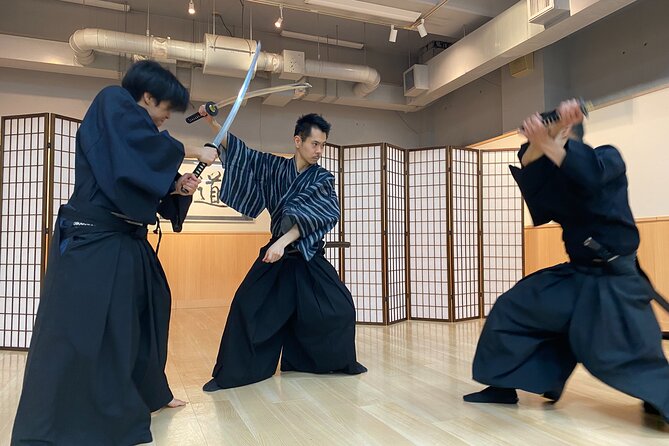
- A one-hour hands-on class: You learn etiquette, sword handling, and a short fighting sequence rather than simply watching a demonstration.
- Professional performers lead the lesson: Master Shin is specifically praised for teaching with humor and care, especially with young teens.
- Heavy metal practice swords: The katana are fake and not sharp along the blade, but they still have enough weight to make the movements feel physical.
- Costume photos are part of the experience: You wear a samurai kimono and have time for photographs before finishing.
- Small-to-medium group setting: The maximum is 19 people, so this is social and active, but not a private lesson.
- Optional performance available: You can pay extra to have the instructors add a samurai show to your session.
What SAMURAI’ve actually offers
This is not a historical museum visit or a sword-making workshop. It is a short practical class built around samurai performance, costume, manners, and choreographed movement.
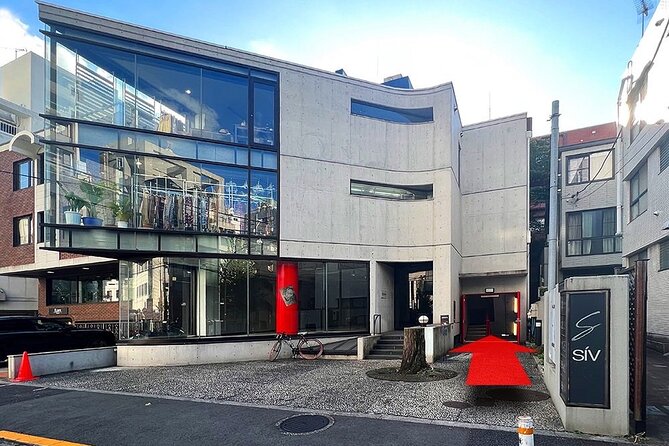
The session takes place at SAMURAI EXPERIENCE in Tokyo, also called SAMURAI’ve, in Sendagaya, Shibuya. The listed address is 3-12 Shibata Building B2, Sendagaya, Tokyo 151-0051. The location is near public transportation, but you should allow time to find the building and basement entrance.
The class costs about $71.85 per person. That is not cheap for one hour, so the value depends on what you want from it. If you only want to put on a costume for a quick picture, the price may feel high. If you want instruction, a group activity, cultural context, and a staged finale, it becomes easier to justify.
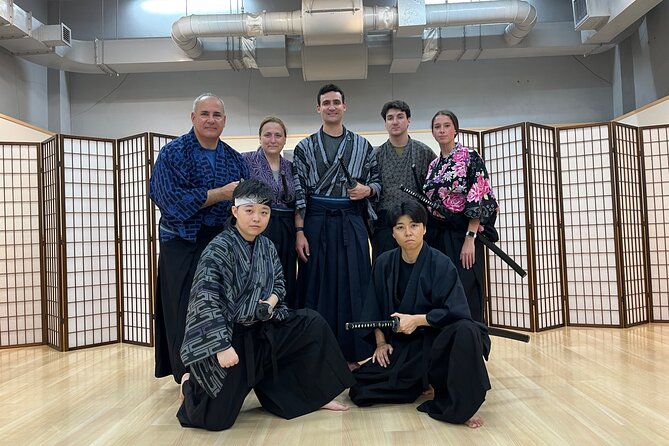
The maximum group size is 19 people. That gives the class an energetic, social feel and makes it suitable for families or friends traveling together. It also means you should not expect the close attention of a one-on-one martial arts lesson.
More samurai and ninja sessions:
- Tokyo: Samurai Ninja Museum Guided tour and Experience
★ 4.6 · 1,010 reviews - Tokyo: Samurai Sword & Archery Class from Samurai Descendant
★ 5.0 · 603 reviews - Best Samurai Experience in Tokyo
★ 5.0 · 458 reviews
Putting on the samurai kimono
The activity begins with kitsuke, the process of putting on the samurai costume. You learn how a kimono is worn, rather than simply being handed a costume and sent into the room.
This first stage matters because the clothing changes the feel of the class. Once you are dressed, the experience becomes more than a generic sword activity. You are taking part in a carefully staged introduction to samurai presentation and conduct.
The clothing is included in the price, and the costume area is described as clean and neat. That is useful for families, since children may be more interested in the activity when they can dress up and see the finished look in photographs.
Give yourself enough time before the class to arrive at the meeting point. The published schedule lists two separate one-hour sessions, from 10:30 to 11:30 a.m. and from 3 to 4 p.m. A calendar entry that showed noon caused one customer to miss the class, so rely on the confirmed booking time rather than an automatically generated calendar reminder.
Learning samurai etiquette before touching the sword
Next comes reigi sahou, the basic etiquette and manners associated with samurai conduct. This part helps frame the sword as a serious object rather than a toy.
The lesson does not attempt to turn you into a historical expert in ten minutes. Instead, it gives the sword work a cultural setting. You learn why posture, respect, and controlled movement matter before you begin the physical exercises.
I appreciate this order. A costume-and-sword activity can easily become a collection of dramatic poses. Starting with manners adds a little discipline and reminds you that the class is based on a tradition of formal conduct, even though the session itself is designed for fun.
The instructors are professional samurai performers who appear in shows and events. That background should be apparent in the way the class moves toward a final sequence. You are not just practicing isolated gestures. You are preparing for a small piece of stage combat.
Handling a metal practice katana
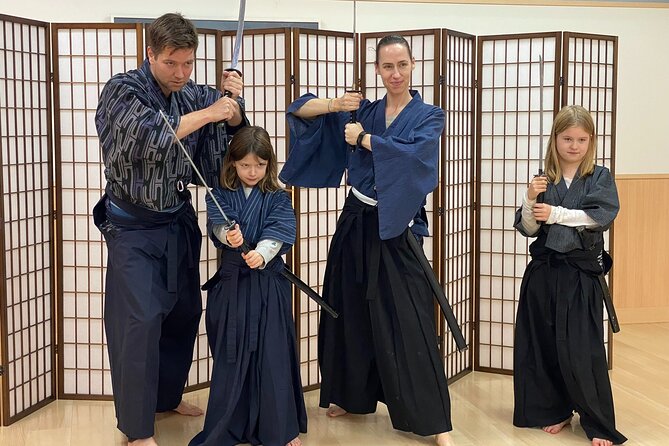
The basic lesson introduces the main movements of samurai sword fighting. You learn how to draw the sword and follow simple instructions for holding, positioning, and moving it.
The included katana is a metal fake sword. It is not sharp along the side of the blade, but it is still heavy enough to feel substantial. That detail is important. This is not a foam prop, so you need to pay attention to the instructor and keep your movements controlled.
The class is therefore physical without being presented as a real combat lesson. The goal is performance and technique, not sparring or testing strength. You should expect repeated practice of basic moves, followed by a more complete action sequence.
This is where the patience of the instructors matters most. Master Shin received particular praise for making the activity safe and enjoyable for young teenagers, while also using humor to keep them engaged. That combination is useful in a group where ages and confidence levels may vary.
A few more Tokyo bookings worth comparing
- Mt Fuji and Hakone 1-Day Bus Tour Return by Bullet Train
★ 5.0 · 26,383 reviews - 1-Day Tokyo Bus Tour
★ 5.0 · 14,250 reviews - Tokyo: TOKYO SKYTREE® Admission ticket
★ 4.5 · 11,192 reviews - Tokyo: teamLab Planets TOKYO Digital Art Museum Entry Ticket
★ 4.6 · 9,779 reviews
The Tachimawari sword sequence
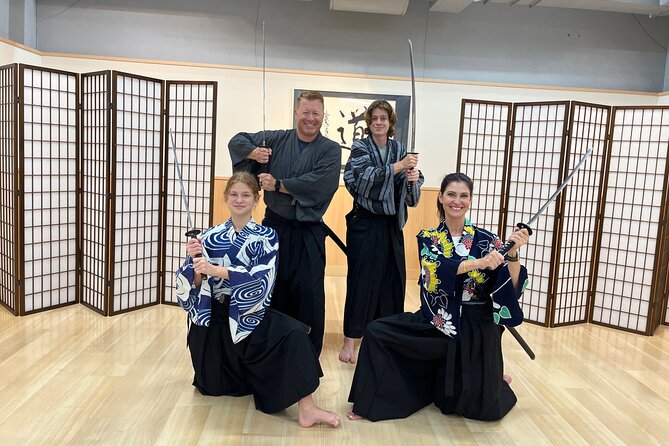
The main hands-on portion is tachimawari, the staged sword-fighting section. You use what you have learned to perform a short sequence of movements.
This is the part most likely to make the hour feel worthwhile. The final sequence brings together posture, drawing, sword positions, and timing. It gives you a clear goal and lets you see why the earlier etiquette and basic exercises were included.
You should not mistake the choreography for genuine sword fighting. It is a controlled performance activity led by professionals. The fun comes from learning enough of the form to look and move like part of a samurai scene.
That staged quality also makes the activity approachable. You do not need previous martial arts experience, and the information provided says most people can participate. The instructors demonstrate the movements, guide the group, and keep the pace moving.
If you are shy about performing in front of others, remember that this is a group class, not a solo audition. You will be learning alongside other participants, and the shared silliness of the costumes usually makes the activity less intimidating. Still, anyone who dislikes role-play may find the final sequence a little theatrical.
The photo session at the end
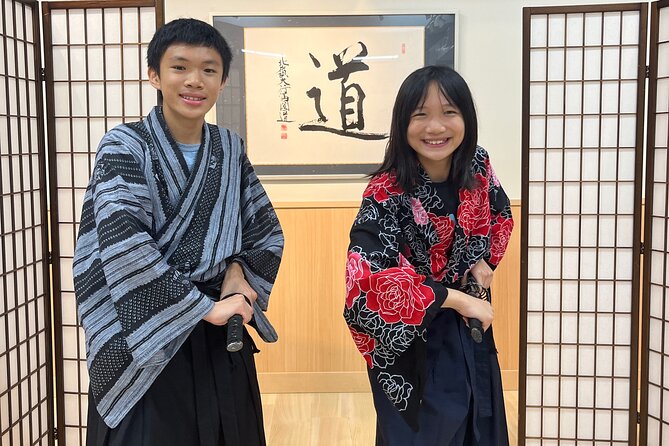
The experience finishes with a photo shoot. You have already learned the basic movements, so the photographs can include more than a static costume pose.
The staff take plenty of pictures, which is a useful touch for families and couples who might otherwise struggle to get photos of everyone together. It also means you do not have to spend the class asking another participant to operate your phone.
The photo session is one of the strongest practical reasons to choose this experience over a simple costume rental. You get the clothing, instruction, and a record of the activity in one visit.
Keep your expectations sensible. The experience lasts about an hour, so the photo shoot is part of a compact program rather than a full professional portrait session. The value is in capturing the moment after you have learned the sword sequence.
The optional samurai performance
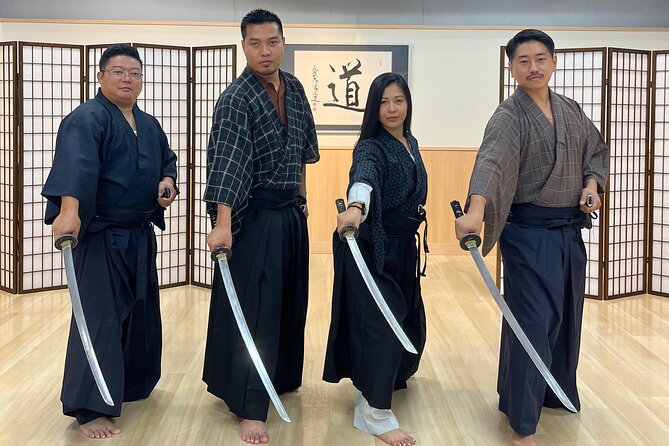
SAMURAI’ve can arrange a samurai performance by the instructors during the experience. This costs extra, so it is not included in the $71.85 price.
The performance may appeal to you if your group wants a fuller stage-show feel. It also gives context to the movements you have just practiced, since the instructors are professional performers who appear in other shows and events.
For a short visit, I would consider this an optional add-on rather than a necessary part of the class. The basic program already includes costume, etiquette, instruction, sword work, and photos. Families who want a bigger entertainment component may find the added expense worthwhile, while budget-minded visitors can skip it.
Ask about the additional cost when booking if the show is important to you. The published information confirms that extra fees apply but does not state the amount.
Why the one-hour format works, and where it falls short
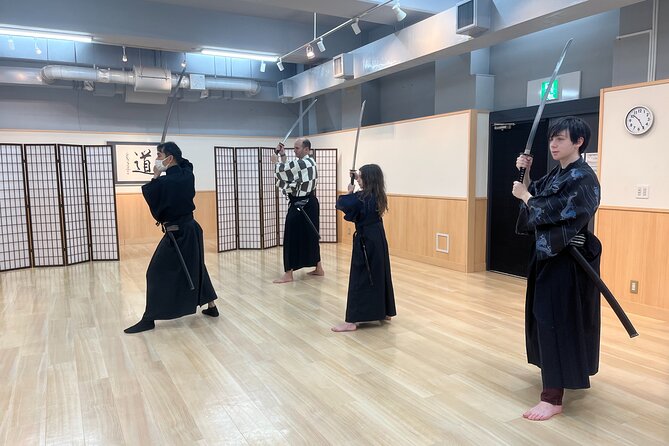
One hour is enough time to create a complete experience without taking over your day in Tokyo. You can schedule it around sightseeing, shopping, or a meal, and the morning or afternoon options give you some flexibility.
The short format also keeps the lesson focused. You move from dressing to manners, then basic sword work, the staged sequence, and photographs. There is little room for the session to become a long lecture.
The tradeoff is that the cultural explanation must remain fairly introductory. You will learn selected elements of samurai etiquette and swordsmanship, but this is not a detailed history course or a long martial arts workshop.
That distinction helps set the right expectations. Book it for a lively introduction and a memorable activity, not for advanced training or a full study of Japanese warrior culture.
Who will get the most from the $71.85 price
I think the price works best for families, couples, and small groups who want to do something active together. The experience has enough structure for adults, while the costumes and staged fight sequence can hold the attention of older children and teenagers.
A 10-year-old and a 14-year-old were able to enjoy the session with their family, and the instructors’ patient approach is particularly helpful for younger participants. The activity also suits people who want photographs that feel more distinctive than standard sightseeing snapshots.
The group format can help solo visitors meet other participants, though the published maximum of 19 means it is not an intimate private activity. Group discounts are available, which may improve the value for families or larger parties.
I would be less likely to recommend it to someone seeking serious martial arts instruction. The class teaches basic movements for a controlled performance. It gives you a taste of samurai sword handling, not a qualification or a long-term training plan.
Timing, location, and simple planning advice
The meeting point is SAMURAI EXPERIENCE in Tokyo, in the basement of the Shibata Building in Sendagaya. The activity ends at the same place.
Because the location is near public transportation, getting to the neighborhood should be manageable. The supplied information does not name a particular station or give walking directions, so check the exact map pin before leaving. A basement venue can be easy to pass if you are rushing.
The two listed start times are 10:30 a.m. and 3 p.m. Confirm which one you booked. Do not assume an online calendar tool has selected the right time, especially since one customer missed the session after a noon reminder appeared.
Confirmation is provided at booking, and mobile tickets are accepted. Most people can participate, but the experience is still based around standing, moving, holding a metal sword, and following physical instructions. If that raises a concern for anyone in your group, contact the provider before booking.
Cancellation is free up to 24 hours before the start time for a full refund. Cancellations or changes made less than 24 hours before the local start time are not accepted for a refund.
What the strongest praise tells you
The most consistent strength is the instructors’ attitude. They are described as friendly, patient, professional, and able to make the lesson fun without losing control of the group.
That matters more here than fancy surroundings. Sword choreography depends on timing and clear instruction, particularly when the practice swords are metal and heavy. A calm teacher makes the difference between an amusing cultural activity and a confusing one.
The other strong point is the sense of participation. You are not watching a samurai show from the sidelines. You put on the clothing, learn the manners, hold the sword, perform the sequence, and finish with photographs.
The main caution is not about the lesson itself. It is about booking precision. With only two one-hour sessions, arriving at the wrong time can mean losing the whole activity. Treat the start time as an essential part of your planning.
Should you book SAMURAI’ve?
Book this experience if you want a compact, social Tokyo activity with costume photos and a real lesson structure. It is particularly well suited to families with older children, couples, and anyone who likes trying something hands-on rather than moving from one famous sight to another.
The $71.85 price is reasonable when you use all the elements: kimono dressing, etiquette, sword instruction, staged combat, and photos. It is harder to justify if you only want a costume picture or expect advanced sword training.
Check your session time, arrive at the Sendagaya meeting point early, and decide in advance if the optional performance is worth the extra fee. With those points handled, SAMURAI’ve offers a memorable hour that mixes Japanese tradition, stagecraft, and a little harmless swordplay.
FAQ
Where does the samurai experience take place?
It takes place at SAMURAI EXPERIENCE in Tokyo, also called SAMURAI’ve, at 3-12 Shibata Building B2, Sendagaya, Shibuya, Tokyo 151-0051. The activity ends at the meeting point.
How long does the experience last?
The class lasts approximately one hour. The listed sessions run from 10:30 to 11:30 a.m. and from 3 to 4 p.m.
What is included in the price?
The experience includes samurai costumes and a metal fake katana. The optional samurai performance costs extra.
Is the sword real or sharp?
The included katana is a metal fake sword. It is not sharp along the side of the blade, but it is heavy enough to require careful handling.
What happens during the class?
You put on a samurai costume, learn basic samurai etiquette and manners, practice basic sword-fighting movements, perform a staged sequence, and take part in a photo shoot.
How many people can join the activity?
The maximum group size is 19 people. Group discounts are available.
Can I cancel for a refund?
You can cancel up to 24 hours before the experience start time for a full refund. Cancellations or changes made less than 24 hours before the local start time are not accepted for a refund.
New on our Tokyo list
- Sumi-e Experience in a relaxing green tea shop in Tokyo★ 5.0 · 3 reviews
- Tokyo : Kamikaze Street Drift Ride★ 5.0 · 3 reviews
- Private Zen Meditation in English in Shinjuku, Tokyo★ 5.0 · 3 reviews
- Onsen Spa in Tokyo and Asakusa Bar Hopping with Local Guide★ 5.0 · 3 reviews
- Easy for everyone! Now you can play handmade mini shamisen and show off to everyone! Musical instruments, sweets and live music★ 5.0 · 3 reviews
- Tokyo: Private Tsukiji Street Food & Sake with Local Guide★ 5.0 · 3 reviews
- Mt Fuji Exploration Tour with Free Japanese Kusa Mochi from Tokyo★ 4.5 · 3 reviews
- Tokyo Tsukiji Fish Market Walking and Exploring Hidden Gems Tour★ 5.0 · 3 reviews
Samurai & Ninja Experiences, compared.
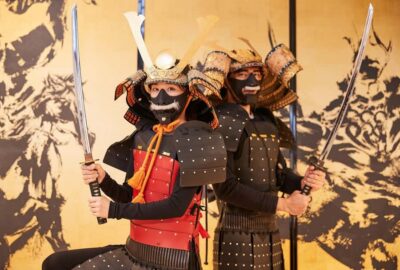
Samurai Ninja Museum Guided tour and Experience
Read our review →
Samurai Sword & Archery Class from Samurai Descendant
Read our review →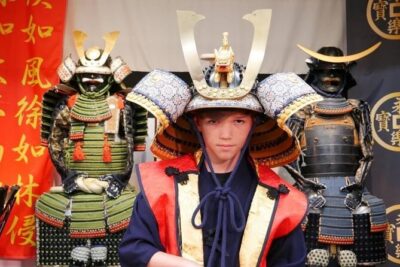
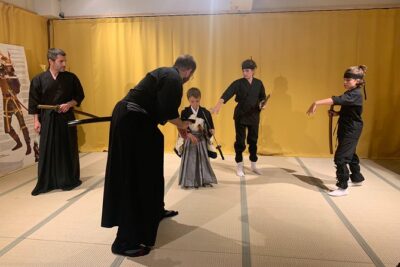
Ninja Experience (Family Friendly) at Samurai Ninja Museum TOKYO
Read our review →
Samurai Entertainment Night Show in Kanda Shrine
Read our review →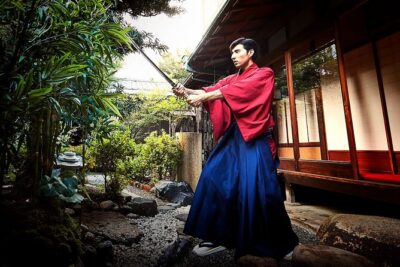
Tokyo Sword Experience – includes Museum Ticket/Ninja Experience
Read our review →
Samurai Ninja Museum Asakusa: Samurai Sword Lesson & Tour
Read our review →
Ninja Samurai 2-hour hands-on lesson by Japanese master in Tokyo
Read our review →Browse the lists this tour appears in