
Reviewed · SAMURAI & NINJA EXPERIENCES
Samurai Sword Training and Katazome Dyeing Experience in Tokyo
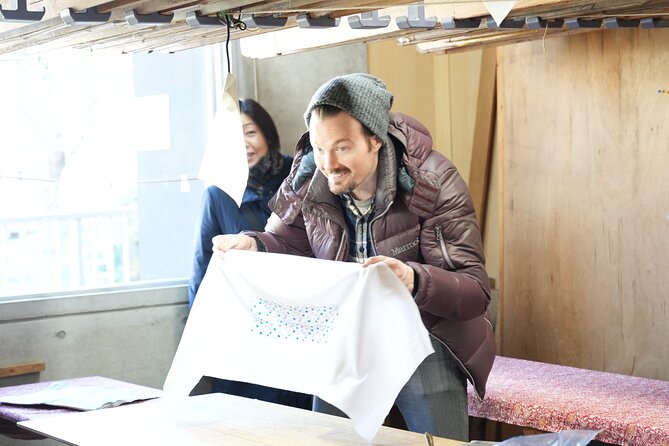
The most unusual part of this Tokyo experience is the link between Katazome dyeing and samurai dress. You begin by making a tenugui headband with an Edo Komon pattern, then walk about one minute to a dojo for a sword demonstration and basic training. It is a compact way to connect craft, clothing, and martial practice.
I like the hands-on format, since you do not simply watch a craftsperson work. I also like the small group, capped at eight, which gives the artisans and instructors room to explain both technique and cultural meaning. The main consideration is the pace: two one-hour workshops leave little time for lingering or a long historical lecture.
In This Review
- Key points to know before booking
- Why the dyeing and sword lessons belong together
- Starting at Somenosato Ochiai at 10:00 am
- Making a tenugui with Katazome methods
- A one-minute walk from cloth to dojo
- Watching the 15-minute real sword demonstration
- Learning defensive actions with toy swords
- Thirty minutes of hands-on sword training
- What the $97.73 price really covers
- Who should book this Tokyo workshop
- Practical timing, cancellation, and planning notes
- Should you book the samurai and Katazome experience?
- FAQ
- Where does the experience begin?
- What time does the experience start?
- How long does the full experience last?
- How many people can join the group?
- Where does the experience end?
- Do I make something during the dyeing workshop?
- Can I cancel for a full refund?
Key points to know before booking
- Two workshops in about two hours: You make a dyed tenugui headband, then move straight into sword training.
- Edo Komon has a samurai connection: The fine patterns were used on samurai kamishimo, a formal style of clothing.
- You leave with something you made: The dyed tenugui is wrapped as a headband before you depart the textile workshop.
- The dojo is one minute away: You do not need a taxi or long transfer between the two parts.
- The group is limited to eight people: That matters when you need help with the stencil and sword movements.
- The price is $97.73 per person: For two guided workshops and included materials and instruction, it is a reasonable choice for hands-on culture, though not a bargain for a short activity.
Why the dyeing and sword lessons belong together
At first, cloth dyeing and sword training may sound like unrelated stops. The connection becomes clearer when you learn about Edo Komon patterns. These tiny repeating designs were used in samurai kamishimo, formal clothing associated with the warrior class.
That link gives the morning a useful shape. You begin with the outward details of samurai culture, including fabric and pattern, then move to the discipline of the sword. You are not studying samurai life in a museum display. You are handling the cloth, making a wearable item, and practicing movements in a dojo.
I like this approach because it avoids reducing samurai culture to armor, weapons, and dramatic poses. The textile lesson shows the care and restraint built into formal dress. The sword session then adds movement and physical focus.
The format is also efficient. Both locations are in Kamiochiai, in Shinjuku City, and the dojo is only a one-minute walk from Somenosato Ochiai. You spend your time learning instead of crossing Tokyo.
More samurai and ninja sessions:
- Tokyo: Samurai Ninja Museum Guided tour and Experience
★ 4.6 · 1,010 reviews - Tokyo: Samurai Sword & Archery Class from Samurai Descendant
★ 5.0 · 603 reviews - Best Samurai Experience in Tokyo
★ 5.0 · 458 reviews
Starting at Somenosato Ochiai at 10:00 am
Your morning begins at Somenosato Ochiai, at 2-chōme-3-6 Kamiochiai. The scheduled start is 10:00 am, so plan to arrive with enough time to find the meeting point without rushing. The experience uses a mobile ticket, and confirmation is provided when you book.
The first ten minutes are devoted to an introduction to Edo Komon patterns. This is important preparation for the craft portion. Rather than choosing a design without context, you learn why these patterns matter and how they relate to samurai kamishimo.
Edo Komon patterns are known for their extremely fine, repeated designs. From a distance, the fabric can appear plain. Up close, the pattern reveals itself. That small detail gives the activity more substance than a basic souvenir-making class.
You do not need to arrive with specialist knowledge. The workshop includes explanations from the artisans, and the teaching covers both the cultural background and the practical steps. The information provided does not name individual guides, so you should expect instruction from the staff at the textile workshop rather than a specific named host.
Making a tenugui with Katazome methods
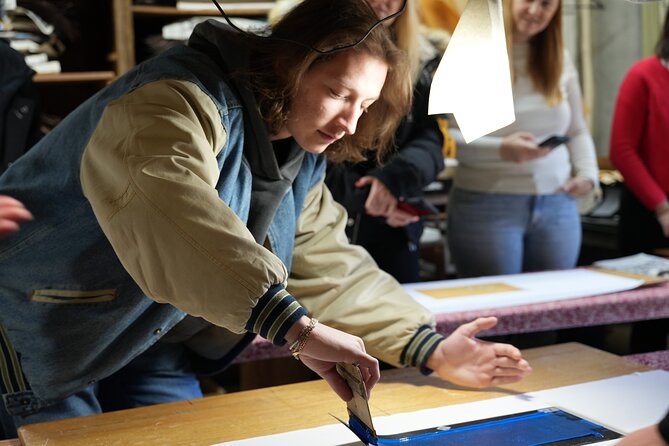
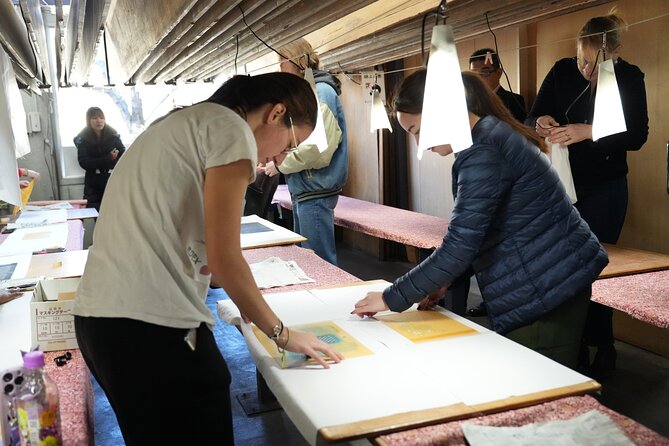
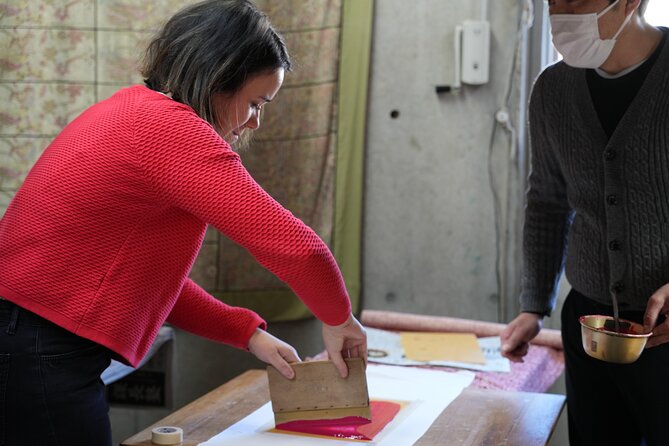
The main dyeing activity lasts about 40 minutes. You receive instruction and hands-on help as you work with a stencil and Edo Komon-style pattern. The point is not simply to watch a professional create a perfect textile. You take part in the process and make your own tenugui.
Katazome is a stencil-dyeing method. The stencil controls where the design appears, making careful placement and steady work important. The fine pattern also means that small details matter. You may find this more satisfying than a quick brush-painting activity because the design comes from a traditional method with a clear historical connection.
The 40-minute slot is long enough for instruction and practice, but it is not an open-ended studio session. You will need to listen closely and follow the workshop’s pace. If you enjoy craft activities, this focused timing should keep the lesson moving. If you want to experiment freely with several designs, you may find the format short.
Your finished tenugui becomes part of the experience rather than something placed in a bag and forgotten. Before leaving, you wrap it as a headband. That final step gives the object a direct connection to the samurai theme and makes it easy to wear during the next part of the morning.
The textile lesson is also a good choice for people who want a souvenir with a personal story. You can point to the pattern and remember how you made it, rather than buying a generic Tokyo item. The provided information does not specify color choices, drying time, or the exact stencil selection, so do not assume you will have unlimited customization.
A one-minute walk from cloth to dojo
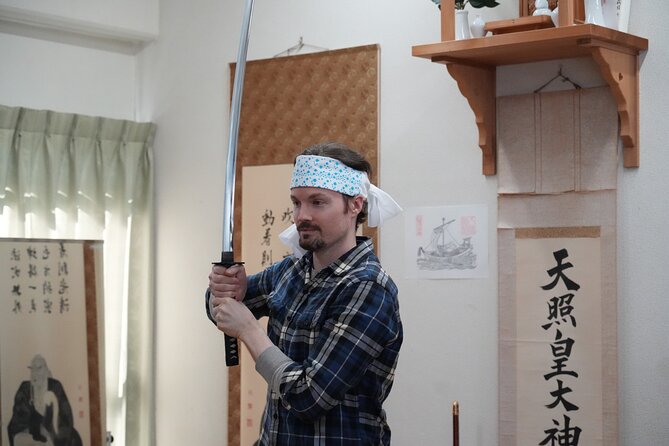
After finishing the tenugui, you take off your shoes and enter the dojo. The next location is at 2-chōme-4-6 Kamiochiai, just one minute from the textile workshop.
That tiny transfer is one of the practical strengths of the experience. You do not need to navigate another train station or spend part of the morning in a vehicle. Still, the shoe-removal detail matters. Wear socks or footwear that you can remove easily, and expect the dojo portion to follow soon after the dyeing session.
The change of setting is noticeable. The first workshop is about pattern, material, and careful handwork. The dojo asks you to pay attention to posture, movement, and response. The two parts feel different, but the shared theme is discipline.
A few more Tokyo bookings worth comparing
- Mt Fuji and Hakone 1-Day Bus Tour Return by Bullet Train
★ 5.0 · 26,383 reviews - 1-Day Tokyo Bus Tour
★ 5.0 · 14,250 reviews - Tokyo: TOKYO SKYTREE® Admission ticket
★ 4.5 · 11,192 reviews - Tokyo: teamLab Planets TOKYO Digital Art Museum Entry Ticket
★ 4.6 · 9,779 reviews
Watching the 15-minute real sword demonstration
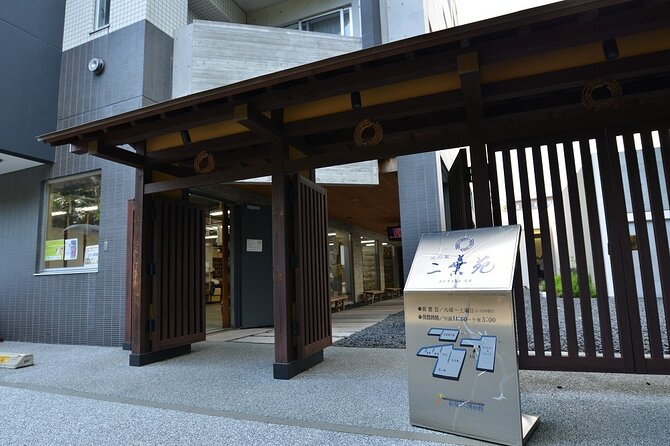
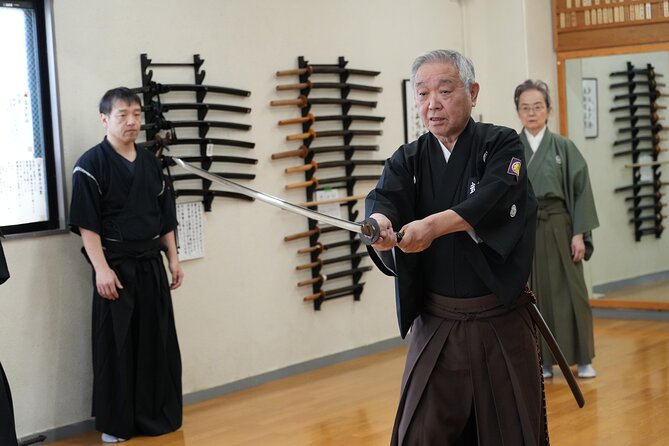
The sword section opens with a 15-minute demonstration using a real sword. This is a viewing segment, not a chance to handle the real weapon. The demonstration gives you a reference point before you begin the safer practice exercises.
A real sword demonstration can make the difference between theatrical swordplay and controlled martial technique easier to see. The schedule does not describe the exact sequence or style, so you should expect a concise demonstration rather than a long performance.
I appreciate that the experience places the demonstration before participant training. You get to watch the instructors first, then move into the basic actions with clear boundaries. That order should help you understand that sword work depends on control and precision, not fast waving.
Learning defensive actions with toy swords
The next 15 minutes focus on defensive actions with toy swords. This part acts as a bridge between watching and doing. You receive an explanation of the movements before the 30-minute training session begins.
Using toy swords keeps the activity centered on practice rather than handling a real blade. The provided details do not identify the exact type of toy sword or list physical requirements, so you should follow the instructors’ directions and consider your own comfort with light physical activity.
The defensive focus may appeal to people who want more than a staged samurai photo. You are learning a simple set of actions within a supervised setting. At the same time, this is an introductory workshop, not a full martial arts lesson. You should book it for a cultural and practical taste, not professional sword instruction.
Thirty minutes of hands-on sword training
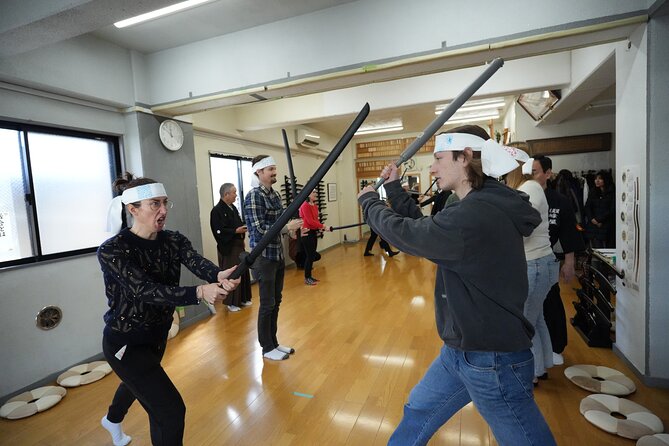
The final 30 minutes are devoted to training. By this point, you have watched the real sword demonstration and heard the explanation of defensive actions. The training gives you time to repeat the movements and put the lesson into practice.
This is where the small group matters most. With a maximum of eight participants, the instructors can give more direct attention than they could in a large class. A small group also makes it easier to see the demonstration and follow corrections.
The activity does not promise an advanced curriculum, and the total sword portion is about one hour. That is enough to give you a taste of the discipline and physical focus involved. It is not enough to build serious proficiency. I would choose this for a first introduction, a family or friend activity, or a culture-focused morning in Tokyo.
The tour ends at the dojo after training. There is no return transfer to the textile workshop or another central meeting point. Check your route onward before the session begins, especially if you have a timed lunch, museum entry, or train reservation.
What the $97.73 price really covers
At $97.73 per person, this is not the cheapest two-hour activity in Tokyo. Its value comes from the combination of two specialized settings, artisan instruction, a personal dyed tenugui, a real sword demonstration, and hands-on dojo training.
You are paying for more than admission. The price includes access to instruction in both workshops, the chance to make a usable item, and a small-group format capped at eight people. If you would otherwise book a craft class and a samurai demonstration separately, combining them can make the cost easier to justify.
The price is less attractive if you mainly want a photo opportunity or a long historical talk. The schedule is tightly divided into short sections, and the whole activity lasts about two hours. You will get direct participation, but not a full day of cultural study.
I see the best value for someone who wants an active introduction to traditional Japan. You make something, watch a controlled sword demonstration, and practice basic techniques. The experience gives you several kinds of contact with the subject in a short time.
Who should book this Tokyo workshop
I would recommend it to you if you like learning by doing. The dyeing section rewards patience and attention, while the dojo section gives you a chance to move and practice. Together, they make a good break from sightseeing that consists mainly of walking, temples, shops, and observation.
It also suits visitors who want a small group. Eight people is a useful limit for a craft lesson, especially when you may need help with the stencil or pattern. It also keeps the dojo training from feeling like a large public demonstration.
Families and mixed-age groups may find the two-part format useful, provided everyone can take part in the workshop activities. The information says most participants can join, but it does not provide detailed accessibility or mobility guidance. If you have specific physical needs, ask the provider before booking.
History-minded visitors should enjoy the connection between Edo Komon and samurai clothing. You get a cultural explanation before making the headband, so the craft has a clear reason behind it. People seeking advanced sword study should look elsewhere, since this is a short introductory training session.
Practical timing, cancellation, and planning notes
The experience begins at 10:00 am and lasts approximately two hours. The first hour takes place at Somenosato Ochiai, followed by a one-minute walk to the dojo for the second hour.
The group maximum is eight people. Confirmation arrives at booking, and the mobile ticket makes it easy to keep the reservation on your phone. Free cancellation is available if you cancel at least 24 hours before the start time. Changes or cancellations inside that window are not accepted for a refund.
A minimum number of participants is required. If the provider cancels because that minimum is not reached, you can choose another date or experience, or receive a full refund.
Because the experience ends at the dojo, make your onward plans from the dojo address, not the textile workshop. Take note that you remove your shoes before entering the dojo. That is a small detail, but it is useful to know before you arrive.
Should you book the samurai and Katazome experience?
Book it if you want a compact, active cultural experience with a clear connection between samurai clothing and martial practice. The strongest features are the hands-on Katazome lesson, the headband you make, the real sword demonstration, and the small group of no more than eight.
Skip it if you want a long museum-style explanation, advanced sword instruction, or a full-day craft workshop. At $97.73, the value depends on taking part in both halves. For the right visitor, it is a well-planned two-hour introduction that leaves you with a handmade item and a better sense of how samurai culture reached beyond the battlefield.
FAQ
Where does the experience begin?
It begins at Somenosato Ochiai, at 2-chōme-3-6 Kamiochiai, Shinjuku City, Tokyo 161-0034, Japan.
What time does the experience start?
The scheduled start time is 10:00 am.
How long does the full experience last?
The experience lasts approximately two hours, with about one hour for Katazome dyeing and one hour for sword training.
How many people can join the group?
The activity has a maximum of eight participants.
Where does the experience end?
It ends at the dojo, Musashikoku Mugai Kai, at 2-chōme-4-6 Kamiochiai, Shinjuku City, Tokyo 161-0034, Japan.
Do I make something during the dyeing workshop?
Yes. You dye a tenugui with instruction and hands-on help, then wrap the finished tenugui as a headband before leaving the textile workshop.
Can I cancel for a full refund?
Yes. You can cancel at least 24 hours before the experience start time for a full refund. Cancellations or changes made less than 24 hours before the start time are not accepted for a refund.
New on our Tokyo list
- Sumi-e Experience in a relaxing green tea shop in Tokyo★ 5.0 · 3 reviews
- Tokyo : Kamikaze Street Drift Ride★ 5.0 · 3 reviews
- Private Zen Meditation in English in Shinjuku, Tokyo★ 5.0 · 3 reviews
- Onsen Spa in Tokyo and Asakusa Bar Hopping with Local Guide★ 5.0 · 3 reviews
- Easy for everyone! Now you can play handmade mini shamisen and show off to everyone! Musical instruments, sweets and live music★ 5.0 · 3 reviews
- Tokyo: Private Tsukiji Street Food & Sake with Local Guide★ 5.0 · 3 reviews
- Mt Fuji Exploration Tour with Free Japanese Kusa Mochi from Tokyo★ 4.5 · 3 reviews
- Tokyo Tsukiji Fish Market Walking and Exploring Hidden Gems Tour★ 5.0 · 3 reviews
Samurai & Ninja Experiences, compared.
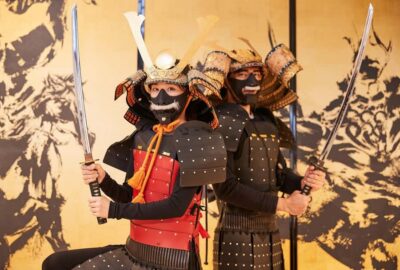
Samurai Ninja Museum Guided tour and Experience
Read our review →
Samurai Sword & Archery Class from Samurai Descendant
Read our review →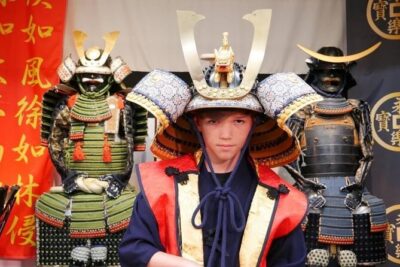
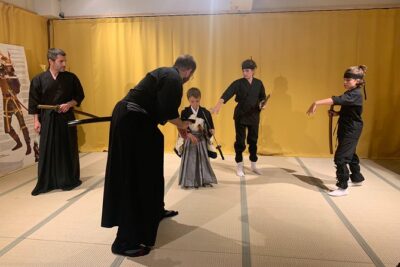
Ninja Experience (Family Friendly) at Samurai Ninja Museum TOKYO
Read our review →
Samurai Entertainment Night Show in Kanda Shrine
Read our review →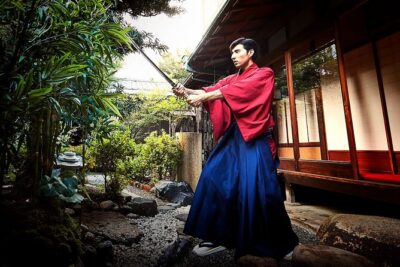
Tokyo Sword Experience – includes Museum Ticket/Ninja Experience
Read our review →
Samurai Ninja Museum Asakusa: Samurai Sword Lesson & Tour
Read our review →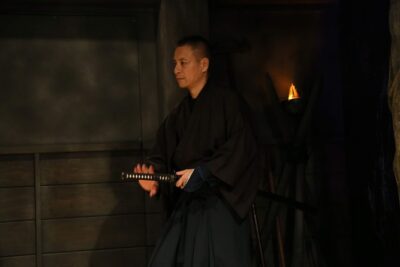
Ninja Samurai 2-hour hands-on lesson by Japanese master in Tokyo
Read our review →Browse the lists this tour appears in