
Reviewed · SAMURAI & NINJA EXPERIENCES
Samurai Training in Tokyo: Swords, Bushido & Mental Discipline
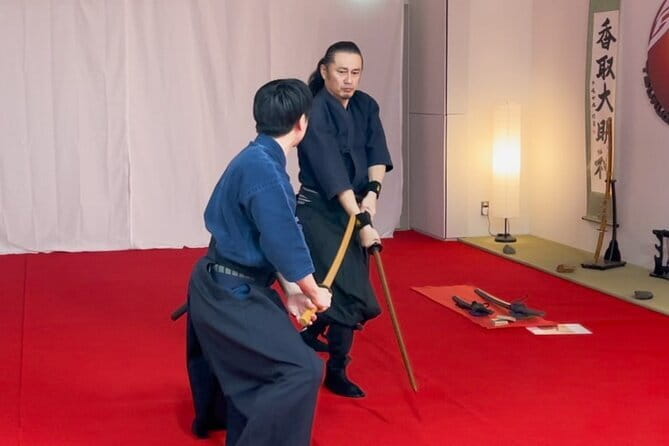
The most interesting part of this Tokyo experience is that you do not simply watch a samurai demonstration. You enter a dojo, put on traditional clothing, learn the manners and mindset behind Bushido, then practice sword movements yourself. The session takes place in Kojimachi, an area once within Edo Castle’s inner grounds.
I like the private format, which gives you room to ask questions and work at a comfortable beginner pace. I also like the mix of physical training and quiet focus: meditation, breathing, silent walking, wooden-sword drills, and a matcha break make this more than a staged photo stop. The main consideration is that the two-hour session packs in many activities, so you should expect an introduction to samurai training rather than years of martial instruction.
In This Review
- Key points to know before booking
- Entering the Kojimachi dojo near former Edo Castle grounds
- Samurai clothing and the rules of Bushido
- Breathing, meditation, and silent walking
- Wooden sword drills and strength work
- Learning one authentic combat kata
- Matcha, Japanese sweets, and a quieter break
- A certificate and photo that do not feel entirely generic
- What the $85.66 price includes
- Who will get the most from this experience
- My take on the private two-hour format
- Should you book Samurai Training in Tokyo?
- FAQ
- Where does the samurai training take place?
- How long is the experience?
- Is the experience private?
- Is the activity conducted in English?
- Do I need previous sword or martial arts experience?
- What is included in the price?
- Can I cancel for a full refund?
Key points to know before booking
- You train in a private group: Only your party participates, with a minimum of two people required.
- The lesson goes beyond swordplay: Bushido, etiquette, breathing, meditation, posture, and silent walking are part of the session.
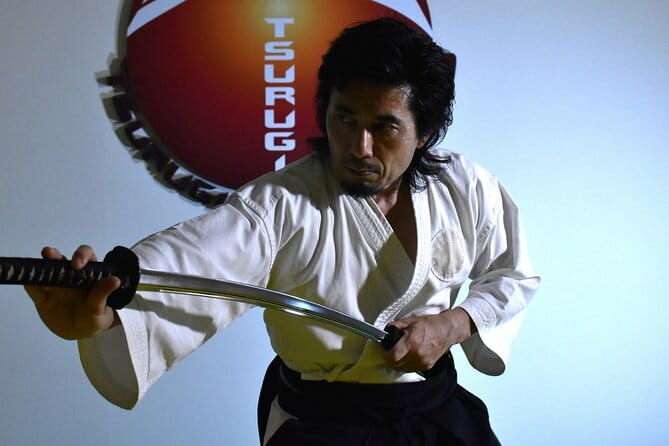
- You practice with wooden weapons: Training includes a wooden sword, a heavy stick, and one authentic combat kata.
- The setting has historical context: The Kojimachi dojo sits in an area once connected with Edo Castle’s inner grounds.
- The keepsakes are personal: You receive a scroll-style certificate with your name and learned techniques, plus a photo in samurai dress.
- The price includes cultural extras: At $85.66 per person, the fee covers uniform rental, English guidance, matcha, Japanese sweets, and the private lesson.
Entering the Kojimachi dojo near former Edo Castle grounds
The experience begins at Samurai Sword Tokyo, at 4-chōme-2-1 Kōjimachi in Chiyoda City. The site is near public transportation, and the activity returns to this same meeting point at the end. You will need to arrange your own way there, since private transportation is not included.
The location adds useful context before training starts. Kojimachi was once part of the inner grounds of Edo Castle, where samurai trained and served. That does not turn the dojo into a surviving castle building, but it gives the lesson a stronger sense of place than a generic activity room.
This is a private activity, not a large class. Only your group takes part, and the minimum booking is two participants. That makes it a natural fit for couples, friends, and families traveling together. It also means a solo booking is not enough unless another participant is included in the reservation.
You should allow a little time to find the building and arrive ready for a structured class. Toilets are available in the building. Since the experience lasts about two hours and has several stages, arriving on time matters.
More samurai and ninja sessions:
- Tokyo: Samurai Ninja Museum Guided tour and Experience
★ 4.6 · 1,010 reviews - Tokyo: Samurai Sword & Archery Class from Samurai Descendant
★ 5.0 · 603 reviews - Best Samurai Experience in Tokyo
★ 5.0 · 458 reviews
Samurai clothing and the rules of Bushido
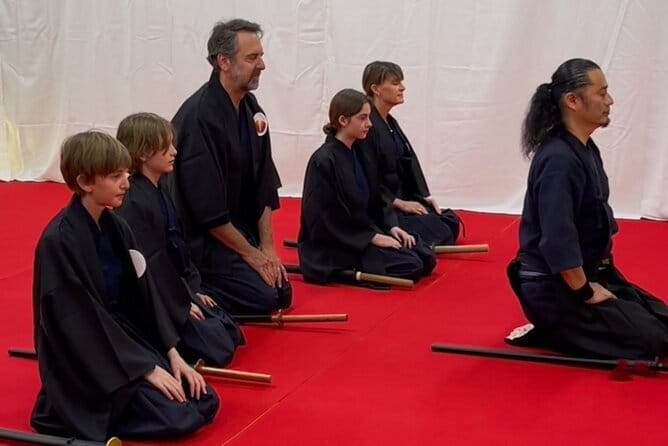
Your instructor begins with samurai etiquette and the spirit of Bushido. This part is important because the class presents sword work as a discipline built on respect, control, and attention, not as a flashy action performance.
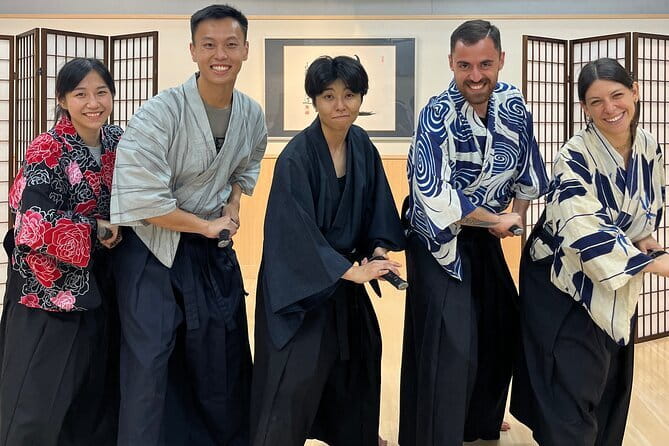
You will wear a traditional samurai uniform during the session. The rental is included, so you do not need to bring special clothing. The outfit also sets up the commemorative photo at the end, though the clothing serves a practical purpose within the lesson as well. It helps mark the shift from ordinary sightseeing to a formal training setting.
The English instruction covers sword skills, Bushido, and samurai history. Some sessions also use an English translator, which can help when the instructor explains Japanese terms, etiquette, or the meaning behind a movement. The experience is designed for beginners, so you do not need previous sword or martial arts training.
The lesson’s cultural side will appeal most if you want to understand why the movements are performed in a particular way. If you only want fast sword fights and dramatic poses, the opening section may feel slow. For me, that pause is part of the point. The class asks you to pay attention before it asks you to move.
Breathing, meditation, and silent walking
After the introduction, the physical training begins with breathing exercises and meditation. These practices are used to settle the mind and build focus before handling a training sword.
You also work on posture through silent walking exercises. The activity describes this as testing your focus in a ninja-like way. It is a simple idea, but it changes how you think about martial training. A sword technique is not only about arm movement. Your stance, balance, pace, and awareness matter too.
The meditation section gives the session a different rhythm from a standard cultural show. You are not rushed from one photo opportunity to the next. At the same time, this is a short introductory class, so do not expect a long retreat or an advanced meditation course.
You might find these exercises especially useful if you are new to martial arts. They give you a way to settle nerves and follow instructions before the more active drills begin. If you are traveling with children, keep in mind that the session includes quiet concentration as well as movement.
Wooden sword drills and strength work
The next stage introduces wooden sword movements. You learn basic handling and practice drills under the instructor’s direction. A live sword demonstration is included, but your own training uses a wooden sword.
That distinction matters. You get to see the precision and control of real sword technique without being handed a live blade. The wooden sword makes the activity suitable for beginners while still giving the movements weight and form.
The class also includes strength training with a heavy stick. This adds a physical element beyond memorizing sword positions. You will use your body, not just your hands, and the work may feel more demanding than the photographs suggest.
No fitness level is specified beyond the note that most people can participate. The experience is beginner-friendly, but it is still an active lesson involving posture, walking, sword drills, and one-on-one practice. Wear or bring clothing that allows comfortable movement beneath the rented uniform, and tell the instructor if you need to work at a gentler pace.
The two-hour schedule means these exercises are introductory rather than exhaustive. You will learn enough to understand the structure of a samurai training session, but not enough to claim advanced proficiency. That is a sensible expectation for the price and duration.
A few more Tokyo bookings worth comparing
- Mt Fuji and Hakone 1-Day Bus Tour Return by Bullet Train
★ 5.0 · 26,383 reviews - 1-Day Tokyo Bus Tour
★ 5.0 · 14,250 reviews - Tokyo: TOKYO SKYTREE® Admission ticket
★ 4.5 · 11,192 reviews - Tokyo: teamLab Planets TOKYO Digital Art Museum Entry Ticket
★ 4.6 · 9,779 reviews
Learning one authentic combat kata
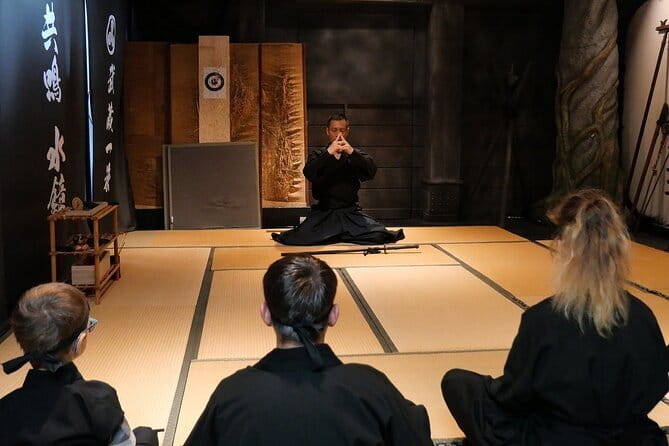
The centerpiece is one authentic samurai combat kata. A kata is a set sequence of movements practiced with care and repetition. Here, the goal is not to collect a long list of techniques. You focus on learning one complete form correctly.
This is where the private format pays off. You can ask questions as often as you like, and the instructor can spend time clarifying sword position, footwork, or timing for your group. The experience is not described as a competition, so the emphasis is on learning and control rather than winning.
The instructor also gives a live sword demonstration. Watching a practiced form before attempting your own version can help you see the difference between a casual swing and a disciplined movement. The demonstration gives the lesson a visual high point, while the student practice keeps you involved.
You then apply what you have learned in one-on-one sparring with an instructor. The description does not specify protective equipment or the exact rules of this sparring, so you should follow the dojo’s directions closely and ask questions before beginning. Since the main student weapon is wooden, this is best understood as controlled practice, not a full-contact fight.
For many people, this will be the most memorable part of the activity. You have already learned the etiquette, breathing, and basic movements. The kata gives those pieces a clear shape.
Matcha, Japanese sweets, and a quieter break
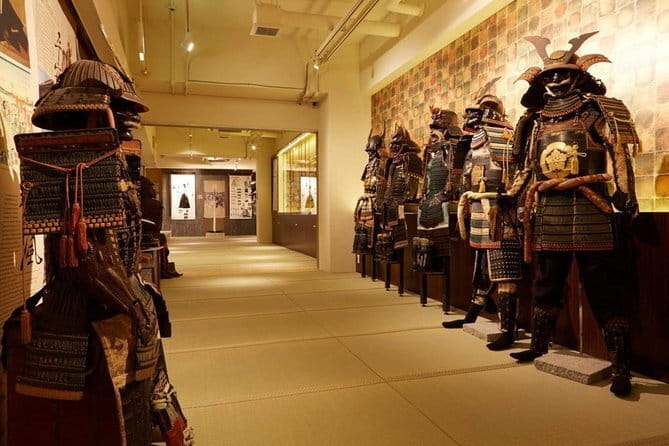
The break includes authentic matcha green tea and traditional Japanese sweets. This is a small detail, but it improves the pacing of the session. After standing, walking, and practicing sword movements, you get a calm cultural pause rather than a rushed handoff to the next activity.
The tea break also gives you time to ask more questions. Because the experience is private, you can use this moment to ask about Bushido, sword training, samurai history, or the techniques you have just practiced.
Do not book this activity mainly for the food. The tea and sweets are a welcome inclusion, not a meal. If you have dietary concerns, the provided information does not specify ingredients or alternatives, so ask the provider in advance.
A certificate and photo that do not feel entirely generic
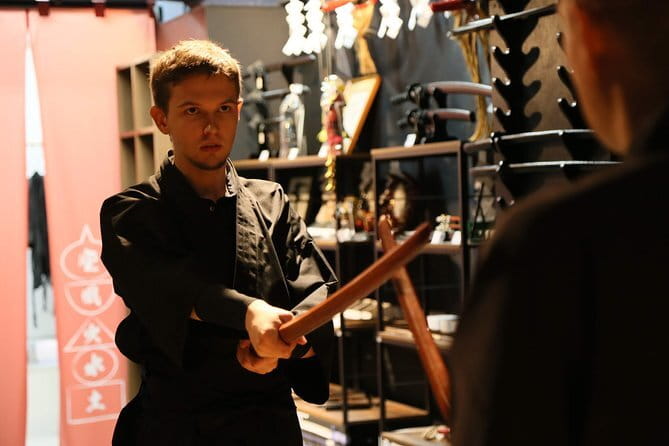
At the end, you receive a personalized scroll-style certificate with your name and the techniques you learned. Many cultural activities finish with a standard souvenir. This one ties the certificate to your particular lesson, which makes it more useful as a memory of what you actually practiced.
You also take a commemorative photo in traditional samurai clothing. The instructor will happily take the picture, so you do not need to arrange a photographer. The photo is a simple extra, but it works well for families and couples who want a shared record of the experience.
The certificate and photo are not reasons to book on their own. They matter because they come after a real class. You have practiced etiquette, meditation, wooden-sword drills, a kata, and controlled sparring before putting on a final pose.
What the $85.66 price includes
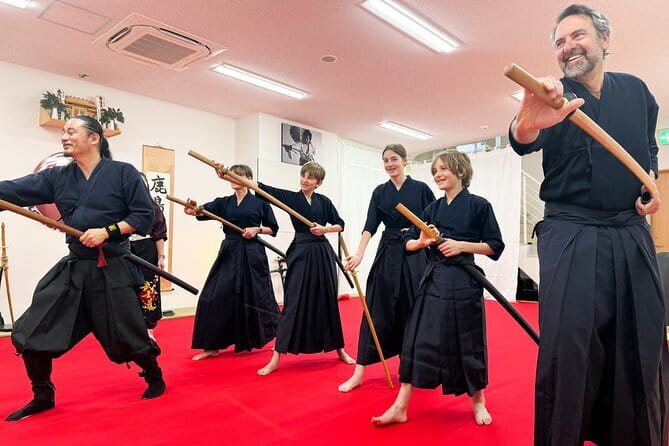
At $85.66 per person, this is not the cheapest cultural activity in Tokyo. The value comes from the amount bundled into a private two-hour lesson.
Your price includes:
- Samurai uniform rental
- Private English-guided instruction
- Samurai history, Bushido, and sword guidance
- A live sword demonstration
- Wooden sword and training activities
- Matcha tea and Japanese sweets
- A personalized certificate
- A commemorative photo
You also avoid the tradeoff of a large group class. With only your own party participating, you can ask questions freely and receive direct instruction. That is a meaningful part of the price, especially if you have a specific interest in samurai swords or Japanese martial traditions.
The experience is often booked about 37 days ahead, so it is wise to reserve early if your Tokyo dates are fixed. Free cancellation is available until 24 hours before the start time. Inside that window, the fee is not refundable and changes are not accepted.
Who will get the most from this experience
I would recommend this to anyone who wants an active cultural lesson rather than another museum visit. It suits first-time participants because the class is in English and beginner-friendly. You do not need prior sword experience.
It is also a good choice for:
- Couples seeking a private activity
- Families with participants interested in samurai culture
- Friends who want a shared hands-on experience
- Martial arts fans curious about Koryu Kenjutsu
- Visitors who value instruction, not just photographs
- People who want a structured activity near central Tokyo
The activity can work for different ages, since the instruction is guided and most people can participate. Still, it includes movement, strength work, posture exercises, and sparring. Anyone with mobility concerns or a medical issue should judge their own ability before booking, since the supplied details do not describe specific adaptations.
You should also know what this is not. It is not a full-day martial arts course, a history lecture, or a chance to use a live sword yourself. It is a focused introduction that combines cultural background with safe, practical training.
My take on the private two-hour format
The strongest feature is the balance between meaning and action. You learn what Bushido represents, settle your breathing, practice basic movements, and then use those ideas in a kata. That sequence makes the sword work feel connected to the culture rather than added for spectacle.
The private setup is another real advantage. The instructor can answer your questions, and the lesson does not require you to keep pace with a busload of people. English support, including a translator when used in the session, makes the technical instruction easier to follow.
The limitation is time. Two hours passes quickly once you include changing, etiquette, meditation, sword drills, strength work, silent walking, the kata, sparring, tea, and the certificate. You will sample several parts of training, not master them.
The activity has received a five-star rating from 25 reviews, with 100 percent recommending it. The most consistent praise centers on the warmth of the instructors and translators, the clear guidance on the first form, and the attention given to respect and Bushido. Those points match the structure of the experience: you are not only shown how to move a sword, you are taught why discipline and etiquette come first.
Should you book Samurai Training in Tokyo?
Book it if you want to do more than look at samurai armor in a display case. The combination of traditional dress, meditation, wooden-sword practice, one combat kata, matcha, and a personal certificate gives you a full cultural activity in a short block of time.
I would skip it if you want an advanced martial arts workshop, a long historical lecture, or unrestricted sword combat. The class is introductory and carefully structured.
For most visitors with at least two people in their party, the $85.66 fee is fair for a private English session with equipment, instruction, refreshments, and keepsakes included. Reserve ahead if possible, arrive at the Kojimachi meeting point on time, and treat the session as a lesson in discipline as much as a chance to hold a sword.
FAQ
Where does the samurai training take place?
The activity begins and ends at Samurai Sword Tokyo, located at 4-chōme-2-1 Kōjimachi, Chiyoda City, Tokyo 102-0083, Japan.
How long is the experience?
The session lasts approximately two hours.
Is the experience private?
Yes. Only your group participates, and a minimum of two participants is required.
Is the activity conducted in English?
Yes. The experience is in English and includes English guidance on sword skills, Bushido, and samurai history.
Do I need previous sword or martial arts experience?
No. The experience is beginner-friendly, and most people can participate.
What is included in the price?
The price includes samurai uniform rental, instruction, a live sword demonstration, a personalized certificate, matcha tea, Japanese sweets, and a commemorative photo.
Can I cancel for a full refund?
Yes. You can cancel at least 24 hours before the experience start time for a full refund. Cancellations or changes made less than 24 hours before the start time are not accepted for a refund.
New on our Tokyo list
- Sumi-e Experience in a relaxing green tea shop in Tokyo★ 5.0 · 3 reviews
- Tokyo : Kamikaze Street Drift Ride★ 5.0 · 3 reviews
- Private Zen Meditation in English in Shinjuku, Tokyo★ 5.0 · 3 reviews
- Onsen Spa in Tokyo and Asakusa Bar Hopping with Local Guide★ 5.0 · 3 reviews
- Easy for everyone! Now you can play handmade mini shamisen and show off to everyone! Musical instruments, sweets and live music★ 5.0 · 3 reviews
- Tokyo: Private Tsukiji Street Food & Sake with Local Guide★ 5.0 · 3 reviews
- Mt Fuji Exploration Tour with Free Japanese Kusa Mochi from Tokyo★ 4.5 · 3 reviews
- Tokyo Tsukiji Fish Market Walking and Exploring Hidden Gems Tour★ 5.0 · 3 reviews
Samurai & Ninja Experiences, compared.
Samurai Ninja Museum Guided tour and Experience
Read our review →
Samurai Sword & Archery Class from Samurai Descendant
Read our review →
Ninja Experience (Family Friendly) at Samurai Ninja Museum TOKYO
Read our review →
Samurai Entertainment Night Show in Kanda Shrine
Read our review →
Tokyo Sword Experience – includes Museum Ticket/Ninja Experience
Read our review →
Samurai Ninja Museum Asakusa: Samurai Sword Lesson & Tour
Read our review →
Ninja Samurai 2-hour hands-on lesson by Japanese master in Tokyo
Read our review →Browse the lists this tour appears in