
Reviewed · YANAKA & OLD TOKYO WALKS
Shibamata: Step Back into Old Japan!
Shibamata gives you a side of Tokyo that most visitors miss: a quiet old neighborhood where temple carvings, snack shops, gardens, and a beloved film character all fit into one easy walk. The tour is led in English by a small-group guide, with Megumi and Machiko receiving especially warm praise for their kindness and local insight.
I like the small maximum of five people, which makes questions and conversation easy. I also like the mix of stops: you get food, a major Buddhist temple, the Tora-san story, and a garden with tea instead of three hours of only sightseeing. The main consideration is time. One guest found the experience ran closer to three hours than the expected two, so leave room in your schedule.
In This Review
- Key points at a glance
- Why Shibamata feels unlike central Tokyo
- A snack walk along Taishakuten Sandō
- Taishakuten Temple and its carved details
- Meeting Tora-san at the memorial hall
- Tea and garden time at Yamamoto-tei
- What $90 includes, and what it does not
- How the three hours are paced
- The guides are a major part of the experience
- Who should book this Shibamata walk?
- Should you book it?
- FAQ
- Where does the Shibamata tour meet?
- How long does the experience last?
- What language is the tour offered in?
- How large is the group?
- What food can I try during the walk?
- Is tea included?
- What admissions are included?
- Do I need cash?
Key points at a glance
- Quiet Tokyo setting: Shibamata feels far removed from the city center’s crowds and bright commercial streets.
- Taishakuten’s wood carvings: The temple is known for detailed craftsmanship, decoration, and color.
- Old-fashioned food stops: Try grass dumplings, mitarashi dumplings, rice crackers, and savory Japanese omelets.
- Tora-san connection: The museum explains a famous Japanese character and presents traditional daily life.
- Tea at Yamamoto-tei: End with refreshments beside a Japanese garden, included in the tour price.
- Useful planning details: The tour costs $90 per person, lasts three hours, and meets at the Tora-san statue outside Keisei Shibamata Station.
Why Shibamata feels unlike central Tokyo
Tokyo can be loud, fast, and packed with people. Shibamata offers a gentler change of pace. Its traditional streets lead toward Taishakuten Temple, with small food shops and old-style storefronts along the way.
I would choose this outing when you want a break from major sights such as Shibuya, Asakusa, or the Imperial Palace. Shibamata is not presented as a grand capital attraction. Its appeal is more personal: you walk, eat, look closely, and let the neighborhood reveal itself at street level.
The meeting point is easy to identify. You gather in front of the Futen Tora statue and Sakura statue outside Keisei Shibamata Station. From there, your guide takes you through the district on foot and returns you to the same area at the end.
The neighborhood’s quieter mood was one of the most praised parts of the experience. I think that matters if you have already spent several days in crowded parts of Tokyo. You get a chance to slow down without giving up culture or a sense of place.
More old-Tokyo backstreet walks:
- The Old Quarter of Tokyo – Yanaka Walking Tour
★ 4.5 · 590 reviews - Yanaka Walking Tour: Historic and Traditional District of Tokyo
★ 5.0 · 530 reviews - Tokyo: Old Quarter Yanaka Walking Tour
★ 4.8 · 406 reviews
A snack walk along Taishakuten Sandō
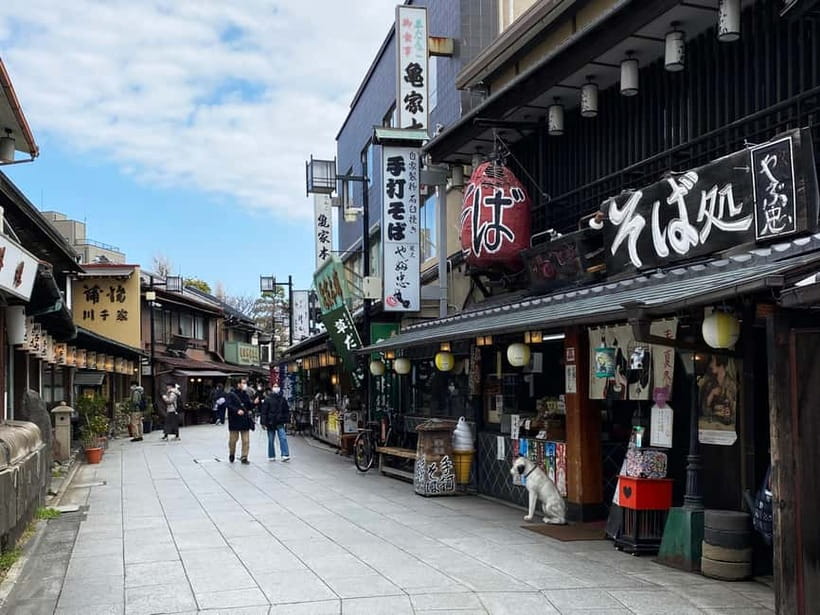
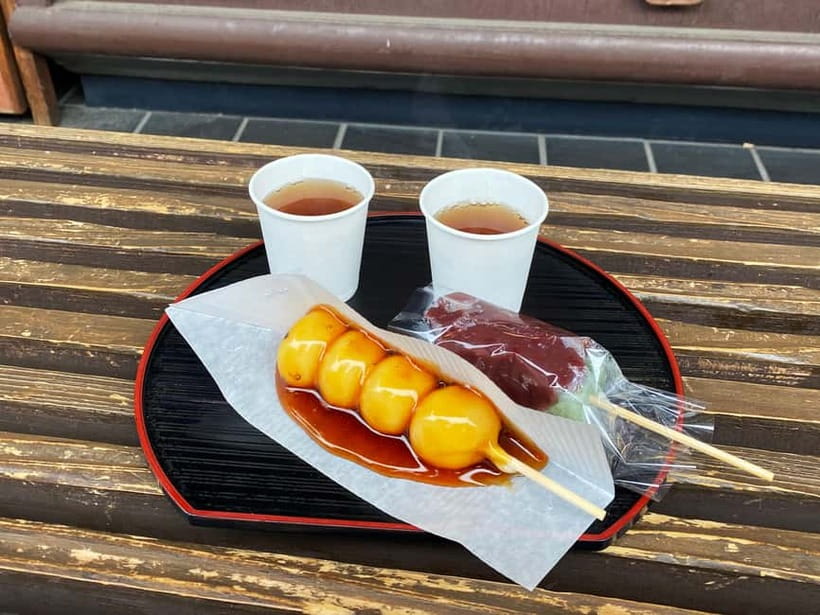
The first main stop is Taishakuten Sandō, the approach street leading toward the temple. You spend about 30 minutes walking, learning about the area, and trying local treats.
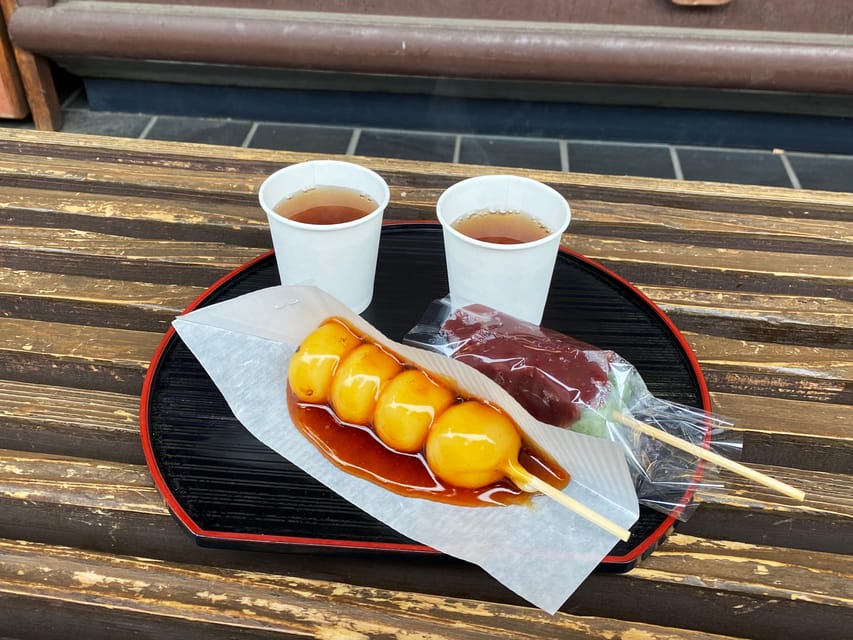
This is where the tour becomes more than a sightseeing walk. Food gives you a practical way to understand the neighborhood. Depending on what is available during your visit, you can try grass dumplings, mitarashi dumplings, rice crackers, and savory Japanese-style omelets.
Grass dumplings, often recognized by their green color and herbal flavor, offer something different from the familiar sweets sold in central Tokyo. Mitarashi dumplings are usually coated in a glossy sweet soy-based sauce. Rice crackers provide a crisp, savory contrast, while the omelet adds a more filling local bite.
I like that the food is tied to the street rather than presented as a formal meal. You can see where snacks are sold and how the temple approach functions as a social space. The tour does not promise a large lunch, so plan to eat beforehand or afterward if you need a full meal.
Bring cash. Some shops may not accept cards, and small snack purchases or souvenirs are not covered by the tour fee. The souvenir cost is specifically extra, so keep a few yen available if something catches your eye.
Taishakuten Temple and its carved details
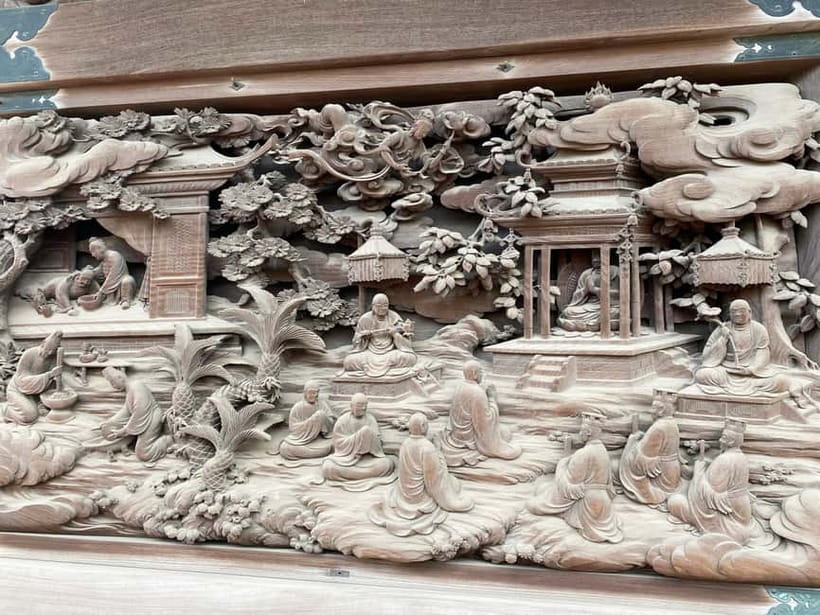
The centerpiece is Shibamata Taishakuten, a Buddhist temple visited with a guide for about 40 minutes. The temple is known for its intricate wood carvings, detailed decoration, and strong traditional design.
This is the stop where a guide adds real value. Without explanation, Japanese temple details can blur together after several days of sightseeing. A good guide can point out what you are looking at and give the building a clearer place within Shibamata’s local identity.
Entry also includes access to the Sculpture Gallery and Garden at Taishakuten. That combination is important. You are not only looking at the outside of a temple. You also have time to focus on the carved work and then move into a calmer garden setting.
The carvings are the sort of detail you should view slowly. Look for the depth of the work, the layers of decoration, and the way the wood carries scenes and patterns. The supplied information does not identify particular panels or religious stories, so I would avoid arriving with a fixed checklist. Let the guide explain the details on site.
The temple was one of the strongest parts of the experience for several people, especially the building and garden together. If craftsmanship interests you, this may be the most valuable 40 minutes of the tour.
Meeting Tora-san at the memorial hall
Next comes the Tora-san Museum, also called the Tora-san Memorial Hall, for about 20 minutes. This visit includes a guided tour and time for photographs.
Tora-san is a famous Japanese fictional character, but you do not need to know him in advance to get something from the museum. One participant arrived without any previous connection to Tora-san and still enjoyed the visit. That makes the stop approachable for international visitors who may not recognize the name.
The museum presents traditional living and connects the character with the old-fashioned atmosphere of Shibamata. It helps explain why the district is so closely associated with a slower, more traditional image of Tokyo.
I would treat this as a cultural context stop rather than the main event. If you are already a devoted Tora-san fan, you may wish for more time. If you know nothing about the films, the 20-minute visit gives you a useful introduction without taking over the day.
There is also a photo-stop element, so have your camera ready. The museum works best after the temple and snack street because you have already seen the setting that gives the character his meaning.
A few more Tokyo bookings worth comparing
- Mt Fuji and Hakone 1-Day Bus Tour Return by Bullet Train
★ 5.0 · 26,383 reviews - 1-Day Tokyo Bus Tour
★ 5.0 · 14,250 reviews - Tokyo: TOKYO SKYTREE® Admission ticket
★ 4.5 · 11,192 reviews - Tokyo: teamLab Planets TOKYO Digital Art Museum Entry Ticket
★ 4.6 · 9,779 reviews
Tea and garden time at Yamamoto-tei
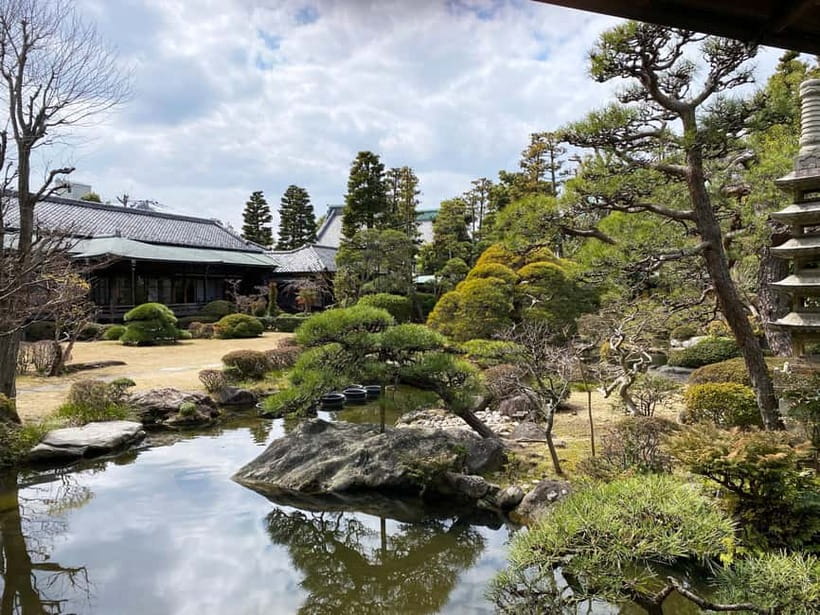
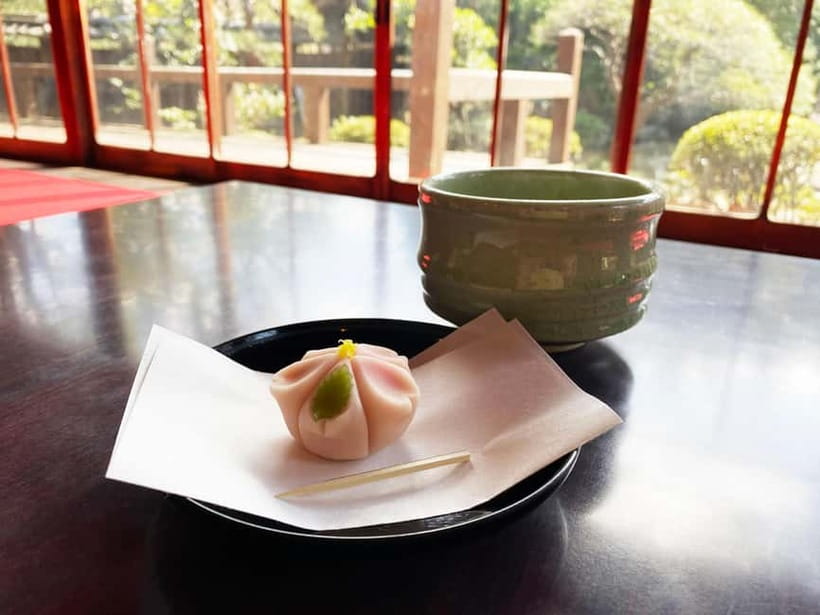
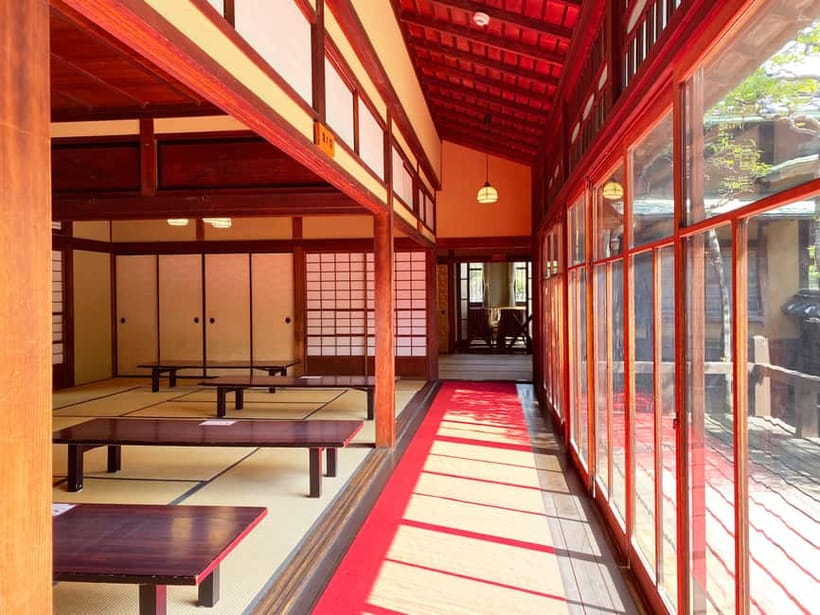
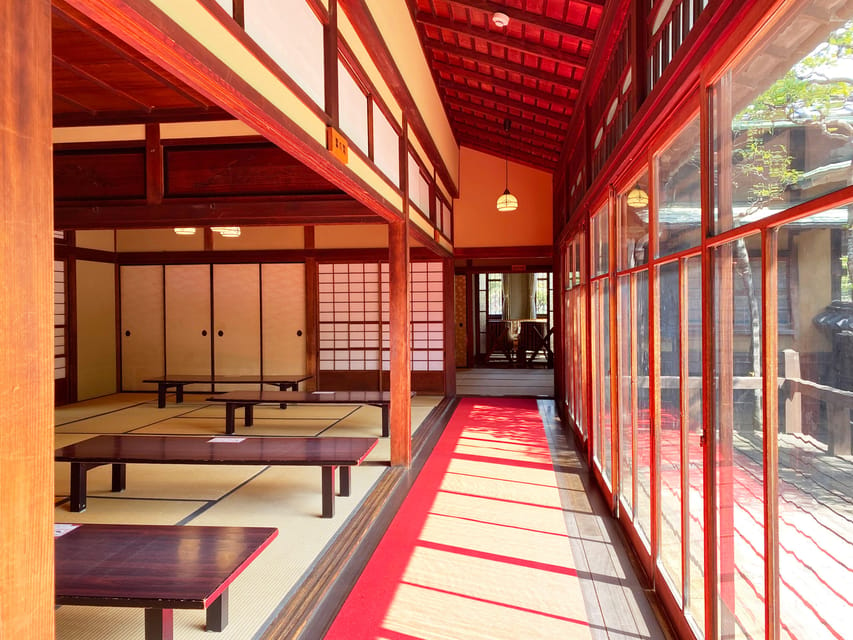
The final substantial stop is Yamamoto-tei, where you get a 30-minute break, refreshments, tea, guided commentary, and views of a Japanese garden.
This is a fine way to finish the walk. After several streets and temple details, sitting down with traditional green tea gives the experience a quiet pause. You are not rushing from one major sight to another. You have time to look into the garden and let the neighborhood’s calm mood sink in.
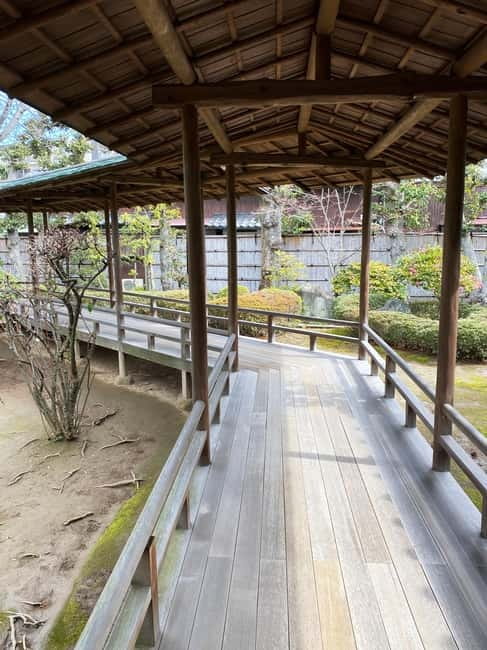
Access to Yamamoto-tei is included, as are refreshments. The garden is one of the tour’s strongest contrasts with central Tokyo. Instead of asking you to cover more ground, this stop asks you to sit still for a while.
I especially like this part for people who enjoy gardens but do not want to spend half a day at a large formal site. The visit is short, around 30 minutes, so it will not satisfy someone seeking a long garden study. Still, it gives the tour a pleasing rhythm: street food, temple, museum, then tea.
The guide also provides scenic views along the way and during the visit. The exact amount of commentary can depend on the guide and the group, but guides such as Megumi and Machiko have been praised for answering questions and sharing the area with warmth.
What $90 includes, and what it does not
At $90 per person, this is not the cheapest way to walk around Shibamata. You can reach the neighborhood independently and visit some places on your own. The value comes from combining several admissions, food-oriented stops, English guidance, and tea into a compact three-hour experience.
Your fee includes entry to the Tora-san Memorial Hall, the Sculpture Gallery and Garden at Taishakuten, and Yamamoto-tei. Refreshments at Yamamoto-tei are included as well.
The small group changes the value calculation. With no more than five participants, the guide can respond to questions and keep the walk personal. That is a better fit for you if you prefer conversation over a large group moving in a line.
Souvenirs are not included. Some shops may also require cash, so carry money for optional purchases. The provided details do not state that transportation to Shibamata is included, so you should make your own way to Keisei Shibamata Station and meet outside the station at the statues.
For a three-hour guided introduction, the price is reasonable if you value context and convenience. It is less attractive if you mainly want an inexpensive stroll and are happy to research the temple and museum yourself.
How the three hours are paced
The planned stops add up to roughly two hours, while the full experience is advertised as three hours. That leaves room for walking between sites, food sampling, explanations, photos, and the return to the station.
One participant felt the outing ran closer to three hours than the two hours suggested by an earlier schedule. I would plan for the full three hours and avoid booking a train, meal, or second activity immediately afterward.
The pace should suit most people who enjoy a leisurely neighborhood walk. It is not designed as a rapid checklist. You move between the station, shopping street, temple, museum, and Yamamoto-tei, then return to the starting point.
You should also expect an experience shaped by the day’s conditions. The operator asks people who are not feeling well to skip participation. That is a sensible policy for a small group and a walking tour.
The guides are a major part of the experience
The guides are English-speaking, and the personal connection appears to be one of the tour’s biggest strengths. Megumi was praised for being kind, well informed, patient with questions, and fun to spend time with. Machiko received similar praise for her local knowledge and friendly manner.
That difference matters in a district like Shibamata. The buildings and food are enjoyable on their own, but a good guide helps you understand why the area feels special. You get explanations in the moment, rather than trying to piece together a story from signs or a guidebook.
Guide assignments can change, so you should not assume a particular person will lead your date. Still, the experience clearly depends on a warm, engaged guide, and the small group gives that person room to talk with you rather than deliver a fixed speech to a crowd.
If you enjoy asking about Japanese customs, local food, or the Tora-san connection, this format should suit you. If you prefer complete independence and long stretches alone, a private self-guided visit may be better.
Who should book this Shibamata walk?
I would recommend it to first-time visitors who want to see a quieter side of Tokyo, especially after spending time in the city’s busiest districts. It also suits repeat visitors who have already covered the standard sights and want a neighborhood with a more local feel.
Families and couples may appreciate the variety. There is food to sample, a temple to examine, a museum with a clear cultural theme, and a garden break. People interested in Japanese architecture, traditional daily life, or film culture will find several entry points.
It may be less suitable if you want a full-day cultural tour, a large meal, or an in-depth study of Buddhist art. The temple visit is meaningful but short, and the Tora-san Museum is an introduction rather than a long museum session.
I would also be cautious about scheduling it on a tight day. The walk is advertised as three hours, and the relaxed pace can run over an earlier two-hour expectation. Give yourself breathing room.
Should you book it?
Book this tour if you want quiet Tokyo, small-group guidance, and a useful mix of food and culture. The temple carvings, garden access, Tora-san Museum, and tea at Yamamoto-tei give you more substance than a simple neighborhood stroll.
Skip it if you only want the lowest-cost way to see Shibamata or if your schedule cannot spare three unhurried hours. For everyone else, $90 is a fair price for the admissions, refreshments, English guide, and personal scale. Bring cash, arrive ready to walk, and let the neighborhood set the pace.
FAQ
Where does the Shibamata tour meet?
You meet in front of the Tora-san statue and Sakura statue outside Keisei Shibamata Station.
How long does the experience last?
The tour lasts three hours and returns to the Tora-san and Sakura statues near Keisei Shibamata Station.
What language is the tour offered in?
The live tour guide speaks English.
How large is the group?
The tour is limited to five participants.
What food can I try during the walk?
The experience includes opportunities to try local treats such as grass dumplings, mitarashi dumplings, rice crackers, and savory Japanese-style omelets.
Is tea included?
Yes. Refreshments at Yamamoto-tei are included in the fee.
What admissions are included?
The fee includes entry to the Tora-san Memorial Hall, the Sculpture Gallery and Garden at Taishakuten, and Yamamoto-tei.
Do I need cash?
Yes, it is wise to prepare cash because some shops may not accept cards. Souvenirs are not included in the tour fee.
New on our Tokyo list
- Sumi-e Experience in a relaxing green tea shop in Tokyo★ 5.0 · 3 reviews
- Tokyo : Kamikaze Street Drift Ride★ 5.0 · 3 reviews
- Private Zen Meditation in English in Shinjuku, Tokyo★ 5.0 · 3 reviews
- Onsen Spa in Tokyo and Asakusa Bar Hopping with Local Guide★ 5.0 · 3 reviews
- Easy for everyone! Now you can play handmade mini shamisen and show off to everyone! Musical instruments, sweets and live music★ 5.0 · 3 reviews
- Tokyo: Private Tsukiji Street Food & Sake with Local Guide★ 5.0 · 3 reviews
- Mt Fuji Exploration Tour with Free Japanese Kusa Mochi from Tokyo★ 4.5 · 3 reviews
- Tokyo Tsukiji Fish Market Walking and Exploring Hidden Gems Tour★ 5.0 · 3 reviews
Yanaka & Old Tokyo Walks, compared.
Yanaka Walking Tour: Historic and Traditional District of Tokyo
Read our review →

Small Town in the Big City: Tasting Tokyo’s Kichijoji
Read our review →
Stroll in Old traditional culture towns~Yanaka & Nezu
Read our review →
Yanaka Historical Walking Tour in Tokyo’s Old Town
Read our review →
Private Home Cooking in Yanaka – Local Flavors in a Warm Setting
Read our review →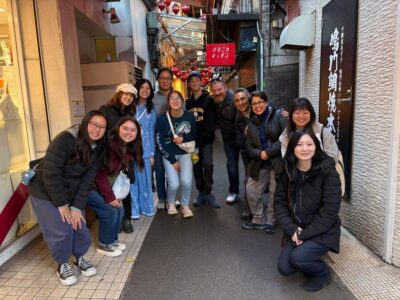
Browse the lists this tour appears in