
Reviewed · CYCLING TOURS
Shibuya Electric Bike Tour of Tokyo’s Most Expensive Neighborhood
Shibuya Crossing gets the attention, but the best part of this tour is how quickly you leave the crowds behind. You pedal into Shōtō, Komaba, Yoyogi, and Oku-Shibuya, where quiet streets, old houses, cafés, shrines, and polished modern buildings sit close to central Tokyo. I like the small-group size and the way the route mixes culture with ordinary neighborhood life.
I also like the pauses built into the ride. The Former Marquis Maeda Teahouse gives you a calm traditional setting, while Little Nap Coffee Stand and CAMELBACK add a taste of present-day Tokyo. The main drawback is the short running time: two and a half hours is enough for a strong introduction, but not enough for long stops, a full meal, or much free time. Also, some customer comments call the vehicle a scooter, while the tour details describe an electric bicycle with pedals, so confirm the exact bike setup when booking.
In This Review
- Key points to know before you book
- Why this ride shows you a different Shibuya
- Starting near Maruyamachō and leaving the crowds behind
- Nabeshima Shōtō Park and Tokyo’s famous toilets
- The Former Marquis Maeda Teahouse
- A quiet vintage shop in Tomigaya
- Yoyogi Hachimangu Shrine and a practical Shinto lesson
- Coffee, a clever public toilet, and an egg sandwich
- What the guide adds to the experience
- Is $52.03 a fair price?
- Who will enjoy this ride most?
- Booking, weather, and practical details
- Should you book the Shibuya electric bike tour?
- FAQ
- How long does the Shibuya electric bike tour last?
- Where does the tour begin?
- Where does the tour end?
- How many people can join the tour?
- Is the bike included?
- Is a guide included?
- Is food or coffee included?
- Is entry to the Former Marquis Maeda Teahouse included?
- Can I cancel for a full refund?
Key points to know before you book
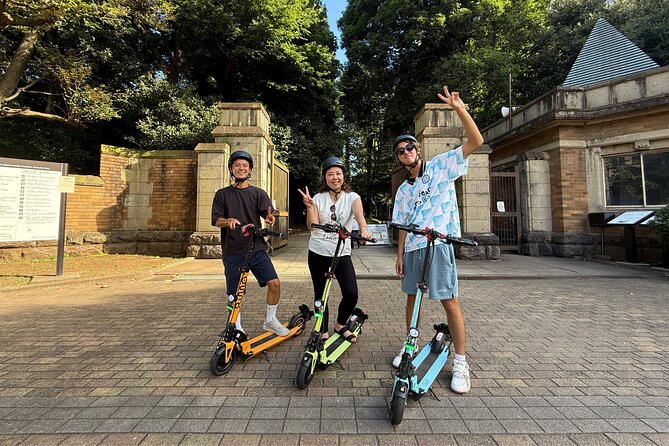
- Small groups of up to six people: The guide can keep the pace personal and manage city riding more easily than a large cycling group.
- A quiet side of Shibuya: The route leaves the famous crossing for Shōtō, Komaba, Yoyogi, Yoyogi-Uehara, Tomigaya, and Oku-Shibuya.
- Traditional and modern Tokyo together: You visit a Shinto shrine and classic teahouse, then see minimalist buildings, bakeries, coffee stands, and unusual public toilets.
- Food stops are not included: You can buy coffee, an egg sandwich, or a bakery snack, but budget extra for anything you eat or drink.
- English-speaking guide: Guide Leo is named in the customer feedback, and the tour is designed around conversation as well as sightseeing.
- Good weather matters: The activity can be moved or refunded if poor weather leads to cancellation.
Why this ride shows you a different Shibuya
This is not a tour of Tokyo’s biggest sights. You will not spend the morning at Meiji Shrine, Tokyo Tower, or the Shibuya Scramble. Instead, you get a close look at neighborhoods that are expensive, stylish, and surprisingly calm.
That contrast is the real point. Shibuya is often pictured as giant video screens and waves of people. A few minutes away, Shōtō and nearby districts feel more residential. The streets are quieter, the buildings are lower, and the sightseeing comes from noticing details rather than checking famous landmarks off a list.
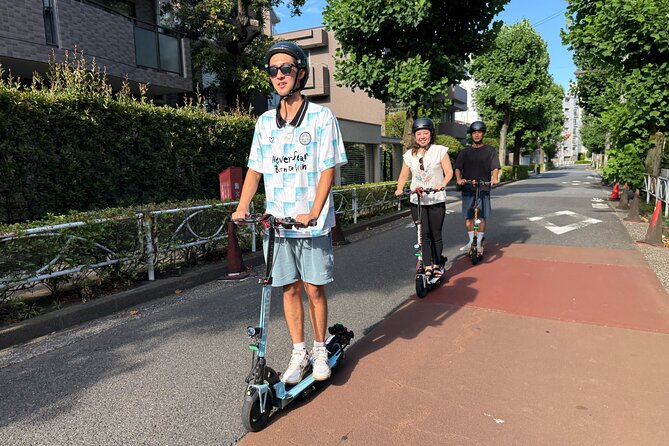
I like this kind of route because an electric bike lets you cover more ground than you could on foot without turning the experience into a bus tour. You still see the street level of Tokyo. You can stop for a photo, look into a small shop, and pass from a busy district into a peaceful one in a short time.
The ride lasts about two hours and 30 minutes. That makes it useful early in a Tokyo stay, when you want to get your bearings around western central Tokyo. It also works near the end of a trip, when you have already seen the major sights and want something less familiar.
More Shibuya plans:
- Official Street Go-Kart in Shibuya
★ 5.0 · 3,435 reviews - Tokyo: Street Kart Experience in Shibuya
★ 4.9 · 1,484 reviews - Shibuya Meltdown Nightlife Tour: All-You-Can-Drink Bar Hopping
★ 5.0 · 1,058 reviews
Starting near Maruyamachō and leaving the crowds behind
The meeting point is Liquor Shop Matsumoto in Shibuya’s Maruyamachō area, at 10-15 Matsumotoya Sake-ten Building, Tokyo 150-0044. The location is near public transportation, but you should allow time to find the shop and arrive ready to ride.
The route begins in one of Tokyo’s busiest areas, then shifts quickly into quieter streets. This change gives the ride a clear rhythm: city energy at the start, residential calm in the middle, and a return to the Shibuya area at the end.
The group limit is six people. That matters on a bike tour. A small group is easier to keep together at intersections, and it gives you more chances to ask about the buildings, food stops, and customs you pass.
The bikes are described as electric bikes with pedals. Electric assistance should make the ride less demanding than a standard cycling tour, but you still need to be comfortable riding in an urban setting. The experience is weather dependent, and it ends back at the starting point.
Nabeshima Shōtō Park and Tokyo’s famous toilets
The first stop is Nabeshima Shōtō Park, where you spend about 10 minutes. The park offers a change of pace from the surrounding streets, and the guide explains its history while pointing out a public toilet designed by a world-famous Japanese architect.
Tokyo’s public toilets have become an unexpected part of the city’s design story. These are not simply facilities to use and forget. Some were created with careful attention to appearance, access, and the way they fit into a public space.
This stop is brief, so think of it as a quick introduction rather than a long park visit. It gives you a useful theme for the ride: Tokyo can turn an everyday object into something worth examining.
The Former Marquis Maeda Teahouse
The longest stop is the Former Marquis Maeda Teahouse, where you spend about 30 minutes. Admission is included, and you leave the bikes to enter a classic Japanese teahouse.
This is one of the strongest parts of the route because it provides stillness. After riding through city streets, you get time to slow down and notice the design and atmosphere of a traditional setting. The tour presents the teahouse as a place of quiet and calm, not as a formal tea ceremony, so you should not book it expecting a lengthy ceremonial demonstration.
The stop also gives the guide room to explain more than a quick street-side fact. You can ask questions and take in a different side of Tokyo’s built environment. If you enjoy architecture, traditional interiors, and short cultural visits, this pause will likely matter more to you than the shopping stop later in the tour.
A few more Tokyo bookings worth comparing
- Tokyo Guided Small-Group Biking Tour
★ 5.0 · 1,250 reviews - Tokyo Great Cycling Tour
★ 5.0 · 811 reviews - Tokyo Top Highlights 3h Guided E-bike Tour
★ 5.0 · 714 reviews - 3h Tokyo E-Bike Tour: Hidden Gems, and Local Life with guide
★ 5.0 · 670 reviews
A quiet vintage shop in Tomigaya
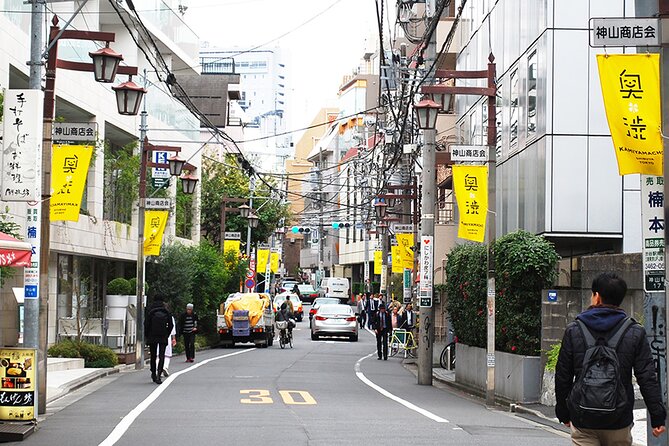
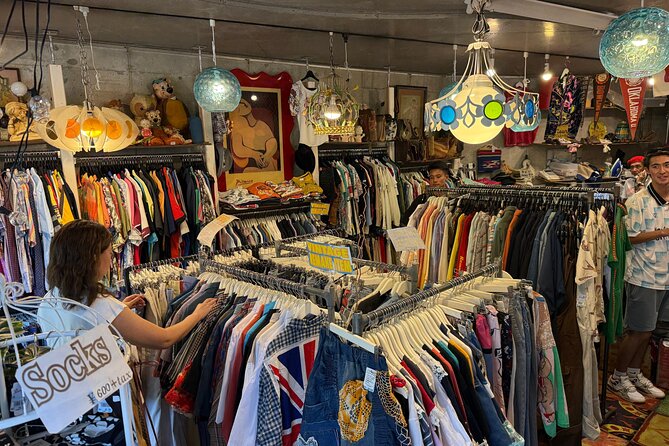
At Panamaboy Co., Ltd., you stop for about 10 minutes. This cozy vintage and accessories shop sits in Tomigaya, a neighborhood known on this route for its quieter streets and independent feel.
The stop is short, so it is best viewed as a snapshot of local retail rather than a dedicated shopping session. You might find something worth browsing, but the tour does not promise a shopping allowance or extra time for serious buying.
I like that this is included because it keeps the route from becoming only a parade of temples and parks. Tokyo’s character also appears in small shops, clothing, design, and the way local businesses fit into residential streets.
Yoyogi Hachimangu Shrine and a practical Shinto lesson
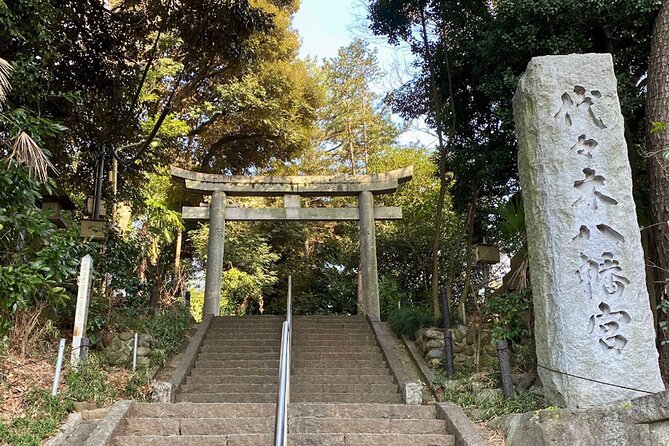
The Yoyogi Hachimangu Shrine stop lasts about 20 minutes. You walk through the shrine with the guide and learn about Shinto, Japan’s ancient religion, along with proper manners for visiting a shrine.
This is a useful stop for anyone who wants more context when visiting Japanese religious sites. You are not simply being shown a pretty entrance gate and sent on your way. The guide explains how to behave, which can make later shrine visits around Japan feel less uncertain.
The time is limited, so you should expect a focused introduction rather than a long history lecture. That suits the overall ride. The tour gives you enough background to understand what you are seeing, then keeps moving through the neighborhood.
Yoyogi Hachimangu also fits the larger idea of the experience. A shrine can be close to major shopping streets and train stations yet still feel removed from them. The ride lets you see that contrast without spending a full day on a formal cultural tour.
Coffee, a clever public toilet, and an egg sandwich
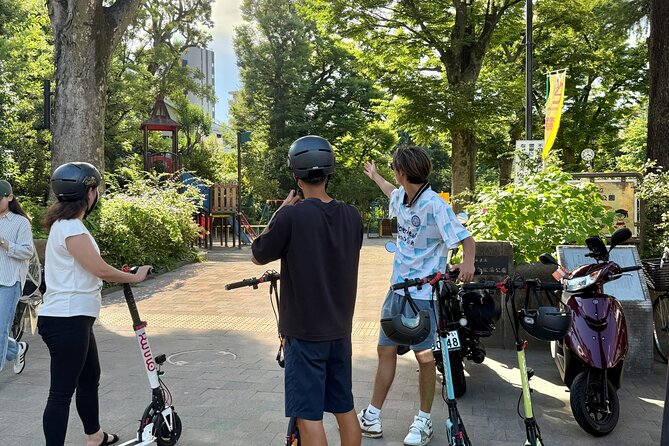
The food and drink stops are optional purchases, and that is important when judging the price. The tour includes the bike, guide, and entry to the teahouse, but it does not include food, coffee, or tips.
At Little Nap Coffee Stand, you get about 15 minutes for a quick coffee break. This is a short pause, not a long café visit. If you need a full breakfast or lunch, plan to eat before or after the tour.
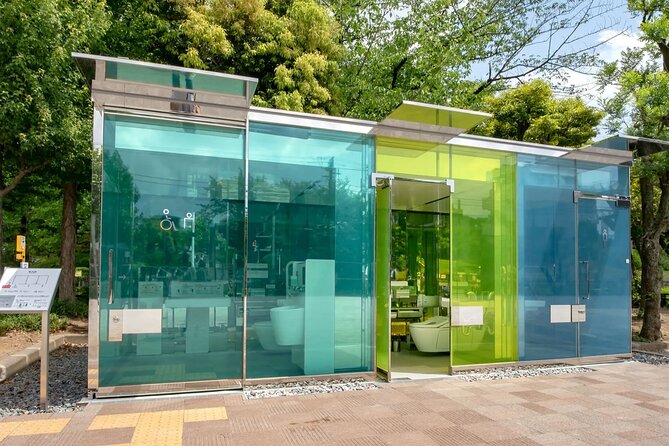
The next stop, Yoyogi Fukamachi Mini Park, takes about 10 minutes. Here you see Japan’s first public toilet using light-control film. With the press of a button, the glass changes from transparent to opaque.
It is an odd and memorable detail, and it reflects the tour’s interest in modern urban design. You are seeing Tokyo through small examples of how the city handles public space, not just through grand monuments.
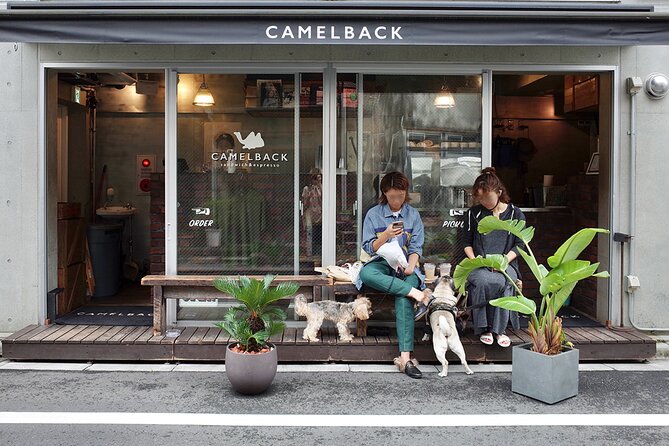
The final listed stop is CAMELBACK sandwich&espresso, with about 15 minutes for a break. The signature item is an egg sandwich made by a former sushi chef. You pay separately for the food and drink, but this is a chance to try a local favorite rather than settle for a generic chain snack.
The short stops create a pleasant food trail, but they can also make the schedule feel tight. You may need to choose one coffee or snack instead of treating every stop as a full café visit. A bakery snack is also mentioned during the route, so keep a little room in your budget if you want to sample more than one item.
What the guide adds to the experience
The English-speaking guide is central to the tour. Without the explanations, the route would still be a pleasant bike ride, but the shrine manners, teahouse visit, park details, and public toilet designs would have less meaning.
Leo is the guide named in the available customer feedback. The comments describe him as friendly and easy to talk with, and one person compared the experience to being shown around by a local friend. That fits the tour’s design, which leaves room for conversation instead of delivering only a fixed list of facts.
You should still remember that guide quality can vary by date. The important point is that this is a guided neighborhood ride, not a rental bike outing. You are paying for local explanation, route planning, and the confidence of being led through areas you might not connect on your own.
Some comments refer to the ride as a scooter tour, while the formal details say electric bike with pedals. Ask the provider about the current vehicle before you arrive, especially if you have a strong preference between an e-bike and an electric scooter.
Is $52.03 a fair price?
At $52.03 per person, the value depends on how you like to explore. The admission cost for most stops is free, and you pay separately for food and drink. So the price is not mainly for paid attractions. It covers the electric bike, English-speaking guide, route design, and included entry to the Former Marquis Maeda Teahouse.
For a small group capped at six people, that is a reasonable price if you want a guided introduction to several neighborhoods in one outing. Walking between all these areas would take more time, while a large sightseeing vehicle would not give you the same street-level view.
The value is weaker if you want a long food tour, extensive shopping time, or major landmark access. This is a compact local-life experience. You are paying to connect several small stops into one smooth outing.
Group discounts may be available, which can help if you are booking with family or friends. Since the experience is often reserved well in advance, planning early may be wise if your Tokyo dates are fixed.
Who will enjoy this ride most?
I would choose this tour for someone who has already seen a few headline sights and wants to understand how central Tokyo changes from one block to the next. It also suits a first-time visitor who prefers a guided introduction instead of figuring out bike routes alone.
It is a good match for:
- People who enjoy quiet neighborhoods more than famous photo stops
- Visitors interested in Japanese shrine manners and traditional spaces
- Coffee and bakery fans who like short local food breaks
- Couples, friends, or families who appreciate a small group
- Anyone who wants to cover several nearby districts without a full-day commitment
You should think twice if you dislike cycling, need a long sit-down meal, or want a tour with many formal historical sites. The pace includes repeated getting on and off the bike, walking through stops, and making quick visits.
The activity says most people can participate, but it does not provide detailed physical requirements. If you have concerns about cycling or the exact vehicle, contact the provider before booking.
Booking, weather, and practical details
You receive confirmation when you book, and the ticket is mobile, so you do not need a printed voucher. The tour begins and ends at the Maruyamachō meeting point, which makes it easy to continue exploring Shibuya afterward.
Food, drinks, and tips are extra. I would carry a little spending money for coffee or the egg sandwich, but you do not need to buy at every stop.
Free cancellation is available up to 24 hours before the local start time. Changes or cancellations inside that 24-hour window are not accepted for a refund. Bad weather can cancel the ride, in which case you are offered another date or a full refund.
The best practical tip is to treat the tour as an outdoor activity even though several stops are indoors. Wear comfortable clothing, arrive ready to ride, and leave enough time to reach the shop in Maruyamachō.
Should you book the Shibuya electric bike tour?
Book it if you want a friendly, small-group ride through the quieter side of Tokyo, with enough cultural explanation to make the stops meaningful. The combination of a teahouse, shrine, vintage shop, coffee stands, and unusual toilets gives you a more varied look at the city than a simple neighborhood ride.
Skip it if your priority is a major landmark checklist or a full meal-based food tour. At two and a half hours, the schedule is a sampler, not a full day of exploration.
For most visitors, the strongest reason to book is the route itself. You start near Shibuya’s famous center, then see how quickly Tokyo shifts into calm residential districts. That change, paired with a small group and an English-speaking guide such as Leo, makes this a useful choice when you want your time in Shibuya to feel more personal.
FAQ
How long does the Shibuya electric bike tour last?
The tour lasts approximately two hours and 30 minutes.
Where does the tour begin?
It begins at Liquor Shop Matsumoto, at 10-15 Matsumotoya Sake-ten Building in Maruyamachō, Shibuya, Tokyo 150-0044.
Where does the tour end?
The activity ends back at the meeting point.
How many people can join the tour?
The maximum group size is six people.
Is the bike included?
Yes. An electric bike with pedals is included in the tour price.
Is a guide included?
Yes. The tour includes an English-speaking guide. Leo is the guide named in the available customer feedback.
Is food or coffee included?
No. Food and drinks are not included, so you pay separately for coffee, snacks, or the egg sandwich.
Is entry to the Former Marquis Maeda Teahouse included?
Yes. Admission to the Former Marquis Maeda Teahouse is included.
Can I cancel for a full refund?
Yes, if you cancel at least 24 hours before the experience start time. Cancellations made less than 24 hours before the start are not refunded. If poor weather causes the provider to cancel, you can receive a full refund or choose another date.
More E-Bikes in Tokyo
- Tokyo: 3-Hour Bike or E-Bike City Highlights Tour
★ 4.8 · 435 reviews - Tokyo: 3-hour Guided E-Bike Tour of the City’s Hidden Gems
★ 4.8 · 251 reviews - Tokyo: 3-Hour Bike/E-Bike Tour of the City’s Highlights
★ 5.0 · 209 reviews - 3-Hour Tokyo Private E-Bike Tour Starting from Your Hotel
★ 5.0 · 117 reviews
New on our Tokyo list
- Sumi-e Experience in a relaxing green tea shop in Tokyo★ 5.0 · 3 reviews
- Tokyo : Kamikaze Street Drift Ride★ 5.0 · 3 reviews
- Private Zen Meditation in English in Shinjuku, Tokyo★ 5.0 · 3 reviews
- Onsen Spa in Tokyo and Asakusa Bar Hopping with Local Guide★ 5.0 · 3 reviews
- Easy for everyone! Now you can play handmade mini shamisen and show off to everyone! Musical instruments, sweets and live music★ 5.0 · 3 reviews
- Tokyo: Private Tsukiji Street Food & Sake with Local Guide★ 5.0 · 3 reviews
- Mt Fuji Exploration Tour with Free Japanese Kusa Mochi from Tokyo★ 4.5 · 3 reviews
- Tokyo Tsukiji Fish Market Walking and Exploring Hidden Gems Tour★ 5.0 · 3 reviews
Cycling Tours, compared.
3h Tokyo E-Bike Tour: Hidden Gems, and Local Life with guide
Read our review →
3-hour Guided E-Bike Tour of the City’s Hidden Gems
Read our review →
3-Hour Bike/E-Bike Tour of the City’s Highlights
Read our review →Browse the lists this tour appears in