
Reviewed · TOKYO FOOD TOURS
Shimbashi Tastes & Stories A Culinary Foodie Tour By Local Guide
Shinbashi is where Tokyo’s famous office-worker culture meets old alleyways, railway history, tiny shrines, and serious food. This four-hour tour uses several eateries and local landmarks to show you a side of the city that is easy to miss between Ginza and Tokyo Station.
I like the variety of food, since the price includes sushi, seafood, Japanese wagyu, two soft drinks, water, and dessert. I also like the local focus: Karasumori-jinja, Tanuki Alley, and the old railway district give the meal stops a sense of place.
The main consideration is the meeting point. One booking had confusion over the exact location, although a local resident helped the participant reach the guide. Arrive early, check the mobile ticket carefully, and keep the guide’s contact details handy.
In This Review
- Key Points Before You Book
- Why Shinbashi Makes a Good Food-Tour Base
- Starting at Old Shinbashi Station and SL Square
- Karasumori-jinja, a Quiet Local Pause
- New Shinbashi Building and the Story of Tanuki Alley
- Shiodome City Center and the Modern Tokyo Skyline
- The Food: Sushi, Seafood, Wagyu, and Dessert
- What the Guides Add to the Day
- Timing, Walking, and Practical Fit
- Who Will Get the Most From the $171 Price
- Booking Details That Matter
- Should You Book the Shinbashi Food Tour?
- FAQ
- Where does the Shinbashi food tour begin?
- Where does the tour end?
- How long does the experience last?
- What food is included?
- Is alcohol included?
- How many people can join the tour?
- Is the tour available in English?
- Can I cancel for a refund?
Key Points Before You Book
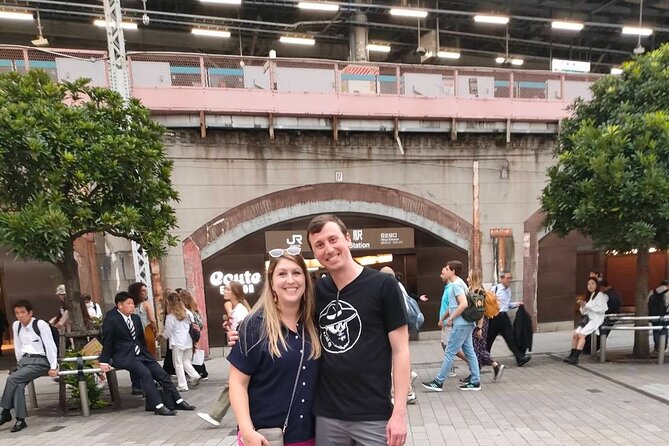
- Four hours in working Tokyo: See Shinbashi through railway history, office districts, shrines, and local restaurants.
- Several types of Japanese food: Sushi, seafood, wagyu, soft drinks, water, and desserts are included.
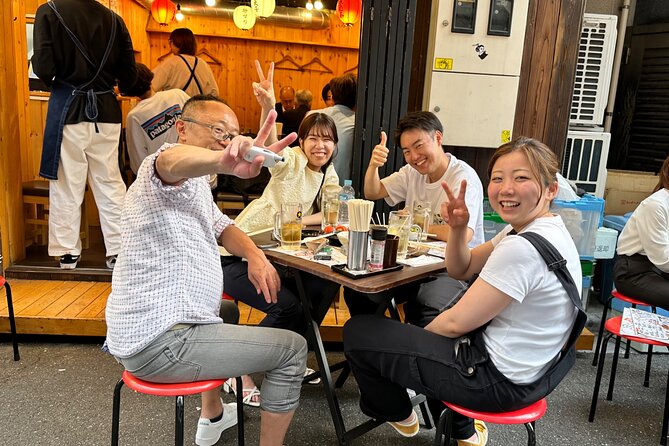
- Guides who add a personal touch: Akira and Kaori are named in past tour experiences, with praise for their help, conversation, and photo-taking.
- A small maximum group: The tour accepts up to 15 people, though the actual group may be smaller.
- A useful location between major sights: Shinbashi is about a 10-minute walk from Ginza and directly south of Tokyo Station.
- Alcohol costs extra: Beer and other alcoholic drinks are available to buy, but they are not part of the $171 price.
Why Shinbashi Makes a Good Food-Tour Base
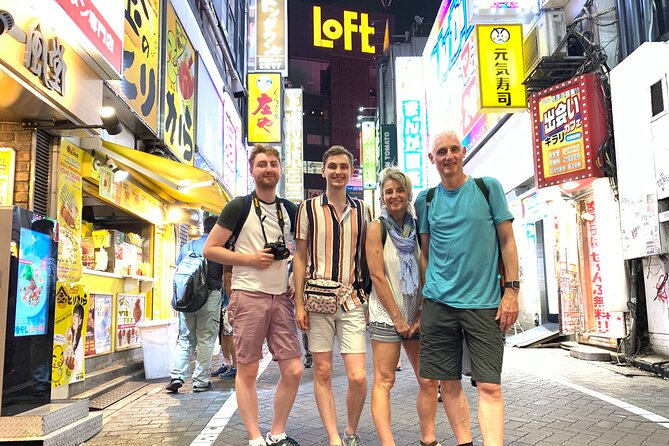
Many first visits to Tokyo revolve around Shibuya, Shinjuku, Asakusa, and Ginza. Shinbashi gives you a different view. It is a major transport hub, but its identity comes from office workers, after-work dining, old station buildings, narrow restaurant areas, and small neighborhood religious sites.
That mix matters. Food tastes better when you understand why the area has so many casual eateries and why the streets feel different at lunchtime than after work. The tour’s focus on salaryman culture helps explain the local rhythm without turning the outing into a formal history lecture.
You also get a useful geographic bridge between famous parts of central Tokyo. Ginza is close by, Tokyo Station is just north, and Shiodome rises on the eastern side of Shinbashi. In four hours, you can connect these districts through food and short walks instead of spending the whole afternoon inside one restaurant.
The tour costs $171 per person. That is not a cheap meal, but the price covers a guided city walk, food at more than one eatery, sushi, seafood, wagyu, two soft drinks, water, and desserts. If you would rather order one inexpensive bowl of noodles and explore alone, this will feel costly. If you want a planned introduction to local food with cultural context and someone handling the restaurant choices, the value is easier to see.
More Tokyo food crawls:
- Tokyo: Shinjuku Food Tour (13 Dishes at 4 Local Eateries)
★ 5.0 · 6,603 reviews - Tokyo: Shinjuku Food Tour (15 Dishes and 4 Eateries)
★ 4.9 · 2,033 reviews - Best of Shinjuku: Izakaya Food Tour (4 Stops, 14+ Tastings)
★ 5.0 · 1,863 reviews
Starting at Old Shinbashi Station and SL Square
The meeting point is SL Square, listed at 2-chōme-7-先 Shinbashi, Minato City. This is a practical starting place because it puts the story of Shinbashi’s food culture next to the story of Japan’s railways.
Shinbashi Station is one of Tokyo’s major interchange stations. It sits in Minato Ward, close to Ginza and south of Tokyo Station. The old station area helps set the tone for the outing: Shinbashi grew as a transport and business center, and its restaurants served the workers passing through.
SL Square was created in 1972 to mark 100 years of railway transport in Japan. The district was linked to the first railway route between Tokyo and Yokohama, so the square is more than a convenient meeting point. It explains why Shinbashi became such an important place for commuters, workers, and after-work dining.
The first portion of the route lasts about 30 minutes at the old station area, followed by roughly 45 minutes around SL Square. Admission is free, so your payment goes toward the guide, food, and organization rather than attraction tickets.
Give yourself extra time to find the correct side of the station. Tokyo stations can be confusing, and the meeting-point mix-up reported by one participant is a useful warning. The mobile ticket should help, but you should still confirm the exact spot before setting out.
Karasumori-jinja, a Quiet Local Pause
Karasumori-jinja is one of the most distinctive stops because it shifts the mood from railway and office culture to local religion. The shrine is described as one of the oldest in the area and a place mainly visited by locals.
That makes it a useful contrast to Tokyo’s major temple and shrine stops. You are not being sent to a famous landmark with a long queue and a large souvenir operation. Instead, the guide can use a smaller site to explain how religious places fit into ordinary neighborhoods.
The visit is scheduled for about 45 minutes. That is a generous block for a small shrine, so much depends on the guide’s storytelling and the pace of the group. A good guide can make the stop meaningful by explaining what you are seeing and how the shrine relates to the surrounding district.
You should not expect a grand temple complex or a long list of formal attractions here. The appeal is the change of scale. After the railway history and city traffic, a local shrine gives you a closer look at the older side of Shinbashi.
New Shinbashi Building and the Story of Tanuki Alley
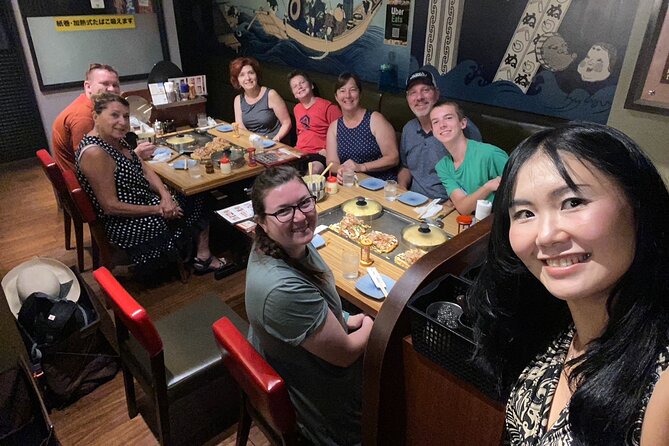
The New Shinbashi Building brings you back to the district’s working-city character. Before the building was created, this area was known as Tanuki Alley, a bar district. An urban restructuring project followed the 1964 Tokyo Olympics and changed the area into the building you see today.
This is the sort of detail that gives the tour its edge. You are not simply walking past an office building. You are learning how Tokyo repeatedly rebuilt itself while keeping traces of older entertainment districts and neighborhood dining culture.
The stop lasts about 30 minutes. The building is a useful place to understand why Shinbashi feels less polished than Ginza, even though the two are close together. Its atmosphere connects to the after-work food scene that gives the district much of its personality.
You may find the building’s appearance more practical than beautiful. That is part of the point. This is an urban story about redevelopment, bars, commuters, and everyday meals, not a grand architectural showcase.
A few more Tokyo bookings worth comparing
- Mt Fuji and Hakone 1-Day Bus Tour Return by Bullet Train
★ 5.0 · 26,383 reviews - 1-Day Tokyo Bus Tour
★ 5.0 · 14,250 reviews - Tokyo: TOKYO SKYTREE® Admission ticket
★ 4.5 · 11,192 reviews - Tokyo: teamLab Planets TOKYO Digital Art Museum Entry Ticket
★ 4.6 · 9,779 reviews
Shiodome City Center and the Modern Tokyo Skyline
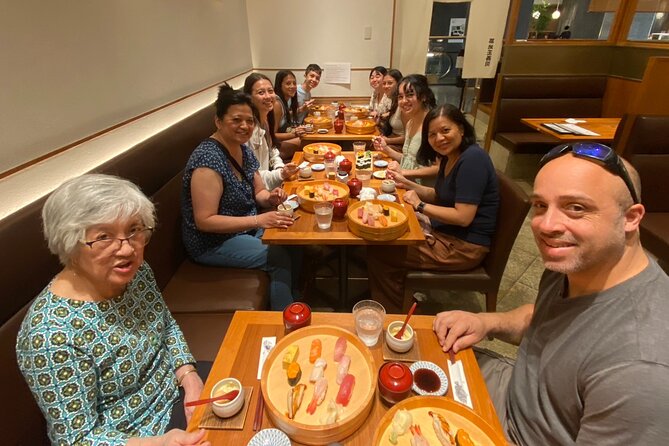
The route then reaches Shiodome City Center, including the area around NTV Plaza and the NTV Tower. NTV is one of Japan’s largest television broadcasters, and its studios and offices occupy the tower.
This stop adds a modern layer to the outing. Shinbashi is not only an old station district with small restaurants. It also sits next to a major business and media center, where large towers changed the look of the neighborhood.
The planned visit takes about 30 minutes. If Japanese television is not part of your daily life, the broadcasting connection may be less interesting on its own. The value comes from seeing how quickly the surroundings change from older food streets to large-scale commercial development.
The contrast also helps you read Tokyo better. The city does not divide neatly into old and new quarters. A local shrine, an office-worker bar district, a railway square, and a modern television tower can all sit within the same short walking route.
The Food: Sushi, Seafood, Wagyu, and Dessert
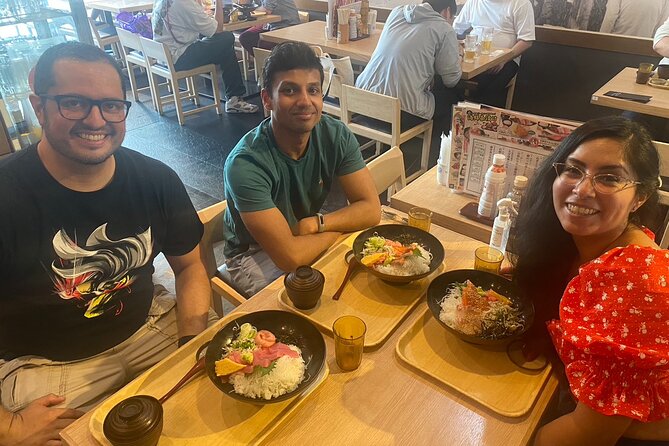
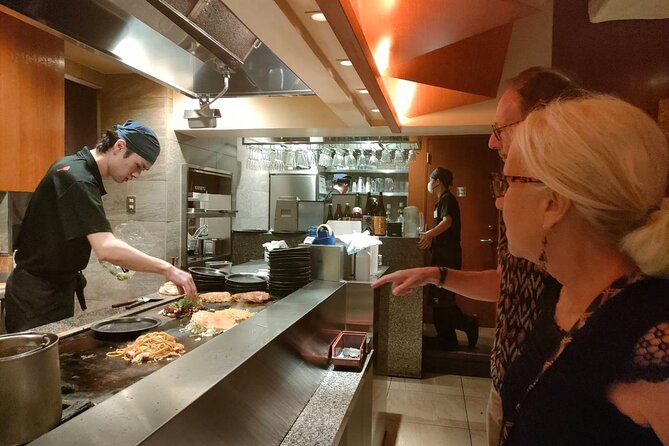
Food is the center of the experience, not a side snack between sights. The included selection covers sushi, seafood, Japanese wagyu, soft drinks, water, and desserts. The exact restaurants and dishes are not specified, so you should think of this as a guided tasting across several eateries rather than a fixed menu you can study in advance.
The use of different eateries is important. One restaurant rarely gives you a full sense of a district. Moving between places lets you compare settings and styles, while the guide explains what you are eating and why the area is known for it.
The food experiences described by past participants include two substantial meal stops, with strong praise for the quality of the food. One guide, Kaori, was singled out for taking the group to places they would not have found alone. Another guide, Akira, was praised for choosing good food and helping take photos during the walk.
Those details point to the tour’s strongest feature: the guide is not just carrying a menu. The guide helps you enter places that may not be obvious from the street, keeps the route moving, and gives you a social connection to the district.
You receive two soft drinks and water. Alcohol is not included, though you can buy it separately. This is worth remembering if you picture the tour as a pub crawl or an evening of beer with every course. It is a food and culture walk first.
Because the tour lasts about four hours, you should expect a full stomach by the end. Eat lightly beforehand, especially if you want to enjoy both the seafood and wagyu. The tour does not list dietary options, allergies, or vegetarian substitutions, so ask the operator before booking if those issues affect your meal.
What the Guides Add to the Day
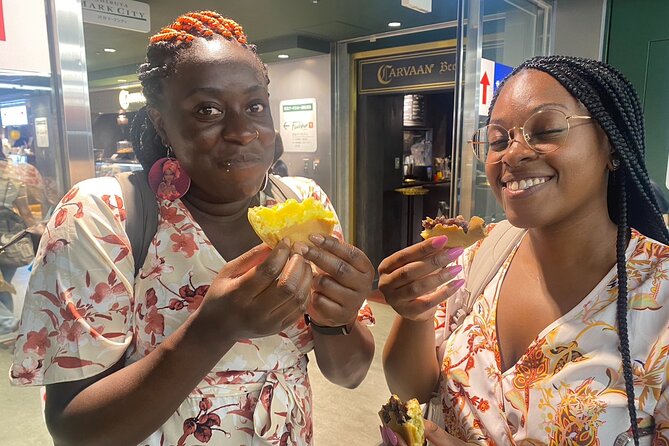
A food tour rises or falls on its guide. The names Akira and Kaori appear in the tour’s experiences, and both are associated with personal attention. Akira helped with photos for a parent and daughter, while Kaori was praised for making the route comfortable and finding places that were hard to locate alone.
The listed guide is a professional Japanese-speaking English guide. That wording suggests the tour is designed for English-speaking visitors who want help with both language and local context. You should still treat guide assignments as subject to change, since a specific guide is not guaranteed at booking.
The best part of this format is the conversation. You can ask why Shinbashi has so many small food businesses, how the salaryman tradition shapes dining, or what separates one type of Japanese meal from another. The guide’s explanation can turn a dish from a quick bite into part of the neighborhood story.
The group maximum is 15 people. That is small enough to keep a walking group manageable, though it is not a private tour by default. One past booking happened to have only one participant, but you should not count on that. If you want a private tour, check the booking terms rather than assuming the group size will be tiny.
Timing, Walking, and Practical Fit
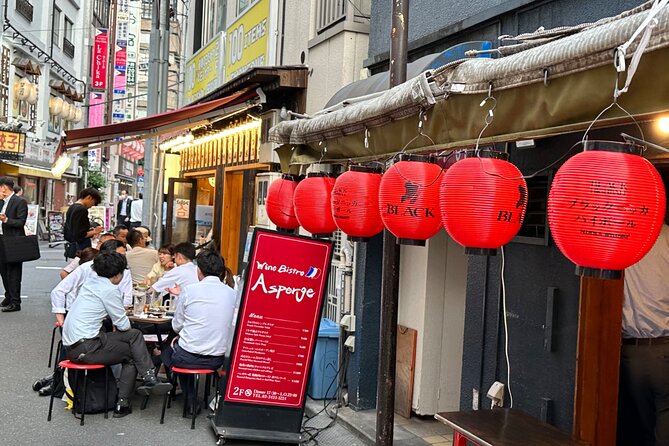
The listed stops add up to roughly three and a half hours, leaving the balance of the four-hour experience for food, movement, ordering, and transitions. This is a steady outing rather than a rushed series of photo stops.
You will move around Shinbashi on foot and use the station area as your base. The route is near public transportation, and the tour ends back at the starting point. That return is convenient if you have evening plans elsewhere in Tokyo.
The tour suits most participants, according to the supplied activity information. Still, you should be comfortable walking between stops and spending time in several eating places. The itinerary includes free-admission sights, so there are no major ticket lines or attraction fees to manage.
I would schedule this early in your Tokyo stay if you want help understanding Japanese food and casual dining. By the end, you should have a clearer sense of how to approach small local eateries on your own. I would schedule it later if your main aim is famous monuments, formal temples, or a carefully specified tasting menu.
Who Will Get the Most From the $171 Price
This tour makes the most sense for you if you want three things in one outing:
- Food from several local eateries
- A guide to explain Japanese dining and Shinbashi culture
- A walking route through places you might skip alone
Families may appreciate the practical help and the chance to take photos without organizing every stop themselves. Couples and solo visitors can also benefit from the structure, especially if ordering in unfamiliar restaurants feels awkward.
Food-focused visitors should note that this is not described as a specialist sushi class or a wagyu tasting with detailed grading. It is broader and more social. You get several kinds of food along with neighborhood stories.
The cost is harder to justify if you already speak Japanese, know Shinbashi well, and are happy choosing your own restaurants. In that case, you are paying for convenience and interpretation you may not need.
The 92 percent recommendation figure and 4.7 rating from 13 published ratings suggest a strong response, though the sample is small. The repeated praise centers on three points: good food, guides who are helpful and personable, and access to places that are difficult to find without local help.
Booking Details That Matter
Confirmation arrives when you book, and the tour uses a mobile ticket. You should confirm the meeting point before the day of the tour, since the exact location caused trouble for at least one participant. The starting point is SL Square, and the tour returns there at the end.
Free cancellation is available if you cancel at least 24 hours before the local start time. Inside that 24-hour window, the payment is not refunded, and changes are not accepted.
The tour is usually booked about 16 days in advance. That gives you a useful planning guide, especially if your Tokyo dates are fixed. The maximum group is 15, but the experience may feel more personal if the day’s booking count is low.
Should You Book the Shinbashi Food Tour?
Book it if you want a guided introduction to everyday central Tokyo, not just the headline sights. The strongest reasons are the mix of sushi, seafood, wagyu, and dessert, plus the route through railway history, Karasumori-jinja, Tanuki Alley’s former bar district, and modern Shiodome.
Skip it if you need a guaranteed private guide, a fully published menu, extensive alcohol, or a low-cost meal. You should also ask about food restrictions before paying, since the available details do not list substitutions.
For most first-time visitors who want food with a story, this is a useful four-hour choice. It gives you a neighborhood, a meal, and a clearer idea of how Tokyo’s working districts eat.
FAQ
Where does the Shinbashi food tour begin?
The tour begins at SL Square, at 2-chōme-7-先 Shinbashi, Minato City, Tokyo 105-0004, Japan.
Where does the tour end?
The activity ends back at the meeting point at SL Square.
How long does the experience last?
The tour lasts approximately four hours.
What food is included?
The price includes sushi, seafood, Japanese wagyu, desserts, two soft drinks, and water.
Is alcohol included?
No. Alcoholic drinks are not included, but they are available to purchase separately.
How many people can join the tour?
The maximum group size is 15 participants.
Is the tour available in English?
A professional Japanese-speaking English tour guide is included.
Can I cancel for a refund?
Yes. You can receive a full refund if you cancel at least 24 hours before the experience start time. Cancellations or changes made within 24 hours are not accepted and are not refunded.
New on our Tokyo list
- Sumi-e Experience in a relaxing green tea shop in Tokyo★ 5.0 · 3 reviews
- Tokyo : Kamikaze Street Drift Ride★ 5.0 · 3 reviews
- Private Zen Meditation in English in Shinjuku, Tokyo★ 5.0 · 3 reviews
- Onsen Spa in Tokyo and Asakusa Bar Hopping with Local Guide★ 5.0 · 3 reviews
- Easy for everyone! Now you can play handmade mini shamisen and show off to everyone! Musical instruments, sweets and live music★ 5.0 · 3 reviews
- Tokyo: Private Tsukiji Street Food & Sake with Local Guide★ 5.0 · 3 reviews
- Mt Fuji Exploration Tour with Free Japanese Kusa Mochi from Tokyo★ 4.5 · 3 reviews
- Tokyo Tsukiji Fish Market Walking and Exploring Hidden Gems Tour★ 5.0 · 3 reviews
Tokyo Food Tours, compared.
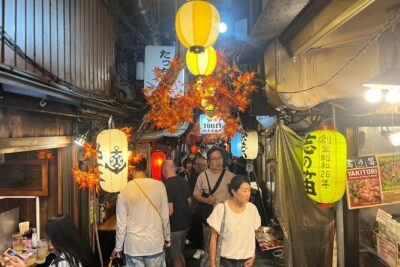
Shinjuku Food Tour (13 Dishes at 4 Local Eateries)
Read our review →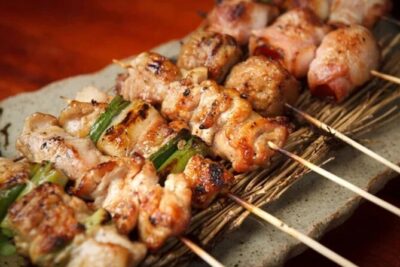
Shinjuku Food Tour (15 Dishes and 4 Eateries)
Read our review →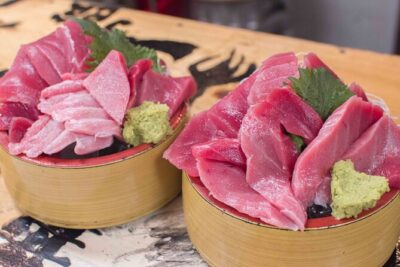
Best of Shinjuku: Izakaya Food Tour (4 Stops, 14+ Tastings)
Read our review →
Tokyo Night Foodie Tour in Shinjuku – Seasonal Sushi, Wagyu Beef
Read our review →
Eat and Drink Like a Local: Tokyo Ueno Food Tour-Taverns&Ramen
Read our review →
Tsukiji Fish Market: Street Food & Culture Walking Tour
Read our review →Shinjuku Food Tour – 15 Dishes, 3 Drinks, 4 Eateries
Read our review →Browse the lists this tour appears in