
Reviewed · ASAKUSA TOURS
This is Asakusa! A Tour Includes the All Must-Sees!
Asakusa can feel like several neighborhoods packed into one, with temple gates, food stalls, old-style shopping streets, kitchenware shops, and Tokyo Skytree all competing for your attention. This private six-and-a-half-hour tour gives you one guide for the full route and takes you from Asakusa Station to Oshiage.
I like the clear sweep of the day: you see the big religious sights, get a taste of local eating streets, browse Kappabashi, and finish beneath Japan’s tallest tower. I also like the chance to ask about daily life, Buddhism, Japanese customs, and local shopping instead of simply walking past the sights. The main drawback is cost. At $137.29 per person, plus about 4,880 JPY in estimated expenses, this makes the most sense for a small group that values personal attention.
In This Review
- Key points to know before booking
- Why a private route helps in Asakusa
- Starting at the Asakusa Culture Tourist Information Center
- Senso-ji, Asakusa’s grand entrance
- Asakusa Shrine and the Sanja Matsuri connection
- Nishi-sando and Hoppy Street
- Kappabashi, where Tokyo cooks shop
- Lunch at Gonpachi near Azumabashi Bridge
- Tokyo Skytree and the finish at Oshiage
- Solamachi and the final station
- What the price really includes
- The guides make the difference
- Who will get the most from this day
- Final decision: book it or skip it?
- FAQ
- Is this a private tour?
- How long does the tour last?
- Where does the tour begin and end?
- Are admission fees and lunch included?
- What sights are included?
- Can the route change if the weather is bad?
Key points to know before booking
- Private guiding keeps Asakusa manageable: Only your party takes part, so you can ask questions and adjust the pace.
- The route covers Asakusa’s major sights: Senso-ji, Asakusa Shrine, Nishi-sando, Hoppy Street, and Kappabashi are all included.
- The day ends at Tokyo Skytree: You finish at Oshiage Station, not back at the starting point.
- Lunch and major admission costs are extra: Plan for about 4,880 JPY per person in estimated expenses.
- Guide quality is central to the experience: Haruo, Macky, Walt, and Sayaka are named in past feedback as especially helpful, polite, and adaptable.
- The meeting point needs care: Confirm the exact Asakusa subway station before setting out, since one party had trouble after giving a taxi only the street address.
Why a private route helps in Asakusa
Asakusa is easy to reach, but not always easy to understand. Senso-ji draws large crowds, narrow streets fill quickly, and the area changes character from one block to the next. A private guide gives you a human map of the district, helping you connect the grand temple, local shrines, eating streets, and shopping lanes.
I especially like the private format for first-time visitors. You can stop to ask why a temple and shrine sit so close together, what a Buddhist ritual means, or how to choose a Japanese kitchen knife. The guide can also explain local customs as you encounter them instead of saving all the information for a long speech.
The group size is limited to your own party, though the exact maximum is not stated. That matters if you are traveling with family or friends who have different interests. One person can ask about religion, another about food, and someone else can take time with tableware or knives without holding up a large group.
The route is listed at about six hours and 30 minutes. That is a full half-day, with plenty of walking and several stops. The timing may change in bad weather, and the operator says transportation, destinations, or routes can be adjusted if conditions require it.
More Asakusa visits:
- Tokyo: Japanese Dance Cabaret Theater Asakusa-Kaguwa Ticket
★ 4.8 · 2,270 reviews - Tokyo: Meiji Shrine, Asakusa, Skytree Bus Tour and Cruise
★ 4.7 · 1,986 reviews - Tokyo: Roll and Authentic Sushi Making Class in Asakusa
★ 4.9 · 1,957 reviews
Starting at the Asakusa Culture Tourist Information Center
The first stop is the Asakusa Culture Tourist Information Center, a useful place to get your bearings before entering the busiest part of the district. The key feature here is the observation terrace, which looks over Asakusa from above.
You get 15 minutes and there is no admission charge. That sounds brief, but it is enough to orient yourself and see how the temple zone, streets, river area, and surrounding buildings fit together.
I like beginning here because Asakusa can seem confusing at street level. A high viewpoint gives you a quick sense of direction before you move into the lanes below. It also offers a calmer start than plunging straight into the crowds around the famous temple gate.
Be sure to meet at the correct Asakusa Station location. The listed starting address is 1-chome-1-3 Asakusa, Taito City, but station names in Tokyo can be confusing because several railway lines use nearby Asakusa stops. Confirm the exact station and meeting instructions with the guide. This is not a small point. One party lost time after a taxi was directed to a train station rather than the intended meeting place.
Senso-ji, Asakusa’s grand entrance
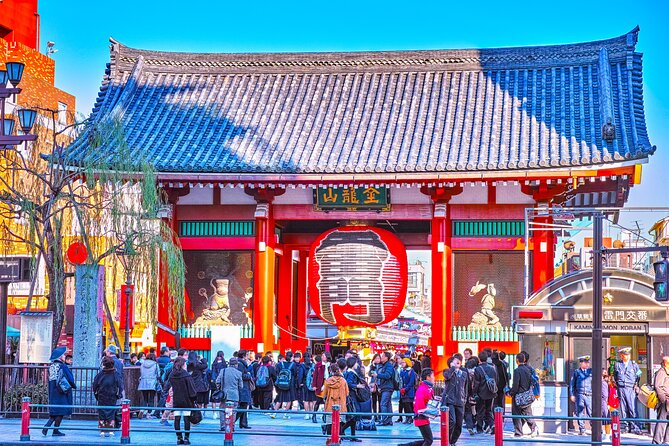
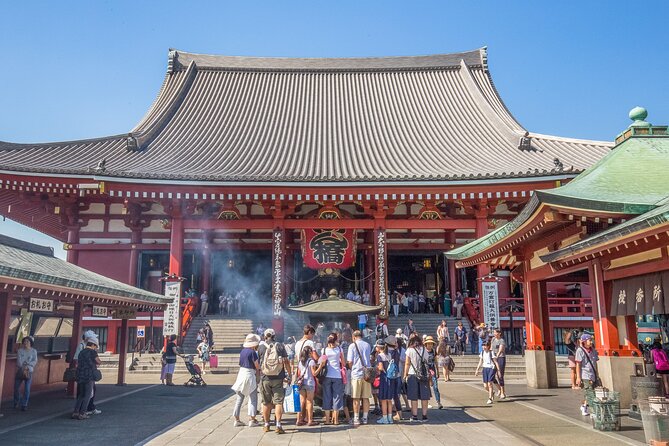
You spend about an hour at Senso-ji, Tokyo’s oldest temple and the landmark most closely linked with Asakusa. Its large red lanterns and red buildings make a strong first impression, but the guide adds the context that turns a photo stop into a cultural visit.
The temple grounds are one of Tokyo’s most popular sightseeing areas, so crowds are part of the experience. A private guide helps you move through the space with more purpose and explains what you are seeing along the way.
This is one of the tour’s strongest sections for anyone interested in Buddhism and Japanese history. You can ask questions at the moment they come up, rather than trying to remember them later. The guide may also help you understand the difference between a temple and a shrine, a distinction that becomes important at the next stop.
The hour gives the visit room to breathe, but you should not expect solitude. If you want quiet photographs or a slow personal visit, the crowd level may limit that. The advantage here is not escaping everyone. It is knowing where you are, what matters, and how to use your time.
Asakusa Shrine and the Sanja Matsuri connection
Asakusa Shrine is a shorter 15-minute stop, but it provides a useful contrast with Senso-ji. The tour explains that shrines and temples are different religious institutions, while also showing how closely connected they are in this part of Tokyo.
The shrine is famous for Sanja Matsuri, one of Tokyo’s three major festivals. Even outside festival time, that connection helps explain why the site matters to Asakusa’s local identity.
I find this pairing particularly useful. Seeing Senso-ji and Asakusa Shrine on the same morning gives you a simple, practical introduction to two major Japanese religious traditions. You do not need prior knowledge, and you can ask the guide to clarify details that might otherwise seem mysterious.
The stop is short, so this is more about orientation and explanation than a long visit. If your main goal is detailed religious study, you may want extra time on your own after the tour.
A few more Tokyo bookings worth comparing
- Mt Fuji and Hakone 1-Day Bus Tour Return by Bullet Train
★ 5.0 · 26,383 reviews - 1-Day Tokyo Bus Tour
★ 5.0 · 14,250 reviews - Tokyo: TOKYO SKYTREE® Admission ticket
★ 4.5 · 11,192 reviews - Tokyo: teamLab Planets TOKYO Digital Art Museum Entry Ticket
★ 4.6 · 9,779 reviews
Nishi-sando and Hoppy Street
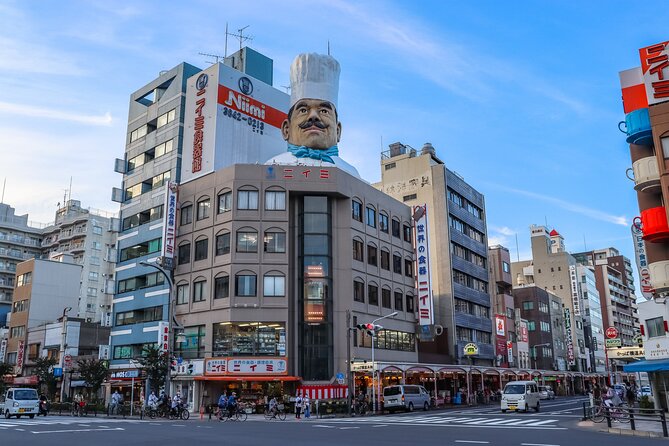
The Asakusa Nishi-sando Shopping Street takes about 15 minutes. Festival-style decorations and traditional shops give the street a different feel from the formal temple grounds. It is a place where everyday shopping, local traditions, and tourism meet.
The brief visit works well as a transition. You move from religious sights into the social and commercial side of Asakusa, where the neighborhood feels less like a monument and more like a place people use.
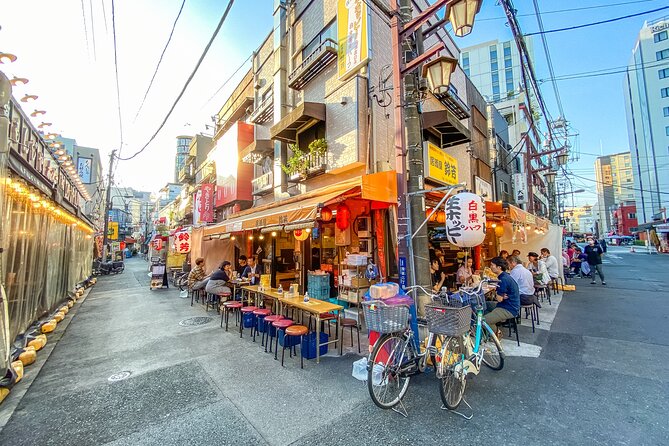
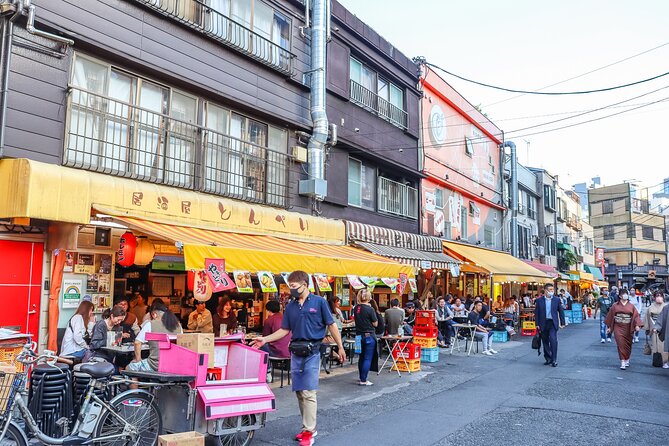
Hoppy Street is scheduled for only five minutes. It is lined with restaurants, outdoor tables, and reasonably priced drinks. Many people come for the atmosphere, and the street offers a quick look at Asakusa’s casual eating culture.
Do not expect a full meal here. The stop is too short for that, and the main meal later is at Gonpachi. Think of Hoppy Street as a fast introduction to the district’s informal side. If you want to linger over a drink, ask the guide whether the route can be adjusted, but there is no guarantee that extra time will be available.
Kappabashi, where Tokyo cooks shop
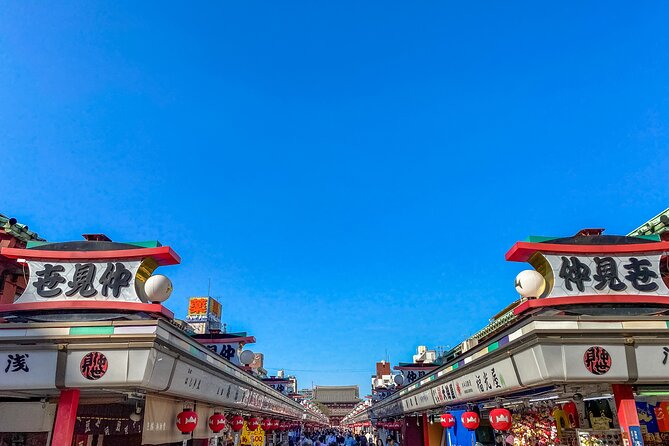
Kappabashi Dogugai is one of the most distinctive stops on the route. You spend about 30 minutes in a shopping district known for specialty stores selling knives, tableware, and other kitchen tools.
This is where the tour moves beyond the standard temple circuit. Kappabashi gives you a look at the working side of Japanese food culture, not just the finished dishes served in restaurants. You might find professional-style knives, ceramics, utensils, and food-service items that are hard to identify without help.
A guide can make this stop much more useful. You can ask about knife types, materials, intended uses, and how to handle a purchase. One past party received help while choosing a knife, which is exactly the kind of small service that can save you from buying the wrong item.
Thirty minutes is enough for a first look, but not enough for a serious shopping expedition across the whole district. If you already know you want a knife or tableware, tell the guide early. The operator can sometimes shape the pace around your interests, though the full route still needs to be covered.
Remember that purchases are your responsibility. The tour includes the guide, but not items you buy in the shops.
Lunch at Gonpachi near Azumabashi Bridge
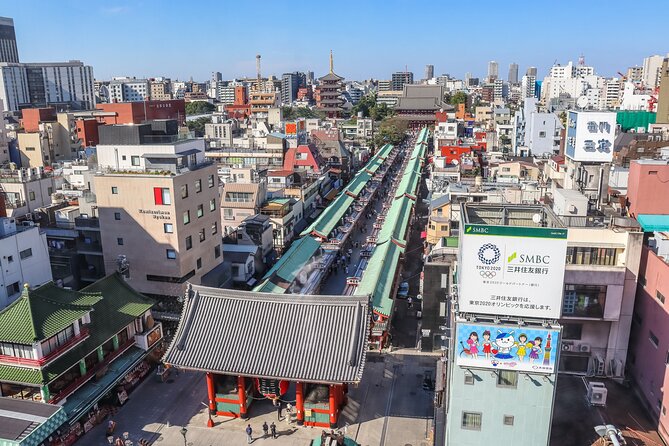
The itinerary allows 50 minutes at Gonpachi, a handmade soba restaurant at the foot of Azumabashi Bridge. Large windows look toward the Sumida River and Tokyo Skytree, giving lunch a pleasant setting as well as a practical break.
The meal is not included in the tour price. The estimated meal cost is 1,200 JPY per person, though the final amount depends on what you order. Food and drinks bought at the visited places are paid for by you.
A 50-minute meal is a sensible length for a day with many stops. It gives you time to sit down without turning the tour into a restaurant afternoon. The restaurant setting also links the earlier kitchenware stop with the food itself: you have just seen the tools and tableware used in Japanese cooking, then you sit down for a handmade soba meal.
If you have dietary restrictions, ask the operator before booking or contact the guide in advance. The supplied information does not list specific dietary accommodations, so you should not assume the restaurant can meet every need.
Tokyo Skytree and the finish at Oshiage
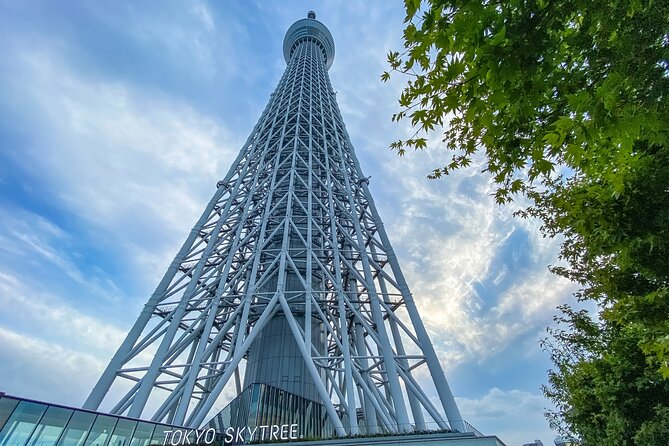
The route then moves to Tokyo Skytree, allowing about one hour and 10 minutes. At 634 meters, it is Japan’s tallest building and opened in 2012. The surrounding Tokyo Skytree Town area includes shopping, an aquarium, offices, and other attractions.
Admission is not included. The estimated admission portion of the day’s extra cost is 3,400 JPY per person, making it important to understand the price before you book. The exact charge can vary depending on the access or ticket arrangement, so confirm the current details when reserving.
The Skytree section changes the scale of the day. Senso-ji shows old Tokyo, while Skytree represents the modern city reaching upward. That contrast is one of the best reasons to keep both parts of the route. You get a temple district, traditional shopping, a river view, and a major modern landmark in one outing.
Crowds and visibility can affect the experience. The tour notes that routes may change in poor weather, and views from a tower are naturally weather-dependent. You should also remember that one hour and 10 minutes includes the visit within a larger route, not unlimited time for every Skytree attraction.
Solamachi and the final station
Tokyo Solamachi is the commercial complex next to Skytree, with about 30 minutes set aside for the visit. Its concept is described as a new downtown style, combining shopping, entertainment, dining, and other urban activities.
This is a practical ending because you can continue exploring after the guide leaves. The tour finishes at Oshiage Station, directly associated with Skytree, rather than returning you to Asakusa. From there, you can head onward by public transportation or stay in the Skytree area.
The end point is different from the starting point, so plan your evening accordingly. If you would prefer to finish somewhere else, tell the guide. The operator says a change may be possible, but it should be discussed rather than assumed.
What the price really includes
The listed price is $137.29 per person. That covers a private tour, a tour guide, and the necessary expenses of the guide during the outing. It does not cover your own transportation, admission fees, meals, or drinks.
The estimated additional cost is 4,880 JPY per person:
- Transportation: 180 JPY
- Admission fees: 3,400 JPY
- Meal: 1,200 JPY
- Optional experience costs: 100 JPY
At first glance, the total may feel high for a walking and public-transportation tour. The value comes from the private format and the amount of ground covered. You are not paying only for entry to a temple or tower. You are paying for a guide who can explain the religious sites, help you navigate crowded streets, answer local-life questions, and assist with specialized shopping.
For a solo visitor, the cost is harder to justify. For a small group, the private arrangement becomes more attractive, especially if you want to ask many questions or adjust the pace. Group discounts are available, but the exact discount is not specified, so check the price for your party before booking.
The guides make the difference
The tour provider is OTOMO Travel Guide, and guide quality is central to the experience. Named guides include Haruo, Macky, Walt, Sayaka, and Sakaya.
Haruo is noted for making the day easy for a group of four adults, helping them avoid crowds at the observatory, explain local traditions, and choose a kitchen knife. Macky is described as polite, kind, and attentive to individual needs, including selecting a good restaurant for lunch.
Walt is praised for explaining Japan, Buddhism, and its history in a way that made the sites more meaningful. Sayaka is described as highly polite, with strong English and a broad grasp of the local area and Japanese culture. These details suggest that the best part of the tour is not simply the route. It is the person leading it.
A specific guide cannot be guaranteed from the information provided. Still, the repeated emphasis on courtesy, flexibility, English ability, and local knowledge gives you useful standards to expect. If you have special interests, state them when booking and again at the meeting point.
Who will get the most from this day
I would choose this tour if you are visiting Tokyo for the first time and want Asakusa explained rather than simply photographed. It is also a good fit for families, couples, and friend groups who prefer a private guide to a large scheduled group.
The route suits you if you want variety. In one day, you see religious sites, shopping streets, casual dining, kitchen tools, a major observation tower, and a modern shopping complex.
It may be less suitable if you dislike walking, want a slow temple visit, or already know Asakusa well. The schedule is active, and several stops are short. It is also not ideal for anyone who wants to spend hours browsing Kappabashi or linger over drinks on Hoppy Street.
Most people can participate, and the route is near public transportation. Since walking conditions and exact routes can change, ask about your group’s needs before booking if anyone has mobility concerns.
Final decision: book it or skip it?
Book this tour if you want a private introduction to Asakusa that reaches beyond Senso-ji. The combination of temples, local streets, Kappabashi, soba, and Skytree gives you a strong first look at both old and modern Tokyo.
Skip it if the $137.29 price feels too steep, you are comfortable navigating Tokyo alone, or you want long, unhurried visits at only one or two sights. You will also need to budget for the extra 4,880 JPY per person and make sure the Asakusa meeting station is clear.
For a small group that values a flexible guide, this is a well-shaped day. Just confirm the meeting point, understand the extra costs, and remember that the tour ends at Oshiage rather than where it began.
FAQ
Is this a private tour?
Yes. The activity is private, and only your group participates.
How long does the tour last?
The tour lasts approximately six hours and 30 minutes.
Where does the tour begin and end?
It begins at Asakusa Station in Asakusa, Taito City, Tokyo. It ends at Oshiage Station near Tokyo Skytree. The tour does not normally finish at the starting point.
Are admission fees and lunch included?
No. Transportation, entrance fees, food, and drinks are paid by you. Estimated extra costs total about 4,880 JPY per person, including transportation, admission fees, a meal, and an optional experience cost.
What sights are included?
The route includes the Asakusa Culture Tourist Information Center, Senso-ji Temple, Asakusa Shrine, Asakusa Nishi-sando Shopping Street, Hoppy Street, Kappabashi Street, Gonpachi, Tokyo Skytree, and Tokyo Solamachi.
Can the route change if the weather is bad?
Yes. In poor weather, the transportation, destinations, or route may change. Stops may also be replaced if a location is temporarily closed.
New on our Tokyo list
- Sumi-e Experience in a relaxing green tea shop in Tokyo★ 5.0 · 3 reviews
- Tokyo : Kamikaze Street Drift Ride★ 5.0 · 3 reviews
- Private Zen Meditation in English in Shinjuku, Tokyo★ 5.0 · 3 reviews
- Onsen Spa in Tokyo and Asakusa Bar Hopping with Local Guide★ 5.0 · 3 reviews
- Easy for everyone! Now you can play handmade mini shamisen and show off to everyone! Musical instruments, sweets and live music★ 5.0 · 3 reviews
- Tokyo: Private Tsukiji Street Food & Sake with Local Guide★ 5.0 · 3 reviews
- Mt Fuji Exploration Tour with Free Japanese Kusa Mochi from Tokyo★ 4.5 · 3 reviews
- Tokyo Tsukiji Fish Market Walking and Exploring Hidden Gems Tour★ 5.0 · 3 reviews
Asakusa Tours, compared.
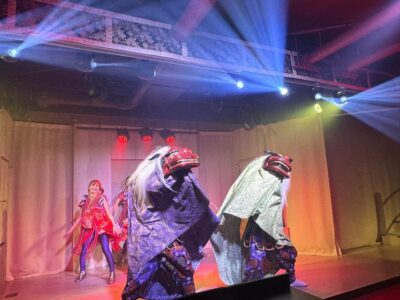
Japanese Dance Cabaret Theater Asakusa-Kaguwa Ticket
Read our review →
Meiji Shrine, Asakusa, Skytree Bus Tour and Cruise
Read our review →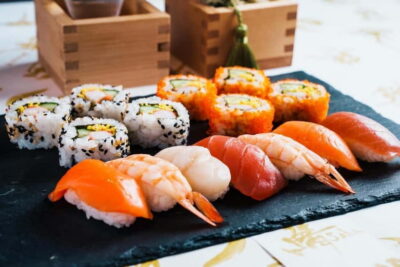
Roll and Authentic Sushi Making Class in Asakusa
Read our review →
Asakusa Walking Tour with Sensoji Temple Visit
Read our review →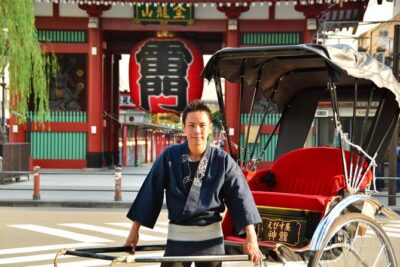
Tokyo Panoramic 1 Day: Meiji Shrine, Asakusa, Odaiba and SKYTREE®
Read our review →
Tokyo Go Kart: Asakusa, Skytree, and Akihabara **IDP MUST**
Read our review →
Asakusa, Skytree & Akhihabara Go-Kart City Experience
Read our review →Browse the lists this tour appears in