
Reviewed · CYCLING TOURS
Tokyo 3 Hour E Bike Tour of the City Bayside Areas
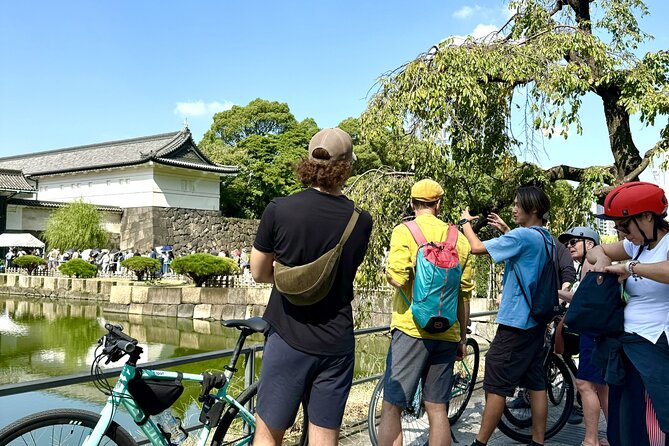
Tokyo’s bayside is best understood from a bicycle seat. This tour links polished Ginza, old Tsukiji, riverside streets, a local shrine, and Kiyosumi Gardens in three hours, giving you a much broader look at the city than a short subway hop. The electric bikes make the ride easier, and guides Nao and Sho are noted for safe riding and lively local commentary.
I especially like the small maximum group of seven, which should make city riding less awkward, and the stop at Tsukiji Fish Market, where you can pause for a quick snack. The main caution is that this remains an active tour through busy streets, so you need moderate fitness and comfort on a bicycle.
In This Review
- Key points at a glance
- Why an e-bike is a smart way to see bayside Tokyo
- Starting in Ginza, Tokyo’s polished center
- Kabuki-za and the edge of Tsukiji
- Tsukiji Hongwanji, a striking pause by the market
- Tsukiji Fish Market and the quick food stop
- Tsukishima Monja Street and a more local Tokyo
- Sumiyoshi Jinja and the feel of an older neighborhood
- Kiyosumi Gardens, the tour’s calm center
- Optional Fukagawa Fudodo and the finish in Koto City
- What the $87.96 price really covers
- Who will enjoy this ride most
- Practical details before you book
- Should you book the Tokyo bayside e-bike tour?
- FAQ
- How long does the Tokyo e-bike tour last?
- Where does the tour start?
- Where does the tour finish?
- How many people can join the tour?
- Is the bicycle included?
- Is Kiyosumi Gardens admission included?
- Is food included at Tsukiji Fish Market?
- How much does the optional Fukagawa Fudodo visit cost?
Key points at a glance
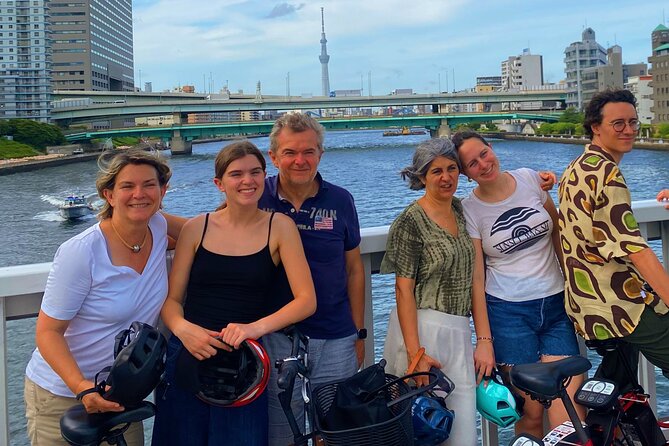
- Electric Bianchi bicycles: The bikes are described as easy to ride, a useful help on a three-hour city route.
- A seven-person maximum: A small group gives the guide a better chance to keep the ride together.
- Tsukiji snack break: Food is not included, but you have time to buy a quick bite or sashimi.
- More than the famous sights: The route includes Tsukishima Monja Street, Sumiyoshi Jinja, and backstreets that many visitors miss.
- Kiyosumi Gardens included: The garden entrance is covered in the tour price.
- Optional Fukagawa temple visit: You can enter Naritasan Fukagawa Fudodo Honden for ¥1,000 in cash, or finish the tour without going inside.
Why an e-bike is a smart way to see bayside Tokyo
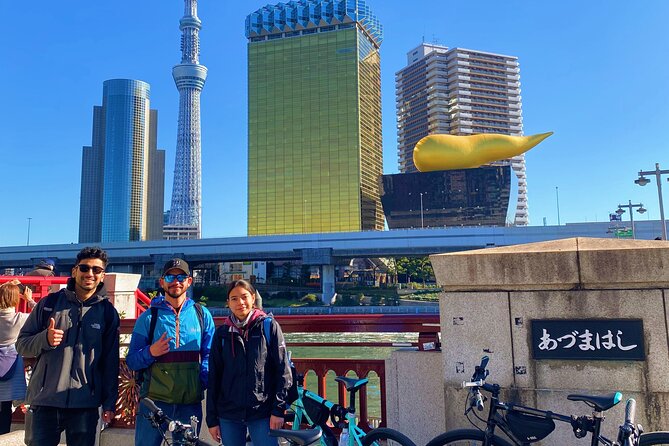
Tokyo is huge, and its central districts can feel disconnected when you move only by train. An e-bike joins the dots. You begin near Hibiya and Ginza, pass through Tsukiji, cross into older neighborhood streets, and finish in Koto City near Fukagawa Fudodo.
That change of scenery is the real value. Ginza gives you grand commercial Tokyo. Tsukiji brings food and religious architecture. Tsukishima adds a traditional local flavor. Kiyosumi offers gardens and quiet paths. You get several versions of the city in one outing.
The electric assist matters. The tour covers a fair amount of ground in three hours, and the bikes have been praised for being easy to ride. A Bianchi bicycle is supplied, according to the tour information and rider feedback. Still, an electric bicycle is not a motorbike. You will pedal, steer, stop, and stay alert around traffic.
The group size is limited to seven people. That is one of the strongest practical features here. A smaller group is easier to manage at intersections, and you are less likely to spend the entire ride watching the back of a long bicycle line.
A few more Tokyo bookings worth comparing
- Tokyo Guided Small-Group Biking Tour
★ 5.0 · 1,250 reviews - Tokyo Great Cycling Tour
★ 5.0 · 811 reviews - Tokyo Top Highlights 3h Guided E-bike Tour
★ 5.0 · 714 reviews
Starting in Ginza, Tokyo’s polished center
The meeting point is at 1-3 Hibiya Park in Chiyoda City. From there, the route heads toward Ginza, one of Tokyo’s most famous shopping districts.
Your stop in Ginza is short, about 10 minutes, so think of it as a first look rather than a shopping visit. The guide can help you notice the contrast between the district’s luxury storefronts and the surrounding central Tokyo streets. You will not have time for a serious browse, so save Ginza shopping for another part of your trip.
This opening section also helps set the pace. You are getting used to the bicycle, the guide’s signals, and the rhythm of riding as a group. If you are new to city cycling, pay close attention here. Tokyo traffic can be demanding, even when the route is handled safely.
The tour is conducted in English. Guides Nao and Sho have been singled out for clear explanations, enthusiasm, and safe handling of busy streets. Guide quality matters greatly on a bicycle tour, and those details are more useful than a long list of landmarks.
Kabuki-za and the edge of Tsukiji
Next comes Kabuki-za, the famous theater for classical Japanese kabuki. The stop lasts about 10 minutes and does not include a performance or theater admission.
That short visit is still worthwhile because the building gives you a strong cultural marker in the middle of modern Ginza. You can see where one of Japan’s most distinctive theater traditions is presented, then continue on two wheels instead of spending the morning indoors.
Do not book this tour expecting a theater tour. Kabuki-za is a sightseeing stop from the outside, with free admission listed for the visit. If you want a performance, that requires separate planning.
From Kabuki-za, the route moves toward Tsukiji, where the mood changes quickly. The area is closely tied to Tokyo’s food culture, and the next two stops give you more time to walk and eat.
Tsukiji Hongwanji, a striking pause by the market
Tsukiji Hongwanji Temple receives about 15 minutes. It is a Buddhist temple in the heart of Tsukiji, and it offers a useful break from the commercial energy around the market.
The stop is not just a photo opportunity. It gives you a chance to see how a religious site fits into an ordinary working neighborhood. You can look around, listen to the guide, and reset before the market section.
Because the schedule is tight, keep your visit focused. You will not have unlimited time for detailed exploration. The appeal is the combination: temple, food market, and neighborhood streets within a few minutes of one another.
This is also a good point to remember that the tour is not a formal food tour. The guide takes you to the market area, but food and drinks are not included. You pay for your own snack.
Same corner of Tokyo, a completely different plan:
- Mt Fuji and Hakone 1-Day Bus Tour Return by Bullet Train
★ 5.0 · 26,383 reviews - 1-Day Tokyo Bus Tour
★ 5.0 · 14,250 reviews - Tokyo: TOKYO SKYTREE® Admission ticket
★ 4.5 · 11,192 reviews - Tokyo: teamLab Planets TOKYO Digital Art Museum Entry Ticket
★ 4.6 · 9,779 reviews
Tsukiji Fish Market and the quick food stop
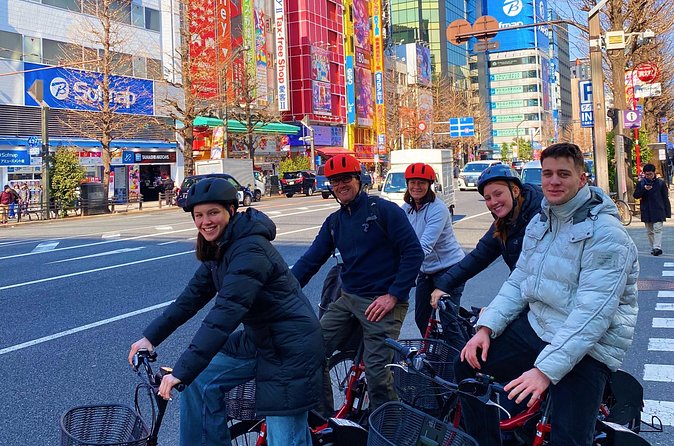
The Tsukiji Fish Market stop lasts about 20 minutes. This is one of the most useful parts of the route because it gives you a chance to step off the bikes and try something local.
You might buy a small snack, and sashimi is one possibility mentioned in the tour feedback. Keep your expectations sensible. Twenty minutes is enough for a quick taste, not a long market meal or a full crawl through every stall.
The stop also makes the tour feel less rushed. A three-hour bicycle ride needs moments when you can stand, look around, and eat. Tsukiji provides that natural pause.
Bring payment for your own food. The tour price does not cover food or drinks. It is also wise to avoid ordering something that needs a long wait, since the group will continue on schedule.
Tsukishima Monja Street and a more local Tokyo
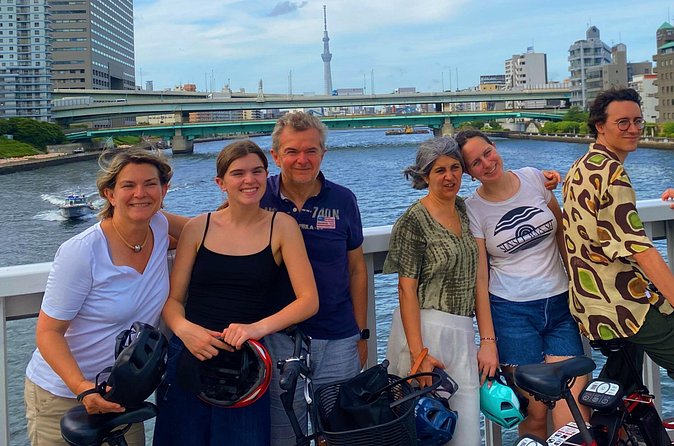
The route then pedals toward Tsukishima Monja Street, with about 10 minutes to cycle through the area. Monjayaki is a Tokyo specialty associated with Tsukishima, although the tour does not include a cooking session or meal there.
This stop is valuable because it takes you away from the best-known central sights. You are seeing a neighborhood connected with a particular local dish, rather than simply checking off a major monument.
The tour information also points to a mini fisherman’s island as a memorable and unusual part of the route. That phrase refers to the distinctive small-island character of the area, where waterways and older streets help show a side of Tokyo many people would not find by following the standard sightseeing circuit.
The stop is brief, so treat it as a moving introduction. If monjayaki is high on your food list, return to Tsukishima later for a proper meal.
Sumiyoshi Jinja and the feel of an older neighborhood
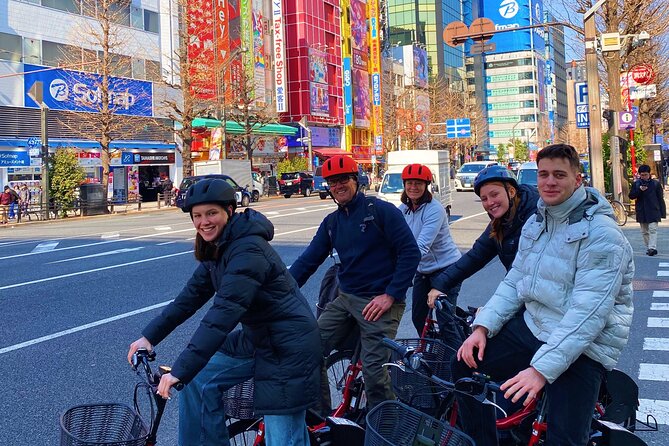
At Sumiyoshi Jinja, you spend about 10 minutes visiting a local shrine in a traditional Japanese town setting. This is another short stop, but it adds balance to the route.
The shrine gives you a quieter cultural moment after the market and city streets. You can take in the gate, grounds, and local atmosphere while the guide explains what you are seeing. The tour description does not promise a long religious or historical lecture, so expect a brief visit rather than a structured temple lesson.
This is where the route feels most useful for repeat visitors to Tokyo. You are not only moving between major attractions. You are also seeing smaller places that fit into daily neighborhood life.
The ride through backstreets is repeatedly praised as a strong part of the experience. That is a good reason to choose this tour over a bus route. A bicycle lets you notice street-level details and move through areas that may not have a subway stop beside them.
Kiyosumi Gardens, the tour’s calm center
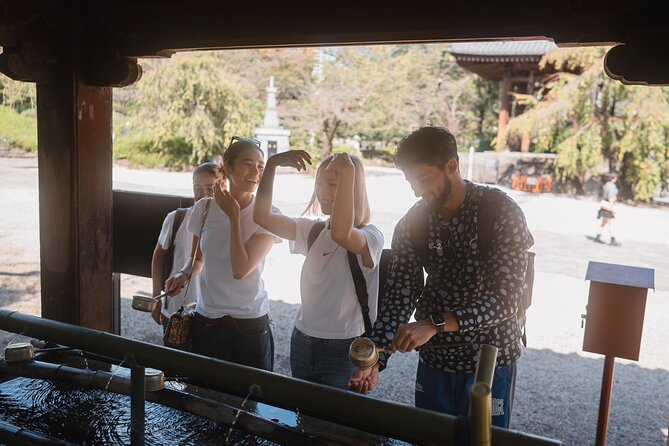
Kiyosumi Gardens is the longest stop, at about 25 minutes, and the entrance fee is included. You leave the bicycles and walk through the grounds.
This is a welcome change of pace. After several urban stops, the garden gives you room to slow down and look around without traffic moving beside you. The visit is not merely a quick photo stop because you have enough time for a proper walk, though you should not expect to explore every corner in depth.
The included admission improves the tour’s value. You are paying for the bicycle, guide, and access to the garden, not just for a ride past the entrance. The garden also gives the three-hour route a clear middle or late-tour pause, with a different mood from Ginza and Tsukiji.
You should be comfortable walking for 25 minutes after cycling. The tour calls for moderate physical fitness, and this stop is part of the reason. It is not a difficult hike, but the outing involves repeated mounting, riding, stopping, and walking.
Optional Fukagawa Fudodo and the finish in Koto City
The tour finishes at Naritasan Fukagawa Fudodo Honden, also known as Fukagawa Fudodo, the Tokyo branch temple of Naritasan. The optional visit lasts about 20 minutes.
Entrance costs ¥1,000 and must be paid in cash. This fee is not included. If you do not want to enter, you can finish the tour at this point without paying the extra charge.
That flexible ending is helpful. Some riders will want one last religious site, while others may have had enough sightseeing after three hours. The end point is at 1-17-13 Tomioka in Koto City, not back at the starting point, so plan your next move from there.
The tour is near public transportation, according to the supplied information. Still, you should check your route before booking, since the start and finish are in different parts of Tokyo. A one-way bicycle tour works well for sightseeing, but it is less convenient if you need to return to your starting area immediately.
What the $87.96 price really covers
At $87.96 per person, this is not the cheapest way to see Tokyo. The price makes more sense if you place value on the guide, the electric bicycle, the small group, and the route planning.
You receive use of the electric bike, an English-speaking guide, and admission to Kiyosumi Gardens. The route also saves you the work of planning how to connect Ginza, Tsukiji, Tsukishima, and Koto City on your own.
Food is extra, and the optional Fukagawa Fudodo entrance costs another ¥1,000 in cash. Those costs are easy to manage, but you should know about them before you arrive.
For a first visit, the tour can be a good orientation to Tokyo’s central bayside. You see famous names, local streets, a food market, a garden, and a shrine without spending the day changing trains. For a rider who already knows these districts well, the value depends on how much you want a guided bicycle outing rather than independent exploration.
The tour is booked, on average, 67 days ahead. That suggests you should reserve early if your Tokyo dates are fixed, especially because the group is limited to seven people.
Who will enjoy this ride most
I would recommend this experience to you if you want to cover several districts in a short time and prefer street-level sightseeing to a vehicle tour. It suits couples, friends, families with comfortable riders, and solo visitors who like having a guide while exploring.
It is also a strong choice if you want help handling Tokyo’s busy streets. Nao and Sho are praised for keeping riders safe and for explaining the areas along the way. The small group should make the experience more personal than a large cycling procession.
This is less suitable if you dislike riding in traffic, need a leisurely pace, or want long visits at each attraction. The stops are carefully timed. Ginza, Kabuki-za, Tsukishima, and Sumiyoshi Jinja each receive only about 10 minutes, so you are sampling rather than fully touring them.
You also need moderate physical fitness. The electric assist reduces effort, but it does not remove the need to cycle for much of the three hours. Wear practical clothing and shoes, and expect to walk during the garden and temple visits.
Practical details before you book
You receive confirmation when you book, and the tour uses a mobile ticket. The meeting point is 1-3 Hibiya Park, Chiyoda City, Tokyo 100-0012. The finish is at Fukagawa Fudodo, 1-17-13 Tomioka, Koto City.
The activity requires good weather. If poor weather causes cancellation, you can choose another date or receive a full refund. You can also cancel for a full refund up to 24 hours before the start time. Cancellations or changes made less than 24 hours before the start are not refunded or accepted.
Check the local time carefully because the cancellation cut-off uses Tokyo time. Bring enough money for snacks at Tsukiji and ¥1,000 in cash if you want to enter Fukagawa Fudodo.
Should you book the Tokyo bayside e-bike tour?
Book it if you want an efficient, active introduction to Tokyo beyond the usual major sights. The best parts are the easy electric bicycles, the small group, the Tsukiji food pause, and the route through neighborhoods you might not otherwise reach.
Skip it if you want a slow temple tour, a long market meal, or a completely traffic-free ride. The schedule is brisk, and the start and finish are in different districts.
For most visitors who are comfortable on a bicycle, I see this as a smart three-hour use of your Tokyo time. It gives you famous landmarks, local streets, food, gardens, and a guide who can make the city easier to read.
FAQ
How long does the Tokyo e-bike tour last?
The tour lasts approximately three hours.
Where does the tour start?
The meeting point is 1-3 Hibiya Park, Chiyoda City, Tokyo 100-0012, Japan.
Where does the tour finish?
The tour ends at Fukagawa Fudodo, 1-17-13 Tomioka, Koto City, Tokyo 135-0047, Japan.
How many people can join the tour?
The tour has a maximum of seven participants.
Is the bicycle included?
Yes. The tour includes use of an electric bicycle.
Is Kiyosumi Gardens admission included?
Yes. Admission to Kiyosumi Gardens is included in the tour price.
Is food included at Tsukiji Fish Market?
No. Food and drinks are not included. You can use the market stop to buy a quick snack.
How much does the optional Fukagawa Fudodo visit cost?
Entry to Fukagawa Fudodo costs ¥1,000. The fee is optional and must be paid in cash.
More 3-Hour Experiences in Tokyo
- 3h Tokyo E-Bike Tour: Hidden Gems, and Local Life with guide
★ 5.0 · 670 reviews - Tokyo: 3-Hour Bike or E-Bike City Highlights Tour
★ 4.8 · 435 reviews - Tokyo: 3-hour Guided E-Bike Tour of the City’s Hidden Gems
★ 4.8 · 251 reviews - 3-Hour Tokyo Pub Crawl Nightlife Welcome Guided Tour in Shibuya
★ 5.0 · 209 reviews
New on our Tokyo list
- Sumi-e Experience in a relaxing green tea shop in Tokyo★ 5.0 · 3 reviews
- Tokyo : Kamikaze Street Drift Ride★ 5.0 · 3 reviews
- Private Zen Meditation in English in Shinjuku, Tokyo★ 5.0 · 3 reviews
- Onsen Spa in Tokyo and Asakusa Bar Hopping with Local Guide★ 5.0 · 3 reviews
- Easy for everyone! Now you can play handmade mini shamisen and show off to everyone! Musical instruments, sweets and live music★ 5.0 · 3 reviews
- Tokyo: Private Tsukiji Street Food & Sake with Local Guide★ 5.0 · 3 reviews
- Mt Fuji Exploration Tour with Free Japanese Kusa Mochi from Tokyo★ 4.5 · 3 reviews
- Tokyo Tsukiji Fish Market Walking and Exploring Hidden Gems Tour★ 5.0 · 3 reviews
Cycling Tours, compared.
3h Tokyo E-Bike Tour: Hidden Gems, and Local Life with guide
Read our review →
3-hour Guided E-Bike Tour of the City’s Hidden Gems
Read our review →
3-Hour Bike/E-Bike Tour of the City’s Highlights
Read our review →Browse the lists this tour appears in