
Reviewed · CYCLING TOURS
Tokyo: 3h Private E-bike Tours, Starting at Your Hotel
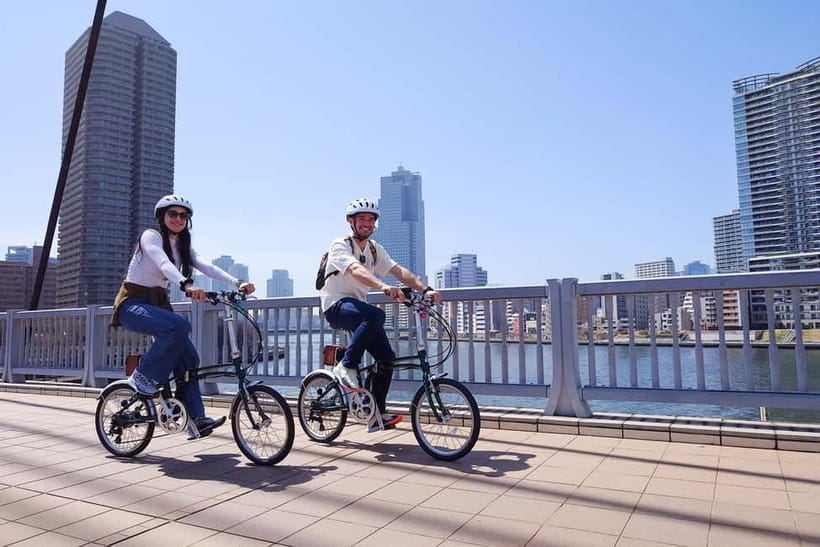
Tokyo is enormous, but a private e-bike tour lets you cover real ground without spending the day underground on trains. You can roll from skyscrapers and famous crossings to quiet lanes, shrines, riverside paths, and old neighborhoods in a single outing. Starting and ending at your hotel makes the whole experience unusually easy.
I especially like the electric assistance, which takes the sting out of Tokyo’s hills, and the personal attention from Kazuma, the English-speaking guide. He adjusts the bikes, explains what you are seeing, and has taken memorable photos for riders along the way. The main drawback is that three hours is not enough for every stop on the long menu of possible sights, so you will need to choose a sensible route.
In This Review
- Key points to know before you book
- Why a Tokyo e-bike tour works so well
- Meeting Kazuma at your hotel
- Tokyo Metropolitan Government Building and Shinjuku
- Shibuya, Aoyama, and the Olympic district
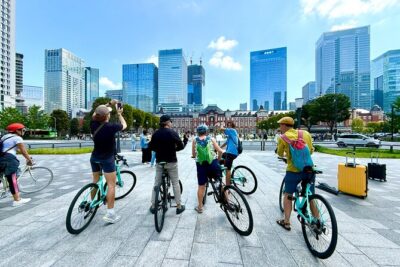
- The Imperial Palace, Tokyo Station, and Nihonbashi
- Tsukuda, Tsukishima, and Tokyo Bay side streets
- Zojo-ji Temple and Tokyo Tower
- Asakusa, the Sumida River, and Tokyo Skytree
- What riding the e-bikes is really like
- The value of $141 per person
- Who should book this ride
- Should you book the Tokyo private e-bike tour?
- FAQ
- Where does the Tokyo e-bike tour start and finish?
- How long is the tour?
- What language does the guide speak?
- Which Tokyo sights can the tour visit?
- Are food and drinks included?
- Are the bikes electric?
- Who cannot join the tour?
- What should I wear?
- Can I change the start time or request a special stop?
Key points to know before you book
- Hotel-to-hotel convenience: Meet Kazuma in your lobby five minutes before pickup, then finish back at your hotel or an agreed drop-off point.
- A useful 15 to 20 km range: You see far more than on a walking tour, but still stop often for short explanations, water, and photos.
- A genuinely private route: Ask for Shibuya, the Imperial Palace, Asakusa, local streets, or a quieter mix of Tokyo neighborhoods.
- E-bikes make the distance manageable: The motor assists as you pedal, so the ride feels relaxed rather than athletic.
- Kazuma is the key part of the experience: He is praised for careful riding, clear English, patience, historical context, and thoughtful route changes.
- Check the fit and clothing rules: Riders should be 145 to 185 centimeters tall, under 100 kilograms, and wear closed shoes and practical clothing.
Why a Tokyo e-bike tour works so well
Tokyo can feel like a collection of separate cities. Shinjuku has towers and bright signs. Imperial Palace areas feel formal and open. Asakusa brings older temple streets and traditional landmarks. Between them are residential lanes, office districts, waterways, and small shrines that are easy to miss from a train window.
An e-bike links these pieces together. You can move quickly enough to see several districts, but slowly enough to notice the change from one neighborhood to the next. I like this middle ground. Walking gives you detail but limited range. A taxi gives you range but not much connection to the street. A bicycle gives you both, with the electric motor helping when the road tilts upward.
The ride covers about 15 to 20 kilometers in three hours. That is a respectable distance, but not a race. The route includes several short stops for commentary and drinks, so you are not pedaling continuously. Your guide sets the pace, and the private format means you can ask to pause, change direction, or spend more time at a place that interests you.
A few more Tokyo bookings worth comparing
- Tokyo Guided Small-Group Biking Tour
★ 5.0 · 1,250 reviews - Tokyo Great Cycling Tour
★ 5.0 · 811 reviews - Tokyo Top Highlights 3h Guided E-bike Tour
★ 5.0 · 714 reviews
Meeting Kazuma at your hotel
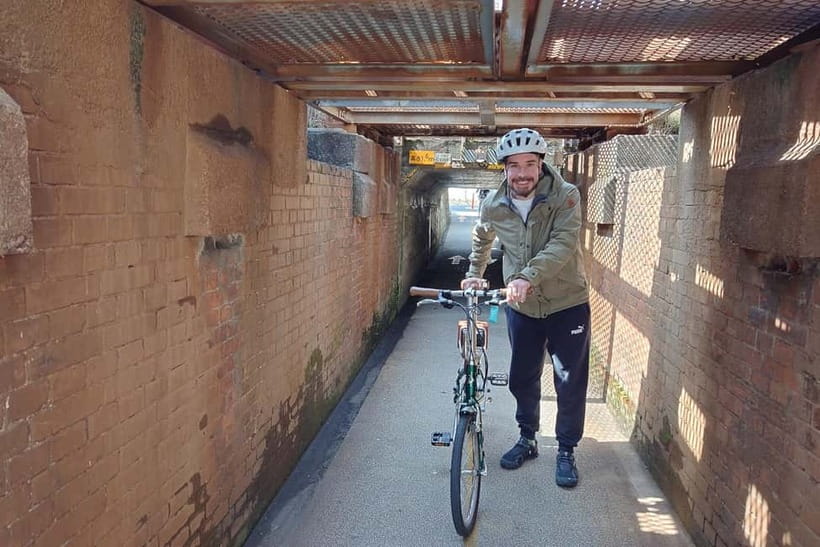
The simplest part of the tour is also one of its smartest features. You do not need to find an unfamiliar station exit or explain a meeting point to a taxi driver in Japanese. Kazuma comes to your hotel lobby with a bike helmet, and you should be ready about five minutes before the scheduled pickup.
The advertised pickup and drop-off areas cover 23 locations, including Shinjuku, Shibuya, Ginza, Marunouchi, Asakusa, Ueno, Akihabara, Roppongi, Shinagawa, Nihonbashi, and several other central Tokyo districts. If your hotel falls outside the normal range, the operator can discuss another starting point, though an extra charge may apply.
At the start, expect safety instructions and bike adjustments. One rider described Kazuma adjusting each bicycle to fit the group before setting off. That small step matters, especially if you are not used to cycling in a large city or if different members of your group have different heights.
You will communicate with the operator by WhatsApp, iMessage, or SMS. Keep an eye on those messages before the tour, especially if you request a different start time or a particular area.
Tokyo Metropolitan Government Building and Shinjuku
A listed photo stop at the Tokyo Metropolitan Government Building lasts about 10 minutes. It is a natural starting point for a tour that wants to show you Tokyo’s scale. The building rises above Shinjuku, one of the city’s major business and entertainment districts, and the surrounding streets quickly show how modern Tokyo operates.
Nearby, Shinjuku Omoide Yokocho, or Memory Lane, offers a sharp change in mood. Its narrow lanes and small eating places feel far removed from the broad avenues and office towers. The tour does not include food or drinks, so this is a place to look, listen, and take in the atmosphere rather than sit down for a meal unless you arrange extra time.
Shinjuku is also one of the busier parts of the possible route. You should expect more traffic, more people, and more stops at crossings than on a quiet riverside stretch. That is part of the point, but it may not suit you if you want a calm ride from start to finish.
Shibuya, Aoyama, and the Olympic district
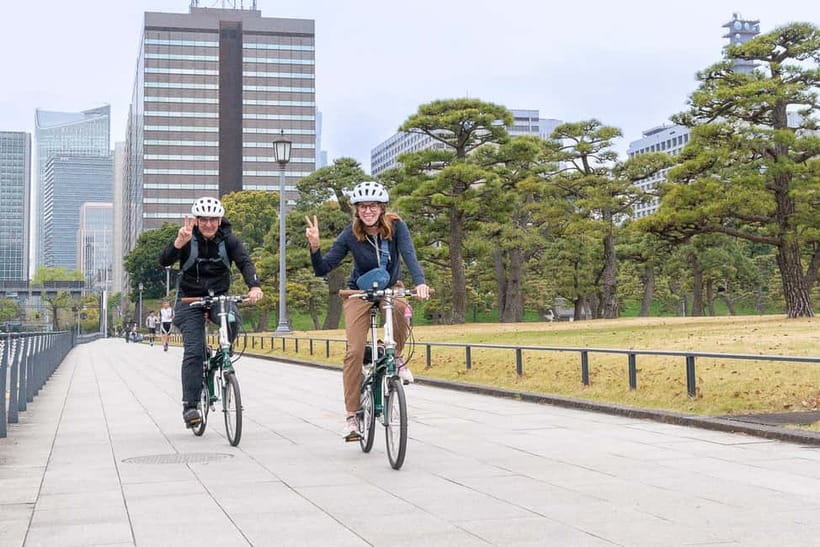
A route through Shibuya can include the famous Shibuya Crossing, where the city’s pedestrian flow becomes the attraction. Seeing it by bicycle gives you a useful sense of how streets, side roads, and major avenues fit together, even if the crossing itself is a brief stop rather than a long viewing session.
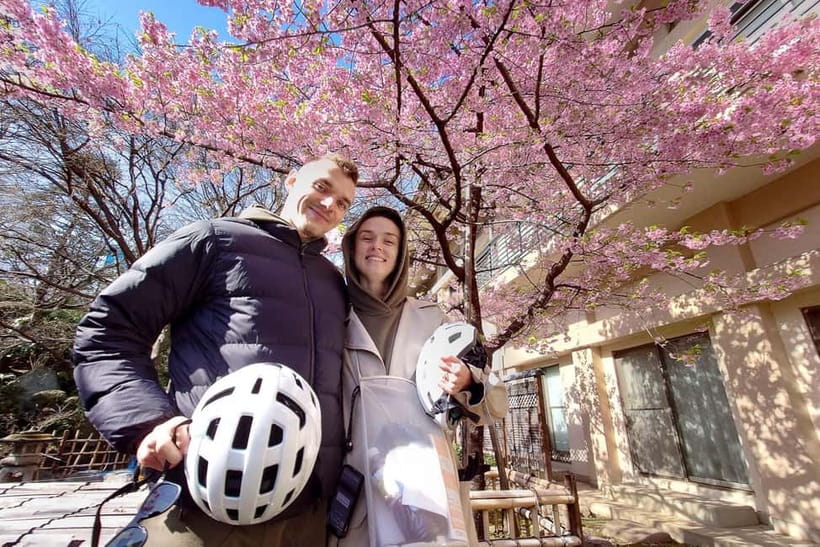
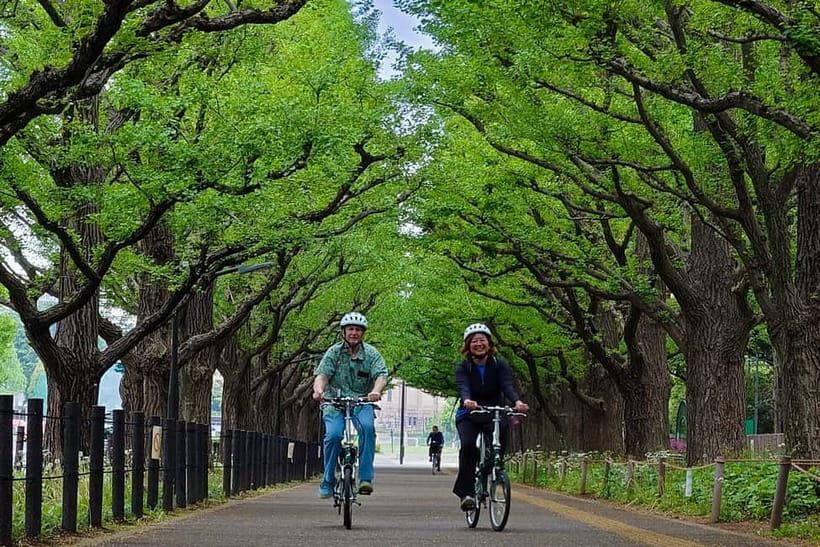
From Shibuya, the ride may continue toward Aoyama, the Gaien Ginkgo Tree Avenue, and Aoyama Cemetery’s cherry blossom street. These areas offer a quieter side of central Tokyo, with broad avenues and more open space. The exact seasonal appearance will depend on when you visit, so do not book this route expecting blossoms or autumn color outside their usual periods.
The National Stadium, built for the Tokyo Olympics, may also be included. It gives the route a modern architectural marker and helps connect Tokyo’s sporting identity with its older religious and neighborhood districts. Because the tour is private, you can tell Kazuma if you prefer city design, sports, gardens, or back streets.
Same corner of Tokyo, a completely different plan:
- Mt Fuji and Hakone 1-Day Bus Tour Return by Bullet Train
★ 5.0 · 26,383 reviews - 1-Day Tokyo Bus Tour
★ 5.0 · 14,250 reviews - Tokyo: TOKYO SKYTREE® Admission ticket
★ 4.5 · 11,192 reviews - Tokyo: teamLab Planets TOKYO Digital Art Museum Entry Ticket
★ 4.6 · 9,779 reviews
The Imperial Palace, Tokyo Station, and Nihonbashi
The Imperial Palace area is one of the strongest choices for a first ride in Tokyo. Broad spaces around the palace contrast with the dense blocks elsewhere, and the route can show you how the imperial center sits within the modern capital.
Hibiya Park is another possible stop. It is described as Tokyo’s first Western-style park, which makes it a useful place to talk about the city’s changes during Japan’s modernization. The park also provides a break from traffic and concrete.
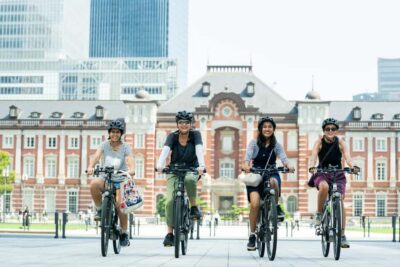
From there, the route may pass Tokyo Station and Nihonbashi Bridge. These landmarks help explain Tokyo’s commercial and transport history. Nihonbashi, in particular, connects the old road network with the city’s present-day business core.
Do not expect a full museum-style explanation at each location. The tour uses short stops and commentary while moving through the city. That format is best for getting a broad understanding and spotting places to revisit later, not for spending an hour at every major landmark.
Tsukuda, Tsukishima, and Tokyo Bay side streets
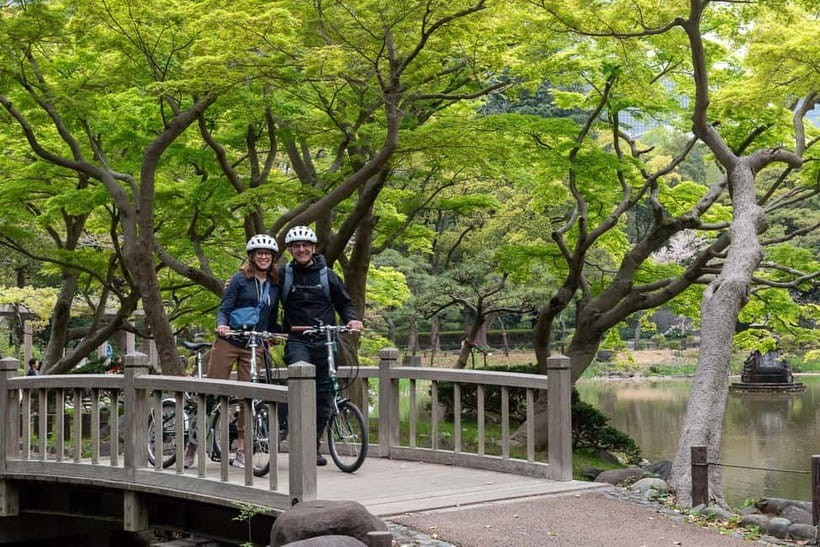
Tsukuda Island and Tsukishima offer a different feel from Shinjuku or Marunouchi. These areas bring waterways, older local streets, and the possibility of seeing how traditional neighborhood life sits beside Tokyo’s newer development.
Tsukishima Monja Street is a special stop for food-minded riders. Monjayaki is a local Tokyo specialty, cooked on a hot plate and eaten directly from the griddle. Food is not included in the tour, and the three-hour schedule may not allow a sit-down meal, but Kazuma can help you understand why this street matters and you can return later if you want to eat.
This part of the ride may appeal most if you have already seen the main postcard sights. It gives you a better sense of Tokyo as a lived-in city, not just a collection of famous buildings.
Zojo-ji Temple and Tokyo Tower
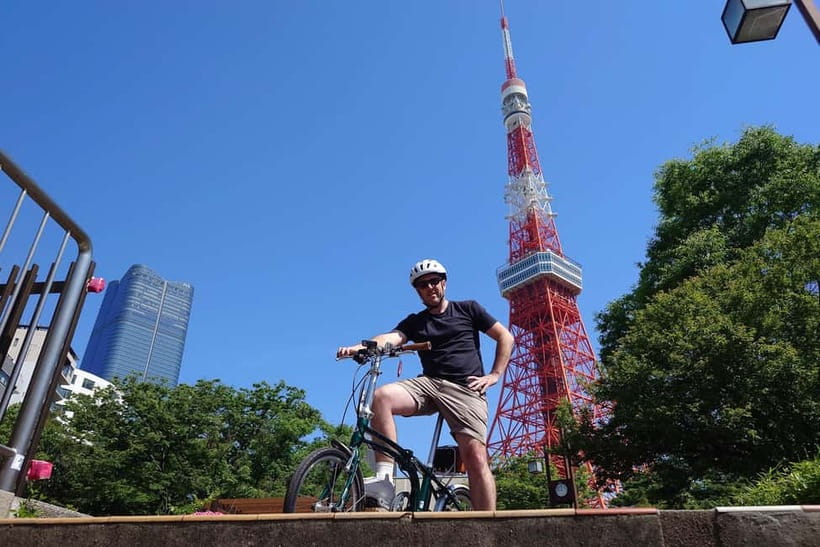
Zojo-ji Temple and Tokyo Tower make a natural pair. The temple offers a traditional religious setting, while the tower represents postwar Tokyo and the city’s modern skyline. Together, they show the layered character of central Tokyo in a single view.
The route may also include Shibakoen, the park area around Tokyo Tower. This can be a pleasant place for a pause, but the actual time available depends on the rest of your route. If Tokyo Tower is a priority, tell Kazuma before departure so he can build the ride around it rather than trying to squeeze it in at the end.
You should also remember that this is a cycling tour, not a tower admission tour. The experience focuses on reaching and viewing the sites from street level. Any entrance ticket or extended visit would need to be handled separately.
Asakusa, the Sumida River, and Tokyo Skytree
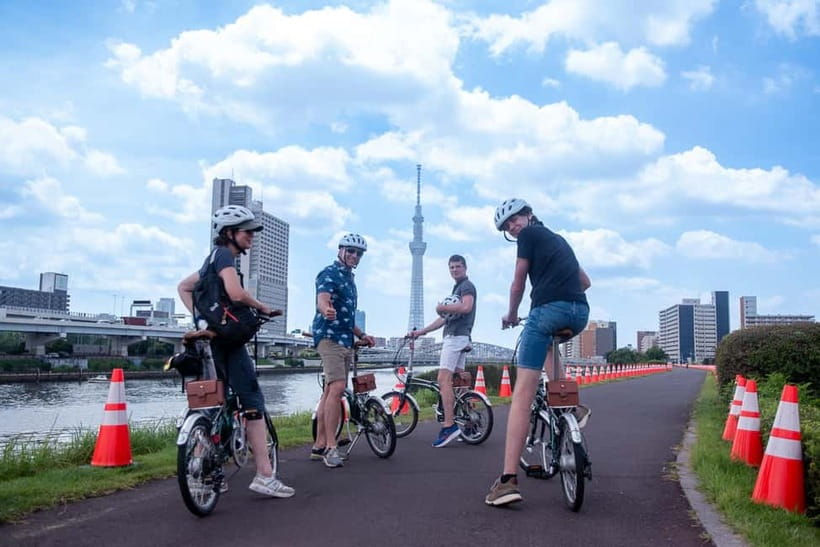
Asakusa’s Kaminarimon Gate is one of Tokyo’s most recognizable sights. The gate leads toward Senso-ji, although the supplied route information specifically names Kaminarimon rather than promising a full temple visit. The area can be crowded, so your guide may use nearby streets and stopping points carefully.
The Sumida River and Tokyo Skytree provide a strong eastern Tokyo option. Riverside riding can feel more open than the central business districts, and the Skytree gives you a clear visual landmark. You may also pass through Kitasenju, a local neighborhood with a more everyday feel than the headline attractions.
This route is particularly good if you want to compare old Tokyo, residential Tokyo, and the city’s modern height in one outing. It is also one of the options that may involve more distance from hotels in western or southern Tokyo, so ask about the route and any extra charge before confirming special requests.
What riding the e-bikes is really like
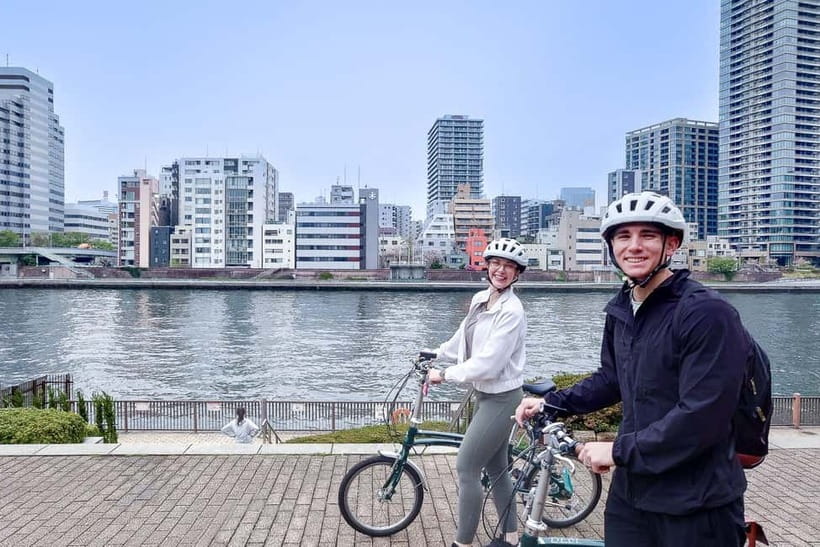
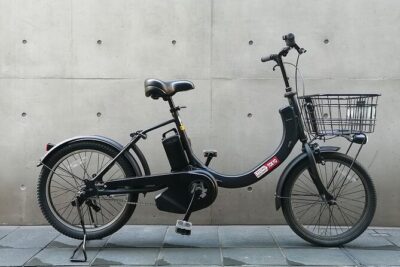
The bicycles use motor assistance when you pedal. You still ride the bike, steer, stop, and pay attention to the road, but the motor reduces the effort needed for hills and longer stretches.
That makes the tour suitable for people who can ride a bicycle but do not want a hard workout. Several riders described the bikes as easy to ride, and one novice cyclist felt safe throughout the outing. Kazuma is also praised for putting safety first and keeping a comfortable pace.
This is not a permission slip to switch off your attention. Tokyo traffic, crossings, pedestrians, and narrow streets still require care. You cannot take photos or videos while cycling. Pull over at stops instead, and let Kazuma manage the route while you focus on riding.
The operator says the bikes are best suited to people between 145 and 185 centimeters tall and are not suitable for anyone over 100 kilograms. Children under 10 cannot join. These limits are practical equipment and safety restrictions, not minor booking details.
Wear comfortable trousers or other practical clothing, and choose sneakers or sturdy closed shoes. High heels, sandals, flip-flops, and skirts are not allowed. Smoking, alcohol, and drugs are also prohibited.
The value of $141 per person
At $141 per person, this is not the cheapest way to see Tokyo. You could walk through one district for very little money, or use the excellent train system to move between major sights.
The comparison changes when you consider what is included: three hours, a private English-speaking guide, an e-bike, helmet, safety instruction, insurance, and hotel pickup. You are also paying for route planning and the ability to shape the outing around your own interests. For a couple or small family that values personal attention, the price can be reasonable.
I would not choose this tour mainly to save money. I would choose it to save time, avoid a complicated meeting point, and see more than you could comfortably cover on foot. It is especially useful on your first day in Tokyo, when a guided ride can help you understand how the central districts connect.
Extra charges may apply for a changed start time, a longer duration, or a request to visit places far outside the original route. Ask about those costs before you commit to a custom plan.
Who should book this ride
I would recommend it to adults, families with children aged 10 or older, and friends who want a private introduction to Tokyo without committing to a demanding cycling excursion. It is also a strong choice if you have limited time and want to see several areas in one morning or afternoon.
The tour suits you if you can ride a bicycle confidently enough to manage city streets and if you enjoy asking questions along the way. Kazuma’s patience, clear English, historical explanations, and careful riding are repeatedly highlighted, making him a particularly good fit for first-time visitors who want context rather than a simple ride.
You may want another activity if you dislike traffic, cannot meet the height and weight requirements, or want long indoor visits at museums, temples, or observation decks. Three hours passes quickly, and the tour is designed for movement with short stops, not extended sightseeing at one site.
The operator offers free cancellation up to 24 hours before departure and allows you to reserve now and pay later. Check the available start times when booking, then use the message service to confirm your hotel and any route priorities.
Should you book the Tokyo private e-bike tour?
Book it if you want a flexible, active introduction to Tokyo and value a guide who can adjust the plan as you ride. I especially like the hotel pickup, the easy-to-manage e-bikes, and the chance to move from major sights to ordinary streets without organizing several separate train trips.
Before booking, choose your top two or three areas. Shibuya, the Imperial Palace, and Tokyo Tower make a strong central route. Asakusa, the Sumida River, and Tokyo Skytree create a good eastern route. Trying to include everything from Shinjuku to Asakusa in three hours may leave you with more time in motion and less time at the places you came to see.
For the right rider, this is a smart use of three hours and a lively way to get your bearings in Tokyo. Just arrive in proper shoes, keep your expectations focused, and tell Kazuma what you most want to see.
FAQ
Where does the Tokyo e-bike tour start and finish?
The tour starts at your hotel and can end at your hotel or an agreed drop-off location within the listed service areas. Meet the guide in the lobby five minutes before pickup.
How long is the tour?
The standard tour lasts three hours. The usual route covers about 15 to 20 kilometers.
What language does the guide speak?
The tour is available in Japanese and English. Kazuma is the named guide associated with the experience and is described as speaking excellent English.
Which Tokyo sights can the tour visit?
Possible areas include Shinjuku, Shibuya, the Imperial Palace, Tokyo Station, Nihonbashi, Tsukishima, Tokyo Tower, Zojo-ji Temple, Asakusa, Kitasenju, the Sumida River, and Tokyo Skytree. The private route is adjusted to your interests and available time.
Are food and drinks included?
No. Food and beverages are not included.
Are the bikes electric?
Yes. The e-bikes provide motor assistance as you pedal, which helps with hills and longer distances.
Who cannot join the tour?
Children under 10, people over 100 kilograms, and people shorter than 145 centimeters cannot join. The recommended height range is 145 to 185 centimeters.
What should I wear?
Wear practical clothing and closed shoes. High heels, sandals, flip-flops, and skirts are not allowed.
Can I change the start time or request a special stop?
Yes, you can request a different start time, longer duration, or visits to selected places. Additional charges may apply, especially for requests far outside the original route.
More 3-Hour Experiences in Tokyo
- 3-Hour Tokyo Pub Crawl Nightlife Welcome Guided Tour in Shibuya
★ 5.0 · 209 reviews - 3-Hour Small-Group Sushi Making Class in Tokyo
★ 5.0 · 166 reviews - 3-Hour Tokyo Private E-Bike Tour Starting from Your Hotel
★ 5.0 · 117 reviews - Tokyo Like a Local: Private & Personalised Experience (2-3 hours)
★ 4.5 · 81 reviews
New on our Tokyo list
- From Tokyo: Mount Fuji & Hakone Full Day Private Tour★ 4.9 · 25 reviews
- Tokyo Spectacular View Day-Cruise in 90 Minutes★ 5.0 · 25 reviews
- Real Tokyo Runner Club : Daikoku Car Meet Night Tour with JDM Car★ 5.0 · 25 reviews
- 2.5 Hour-Guided Cycle Tour in the Central Tokyo★ 5.0 · 25 reviews
- Ramen Making from Scratch +Akihabara Tour –Cooking Class★ 5.0 · 25 reviews
- [Self-Drive] Tokyo & Daikoku Custom Car Driving Tour★ 4.9 · 25 reviews
- Tokyo: 2-Hour Night Bike Tour of the City’s Hidden Gems★ 4.9 · 25 reviews
- Samurai themed Entertainment show in Shinjuku★ 4.5 · 25 reviews
Cycling Tours, compared.
3h Tokyo E-Bike Tour: Hidden Gems, and Local Life with guide
Read our review →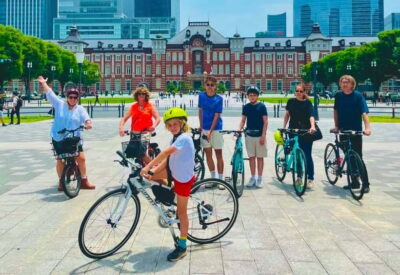
3-hour Guided E-Bike Tour of the City’s Hidden Gems
Read our review →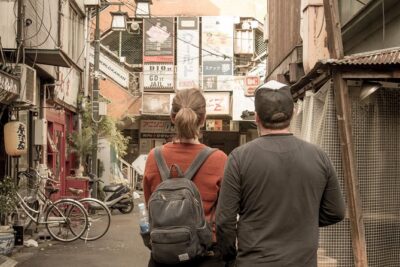
3-Hour Bike/E-Bike Tour of the City’s Highlights
Read our review →Browse the lists this tour appears in