
Reviewed · SAMURAI & NINJA EXPERIENCES
Tokyo : Authentic Samurai Experience in a Private Space.
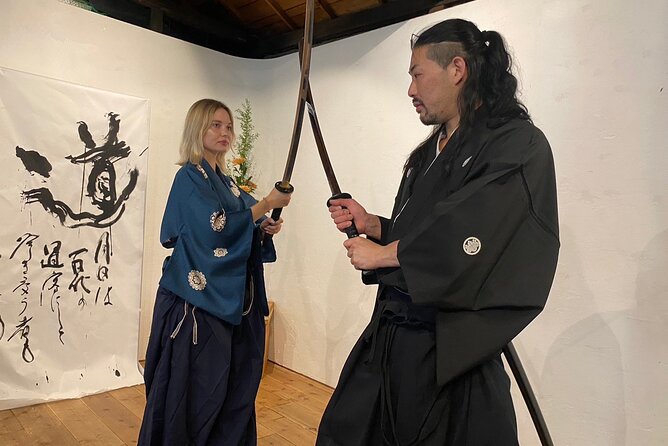
The sharpest part of this Tokyo experience is the chance to handle a real samurai sword in a private old Japanese house, then face a samurai in a controlled practice bout. This is not a stage show where you only pose beside a prop. You learn how to stand, draw, sheath, and swing the blade under careful instruction.
I like the small group of no more than three people, which gives you room to ask questions and receive corrections. I also like the gentle finish: after the sword work, you change pace with Japanese tea, conversation, and photos in a traditional setting. The main consideration is the $322 price for 90 minutes, so this makes the most sense if hands-on culture is a major part of your Japan trip.
In This Review
- Key points at a glance
- Inside the old house, the experience begins
- Kimono first, sword second
- Bushido explained without requiring prior knowledge
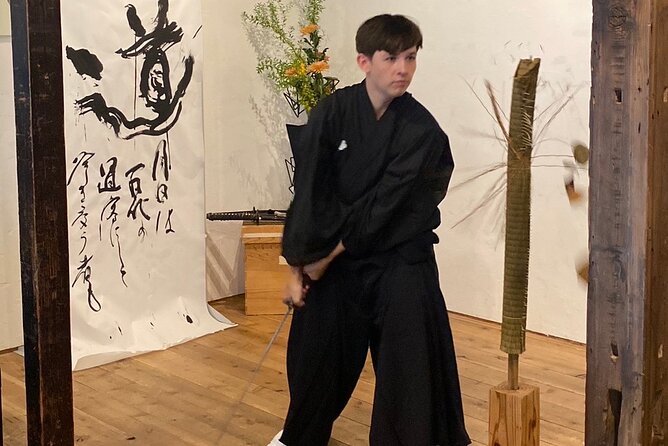
- Learning to draw, hold, and swing the katana
- The final samurai encounter
- Tea, questions, and a quieter finish
- How much value do you get for $322?
- Who should book this samurai session?
- Practical advice before you go
- Is this the right Tokyo cultural experience for you?
- FAQ
- Where does the samurai experience take place?
- How long does the experience last?
- How many people can join the group?
- What languages does the instructor speak?
- Is a kimono included?
- Will I handle a real sword?
- Who should not take part?
Key points at a glance
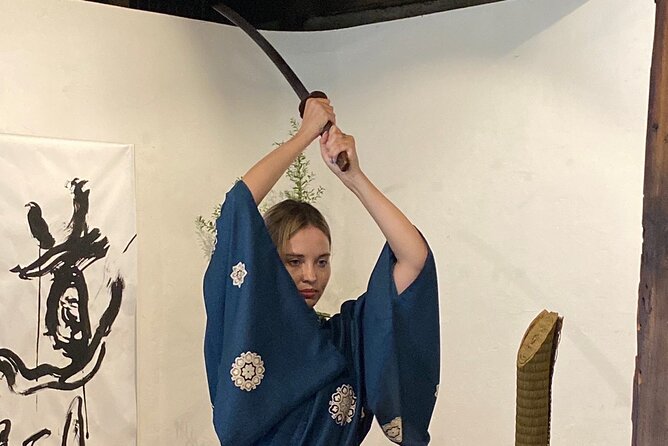
- Handle a real sword: Learn basic sword etiquette, drawing, sheathing, stance, and cutting motions.
- Dress in formal samurai clothing: The session begins with a kimono dressing experience, with help from Yukari.
- Train in a tiny group: The limit of three participants allows personal guidance from the instructor.
- Face a real samurai: Finish with a safe, supervised sword encounter rather than only a demonstration.
- Enjoy tea in an old house: The quiet tea service gives you time to ask about Bushido and Japanese culture.
- Bring home traditional photos: The setting and clothing create the kind of Japanese portrait many visitors hope to capture.
Inside the old house, the experience begins
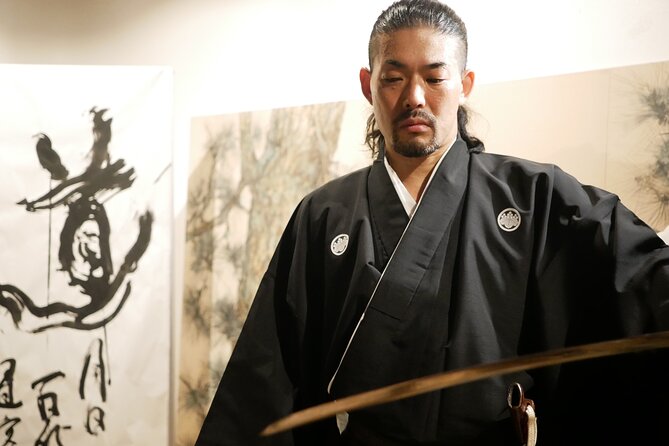
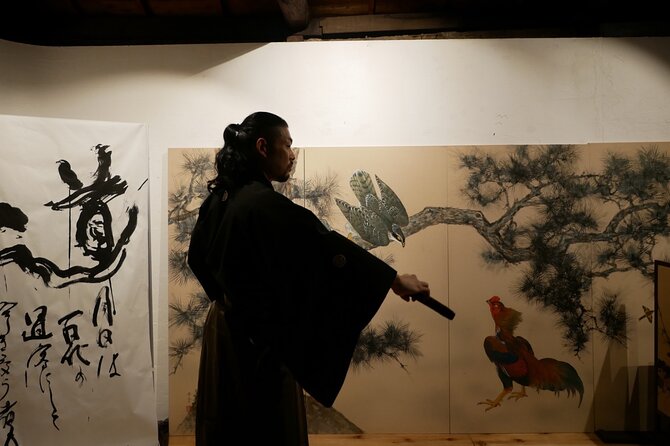
You meet near a signboard and follow its arrow through the entrance. The venue is an old private Japanese house, and that setting does much of the work. Instead of a modern activity studio, you begin in a place that gives the clothing, manners, tea, and sword lesson a more convincing context.
The program lasts 90 minutes. That is long enough for several distinct parts, but not so long that the physical practice becomes exhausting. Because the group is capped at three, the tone should feel closer to a private lesson than a large cultural demonstration.
The instructors teach in Japanese and English. The lead teacher is identified in the experience as Musashi-oka, while Yukari helps with dressing, photographs, and tea. The teaching style is patient and friendly, with clear corrections for beginners. Even if sword work is completely new to you, you are not expected to arrive with prior training.
More samurai and ninja sessions:
- Tokyo: Samurai Ninja Museum Guided tour and Experience
★ 4.6 · 1,010 reviews - Tokyo: Samurai Sword & Archery Class from Samurai Descendant
★ 5.0 · 603 reviews - Best Samurai Experience in Tokyo
★ 5.0 · 458 reviews
Kimono first, sword second
The session starts with the kimono dressing experience. This matters because the clothing is not just a costume change for a photograph. You get a first look at how formal traditional dress affects posture, movement, and presentation.
Yukari helps you put on the clothing, then takes photographs during the experience. That practical support is useful. You can focus on listening and moving instead of trying to manage a phone or ask another participant to take every picture.
The formal dress also changes the mood. Once you are dressed, the lesson feels less like a quick tourist photo and more like a structured introduction to samurai manners. I would treat the photographs as a pleasant result, not the main reason to book. The real value comes from the instruction that follows.
Bushido explained without requiring prior knowledge
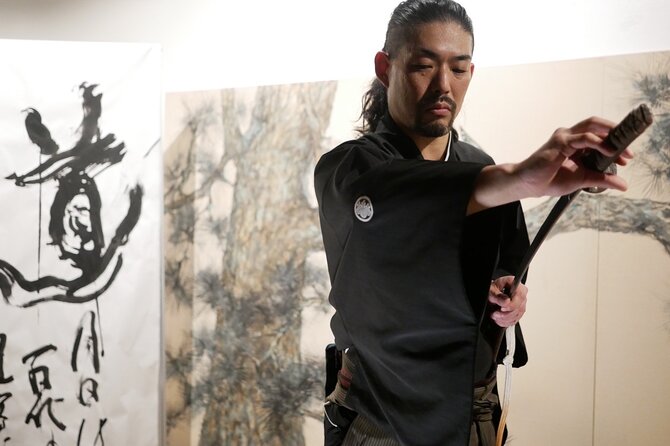
Before you start swinging, the instructor introduces the etiquette and ideas connected with Bushido, the samurai code. The aim is not to turn a 90-minute activity into a history lecture. Instead, the explanation gives meaning to the careful movements, respectful handling of the sword, and disciplined stance.
This is one of the better features for first-time visitors. You can arrive knowing very little about samurai culture and still follow the lesson. The instructor explains what you are doing and why, then shows the movement before asking you to try it.
The experience can also appeal to people who already study martial arts. One participant with HEMA experience appreciated the attention to drawing and sheathing the katana, sword positions, and basic cutting technique. The instructor adjusted the practice for that participant, including a more difficult seated cutting attempt. That suggests the lesson can offer something beyond a simple photo opportunity, although it remains an introductory session rather than a full martial arts course.
Learning to draw, hold, and swing the katana
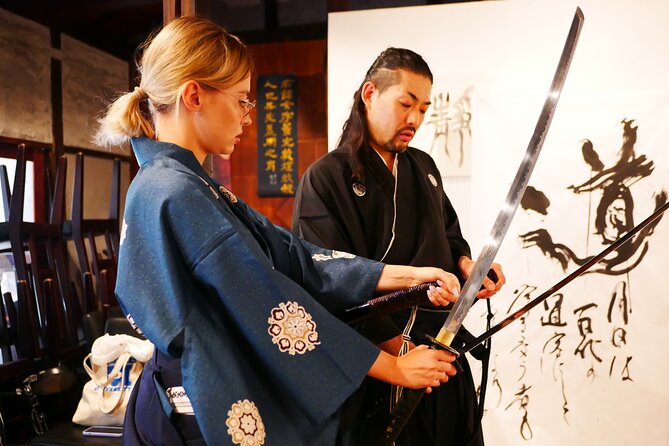
The sword lesson is broken into manageable actions. You learn how to handle the katana, how to pull it from its scabbard, how to return it, and how to hold your body while swinging. The teacher watches your form and points out mistakes, which is especially helpful because the movements can look simple until you try them.
I like this hands-on approach. Watching a professional perform a sword sequence can be impressive, but it does not tell you how awkward the first attempt may feel. Here, you learn by doing, with time to correct your hands, stance, and cutting motion.
Still, do not expect a long practice session devoted to repeated swings. One participant felt that a few extra practice motions focused only on the cutting movement would improve the program. That is a fair point. The 90-minute schedule has to include dressing, Bushido instruction, sword etiquette, the final match, tea, and photos, so practice time is necessarily limited.
The sword is handled with safety rules. The instruction states that no one will point the blade at you. If you are uncomfortable with the sharp edge, tell the staff before the activity begins. That is important information, not a footnote. You should be comfortable following precise directions and staying aware of the blade at all times.
A few more Tokyo bookings worth comparing
- Mt Fuji and Hakone 1-Day Bus Tour Return by Bullet Train
★ 5.0 · 26,383 reviews - 1-Day Tokyo Bus Tour
★ 5.0 · 14,250 reviews - Tokyo: TOKYO SKYTREE® Admission ticket
★ 4.5 · 11,192 reviews - Tokyo: teamLab Planets TOKYO Digital Art Museum Entry Ticket
★ 4.6 · 9,779 reviews
The final samurai encounter
The session ends with a fight against a real samurai. This is presented as a safe, supervised part of the program, not an uncontrolled contest. The instructor takes safety into account, and you are guided through the encounter rather than left to improvise.
The word fight may sound more intense than the actual format. Think of it as a staged training exchange that lets you use the posture and sword handling you have just practiced. It gives the lesson a clear payoff and makes the earlier etiquette and technique feel practical.
For many people, this will be the most memorable moment. You are no longer only learning isolated movements. You are responding to another person, keeping your attention on the sword, and trying to maintain the form you were taught.
If your main interest is historical weapons, ask the guide about the sword itself. One participant asked to see the katana taken apart at the end, and the guide willingly explained its construction. That is not listed as a standard part of the session, so it is best treated as a possible extra conversation, not something guaranteed. Still, it is a useful tip for anyone interested in how the weapon is made.
Tea, questions, and a quieter finish
After the active portion, you sit down for Japanese tea. The change of pace is welcome. Sword practice asks for concentration, and tea gives you time to relax, talk with the instructor, and ask more about Bushido or Japanese customs.
The tea is served by Yukari, who also assists with clothing and photographs. This final pause helps the experience feel like a cultural visit rather than a single physical activity. You have time to look around the old house and enjoy the atmosphere before leaving.
The tea is also where the experience becomes accessible to people who are interested in Japan but not especially interested in martial arts. You do not need to be a sword enthusiast to appreciate the clothing, etiquette, house, tea, and conversation.
How much value do you get for $322?
At $322 per person, this is an expensive 90-minute activity. You are paying far more than you would for a standard museum visit, public cultural demonstration, or ordinary tea experience.
The value comes from the combination of elements. You receive help dressing in formal clothing, individual sword instruction, access to a real sword, a supervised encounter with a samurai, Japanese tea, and photographs in an old private house. With only three participants, the price also buys personal attention rather than a crowded class.
I would consider it good value for a special occasion, a first trip to Japan, or anyone who has specifically wanted to handle a katana under expert supervision. I would hesitate if you are comparing activities mainly by minutes per dollar. The program is short, and the sword practice cannot fill the entire session because dressing, explanation, tea, and photographs are all part of the package.
The small group changes the calculation. If three people book together, the setting should feel personal and your turn with the instructor should come quickly. If you book alone or with one other person, you may receive even more direct correction, though the exact amount of practice depends on the pace of the group.
Free cancellation is available up to 24 hours before the activity for a full refund, and you can reserve now and pay later. Those terms make it easier to fit the experience into a changing Tokyo schedule.
Who should book this samurai session?
I would recommend it most strongly to:
- First-time visitors who want an activity beyond temples and museums
- Couples or friends looking for a memorable shared experience
- People interested in Bushido, Japanese etiquette, or traditional clothing
- Martial arts students who want to compare Japanese sword handling with their own practice
- Photographers and culture-focused visitors who value the old-house setting
- Anyone who prefers a private, small-group lesson to a large staged performance
It suits both men and women. Beginners are welcome, and the instructor is used to explaining the movements step by step.
This is not suitable for children under 10, pregnant women, or people with mobility impairments. Scooters are not allowed. You should also be prepared to stand, move carefully, and follow safety instructions around a blade.
Practical advice before you go
Wear clothing that allows comfortable movement beneath the kimono. The provided information does not specify a dress code, so I would avoid anything that makes changing difficult or restricts your legs and shoulders.
Arrive ready to pay attention. The sword lesson depends on small details, including how you hold the handle, position your feet, draw the blade, and return it to its scabbard. Trying to rush ahead will not make the session better.
Tell the staff before the activity if you do not like the blade edge. The safety note specifically says the blade will not be pointed at you, but speaking up early is the sensible choice if you are nervous.
If you have questions about Japanese swords, Bushido, or construction, save them for the instructor. The teacher is willing to explain and correct, and the tea period gives you a natural time for conversation. If you are interested in seeing how the sword is assembled, you can politely ask, but do not assume it is part of the standard schedule.
The meeting point has a signboard near the entrance. Follow the arrow and enter through the doorway. Since the activity is held in a private house, following those directions carefully matters more than expecting a large attraction entrance.
Is this the right Tokyo cultural experience for you?
Book this if you want to do more than look at samurai armor behind glass. The strongest features are the tiny group, patient instruction, formal clothing, old-house setting, and chance to handle a real sword under supervision. The tea and photographs add warmth to what could otherwise be a very technical lesson.
Skip it if you want a longer martial arts class, a broad historical tour, or a low-cost activity. Ninety minutes passes quickly, and the $322 price requires genuine interest in the subject.
For the right person, this is a focused and memorable introduction to Bushido. You leave with more than a costume photograph: you have practiced the etiquette, movements, and concentration that give the samurai image its meaning.
FAQ
Where does the samurai experience take place?
It takes place in an old private Japanese house in Tokyo, on Honshu. Near the meeting place, look for a signboard, follow the arrow, and enter through the entrance.
How long does the experience last?
The activity lasts 90 minutes. Starting times vary, so you need to check availability when booking.
How many people can join the group?
The group is limited to three participants, making this a small-group experience with personal instruction.
What languages does the instructor speak?
Instruction is available in Japanese and English.
Is a kimono included?
Yes. The experience includes a kimono dressing experience, with assistance provided as part of the session.
Will I handle a real sword?
Yes. The included experience specifies a real sword, and the lesson covers sword handling, etiquette, drawing, sheathing, stances, and swinging. No one will point the blade at you, and you should tell the staff first if you are uncomfortable with the blade edge.
Who should not take part?
The experience is not suitable for pregnant women, people with mobility impairments, or children under 10 years old. Scooters are not allowed.
New on our Tokyo list
- Tokyo : Kamikaze Street Drift Ride★ 5.0 · 3 reviews
- Private Zen Meditation in English in Shinjuku, Tokyo★ 5.0 · 3 reviews
- Sumi-e Experience in a relaxing green tea shop in Tokyo★ 5.0 · 3 reviews
- Onsen Spa in Tokyo and Asakusa Bar Hopping with Local Guide★ 5.0 · 3 reviews
- Easy for everyone! Now you can play handmade mini shamisen and show off to everyone! Musical instruments, sweets and live music★ 5.0 · 3 reviews
- Tokyo: Private Tsukiji Street Food & Sake with Local Guide★ 5.0 · 3 reviews
- Mt Fuji Exploration Tour with Free Japanese Kusa Mochi from Tokyo★ 4.5 · 3 reviews
- Tokyo Tsukiji Fish Market Walking and Exploring Hidden Gems Tour★ 5.0 · 3 reviews
Samurai & Ninja Experiences, compared.
Samurai Ninja Museum Guided tour and Experience
Read our review →
Samurai Sword & Archery Class from Samurai Descendant
Read our review →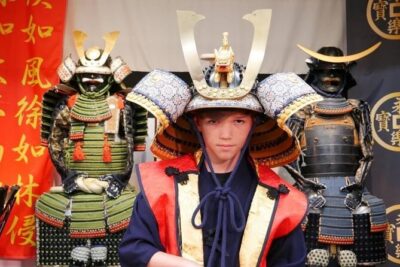
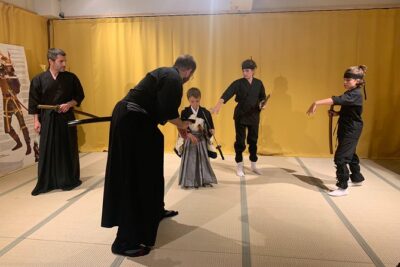
Ninja Experience (Family Friendly) at Samurai Ninja Museum TOKYO
Read our review →
Samurai Entertainment Night Show in Kanda Shrine
Read our review →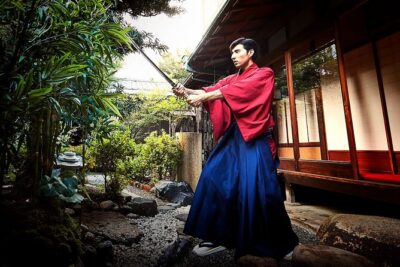
Tokyo Sword Experience – includes Museum Ticket/Ninja Experience
Read our review →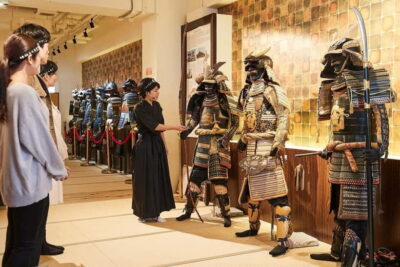
Samurai Ninja Museum Asakusa: Samurai Sword Lesson & Tour
Read our review →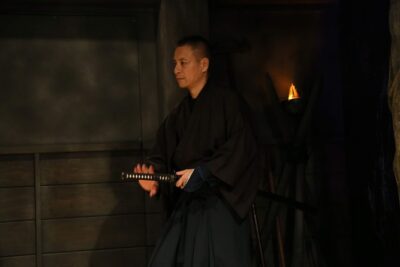
Ninja Samurai 2-hour hands-on lesson by Japanese master in Tokyo
Read our review →Browse the lists this tour appears in