
Reviewed · SUMO EXPERIENCES
Tokyo: Authentic Sumo Wrestling Experience with Lunch
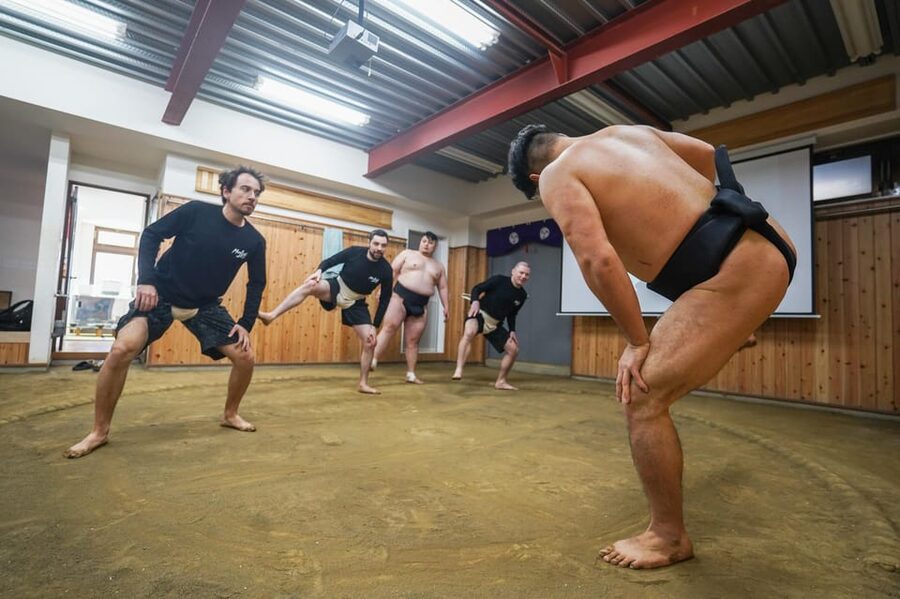
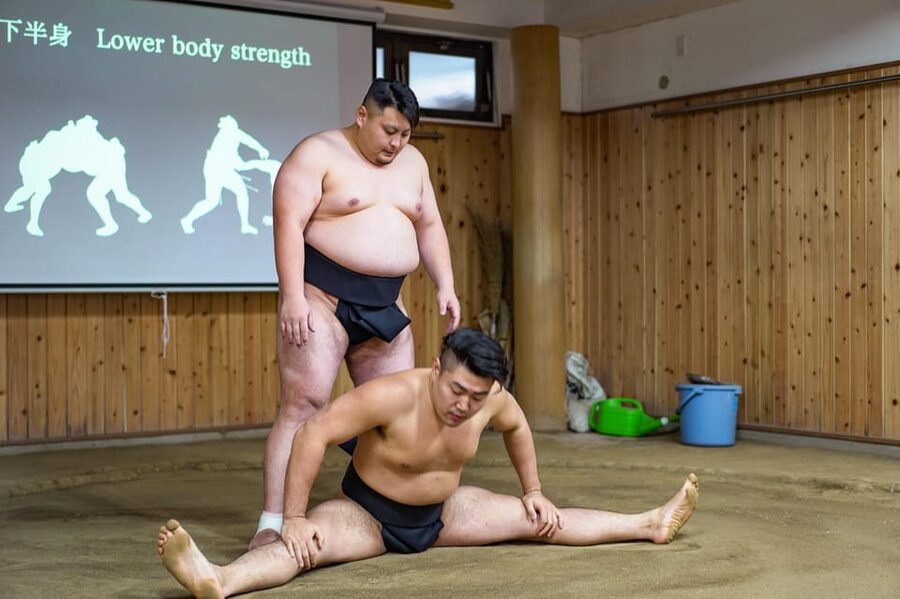
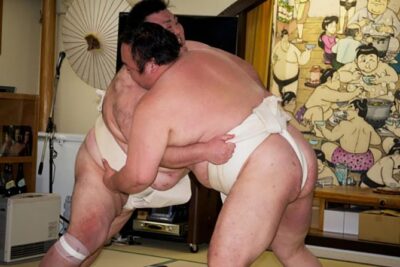
The best part of this four-hour outing is the chance to sit right beside a real sumo ring while wrestlers train. This is not a stadium performance. You see the hard, repetitive work behind the sport, then learn the customs, movements, and rules before trying some yourself.
I like the friendly, human side of the visit: making chicken dumplings for chanko-nabe and eating at a table once used in the stable. I also like that the match with a rikishi is optional, so you can watch and learn without stepping into the ring. The main drawback is that the tour starts strictly on time, and some parts are not suitable for wheelchairs or strollers.
In This Review
- Key details before you book
- Why watching practice beats seeing only a tournament
- Meeting at Shin-Kawasaki Station
- Entering the former sumo stable
- Sitting close to the morning practice
- The optional bout with a rikishi
- Making chanko-nabe with the wrestlers
- Photos, handprints, and the included gifts
- Is the $166 price fair?
- Who will enjoy this most
- Practical tips for a better morning
- Should you book this sumo experience?
- FAQ
- Where does the sumo experience begin?
- How long does the activity last?
- Is the tour conducted in English?
- Do I have to wrestle with a sumo wrestler?
- Is lunch included?
- Can dietary requests or allergies be accommodated?
- Is the experience accessible by wheelchair or stroller?
Key details before you book
- Watch morning practice from the edge of the ring: See how wrestlers begin training and repeat basic sumo movements.
- Visit a former working sumo stable: The building was officially used until 2022, with access to areas such as the practice space, dining room, and bath.
- Try the rituals and exercises yourself: Your guide explains the purpose of the movements before you copy them.
- Challenge a rikishi if you choose: The bout is meant to be fun, but the size and strength difference is very real.
- Make and eat chanko-nabe: Prepare chicken dumplings, then share lunch with the wrestlers.
- Travel easily from central Tokyo: The meeting point is about 20 minutes from Tokyo Station and 10 minutes from Yokohama Station.
Why watching practice beats seeing only a tournament
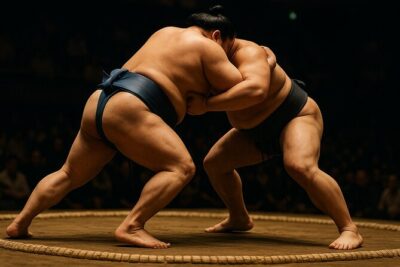
A professional sumo tournament gives you the spectacle: packed stands, formal bouts, colorful robes, and a full day of matches. This visit gives you something different. You watch the training that makes those short bouts possible.
Morning practice begins with basic exercises and repeated movements. Your guide explains what you are seeing and why the wrestlers perform each action. You might notice that the work is less about flashy throws than about balance, stance, leg strength, timing, and control.
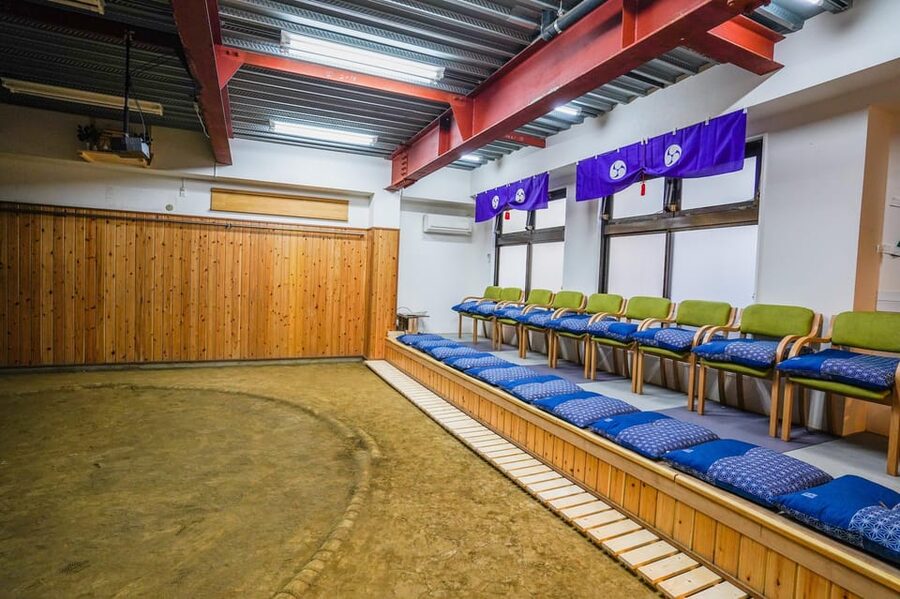
That setting matters. You are seated close to the ring, not watching tiny figures from a distant stadium seat. You can see the concentration, the physical effort, and the quiet rhythm of practice. It is a useful choice if you know little about sumo, since the guide fills in the missing pieces as the action unfolds.
The stable itself was officially used until 2022. That gives the visit a particular character: you are entering a genuine sumo training setting, though you should understand that this is not presented as a current tournament venue. You tour practical parts of the building, including the dining room, bath, and practice area, and learn about the lifestyle built around the sport.
More sumo mornings:
- Authentic Sumo Experience in Tokyo: Enter the Sanctuary
★ 5.0 · 603 reviews - Tokyo: Sumo Show Experience with Chicken Hot Pot and a Photo
★ 4.8 · 6,678 reviews - Tokyo: Sumo Show and Dining Experience
★ 4.8 · 2,742 reviews
Meeting at Shin-Kawasaki Station
You meet just outside the only ticket gate at Shin-Kawasaki Station. The meeting place is in front of Kiyoken, the well-known shumai shop, and the guide carries a red or orange sign marked Magical Trip.
This is a simple meeting point, but do not treat it casually. The tour cannot wait for late arrivals, and missing the group means no refund or rescheduling. Allow extra time to reach Shin-Kawasaki and get outside the gate before the scheduled start.
The location also makes this outing practical for a wider Tokyo visit. It is about 20 minutes from Tokyo Station and roughly 10 minutes from Yokohama Station. The activity takes place in Kawasaki, so you are not spending the whole morning crossing central Tokyo.
English is the tour language. Guides who have led this experience include Charlie, Mayu, and Masao, with the exact guide depending on the departure date. The guides use explanations, demonstrations, and visual material to make the sport easier to follow, even if you have never watched a sumo match before.
Entering the former sumo stable
After meeting your guide, you head to the stable and receive an introduction to the sumo world. This is where the outing moves beyond a simple photo opportunity.
You learn about the daily customs, rankings, training schedule, and distinctive way of life associated with sumo wrestlers. The guide also explains the basic structure of the sport, including how the ranking system works and what separates one level from another.
The tour includes a look at the dining room, bath, and training space. These details help you understand that a sumo stable is not only a gym. It is also a place where wrestlers train, eat, rest, and follow established traditions.
I find this section especially useful for families and first-time visitors. Children may be drawn to the sheer size of the wrestlers, while adults often appreciate seeing the ordinary rooms and routines behind the public image. The tour has enough explanation to give the visit context without requiring prior sumo knowledge.
Sitting close to the morning practice
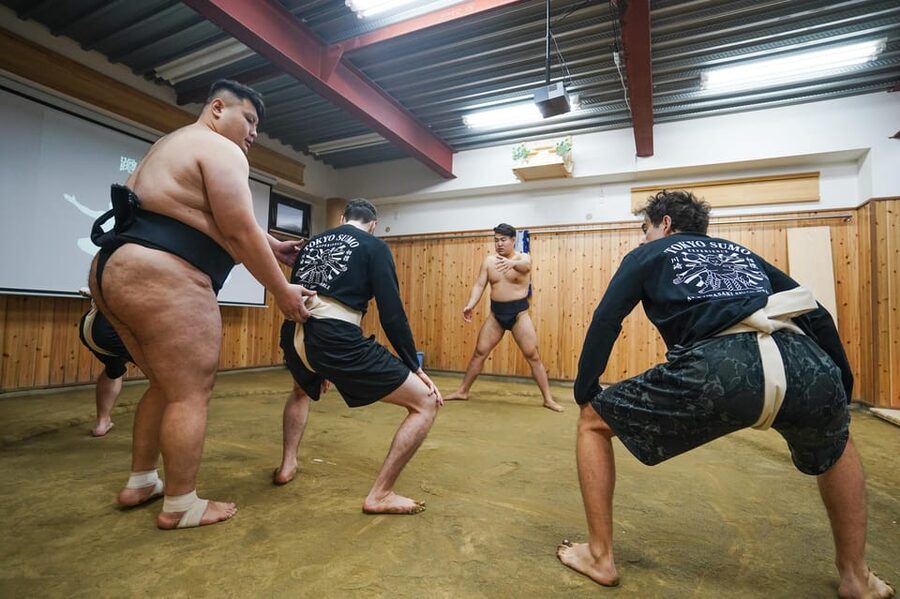
The central part of the morning is watching the wrestlers train from seats in front of the ring. You see how practice begins and how the movements build strength and technique.
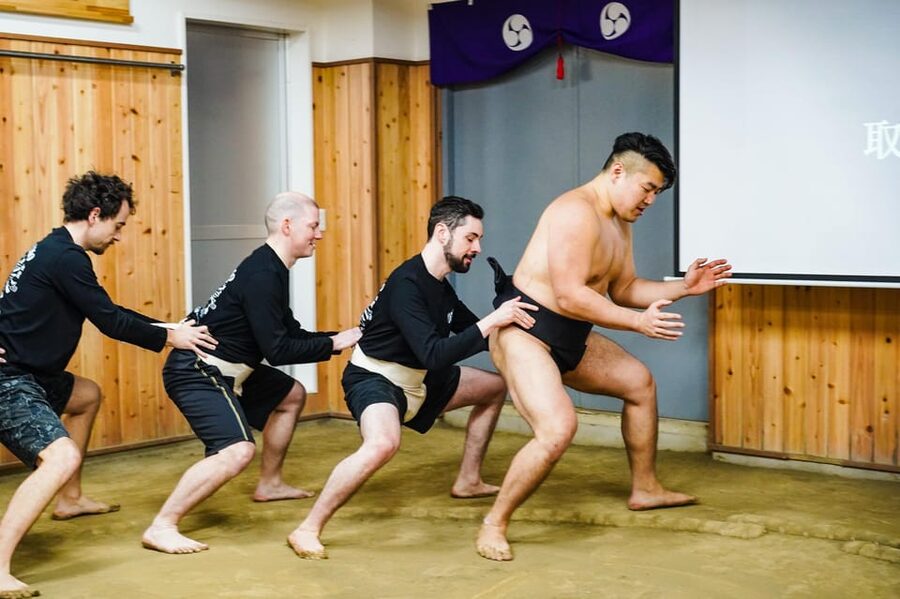
Your guide explains the purpose of the exercises, then gives you a chance to try some of them. This can be harder than it looks. Sumo stances require balance and leg work, and the humor comes naturally when visitors discover that a simple-looking movement is not simple at all.
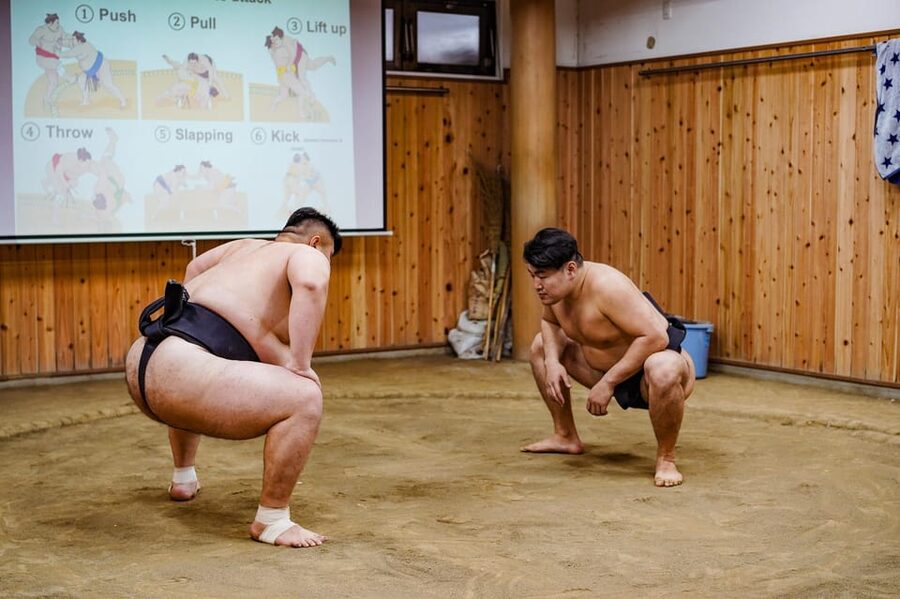
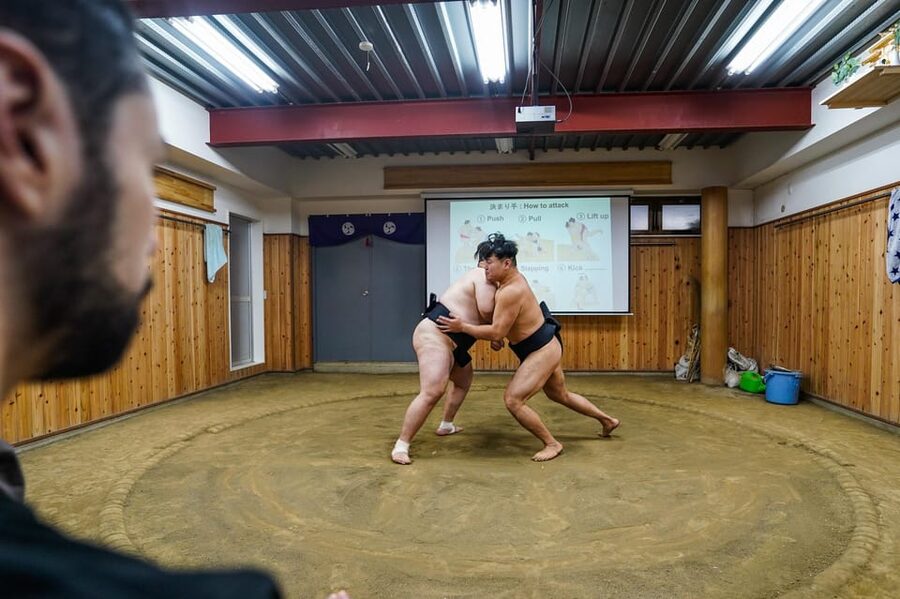
The wrestlers demonstrate how a match begins and show basic rules, moves, and techniques. You learn what happens before the pushing and grappling start, and why position and balance matter so much.
This teaching style works well because it keeps the morning active. You are not simply listening to a lecture, but you are also not thrown into a physical contest without preparation. The guide explains first, the wrestlers demonstrate next, and you try the movements afterward.
More Yokohama outings:
- EVO, WRX, Skyline – JDM Night Run to Daikoku Car Meet
★ 4.9 · 478 reviews - Tokyo: Best Price Daikoku Parking Area JDM Car Meet
★ 4.9 · 192 reviews - Daikoku & Tokyo Private JDM Tour by 700HP R34 GT-R
★ 4.9 · 101 reviews - Tokyo 8hr Private Tour with Licensed Guide from Yokohama
★ 5.0 · 94 reviews
The optional bout with a rikishi
The most memorable part for many people is the chance to enter the ring and face a sumo wrestler. You do not have to participate. If you prefer to watch, you can stay on the sidelines and enjoy the demonstrations.
If you do step forward, expect a playful but humbling contest. A trained rikishi has a huge advantage in size, strength, balance, and technique. The wrestlers are described as friendly, funny, and patient, but you should not mistake their good humor for a lack of power.
The activity is presented as a real-style one-round bout, with the wrestler controlling the pace. It is a good fit for outgoing adults, older children, and families who enjoy being part of the show. It is less suitable if you have a heart problem, high blood pressure, a cold, a pre-existing medical condition, or any concern about strenuous activity.
You can also participate at a gentler level by trying the exercises rather than wrestling. That flexibility is important. The tour does not depend on every person wanting to wear the traditional sumo garment or challenge a professional.
Making chanko-nabe with the wrestlers
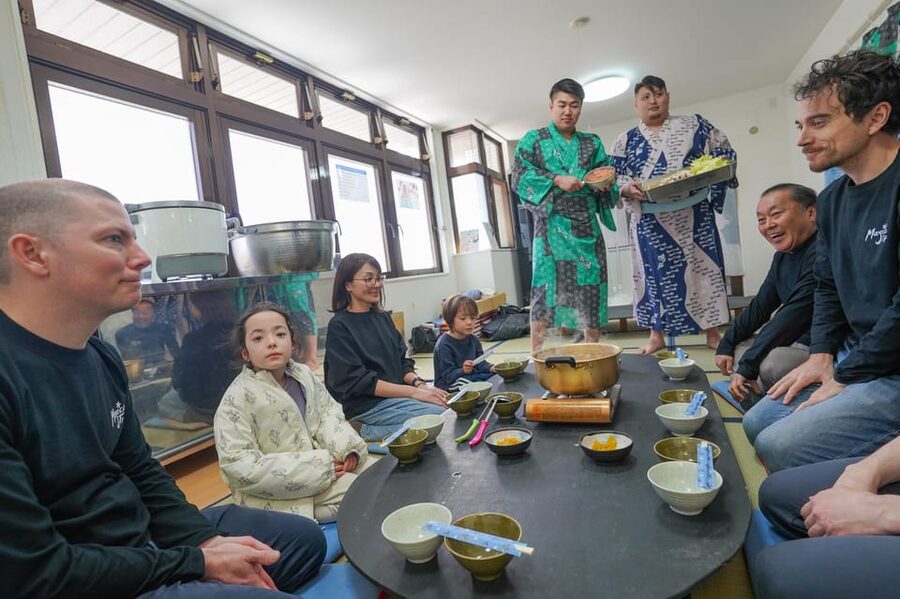
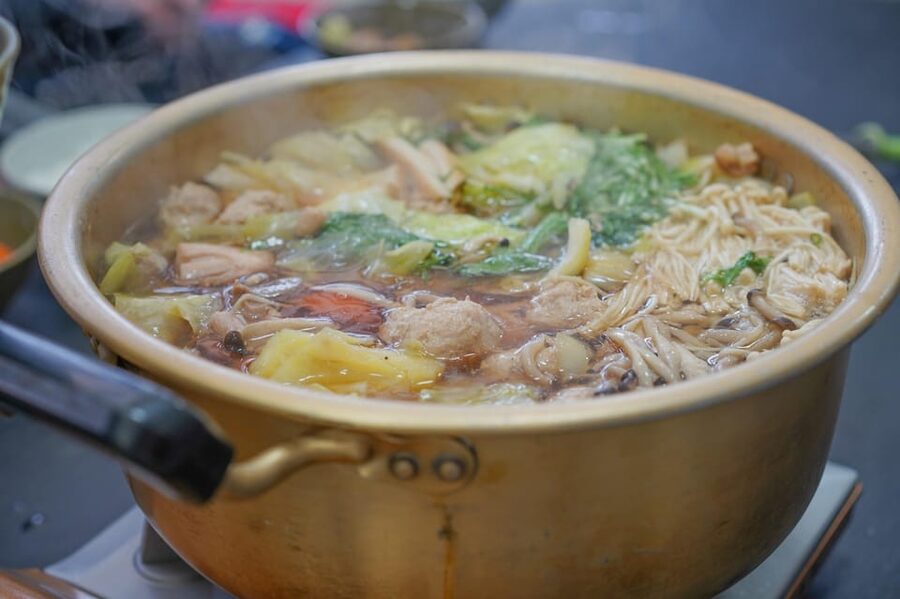
After the practice and demonstrations, you sit down for chanko-nabe, the hearty meal associated with sumo wrestlers. You help make chicken dumplings, then eat together around a table that was actually used in the sumo room.
The cooking activity gives lunch a social purpose. You are not just served a bowl and sent on your way. You take part in preparing one component, then have time to ask questions and talk with the wrestlers.
The meal is one of the strongest reasons to choose this experience over a short sumo demonstration. Conversation gives you a chance to ask about training, food, customs, and life in the sumo world. The setting is informal, and the wrestlers are part of the lunch rather than distant performers.
Dietary needs require planning. You must tell the operator at least one day before the tour if you have allergies or special dietary requests. A vegetarian lunch has been provided when requested in advance, but substitutions are not guaranteed, and the kitchen cannot promise an allergy-free meal. Requests made on the day cannot be accommodated.
Additional food and drinks are not included, so the included lunch is the main meal component of the outing.
Photos, handprints, and the included gifts
The tour includes photos, and there is time to take pictures with the wrestlers. Some sessions also include the chance to wear a yukata or kimono for a commemorative image.
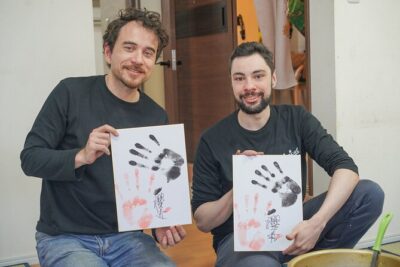
You can make a memorial handprint on paper, a small keepsake that feels more personal than a standard souvenir. The included T-shirt gives you another tangible reminder of the day.
There is one point to keep in mind. One account of the experience noted a sales pitch at the end for items such as T-shirts and kimono. The T-shirt listed as included should be distinguished from any optional merchandise offered for purchase. If you do not want extra shopping, simply treat that part as optional.
Is the $166 price fair?
At $166 per person, this is not a budget activity. The value depends on what you want from sumo.
You are paying for four hours, an English-speaking guide, transport from the meeting point to the stable, access to a former sumo training space, morning practice, demonstrations, optional participation, lunch with the wrestlers, photos, and a T-shirt. You also receive direct access to people who can explain the sport from inside its daily setting.
For a first visit to Japan, I think the price can make sense if you want one substantial cultural activity rather than a quick sightseeing stop. The stable visit, hands-on exercises, meal preparation, conversation, and photographs create a full morning with several distinct parts.
The value is weaker if your main goal is simply to watch high-level competitive sumo. This is training and cultural instruction, not a tournament ticket. You will not get the atmosphere of a major arena or a full schedule of official bouts.
It is also worth considering the four-hour length. One participant found the start a little slow, but the time passed quickly once the demonstrations and meal began. That sounds right to me: the opening explanations may feel measured, but the program gains energy as you move from watching to participating.
Who will enjoy this most
I would recommend this outing to:
- First-time sumo viewers who want rules and customs explained clearly.
- Families looking for an activity that mixes learning, humor, food, and photos.
- Couples and friends who are comfortable taking part in a playful physical activity.
- Sumo fans who want to see training in a real stable rather than only attending a tournament.
- Visitors staying near Tokyo Station or Yokohama who want a half-day activity outside the main city center.
It may not suit you if you have mobility problems, since some locations are not accessible by wheelchair or stroller and walking is involved. The operator specifically recommends a private tour for people with walking difficulties.
You should also skip the physical portion if you have heart trouble, high blood pressure, a cold, or another medical condition that could make exertion unwise. Watching is optional, but the setting itself still involves moving through the stable.
Practical tips for a better morning
Arrive early at Shin-Kawasaki Station. The meeting point is easy to identify, but a strict start time leaves no room for a delayed train or a wrong turn.
Wear comfortable clothing that allows movement. Even if you do not plan to wrestle, you may want to copy the training exercises. Choose shoes and clothes that are easy to manage during the stable visit.
Tell the operator about food needs at least a day ahead. Do not assume that a request made at the door can be handled, especially for allergies.
Think about your participation choice before you arrive, but do not feel pressured to fight. The tour is still worthwhile if you watch the bouts, practice the movements, and focus on the explanations.
Finally, bring room for photographs and the included T-shirt. The handprint and photos make the visit feel more complete, especially for children.
Should you book this sumo experience?
Book it if you want close-up training, direct conversation, and a shared meal, not just a look at sumo from the seats of a stadium. The combination of practice, guided explanations, optional wrestling, chanko-nabe, and photographs gives you a fuller picture of the sport and the people who live by its routines.
I would be most likely to book this for a family, a couple, or a small group of friends who enjoy participating. The 4.9 rating from 88 ratings reflects a very strong response, and the repeated praise centers on the same features: friendly wrestlers, clear guides, entertaining practice, and lunch together.
Skip it if you need a fully accessible activity, cannot manage a strict start time, or want only official tournament competition. For everyone else, this is a lively and unusually personal way to spend a half-day near Tokyo.
FAQ
Where does the sumo experience begin?
Meet just outside the only ticket gate at Shin-Kawasaki Station, in front of Kiyoken, the shumai shop. The guide will hold a red or orange Magical Trip sign.
How long does the activity last?
The experience lasts four hours, including the stable visit, morning practice, explanations, participation, lunch, and time with the wrestlers.
Is the tour conducted in English?
Yes. The experience includes a live English-speaking guide.
Do I have to wrestle with a sumo wrestler?
No. The bout is optional. You can watch the demonstrations and try the training movements without entering a match.
Is lunch included?
Yes. Lunch with the sumo wrestlers is included, along with making chicken dumplings for chanko-nabe. Extra food and drinks are not included.
Can dietary requests or allergies be accommodated?
Tell the operator at least one day before the tour. A vegetarian option may be possible with advance notice, but allergy-free meals and all substitutions cannot be guaranteed.
Is the experience accessible by wheelchair or stroller?
Some locations on the tour are not accessible by wheelchair or stroller. The activity is not recommended for people with mobility issues, and a private tour is recommended if you have walking difficulties.
More Lunch Experiences in Yokohama
- Tokyo: Mt.Fuji & Lake Kawaguchiko 1-Day Bus Tour w/Optional Lunch
★ 4.5 · 839 reviews - Tokyo: Sumo Experience and Chanko Nabe Lunch
★ 4.8 · 257 reviews - Tokyo: Tsukiji Fish Market Tour with 6 Stops & Seafood Lunch
★ 4.5 · 165 reviews - Tokyo: 1 Day Bus Tour with Meiji-Jingu,Odaiba,lunch&Skytree
★ 4.6 · 156 reviews
New on our Yokohama list
- Yokohama and Kamakura 6hr Private Trip Government-Licensed Guide★ 5.0 · 25 reviews
- Tokyo Full Day Tour with Licensed Guide and Vehicle from Yokohama★ 5.0 · 26 reviews
- Daikoku & Tokyo JDM Night Tour in R34 or TopSecret R35 GT-R★ 4.8 · 27 reviews
- Yokohama: Guided Cup Noodles Museum Tour & Make Your Own Cup★ 4.9 · 27 reviews
- Tokyo: Kamakura and Yokohama Private Day Trip with Guide★ 4.6 · 27 reviews
- Private Kamakura plus Yokohama Tour – English Speaking Driver★ 4.5 · 28 reviews
- Japanese Tea Ceremony at Private Home in Yokohama, suburban Tokyo★ 5.0 · 32 reviews
- Yokohama 4hr Private Tour with Government-Licensed Guide★ 5.0 · 34 reviews
Sumo Experiences, compared.
Sumo Show Experience with Chicken Hot Pot and a Photo
Read our review →
Tokyo Shinjuku Sumo Show & Experience with Photo
Read our review →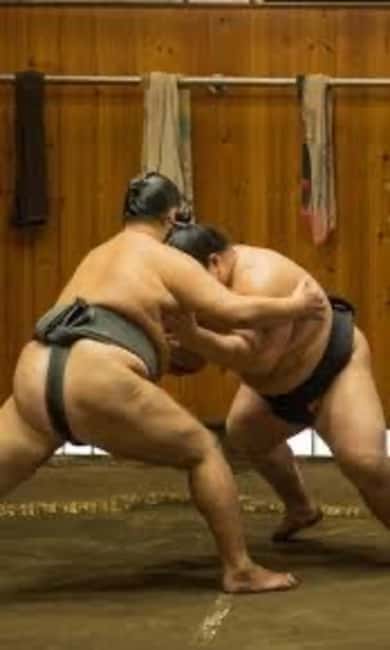
Authentic Sumo Experience in Tokyo: Enter the Sanctuary
Read our review →
Luxury Sumo Show Experience & Japanese cuisine & Drink
Read our review →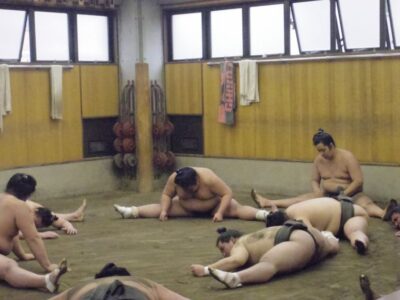
Browse the lists this tour appears in