
Reviewed · SUMO EXPERIENCES
Tokyo: Sumo Experience and Chanko Nabe Lunch
Tokyo’s sumo lunch puts you close to the action without requiring a tournament ticket. Former professionals explain the rules, rituals, training, and competition in English, then invite audience members into the ring for playful bouts and photos. The meal is chanko nabe, the hearty hot pot associated with sumo wrestlers.
I like the small-group format, limited to six, and the mix of teaching, comedy, and participation. I also like that the wrestlers prepare lunch themselves, giving the meal a clear connection to the sport. The main consideration is timing: the session starts promptly at 1 PM, and the exact meeting place arrives with your voucher.
In This Review
- Key points
- Why this sumo lunch works so well
- Entering the sumo world in English
- The demonstration: strength with a sense of humor
- Your chance to step into the ring
- Chanko nabe, the lunch connected to sumo
- Asakusa on Monday, Ryogoku on Thursday
- What the two-hour schedule feels like
- How much value do you get for $95?
- Who should book this experience
- Useful planning advice before you book
- Should you book the Tokyo sumo experience?
- FAQ
- How long does the sumo experience last?
- What time does the activity start?
- Where does the experience take place?
- Is the activity conducted in English?
- Is lunch included?
- Can I wrestle a sumo wrestler?
- Can I request a vegetarian or Halal meal?
- Is the activity wheelchair accessible?
Key points
- Former wrestlers lead the session: Learn sumo from professionals who can explain its rules, rituals, and training in English.
- Try the ring yourself: Audience members may be invited to wear a sumo costume and take part in a playful bout.
- Chanko nabe is part of the story: Eat the hot pot traditionally linked with strength and stamina, prepared by the wrestlers.
- Two Tokyo locations: Visit Asakusa on Mondays or Ryogoku on Thursdays, depending on the day you book.
- A compact two-hour activity: The schedule packs teaching, demonstrations, interaction, photos, and lunch into one sitting.
- Good for mixed ages: The friendly, humorous format works well for families, first-time Japan visitors, and people new to sumo.
Why this sumo lunch works so well
Sumo can look simple from the outside: two large wrestlers push, shove, and try to force one another from a circular ring. The real sport is wrapped in ceremony, discipline, gestures, and rules that are not always obvious to someone watching for the first time.
This experience gives you the missing pieces. Former professional wrestlers explain what is happening in plain English, then show you the movements at close range. You get more than a photo opportunity. You learn why the bout begins with ritual, how a match is won, and how much technique hides behind the apparent force.
The tone is intentionally light. The wrestlers are teachers and entertainers, and the audience participation brings plenty of laughs. At the same time, the demonstrations help you understand the strength and control required in professional sumo.
That balance is the heart of the experience. A formal lecture about sumo could feel dry. A simple staged show could leave you amused but uninformed. Here, the explanations and demonstrations support each other.
More sumo mornings:
- Tokyo: Sumo Show Experience with Chicken Hot Pot and a Photo
★ 4.8 · 6,678 reviews - Tokyo: Sumo Show and Dining Experience
★ 4.8 · 2,742 reviews - the SUMO show
★ 5.0 · 1,960 reviews
Entering the sumo world in English
You do not need previous knowledge of sumo. The instructors explain the sport in English, including its history, rituals, training, and competition. That makes this a useful first stop before attending a professional tournament, watching sumo on television, or visiting the Ryogoku district on your own.
The explanations matter because sumo has its own vocabulary and customs. The ring, the pre-match gestures, and the movements before a bout are not random decoration. They form part of the sport’s identity, and the wrestlers can show you what to watch for.
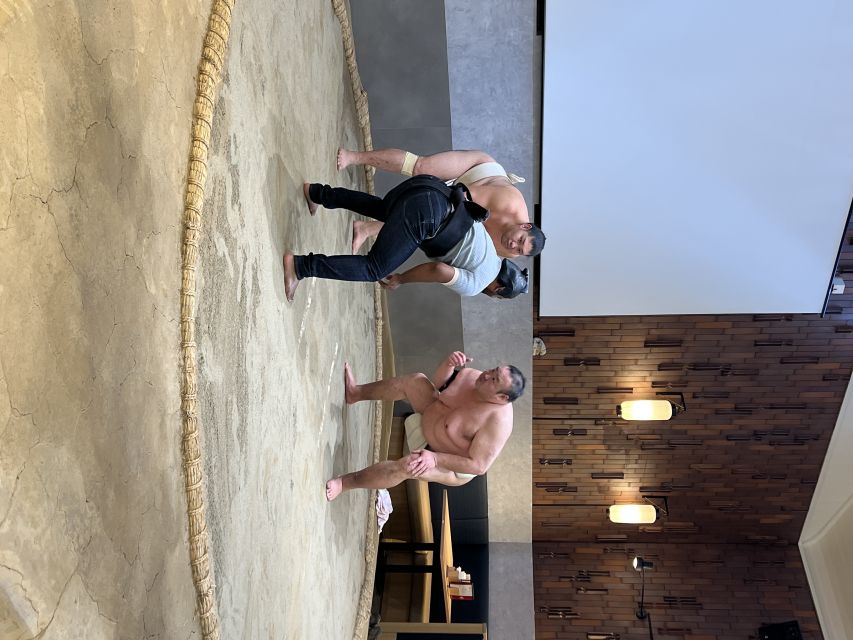
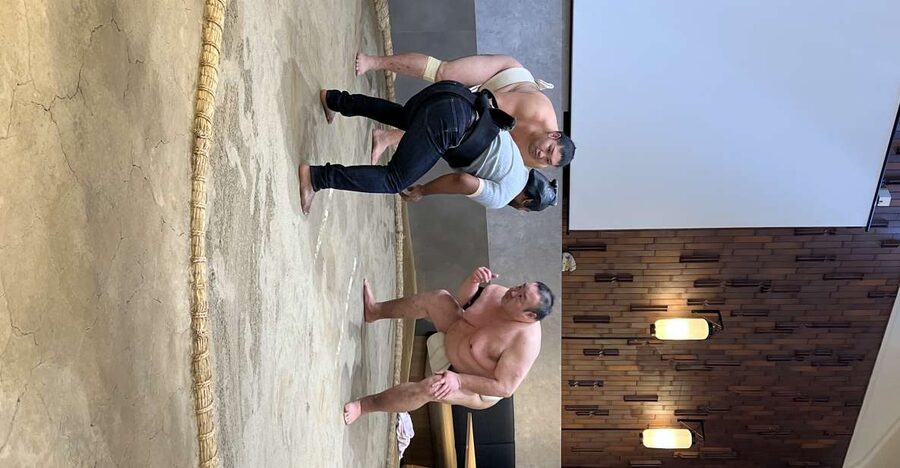
The instruction is also practical. You hear about the competition side of sumo, not just the ceremony. One particularly useful part is seeing how a wrestler’s balance, stance, and timing affect the result. Even a strong person can be moved quickly if the technique is right.
English delivery is central to the activity, and the instructors are described as clear and engaging. Some past sessions have featured wrestlers called Audrey and Jumbo, whose comic timing and showmanship added to the presentation. Names and performers may change, but you can expect the teaching to be designed for an international audience.
The demonstration: strength with a sense of humor
The demonstration is not presented as a solemn professional match. It is a controlled, playful display designed to show you how sumo works. That makes it suitable for people who want to learn but are not looking for a serious athletic contest.
You will see the wrestlers explain and perform basic aspects of the sport. The close setting helps you notice how quickly they move, how they use their weight, and how much balance goes into each action. The contrast between their relaxed manner and their physical power is part of the fun.
The humor is useful rather than distracting. It gives the audience permission to ask questions, laugh, and join in. Families especially benefit from this tone. Children can watch the action without needing to sit through a long, formal talk, while adults get enough cultural background to make the experience worthwhile.
Do not expect a full professional tournament or a long sequence of competitive bouts. This is a workshop and demonstration with lunch, not a replacement for seeing the Grand Sumo Tournament. Its value is personal contact and explanation, not the tension of an official match.
Your chance to step into the ring
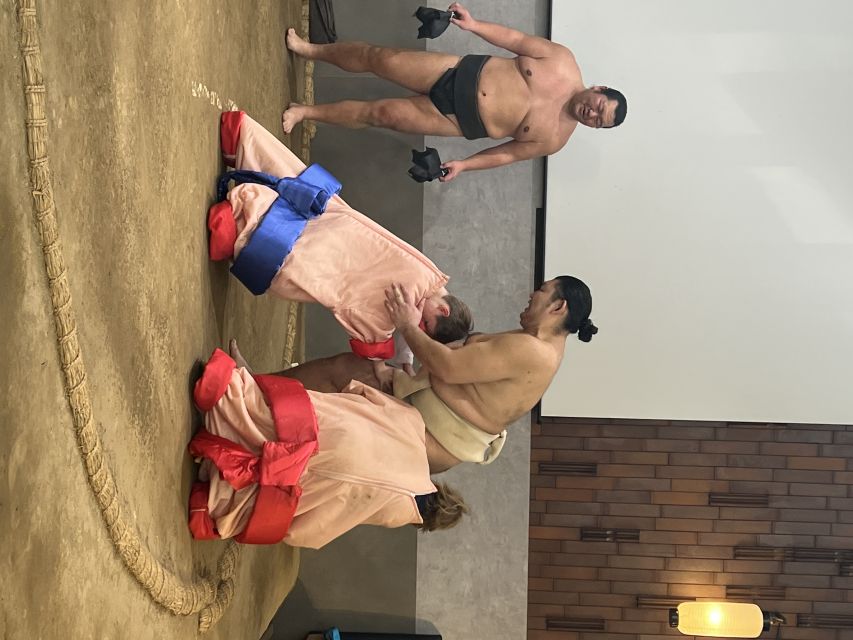
Audience participation is one of the most memorable parts of the session. Some people may be selected to put on a sumo wrestler costume and help with the demonstration. Participation is voluntary, and not everyone can be chosen.
The wording matters here. You should arrive ready to enjoy the show even if you never enter the ring. The activity does not promise that every participant will wrestle, although several accounts describe broad opportunities for people to have a go. The exact number of volunteers and the order of participation can vary.
If you are selected, expect a playful bout rather than a serious test of strength. The former wrestlers control the action, keep it entertaining, and let you feel the difference between ordinary strength and professional technique. One large participant weighing 105 kilograms still felt like a child against the wrestler’s power. That gives you a fair idea of the physical gap.
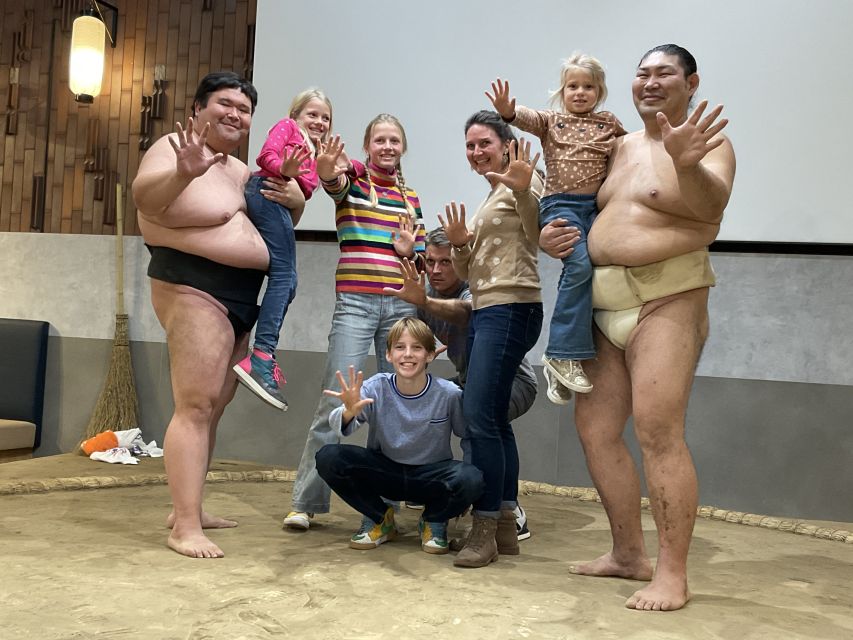
Children may also be included when appropriate. The wrestlers are described as warm and attentive with young participants, and families with children around six to ten years old have found the activity especially enjoyable. Still, parents should understand that the ring portion is optional and depends on the session.
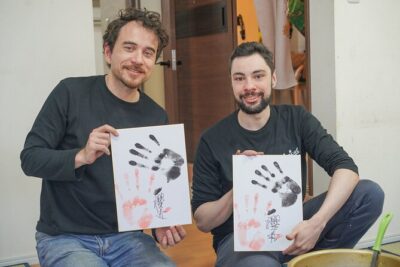
Even if you stay seated, you are part of the show. You watch the demonstrations from close range, react to the playful contests, and usually have time for photographs with the wrestlers.
A few more Tokyo bookings worth comparing
- Tokyo: Mt.Fuji & Lake Kawaguchiko 1-Day Bus Tour w/Optional Lunch
★ 4.5 · 839 reviews - Tokyo: Tsukiji Fish Market Tour with 6 Stops & Seafood Lunch
★ 4.5 · 165 reviews - Tokyo: 1 Day Bus Tour with Meiji-Jingu,Odaiba,lunch&Skytree
★ 4.6 · 156 reviews - Mt. Fuji, Oishi Park & Arakurayama Pagoda Bus Tour with Lunch
★ 5.0 · 128 reviews
Chanko nabe, the lunch connected to sumo
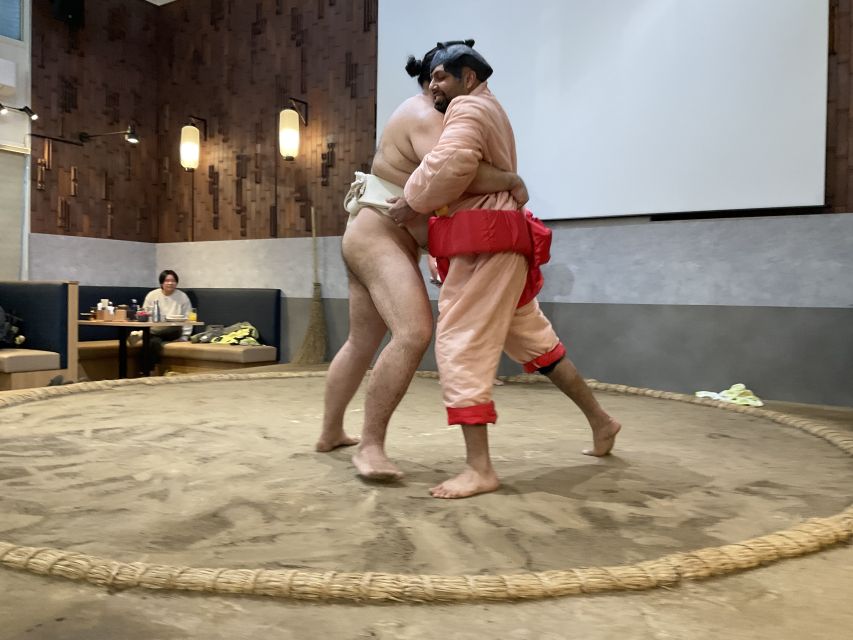
After the demonstrations, you sit down to chanko nabe, a Japanese-style hot pot associated with sumo wrestlers. The wrestlers prepare it themselves, which gives the meal a direct link to the lesson rather than making lunch feel like an unrelated add-on.
Chanko nabe is known as filling food for wrestlers in training. It is served hot and is intended to provide stamina. The meal is social, simple, and hearty, with the pot forming the center of the experience.
The food receives strong praise, with repeated approval for its flavor, generous portions, and speed of service. Some descriptions call it a three-course Japanese lunch and include a drink and dessert. The official inclusions identify lunch, so check the current meal details when booking if those extras matter to you.
The meal also gives you a slower chance to talk with the wrestlers and take in the setting. The best experiences do not rush straight from the final demonstration to the exit. You get food, conversation, and photographs in the same place.
Vegetarian and Halal meals can be requested, but you need to note this in your reservation or contact the operator by email at least two days before the activity. Do not wait until the day of the session. A food request made early has a much better chance of being handled properly.
Asakusa on Monday, Ryogoku on Thursday
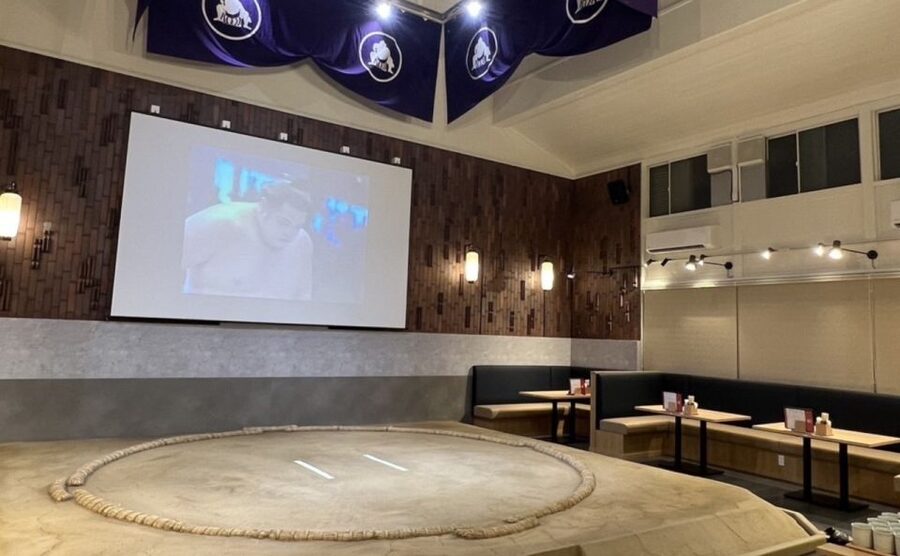
The location changes by day. On Mondays, the experience takes place in Asakusa. On Thursdays, it takes place in Ryogoku, Tokyo’s best-known sumo district.
That schedule can help you plan a themed day. A Monday session in Asakusa fits neatly with the area’s temples, traditional streets, and old Tokyo atmosphere. A Thursday session in Ryogoku pairs naturally with other sumo-related sights. The activity itself is the same basic experience, but the surrounding neighborhood can shape the rest of your day.
You are not given the exact meeting point in the general details. The operator sends a voucher with a map after booking. Build in extra time to follow that map, since the activity starts at 1 PM and late arrivals may miss the opening explanation.
The stated door-opening information contains an odd time notation, listing 12:40 while also stating a 1 PM start. Check the voucher for the current arrival instruction, and plan to be at the meeting point before 1 PM. The important point is simple: this is a fixed-start activity, not a drop-in demonstration.
There is no hotel pick-up or drop-off. You make your own way to the meeting point and return there when the two-hour session ends.
What the two-hour schedule feels like
The compact format is a strength. You get an introduction, explanations, demonstrations, audience interaction, photographs, and lunch without giving up half a day of sightseeing.
The opening teaching gives you a framework for the rest of the session. Instead of watching a demonstration with no context, you know what the wrestlers are showing and why it matters. The performance then turns those explanations into something physical and easy to remember.
The interactive portion changes the pace again. You are not simply sitting through a talk. You may watch someone from the audience try the ring, see a child take part, or be invited to join yourself. This is also the section most likely to generate laughter and memorable photographs.
Lunch follows as the relaxed final portion. The hot pot gives you time to settle down after the show and talk about what you have seen. Because the meal is prepared by the wrestlers, it still feels connected to the activity.
Two hours is enough for a satisfying introduction, but it does limit the amount of detail possible. If you want an exhaustive study of sumo’s institutions, rankings, or tournament history, you will need another source. This activity aims for clarity, contact, and fun.
How much value do you get for $95?
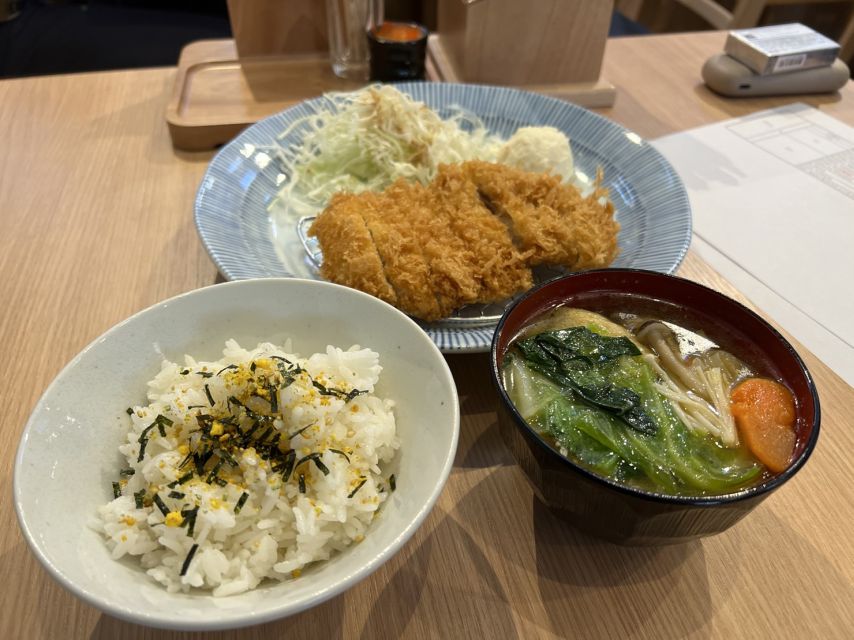
At $95 per person, this is not a cheap lunch. The price includes admission, participation, and food, but the main value is access to former professionals who explain and demonstrate the sport in English.
You are paying for a structured cultural experience, not simply a meal beside a ring. The instruction removes the confusion many first-time viewers feel, while the live demonstrations show details that are difficult to understand from a book or video. The chance to interact directly with the wrestlers adds another layer.
The small-group promise, limited to six participants, is also important. A small group should make it easier to hear the explanations, ask questions, and take photographs without feeling lost in a crowd. One account noted more tables and people than expected, so the current room arrangement may be larger than the group-size label suggests. If a very private setting is essential to you, confirm the format before booking.
The meal helps the price feel more reasonable, especially if you value an activity that combines lunch and entertainment. Food is described as plentiful and delicious, with some sessions including a drink and dessert. You also avoid paying separately for a sumo demonstration and a themed meal.
I would call it good value for someone who wants a clear, friendly introduction to sumo. It is less compelling if you mainly want to eat chanko nabe or watch an authentic tournament bout.
Who should book this experience
This is a strong choice for first-time visitors to Japan. You learn a distinctly Japanese sport through English explanations, then take part in a social meal. You do not need to understand rankings, techniques, or ritual before arriving.
Families should also consider it. The playful demonstrations, costume, audience participation, and approachable instructors give children something to watch and do. The meal adds a natural break, and the two-hour length is easier for younger attention spans than a long museum visit.
It suits adults as well, especially if you prefer cultural activities with a human connection. You are not only looking at an object or listening to an audio guide. You meet people who trained in the sport and can explain it from personal experience.
The activity is wheelchair accessible, which makes it an option for more visitors than many traditional sports experiences. You should still provide any needs when booking so the operator can give you the most useful meeting information.
This may not be the best match for someone seeking a serious athletic event. The bouts are playful, the show is made for a general audience, and the emphasis is on learning and entertainment. Think of it as an introduction led by former professionals, not a live tournament.
Useful planning advice before you book
Choose the day based on your wider Tokyo plans. Monday places you in Asakusa, while Thursday places you in Ryogoku. If the neighborhood matters to you, do not book on autopilot.
Arrive early enough to find the meeting point and settle in before 1 PM. The exact address comes with the voucher, and there is no included transport. The activity ends back at the starting point, so you can plan your next stop from there.
Wear something comfortable if you hope to participate. The ring portion is optional, and selection is not guaranteed, but comfortable clothing makes it easier to volunteer if invited.
Tell the operator about vegetarian or Halal requirements at least two days ahead. The same advice applies to any question about the meal or room setup. Last-minute requests are not a sound plan for a fixed lunch service.
Cancellation is free up to 10 days before the activity for a full refund. That is useful when you are arranging a Tokyo schedule with several timed visits, but check the booking terms attached to your reservation.
Should you book the Tokyo sumo experience?
Book it if you want sumo explained in English, enjoy light audience participation, and like the idea of lunch prepared by former wrestlers. The combination of instruction, physical demonstration, humor, photographs, and chanko nabe gives you a memorable two-hour introduction.
I would especially recommend it for families, first-time Japan visitors, and anyone who has watched sumo but never understood the rituals or tactics. You will get the most from it if you join in when invited, though you can still enjoy the session from your seat.
Skip it if your priority is an official tournament, a quiet gourmet lunch, or a private one-to-one lesson. For everyone else, $95 is a fair price for a focused cultural activity that makes sumo easier to understand and much more fun to watch.
FAQ
How long does the sumo experience last?
The activity lasts two hours.
What time does the activity start?
The activity starts promptly at 1 PM. You should arrive before the start time.
Where does the experience take place?
It takes place in Asakusa on Mondays and Ryogoku on Thursdays.
Is the activity conducted in English?
Yes. The instructor language is English.
Is lunch included?
Yes. Lunch is included, and the meal is chanko nabe, a Japanese-style hot pot prepared by the wrestlers.
Can I wrestle a sumo wrestler?
Some audience members may be selected to wear a sumo costume and take part in a playful demonstration. Participation is voluntary, and selection is not guaranteed for everyone.
Can I request a vegetarian or Halal meal?
Yes. Note the requirement in your reservation or contact the operator by email at least two days before the participation date.
Is the activity wheelchair accessible?
Yes. The activity is listed as wheelchair accessible.
New on our Tokyo list
- From Tokyo: Mount Fuji & Hakone Full Day Private Tour★ 4.9 · 25 reviews
- Tokyo Spectacular View Day-Cruise in 90 Minutes★ 5.0 · 25 reviews
- Real Tokyo Runner Club : Daikoku Car Meet Night Tour with JDM Car★ 5.0 · 25 reviews
- 2.5 Hour-Guided Cycle Tour in the Central Tokyo★ 5.0 · 25 reviews
- Ramen Making from Scratch +Akihabara Tour –Cooking Class★ 5.0 · 25 reviews
- [Self-Drive] Tokyo & Daikoku Custom Car Driving Tour★ 4.9 · 25 reviews
- Tokyo: 2-Hour Night Bike Tour of the City’s Hidden Gems★ 4.9 · 25 reviews
- Samurai themed Entertainment show in Shinjuku★ 4.5 · 25 reviews
Sumo Experiences, compared.
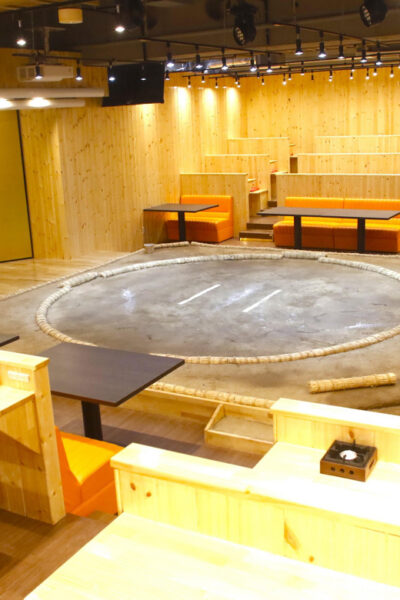
Sumo Show Experience with Chicken Hot Pot and a Photo
Read our review →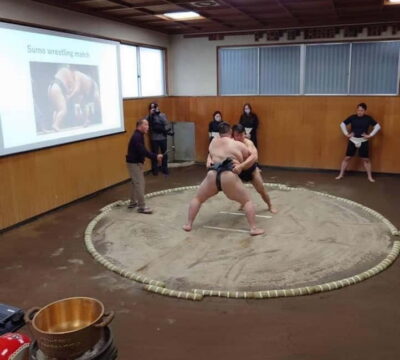
Tokyo Shinjuku Sumo Show & Experience with Photo
Read our review →
Authentic Sumo Experience in Tokyo: Enter the Sanctuary
Read our review →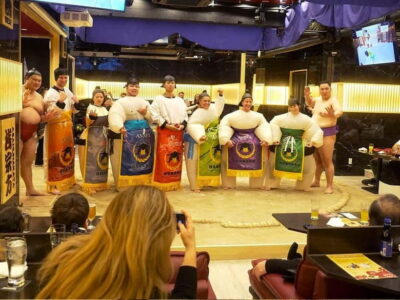
Luxury Sumo Show Experience & Japanese cuisine & Drink
Read our review →
Browse the lists this tour appears in