
Reviewed · TSUKIJI & TOYOSU MARKET TOURS
Tokyo: Tsukiji Fish Market Tour with 6 Stops & Seafood Lunch
Tsukiji is no longer Tokyo’s main wholesale fish market, but its Outer Market still delivers the smells, sounds, narrow lanes, and food stalls that made this district famous. This tour pairs those market bites with a Buddhist temple, a Shinto shrine, and a city view from Shiodome, so you get more than a seafood stop.
I like the small group, limited to seven people, and the way the guide helps you choose foods that can be hard to order on your own. I also like the balance between eating and culture: temple customs at Tsukiji Hongan-ji, market traditions, and a sit-down donburi lunch.
The main consideration is that this is a tour of the Outer Market, not the wholesale fish market that moved to Toyosu. The lanes can be packed, and some people find the market portion rushed. Drinks such as beer or sake cost extra, and the advertised dietary flexibility is not guaranteed.
In This Review
- Key points to know before booking
- Tsukiji today: a food district with an old-market feel
- Starting at Tsukiji Hongan-ji
- Eating through the Outer Market
- Namiyoke Inari Jinja and market traditions
- The included donburi lunch
- Shiodome views above the market
- Is $94 a fair price?
- Timing, group size, and comfort
- Who will enjoy this Tsukiji tour most?
- Should you book it?
- FAQ
- Where does the Tsukiji tour meet?
- How long does the experience last?
- What food is included?
- Are drinks included?
- Is the tour suitable for vegetarians or vegans?
- How large is the group?
- Can I cancel if my plans change?
Key points to know before booking
- Five or more tastings: Try several market foods, which may include tuna sushi, oysters, grilled eel, rolled omelet, mochi, or other seasonal items.
- Temple and shrine visits: Learn basic Japanese religious customs at Tsukiji Hongan-ji and Namiyoke Inari Jinja.
- Seafood donburi lunch: A seafood bowl is included, with the lunch allowance capped at 1,500 yen.
- Small group format: The maximum group size is seven, giving you a better chance to ask questions and get help ordering.
- Shiodome views: Finish near Shiodome Media Tower, where the observation area offers a high view over Tsukiji and Tokyo Bay.
- Bring cash and arrive early: Street food purchases are not included, and late arrivals cannot join the group or receive a refund.
Tsukiji today: a food district with an old-market feel
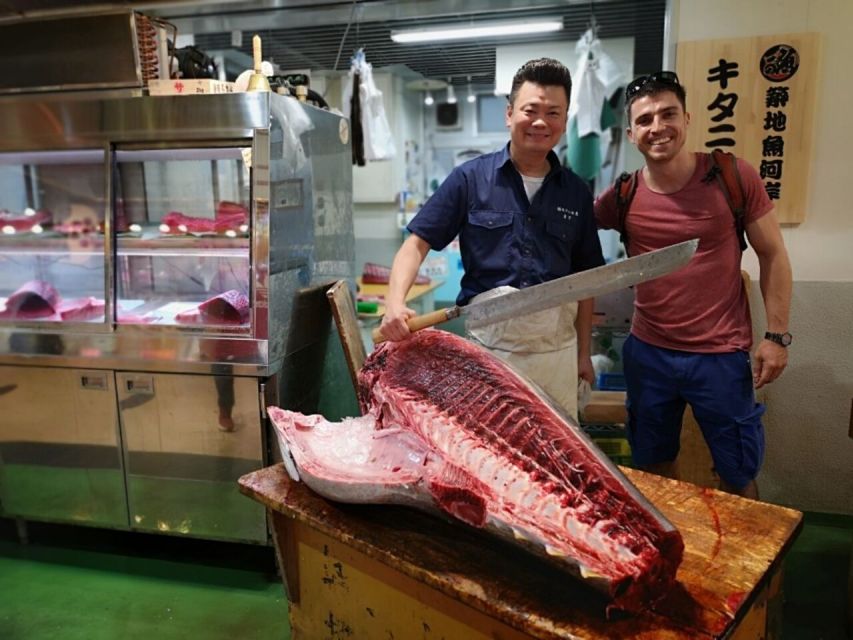
The Tsukiji of today needs a little explanation. Tokyo’s main wholesale fish market moved to Toyosu, including the famous tuna auction activity. Tsukiji’s Outer Market remains in its original area, though, with small shops, food counters, knife sellers, seafood stalls, and prepared-food vendors.
That distinction matters. If you expect to walk through a giant wholesale warehouse, this experience will disappoint. If you want to eat your way through a compact, crowded market district and learn how Japanese food culture works, it makes much more sense.
I see the market as the heart of the tour. Your guide leads you through the lanes, points out foods and products, and helps you decide what is worth trying. This is useful because many stalls are designed for local shoppers, not for people who need an English explanation or a clear menu.
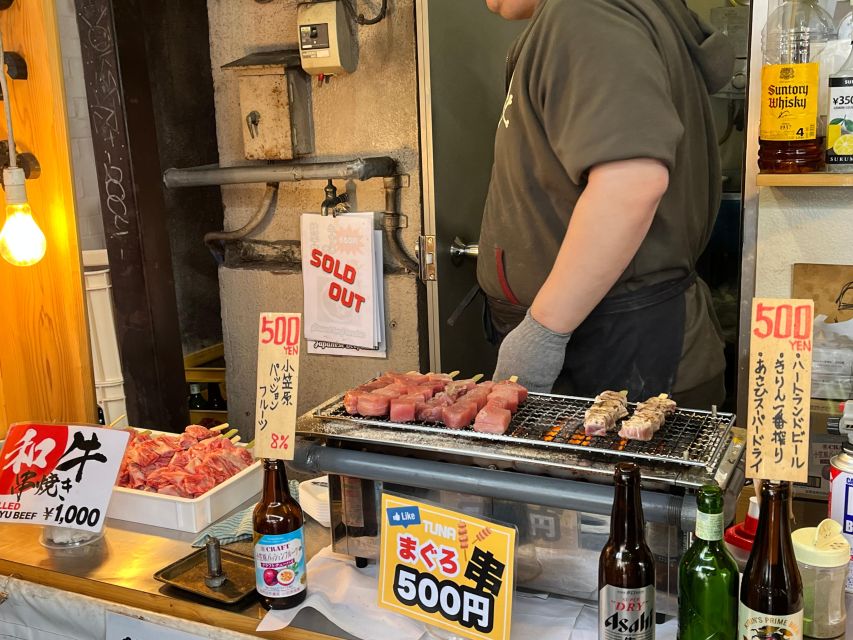
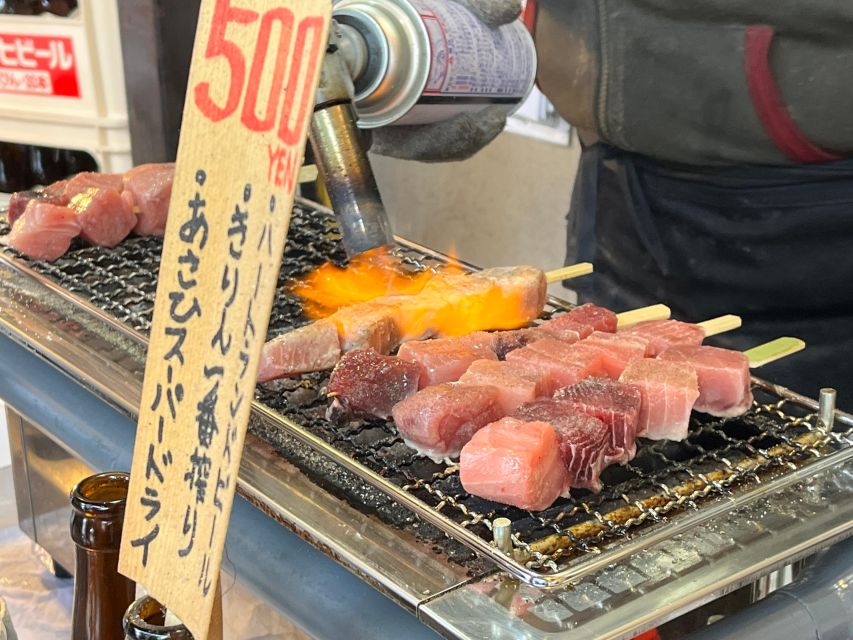
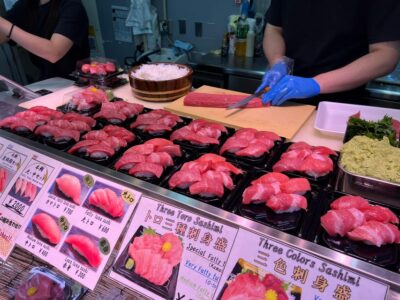
The group stops for at least five tastings. The exact selection can change, but the foods described by participants include tuna sushi, oysters, unagi, yakitori, rolled omelet, tuna-shaped taiyaki, custard-filled mochi, and salmon roe. That range gives you a better sense of the market than simply sitting down for one sushi meal.
The tastings are small, so do not expect each one to be a full meal. Think of them as a series of introductions. You might try a fresh seafood item, a grilled snack, and a sweet before lunch. The guide can also explain what you are eating and how it fits into Japanese food customs.
More market mornings in Tokyo:
- Tokyo Tsukiji Fish Market Food and Culture Walking Tour
★ 5.0 · 3,184 reviews - Tokyo: Tsukiji Fish Market Food and Walking tour
★ 5.0 · 1,724 reviews - Tokyo: Tsukiji Fish Market Guided Walking Tour
★ 4.9 · 1,397 reviews
Starting at Tsukiji Hongan-ji
The meeting point is outside the main gate of Tsukiji Hongan-ji, near Tsukiji Station. Look for the guide holding a red or orange MagicalTrip sign. Pay close attention to the station name: Tsukiji Station is different from Tsukijishijo Station, and going to the wrong one can create a stressful start.
The tour opens with about 20 minutes inside or around Tsukiji Hongan-ji, a Buddhist temple with roughly 300 years of connection to the district. This is not just a quick photo stop. Your English-speaking guide introduces Japanese worship customs and explains how people behave at a temple.
For a first morning in Tokyo, this cultural opening works well. You begin with a quiet place before entering the tight market lanes. It also gives you context for the religious sites that appear later, rather than treating them as random stops between food stalls.
You should expect a guided introduction rather than an extended religious lecture. The temple visit is short, but it helps you understand practices such as respectful behavior and the difference between Buddhist and Shinto settings.
Eating through the Outer Market
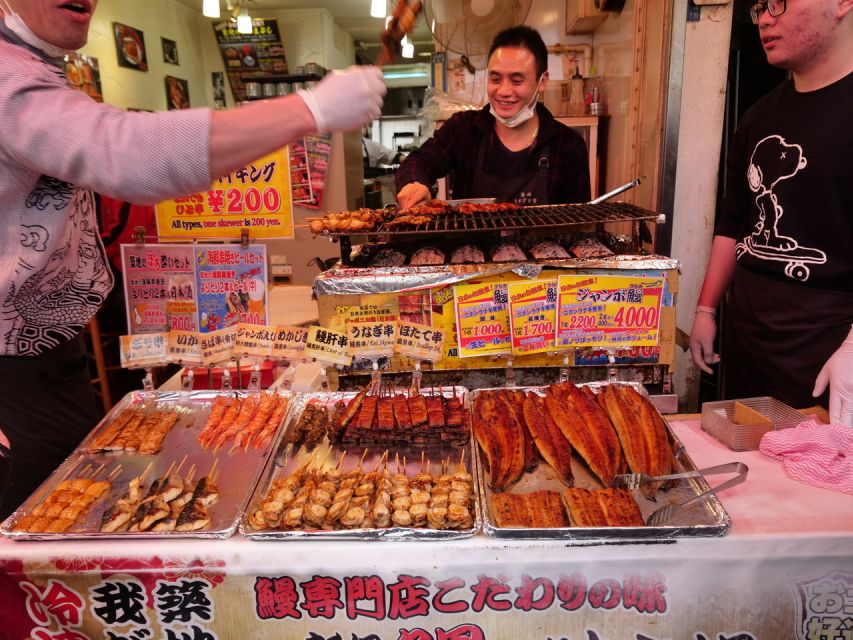
The market visit lasts about an hour, including shopping and food tastings. This is the part where the tour earns much of its price. A guide can lead you to stalls you might pass without noticing and can explain how to buy foods that may be unfamiliar.
A few specific tastings help show the range. Unagi gives you grilled freshwater eel with a sweet-savory flavor. Tamagoyaki, or rolled omelet, is soft and gently sweet. Taiyaki is usually a fish-shaped pastry, and the market version may have a custard filling rather than seafood. Oysters, tuna, sashimi, ikura, and grilled skewers bring you back to the market’s seafood focus.
The best feature is choice. You can ask the guide what to try, what to buy, and where to find seasonings or flavorings. Several people have found the guide useful for locating products to take home, not just snacks to eat on the spot.
The crowded lanes are also the tour’s biggest weakness. On a Saturday morning, the market can become difficult to navigate. You may need to move slowly, keep close to the group, and put away a large camera or bag. If you want plenty of time to photograph every stall or browse at your own pace, three hours with a group may feel tight.
One practical advantage of a guide is that you do not have to solve every ordering problem yourself. Guides such as Mai, Ken, Momo, Kiyo, Taka, and Naoki have been praised for explaining food, helping with choices, and keeping the group together. The experience depends partly on who leads your departure, but the repeated strength of the tour is personal guidance rather than a scripted walk.
Do not count on vendors providing a lengthy interactive demonstration. The guide can explain the food and help you order, but this is not a cooking class or a private introduction to every shopkeeper.
Namiyoke Inari Jinja and market traditions
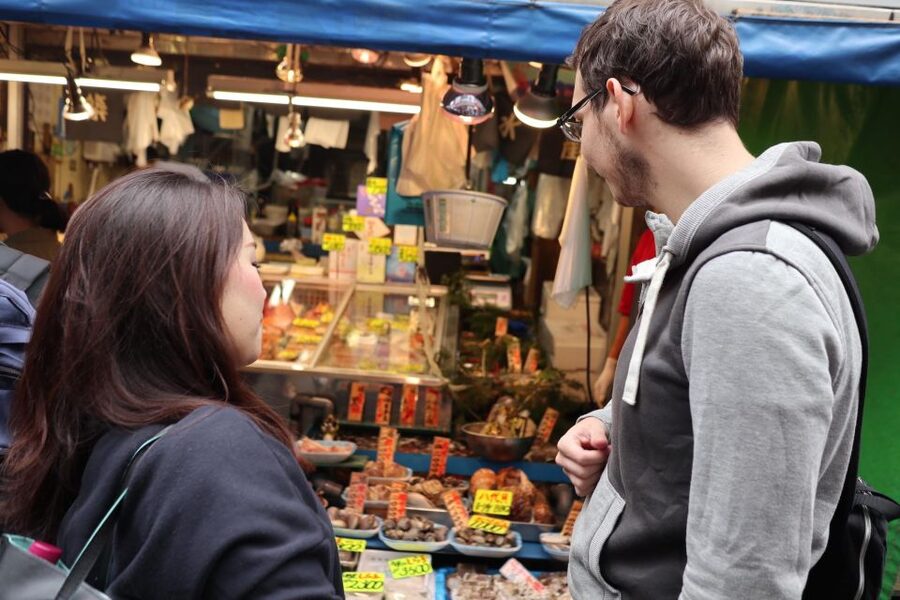
The next religious stop is Namiyoke Inari Jinja, a Shinto shrine near the market. The visit lasts about 20 minutes and adds another layer to the district’s identity.
The shrine has a practical connection to the market community, and your guide uses the stop to explain Japanese religious customs and local views of worship. This is valuable because Shinto and Buddhism often appear side by side in Japan, yet the rituals and settings can look confusing at first.
The shrine visit also breaks up the food stops. After working through crowded lanes, you get a short pause to look at a sacred site and hear why it matters locally. You will not spend a long time here, but the stop helps the tour feel like a neighborhood walk rather than a simple tasting route.
If your main goal is maximum seafood, you might see the shrine as time taken away from the stalls. I think the tradeoff is worthwhile, especially if this is your first visit to Japan and you want a little cultural context with your meal.
A few more Tokyo bookings worth comparing
- Tokyo: Mt.Fuji & Lake Kawaguchiko 1-Day Bus Tour w/Optional Lunch
★ 4.5 · 839 reviews - Tokyo: Sumo Experience and Chanko Nabe Lunch
★ 4.8 · 257 reviews - Tokyo: 1 Day Bus Tour with Meiji-Jingu,Odaiba,lunch&Skytree
★ 4.6 · 156 reviews - Mt. Fuji, Oishi Park & Arakurayama Pagoda Bus Tour with Lunch
★ 5.0 · 128 reviews
The included donburi lunch
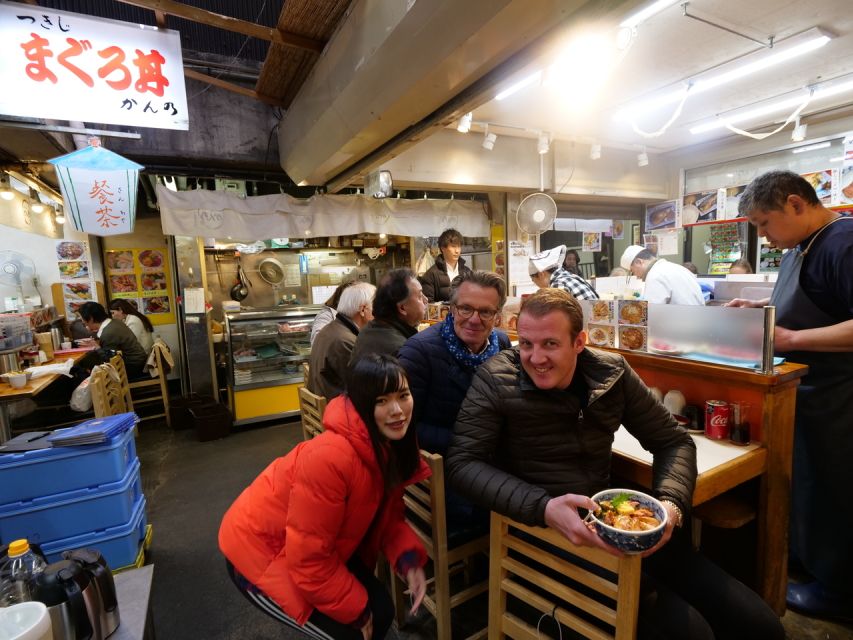
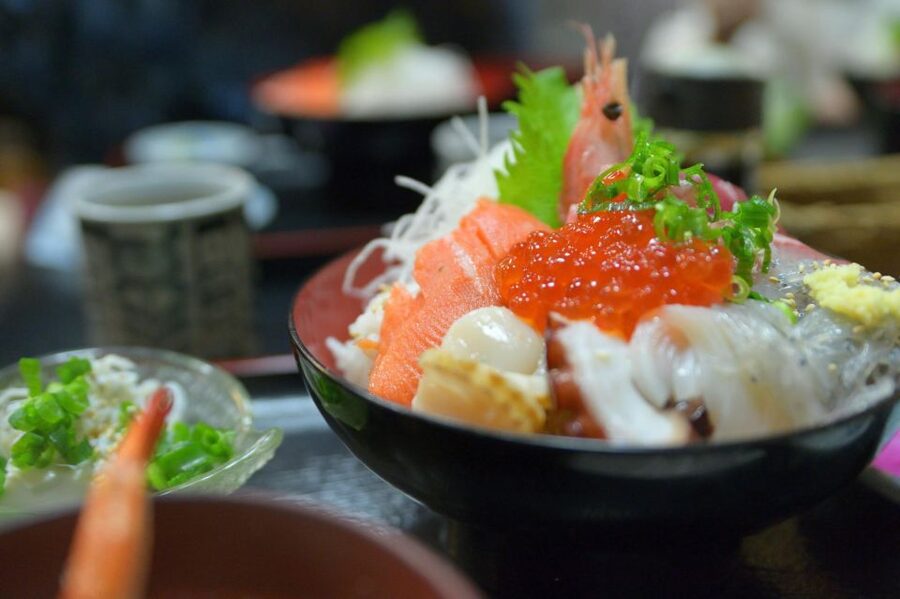
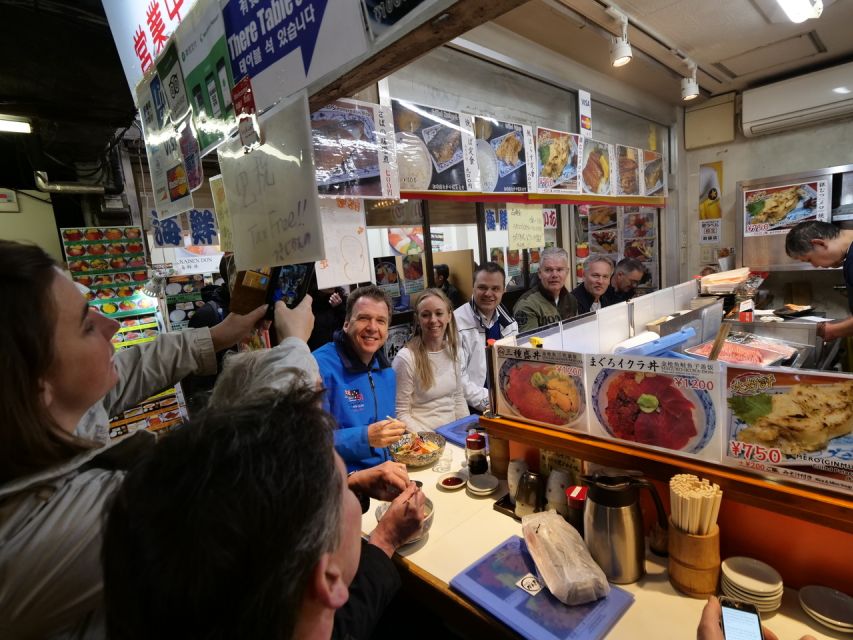
The tour finishes the market section with a sit-down seafood lunch. You receive a donburi bowl, a Japanese dish served over rice, at a seafood restaurant in the Tsukiji area.
This is a welcome change after standing and walking through the market. Instead of rushing from stall to stall, you can sit down, compare impressions, and eat a proper portion of seafood. Fresh sashimi and salmon roe have been particular highlights, and one participant described the raw fish as the best they had eaten.
The lunch allowance is included up to 1,500 yen. That makes the $94 price easier to assess, since the fee covers the meal, five or more tastings, a certified guide, and tour photos. You still need cash for extra market food, and beer or sake is not included.
The alcohol detail deserves special attention. The experience presents Japanese beer or sake as a natural way to enjoy the meal, but you must buy it yourself. Treat those drinks as optional add-ons, not part of the package.
Dietary needs require caution. The information describes vegetarian meals in one place, but the practical notes also state that vegan and vegetarian options are not available. It also says allergy-free food cannot be guaranteed, since the food is prepared in kitchens outside the tour company’s control. If you have an allergy, serious restriction, or need a meat-free meal, confirm before paying and do not assume substitutions will be possible.
Shiodome views above the market
After lunch, the group walks to the Shiodome Media Tower area for about 20 minutes. The final stop gives you a high view over the district and Tokyo Bay, with several participants describing an observation deck around the 46th floor.
This is a smart ending. From street level, Tsukiji can feel like a maze of signs, stalls, and people. From above, you can place the market in the wider city and see how close it is to Tokyo’s modern high-rise districts and waterfront.
The view is not the main reason to book the tour, but it adds variety and gives you a final photo opportunity. It also helps prevent the experience from becoming three straight hours of eating in tight lanes.
The tour returns to the Tsukiji Hongan-ji meeting point. Guides have sometimes helped people find the correct train, buy tickets, or continue toward another part of Tokyo after the formal tour. That extra help can be especially useful on a first day, though it should be treated as a kindness rather than a promised part of the itinerary.
Is $94 a fair price?
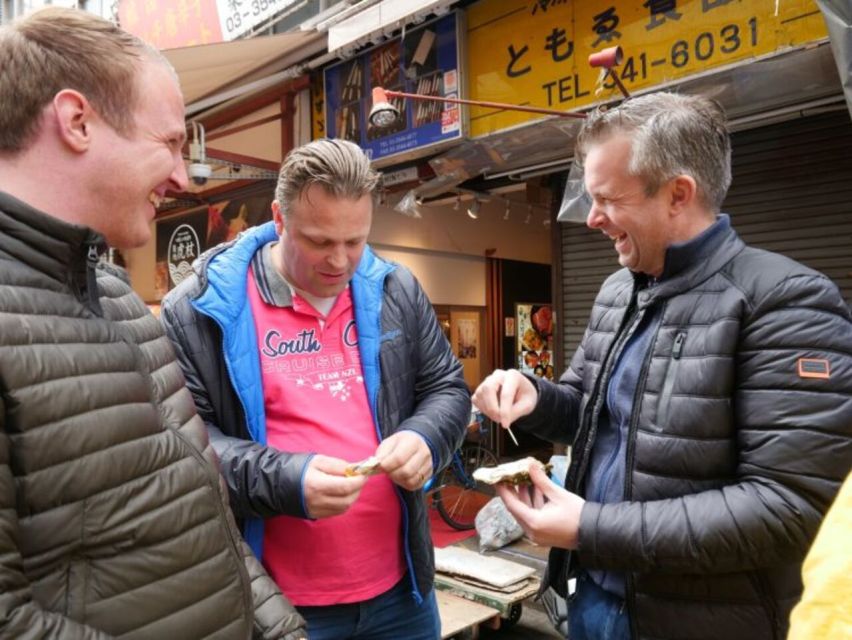
At $94 per person, this is not the cheapest way to visit Tsukiji. You can walk through the Outer Market independently and buy individual snacks for less. The question is what you are paying to avoid.
The fee covers three hours with an English-speaking guide, five or more tastings, a seafood donburi lunch up to 1,500 yen, a temple and shrine introduction, the Shiodome stop, and tour photos. If you are comfortable reading menus, finding stalls, and handling a crowded market alone, the added cost may not feel necessary.
I think the price is easier to justify for first-time visitors, families, couples, and solo visitors who want a clear route. A small group gives you access to a guide without the cost of a private tour. You also get help identifying foods and finding a restaurant, which has real value when you have only one morning in the area.
The tour can be especially useful at the start of a Japan trip. One participant used it during a layover and found it a helpful introduction to Tokyo. Another guide helped a group with onward train travel. Those details show the practical benefit of a good local escort, though the exact level of help depends on your guide and schedule.
Timing, group size, and comfort
The tour lasts three hours and is offered at different starting times, depending on availability. The market is a working food district, so the time of day affects how crowded it feels. A late-morning Saturday departure can mean very slow movement through the lanes.
The maximum group size is seven. That is small enough for questions and food ordering, but it is still a group. You need to stay with the guide, especially at busy crossings and narrow stalls.
Wear comfortable shoes and bring a small amount of cash. You will be walking and standing, and extra street food is not covered. Keep your belongings compact so you can move through crowded areas without blocking shoppers.
Arrive early. The group starts on time, and late arrivals who miss it cannot join, reschedule, or receive a refund. Build in extra time to find the correct station exit and the temple meeting point.
All ages may join, but parts of the route are not accessible to wheelchairs or strollers. If mobility access is important, ask before booking rather than assuming the small group will make the route easier.
Who will enjoy this Tsukiji tour most?
I would choose this experience if you want food guidance, local context, and a planned morning. It suits you if you are curious about Japanese seafood but are not sure what to order, or if you want your market visit tied to temples and shrines.
Families can benefit from the variety of small tastings, and several guides have been praised for keeping children engaged. Couples and solo visitors also fit the format well. A solo booking may even become a very small group, depending on demand.
You may prefer to go independently if you want to photograph every shop, spend hours shopping, or avoid a fixed pace. You should also reconsider if you expect the old wholesale fish market, a tuna auction, alcohol included in the price, or guaranteed vegetarian and allergy-safe food.
The strongest part of the experience is the guide. Names such as Mai, Ken, Kiyo, Naoki, Momo, Taka, and Max appear in the tour’s praise, with particular approval for clear English, food explanations, route help, and friendly service. No guide can remove the crowds, but a good one makes the market far easier to understand.
Should you book it?
Book this Tsukiji tour if you want a three-hour introduction to food and culture, not a technical tour of Tokyo’s wholesale fish trade. The tastings, included donburi lunch, temple and shrine visits, and Shiodome view make it a well-rounded morning.
Skip it if you are happy exploring Tsukiji alone, need firm dietary guarantees, or want long, unhurried time at each stall. For everyone else, the small group and food guidance make the $94 cost reasonable, especially on a first Tokyo visit. Bring cash, arrive at Tsukiji Station early, and keep your expectations focused on the Outer Market.
FAQ
Where does the Tsukiji tour meet?
The meeting point is at Tsukiji Station, near the main gate of Tsukiji Hongan-ji. The guide will hold a red or orange MagicalTrip sign. Do not go to Tsukijishijo Station by mistake.
How long does the experience last?
The tour lasts three hours. Starting times vary, so check availability when booking.
What food is included?
The tour includes five or more food tastings in the market and a seafood donburi lunch. The included lunch allowance is capped at 1,500 yen.
Are drinks included?
No. Japanese beer and sake are available for you to purchase separately, but they are not included in the tour price.
Is the tour suitable for vegetarians or vegans?
The practical information states that vegan and vegetarian options are not available. Other details mention vegetarian meals, so you should confirm directly before booking. Allergy-free food cannot be guaranteed.
How large is the group?
The tour is a small-group experience limited to seven participants. A certified English-speaking guide leads the group.
Can I cancel if my plans change?
You can cancel up to 24 hours in advance for a full refund. You can also reserve now and pay later. Late arrivals who miss the group cannot join, reschedule, or receive a refund.
More Shopping Tours in Tokyo
- Tokyo: Tsukiji Fish Market Sushi Making Class with Pro Chef
★ 4.9 · 506 reviews - Tokyo Food Tour Taste Fresh Delights at Tsukiji Market
★ 5.0 · 429 reviews - Tokyo Tsukiji Fish Market Tour and Sushi Making Lesson
★ 5.0 · 390 reviews - Tsukiji Fish Market: Street Food & Culture Walking Tour
★ 4.8 · 259 reviews
More Markets in Tokyo
- Tsukiji Fish Market Guided Tour and Sushi Making with Pro Chef
★ 5.0 · 775 reviews - Tokyo: Tsukiji Fish Market Food and Culture Walking Tour
★ 4.7 · 757 reviews - Tsukiji Fish Market: Street Food & Culture Walking Tour
★ 5.0 · 669 reviews - Tsukiji Fish Market Small-Group Food Walking Tour
★ 5.0 · 621 reviews
New on our Tokyo list
- From Tokyo: Mount Fuji & Hakone Full Day Private Tour★ 4.9 · 25 reviews
- Tokyo Spectacular View Day-Cruise in 90 Minutes★ 5.0 · 25 reviews
- Real Tokyo Runner Club : Daikoku Car Meet Night Tour with JDM Car★ 5.0 · 25 reviews
- 2.5 Hour-Guided Cycle Tour in the Central Tokyo★ 5.0 · 25 reviews
- Ramen Making from Scratch +Akihabara Tour –Cooking Class★ 5.0 · 25 reviews
- [Self-Drive] Tokyo & Daikoku Custom Car Driving Tour★ 4.9 · 25 reviews
- Tokyo: 2-Hour Night Bike Tour of the City’s Hidden Gems★ 4.9 · 25 reviews
- Samurai themed Entertainment show in Shinjuku★ 4.5 · 25 reviews
Tsukiji & Toyosu Market Tours, compared.
Tokyo Tsukiji Fish Market Food and Culture Walking Tour
Read our review →
Tokyo Sushi Making Class in Tsukiji with Professional Chef
Read our review →
Tsukiji Fish Market Guided Tour and Sushi Making with Pro Chef
Read our review →Tsukiji Fish Market Food and Culture Walking Tour
Read our review →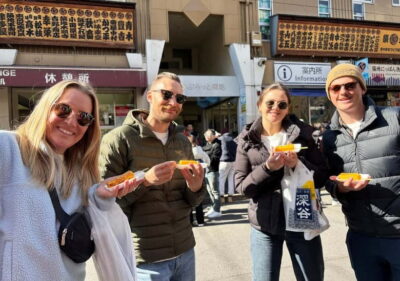
Tsukiji Fish Market: Street Food & Culture Walking Tour
Read our review →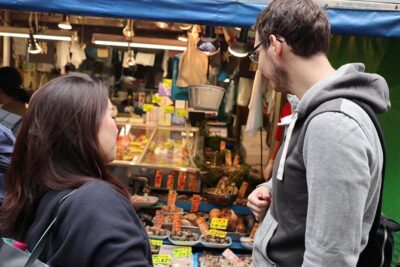
Tsukiji Fish Market Small-Group Food Walking Tour
Read our review →Browse the lists this tour appears in