Reviewed · GUIDED
Tokyo Baseball Experience Tour with Expert English-Speaking Guide
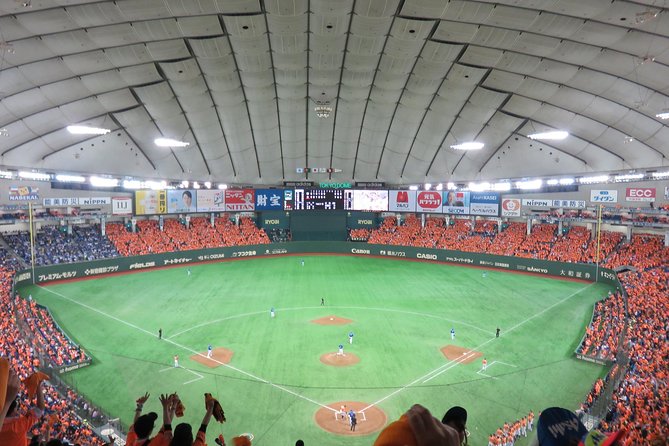
Japanese baseball is not just a game. It is a carefully practiced chorus, a shared ritual, and a very good excuse to spend an evening at Meiji Jingu Stadium. This tour gives you an English-speaking guide, a seat in the S, A, or B section, and an explanation of the chants and anthems that turn the crowd into part of the show.
I like the small group of up to 12 people, which makes it easier to hear the guide and ask questions. I also like the audio headset, especially in an open-air stadium where crowd noise can quickly swallow a quiet explanation. The main drawback is timing: the tour ends when the game begins, so you may not watch the full match.
In This Review
- Key points at a glance
- Why Japanese baseball feels different
- Arriving at Meiji Jingu Stadium
- Learning the fan language before first pitch
- Choosing between S, A, and B Seats
- The game begins, but the tour does not cover the full match
- Food, drinks, and merchandise at the stadium
- Is $98 a fair price?
- Rain and the open-air stadium
- Who will enjoy this experience most?
- Booking and cancellation details to keep in mind
- Should you book the Tokyo Baseball Experience?
- FAQ
- Where does the Tokyo Baseball Experience begin?
- Where does the activity end?
- How long does the experience last?
- Is admission to the baseball game included?
- What do the S, A, and B seats offer?
- Is food included?
- What happens if I am late?
- What happens if it rains?
Key points at a glance
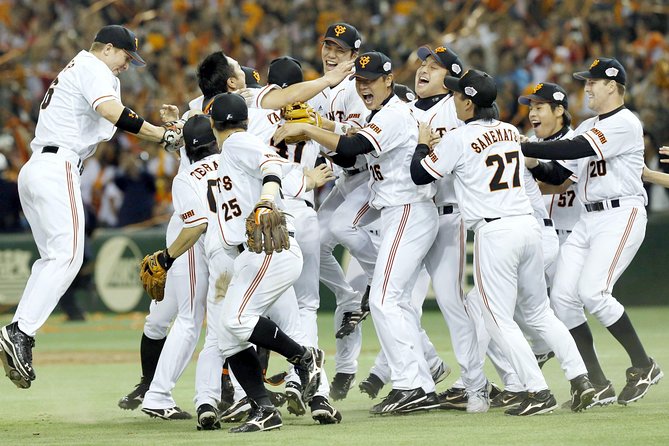
- Meiji Jingu Stadium setting: Watch Japanese baseball at one of Tokyo’s best-known open-air ballparks.
- Fan chants and anthems: Learn the songs and calls used by Japanese supporters, then join the crowd.
- Three possible seat areas: S Seats sit behind home plate, A Seats are near first or third base, and B Seats are behind the foul pole.
- English-speaking baseball guide: Hear about Japanese baseball and its differences from Major League Baseball through an audio headset.
- Four-hour format: The guided portion leads into the start of the game, but it does not include the complete match.
- Maximum of 12 people: This is a join-in activity, and at least eight bookings are needed for it to operate.
Why Japanese baseball feels different
If you know baseball through Major League Baseball, you will recognize the basic game quickly. The setting and crowd behavior, however, can feel quite different. Japanese fans use organized chants and anthems, often tied to individual players or teams. The noise is not random. It has rhythm, timing, and a strong sense of group participation.
That is the heart of this experience. You are not simply handed a ticket and pointed toward a gate. The guide explains how baseball fits into Japanese sporting culture, then teaches you enough of the fan language to take part. You do not need to arrive as an expert. In fact, this tour may be more useful if you know the rules but do not know what the crowd is doing.
The audio headset matters here. Meiji Jingu Stadium is open to the sky, and a baseball crowd can be loud. With the headset, you can hear explanations about the sport, the stadium, and differences between Japanese baseball and MLB without needing to stand beside the guide at every moment.
A few more Tokyo bookings worth comparing
- Mt Fuji and Hakone 1-Day Bus Tour Return by Bullet Train
★ 5.0 · 26,383 reviews - 1-Day Tokyo Bus Tour
★ 5.0 · 14,250 reviews - Tokyo: TOKYO SKYTREE® Admission ticket
★ 4.5 · 11,192 reviews
Arriving at Meiji Jingu Stadium
The meeting point is Meiji Jingu Baseball Stadium at 3-1 Kasumigaokamachi in Shinjuku City. The stadium is near public transportation, but you are responsible for getting there. No transport to or from the attraction is included, so allow extra time for the journey and for finding the exact meeting spot.
Arrive at least 10 minutes before the scheduled meeting time. This is important. The group may leave without anyone who is late, and the guide may not be able to stop the tour while trying to reunite the group. You receive the guide’s phone number before the activity, so you can call if you need to meet the group later, but arriving on time is far simpler.
The tour has a minimum of eight people and a maximum of 12. That small size is a real advantage for an explanation-heavy activity. You can ask about rules, player chants, seating, or the differences between Japanese and American baseball without trying to catch the guide’s attention in a large crowd.
Learning the fan language before first pitch
The guided part focuses on what makes baseball in Japan special. You learn about the sport’s place in Japan and how supporters create a shared atmosphere through chants and anthems. The goal is not to turn you into a lifelong supporter in one afternoon. It is to give you enough context to understand what is happening around you.
I especially like this part for first-time visitors. Without guidance, you might notice that the crowd is singing and clapping but miss the structure behind it. Here, you can learn the calls before the action begins, then try them as the crowd joins in.
The guide is described as both an English speaker and an expert Japanese baseball fan. No individual guide name is provided, so do not book this expecting a specific person. The useful point is the combination of language help and baseball interest. You receive the explanation through an audio headset, which lets you hear clearly even when the stadium gets noisy.
The discussion also covers differences between Japanese baseball and MLB. That comparison will suit American baseball fans, but it is not limited to them. If you have only a basic understanding of baseball, you can still follow the broader explanation and learn how the sport is presented and supported in Japan.
Choosing between S, A, and B Seats
Your ticket is included, but the exact section depends on availability. The three possible categories offer different views:
- S Seats: Behind the batter, close to the center of the action.
- A Seats: Behind first or third base, with a broad view of the field and the players on the bench.
- B Seats: Behind the foul pole, with a good view of outfield play.
This matters because the tour does not promise one particular section. S Seats are the obvious choice if you want to watch pitches and at-bats from behind home plate. A Seats may offer the best balance between a full-field view and a look toward the dugout areas. B Seats put more emphasis on the outfield and can feel less central to the action.
Do not assume that paying $98 guarantees a premium seat directly behind home plate. S, A, and B are all included possibilities, and availability determines which one you receive. The practical advantage is that every listed category is intended to provide a good view, but the exact experience can still vary by section.
Same corner of Tokyo, a completely different plan:
- Tokyo: teamLab Planets TOKYO Digital Art Museum Entry Ticket
★ 4.6 · 9,779 reviews - Mt Fuji & Hakone Cruise, Drum Show Bullet Train 1 Day from Tokyo
★ 4.0 · 7,413 reviews - Tokyo: Sumo Show Experience with Chicken Hot Pot and a Photo
★ 4.8 · 6,678 reviews - Tokyo: Shinjuku Food Tour (13 Dishes at 4 Local Eateries)
★ 5.0 · 6,603 reviews
The game begins, but the tour does not cover the full match
This is the detail I would keep in mind before booking. The activity lasts about four hours, and the game itself can run for roughly three hours, but the tour ends when the game commences. In plain terms, you take part in the guided introduction and watch the beginning of the match, rather than staying with the group until the final out.
One person who expected to arrive before the start and enjoy the entire game found this timing different from what they had imagined. That is a fair concern. If your main goal is to watch every inning, you need to check whether the ticket and arrangements allow you to remain after the guided portion ends. The supplied details only promise the tour through the start of the game, so do not build your plans around a complete match.
For many people, this format works well. You get cultural context, fan instruction, a seat, and the opening atmosphere without committing your whole evening to baseball. It is a good fit if the game is one part of a Tokyo itinerary. It is less suitable if you are a serious baseball fan who wants to track the complete scorecard from first pitch to the end.
Food, drinks, and merchandise at the stadium
Food and drinks are not included in the $98 price. Snacks, beverages, and merchandise are available for purchase at stadium stands, so bring money or a payment method you expect the venue to accept.
This arrangement gives you control over spending. You can buy a quick snack and drink, or skip concessions entirely. The price of the tour covers the guide, seat ticket, headset, service fee, and tax, but not anything you choose to purchase inside the stadium.
If you want to eat before the game, plan to do it before arriving or leave enough time to buy something at the venue. Do not arrive assuming a meal is part of the experience. The tour is about the baseball setting and the guided introduction, not a food tour.
Is $98 a fair price?
At $98, this is more expensive than buying a standard baseball ticket on your own. You are paying for more than entry, though. The package includes an English-speaking guide, an S, A, or B seat, an audio headset, service fees, and tax. The guide also gives you access to the cultural side of the game, especially the chants and anthems that are hard to understand from a ticket alone.
I see the value most clearly in the explanation. If you already understand Japanese baseball, know the fan songs, and can manage the stadium without help, the extra cost may not feel worthwhile. You could prefer to buy a ticket independently and stay for the whole match.
If you are visiting Tokyo for a short time, the price can make more sense. You receive a ready-made introduction to a local sporting tradition, in English, with a small group and a seat selected from three useful sections. You also avoid the uncertainty of arriving without knowing how the crowd participates.
The key question is not simply how much the ticket costs. Ask yourself how much you value interpretation and participation. If you want to understand what you are seeing and join the chants with some confidence, the added fee has a clear purpose.
Rain and the open-air stadium
Meiji Jingu Stadium is an open-air venue, so weather can affect the event. If heavy rain causes the match to be canceled, you receive a full refund. If there is light rain, the match goes ahead.
The less comfortable case is sudden rain after the game has started. If the match is already under way and rain begins unexpectedly, no refund is provided. Check the forecast before leaving, and dress for conditions that may change. The tour does not promise a covered setting.
This is not a reason to avoid the activity, but it is a reason to understand the policy. Baseball is tied to the weather here, and the refund rules are strict once play begins.
Who will enjoy this experience most?
I would recommend this tour to several types of people:
- First-time visitors to Japanese baseball: You receive the cultural context that a standard ticket does not provide.
- MLB fans: The guide explains differences between Japanese baseball and Major League Baseball, giving you a useful comparison.
- Solo visitors and couples: The join-in group format provides company without the feel of a large bus tour.
- Families with older children: There is no age requirement, but every child must be accompanied by an adult, and every person needs a reservation.
- Short-stay visitors: The four-hour format introduces the stadium without requiring a full evening at the ballpark.
I would hesitate to recommend it to someone who only wants the longest possible baseball viewing time. Since the tour ends when the game begins, it is not the best match for a full-game plan unless you confirm what happens with your seat after the guided portion.
The group size also has a practical limit. Eight bookings are needed for the tour to operate, and the maximum is 12. If the minimum is not reached, the activity is canceled and you receive a full refund. That protects you from joining an undersized tour, but it also means plans can change if demand is low.
Booking and cancellation details to keep in mind
Confirmation is sent within 48 hours of booking, subject to availability. Since seats depend on availability and the minimum group size applies, do not treat the reservation as fully settled until confirmation arrives.
The cancellation information supplied for this experience is strict and somewhat inconsistent. One section describes fees of 25 percent up to 20 days before the event, 50 percent up to 14 days before, and 100 percent seven days or less before the event. Another section says the activity is non-refundable and cannot be changed for any reason.
Because those terms do not match perfectly, I would confirm the exact cancellation rule before paying. Once you are inside the seven-day period, assume you will lose the full amount if you cancel. Travel insurance does not change the provider’s own policy.
Should you book the Tokyo Baseball Experience?
Book this if you want more than a seat. The chants, anthems, headset commentary, and comparison with MLB give you a way to understand Japanese baseball as a social event, not just a game on a field. The small group and included ticket make the experience easy to follow once you reach the stadium.
Skip it if watching the complete match is your priority. The tour ends as the game starts, food is extra, transportation is not included, and the cancellation rules require care.
For most first-time visitors who want a compact introduction to Japanese baseball, I think the tour has a clear purpose and good practical value. Just arrive early, check the weather, confirm the cancellation terms, and book it for the cultural experience and opening action, not a full nine-inning evening.
FAQ
Where does the Tokyo Baseball Experience begin?
It begins at Meiji Jingu Baseball Stadium, 3-1 Kasumigaokamachi, Shinjuku City, Tokyo 160-0013, Japan.
Where does the activity end?
The activity ends back at the meeting point at Meiji Jingu Baseball Stadium.
How long does the experience last?
The tour lasts approximately four hours. The game itself can last about three hours, but the guided activity ends when the game begins.
Is admission to the baseball game included?
Yes. A baseball seat ticket is included, with an S, A, or B seat assigned depending on availability.
What do the S, A, and B seats offer?
S Seats are behind the batter. A Seats are behind first or third base. B Seats are behind the foul pole and provide a good view of outfield play.
Is food included?
No. Snacks, drinks, and merchandise are available to buy at stadium stands.
What happens if I am late?
You should arrive at least 10 minutes before the scheduled meeting time. The group may begin without you. You receive the guide’s phone number before the tour and can call if you need to meet the group later.
What happens if it rains?
Heavy rain that causes the match to be canceled results in a full refund. Light rain does not cancel the match. If rain begins after the game has started, no refund is provided.
New on our Tokyo list
- Sumi-e Experience in a relaxing green tea shop in Tokyo★ 5.0 · 3 reviews
- Tokyo : Kamikaze Street Drift Ride★ 5.0 · 3 reviews
- Private Zen Meditation in English in Shinjuku, Tokyo★ 5.0 · 3 reviews
- Onsen Spa in Tokyo and Asakusa Bar Hopping with Local Guide★ 5.0 · 3 reviews
- Easy for everyone! Now you can play handmade mini shamisen and show off to everyone! Musical instruments, sweets and live music★ 5.0 · 3 reviews
- Tokyo: Private Tsukiji Street Food & Sake with Local Guide★ 5.0 · 3 reviews
- Mt Fuji Exploration Tour with Free Japanese Kusa Mochi from Tokyo★ 4.5 · 3 reviews
- Tokyo Tsukiji Fish Market Walking and Exploring Hidden Gems Tour★ 5.0 · 3 reviews
Guided, compared.
Tokyo 6hr Private Tour with Government-Licensed Guide
Read our review →
Shinjuku Local Bar and Izakaya Guided Walking Tour
Read our review →
Private City Highlights Tour with Local Guide
Read our review →
Tokyo 4hr Private Tour with Government-Licensed Guide
Read our review →
Samurai Ninja Museum Guided tour and Experience
Read our review →