
Reviewed · CYCLING TOURS
Tokyo Bike Tour: Shibuya, Harajuku & Hidden Gems
Tokyo makes much more sense from a bicycle seat. In three hours, you move from Shibuya Crossing and Hachikō to quiet lanes, leafy parks, Aoyama streets, and the city’s grand stadium area. You cover a lot of ground without spending the whole morning underground on trains.
I especially like the small group, limited to six people, and the local angle. Your guide, known as Taichi in the tour information, is an experienced cyclist who can explain both traffic rules and neighborhood life. I also like the route’s mix of major sights and places you would probably miss on foot. The catch is simple: you need to be comfortable cycling in city traffic, including narrow stretches, crowds, traffic lights, and a few uphill sections.
In This Review
- Key points to know before you book
- Why a bicycle works so well in western Tokyo
- Meeting at Umayamichi Park near Yoyogi
- Yoyogi Park and the first quiet views
- Shibuya Crossing and Hachikō without wasting the morning
- Harajuku and Omotesando, from busy streets to quieter corners
- Aoyama and the 20-minute cemetery stop
- Gaien Ginkgo Avenue and the National Stadium
- What the three-hour schedule really feels like
- Guide quality and the value of a small group
- Is $63 a fair price?
- Who should book this Tokyo bike tour?
- Should you book it?
- FAQ
- Where does the Tokyo bike tour start?
- How long does the tour last?
- How many people can join the tour?
- Is the tour conducted in English?
- Are a bicycle and helmet included?
- Which areas does the tour visit?
- Do I need to be an experienced cyclist?
- What should I wear and bring?
- Can the tour operate in rain?
- Can I cancel for a refund?
Key points to know before you book
- Three hours on a bicycle: You ride at roughly 15 kilometers per hour, with short stops for photos, walks, and explanations.
- A six-person maximum: The small group allows for questions and a more personal pace than a large bus or walking tour.
- Four distinct areas: The route links Shibuya, Harajuku, Omotesando, Aoyama, and Gaien in one efficient circuit.
- Famous sights plus quiet corners: Shibuya Crossing and Hachikō are paired with backstreets and lesser-known stops.
- Bikes, helmets, and an English-speaking guide included: You only need comfortable clothes, closed shoes, and something to drink.
- A real cycling requirement: This is not a casual ride around a park. You should confidently handle city streets for three hours.
Why a bicycle works so well in western Tokyo
Shibuya, Harajuku, Aoyama, and Gaien sit close together on a map, but walking between them takes time. Public transport is fast, yet trains drop you at major stations and often leave you with little sense of how one neighborhood blends into the next.
A bicycle gives you the in-between spaces. You can pass from a crowded commercial street to a quiet residential lane, then reach a park or cemetery without repeatedly descending into a station. That is the real value of this tour. It is less about checking off a long list of monuments and more about seeing how Tokyo’s districts fit together.
The route also offers a useful contrast. Shibuya brings neon, crowds, and famous city energy. Harajuku adds youth culture and busy shopping streets. Aoyama feels more polished, while Gaien opens into broad avenues and mature trees. In one morning or afternoon, you get several versions of Tokyo without changing trains.
The group limit matters here. With no more than six participants, the guide can watch the riders, answer questions, and adjust small details to suit the group. That does not mean the route becomes fully private, but it should feel more direct than a large organized ride.
More Shibuya plans:
- Official Street Go-Kart in Shibuya
★ 5.0 · 3,435 reviews - Tokyo: Street Kart Experience in Shibuya
★ 4.9 · 1,484 reviews - Shibuya Meltdown Nightlife Tour: All-You-Can-Drink Bar Hopping
★ 5.0 · 1,058 reviews
Meeting at Umayamichi Park near Yoyogi
The tour begins at Umayamichi Park, next to Freshness Burger. The location is about a one-minute walk from Yoyogi Station and roughly ten minutes on foot from Shinjuku Station, which makes it practical if you are staying in either area.
Allow a little extra time to find the park and meeting point. In Tokyo, a station name does not always tell you which exit is most useful, and busy neighborhoods can make a short walk feel longer than expected. Arriving early also gives you time to settle your clothing and water before the safety briefing.
The first five minutes are devoted to safety. This is important, not just a formality. You will be riding on city streets, crossing at traffic lights, and sometimes passing through narrow or crowded areas. Japanese cycling rules can differ from those you know at home, so listen closely to the guide before setting off.
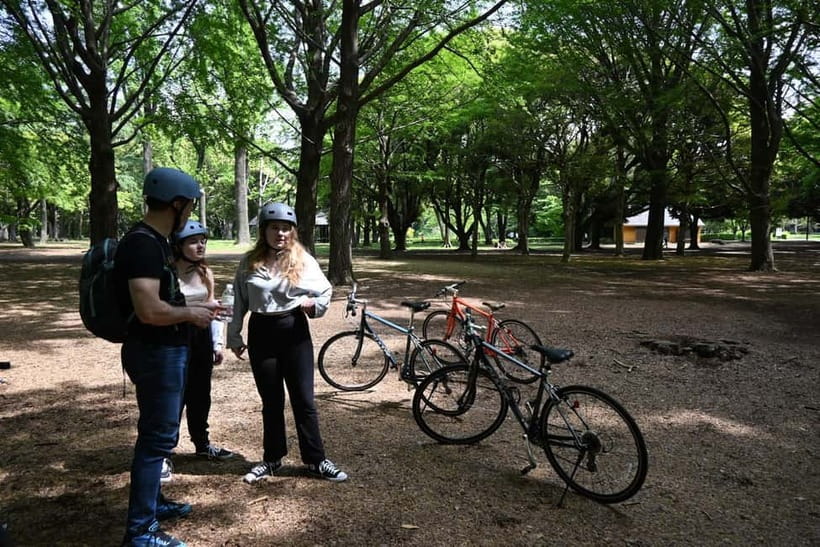
Bicycle and helmet rental are included. Wear closed-toe shoes, comfortable clothing, and shoes you can pedal in for three hours. Sandals, flip-flops, open shoes, short skirts, large bags, umbrellas, and headphones are not allowed. Pack light, since oversized luggage and large bags cannot come along.
Yoyogi Park and the first quiet views
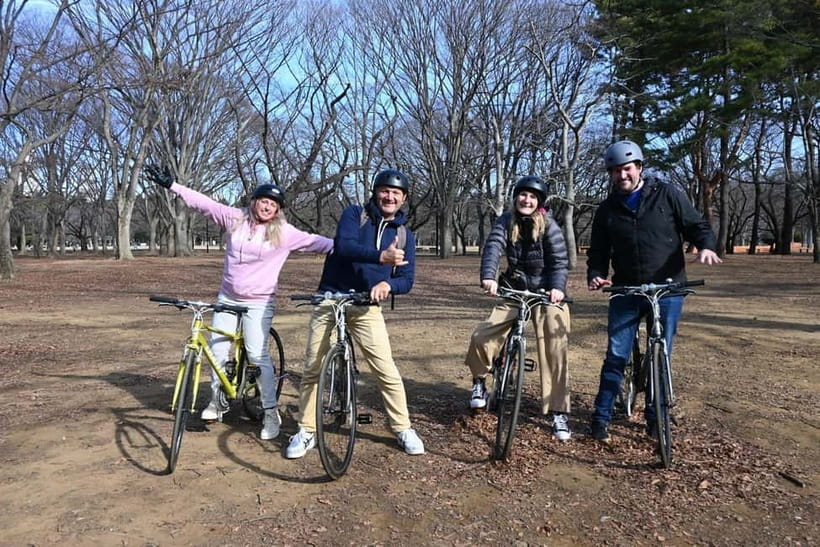
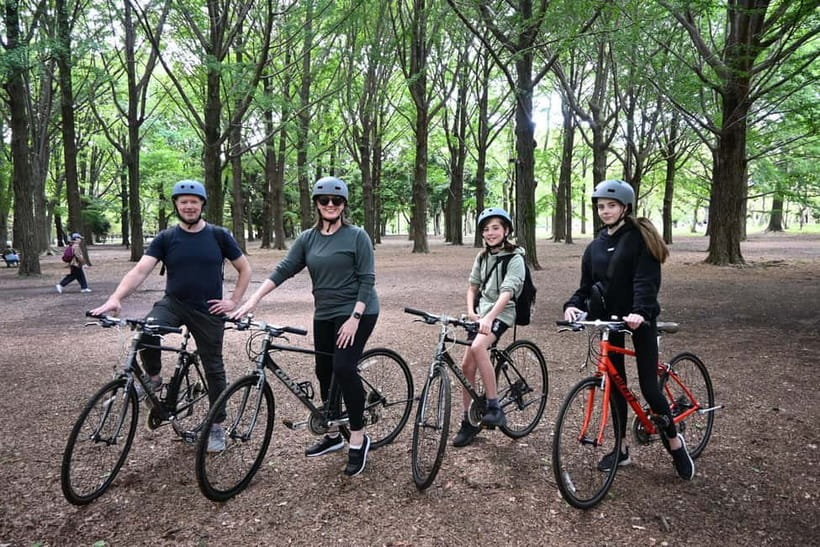
After the briefing, the ride begins with a short scenic stop before reaching Yoyogi Park. The park provides an easy change of mood from the station districts. You get open space, trees, and a chance to take photographs before dealing with the denser parts of Shibuya.
The stop at Yoyogi Park lasts about 15 minutes. It is not a long park tour, so think of it as a visual reset and a chance to understand the area’s scale. You may find this section especially useful early in your Tokyo visit, since it gives you a calmer reference point before the crowds and commercial streets take over.
The route then continues through Shibuya for about 15 minutes of riding and scenic views. This part is about motion rather than a long stop. Your guide leads the group through the streets, helping you handle turns, crossings, and the flow of local traffic.
That guidance is one of the strongest reasons to book a led cycling tour rather than rent a bicycle on your own. You do not need to spend your first hour studying a map or worrying about every turn. You still need to ride confidently, but the guide takes responsibility for route-finding and group safety.
Shibuya Crossing and Hachikō without wasting the morning
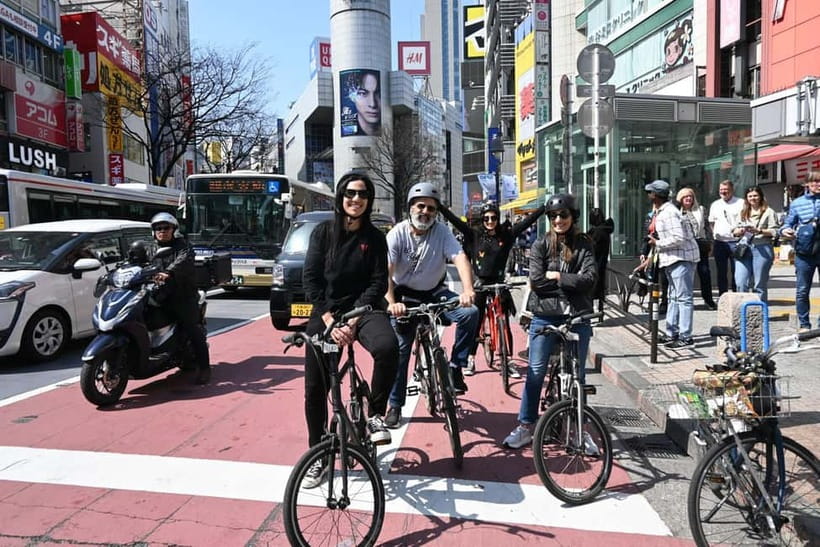
The stop at Shibuya Crossing lasts about ten minutes and includes a guided explanation, a photo stop, and some walking. You get the classic view of one of Tokyo’s best-known intersections, but the short timing keeps the tour moving.
Shibuya Crossing can be overwhelming if you arrive without a plan. A guide helps you understand where the group is going and how the crossing fits into the surrounding district. You will not spend an hour here, and that is a benefit if your goal is to see several neighborhoods in one outing.
The route also includes another secret stop, with about ten minutes for photos, a short walk, and local commentary. The exact nature of this stop is not fixed in the information provided, so you should think of it as one of the route’s flexible discoveries rather than a promised landmark.
Next comes Hachikō Statue, with another ten-minute stop. The statue is a compact sight, but it carries a great deal of meaning in Tokyo’s public life. You can take a photo, hear the guide’s explanation, and see how the statue functions as both a meeting point and a symbol of Shibuya.
The short stops are worth keeping in mind. This is a cycling tour with sightseeing breaks, not a slow walking tour where you linger at every attraction. If you want extended time at Shibuya Crossing or Hachikō, plan to return on your own later.
More Harajuku wanders:
- Tokyo Go-Kart Tour Shibuya-Harajuku-Shinjuku (*IDP Required)
★ 5.0 · 217 reviews - Tokyo: Guided Go Kart Tour from Harajuku to Shibuya Crossing
★ 4.5 · 166 reviews - Shibuya & Harajuku: Hidden Gems & Highlights Private Tour
★ 4.7 · 139 reviews - Harajuku Kawaii Fashion and Pop-Culture Tour
★ 5.0 · 94 reviews
Harajuku and Omotesando, from busy streets to quieter corners
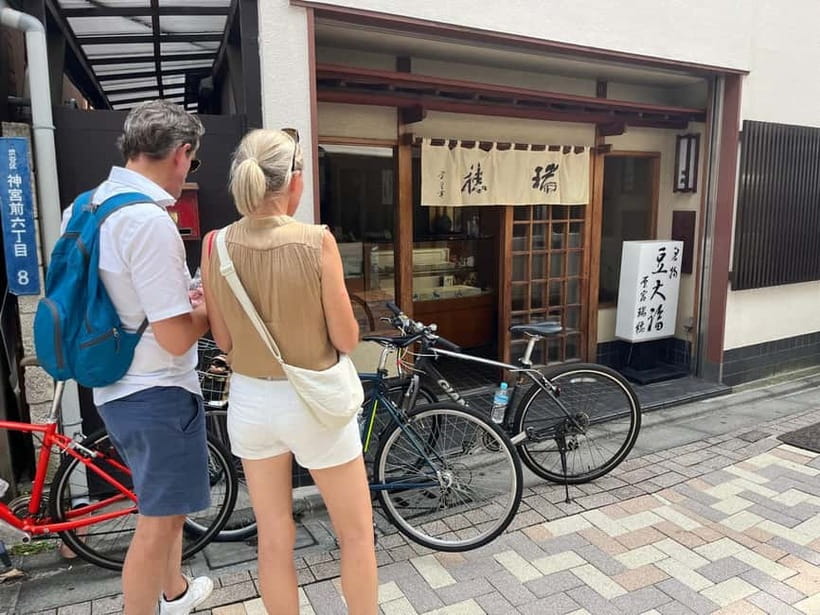
The ride continues into Harajuku, where you have about five minutes for photos and views along the way. The stop is brief, but the neighborhood forms an important link between Shibuya’s large-scale city movement and the more design-focused streets around Omotesando.
Another secret stop follows, also with roughly five minutes for photos and scenery. The tour’s appeal is strongest in these transitions. You are not only riding toward a famous address. You are seeing the smaller streets and side routes that connect the famous districts.
At Omotesando, the group stops for about five minutes. The avenue is known for its broad, stylish feel, but the value here comes from seeing it as part of a larger route rather than as an isolated shopping destination. Cycling lets you appreciate the contrast between the main avenue and the quieter streets nearby.
The schedule does not leave much time for shopping. If you want to browse stores, buy sweets, or explore Harajuku fashion streets at leisure, add a separate visit. This tour is best for orientation and atmosphere, especially if you want to know which districts deserve more of your time later.
Aoyama and the 20-minute cemetery stop
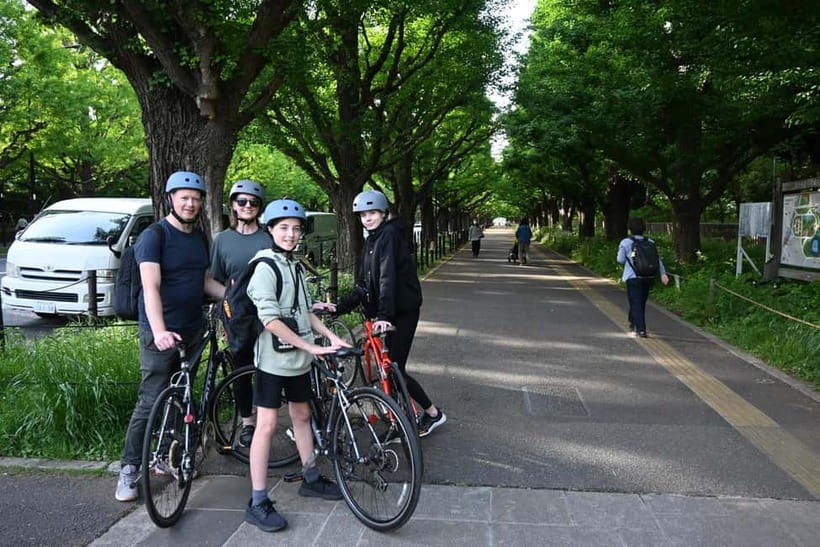
Aoyama receives one of the longer portions of the route, about 20 minutes for photos and views. Compared with Shibuya and Harajuku, the district feels less frantic. The riding here helps show Tokyo as a collection of different local areas rather than one nonstop commercial center.
The Aoyama Cemetery stop also lasts around 20 minutes and includes walking, photos, and a guided visit. This is one of the more unusual parts of the route. A cemetery may not be on your first Tokyo wish list, but it offers a quieter setting and a chance to hear about the area beyond shopping and nightlife.
The guide’s local commentary is useful here. Taichi is described as a Shibuya-based cyclist who has lived in the area and shares practical suggestions for cafes and restaurants. That kind of advice can be more useful than another list of famous attractions, especially if you want to eat somewhere near your hotel or plan a second visit to western Tokyo.
One rider who felt uneasy cycling in the city was able to continue the experience as a walking tour. That shows some flexibility from the guide, but you should not treat it as a guaranteed alternative. The stated requirement is that participants feel comfortable riding city streets, so book only if you can manage that part of the activity.
Gaien Ginkgo Avenue and the National Stadium
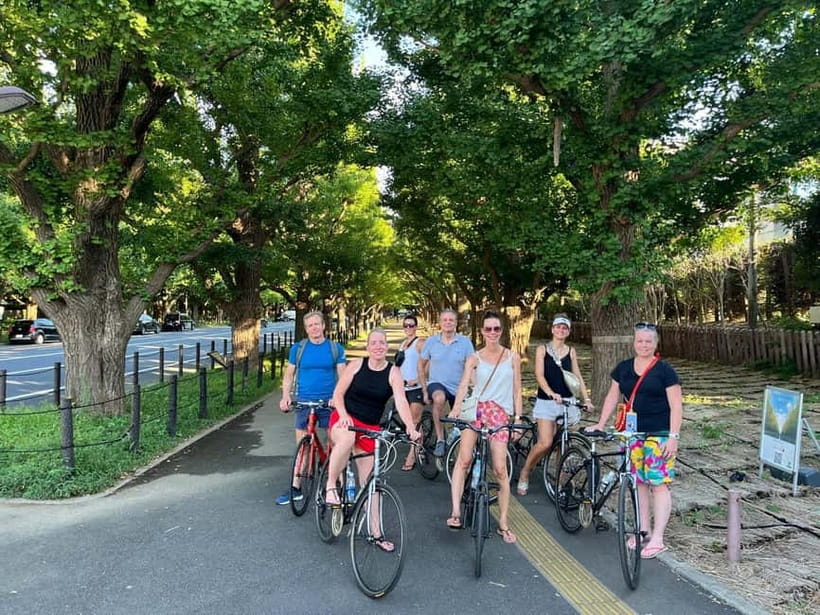
The route leaves Aoyama for Meiji Jingu Gaien Ginkgo Avenue, with about five minutes for photographs and views. The avenue gives you another change of scale, from close city streets to a more open, tree-lined setting.
The exact appearance of the ginkgo trees depends on the season. The stop remains a scenic part of the route, but you should not book this tour solely for autumn foliage unless you have confirmed your dates and conditions. The tour information promises the avenue, not a particular seasonal display.
The final major stop is Japan National Stadium, with about five minutes for photos. The stadium adds a modern architectural note to a route that has already passed through parks, old-style local spaces, commercial districts, and formal avenues.
After this stop, you cycle back to Umayamichi Park. The return makes the route a tidy loop, so you finish near the same convenient transport links that served as your starting point.
What the three-hour schedule really feels like
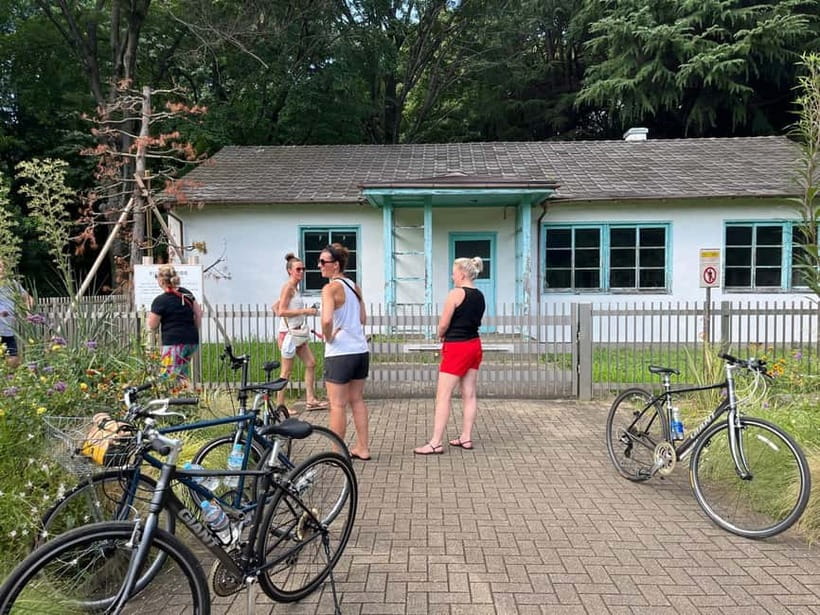
The listed stops add up to a series of short visits, while much of the experience takes place between them. You will ride, pause, walk briefly, take photos, listen to explanations, and get moving again.
That rhythm suits you if you like variety. You can see several districts without feeling trapped in one sightseeing zone. It may feel rushed if you prefer to sit at each viewpoint, browse shops, or study every landmark at length.
The expected cycling speed is about 15 kilometers per hour, or 9.3 miles per hour. The route includes small pauses, but you should still be prepared to pedal steadily for three hours. One German rider specifically noted that there were uphill sections, though the gears worked properly. That is a useful warning for anyone who normally rides only on flat paths.
You also need to follow Japanese traffic rules and the guide’s directions. Light rain does not automatically stop the tour, but sudden weather changes can lead to cancellation for safety. Bring a drink and dress for movement rather than photographs alone.
Guide quality and the value of a small group
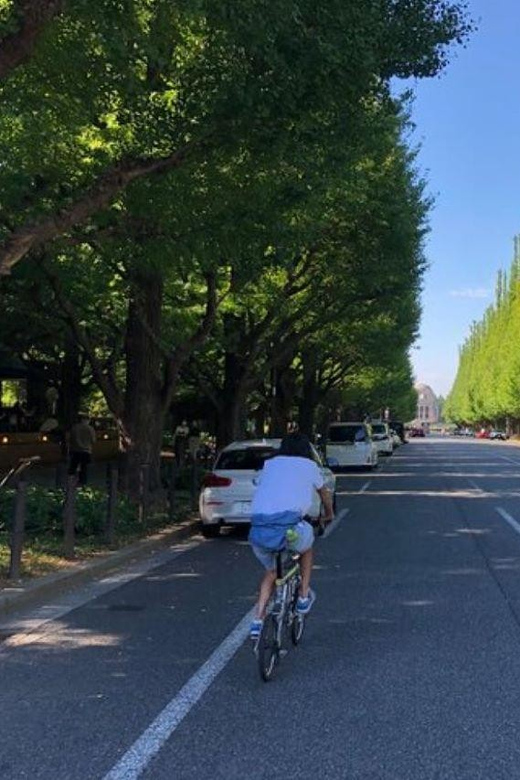
The guide is the main difference between this experience and a simple bicycle rental. A good local cyclist can put the route together safely, explain why a street or district matters, and point you toward places to eat after the ride.
Taichi is identified as the guide in several pieces of tour information, with the name also written as Tachi or Taiche. The consistent picture is of an English-speaking, patient guide who knows the streets and can adjust explanations to the group’s interests.
The small-group format, capped at six, supports that personal approach. You can ask about neighborhood changes, cycling rules, cafes, restaurants, or the history behind a stop without shouting across a crowd. It also lets the guide keep a close eye on riders in traffic.
Still, small group does not mean private chauffeur service. You will ride at the group’s general pace, and the route has a set three-hour structure. If you want a completely custom itinerary, a private tour would be a better fit, but that is not what this experience promises.
Is $63 a fair price?
At $63 per person, the tour costs more than renting a bicycle for a few hours. The price becomes easier to justify when you count what is included: bicycle, helmet, English-speaking guide, route planning, traffic guidance, and access to a compact mix of districts.
You are also buying time. Trying to connect Shibuya, Harajuku, Omotesando, Aoyama, Gaien, and the National Stadium on foot could take much of a day, especially if you stop for photos. The bicycle lets you sample the area in three hours and then decide where to return.
The value is strongest for a first visit to Tokyo. You get a broad orientation and local suggestions before choosing where to spend more time. It is less compelling if you already know these neighborhoods well or mainly want a relaxed park ride.
You can cancel up to 24 hours ahead for a full refund, and the reserve-now, pay-later option helps if your plans are still shifting. Availability depends on the starting time you choose.
Who should book this Tokyo bike tour?
I would recommend it to first-time Tokyo visitors who are confident cyclists and want more than the standard Shibuya photo stop. It is also a good match for solo visitors and couples who like asking questions and prefer a small group.
You should be able to:
- Ride for three hours with short breaks
- Maintain about 15 kilometers per hour
- Cross streets at traffic lights
- Handle occasional narrow or crowded areas
- Follow Japanese traffic rules and the guide’s instructions
- Ride in light rain if necessary
The tour is not suitable for children under 13, pregnant women, people who cannot ride a bicycle, or anyone over 75. It also excludes riders taller than 200 centimeters or shorter than 155 centimeters. Those limits are worth checking before you pay.
Should you book it?
Book this tour if you want a brisk, local-feeling introduction to western Tokyo and are happy to trade long stops for variety. The combination of Shibuya Crossing, Hachikō, Yoyogi Park, Aoyama Cemetery, Ginkgo Avenue, and smaller side streets gives you a useful first look at several districts.
Skip it if city cycling makes you nervous, if you want a slow photography tour, or if shopping and food stops are your main goals. For the right rider, $63 is a fair price for the route planning, safety support, and amount of Tokyo you can see in three hours.
FAQ
Where does the Tokyo bike tour start?
It starts at Umayamichi Park, at the park next to Freshness Burger. The meeting point is about one minute from Yoyogi Station and ten minutes on foot from Shinjuku Station.
How long does the tour last?
The tour lasts three hours, including cycling, guided stops, short walks, and photo breaks.
How many people can join the tour?
The group is limited to six participants.
Is the tour conducted in English?
Yes. An English-speaking live guide leads the tour.
Are a bicycle and helmet included?
Yes. The bicycle and helmet are included in the price.
Which areas does the tour visit?
The route passes through Shibuya, Harajuku, Omotesando, Aoyama, and Gaien. It also includes Yoyogi Park and the Japan National Stadium area.
Do I need to be an experienced cyclist?
You do not need to be an expert, but you must feel comfortable riding on city streets for three hours at about 15 kilometers per hour. You will cross at traffic lights and pass through occasional narrow or crowded areas.
What should I wear and bring?
Bring comfortable clothes, comfortable closed-toe shoes, and drinks. Sandals, flip-flops, open-toed shoes, short skirts, headphones, umbrellas, large bags, and oversized luggage are not allowed.
Can the tour operate in rain?
The tour can proceed in light rain, but sudden weather changes may lead to cancellation for safety.
Can I cancel for a refund?
You can cancel up to 24 hours in advance for a full refund. A reserve-now, pay-later option is also available.
More Cycling Tours in Tokyo
- Tokyo Guided Small-Group Biking Tour
★ 5.0 · 1,250 reviews - Tokyo Great Cycling Tour
★ 5.0 · 811 reviews - Tokyo Top Highlights 3h Guided E-bike Tour
★ 5.0 · 714 reviews - 3h Tokyo E-Bike Tour: Hidden Gems, and Local Life with guide
★ 5.0 · 670 reviews
New on our Tokyo list
- Sumi-e Experience in a relaxing green tea shop in Tokyo★ 5.0 · 3 reviews
- Tokyo : Kamikaze Street Drift Ride★ 5.0 · 3 reviews
- Private Zen Meditation in English in Shinjuku, Tokyo★ 5.0 · 3 reviews
- Onsen Spa in Tokyo and Asakusa Bar Hopping with Local Guide★ 5.0 · 3 reviews
- Easy for everyone! Now you can play handmade mini shamisen and show off to everyone! Musical instruments, sweets and live music★ 5.0 · 3 reviews
- Tokyo: Private Tsukiji Street Food & Sake with Local Guide★ 5.0 · 3 reviews
- Mt Fuji Exploration Tour with Free Japanese Kusa Mochi from Tokyo★ 4.5 · 3 reviews
- Tokyo Tsukiji Fish Market Walking and Exploring Hidden Gems Tour★ 5.0 · 3 reviews
Cycling Tours, compared.
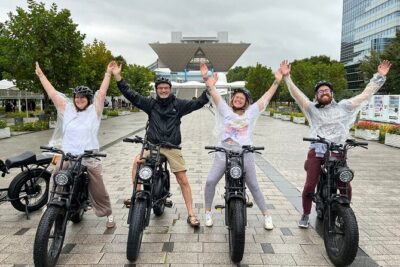
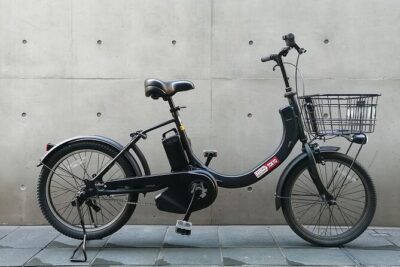
3h Tokyo E-Bike Tour: Hidden Gems, and Local Life with guide
Read our review →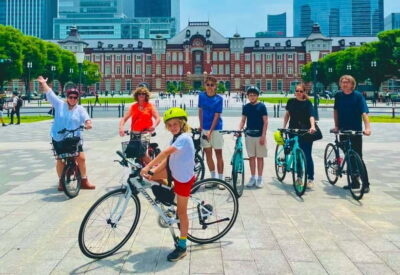
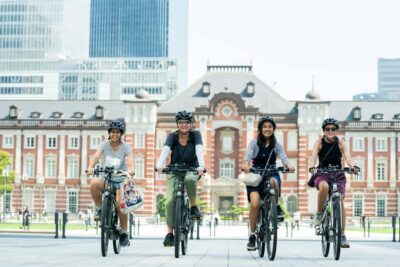
3-hour Guided E-Bike Tour of the City’s Hidden Gems
Read our review →
3-Hour Bike/E-Bike Tour of the City’s Highlights
Read our review →Browse the lists this tour appears in