
Reviewed · TEMPLE & SHRINE TOURS
Tokyo: Buddhism and Shinto Temple Tour with a Real Local
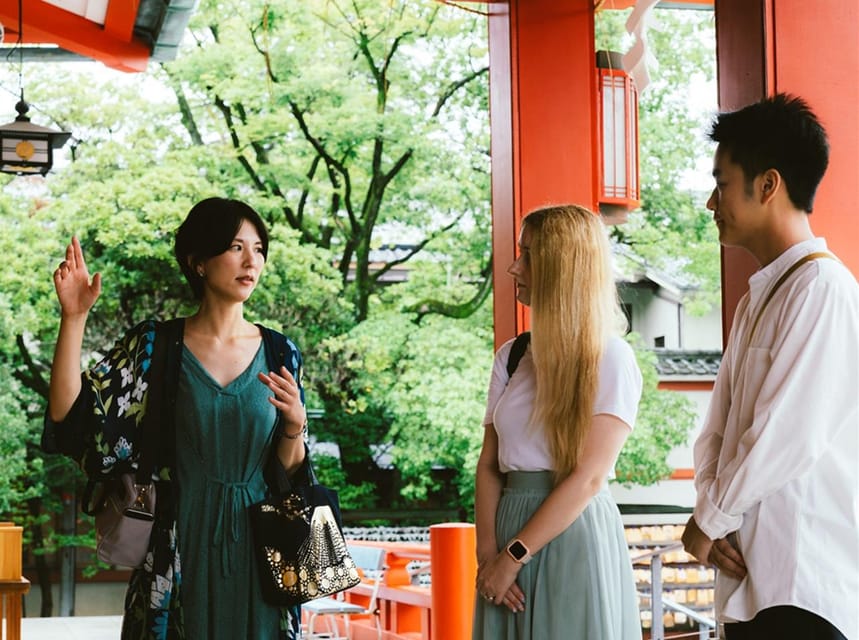
The most striking part of this two-hour walk is the Fukagawa Fudo-do fire ceremony, where powerful drums and rising flames form part of serious Buddhist worship, not a performance staged for sightseers. Guide Manami Watanabe explains what is happening while asking you to observe with the proper restraint.
I like the way the tour joins two sites that many short Tokyo visits treat separately: a Buddhist temple and a Shinto shrine. I also like the small group of no more than six people, plus Manami’s academic background and family ties to the neighborhood. The main consideration is that the tour follows strict rules: no indoor photography, video, audio recording, hats, or casual clothing such as sleeveless shirts and short skirts.
In This Review
- Key points to know before booking
- Why this Monzennakacho walk feels different
- Meeting Manami at Monzen-nakacho Station
- The Oyoko River and Tatsumi-shindo
- Watching the Fukagawa Fudo-do fire ceremony
- What Manami explains about Buddhism and Shinto
- Tomioka Hachimangu Shrine and Shinto customs
- How the itinerary fits into two hours
- Is $62 a fair price?
- Who should book this tour?
- Practical rules that shape the visit
- Should you book the Buddhism and Shinto Temple Tour?
- FAQ
- Where does the tour meet?
- How long does the tour last?
- Who leads the tour?
- Is admission to the fire ceremony included?
- Can I take photographs or record the ceremony?
- What should I wear and bring?
Key points to know before booking
- The fire ceremony is a religious ritual, not a tourist show: You watch in silence and follow local rules about seating, posture, and photography.
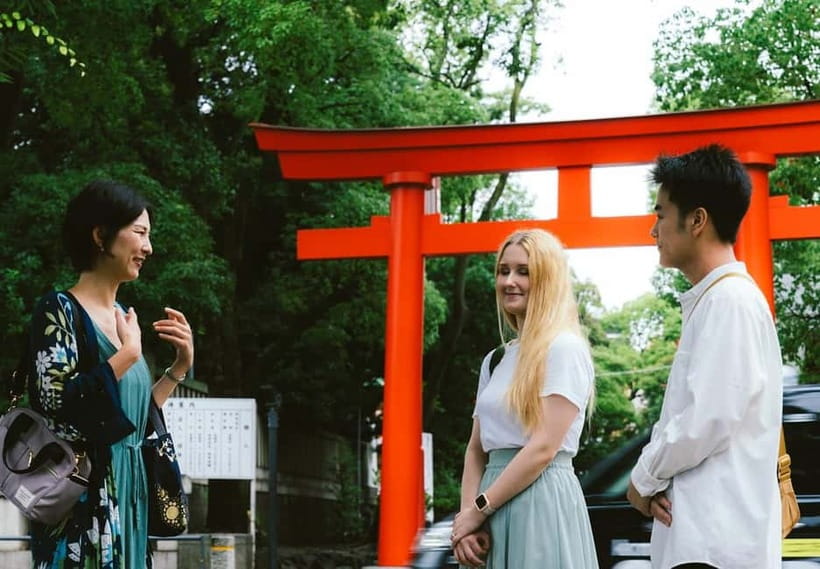
- Manami Watanabe brings local and academic insight: She was born and raised in Tokyo and holds a Ph.D. in cultural heritage protection.
- You visit both Buddhist and Shinto sites: The route explains how the two traditions differ and how Japanese people may take part in both.
- Monzennakacho offers a quieter side of Tokyo: The walk passes through a historic East Tokyo district known as Shitamachi.
- The group stays small: With a maximum of six people, it is easier to ask questions and hear explanations.
- The $62 price includes the temple admission: Bring cash for optional small coin offerings at the temple and shrine.
Why this Monzennakacho walk feels different
Tokyo has no shortage of temple and shrine tours. Many stop for a few photos, explain a handful of symbols, and move on. This one spends more time on the rules and meanings behind what you see.
That matters in Japan. A temple or shrine is not simply an old building with an attractive gate. It can be an active place of prayer, and small actions carry meaning. Manami explains where to stand, how to behave, and when a camera should stay in your bag.
The setting helps. Monzennakacho is in East Tokyo, in the old Shitamachi area. You begin and end at Monzen-nakacho Station, making the route simple to manage. The walk includes the Oyoko River, a small local shrine, a Buddhist temple, and a major Shinto shrine.
You are not spending two hours rushing across Tokyo by train. Instead, you stay in one district and build a clearer picture of how religion fits into daily life. That makes this a useful first or second-day activity if you want cultural background before visiting more famous sites.
More temples and shrines near Tokyo:
- Tokyo: Meiji Shrine, Asakusa, Skytree Bus Tour and Cruise
★ 4.7 · 1,986 reviews - Tokyo: Asakusa Walking Tour with Sensoji Temple Visit
★ 4.8 · 1,583 reviews - Nikko: Kegon Falls, Lake Chuzenji & Toshogu Temple
★ 4.6 · 1,577 reviews
Meeting Manami at Monzen-nakacho Station
The meeting point is outside Exit 4 of Monzen-nakacho Station, served by the Oedo and Tozai subway lines. Look for the Kusuri no Fukutaro drugstore with a red sign directly outside the exit.
Use Exit 4, not another station exit. There is another Kusuri no Fukutaro nearby, and that has caused confusion. The instructions also advise using the stairs rather than the elevator, since the drugstore is easier to spot from the street-level stair exit.
This is a practical meeting point, but give yourself time to find the correct exit. Tokyo stations can have several entrances, and Monzen-nakacho is no exception. If you arrive by taxi and the driver is unsure which drugstore you mean, the meeting instructions say to ask the driver to call Manami.
Wear comfortable shoes. You should also bring a drink and some cash. Small coins are optional, but you may want them for the customary offerings at the temple and shrine.
The Oyoko River and Tatsumi-shindo
The walk begins with about ten minutes along the Oyoko River. This opening gives you time to get settled and hear about the district before entering the main religious sites.
The river stop is not presented as a major sightseeing attraction. Its value is as a local orientation point. You begin to see Monzennakacho as a lived-in neighborhood rather than a collection of famous attractions. Manami’s local connection is important here because the walk is built around the district where she grew up.
The route then continues to Tatsumi-shindo for another ten-minute guided stop. The supplied details do not promise a long visit or a large monument, so you should think of this as part of the neighborhood story rather than a headline attraction.
That is a strength for some people and a weakness for others. If you want a packed list of grand Tokyo landmarks, this is not the right tour. If you want to understand how smaller religious places fit into an ordinary urban area, the short stops add useful context.
Watching the Fukagawa Fudo-do fire ceremony
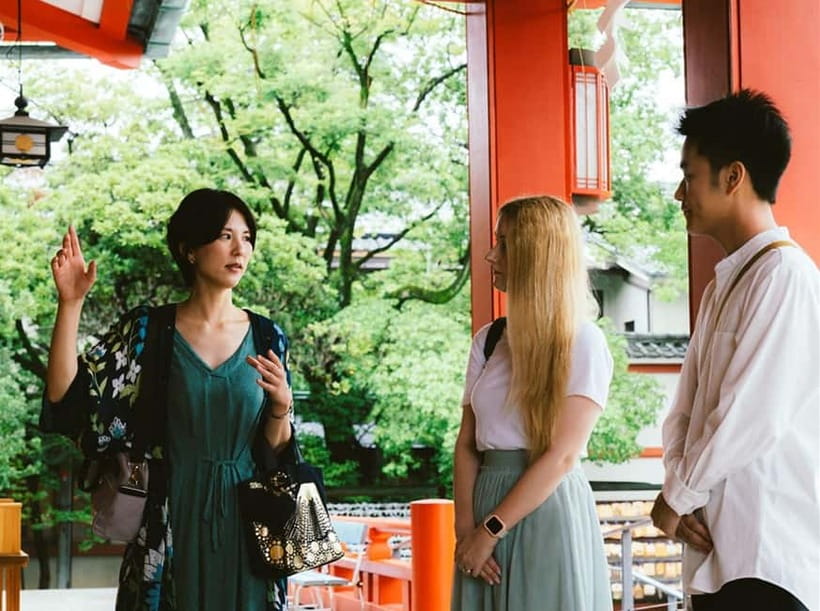
The central event takes place at Naritasan Fukagawa Fudo-do, a Buddhist temple. You spend about 40 minutes there, including admission to the fire ceremony.
Expect strong drumbeats and a visually powerful ritual involving fire. Manami provides scene-by-scene explanations with printed explanation sheets, helping you follow the action without needing to talk during the ceremony.
The key point is the attitude you bring. The ceremony is described as an everyday religious practice for Buddhist worshippers, not a show arranged for visitors. You are expected to watch in silence and respect the people who have come to pray.
The tour also takes care over seating. Some tour groups take the best central front seats for a clear view of the fire and drums. This group does not, since those seats should be available to members of the Buddhist community. That may mean your view is not the closest possible, but it is a more considerate way to attend.
Posture matters too. Crossing your legs while seated is regarded as rude to Buddha and the monks. Manami points out rules that many casual visits miss, including how to sit and how to behave inside the temple.
Photography inside is not allowed. Video and audio recording are also prohibited. These restrictions may disappoint anyone hoping to capture the flames or drum performance, but they make sense within the tour’s stated approach. You are there to observe a ceremony, not produce a souvenir clip.
The temple also has dress expectations. Short skirts, sleeveless shirts, see-through clothing, and hats are not allowed. Shawls are provided for anyone who needs to cover their shoulders or knees, which is a thoughtful detail, but suitable clothing from the start will make the visit easier.
A few more Tokyo bookings worth comparing
- Mt Fuji and Hakone 1-Day Bus Tour Return by Bullet Train
★ 5.0 · 26,383 reviews - 1-Day Tokyo Bus Tour
★ 5.0 · 14,250 reviews - Tokyo: TOKYO SKYTREE® Admission ticket
★ 4.5 · 11,192 reviews - Tokyo: teamLab Planets TOKYO Digital Art Museum Entry Ticket
★ 4.6 · 9,779 reviews
What Manami explains about Buddhism and Shinto
The most useful part of the tour is the comparison between Buddhism and Shinto. In simple terms, Buddhism is a religious tradition associated with teachings about life, suffering, death, and spiritual practice. Shinto is Japan’s native tradition, connected with kami, sacred presence, nature, community, and ritual purity.
The tour does not treat the two as totally separate boxes. Manami explains how Japanese people may take part in both. A person might visit a Shinto shrine for one purpose and a Buddhist temple for another, without seeing that as a contradiction.
That point helps explain many Japanese customs that can otherwise seem confusing. Shrines and temples may both appear in a sightseeing schedule, but their symbols, rituals, and religious roles differ. Manami’s academic training in cultural heritage protection gives the discussion more structure, while her Tokyo background keeps it tied to local life.
You should come ready to ask questions. The group size is limited to six, and the available comments about the tour highlight Manami’s patience with questions. That makes the format better suited to curious visitors than to people who prefer to remain entirely on their own.
Tomioka Hachimangu Shrine and Shinto customs
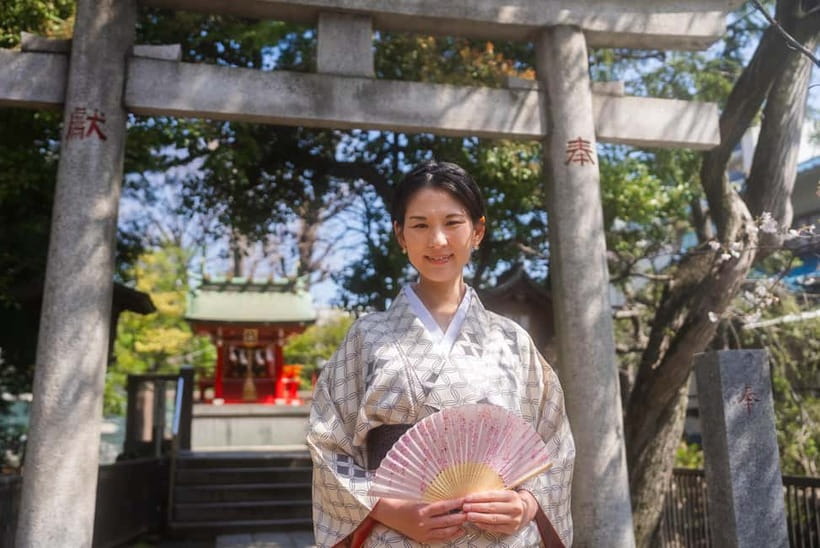
The final major stop is Tomioka Hachimangu Shrine, where you spend about 25 minutes. The shrine offers a calm contrast to the sound and heat of the Buddhist fire ceremony.
Here Manami explains several objects and practices you are likely to encounter elsewhere in Japan:
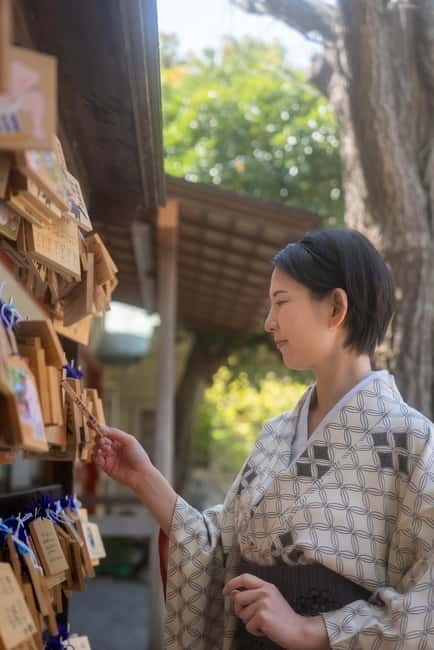
- White fortune-telling paper and what it means when tied at a shrine
- Wooden wish plaques
- Goshuin stamps
- Shinto symbols
- The role of sake in Shinto practice
- The connection between Shinto and sumo
- The shrine’s impressive sumo stones
This is where the tour becomes especially practical. After Manami explains the customs, you can recognize the same items at other shrines instead of treating them as decorative details.
The sumo connection is a particularly useful local angle. Tomioka Hachimangu is tied to the sport, and the sumo stones give that connection a physical form. The stop also includes Manami’s family stories about their strong relationship with the shrine, bringing the discussion back to the neighborhood and its people.
You should not expect a long independent visit or time to complete every possible ritual. The stop is part of a guided route, so the focus is on explanation rather than extended personal prayer or shopping.
How the itinerary fits into two hours
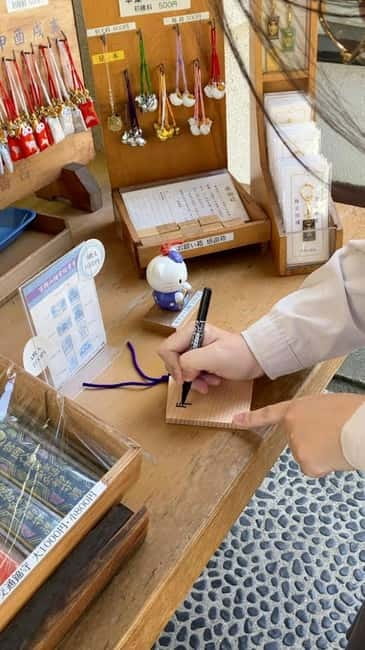
The scheduled route is compact:
- Monzen-nakacho Station, the meeting and return point
- Oyoko River, about 10 minutes
- Tatsumi-shindo, about 10 minutes
- Naritasan Fukagawa Fudo-do, about 40 minutes
- Tomioka Hachimangu Shrine, about 25 minutes
- Return to Monzen-nakacho Station
The timing leaves some room for walking between stops and for Manami’s explanations. At two hours, this is long enough to give the subject shape without taking up half a day.
The small group makes the time more useful. With six people or fewer, you can hear the guide more easily and ask about details that would get lost in a large group. The downside is that the tour may feel focused and fast if you want long periods for photos, quiet personal reflection, or browsing nearby streets.
The route is also not designed around food or shopping. Other local outings may add street food or sake. This one gives that time to religious customs, the ceremony, and the two traditions. Choose it for interpretation, not for a tasting stop.
Is $62 a fair price?
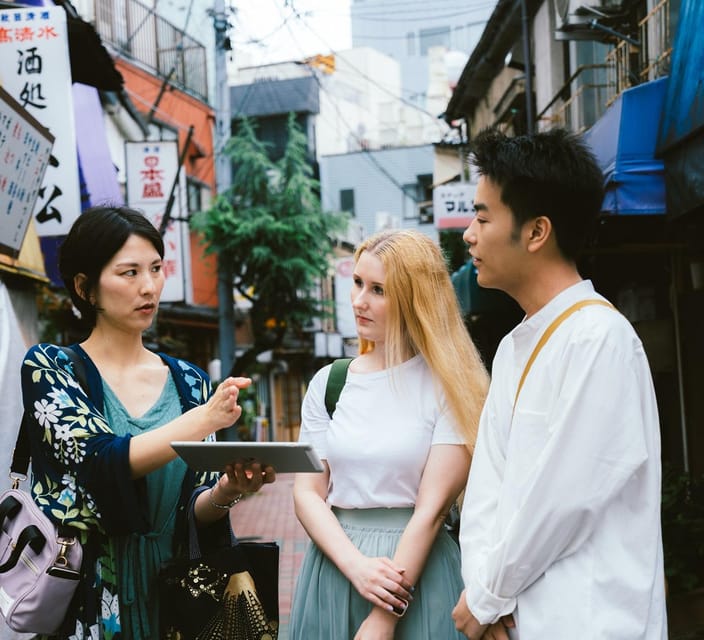
At $62 per person, the cost is higher than simply visiting the temple and shrine by yourself. You are paying for a two-hour English-language guide, a group capped at six, and admission to the fire ceremony.
The value depends on how much explanation you want. A self-guided visit may let you see the buildings, but it will not necessarily explain why front seats are reserved for worshippers, why certain postures are rude, how Buddhist and Shinto customs overlap, or what the shrine objects mean.
Manami’s Ph.D. in cultural heritage protection also gives the tour a level of preparation beyond a basic neighborhood walk. That does not guarantee that every visitor will want an academic discussion, but the format is clearly aimed at people who want more than quick facts.
I consider the price reasonable for a visitor who wants cultural context and a small group. It is less compelling if you only want to photograph the temple, since indoor photography is forbidden and the ceremony is meant to be observed quietly.
Free cancellation up to 24 hours before the start and the option to reserve now and pay later reduce the planning risk. Starting times vary, so check availability for your chosen date.
Who should book this tour?
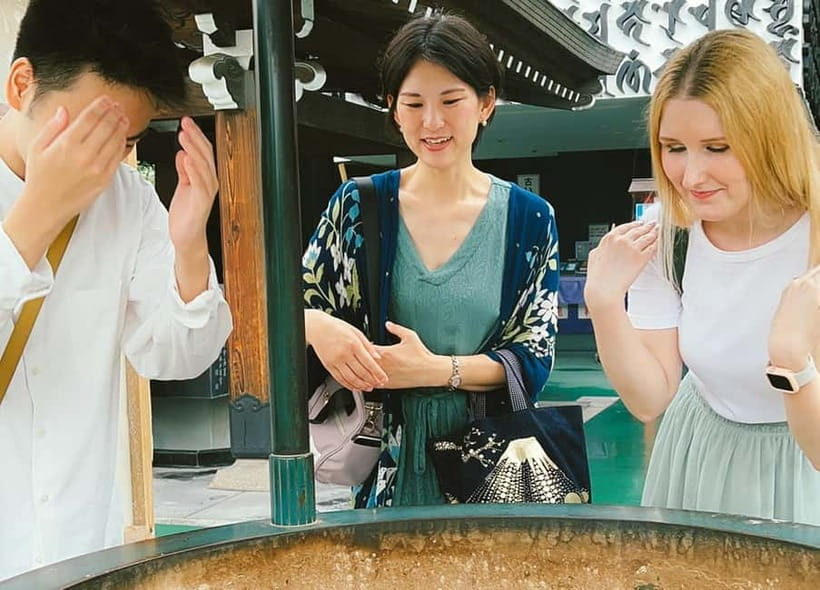
I would choose this tour if you are curious about Japanese religion but worry about getting temple etiquette wrong. It is also a good fit if you want a quieter East Tokyo district and prefer a small group over a large bus-style outing.
The experience suits adults and older children who can follow quiet religious-site rules. It is not suitable for children under five or people over 80, according to the activity restrictions.
You should be comfortable walking between several stops and standing or sitting during the temple visit. Comfortable shoes are essential. Bring clothing that covers your shoulders and knees, even though shawls are available.
This is not a sightseeing checklist tour. You will not cover Tokyo’s most famous districts, and you will not spend the time on food sampling or souvenir hunting. You will, however, leave with a better sense of why shrines and temples operate differently and how to behave at both.
Practical rules that shape the visit
The rules are worth reading before you book because they affect the tone of the entire morning or afternoon. Smoking is not allowed, and shoes must be removed indoors when required.
You cannot take photographs inside, record video, or make audio recordings. Hats are also not allowed. Dress in non-see-through clothing, with shoulders and knees covered, and you will avoid needing to adjust your plans at the entrance.
The ceremony should be watched in silence. The instruction about not crossing your legs is easy to overlook, but it is exactly the sort of local detail that can prevent an awkward mistake.
Bring cash for optional small coin offerings. Drinks are recommended, and the route is best handled in comfortable shoes. English is the tour language.
Should you book the Buddhism and Shinto Temple Tour?
Book it if you want meaning behind the rituals, not just attractive buildings. Manami Watanabe’s local roots, academic training, patience with questions, and family connection to Tomioka Hachimangu give the two-hour route a clear personal and educational focus.
The fire ceremony is the main reason to go, but the Shinto shrine and the etiquette lessons make the visit more complete. Just remember that this is a respectful religious outing. You will give up close-up photography, front-row seating, and casual behavior in exchange for a more considerate look at everyday Buddhist and Shinto practice.
FAQ
Where does the tour meet?
Meet outside Exit 4 of Monzen-nakacho Station, served by the Oedo and Tozai subway lines. Look for the Kusuri no Fukutaro drugstore with a red sign. Use the stairs, and do not go to another station exit.
How long does the tour last?
The tour lasts two hours and returns to Monzen-nakacho Station.
Who leads the tour?
The English-speaking guide is Manami Watanabe, a Tokyo-born and Tokyo-raised local who holds a Ph.D. in cultural heritage protection.
Is admission to the fire ceremony included?
Yes. Admission to the fire ceremony at Naritasan Fukagawa Fudo-do is included. Small coins for optional offerings at the temple and shrine are not included.
Can I take photographs or record the ceremony?
No. Photography inside, video recording, and audio recording are not allowed. The ceremony should be observed in silence.
What should I wear and bring?
Wear comfortable shoes and clothing that covers your shoulders and knees. Short skirts, sleeveless shirts, see-through clothing, hats, and shoes indoors are not allowed. Bring cash and a drink. Shawls are available for guests who need extra coverage.
New on our Tokyo list
- Tokyo : Kamikaze Street Drift Ride★ 5.0 · 3 reviews
- Private Zen Meditation in English in Shinjuku, Tokyo★ 5.0 · 3 reviews
- Sumi-e Experience in a relaxing green tea shop in Tokyo★ 5.0 · 3 reviews
- Onsen Spa in Tokyo and Asakusa Bar Hopping with Local Guide★ 5.0 · 3 reviews
- Easy for everyone! Now you can play handmade mini shamisen and show off to everyone! Musical instruments, sweets and live music★ 5.0 · 3 reviews
- Tokyo: Private Tsukiji Street Food & Sake with Local Guide★ 5.0 · 3 reviews
- Mt Fuji Exploration Tour with Free Japanese Kusa Mochi from Tokyo★ 4.5 · 3 reviews
- Tokyo Tsukiji Fish Market Walking and Exploring Hidden Gems Tour★ 5.0 · 3 reviews
Temple & Shrine Tours, compared.
Meiji Shrine, Asakusa, Skytree Bus Tour and Cruise
Read our review →
Asakusa Walking Tour with Sensoji Temple Visit
Read our review →
Kamakura & Enoshima Day Trip including Temple Tickets
Read our review →
Nikko Toshogu Shrine and Kegon Waterfall Tour
Read our review →
Tokyo Panoramic 1 Day: Meiji Shrine, Asakusa, Odaiba and SKYTREE®
Read our review →
Mt. Fuji Heritage Tour: Traditional Villages, Lakes & Shrine
Read our review →Browse the lists this tour appears in