
Reviewed · TSUKIJI & TOYOSU MARKET TOURS
Tokyo: Explore Authentic Japanese Food Culture at Tsukiji
Tsukiji is best understood with your appetite switched on. This three-hour walk takes you through the Outer Market, where seafood, dried foods, meat, sweets, and cooking supplies still fill the lanes around Tokyo’s former wholesale market. You taste selected snacks as you go, then choose and pay for your own lunch.
I like the small group, limited to six people, because Tsukiji can feel like a maze. I also like the mix of food and local religion, especially the visit to Namiyoke Shrine, which supports market workers. The main catch is that this tour is not suitable for vegans, people with food allergies, or wheelchair users.
In This Review
- Key points to know before booking
- Why Tsukiji still matters after the wholesale market moved
- Starting at Tsukiji Honganji Temple
- Two hours through the Tsukiji Outer Market
- What the included tastings are really worth
- Choosing your own lunch after the tastings
- Namiyoke Shrine and the working side of Tsukiji
- What the small group changes
- Who should book this Tsukiji walk
- Timing, meeting point, and cancellation
- My verdict on the $99 price
- Should you book it?
- FAQ
- How long does the Tsukiji food tour last?
- Where does the tour begin?
- Where does the tour finish?
- Is an English-speaking guide included?
- How many people are in the group?
- What food is included?
- Is lunch included in the price?
- Can people with food allergies join?
- Is the tour wheelchair accessible?
Key points to know before booking
- Up to six people: A small group makes it easier to follow the guide through crowded market lanes and ask questions.
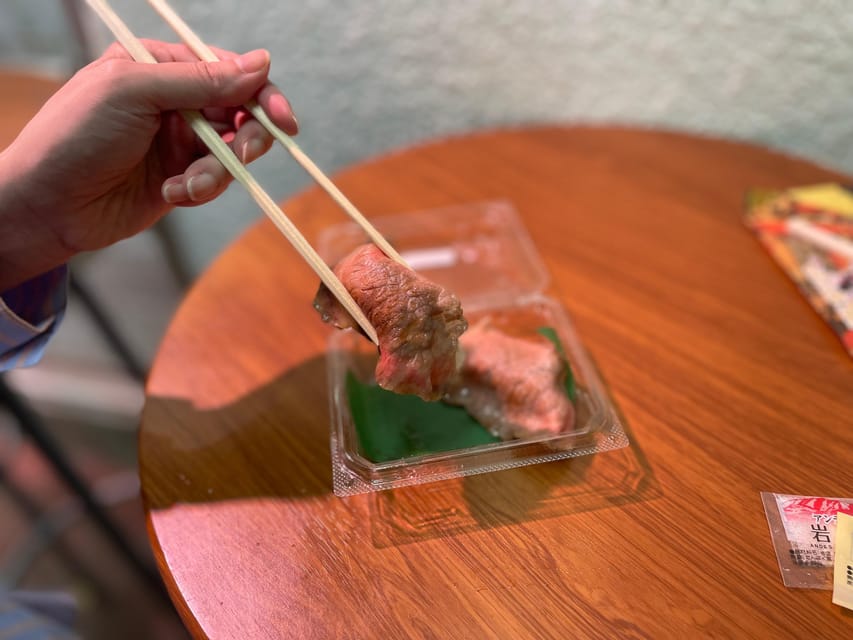
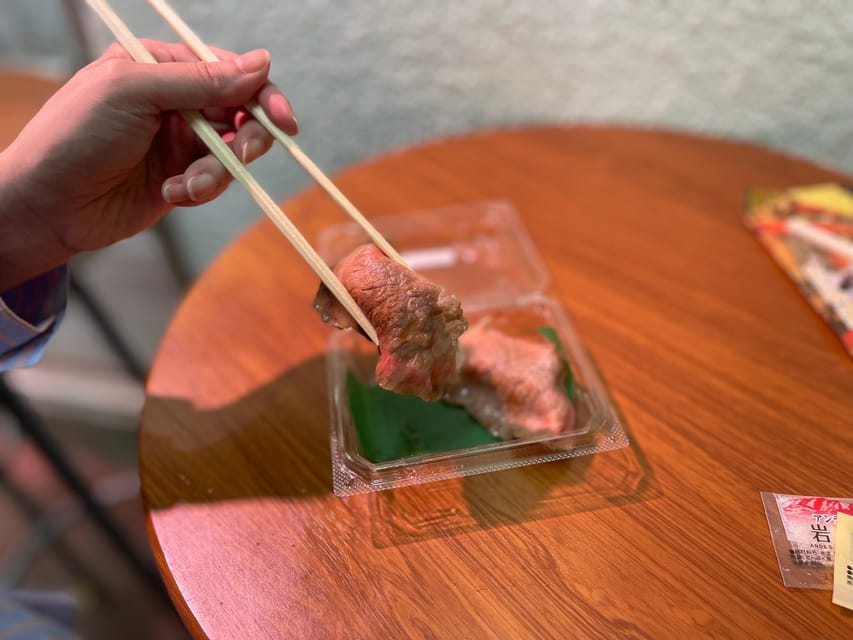
- Food beyond raw fish: Tastings can include seasoned seaweed, dried fish, roast beef sushi, oysters or sashimi, and bean snacks.
- Two important religious stops: You visit Tsukiji Honganji Temple and Namiyoke Shrine, both useful for understanding the district.
- Lunch is your choice and your cost: The guide helps you through the market, but your main meal is not included.
- A guide matters here: Tsukiji’s lanes can be confusing, and one departure was led by Haruka, who took the group to several recommended food stops.
- Plan for walking and tasting: The tour lasts three hours and is not wheelchair accessible.
Why Tsukiji still matters after the wholesale market moved
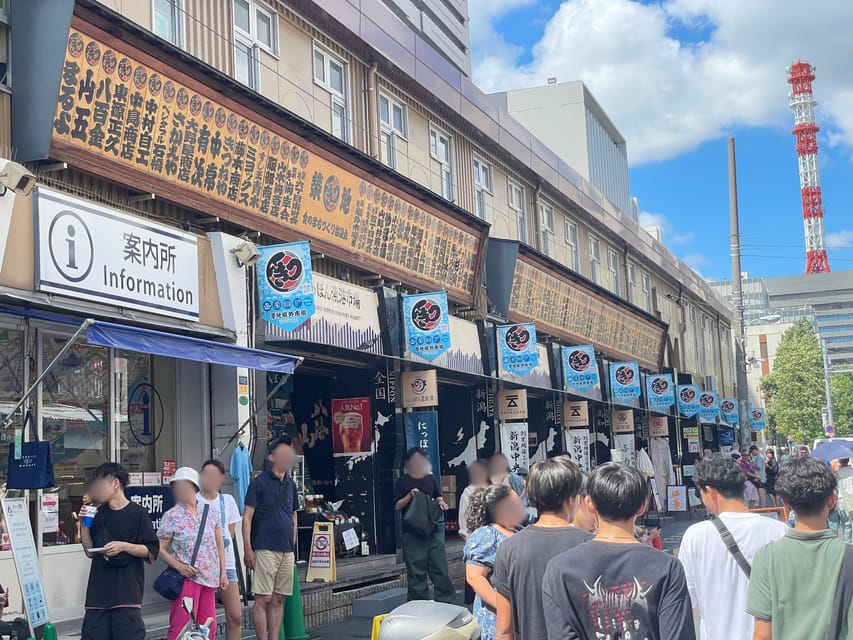
Many people know Tsukiji as Tokyo’s famous fish market. That is only part of the story now. The former central wholesale market closed, but the Tsukiji Outer Market continued as a shopping and dining district.
That change matters. You are not touring the old wholesale floor. Instead, you are walking through the surrounding market area, where Japanese food culture appears in smaller, more approachable ways. You see the foods that home cooks and professionals buy, and you get a chance to taste some of them without planning every stop yourself.
I like this approach because it gives you more than a quick seafood breakfast. The market includes fish, but also dried ingredients, seaweed, meat, beans, snacks, and other Japanese foodstuffs. The guide’s job is to show you how the whole place works, not simply point you toward the most famous sushi counter.
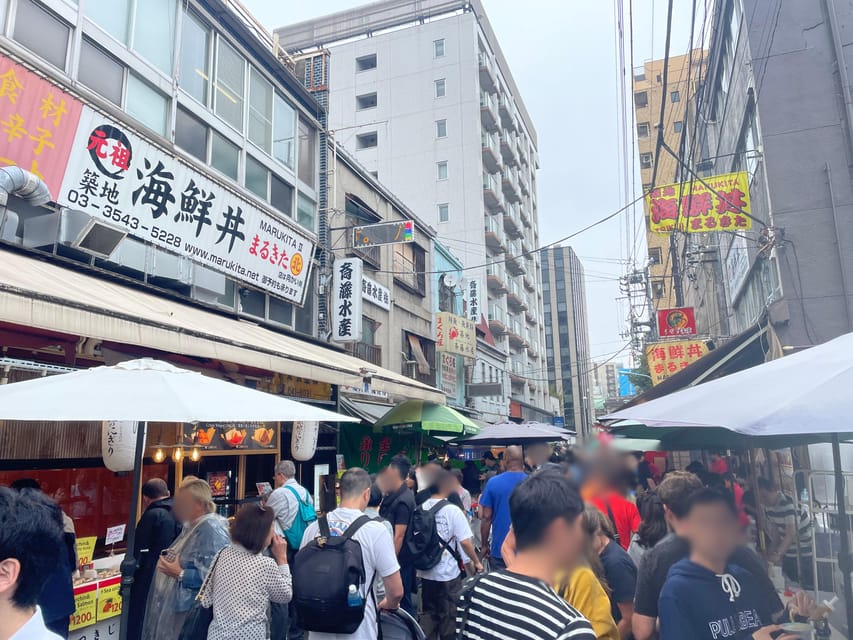
The market can also be confusing. Narrow lanes, many shops, and a steady flow of people make it easy to miss a good stop. A group capped at six gives the guide a fair chance to keep everyone together and explain what you are seeing.
More market mornings in Tokyo:
- Tokyo Tsukiji Fish Market Food and Culture Walking Tour
★ 5.0 · 3,184 reviews - Tokyo: Tsukiji Fish Market Food and Walking tour
★ 5.0 · 1,724 reviews - Tokyo: Tsukiji Fish Market Guided Walking Tour
★ 4.9 · 1,397 reviews
Starting at Tsukiji Honganji Temple
You meet outside the main gate of Tsukiji Honganji Temple, at 3-chōme-15-1 Tsukiji. This is an important detail, since the meeting point is not described as a station exit or a market stall. Give yourself enough time to find the temple and locate the guide outside the main gate.
The temple visit takes about 20 minutes. It gives the tour a calmer opening before you enter the food market. You get a guided look at the site and time for photographs, then move toward the Outer Market.
This stop is useful because Tsukiji is not only about buying and eating. The temple is part of the district’s identity, and including it helps place the market in its wider setting. If you arrive hungry and want to rush straight to food, the temple may feel like a delay. I think it earns its place, particularly if you want local context rather than a simple tasting walk.
The meeting point also means you should not assume the tour begins inside the market. Check the starting location carefully and meet at the temple gate.
Two hours through the Tsukiji Outer Market
The main portion lasts about two hours. This is where you walk with the English-speaking guide, visit recommended shops, and buy snacks along the way.
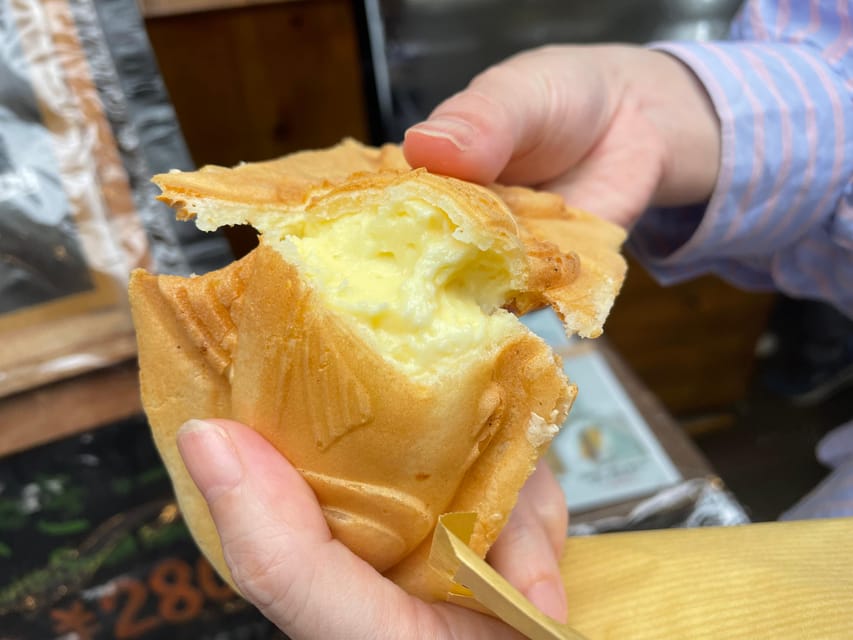
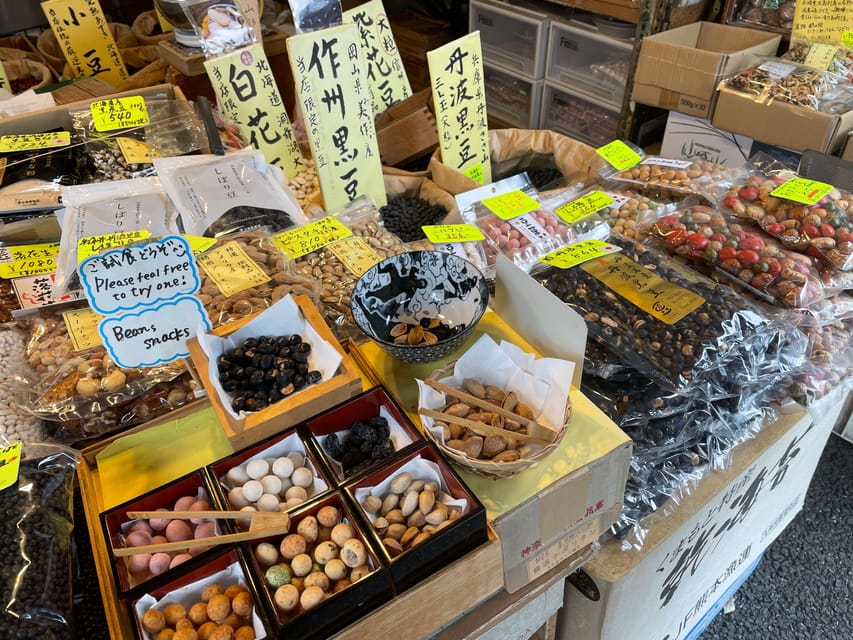
The activity description lists several food categories rather than one fixed meal. Included tastings can feature seasoned seaweed, dried fish, roast beef sushi, oysters or sashimi, and bean snacks. The exact combination may depend on the shops and what is available, so you should think of this as a guided tasting route, not a set restaurant menu.
That variety is one of the strongest reasons to book. You can compare very different Japanese food traditions in a short time. Seaweed and dried fish show the importance of preserved ingredients. Sashimi and oysters bring in fresh seafood. Roast beef sushi adds a meat option, while bean snacks give you something lighter and different from the usual fish-focused picture of Tsukiji.
Some of the tastings include raw seafood and meat. If you have an allergy, you are told to inform the guide, but the supplied tour information also lists people with food allergies among those for whom the tour is not suitable. Take that warning seriously. If you cannot safely eat the listed foods, this is not a good choice.
The tour also includes shopping. That does not mean every purchase is covered by the $99 price. The included snacks are part of the activity, but anything else you buy at the market is your responsibility. This is helpful if you want souvenirs or extra food, but you should set a spending limit before you arrive.
What the included tastings are really worth
At $99 per person, the price is not simply paying for a plate of food. You are paying for three hours of a guide’s time, a small group, interpretation in English, selected tastings, and help finding your way through a market that can be difficult to read on your own.
The value depends on how you like to travel. If you are already confident ordering Japanese food, know Tsukiji well, and plan to browse without help, you could spend less by visiting independently. The tour makes more sense if you want a guided introduction and would rather let someone else choose several stops.
The food list is also more interesting than a standard single-dish tasting. You get small portions from different parts of Japanese food culture, rather than paying for one large lunch. That lets you try more kinds of food, but it also means you should not expect the included snacks to replace lunch.
The roast beef sushi is a useful example of the route’s range. Tsukiji is strongly associated with seafood, yet the tasting can include meat as well. The dried fish, seaweed, and bean snacks show the market’s everyday side. These are the kinds of foods that explain Japanese eating habits better than a quick photograph of a tuna display.
A few more Tokyo bookings worth comparing
- Mt Fuji and Hakone 1-Day Bus Tour Return by Bullet Train
★ 5.0 · 26,383 reviews - 1-Day Tokyo Bus Tour
★ 5.0 · 14,250 reviews - Tokyo: TOKYO SKYTREE® Admission ticket
★ 4.5 · 11,192 reviews - Tokyo: teamLab Planets TOKYO Digital Art Museum Entry Ticket
★ 4.6 · 9,779 reviews
Choosing your own lunch after the tastings
Later, you can purchase your preferred lunch at the market and eat it with the snacks already bought during the tour. Lunch is not included, so this is an extra cost and an opportunity rather than a promised meal.
I like having that choice. A fixed lunch can be a problem when one person wants seafood and another wants something more familiar. Here, you can decide what suits you after seeing the market and learning from the guide.
The limitation is that the tour does not provide a stated lunch allowance or fixed restaurant booking. You need to pay for the meal yourself, and the information does not identify one specific lunch shop. Ask the guide for help when you are ready to choose, then keep your budget in mind.
Because the tastings include several items, you may not need a large lunch. Still, arrive ready to eat. The route is built around breakfast, brunch, dessert, lunch, snacks, and food tasting, so this is not a tour for someone who wants to avoid food until midday.
Namiyoke Shrine and the working side of Tsukiji
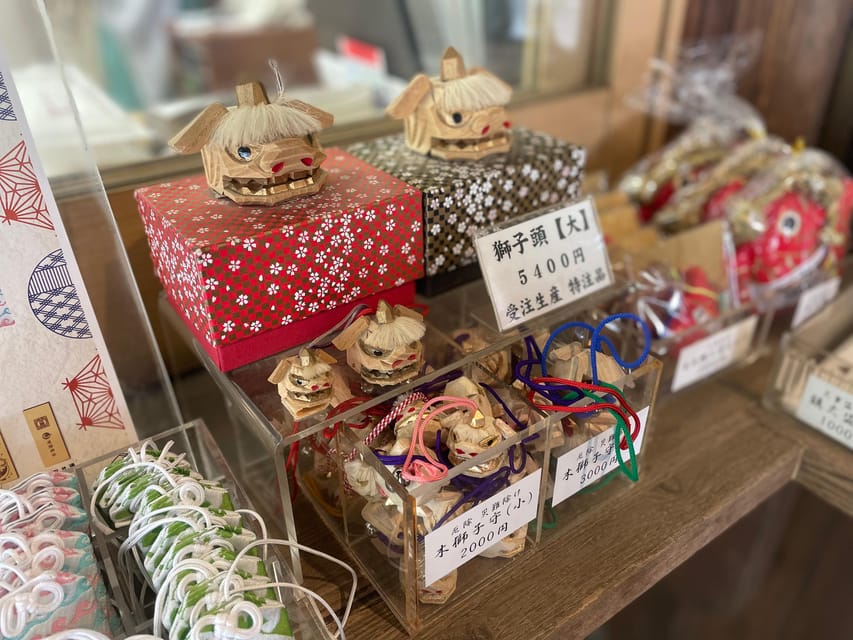
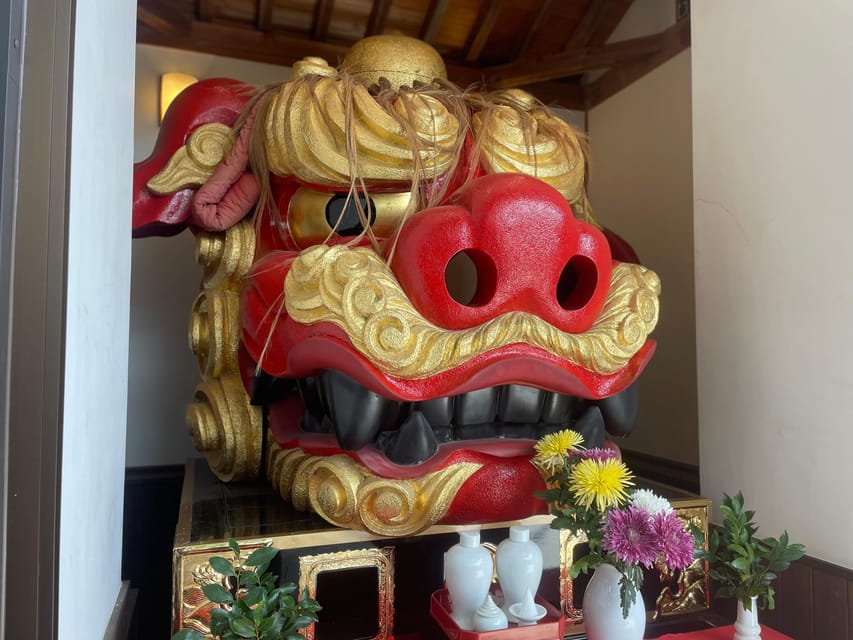
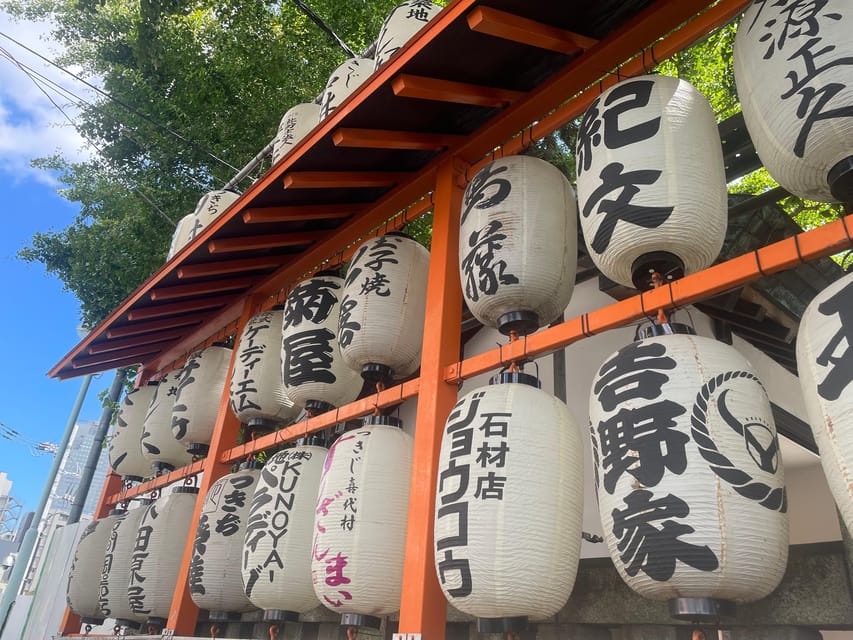
The tour finishes at Tsukiji Namiyoke Shrine, known for supporting workers in Tsukiji. This is more than a final photo stop. It helps connect the market to the people whose daily work keeps the district running.
A shrine visit may be easy to skip when you are focused on food, but it gives the experience a better ending. The market is not just a collection of shops for tourists. It has a working community, and Namiyoke Shrine is tied to that community.
The route also includes Tsukiji Honganji Temple at the start and Namiyoke Shrine at the end. Together, the two religious sites frame the food portion of the walk. You begin with a major local landmark, spend most of the time among market shops, and finish at a shrine linked to the people of Tsukiji.
What the small group changes
The group is limited to six participants. That is a real advantage in Tsukiji, where a large party would be harder to keep together and less pleasant around small storefronts.
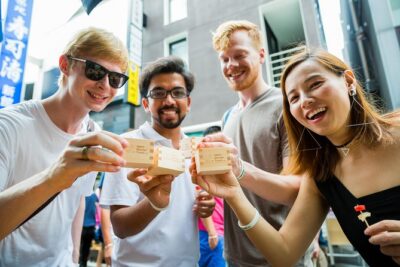
With six people, you can usually hear the English-speaking guide more easily and ask about unfamiliar ingredients. It also makes the snack purchases more manageable. One booking was specifically praised for the small, fun group, and that matches the practical benefit here: the format is social without becoming a large procession.
The small size does not guarantee a quiet market. Tsukiji remains a popular shopping and dining destination, and the market lanes can be active. You should still expect to walk at a steady pace and stay close to the guide.
One food-focused departure had Haruka as its guide. If she leads your date, you can expect a guide who knows the market’s layout well and can point you toward several recommended spots. Since guide assignments can vary, book this for the route and format rather than expecting a particular person.
Who should book this Tsukiji walk
This tour suits you best if you want a first look at Japanese food culture and prefer guidance over independent wandering. It is especially useful if you are curious about ingredients beyond sushi and want a short introduction that combines food, shopping, and local religious sites.
It also works well for people who enjoy tasting many small items. The included food is varied, and the added lunch choice lets you decide how much more you want to eat.
You may want to skip it if you are vegan. The supplied information lists vegans as unsuitable, and the included tastings can contain seafood and meat. People with food allergies should also avoid booking, even though you can tell the guide about allergies, because the activity specifically carries a warning about seafood and meat.
Wheelchair users should not book this experience. It is listed as not wheelchair accessible, and the market route is not presented as suitable for wheelchair access.
This is also not the best match if you want a long, formal history tour or an included full meal. The religious stops are short, and the main focus is walking, tasting, and shopping.
Timing, meeting point, and cancellation
The activity lasts three hours, with availability depending on the selected starting time. The meeting point is outside the main gate of Tsukiji Honganji Temple, at 3-chōme-15-1 Tsukiji.
Wear comfortable shoes and keep your belongings manageable. The supplied information does not give a dress code or transport service, so you should plan to reach the temple independently and be ready for a walking tour.
You can cancel up to 24 hours in advance for a full refund. The reserve-now, pay-later option lets you hold a place without paying immediately, which is useful if your Tokyo schedule is still changing.
The tour is offered in English with a live guide. Since the group is small, the format should feel more personal than a large market excursion, though the experience remains shaped by shop conditions and the food available on the day.
My verdict on the $99 price
I see the $99 price as reasonable for the right kind of visitor, but not an automatic bargain. It includes an English-speaking guide, a three-hour route, the temple and shrine visits, and a set of snacks across several food categories. The small group adds value, especially in a market where finding good stops on your own can take time.
The price does not include lunch or extra shopping. Your final cost can rise if you buy additional food, gifts, or ingredients. Go in knowing that the included tastings are the foundation, not the entire day’s food budget.
The strongest value is the combination of access and explanation. You are not merely buying bites. You are getting help making sense of Tsukiji, plus a chance to taste items you might otherwise pass by. If that sounds useful, the price is easier to justify.
Should you book it?
Book this tour if you want a compact, English-language introduction to Tsukiji with varied tastings, a small group, and two meaningful local landmarks. It is a particularly good fit for curious eaters who want seafood, meat, preserved foods, and snacks in one morning or afternoon.
Skip it if you are vegan, have serious food allergies, use a wheelchair, or want a full lunch included. For everyone else, the best reason to book is simple: Tsukiji is easier to understand when someone who knows the lanes leads you from the temple, through the food stalls, and on to the shrine.
FAQ
How long does the Tsukiji food tour last?
The tour lasts three hours.
Where does the tour begin?
It begins outside the main gate of Tsukiji Honganji Temple at 3-chōme-15-1 Tsukiji.
Where does the tour finish?
The tour finishes at Tsukiji Namiyoke Shrine, shown as 波除神社.
Is an English-speaking guide included?
Yes. The tour includes a live English-speaking guide.
How many people are in the group?
The group is limited to six participants.
What food is included?
Included snacks can include seasoned seaweed, dried fish, roast beef sushi, oysters or sashimi, and bean snacks.
Is lunch included in the price?
No. You can purchase your preferred lunch during the tour, but the lunch fee is not included.
Can people with food allergies join?
The activity is listed as unsuitable for people with food allergies. The snacks include seafood and meat, so you should treat this as a firm warning.
Is the tour wheelchair accessible?
No. The tour is not wheelchair accessible.
New on our Tokyo list
- Sumi-e Experience in a relaxing green tea shop in Tokyo★ 5.0 · 3 reviews
- Tokyo : Kamikaze Street Drift Ride★ 5.0 · 3 reviews
- Private Zen Meditation in English in Shinjuku, Tokyo★ 5.0 · 3 reviews
- Onsen Spa in Tokyo and Asakusa Bar Hopping with Local Guide★ 5.0 · 3 reviews
- Easy for everyone! Now you can play handmade mini shamisen and show off to everyone! Musical instruments, sweets and live music★ 5.0 · 3 reviews
- Tokyo: Private Tsukiji Street Food & Sake with Local Guide★ 5.0 · 3 reviews
- Mt Fuji Exploration Tour with Free Japanese Kusa Mochi from Tokyo★ 4.5 · 3 reviews
- Tokyo Tsukiji Fish Market Walking and Exploring Hidden Gems Tour★ 5.0 · 3 reviews
Tsukiji & Toyosu Market Tours, compared.
Tokyo Tsukiji Fish Market Food and Culture Walking Tour
Read our review →
Tokyo Sushi Making Class in Tsukiji with Professional Chef
Read our review →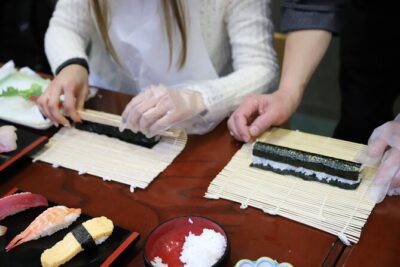
Tsukiji Fish Market Guided Tour and Sushi Making with Pro Chef
Read our review →Tsukiji Fish Market Food and Culture Walking Tour
Read our review →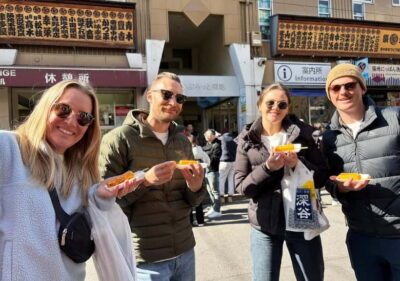
Tsukiji Fish Market: Street Food & Culture Walking Tour
Read our review →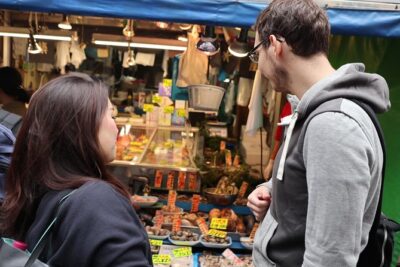
Tsukiji Fish Market Small-Group Food Walking Tour
Read our review →Browse the lists this tour appears in