
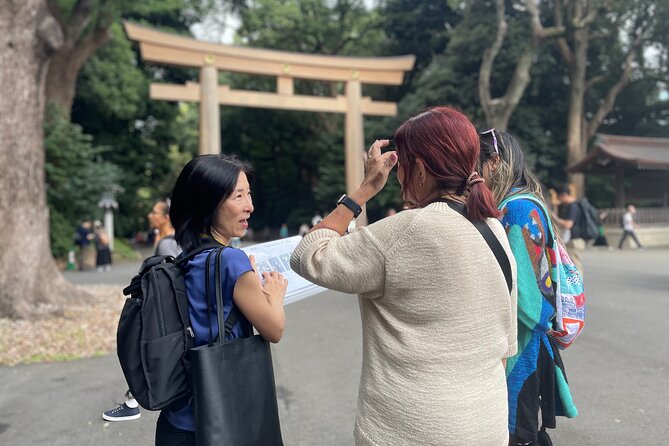
Reviewed · TEMPLE & SHRINE TOURS
Tokyo: Harajuku Meiji Shrine to Shibuya Crossing Guided Tour
The best thing about this tour is the sharp contrast packed into two hours. You begin beneath the wooded approach to Meiji Jingu Shrine, stroll through the playful shops of Takeshita Street, then finish at the famous Shibuya Crossing. It gives you old Tokyo, young Tokyo, and Tokyo at full speed in one easy-to-follow walk.
I like the small group capped at 10 and the route that ends near Shibuya Mark City, close to both JR and Ginza Line trains. I also like that the guide handles the navigation while explaining local customs, including the shrine’s omikuji fortune paper. The main consideration is pace: you will walk for about two hours, including a 20-minute walk from Harajuku to Shibuya, so comfortable shoes matter.
In This Review
- Key points at a glance
- Why this Harajuku to Shibuya route works
- Entering Meiji Jingu through the trees
- Finding Harajuku’s playful side on Takeshita Street
- Walking toward Shibuya Crossing
- Finishing at the famous Shibuya Scramble
- What the guide adds to the experience
- Is $79.73 a fair price?
- Timing, meeting point, and practical planning
- Who should book this Tokyo walk?
- Should you book the Meiji Shrine to Shibuya tour?
- FAQ
- How long does the tour last?
- Where does the tour begin?
- Where does the tour end?
- Which sights are visited?
- How much time is spent at Meiji Jingu Shrine?
- How much time is spent on Takeshita Street?
- Is the walk from Harajuku to Shibuya included?
- Is the omikuji fee included?
- What is the cancellation policy?
Key points at a glance
- Meiji Jingu begins the tour with quiet forest paths, shrine customs, and a chance to see traditional ceremonies.
- Takeshita Street brings you into Harajuku’s youth fashion, kawaii shops, and Japanese-style crepes.
- The route ends at Shibuya Crossing, one of Tokyo’s easiest places for memorable photos.
- A maximum of 10 people makes it easier to hear the guide and ask questions.
- The roughly two-hour route suits a first Tokyo day or a short stop between other plans.
- The $79.73 price is strongest if you value context, navigation, and a compact introduction rather than a long shopping stop.
Why this Harajuku to Shibuya route works
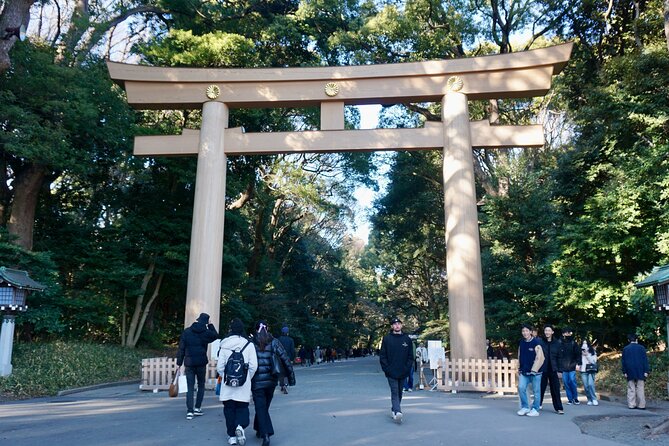
Tokyo can feel like several cities stitched together by train lines. One minute you are in a quiet shrine forest, and a short while later you are surrounded by fashion stores, dessert counters, giant screens, and crossing signals. This walking tour uses that contrast as its main attraction.
You meet at Harajuku Station, at 1 Chome-18 Jingumae. From there, the guide leads you through the route rather than leaving you to match street names with a map. That is useful on a first visit, especially if you want some orientation before exploring Tokyo on your own.
The tour lasts about two hours. That is long enough to give each stop a purpose, but short enough to fit around lunch, museum visits, shopping, or an evening reservation. You should not expect a detailed tour of every corner of Harajuku or Shibuya. Think of it as a well-planned introduction to three major sights.
More temples and shrines near Tokyo:
- Tokyo: Meiji Shrine, Asakusa, Skytree Bus Tour and Cruise
★ 4.7 · 1,986 reviews - Tokyo: Asakusa Walking Tour with Sensoji Temple Visit
★ 4.8 · 1,583 reviews - Nikko: Kegon Falls, Lake Chuzenji & Toshogu Temple
★ 4.6 · 1,577 reviews
Entering Meiji Jingu through the trees
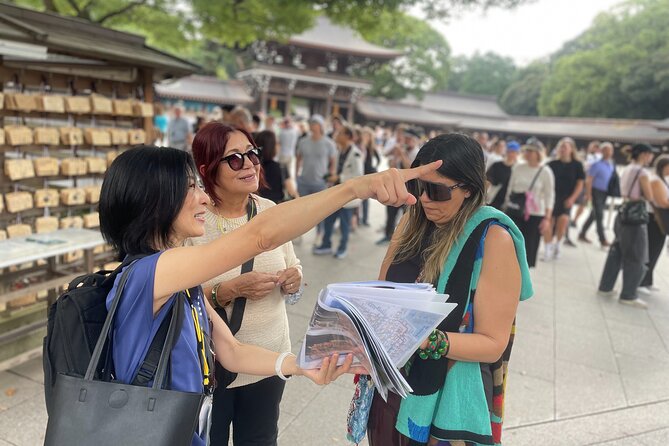
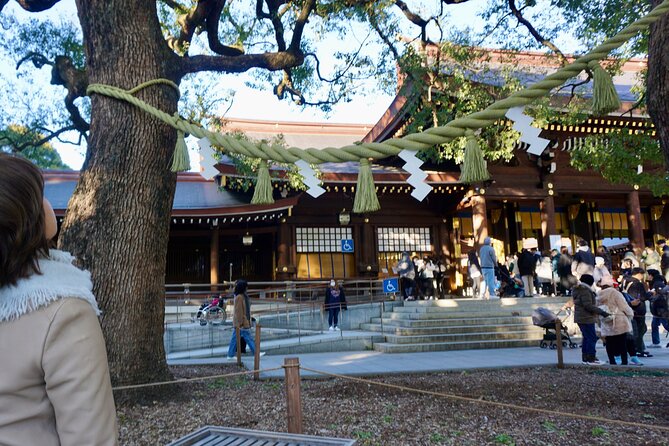
Meiji Jingu takes up about an hour of the tour, making it the main stop. The shrine is dedicated to Emperor Meiji and Empress Shoken, but the important experience here is the change in atmosphere. Harajuku Station is close by, yet the shrine grounds offer a broad, wooded setting where city noise fades.
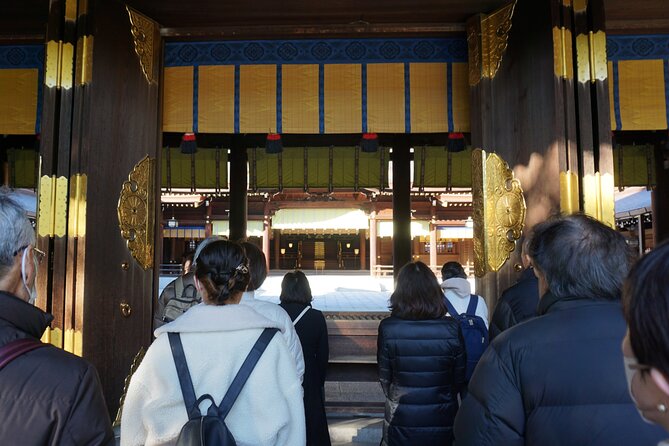
The guide explains the history and culture connected with the shrine. You also get a chance to understand how a Shinto shrine is used, rather than simply walking up to the main building for a photograph. That context helps you notice the gestures and details that can otherwise pass in a blur.
Meiji Jingu is especially associated with Hatsumode, the first shrine visit of the New Year. It is said to be the most visited shrine in Japan for that tradition. Even outside the New Year period, the site gives you a clear introduction to Japanese religious customs and the way a major shrine fits into city life.
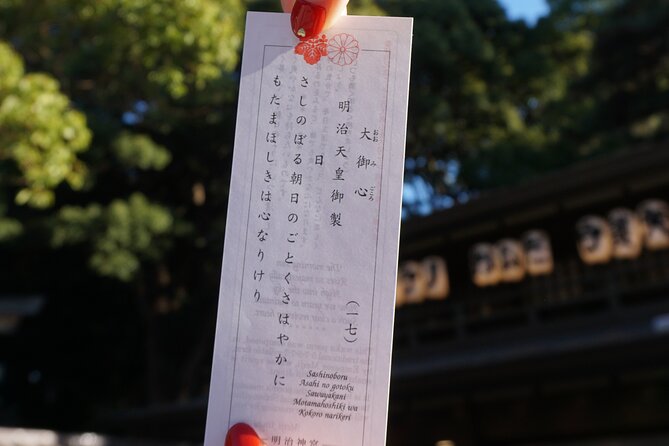
The tour includes the fee for an omikuji, or fortune paper. This is a small but useful detail. You do not need to sort out the process alone, and the guide can help explain what you receive. The fortune is part of the cultural experience, not simply an included extra.
A traditional wedding may also be visible during your visit. It is not promised, and you should not plan the tour around seeing one, but the shrine is a place where such ceremonies can occur. If one happens to be taking place, the guide can help you understand what you are seeing and remind you to observe respectfully.
The shrine portion requires walking. The grounds are not presented as a strenuous hike, but the tour does ask for a moderate level of physical fitness. If you have trouble walking for an hour or prefer frequent seated breaks, this may feel rushed.
Finding Harajuku’s playful side on Takeshita Street
After Meiji Jingu, the mood shifts quickly. Takeshita Street is the modern Harajuku stop, with fashionable stores, kawaii goods, and the youthful style for which the area is known. The tour allows about 30 minutes here.
That time is enough to get a feel for the street and hear the guide explain why Harajuku is such a recognizable part of Tokyo culture. It is not enough for a serious shopping session. If your main goal is to browse every store, compare clothing, or stop for several snacks, you will want to return on your own.
Japanese-style crepes are one of the area’s familiar treats, and the guide introduces the idea during the walk. The information does not specify that a crepe is included in the price, so bring money if you want to buy one. The same applies to shopping and other food stops.
I like this part of the route because it keeps the tour from becoming a shrine-only experience. You see a side of Tokyo built around fashion, character goods, and quick street food. It also gives you a useful sense of how close the city’s traditional and contemporary sides can be.
Takeshita Street can be crowded, and the route is likely to feel more active than the shrine grounds. Stay close enough to the group to hear the guide and keep track of the meeting plan. A group of 10 or fewer helps, but busy sidewalks still require attention.
Walking toward Shibuya Crossing
The move from Takeshita Street to Shibuya takes about 20 minutes on foot. This is not dead time. It connects the two neighborhoods and lets you see the transition from Harajuku’s specialty shopping streets to Shibuya’s large-scale city energy.
The walk also explains why comfortable shoes are important. The total tour is only about two hours, but it includes shrine paths, urban sidewalks, and the walk between districts. The physical demand should be manageable for most people with moderate fitness, but this is not a sit-down sightseeing experience.
The supplied details do not identify every street used on the walk, so you should not expect a fixed list of shops or side roads. The value is having someone guide the route and keep the tour moving. If you are new to Tokyo, that can save time and reduce the stress of checking directions at every turn.
More Shibuya plans:
- Official Street Go-Kart in Shibuya
★ 5.0 · 3,435 reviews - Tokyo: Street Kart Experience in Shibuya
★ 4.9 · 1,484 reviews - Shibuya Meltdown Nightlife Tour: All-You-Can-Drink Bar Hopping
★ 5.0 · 1,058 reviews - Shibuya Official Street Go-Kart in Shibuya Annex
★ 5.0 · 972 reviews
Finishing at the famous Shibuya Scramble
The final 30 minutes are spent at Shibuya Crossing. The guide takes you to the famous scramble crossing for photographs and commentary. This is the tour’s most instantly recognizable stop, and it makes a strong finish because the scene is easy to understand even if you know little about Tokyo.
You will see pedestrians move across the intersection from several directions when the signals change. The tour is not described as including a special rooftop admission or a paid crossing attraction. Instead, it ends at the Shibuya Mark City viewpoint, right next to JR and Ginza Line access.
That ending is practical. You can continue exploring Shibuya, catch a train, or use the station area as a base for your next activity. The official end point is Shibuya Mark City at 1-12-1 Dogenzaka, and the viewpoint is close to both the JR and Ginza lines.
For photographs, follow the guide’s advice about where to stand. The crossing itself is the subject, but the surrounding buildings and movement make the picture. The guide’s timing and local knowledge can help you avoid wasting the final part of the tour figuring out where to go.
What the guide adds to the experience
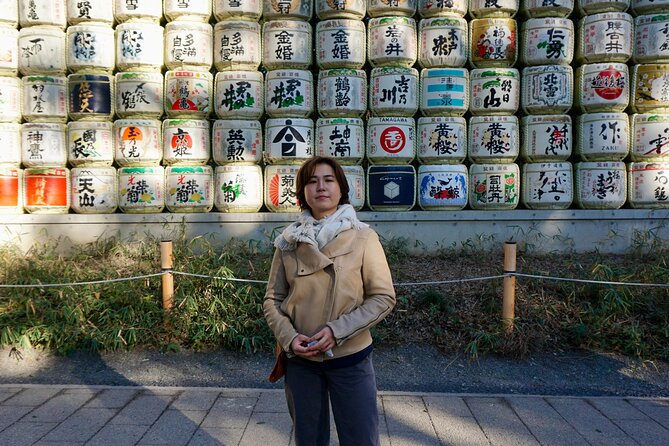
The tour is designed around explanation as much as sightseeing. At Meiji Jingu, the guide provides local history and shrine context. On Takeshita Street, the guide helps connect the shops and street style with modern Harajuku. At Shibuya Crossing, the guide gives the busy scene some structure.
That is most useful if this is your first visit to Tokyo. You get basic orientation without committing to a full-day city tour. You also have a chance to ask practical questions while you are already in the neighborhoods you may want to revisit.
Guides have included Naoko, whose clear English, friendly manner, and explanations of Japanese history were specifically praised. The tour provider is gotcha, and the guide assigned to your date may differ. Still, Naoko gives you a useful idea of the kind of personal, English-language guidance the experience aims to provide.
A traditional wedding was seen during one visit to the shrine. Again, that is a possibility, not a scheduled feature. The guide can point out cultural details when they occur, which is one reason this walk offers more than simply following the same route with a phone map.
Is $79.73 a fair price?
At $79.73 per person, this is not the cheapest way to walk from Harajuku to Shibuya. You can visit all three areas independently, and admission to the shrine, Takeshita Street, and Shibuya Crossing is free.
The price makes more sense if you put value on the guide. You are paying for navigation, explanations, a small group, and the omikuji fee. You are also buying a compact route that can help you understand where you are before spending more time in Tokyo alone.
The group limit of 10 is important. A very large group can make a shrine explanation hard to hear and can slow down a crowded street walk. A smaller group usually gives you a better chance to ask a question or stay connected with the guide.
I would see the tour as good value for a first-time visitor with limited time, particularly if you want a cultural stop and two famous neighborhoods in the same outing. It is less compelling for a confident Tokyo explorer who already knows the area and prefers to spend an hour shopping on Takeshita Street.
The booking pattern also gives you a practical planning clue. The experience is booked an average of 31 days in advance, so you may want to reserve ahead if your Tokyo dates are fixed. The published rating is 4.9 from 27 reviews, with 100 percent recommending it, but a small group of ratings cannot guarantee that every guide or departure will feel identical.
Timing, meeting point, and practical planning
The meeting point is Harajuku Station at 1 Chome-18 Jingumae, Shibuya, Tokyo 150-0001. Check the exact station exit and allow time to find the guide. Tokyo stations can be confusing, and arriving early is wiser than trying to join a walking tour while still orienting yourself.
The tour ends at Shibuya Mark City, at 1-12-1 Dogenzaka. The end point is convenient for JR and Ginza Line services. It also puts you near the wider Shibuya area if you want to continue sightseeing or find a meal after the tour.
A mobile ticket is provided, and confirmation arrives when you book. Public transportation is nearby at both ends. The tour does not list meals, shopping purchases, or crepes as included, so budget separately for anything you want to buy along the way.
Free cancellation is available if you cancel at least 24 hours before the start time. Changes or cancellations made inside that window are not accepted and are not refunded. The experience also needs a minimum number of participants, and if the provider cancels because that minimum is not met, you are offered another date or experience, or a full refund.
Who should book this Tokyo walk?
I would recommend it most to first-time Tokyo visitors who want a quick orientation without spending half a day on a bus. The route introduces a major shrine, a distinctive shopping street, and a famous city crossing in a logical order.
It also suits couples and small groups who like asking questions along the way. The capped group size is a real advantage for anyone who dislikes anonymous crowds or wants more personal guidance.
Families and older visitors should consider the walking requirement carefully. The experience calls for moderate physical fitness, and the route includes roughly 20 minutes between Harajuku and Shibuya. It may work well if everyone is comfortable walking, but it is not designed around long rest periods.
Independent visitors may prefer to skip the tour if they have already visited Meiji Jingu, know Takeshita Street, and can easily find the Shibuya viewpoint. You could reproduce the route without paying a guide. The decision comes down to whether cultural explanation and easy navigation are worth the added cost.
Should you book the Meiji Shrine to Shibuya tour?
Book it if you want a compact first look at western Tokyo, a small group, and a guide who can explain the difference between shrine customs, Harajuku street culture, and Shibuya’s modern spectacle. The route is efficient, the ending is convenient, and the included omikuji adds a small cultural touch.
Skip it if your priority is extended shopping, a slow shrine visit, or the lowest possible cost. Two hours moves quickly, and Takeshita Street receives only about 30 minutes.
For most first-time visitors with a free morning or afternoon, I think the tour earns its price through context and convenience. You finish with a better sense of the area and a useful location from which to continue exploring Tokyo.
FAQ
How long does the tour last?
The tour lasts approximately two hours.
Where does the tour begin?
It begins at Harajuku Station, 1 Chome-18 Jingumae, Shibuya, Tokyo 150-0001, Japan.
Where does the tour end?
It ends at the Shibuya Mark City viewpoint at 1-12-1 Dogenzaka, Shibuya, Tokyo 150-0043, Japan.
Which sights are visited?
The route includes Meiji Jingu Shrine, Takeshita Street, and Shibuya Crossing.
How much time is spent at Meiji Jingu Shrine?
The shrine visit takes about one hour.
How much time is spent on Takeshita Street?
The walk through Takeshita Street takes about 30 minutes.
Is the walk from Harajuku to Shibuya included?
Yes. The route includes an approximately 20-minute walk from Takeshita Street to Shibuya.
Is the omikuji fee included?
Yes. The omikuji, or fortune paper, fee is included.
What is the cancellation policy?
You can cancel for a full refund up to 24 hours before the experience begins. Cancellations or changes made less than 24 hours before the start time are not accepted and are not refunded.
More Harajuku Wanders
- Tokyo Go-Kart Tour Shibuya-Harajuku-Shinjuku (*IDP Required)
★ 5.0 · 217 reviews - Tokyo: Guided Go Kart Tour from Harajuku to Shibuya Crossing
★ 4.5 · 166 reviews - Shibuya & Harajuku: Hidden Gems & Highlights Private Tour
★ 4.7 · 139 reviews - Harajuku Kawaii Fashion and Pop-Culture Tour
★ 5.0 · 94 reviews
New on our Tokyo list
- From Tokyo: Mount Fuji & Hakone Full Day Private Tour★ 4.9 · 25 reviews
- Tokyo Spectacular View Day-Cruise in 90 Minutes★ 5.0 · 25 reviews
- Real Tokyo Runner Club : Daikoku Car Meet Night Tour with JDM Car★ 5.0 · 25 reviews
- 2.5 Hour-Guided Cycle Tour in the Central Tokyo★ 5.0 · 25 reviews
- Ramen Making from Scratch +Akihabara Tour –Cooking Class★ 5.0 · 25 reviews
- [Self-Drive] Tokyo & Daikoku Custom Car Driving Tour★ 4.9 · 25 reviews
- Tokyo: 2-Hour Night Bike Tour of the City’s Hidden Gems★ 4.9 · 25 reviews
- Tokyo: Mt. Fuji, Owakudani, Hakone Shrine, & Open-Air Museum★ 4.7 · 25 reviews
Temple & Shrine Tours, compared.
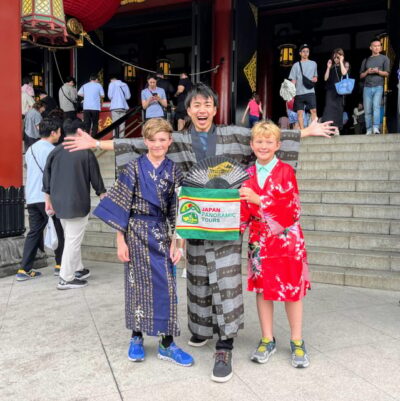
Meiji Shrine, Asakusa, Skytree Bus Tour and Cruise
Read our review →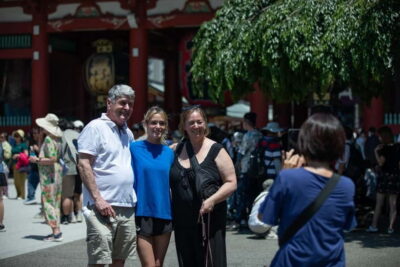
Asakusa Walking Tour with Sensoji Temple Visit
Read our review →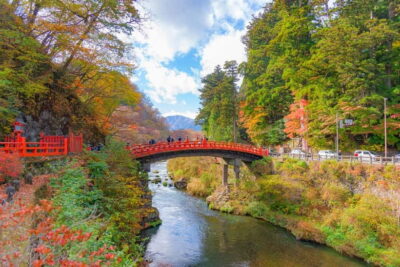
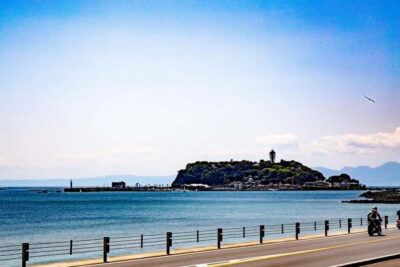
Kamakura & Enoshima Day Trip including Temple Tickets
Read our review →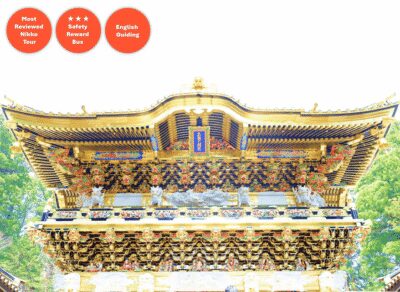
Nikko Toshogu Shrine and Kegon Waterfall Tour
Read our review →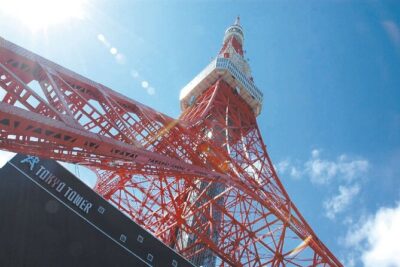
Tokyo Panoramic 1 Day: Meiji Shrine, Asakusa, Odaiba and SKYTREE®
Read our review →
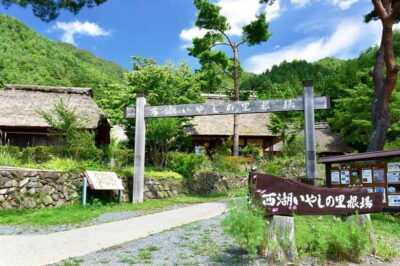
Mt. Fuji Heritage Tour: Traditional Villages, Lakes & Shrine
Read our review →Browse the lists this tour appears in