
Reviewed · TEMPLE & SHRINE TOURS
Tokyo in a Day : Private Tour to Shrine, Temples, Towers &Culture
Tokyo in a Day packs Tokyo’s old and new sides into one long outing. You move from the incense and red gates of Senso-ji Temple to the futuristic height of Tokyo Skytree, then on to Akihabara’s anime shops, Meiji Jingu, and the famous crossing at Shibuya.
I like the private format for up to five people, since your group can travel together without waiting for strangers. I also like the hotel pickup, air-conditioned vehicle, and the fact that the route can be customized. The main catch is time: eight stops in 10 hours means some visits are short, and Shinjuku Gyoen is included only if the schedule allows.
In This Review
- Key things to know before booking
- One long day across Tokyo’s old and new faces
- Senso-ji Temple and Asakusa’s old Tokyo atmosphere
- Tokyo Skytree and the cost of going up
- A short walk beside the Imperial Palace
- Akihabara Electric Town for anime, games, and gadgets
- Meiji Jingu, a quieter pause in Shibuya
- Shibuya Crossing in a 30-minute burst
- Shinjuku Gyoen only if the clock allows
- What $525 means for your group
- The guide and the feel of the day
- Who should book this Tokyo day tour
- Should you book it?
- FAQ
- How long does the private Tokyo tour last?
- How many people can join the private tour?
- Is hotel pickup and drop-off included?
- Is transportation provided during the tour?
- Is Tokyo Skytree admission included?
- Is Shinjuku Gyoen National Garden guaranteed?
- Is lunch included?
- What is the cancellation policy?
Key things to know before booking
- A full-day private route: You get about 10 hours with an English-speaking guide and private transportation for your group.
- Tokyo’s sharp contrasts: The day links an ancient Buddhist temple, a Shinto shrine, the Imperial Palace area, electric town, and major modern sights.
- Tokyo Skytree costs extra: Adult admission is listed at 1,800 yen, so add that to the tour price if you want to go up.
- Shinjuku Gyoen is not guaranteed: The garden is a time-permitting stop, with a listed adult admission fee of 500 yen.
- Guide Ishii is specifically named: One account describes Ishii providing transport, covering every planned destination, and explaining the history of each place.
- Best for a small group: At $525 per group of up to five, the value improves when several people share the cost.
One long day across Tokyo’s old and new faces
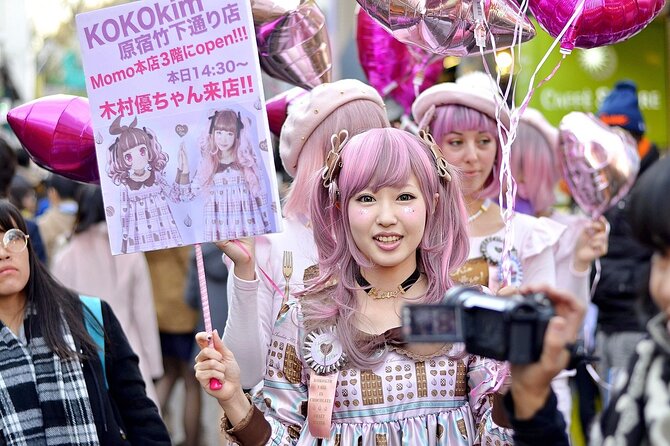
This tour gives you a broad first look at Tokyo rather than a slow study of one neighborhood. That tradeoff matters. You will not have hours to linger at every temple, shop, and garden, but you can see the city’s major cultural markers without working out every train connection yourself.
The route also helps you grasp Tokyo’s unusual rhythm. A quiet shrine may be followed by a dense electronic district. A palace garden may give way to giant video screens and a sea of pedestrians. I like that range because Tokyo can feel confusing when viewed one neighborhood at a time.
Your guide meets you in the lobby of your hotel or at your place of stay in Tokyo. The vehicle is air-conditioned, and the price includes private transportation, fuel, gas, highway tolls, and hotel pickup and drop-off. Those details are useful on a 10-hour day, especially when your group wants to keep its energy for the sights instead of managing every transfer.
The route is described as fully customizable. Still, customization works best when you discuss priorities with the guide at the start. If you care most about views, you may want to protect time for Tokyo Skytree. If you are visiting during cherry blossom season, Shinjuku Gyoen may deserve special attention, though it is only visited if time permits.
More temples and shrines near Tokyo:
- Tokyo: Meiji Shrine, Asakusa, Skytree Bus Tour and Cruise
★ 4.7 · 1,986 reviews - Tokyo: Asakusa Walking Tour with Sensoji Temple Visit
★ 4.8 · 1,583 reviews - Nikko: Kegon Falls, Lake Chuzenji & Toshogu Temple
★ 4.6 · 1,577 reviews
Senso-ji Temple and Asakusa’s old Tokyo atmosphere
Senso-ji is the day’s main historical opening. It is Tokyo’s oldest temple and one of the city’s most important Buddhist sites. The planned visit lasts about an hour, with no admission charge.
You can expect a strong contrast with the glass towers and commercial streets elsewhere on the route. Senso-ji gives the day a sense of place and helps explain why Tokyo is more than its modern skyline. The temple is in Asakusa, an area known for its old downtown character and major historical complex.
An hour is enough for a focused visit, but not for an unhurried exploration of every corner. You will want to leave room for the approach to the temple, photos, and a moment to take in the setting. Since the tour includes no lunch, this part of the day may also be a sensible place to ask about a meal or quick food stop if your schedule allows.
The tour information describes Senso-ji as a Buddhist temple that was once connected with the Tendai sect and later became independent after World War II. That detail gives your guide a useful opening to explain how religious institutions and modern Japanese history intersect.
I would pay attention here rather than treating the temple as a quick photo stop. The rest of the day leans heavily toward famous city sights. Senso-ji is where the tour offers its clearest look at Tokyo’s older spiritual identity.
Tokyo Skytree and the cost of going up
Tokyo Skytree receives about an hour. The tour includes transportation and time at the site, but admission is not included. Adult entry is listed at 1,800 yen.
This is one of the day’s clearest choices. If you want a high view over Tokyo, the extra fee may be worthwhile. If you are more interested in street-level culture, you can use the hour around the Skytree area without paying for the observation deck, depending on how the guide structures the visit.
The supplied description also connects this stop with Asakusa, noting the area’s popularity and its mix of historic sights and old downtown atmosphere. That makes the pairing practical. You get the old and high-tech versions of the same part of Tokyo within a single stretch of the day.
Do not assume the tour price covers every activity. The Skytree admission is specifically separate, as are other activity fees. I would decide before pickup whether the view is a priority, then tell the guide early. A private tour should make that conversation easier than a fixed group schedule.
A short walk beside the Imperial Palace
The Imperial Palace stop is brief, about 30 minutes. The planned activity is a small walk around the front-side garden area, and admission is free.
The palace is the main residence of Japan’s Emperor. Its larger grounds include the Fukiage Palace, the main palace used for ceremonies and receptions, family residences, administrative offices, museums, and an archive. You will not see all of that in a half-hour, so think of this stop as an introduction rather than a full palace visit.
This is a good place to reset between the more crowded attractions. The palace area brings open space and a formal sense of Japan’s current imperial institution into the route. Your guide can also explain what you are seeing, since the itinerary includes an English-speaking guide and historical context is one of the useful parts of the experience.
The limitation is clear: 30 minutes goes quickly. If you want a longer walk or more time around the palace grounds, this private route may need adjustment elsewhere. The tour’s flexibility helps, but the day still has a fixed practical limit.
A few more Tokyo bookings worth comparing
- Mt Fuji and Hakone 1-Day Bus Tour Return by Bullet Train
★ 5.0 · 26,383 reviews - 1-Day Tokyo Bus Tour
★ 5.0 · 14,250 reviews - Tokyo: TOKYO SKYTREE® Admission ticket
★ 4.5 · 11,192 reviews - Tokyo: teamLab Planets TOKYO Digital Art Museum Entry Ticket
★ 4.6 · 9,779 reviews
Akihabara Electric Town for anime, games, and gadgets
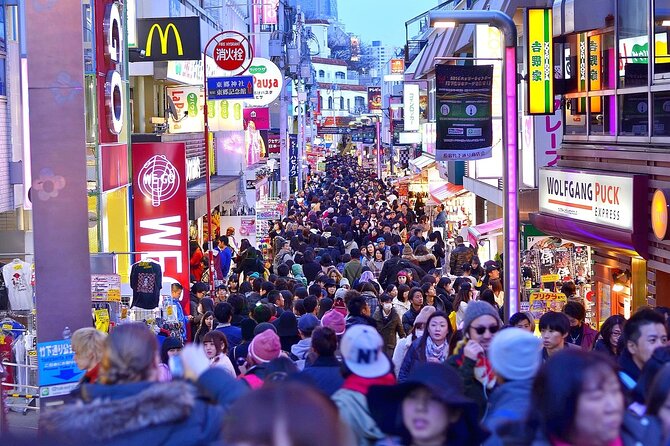
Akihabara receives about an hour and changes the mood completely. This central Tokyo district is known for electronics, anime, manga, gaming centers, themed cafes, colorful signs, and otaku culture.
I like this stop because it shows a side of Tokyo that temples and palace grounds cannot. The area links technology with entertainment and modern Japanese pop culture. You may find electronics shops, anime merchandise, gaming attractions, and themed businesses packed into a small area.
One hour gives you a taste, not a serious shopping session. If you have a particular item in mind, tell the guide before arriving. Otherwise, it is easy to spend the entire visit simply looking at signs and shop windows. The tour includes no stated shopping assistance, so you should treat this as an orientation stop rather than a specialist buying trip.
Akihabara is also useful for families and groups with mixed interests. Someone who is less interested in religious sites may prefer this section, while another person may enjoy the contrast between Akihabara and Meiji Jingu later in the day.
Meiji Jingu, a quieter pause in Shibuya
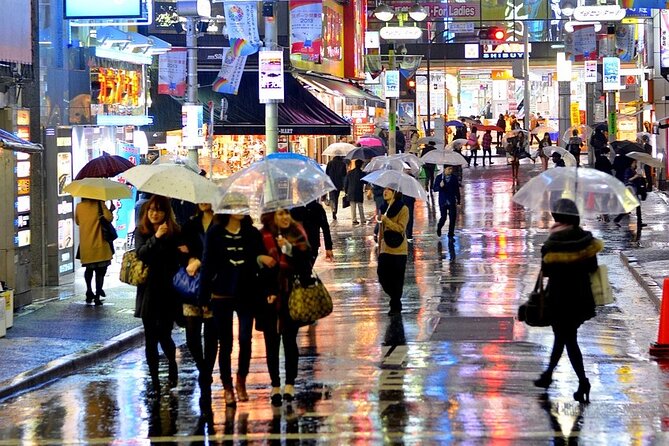
Meiji Jingu is scheduled for about an hour, with free admission. The Shinto shrine is dedicated to the deified spirits of Emperor Meiji and Empress Shoken. The emperor’s grave is not here, but at Fushimi-Momoyama south of Kyoto.
This stop adds an important distinction to the day. Senso-ji represents Buddhism, while Meiji Jingu introduces Shinto tradition. The two sites let you compare different religious settings without needing a separate day devoted to temples and shrines.
The shrine is located in Shibuya, yet the experience is not defined by the district’s giant screens or famous crossing. That change makes the route feel less one-note. You can spend time with the shrine’s setting before moving into one of Tokyo’s most recognizable modern scenes.
An hour is a sensible amount of time for a first visit, though it still calls for a steady pace. If you are particularly interested in shrine customs, ask your guide to explain the proper approach and etiquette. The available information confirms an English-speaking guide, but it does not promise a specific religious lecture or ceremony.
Shibuya Crossing in a 30-minute burst
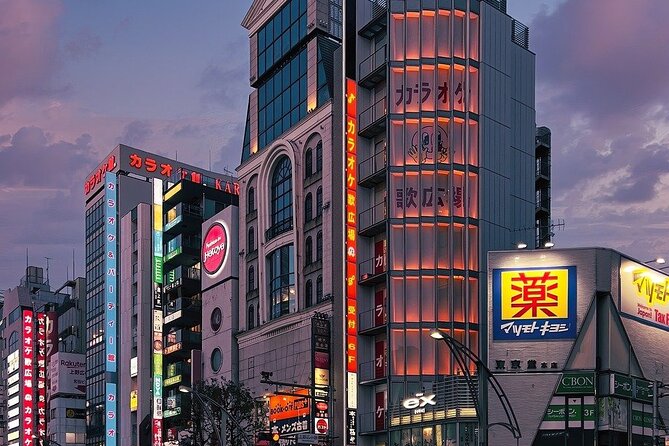
Shibuya Crossing is scheduled for 30 minutes. The intersection is one of Tokyo’s best-known images and has appeared in films, music videos, news programs, and animated productions.
You will have enough time to see the crossing in action and take photographs, but this is not a long neighborhood visit. The stop is about the spectacle of the intersection itself. People gather around the area to photograph the crossing from different angles, and the tour gives you a chance to experience that famous urban scene without making it the whole day.
Thirty minutes is also a useful warning. If you want to shop, visit cafes, or explore Shibuya beyond the crossing, you will likely need to give up time at another stop or return on your own. The private format makes a short adjustment possible, but it cannot turn a 10-hour tour into two separate days.
I like placing Shibuya after Meiji Jingu. The sequence shows Tokyo’s ability to shift from shrine grounds to giant screens and crowded streets in a matter of minutes.
Shinjuku Gyoen only if the clock allows
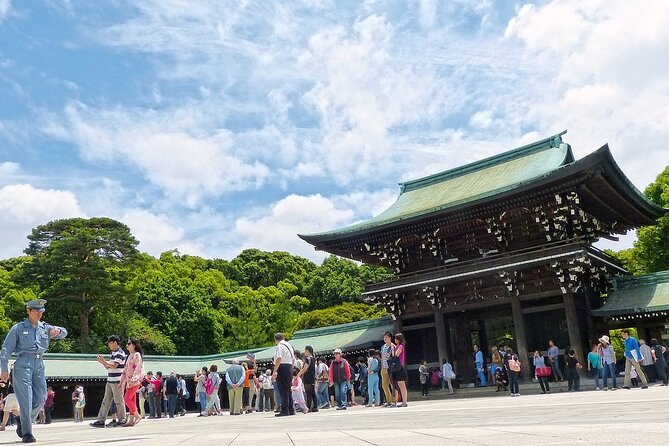
Shinjuku Gyoen National Garden is listed as a possible final stop, not a guaranteed one. The visit lasts about an hour if time permits, and adult admission is listed at 500 yen.
The garden is especially recommended during cherry blossom season. If sakura is your main reason for visiting Tokyo, you should not assume this tour will include a full garden visit. The day already contains several scheduled stops, and the wording makes the garden dependent on the remaining time.
This is where the tour’s flexibility becomes important. Tell the guide before the day begins if the garden matters more to you than Akihabara, the Skytree, or another stop. You may be able to shape the route, but the available details do not guarantee that every requested change will be possible.
For a first-time visit outside cherry blossom season, I would view Shinjuku Gyoen as a bonus. For a spring visit, I would treat it as a priority and plan the rest of the day around it.
What $525 means for your group
The listed price is $525 per group of up to five people. That works out to $105 each for five people, $131.25 each for four, $175 each for three, and $262.50 each for two, before extra admissions and food.
That is not a cheap day for a couple. It becomes more reasonable for a family or group of friends that would otherwise need several taxis, private transfers, or a more complicated rail plan. You are paying for a dedicated vehicle, hotel pickup and drop-off, a guide, fuel, highway tolls, and the ability to shape the day.
Lunch is not included. Neither are activity fees, Tokyo Skytree admission, or Shinjuku Gyoen admission. Build those costs into your budget rather than treating $525 as the final total.
The private setup is the main value. You avoid a fixed group pace and can discuss changes with the guide. That matters in Tokyo, where moving between distant districts can consume time. The drawback is that the tour covers a lot of ground, so you may pay for convenience while still receiving only short visits at several attractions.
The guide and the feel of the day
The guide is described as English-speaking, and Ishii is the specific guide named in the available experience details. Ishii picked up a couple at their hotel, covered the planned destinations, and explained the history of each place.
That combination of transport and explanation is important. A driver alone could get you around, but a guide who connects Senso-ji, Meiji Jingu, the Imperial Palace, and modern Tokyo gives the stops more meaning. You should still confirm the guide’s name and language arrangements when booking, since the tour guarantees an English-speaking guide but does not guarantee Ishii personally.
The day is designed for ease. Hotel pickup, private transport, and drop-off remove much of the planning burden. Most people can participate, the tour is near public transportation, and service animals are allowed.
Confirmation is provided at booking. Free cancellation is available if you cancel at least 24 hours before the start time. Cancellations or changes inside that 24-hour window are not refunded or accepted, based on local start time.
Who should book this Tokyo day tour
I would recommend it for a small group visiting Tokyo for the first time, especially if you want a broad overview in one day. It also suits people who prefer a private vehicle, hotel pickup, and a guide instead of planning a complex route between far-flung districts.
Families may appreciate the private format because you can adjust the pace. Groups with mixed interests also benefit from the variety: history at Senso-ji and the palace, religious culture at Meiji Jingu, technology and anime in Akihabara, and modern city life at Shibuya.
I would be more cautious if you want long museum visits, extended shopping, a relaxed meal, or a detailed look at each neighborhood. Eight listed stops in 10 hours is ambitious. Skytree admission and Shinjuku Gyoen are also extra, and the garden may be skipped if the schedule runs late.
Should you book it?
Book this tour if your priority is coverage and convenience. For up to five people, the price can make sense when shared, and the private vehicle saves you from coordinating Tokyo’s sprawling route on your own. The guide’s role adds context, while the customizable format lets you protect the places that matter most.
Think twice if you are a couple on a tight budget or if you prefer slow travel. In that case, the $525 price, extra admissions, and quick stops may feel too high. Before booking, decide whether you want Tokyo Skytree, Shinjuku Gyoen, or Akihabara to receive the most time. That one conversation can make this packed day far more useful.
FAQ
How long does the private Tokyo tour last?
The tour lasts approximately 10 hours.
How many people can join the private tour?
The price covers one private group of up to five people.
Is hotel pickup and drop-off included?
Yes. Pickup and drop-off at your hotel or place of stay in Tokyo are included.
Is transportation provided during the tour?
Yes. The tour includes private transportation in an air-conditioned vehicle, as well as petrol, gas, and highway tolls.
Is Tokyo Skytree admission included?
No. Tokyo Skytree admission is not included. The listed adult fee is 1,800 yen.
Is Shinjuku Gyoen National Garden guaranteed?
No. Shinjuku Gyoen is visited if time permits. The listed adult admission fee is 500 yen.
Is lunch included?
No. Lunch is not included in the tour price.
What is the cancellation policy?
You can cancel for a full refund if you cancel at least 24 hours before the experience start time. Cancellations and changes made less than 24 hours before the start time are not accepted, and the amount paid is not refunded.
New on our Tokyo list
- Sumi-e Experience in a relaxing green tea shop in Tokyo★ 5.0 · 3 reviews
- Tokyo : Kamikaze Street Drift Ride★ 5.0 · 3 reviews
- Private Zen Meditation in English in Shinjuku, Tokyo★ 5.0 · 3 reviews
- Onsen Spa in Tokyo and Asakusa Bar Hopping with Local Guide★ 5.0 · 3 reviews
- Easy for everyone! Now you can play handmade mini shamisen and show off to everyone! Musical instruments, sweets and live music★ 5.0 · 3 reviews
- Tokyo: Private Tsukiji Street Food & Sake with Local Guide★ 5.0 · 3 reviews
- Mt Fuji Exploration Tour with Free Japanese Kusa Mochi from Tokyo★ 4.5 · 3 reviews
- Tokyo Tsukiji Fish Market Walking and Exploring Hidden Gems Tour★ 5.0 · 3 reviews
Temple & Shrine Tours, compared.
Meiji Shrine, Asakusa, Skytree Bus Tour and Cruise
Read our review →
Asakusa Walking Tour with Sensoji Temple Visit
Read our review →
Kamakura & Enoshima Day Trip including Temple Tickets
Read our review →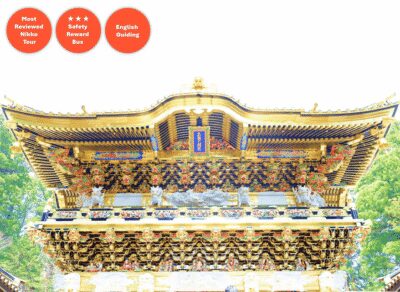
Nikko Toshogu Shrine and Kegon Waterfall Tour
Read our review →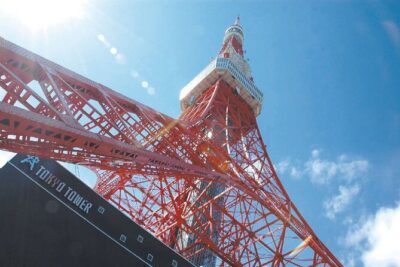
Tokyo Panoramic 1 Day: Meiji Shrine, Asakusa, Odaiba and SKYTREE®
Read our review →
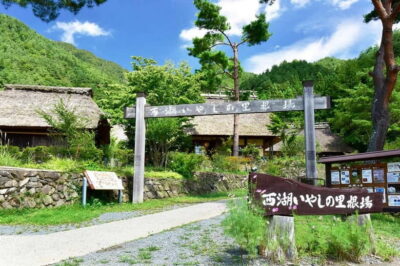
Mt. Fuji Heritage Tour: Traditional Villages, Lakes & Shrine
Read our review →Browse the lists this tour appears in