Reviewed · GUIDED
Tokyo Japanese Garden Lover’s Private Tour with Government-Licensed Guide
Tokyo’s best gardens are not all alike. One may frame a pond with borrowed views, another may use rocks and clipped plants to suggest mountains, while a third offers a quiet path beside tidal water. I like that this private six-hour tour lets you choose three or four sites instead of rushing through ten gardens, and I like the chance to ask a guide such as Yuki, Minoru, Steve, Keiko, or Nobuko about the meaning behind the stones and plants.
The main drawback is that the advertised list is much larger than any realistic six-hour route. Transportation and admission fees are extra, and you walk or use public transport rather than ride in a private vehicle. Choose your gardens carefully, or you may spend more time crossing Tokyo than enjoying them.
In This Review
- Key points to know
- Why a garden tour makes sense in Tokyo
- The six-hour format and route planning
- Imperial Palace and the old Edo Castle setting
- Shinjuku Gyoen and Meiji Jingu
- Koishikawa Korakuen and Rikugien
- Hama Rikyu and Former Shiba Rikyu
- Kiyosumi Teien and the role of stones
- Ueno Park and Koishikawa Botanical Garden
- Nezu Museum, Happo-en, and smaller gardens
- Yoyogi Park and the two kinds of city green space
- What your guide adds to the day
- Price, transport, and what you really pay for
- Who should book this private garden day?
- FAQ
- How long does the Tokyo Japanese Garden Lover’s tour last?
- How many gardens will I visit?
- Is the Imperial Palace interior included?
- Is transportation included?
- Are entrance fees included?
- Is this a private tour?
- Can I cancel for a full refund?
- Should you book it?
Key points to know
- You choose three or four sites: The long list includes Imperial Palace gardens, Rikugien, Kiyosumi Teien, Nezu Museum, Ueno Park, and many others.
- A private guide shapes the day: Only your group participates, so you can ask questions and adjust the pace.
- Garden meaning is part of the experience: Guides explain Japanese spirits and ideas represented by rocks, water, trees, and plants.
- Public transport is part of the plan: Pickup is on foot, with no private vehicle or included fares.
- The tour covers Tokyo’s contrasts: You can pair a formal Edo-era garden with Meiji Jingu, Yoyogi Park, or a museum garden.
- Budget for extras: Entrance tickets, transport, lunch, and personal expenses are not included.
Why a garden tour makes sense in Tokyo
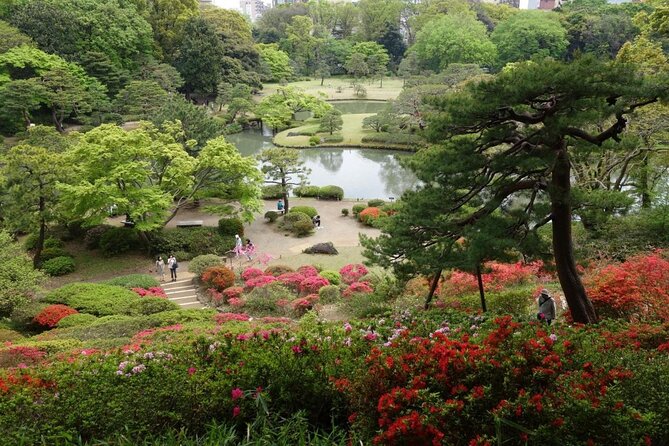
Tokyo can feel like a city of towers, trains, signs, and crowds. Its gardens offer a different rhythm. You follow a pond, pause at a bridge, notice a carefully placed stone, and then look up to see modern buildings beyond the trees. That contrast is one of the pleasures of this tour.
The focus is not simply on pretty scenery. Japanese garden design often uses suggestion rather than literal display. Rocks can represent mountains, plants can hint at the changing seasons, and a pond can bring together distant ideas in a small space. A guide gives you a way to read these choices instead of walking past them as decoration.
The private format matters here. You can ask why a path curves, what a particular garden name means, or how a shrine differs from a garden. Guides who have led this tour include Yuki, Minoru, Steve, Koji, Shuji, Keiko, and Nobuko. The experience may be assigned to one of them, so you should think of those names as examples of the guide team rather than a promise of a particular person.
A few more Tokyo bookings worth comparing
- Mt Fuji and Hakone 1-Day Bus Tour Return by Bullet Train
★ 5.0 · 26,383 reviews - 1-Day Tokyo Bus Tour
★ 5.0 · 14,250 reviews - Tokyo: TOKYO SKYTREE® Admission ticket
★ 4.5 · 11,192 reviews
The six-hour format and route planning
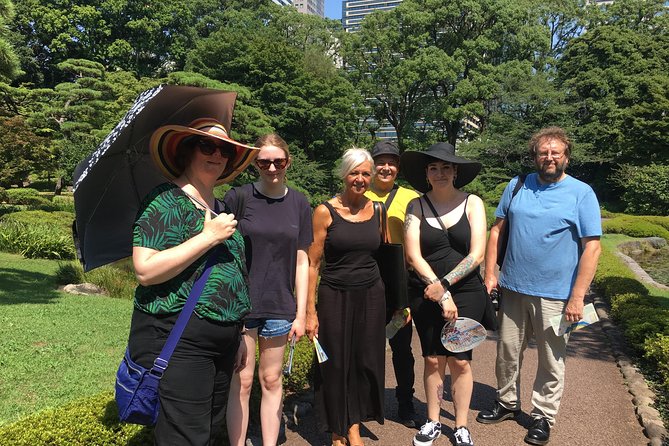
The tour lasts about six hours, but the full selection of possible stops could fill several days. The practical plan is to choose three or four places from the list, then build a route that avoids needless backtracking.
This is where a private guide can add real value. Tokyo’s gardens are spread across different districts. Rikugien and Koishikawa Korakuen are not next door to Hama Rikyu, and a route that jumps from one side of the city to another will use up valuable time. You should discuss your priorities before the day begins.
You might choose three major traditional gardens for a focused design lesson. Another good plan is one garden, one shrine, and one city park. A first-time visitor could combine the Imperial Palace area, Meiji Jingu, and a garden such as Shinjuku Gyoen. Someone returning to Tokyo might prefer Kiyosumi Teien, Former Shiba Rikyu, and Nezu Museum.
The listed stop times range from brief photo stops to 30-minute visits. Treat these as possible points of interest, not as a promise that you will fully explore all 17 locations. The tour includes a customizable walking route of three or four sites.
Imperial Palace and the old Edo Castle setting
The Imperial Palace sits on the former site of Edo Castle, with broad grounds, moats, and huge stone walls. Even a short visit gives you a useful introduction to Tokyo’s political past and the scale of the old castle site.
The important limitation is clear: you do not enter the inside of the Imperial Palace on this tour. The stop is about the surrounding grounds and exterior setting. If you want a slower garden visit, ask to focus on the East Garden area if it fits the route and opening conditions, as one successful day with Minoru began there.
This is a strong first stop because it helps you see how gardens, fortifications, and power were linked. It is less suitable if your main aim is a long, quiet garden walk and you have only six hours.
Shinjuku Gyoen and Meiji Jingu
Shinjuku Gyoen National Garden offers a useful change of scale. It is a large public garden where Japanese-style spaces sit alongside broader Western-style areas. The setting helps you compare different gardening traditions in one place.
The garden requires an entrance ticket, which is not included. Since the tour is customizable, you should confirm that it is open and that the route allows enough time to enjoy it rather than treating it as a quick photo stop.
Nearby Meiji Jingu gives the day a spiritual dimension. The shrine honors the deified spirits of Emperor Meiji and Empress Shoken and sits beside the Harajuku area. The approach through trees feels very different from the surrounding city.
Meiji Jingu is free to enter, but it is not a traditional strolling garden in the same sense as Rikugien or Koishikawa Korakuen. Choose it because you want shrine customs, forested paths, and cultural context. Pair it with a formal garden if you want more detailed discussion of ponds, stones, and garden composition.
Same corner of Tokyo, a completely different plan:
- Tokyo: teamLab Planets TOKYO Digital Art Museum Entry Ticket
★ 4.6 · 9,779 reviews - Mt Fuji & Hakone Cruise, Drum Show Bullet Train 1 Day from Tokyo
★ 4.0 · 7,413 reviews - Tokyo: Sumo Show Experience with Chicken Hot Pot and a Photo
★ 4.8 · 6,678 reviews - Tokyo: Shinjuku Food Tour (13 Dishes at 4 Local Eateries)
★ 5.0 · 6,603 reviews
Koishikawa Korakuen and Rikugien
If you want the classic Japanese garden experience, put Koishikawa Korakuen or Rikugien near the top of your list. Both date to the Edo period and use ponds, bridges, hills, and carefully framed views.
Koishikawa Korakuen is one of Tokyo’s oldest gardens. Its design represents famous Japanese and Chinese scenes in miniature, so a guide can help you understand the references and why the garden is arranged as it is. The garden requires an entrance fee.
Rikugien was built around 1700 for the fifth Tokugawa shogun. Its name refers to the six categories of Chinese poetry, and the garden uses scenes connected with poems and literary ideas. It is a rewarding place to slow down and follow the path around the pond.
One highly praised route paired the Imperial Palace area with lunch in Kagurazaka, then continued to Rikugien. Lunch is not included, but this combination shows how the day can work as more than a sequence of garden entrances. You can add a neighborhood meal if the timing and route suit you.
Do not try to give both gardens only a few minutes. They reward attention. If you have to choose one, ask your guide which better matches your interest in garden design, seasonal color, or Edo-era culture.
Hama Rikyu and Former Shiba Rikyu
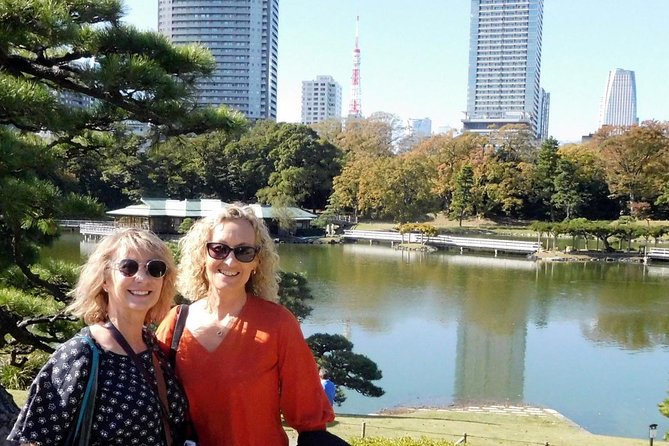
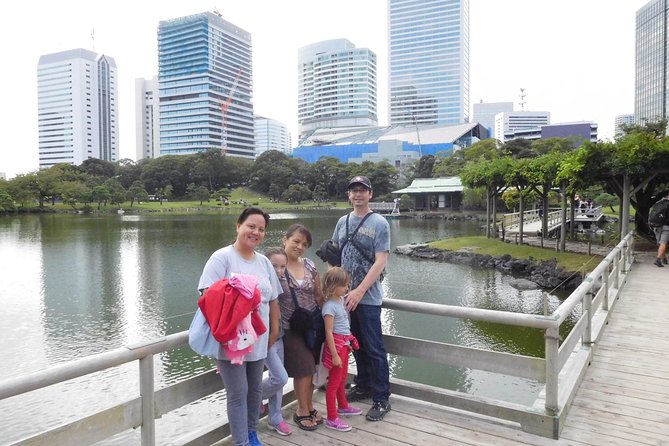
Hama Rikyu gives you a very different view of Japanese garden design. It sits beside Tokyo Bay and includes seawater ponds whose levels change with the tides. A teahouse adds another traditional touch.
This garden works well for someone who wants to see how an old garden survives among central Tokyo’s modern buildings. Its water features are not merely ornamental, and the bay setting helps distinguish it from inland pond gardens. Admission is extra.
Former Shiba Rikyu is another city oasis, but smaller and more enclosed by tall buildings. It has a pond and man-made hills and once belonged to feudal lords before becoming an imperial villa.
I like these two gardens as a pair because they show different kinds of urban survival. Hama Rikyu feels tied to the bay and tidal water. Former Shiba Rikyu feels more intimate. The tradeoff is travel time, so they make the most sense when your route stays in central Tokyo.
Kiyosumi Teien and the role of stones
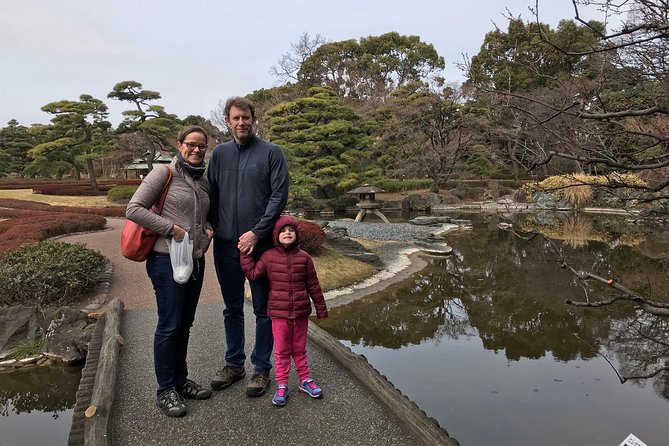
Kiyosumi Teien is a good choice if you want to understand how rocks shape a garden. Walking trails circle a central pond, and some paths cross stones placed directly in the water.
This is the sort of place where a guide can add far more than a signboard. You can ask how the stones affect movement, where the garden invites you to pause, and how water and planting work together. The garden has an admission fee.
The garden can be especially appealing after rain, when wet stones change color and the pond feels quieter. Keiko described enjoying the sight of koi in the pond and the fresh green of May. That points to a useful rule for booking: season matters, but each season gives you a different garden. Spring brings new growth, May offers fresh green, summer brings dense foliage, autumn can bring gold and red leaves, and winter reveals structure.
Ueno Park and Koishikawa Botanical Garden
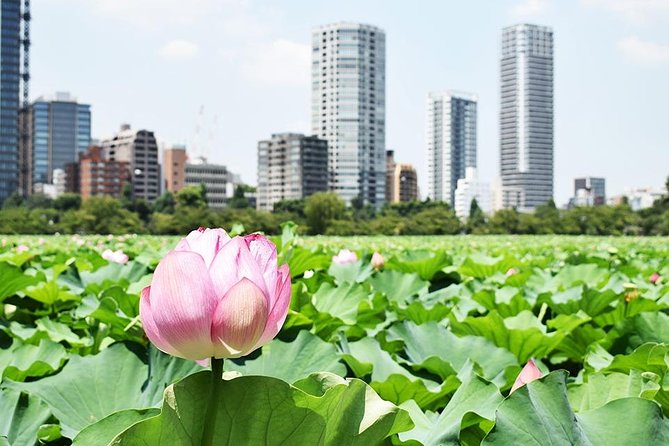
Ueno Park is not a single formal garden. It is a broad cultural park with museums, a zoo, Toshogu Shrine, and Shinobazu Pond. It is also famous for cherry blossom gatherings.
Choose Ueno if you want a lively mix of culture, water, and public park life. It is less ideal if your goal is a quiet study of traditional garden design. The park is free, but individual attractions may have their own charges, and the tour does not include personal expenses.
Koishikawa Botanical Garden offers a more plant-focused visit. It is maintained by the University of Tokyo and contains many tree and plant species, along with a small Japanese garden. It is especially appealing during cherry blossom season.
Admission is extra, and the garden may be a better fit for anyone interested in plants rather than only famous sights. At 30 minutes, the suggested visit is still fairly short, so clarify your expectations before including it.
Nezu Museum, Happo-en, and smaller gardens
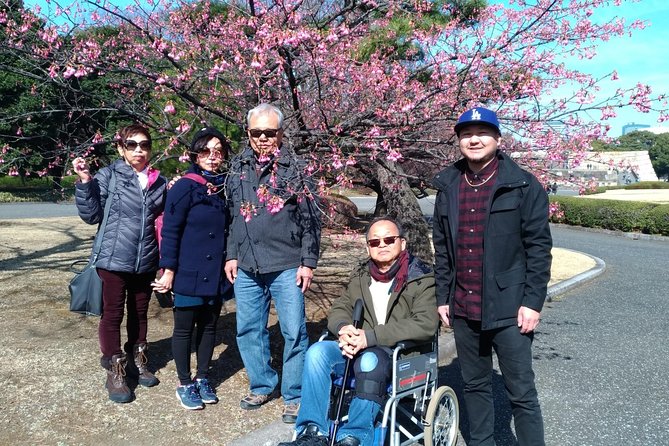
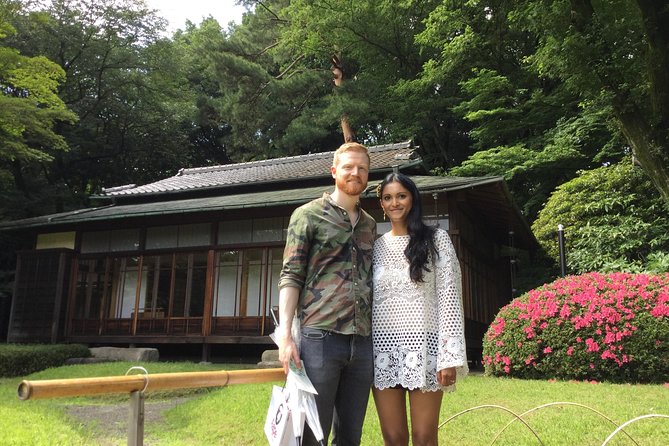
The Nezu Museum garden is one of the more distinctive options because it is paired with an art museum in Omotesando. The garden occupies the former private residence of Nezu Kaichiro and offers an urban retreat in a stylish part of the city.
Admission is not included. It may suit you if you want to combine garden design with art and a central Tokyo neighborhood. If you choose it, check whether you want time for the museum itself or only the garden.
Happo-en is a large park in Minato whose name refers to its appeal from eight views. The grounds are used as a backdrop for photographs and offer a broad setting across seasons and angles. The tour description does not include admission, so budget for that separately.
Mejiro Garden is smaller and free. It is near Ikebukuro Station and offers a peaceful break from the surrounding streets. This is a sensible choice if you prefer a brief, low-cost garden visit rather than a major ticketed attraction.
The Tokyo National Museum Garden is more seasonal. It opens to the public for a few weeks during spring cherry blossoms and in November for autumn leaves. That limited opening makes it a special option, but you need to plan around the dates rather than assume it is available year-round.
Yoyogi Park and the two kinds of city green space
Yoyogi Park is a spacious Western-style public park with lawns, trees, and ponds. It is used by local residents for jogging, picnics, and outdoor activities, and its ginkgo trees are known for golden autumn color.
The itinerary lists Yoyogi Park twice, but you should not read that as two separate tour visits. It is one public park, and the repeated entry appears to describe the same kind of stop. The park is free and works best as a contrast to Meiji Jingu or a formal garden.
This is a good reminder that not every stop is a traditional Japanese garden. You can use Yoyogi Park to see how Tokyo residents use open green space, then compare it with a carefully controlled pond garden. That contrast makes the overall day more interesting.
What your guide adds to the day
The guide is a National Government licensed local guide with interpreter certification, and the tour is offered in English with multilingual support. The most useful role is not simply translation. It is helping you connect design, belief, history, and daily life.
Steve tailored one private route closely to the guest’s interests and explained Japanese traditional gardens in detail. Koji was praised for preparation and clear communication. Shuji made the day both fun and informative, while Keiko helped with Tokyo’s complex transport system and introduced less obvious gardens.
Nobuko has also provided educational materials and combined garden visits with cultural activities such as calligraphy. These details show the range of the guide team. Your day may be more academic, more relaxed, or more focused on navigation and practical sightseeing, so state your preferences clearly.
The private format means you do not have to follow another group’s pace. You can ask for fewer gardens and more explanation, or choose a wider sampling with shorter stops. The tour cannot combine multiple tour groups, which keeps the experience limited to your party.
Price, transport, and what you really pay for
At $154.84 per person, this is not a bargain sightseeing bus. You are paying for a private, customized day with a licensed guide, not for a vehicle, meals, or entry tickets.
The value improves as your group gets larger because group discounts are offered. A couple may find the price worthwhile if they want help navigating Tokyo and care about garden design. A family or small group can spread the guide cost across several people, though each person still needs to cover transport and admission.
Pickup is offered on foot within a designated area of Tokyo. There is no private vehicle. Transportation fees, entrance fees, lunch, and personal expenses are extra, so ask your guide to plan a route that fits both your interests and your budget.
The tour is near public transportation, and most people can participate. Service animals are allowed. Since this is a walking tour, wear comfortable shoes and expect the day to include station transfers and outdoor paths.
Who should book this private garden day?
I would choose this tour if you want more than a checklist of famous Tokyo sights. It suits you especially well if you enjoy gardens, photography, Japanese aesthetics, cultural interpretation, or small details that are easy to miss alone.
It is also a strong choice for a first visit if Tokyo’s rail system feels intimidating. Keiko’s help with transport shows why the guide can be useful even when the gardens themselves are easy to enter.
I would hesitate if you want a fixed, tightly timed itinerary with all entrance fees included. I would also hesitate if your main goal is to see ten gardens in one day. The tour’s real strength is selecting three or four places and giving them a sensible order.
You can cancel for a full refund up to 24 hours before the start time. Changes or cancellations inside that window are not accepted for a refund.
FAQ
How long does the Tokyo Japanese Garden Lover’s tour last?
The tour lasts approximately six hours.
How many gardens will I visit?
The experience includes a customizable walking tour of three or four sites chosen from the available list. The full list contains many more possible gardens and cultural sights, but you will not realistically visit all of them in six hours.
Is the Imperial Palace interior included?
No. The tour does not include access to the inside of the Imperial Palace. The visit focuses on the former Edo Castle site, surrounding grounds, moats, and stone walls.
Is transportation included?
No. Transportation fees are not included. Pickup is on foot within the designated Tokyo area, and the tour does not provide a private vehicle.
Are entrance fees included?
No. Entrance fees are generally extra. Guide entry fees are covered only for sights listed under the tour’s included expectations.
Is this a private tour?
Yes. Only your group participates, and multiple tour groups cannot be combined.
Can I cancel for a full refund?
Yes. You can cancel at least 24 hours before the experience start time for a full refund. Cancellations or changes made less than 24 hours before the start time are not refunded or accepted.
Should you book it?
Book this tour if you want a garden day shaped around your interests, with a licensed guide who can explain why Japanese gardens use rocks, water, plants, and carefully framed views. Pick three or four sites, keep them in one part of Tokyo, and treat public transport as part of the day.
Skip it if you want a cheap, fixed route or a vehicle to carry you between every stop. For garden lovers, culture-focused couples, families, and first-time visitors who want help making sense of Tokyo, the private format can be worth the added cost.
New on our Tokyo list
- From Tokyo: Mount Fuji & Hakone Full Day Private Tour★ 4.9 · 25 reviews
- Tokyo Spectacular View Day-Cruise in 90 Minutes★ 5.0 · 25 reviews
- Real Tokyo Runner Club : Daikoku Car Meet Night Tour with JDM Car★ 5.0 · 25 reviews
- 2.5 Hour-Guided Cycle Tour in the Central Tokyo★ 5.0 · 25 reviews
- Ramen Making from Scratch +Akihabara Tour –Cooking Class★ 5.0 · 25 reviews
- [Self-Drive] Tokyo & Daikoku Custom Car Driving Tour★ 4.9 · 25 reviews
- Tokyo: 2-Hour Night Bike Tour of the City’s Hidden Gems★ 4.9 · 25 reviews
- Samurai themed Entertainment show in Shinjuku★ 4.5 · 25 reviews
Guided, compared.
Tokyo 6hr Private Tour with Government-Licensed Guide
Read our review →
Shinjuku Local Bar and Izakaya Guided Walking Tour
Read our review →
Private City Highlights Tour with Local Guide
Read our review →
Tokyo 4hr Private Tour with Government-Licensed Guide
Read our review →
Samurai Ninja Museum Guided tour and Experience
Read our review →