
Reviewed · TEMPLE & SHRINE TOURS
Tokyo Private Tour: Temples, Culture & Modern City Highlights
Tokyo is easiest to understand when someone shows you how the pieces fit together. This private walking tour links old Asakusa, local markets, peaceful shrine grounds and neon districts, while your guide helps you use Tokyo’s trains and reads the city with you. I especially like the flexible route and the practical help with food, photos and transit.
I also like that guides such as Renaud, Julien, Sebastian and Jimmy have helped visitors shape the day around photography, history, anime, shopping or food. The catch is clear: this is not a chauffeured sightseeing trip. Public transport and serious walking are part of the deal, with some people covering 20,000 to 25,000 steps.
In This Review
- Key points at a glance
- Start with Senso-ji and old Tokyo in Asakusa
- Take a calm walk beside the Sumida River
- Eat and browse at Ameyoko Market
- Slow down at Shinobazu Pond in Ueno
- Choose Akihabara for anime, games and electronics
- Add the Imperial Palace East Gardens for Edo history
- Shop for Japanese kitchenware on Kappabashi Street
- Walk from Harajuku’s Takeshita Street to Meiji Jingu
- Catch the energy of Shibuya Crossing
- Finish in Shinjuku with Godzilla, neon and Golden Gai
- What the flexible format really gives you
- Price, pace and the real value at $99.08
- The guides and who will enjoy this most
- Should you book this Tokyo tour?
- FAQ
- How long does the private Tokyo tour last?
- Which Tokyo neighborhoods can the tour include?
- Is hotel pickup available?
- Is transportation included in the price?
- Are meals and drinks included?
- What languages can the guide speak?
- Is this a private tour?
- How much walking should I expect?
Key points at a glance
- A private route you can shape: Choose from historic temples, markets, shrines, pop culture districts and city lights.
- Tokyo by train, not from a bus window: Your guide can help you understand subway and JR connections.
- Strong opening for first-time visitors: The day gives you a practical feel for Tokyo’s neighborhoods and customs.
- Good for repeat visitors, too: Ask for Akihabara, Kappabashi, quieter local streets or photography stops.
- Lots of walking: Comfortable shoes are essential, and the pace still covers plenty of ground.
- Good value for a private guide: At $99.08 per person, the price is most attractive for two or more people who want personal attention.
Start with Senso-ji and old Tokyo in Asakusa
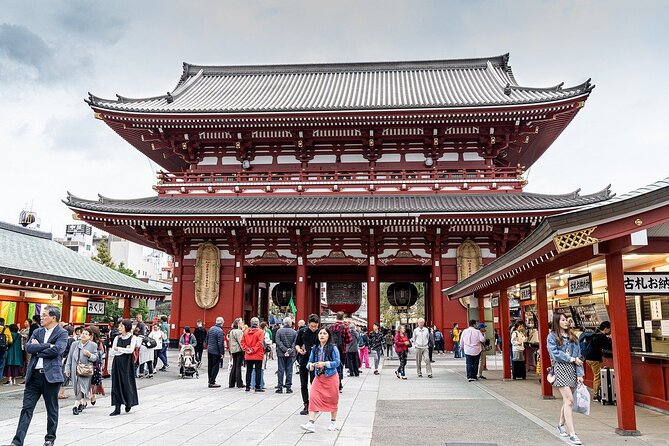
The tour’s natural starting point is Senso-ji, Tokyo’s best-known Buddhist temple. The giant red lantern at Kaminarimon Gate gives you the classic first photograph, but the real pleasure comes from walking through Nakamise Street toward the temple grounds.
This is a busy area, yet it offers one of Tokyo’s clearest links to its past. Your guide can explain the meaning of the temple rituals, the incense, the gates and the customs that may seem puzzling at first. That context matters. Without it, Senso-ji can feel like a grand photo stop. With a local explanation, it becomes a useful introduction to Japanese religious life.
The listed time is about 45 minutes, which is enough for the main approach, temple area and a few pictures. It is not enough for every shop or side street, so tell your guide if you want souvenirs, snacks or a slower look at the neighborhood.
More temples and shrines near Tokyo:
- Tokyo: Meiji Shrine, Asakusa, Skytree Bus Tour and Cruise
★ 4.7 · 1,986 reviews - Tokyo: Asakusa Walking Tour with Sensoji Temple Visit
★ 4.8 · 1,583 reviews - Nikko: Kegon Falls, Lake Chuzenji & Toshogu Temple
★ 4.6 · 1,577 reviews
Take a calm walk beside the Sumida River
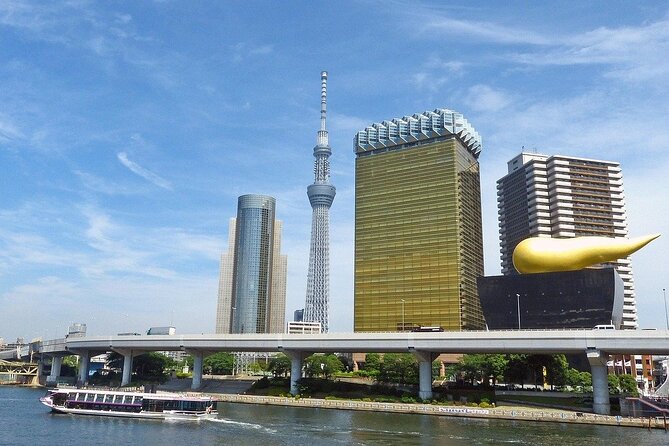
A 15-minute stop at the Sumida River provides a change of pace. After the crowds around Senso-ji, you get broad paths, bridges and views toward Tokyo Skytree. It is a short pause, but it helps you see how Tokyo can shift from packed shopping lanes to open water within minutes.
This is also a useful photo stop. The river gives you a wider view than the narrow streets of Asakusa, and your guide can help with pictures if you are traveling alone or want the whole group in the frame.
Do not expect a long riverside outing. The stop is brief, so it works best as part of a larger route rather than a main attraction.
Eat and browse at Ameyoko Market
Ameyoko Shopping Street runs along the railway between Ueno and Okachimachi. It feels less polished than Tokyo’s major department-store districts, which is exactly its appeal. You will pass seafood, snacks, spices, clothing and small shops packed into a lively market corridor.
This is one of the better places to ask your guide about food. Meals are not included, but guides have helped visitors find street snacks and local restaurants, and one guide assisted a group with ordering lunch. Some shops may take cash only, so keep yen handy even if you normally pay by card.
The scheduled 30 minutes gives you a taste rather than a full market visit. If food is central to your day, ask for more time here and accept that another stop may need to be shortened.
Slow down at Shinobazu Pond in Ueno
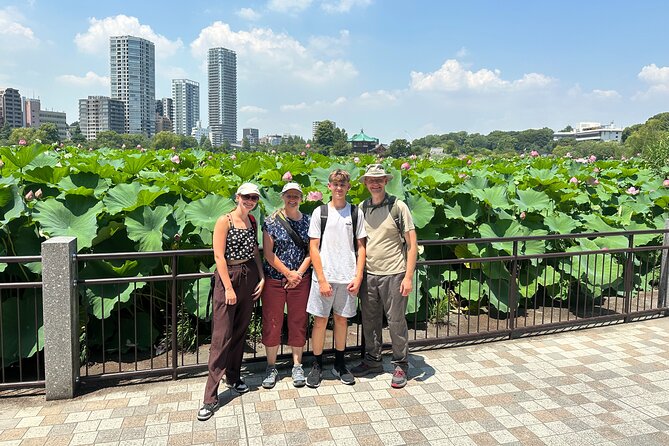
Shinobazu Pond is a quieter Ueno stop, with lotus, koi, turtles and migratory birds at different times of year. Its connection to Edo-period leisure adds a bit of historical color, but the practical value is the breather it gives your feet and your mind.
At about 30 minutes, this is a simple walk and photo stop. It will appeal to you if you want some open space between temples, trains and shopping streets. If your main goal is anime, electronics or landmark photographs, you may prefer to use this time elsewhere.
That flexibility is central to the experience. The route is a menu, not a fixed checklist.
A few more Tokyo bookings worth comparing
- Mt Fuji and Hakone 1-Day Bus Tour Return by Bullet Train
★ 5.0 · 26,383 reviews - 1-Day Tokyo Bus Tour
★ 5.0 · 14,250 reviews - Tokyo: TOKYO SKYTREE® Admission ticket
★ 4.5 · 11,192 reviews - Tokyo: teamLab Planets TOKYO Digital Art Museum Entry Ticket
★ 4.6 · 9,779 reviews
Choose Akihabara for anime, games and electronics
Akihabara is offered as an optional stop, and it changes the mood completely. Known as Electric Town, the district is packed with anime shops, retro games, arcades and electronics retailers. It is a strong choice for anyone interested in Japanese pop culture, gaming or unusual shopping.
The listed visit is 30 minutes, which is short for a district with multi-level stores and plenty to see. Still, a guide can save you time by taking you toward the kind of shop that matches your interests. One past guest used the guide for an anime and pop culture outing, while another wanted help with nightlife.
You should be specific before the tour. Anime, electronics and clubs are different experiences, and a 30-minute stop cannot cover them all.
Add the Imperial Palace East Gardens for Edo history
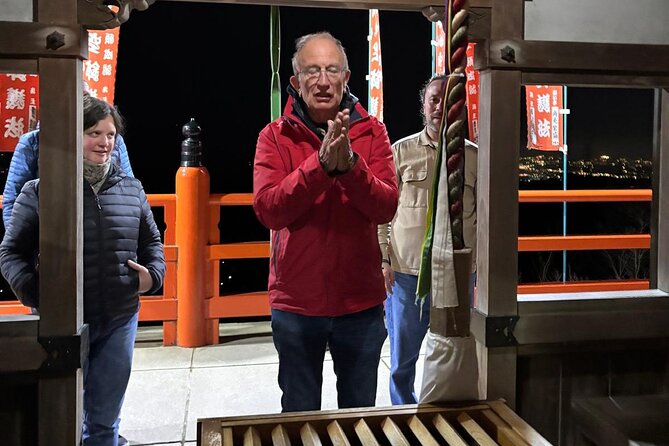
The East Gardens of the Imperial Palace offer a peaceful historic contrast to Akihabara. You can see the remains of Edo Castle, the Ninomaru Garden and old samurai guardhouses. Entrance is free, and the stop takes about 30 minutes.
I would choose this option if you care about Japanese history or want a quieter setting. It gives the day a stronger sense of Tokyo before skyscrapers and rail lines took over the city.
The garden stop is not a full Imperial Palace visit. The experience focuses on the East Gardens and castle remains, so keep your expectations to a compact historical walk.
Shop for Japanese kitchenware on Kappabashi Street
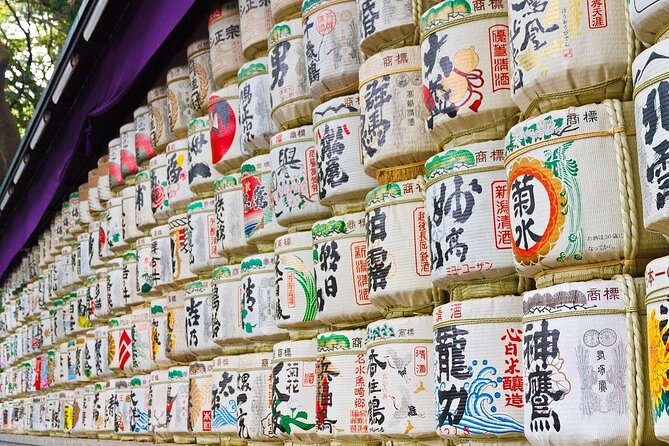
Kappabashi is the practical choice for cooks, food lovers and shoppers looking for something more useful than a standard souvenir. The district is known for knives, cookware, tableware, chopsticks and the famous plastic food displays seen outside Japanese restaurants.
It sits between Asakusa and Ueno, so it can fit neatly into the historic part of the route. A 30-minute visit lets you browse and learn what the shops sell, but you may want longer if you are serious about buying a knife or tableware.
Remember that meals and shopping are extra. Your guide can point out places and explain items, but purchases are your responsibility.
Walk from Harajuku’s Takeshita Street to Meiji Jingu
The Harajuku section shows two very different sides of Tokyo. Takeshita Street is narrow, colorful and packed with youth fashion, kawaii shops and creative snacks. It can feel loud and crowded, but that is part of the point. This is a look at Tokyo’s youth culture, not a quiet heritage lane.
The planned 45 minutes works well for a first pass. You can browse, take photos and sample a snack, though you should not expect to explore every side street.
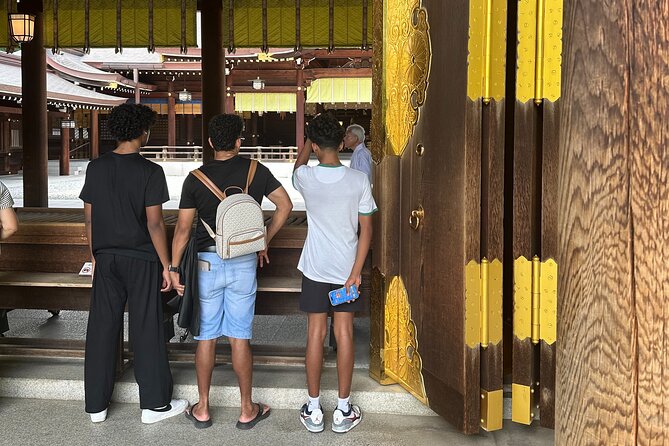
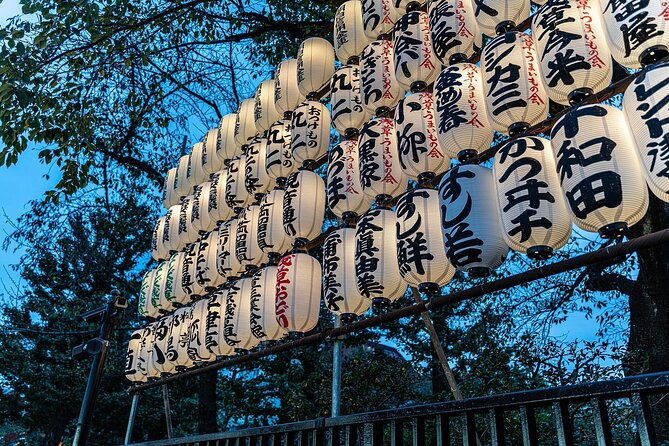
Meiji Jingu then changes the atmosphere. Walk through the tall wooden torii gates into a large forested shrine setting, where the city noise drops away. The shrine is one of Tokyo’s most important Shinto sites, and a 45-minute stop gives your guide time to explain customs and traditions without turning the visit into a rushed photograph.
This pairing is one of the tour’s smartest combinations. You see fashion, snacks and pop culture, then move into a place shaped by ritual and quiet.
Catch the energy of Shibuya Crossing
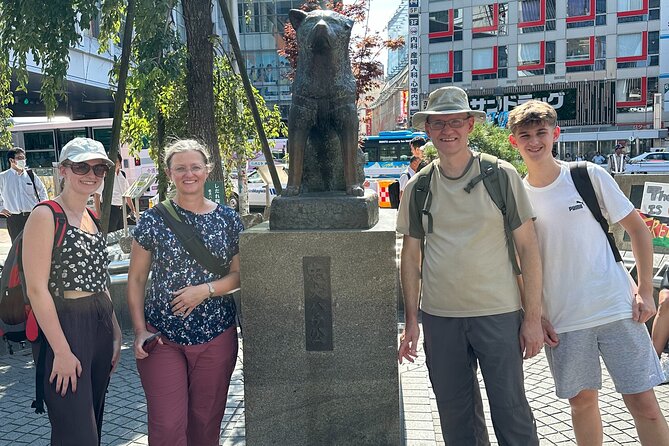
Shibuya is the modern Tokyo postcard: the famous Scramble Crossing, bright signs, shopping centers and nightlife. The planned hour gives you time to cross, watch the movement from a nearby vantage point and walk through the surrounding district.
Your guide can help turn a quick crossing into a useful orientation. Shibuya is easier to enjoy once you understand the main streets and how the different shopping and entertainment areas connect.
It is also a good place for photos, especially if you want a city scene rather than a temple. Tell your guide if photography matters. One couple had the route adjusted to allow more time for pictures, and that kind of personal planning is a major benefit of a private tour.
Finish in Shinjuku with Godzilla, neon and Golden Gai
The Shinjuku stop is another hour and includes the Godzilla Head, the giant 3D cat billboard and Golden Gai, a maze of tiny bars. These sights show Tokyo’s playful, restless side.
Golden Gai is best treated as an atmospheric walk, not a guaranteed bar crawl. The tour information does not include drinks, and meals are not included either. If nightlife is your priority, discuss it before setting the route. One guide has helped visitors plan club outings, but the standard experience is built around city highlights and local explanations.
Shinjuku makes a lively finish because it leaves you with Tokyo after dark in your mind, even if your tour takes place earlier. It also pairs well with a guide who can suggest food or evening plans for the rest of your trip.
What the flexible format really gives you
The advertised duration is about four to seven hours. That range is wide because the day depends on your chosen districts, walking pace and how much time you spend at each stop.
You cannot reasonably give every listed place equal attention in a five-hour outing. As a rough planning guide, a shorter tour might focus on Asakusa, Ueno and one modern district. A longer day could connect Asakusa, Harajuku, Shibuya and Shinjuku, but expect more train rides and a lot of walking.
The private format solves a common Tokyo problem: fixed group tours often move on just when you find something interesting. Here, you can spend longer at a shrine, shorten a market visit or swap in Akihabara and Kappabashi.
Pickup is offered from hotels in central Tokyo. Public transportation is not included, and the tour may use trains and subway connections. A Suica or Pasmo card is recommended, which makes sense for a day with several district changes. Airport or pickup outside central Tokyo costs ¥10,000 per booking.
Price, pace and the real value at $99.08
At $99.08 per person, this is not the cheapest way to see Tokyo. It can be good value if you are splitting the cost with family or friends and want a private guide who can adjust the route to your interests.
The strongest value is not admission savings. Most stops are free, and entrance fees are included only for free attractions. You are paying for local direction, translation help, cultural explanations, photo assistance and the ability to navigate a complicated city with someone beside you.
The price makes less sense if you are comfortable with Tokyo’s trains, already know the neighborhoods and prefer to explore slowly on your own. It also makes less sense if you expect a private vehicle. This is a walking and public transit experience, not a car tour.
Plan for comfortable shoes, water and a flexible attitude. The route may cover 20,000 steps or more, especially if you choose many districts. A shorter route is not a failure. In Tokyo, seeing fewer places with time to understand them can be better than racing across the city.
The guides and who will enjoy this most
The experience is offered in English, French or Japanese. Guides named in the feedback include Renaud, Julien, Sebastian, Jimmy and Leeloo, though the guide assigned to your booking may differ.
The guides are praised for explaining history, religion, food and daily customs in plain terms. They also help with the parts of Tokyo that can slow you down: train connections, restaurant ordering and finding a suitable place for snacks.
I would recommend this for:
- First-time visitors who want to get their bearings quickly
- Families who need help using public transport
- Solo visitors who prefer company and local guidance
- Photographers who want a route adjusted around good picture stops
- Repeat visitors who want Akihabara, Kappabashi, markets or less familiar districts
- French-speaking visitors who prefer a guide in French
I would be cautious if you have limited mobility, dislike long walks or want a vehicle-based tour. The information says most people can participate, but the recorded walking distances show that this is physically active.
Free cancellation is available up to 24 hours before the start time. Changes or cancellations inside that window are not accepted for a refund.
Should you book this Tokyo tour?
Book it if you want a private introduction to Tokyo that mixes temples, food streets, transit practice and modern districts. The best reason to choose it is the human help: you can ask why a shrine ritual works a certain way, how to order food, which train to take and where to focus your limited time.
Choose a shorter route if you want a relaxed day. Choose the full seven hours only if your group is ready for long walks and frequent train connections.
This is a strong first or second day in Tokyo, especially for families, solo visitors and anyone who wants an itinerary shaped around personal interests. Just arrive in comfortable shoes, carry some cash, load a Suica or Pasmo card, and remember that the city is the attraction. The guide’s job is to help you read it.
FAQ
How long does the private Tokyo tour last?
The tour lasts approximately four to seven hours, depending on the route, walking pace and stops you choose.
Which Tokyo neighborhoods can the tour include?
Possible areas include Asakusa, Ueno, Harajuku, Shibuya and Shinjuku. Optional choices include Akihabara, the Imperial Palace East Gardens and Kappabashi Street.
Is hotel pickup available?
Hotel pickup is available in central Tokyo. Airport pickup or pickup outside central Tokyo costs ¥10,000 per booking.
Is transportation included in the price?
No. Public transportation is not included. A Suica or Pasmo transportation card is recommended.
Are meals and drinks included?
No. Meals and drinks are not included. Some shops may accept cash only.
What languages can the guide speak?
The tour can be guided in English, French or Japanese.
Is this a private tour?
Yes. Only your group participates in the activity.
How much walking should I expect?
The tour involves substantial walking. Some recorded outings covered about 20,000 to 25,000 steps, so comfortable shoes are important.
New on our Tokyo list
- From Tokyo: Mount Fuji & Hakone Full Day Private Tour★ 4.9 · 25 reviews
- Tokyo Spectacular View Day-Cruise in 90 Minutes★ 5.0 · 25 reviews
- 2.5 Hour-Guided Cycle Tour in the Central Tokyo★ 5.0 · 25 reviews
- Real Tokyo Runner Club : Daikoku Car Meet Night Tour with JDM Car★ 5.0 · 25 reviews
- Ramen Making from Scratch +Akihabara Tour –Cooking Class★ 5.0 · 25 reviews
- [Self-Drive] Tokyo & Daikoku Custom Car Driving Tour★ 4.9 · 25 reviews
- Tokyo: 2-Hour Night Bike Tour of the City’s Hidden Gems★ 4.9 · 25 reviews
- Samurai themed Entertainment show in Shinjuku★ 4.5 · 25 reviews
Temple & Shrine Tours, compared.
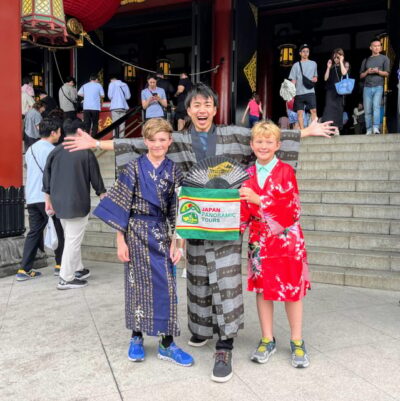
Meiji Shrine, Asakusa, Skytree Bus Tour and Cruise
Read our review →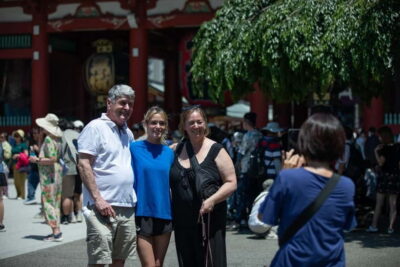
Asakusa Walking Tour with Sensoji Temple Visit
Read our review →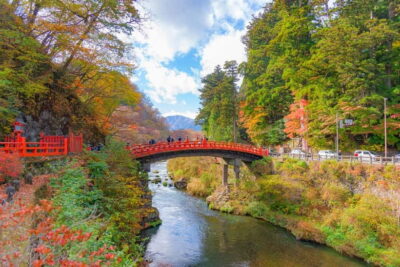
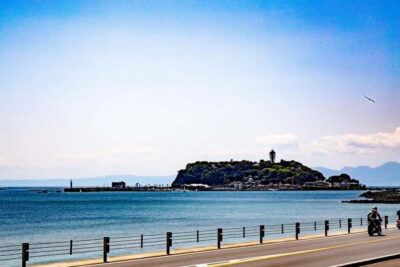
Kamakura & Enoshima Day Trip including Temple Tickets
Read our review →
Nikko Toshogu Shrine and Kegon Waterfall Tour
Read our review →
Tokyo Panoramic 1 Day: Meiji Shrine, Asakusa, Odaiba and SKYTREE®
Read our review →
Mt. Fuji Heritage Tour: Traditional Villages, Lakes & Shrine
Read our review →Browse the lists this tour appears in