Reviewed · GUIDED
Tokyo Private Tour with Local Expert Guide – Hidden Gems
Tokyo can feel like several cities stitched together, and this private day helps you make sense of it. You move from the quiet Imperial Palace grounds to old Asakusa, then into the energy of Harajuku and Shibuya. A flexible route lets you spend more time on culture, food, shopping, or daily life. I also like the practical help: guides such as Aki, Seiji, and Mary can assist with restaurant or entertainment bookings and show you how to handle Tokyo’s trains.
I especially like the small private format, which means your group of up to six can ask questions without holding up a busload of people. I also like that the day works well at the start of a visit, since you get useful subway practice along with the sights. The main drawback is that you will walk and use public transportation for much of the day, and the advertised price does not include train fares, meals, or some admission costs.
In This Review
- Key things to know before booking
- Why this private Tokyo day works well
- Starting at Kokyo Gaien National Garden
- Senso-ji and old Asakusa
- Meiji Jingu, a quiet break in the city
- Harajuku and Tokyo’s playful side
- Shibuya Crossing and the modern city
- Learning Tokyo by train and subway
- Lunch advice and everyday Tokyo
- The guides and the value of personal attention
- Who should book this 6 to 7 hour tour
- Practical cost, timing, and cancellation details
- Should you book it?
- FAQ
- How long does the private Tokyo tour last?
- What time does the tour start?
- How many people can join the private tour?
- Is hotel pickup offered?
- Are transportation and meals included?
- Can I cancel for a full refund?
Key things to know before booking
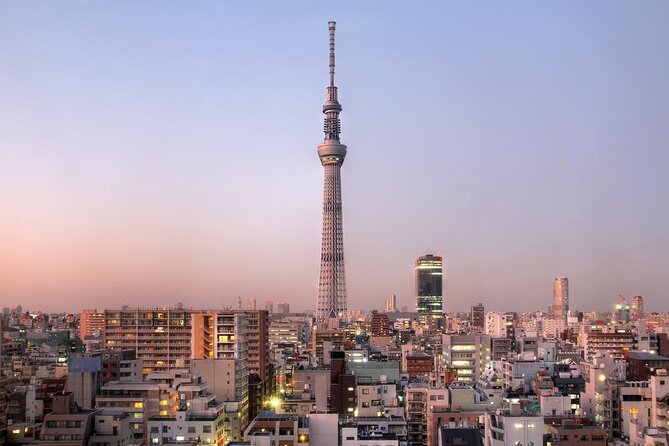
- Five very different Tokyo areas: See Kokyo Gaien, Senso-ji, Meiji Jingu, Harajuku, and Shibuya in one long day.
- A private group of up to six: You can shape the route around your interests and adjust the pace with your guide.
- A practical subway lesson: Public transportation costs about $10 per person, but the guide helps you understand Tokyo’s train and subway system.
- Useful local assistance: Your guide can suggest lunch spots and help with restaurant or entertainment bookings.
- A 9:00 a.m. start: Plan for 6 to 7 hours, with moderate walking and time on trains.
- A strong first-day choice: The route gives you an overview of Tokyo before you explore on your own.
Why this private Tokyo day works well
The appeal here is not simply checking off famous places. It is the way the day connects Tokyo’s different sides. You see imperial grounds, Buddhist tradition, Shinto practice, youth fashion, and modern city movement without spending the entire day inside a private vehicle.
That matters in Tokyo. The city is huge, but its most interesting moments often happen between major sights. You may learn how to read a station sign, figure out a ticket machine, or understand why a quiet shrine sits behind one of the world’s busiest districts. A local guide gives those small transitions some meaning.
The route is also adjustable. You can follow the planned stops, or ask to focus more on food, shopping, neighborhoods, culture, or ordinary city life. One couple chose to spend less time on standard historical sights and more time around active neighborhoods, markets, and shopping districts. That is the kind of flexibility a private tour can provide.
You pay $345.92 per group, with up to six people included. For one person, that is a high price. For six people, it works out to about $58 per person before transport, meals, and other costs. A couple will pay more per person, but you are buying personal attention and a custom plan rather than a fixed group outing.
A few more Tokyo bookings worth comparing
- Mt Fuji and Hakone 1-Day Bus Tour Return by Bullet Train
★ 5.0 · 26,383 reviews - 1-Day Tokyo Bus Tour
★ 5.0 · 14,250 reviews - Tokyo: TOKYO SKYTREE® Admission ticket
★ 4.5 · 11,192 reviews
Starting at Kokyo Gaien National Garden
The day begins at 9:00 a.m. around Kokyo Gaien National Garden, the open area near the Imperial Palace. This is a calm place to start, especially after Tokyo’s crowded stations and dense streets.
You will walk near the palace’s stone walls and gardens while your guide explains the area’s role in Japan’s past and present. The setting gives you an early sense of how Tokyo combines formal history with modern high-rise city life.
There is no admission charge for this stop. The planned visit lasts about an hour, which is enough for a stroll and an introduction without using up the whole morning.
The tradeoff is that this is more of an outdoor orientation than a palace interior visit. If you expect a long tour through royal rooms, you will need to adjust your expectations. The value is in the setting, the stories, and the contrast between quiet grounds and the city around them.
Senso-ji and old Asakusa
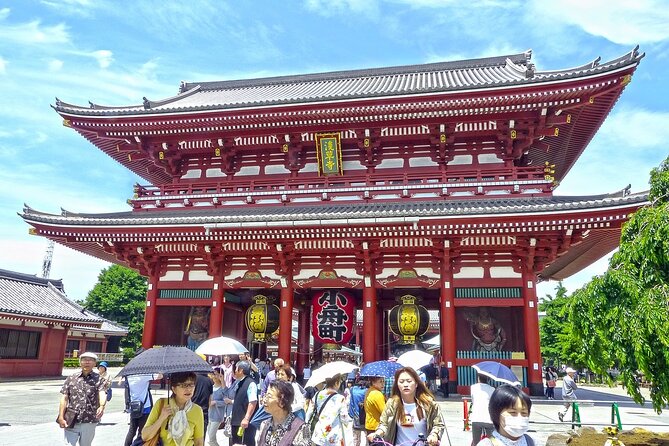
At Senso-ji, you enter Tokyo’s oldest and best-known Buddhist temple through Kaminarimon Gate. The large gate and its famous lantern make an immediate impression, but the walk toward the main temple is just as important.
Nakamise shopping street leads toward the temple, lined with traditional snacks, souvenirs, and small shops. It can be crowded, so stay close enough to hear your guide and allow extra time if you want to browse.
Your guide can explain Buddhist customs and help you understand what you are seeing, rather than leaving you to pass through as if it were only a photo stop. The one-hour visit gives you room to take in the gate, shopping street, temple grounds, and the surrounding Asakusa area.
Senso-ji is one of the busier stops, and it may feel less peaceful than Meiji Jingu later in the day. Still, that contrast is useful. Asakusa shows you a more traditional public face of Tokyo, with worship, shopping, and local routines sharing the same streets.
Meiji Jingu, a quiet break in the city
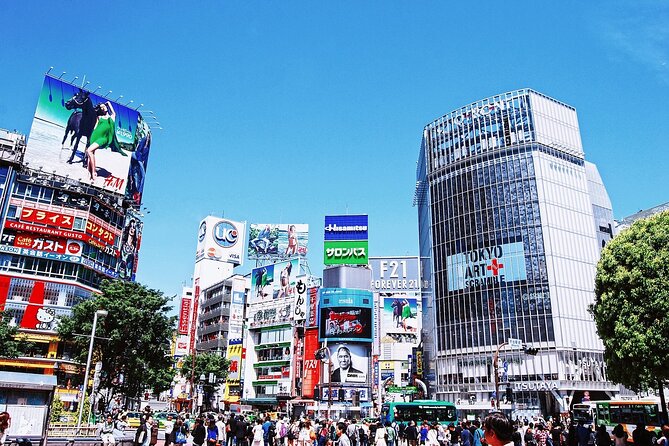
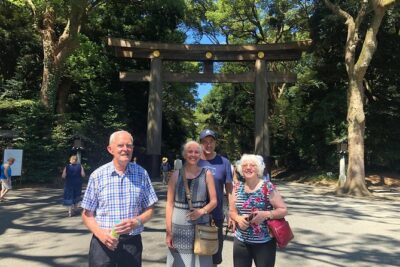
Meiji Jingu offers a sharp change of mood. The shrine sits within a broad wooded area in the middle of Tokyo, and its paths provide a welcome pause from traffic, signs, and crowds.
The visit lasts about 40 minutes. Your guide introduces Shinto traditions as you walk through the grounds, helping you notice the customs and design of a Japanese shrine.
The shorter timing makes sense if you want a broad Tokyo introduction in one day. You get the atmosphere and basic cultural context without spending several hours at one site. If shrines are your main interest, you may want to ask in advance if the schedule can give Meiji Jingu more time.
The stop pairs well with Harajuku, which is nearby in the overall route. First you see a quiet sacred space, then you move into one of Tokyo’s best-known areas for youth style and popular culture.
Same corner of Tokyo, a completely different plan:
- Tokyo: teamLab Planets TOKYO Digital Art Museum Entry Ticket
★ 4.6 · 9,779 reviews - Mt Fuji & Hakone Cruise, Drum Show Bullet Train 1 Day from Tokyo
★ 4.0 · 7,413 reviews - Tokyo: Sumo Show Experience with Chicken Hot Pot and a Photo
★ 4.8 · 6,678 reviews - Tokyo: Shinjuku Food Tour (13 Dishes at 4 Local Eateries)
★ 5.0 · 6,603 reviews
Harajuku and Tokyo’s playful side
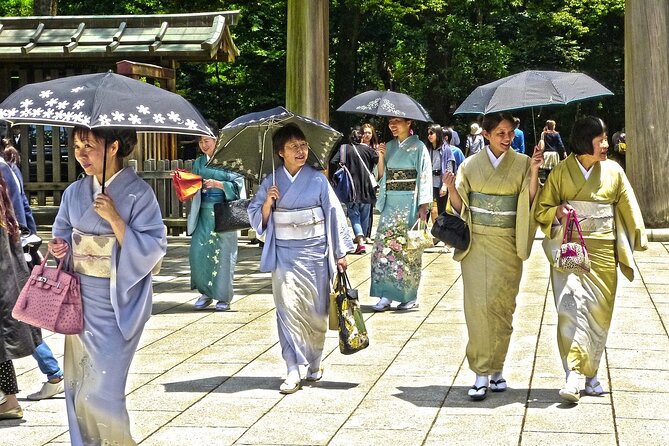
The Harajuku visit lasts about 20 minutes, so think of it as a quick look rather than a full shopping session. The area is associated with colorful fashion, unusual personal styles, and Kawaii culture.
That short stop can still be useful. Your guide can point out how Harajuku differs from the temple districts and palace grounds you have already seen. It also gives you a chance to decide if you want to return later for more shopping or street exploration.
The limitation is clear: twenty minutes is not enough for serious browsing. If you want fashion shops, cafés, or a longer look at local youth culture, tell your guide early. A private itinerary makes that conversation possible, although the total day still has a fixed practical limit.
Shibuya Crossing and the modern city
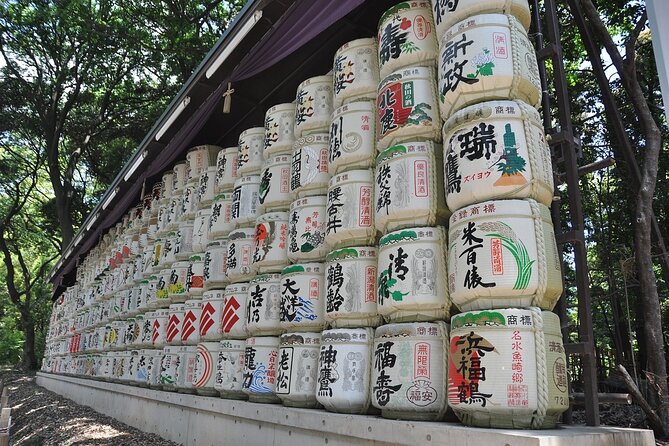
The final listed stop is Shibuya Crossing, where several streams of people cross at once beneath the district’s giant signs and buildings. You get to walk through the crossing rather than only viewing it from a distance.
The planned visit lasts about 30 minutes. That is enough to experience the crossing, take pictures, and feel the scale of modern Tokyo. Your guide may also help you find a good photo position, a detail that matters in an area designed to overwhelm the eye.
Shibuya is not only a famous intersection. It is a useful finish because it brings the day into the present. After the palace, temple, and shrine, you end with Tokyo’s fast-moving commercial side.
Again, this is a brief introduction. If you want department stores, cafés, nightlife, or more time in Shibuya, you may need a separate visit. The point of this tour is breadth, not a full day in one neighborhood.
Learning Tokyo by train and subway
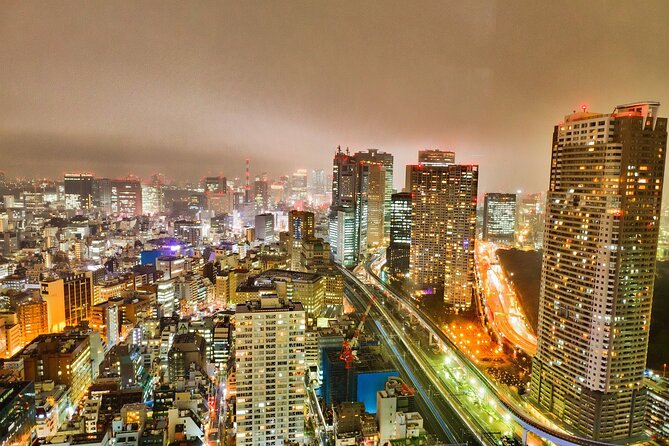
The transport plan is part of the experience. Private car service is not included, so you should expect to walk and use public transportation between stops. Public transportation costs about $10 per person, and the guide can advise you about affordable one-day subway passes.
I see this as a benefit for most people staying in Tokyo. A private car might be more comfortable, but it would not teach you how to move around the city. Tokyo’s rail system can look daunting at first, and a guide can help you get past the initial confusion.
One practical tip is to use this tour early in your stay. The first day or two is ideal because you can reuse what you learn for the rest of your trip. You will have a better sense of stations, train travel, and the city’s broad layout.
The physical demand is moderate. You should be comfortable walking for much of the 6 to 7 hours, standing at stations, and getting on and off trains. Hot, humid weather can make the day harder. One guest specifically appreciated the air conditioning on the trains during very hot weather, but you should still carry water and dress for the forecast.
Lunch advice and everyday Tokyo
Meals are not included, but lunch recommendations are. This is more useful than it may sound. Tokyo has an enormous range of places to eat, and a guide can steer you toward an option that fits your budget, schedule, and interests.
You can also ask for help with restaurant or entertainment bookings. That language support may save time, especially if you have a specific place in mind or are unsure how reservations work.
The tour is not presented as a food tour, so lunch should be viewed as a practical pause rather than a central feature. If food is your main reason for booking, make that clear when you arrange the tour. The private setup gives your guide a chance to build food into the route, but the supplied plan does not promise specific restaurants or included tastings.
The guides and the value of personal attention
Guide quality matters more on a private tour because the guide shapes the whole day. Aki is described as fun, good at finding photo spots, and willing to involve you in planning. Seiji is praised for adapting the route and knowing places to eat. Mary has been noted for sharing history while guiding a group through Asakusa, Meiji Jingu, and Harajuku.
Those details point to the tour’s strongest feature: conversation. You can ask about Japanese and Western cultural differences, daily life, transport, food, or the areas you pass through. A fixed audio guide cannot adjust in that way.
There was also one booking problem in the supplied material, when the scheduled guide did not arrive at the stated time. The issue was handled through Viator contact support, and another guide was arranged. That does not erase the inconvenience, so I recommend confirming the meeting details and guide information before the morning begins.
Who should book this 6 to 7 hour tour
This experience fits you best if:
- You have only a short stay in Tokyo.
- You want a first-day orientation before exploring alone.
- You prefer a private guide to a large group.
- You want a mix of historic sites and modern neighborhoods.
- You are interested in using trains and subways with more confidence.
- You want to adjust the day around shopping, food, culture, or daily life.
It may not suit you if you dislike walking, want private vehicle transport, or prefer spending several hours at one museum or temple. The route covers a lot of ground, and some stops are intentionally short.
It is also less compelling for someone who already knows Tokyo’s train system and has visited all five areas. In that case, the custom planning could still be useful, but you should ask for a more specialized day instead of simply repeating the standard route.
Practical cost, timing, and cancellation details
The $345.92 group price includes a local expert guide and a custom itinerary, but not transport, meals, personal spending, or attraction admission. The stated extra costs are about $10 per person for public transportation and about $25 per person for admission fees, though the listed stops themselves are free. Ask your guide what paid sights, if any, are planned for your customized route.
Pickup is offered, and the experience is near public transportation. Confirmation is provided at booking, and the activity is private for your group only. Free cancellation is available until 24 hours before the 9:00 a.m. start time. After that cutoff, refunds and changes are not accepted.
Should you book it?
I would book this for a first or short visit, especially with three to six people who want a quick but useful introduction. The combination of major sights, neighborhood contrast, subway practice, lunch advice, and a flexible route gives you more than a simple sightseeing checklist.
Book with realistic expectations. This is a long walking day, not a chauffeur service or a slow temple study. Tell the guide what matters most to you, confirm pickup and timing, and use the day to learn how Tokyo works. If you do that, the tour can save you time and give the rest of your stay a much clearer shape.
FAQ
How long does the private Tokyo tour last?
The experience lasts approximately 6 to 7 hours.
What time does the tour start?
The stated start time is 9:00 a.m.
How many people can join the private tour?
The private tour is for groups of up to six people.
Is hotel pickup offered?
Pickup is offered. The experience is also near public transportation.
Are transportation and meals included?
No. Public transportation, meals, personal expenses, and private car or hired car service are not included. Public transportation costs about $10 per person.
Can I cancel for a full refund?
Yes. You can cancel for a full refund up to 24 hours before the experience start time. Changes or cancellations made less than 24 hours before the start are not accepted for a refund.
New on our Tokyo list
- From Tokyo: Mount Fuji & Hakone Full Day Private Tour★ 4.9 · 25 reviews
- Tokyo Spectacular View Day-Cruise in 90 Minutes★ 5.0 · 25 reviews
- Real Tokyo Runner Club : Daikoku Car Meet Night Tour with JDM Car★ 5.0 · 25 reviews
- 2.5 Hour-Guided Cycle Tour in the Central Tokyo★ 5.0 · 25 reviews
- Ramen Making from Scratch +Akihabara Tour –Cooking Class★ 5.0 · 25 reviews
- [Self-Drive] Tokyo & Daikoku Custom Car Driving Tour★ 4.9 · 25 reviews
- Tokyo: 2-Hour Night Bike Tour of the City’s Hidden Gems★ 4.9 · 25 reviews
- Samurai themed Entertainment show in Shinjuku★ 4.5 · 25 reviews
Guided, compared.
Tokyo 6hr Private Tour with Government-Licensed Guide
Read our review →
Shinjuku Local Bar and Izakaya Guided Walking Tour
Read our review →
Private City Highlights Tour with Local Guide
Read our review →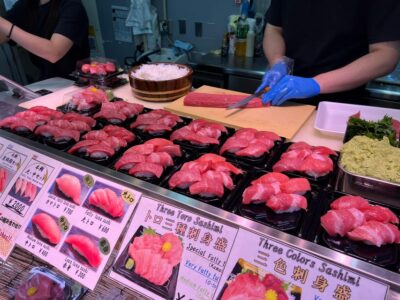
Tokyo 4hr Private Tour with Government-Licensed Guide
Read our review →
Samurai Ninja Museum Guided tour and Experience
Read our review →