
Reviewed · SAMURAI & NINJA EXPERIENCES
Tokyo: Samurai Adventure! Authentic Sword Action Experience
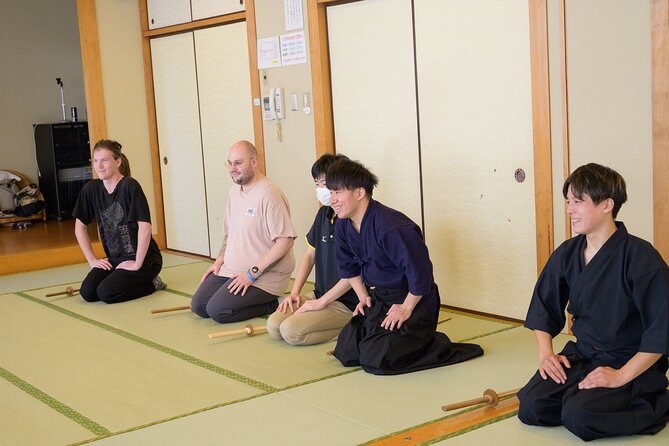
The sharpest part of this Tokyo experience is that you do not just watch a samurai show. You learn the basic movements, handle a wooden sword, and work with a professional action actor on a short scene. Dai and Kume lead the class, which blends Japanese performance training with a safe, beginner-friendly lesson.
I like the hands-on format and the chance to train alongside Japanese students in the group session. I also like the personal touch after class, when the instructors may point you toward traditional places to eat around Tsukishima. The main drawback is simple: this is a one-hour introduction, not a full martial arts course, and kimono dressing is not included.
In This Review
- Key points to know before booking
- Why this samurai class feels different from a stage show
- Starting with warm-ups and basic sword form
- Watching the professional demonstration up close
- Working with a professional samurai on a short scene
- The photo session and the personal touch in Tsukishima
- Group class or private lesson?
- What the price includes, and what it does not
- Who will get the most from this experience?
- Timing, booking, and cancellation advice
- Seven practical questions before you go
- FAQ
- How long does the Tokyo Samurai Adventure last?
- Where does the activity start?
- Where does the activity finish?
- Are beginners allowed to join?
- Do participants use real swords?
- Is kimono dressing included?
- How many people can join the group?
- Should you book the samurai workshop?
Key points to know before booking
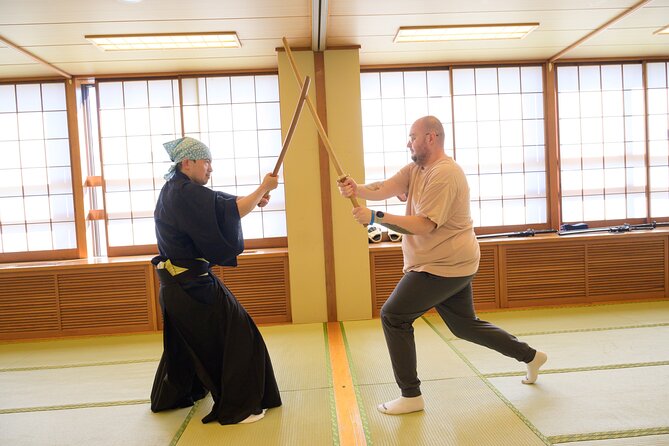
- Train with Dai and Kume: Professional samurai action actors guide the class and help you practice each movement.
- Watch before you swing: A live training demonstration gives you a clear look at the speed and precision involved.
- Use wooden swords: You practice grips, holds, swings, drawing, and sheathing without real sword combat.
- Join a Japanese group class: The group option can include aspiring Japanese actors, giving the session a local connection.
- Finish with an action scene: You pair with a professional samurai and perform a short choreographed sequence.
- Pay about $32.84 for one hour: That is a fair price for an interactive activity in central Tokyo, especially if you want more than a photo stop.
Why this samurai class feels different from a stage show
Many cultural activities ask you to sit still and watch. This one gets you on your feet. You see the instructors train, then copy the basic forms with guidance from people who work as action actors.
That distinction matters. The class is built around performance samurai, so the goal is not to teach you battlefield combat or certify you in a martial art. You are learning controlled movements used in samurai action scenes. The result is more like a short practical workshop than a museum lesson or theatrical performance.
The instructors begin with an introduction to samurai history, giving the physical work some context. Then they show you how the movements should look. You can watch the rhythm, posture, and timing before trying them yourself, which helps if you have never held a sword.
I appreciate the clear line between drama and danger. You do not engage in real sword fighting. Training swords are provided, and the session focuses on safe practice, form, and choreography. Beginners are welcome, so you do not need previous martial arts or acting experience.
More samurai and ninja sessions:
- Tokyo: Samurai Ninja Museum Guided tour and Experience
★ 4.6 · 1,010 reviews - Tokyo: Samurai Sword & Archery Class from Samurai Descendant
★ 5.0 · 603 reviews - Best Samurai Experience in Tokyo
★ 5.0 · 458 reviews
Starting with warm-ups and basic sword form
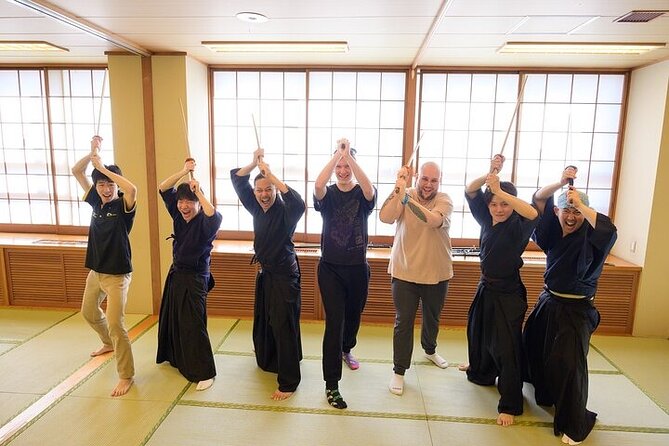
The class starts with warm-ups. This is useful rather than ceremonial. Sword movements rely on balance and controlled body position, and a short physical preparation helps you pay attention to how you stand and move.
Next comes the basic grip. You learn how to hold the sword, how to position your hands, and how to keep the movement controlled. The class also covers holding and swinging, with the instructors correcting your form as you go.
The slow beginning is a strength. You might arrive eager to perform a dramatic slash, but the visual power of samurai movement comes from precision. A rushed swing looks messy. A carefully timed one looks like a scene from a film.
You also practice sword presentation, drawing, and sheathing. These small motions often make the best photographs because they show the ceremony and control associated with the samurai image. The instruction may include Japanese language elements, especially in a group setting with Japanese students. That gives the session a useful cultural exchange without turning it into a language class.
Do not expect a long technical lesson. The format is short, and the aim is to give you a satisfying first experience. If you already train in martial arts, you may find the basics familiar. You will still get the fun of applying them in a choreographed scene.
Watching the professional demonstration up close
The live demonstration is one of the best parts for anyone who enjoys film combat. You see how a trained performer handles the sword and uses timing to make a movement look powerful without making it unsafe.
From close range, the difference between an amateur swing and a professional one becomes easy to spot. The instructors control their speed, posture, and stopping points. Their work also shows that samurai action depends on more than strength. Timing, eye contact, footwork, and clean angles all matter.
This demonstration helps you understand what you are about to practice. It also gives nonparticipants something worthwhile to watch. If someone in your group prefers observing to performing, that person can still enjoy the training display and the photo session.
The tone is welcoming rather than intimidating. Dai and Kume are described as friendly and polite, and their teaching style is suited to visitors who may be trying this sort of activity for the first time. That matters in a class where the equipment looks dramatic but the actual work requires calm attention.
Working with a professional samurai on a short scene
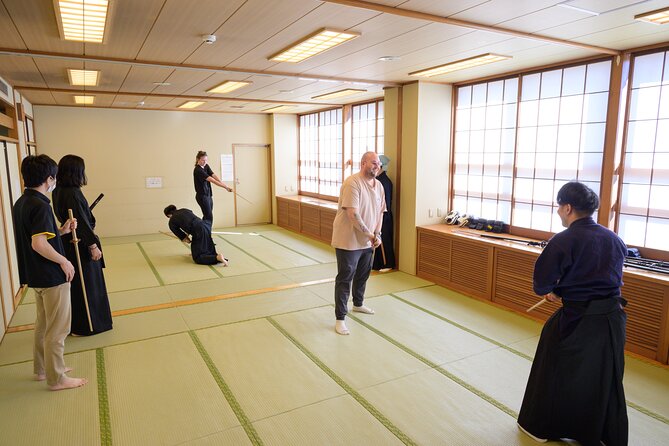
Once you know the basic motions, you pair with a professional samurai for an action-packed scene. This is the point where the lesson becomes a performance exercise.
You are not thrown into an unscripted fight. The activity uses trained instructors and practiced movements, so the emphasis remains on safe timing and presentation. You get to connect the individual techniques from the first part of the class into a short sequence.
For many people, this will be the most memorable portion. A sword drill can feel abstract, but a scene gives it a reason. You respond to another person, hold your position, and try to make the movement look intentional.
The group format adds another layer. You may practice beside Japanese students who are training as actors. That makes the session feel less like a tourist demonstration and more like a visit to a working performance class. You are still a beginner, but you are sharing the space with people who are building real acting skills.
A private lesson may suit you better if you want more direct attention or prefer not to work in front of other participants. The group class, with a maximum of 15 people, offers more social energy. Ask yourself which sounds better: personal coaching or the fun of learning alongside a small group.
A few more Tokyo bookings worth comparing
- Mt Fuji and Hakone 1-Day Bus Tour Return by Bullet Train
★ 5.0 · 26,383 reviews - 1-Day Tokyo Bus Tour
★ 5.0 · 14,250 reviews - Tokyo: TOKYO SKYTREE® Admission ticket
★ 4.5 · 11,192 reviews - Tokyo: teamLab Planets TOKYO Digital Art Museum Entry Ticket
★ 4.6 · 9,779 reviews
The photo session and the personal touch in Tsukishima
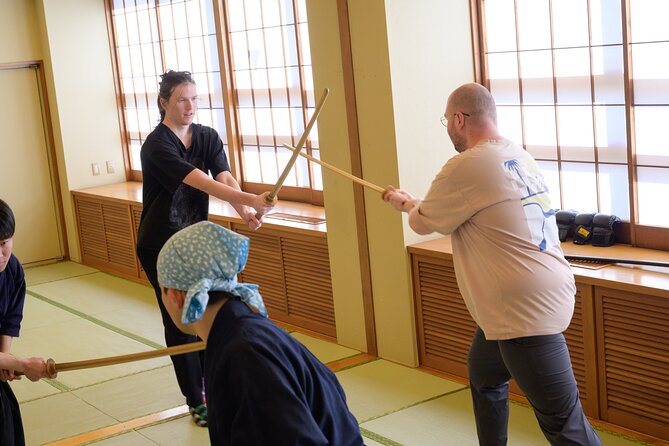
The final photo session gives you a physical reminder of the class. You can pose with the samurai after practicing the movements, which is a better souvenir than a quick photograph beside a costume display. You have learned enough to understand the posture and gesture behind the image.
The meeting point is at 2-chōme-15-3 Tsukuda, Chuo City, Tokyo 104-0051. The activity begins and ends there. It is in the Tsukishima area, with access from Tokyo Station, Ginza, and Tsukiji, and the location is near public transportation.
Tsukishima also gives the outing a local neighborhood setting rather than a major sightseeing plaza. After class, the instructors have sometimes walked with participants and pointed out traditional places to eat, including a chance to try melon bread. That extra interaction is not the formal core of the activity, so you should not book solely for it, but it can make the hour feel connected to the neighborhood.
The area is a useful choice for combining this activity with other central Tokyo plans. You could place it near time in Ginza, Tsukiji, or around Tokyo Station. Allow enough time to reach the meeting point, since the session itself lasts only about one hour and ends back where it began.
Group class or private lesson?
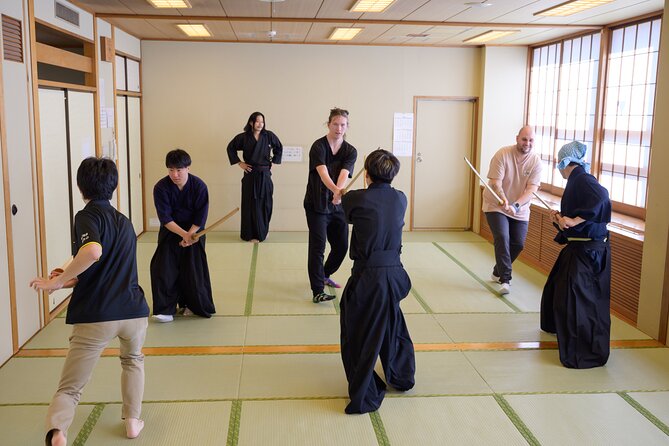
The group option is likely the better value for most visitors. At about $32.84 per person, it gives you the demonstration, instruction, wooden sword practice, action scene, and photos in a compact package. A group can also make the activity more playful, especially if you enjoy meeting Japanese students and practicing together.
A private lesson may be preferable for a couple, family, or serious enthusiast who wants a more focused pace. The available information confirms that private lessons are offered, but it does not give a separate private price or explain the exact difference in teaching time. Check the selected option carefully before paying.
Groups can receive discounts, which may improve the value for families or larger parties. The class maximum is 15 participants, so it is not a giant show with a crowd of people waiting for a turn. Still, a fuller class may mean less individual attention than a private lesson.
I would choose the group option for a first visit. You get the social side, the chance to train beside Japanese actors, and a lively atmosphere. I would consider private training if sword performance is a major interest or if you want the instructors to focus closely on your form.
What the price includes, and what it does not
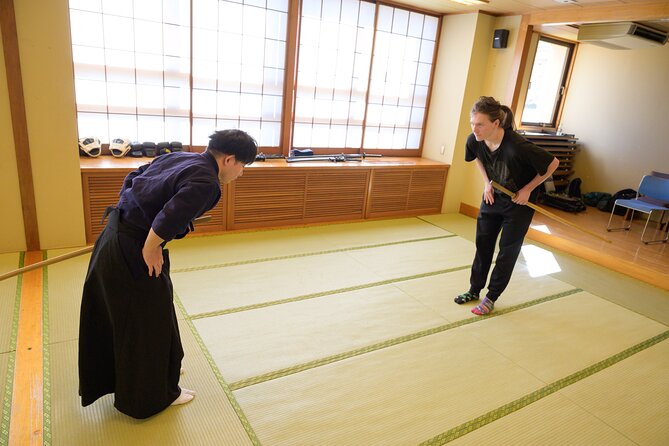
The $32.84 price is reasonable if you want active participation rather than a short cultural photo opportunity. You receive an introduction to samurai history, live demonstrations, instruction in basic swordsmanship, wooden practice swords, and photos with the instructors.
There are no meals or drinks. Transportation to and from the workshop is also your responsibility. That is not a serious problem for a one-hour class, but include local transit in your day’s budget.
Kimono dressing is not included. This is important if your main goal is a full costume experience. The focus here is sword action and training, not a long dressing session or a formal portrait package.
The price makes the most sense for someone who values interaction. If you only want to see samurai perform, a show may offer more stage time. If you want to learn a few movements and take part in a scene, this class gives you more to do for your money.
Who will get the most from this experience?
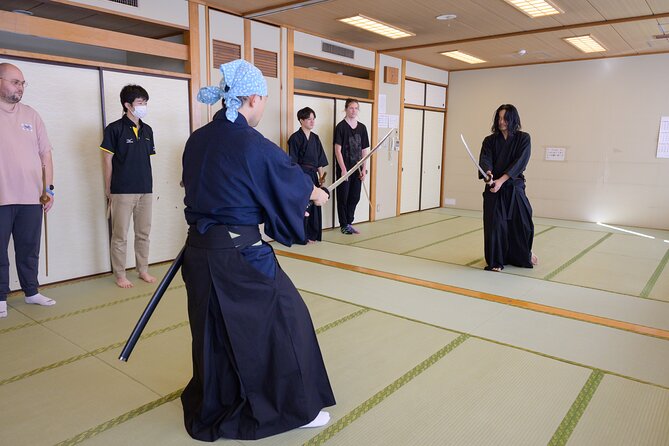
This workshop suits first-time visitors who want a Japanese cultural activity with a physical element. You do not need previous training, and most people can participate. It is a good fit for couples, families, friends, and small groups looking for something more unusual than another temple visit.
It also suits people interested in acting, film combat, or Japanese performance. The instructors are professional action actors, so you get insight into how samurai movements are presented for an audience. The class may be especially enjoyable if you like learning by doing.
The group class can work well for adults and older children who can follow instructions and handle a wooden practice sword safely. The supplied information does not state a minimum age, so families should confirm age rules before booking.
You might want a different activity if you expect a long lecture, detailed military history, genuine weapons, or full samurai clothing. You also should not choose this class as a substitute for a multi-day martial arts course. It is a compact introduction with a performance goal.
Timing, booking, and cancellation advice
The class lasts about one hour. That makes it easy to fit into a busy Tokyo schedule, but it also means you should arrive ready to begin. The experience is commonly booked about 39 days ahead, so reserve early if your dates are fixed.
Confirmation is provided at booking, and a mobile ticket is available. Public transportation is nearby, but transportation is not included. The start and end point are the same, which makes planning the next stop easier.
Free cancellation is available up to 24 hours before the start time for a full refund. Cancellations or changes made within 24 hours are not accepted and are not refunded. The cut-off follows local Tokyo time, so check the clock carefully if your plans change.
Seven practical questions before you go
FAQ
How long does the Tokyo Samurai Adventure last?
The experience lasts approximately one hour.
Where does the activity start?
It starts at 2-chōme-15-3 Tsukuda, Chuo City, Tokyo 104-0051, Japan.
Where does the activity finish?
The class ends back at the meeting point.
Are beginners allowed to join?
Yes. Beginners are welcome, and most people can participate.
Do participants use real swords?
No. The class uses wooden practice swords, and it does not involve real sword fighting.
Is kimono dressing included?
No. Kimono dressing is not included in the experience.
How many people can join the group?
The activity has a maximum of 15 participants. Group discounts are available.
Should you book the samurai workshop?
I would book this if you want an active, friendly cultural experience that fits into one hour. The strongest reasons are the professional instruction from Dai and Kume, the close demonstration, the chance to practice sword forms, and the final scene with a samurai action actor.
The price is modest for central Tokyo, especially when you count the equipment, instruction, performance, and photos. Choose the group class for social energy and better value, or investigate the private option if personal coaching matters most.
Skip it if you want full costume dressing, real weapons, or a long history lecture. But if you want to step into a samurai scene, learn the basics safely, and leave Tsukishima with a memorable photo, this is a smart addition to a Tokyo visit.
New on our Tokyo list
- Sumi-e Experience in a relaxing green tea shop in Tokyo★ 5.0 · 3 reviews
- Tokyo : Kamikaze Street Drift Ride★ 5.0 · 3 reviews
- Private Zen Meditation in English in Shinjuku, Tokyo★ 5.0 · 3 reviews
- Onsen Spa in Tokyo and Asakusa Bar Hopping with Local Guide★ 5.0 · 3 reviews
- Easy for everyone! Now you can play handmade mini shamisen and show off to everyone! Musical instruments, sweets and live music★ 5.0 · 3 reviews
- Mt Fuji Exploration Tour with Free Japanese Kusa Mochi from Tokyo★ 4.5 · 3 reviews
- Tokyo Tsukiji Fish Market Walking and Exploring Hidden Gems Tour★ 5.0 · 3 reviews
- Tokyo: Private Tsukiji Street Food & Sake with Local Guide★ 5.0 · 3 reviews
Samurai & Ninja Experiences, compared.
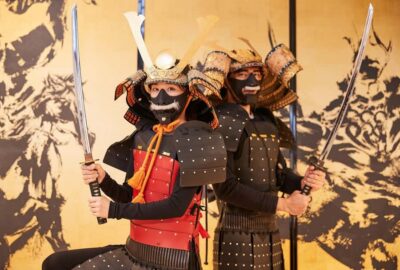
Samurai Ninja Museum Guided tour and Experience
Read our review →
Samurai Sword & Archery Class from Samurai Descendant
Read our review →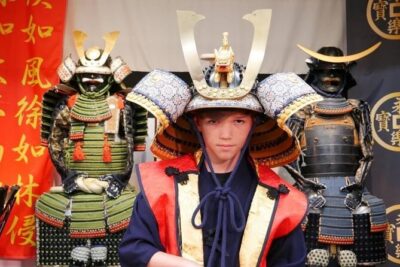
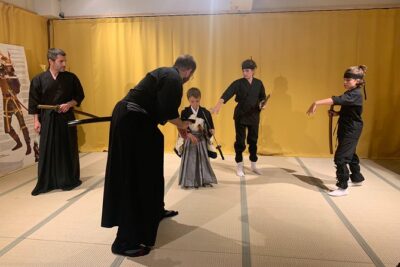
Ninja Experience (Family Friendly) at Samurai Ninja Museum TOKYO
Read our review →
Samurai Entertainment Night Show in Kanda Shrine
Read our review →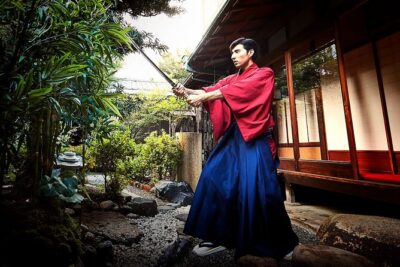
Tokyo Sword Experience – includes Museum Ticket/Ninja Experience
Read our review →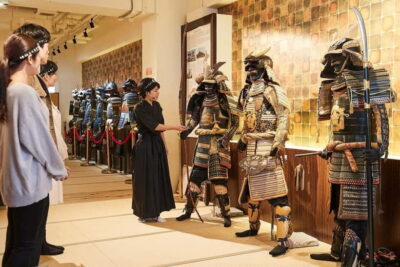
Samurai Ninja Museum Asakusa: Samurai Sword Lesson & Tour
Read our review →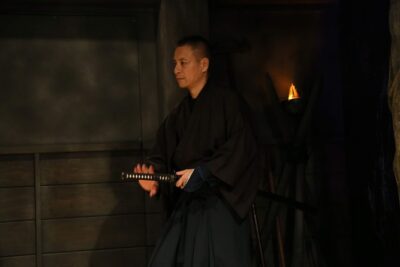
Ninja Samurai 2-hour hands-on lesson by Japanese master in Tokyo
Read our review →Browse the lists this tour appears in