
Reviewed · SAMURAI & NINJA EXPERIENCES
Tokyo: Samurai Adventure! Authentic Sword Experience
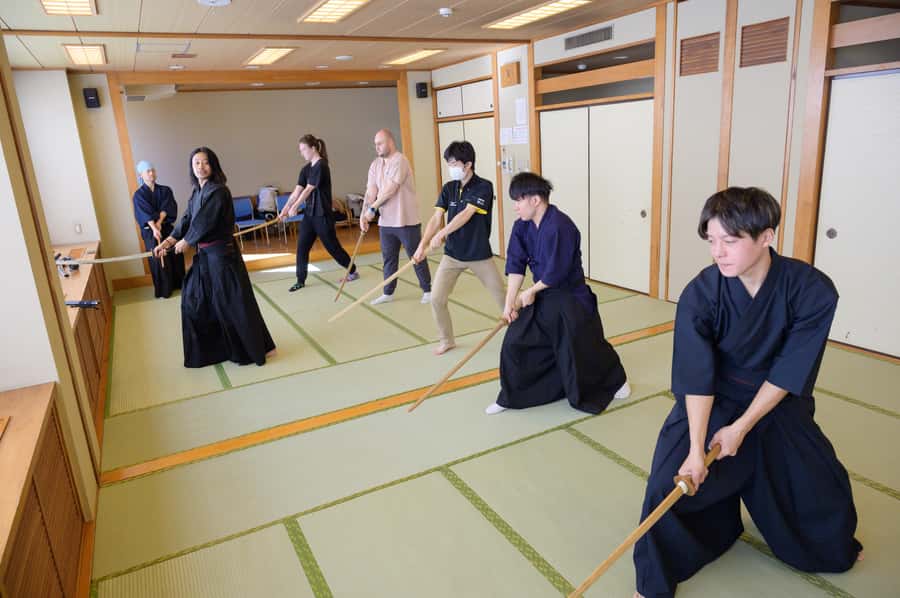
Tokyo’s samurai sword workshop gives you something more active than a museum display. You watch professional action actors train, learn basic Tate sword movements, and practice with a wooden sword under close instruction. It is stage combat, not a real fight, but the work feels physical and focused.
I like the friendly teaching from Dai and Kume, and I like the mix of demonstration, practice, and photos. You also get a rare chance to train beside Japanese students in the public class. The main catch is that one lesson only covers the basics, so martial artists seeking serious sword training will want the private course.
In This Review
- Key points to know before booking
- What the Tokyo samurai workshop really offers
- Arriving at Samurai Experience Photo Studio ICHI
- Warm-ups, posture, and the first sword movements
- Watching the actors demonstrate real stage-combat skill
- Paired practice with a professional samurai actor
- Public class or private lesson?
- Costume, photographs, and the keepsake factor
- Is $24 good value?
- Who should book this experience?
- Practical ways to enjoy the lesson
- Should you book the Tokyo samurai adventure?
- FAQ
- Where does the samurai experience meet?
- Where does the activity end?
- How much does the experience cost?
- Is the workshop suitable for beginners?
- Do participants use real swords?
- Can I choose a private lesson?
- What happens in the public course?
- Is samurai clothing included?
- What should I wear?
- How early should I arrive?
- Is the activity available in English?
- Who should not take part?
Key points to know before booking
- Train with action actors Dai and Kume: The instructors demonstrate the movements, correct your form, and keep the class welcoming for beginners.
- Choose public or private practice: Join Japanese acting students in the public course, or book a private lesson tailored to your level and goals.
- Use wooden practice swords: You learn grip, stance, swings, strikes, and defensive movement without actual sword fighting.
- Expect a physical class: Warm-ups and repeated movement make comfortable clothes and closed-toe shoes essential.
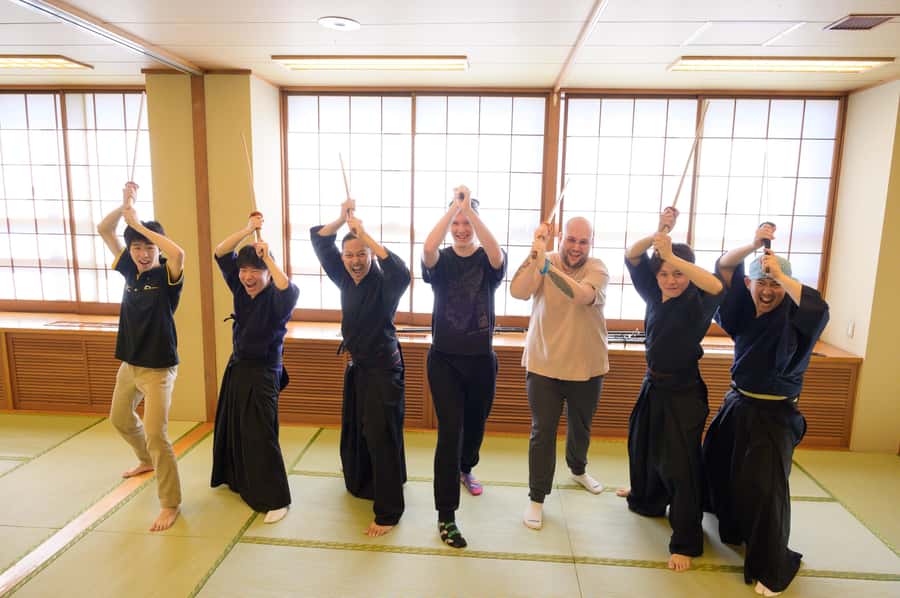
- Costume photos are available: Samurai clothing is an option, and the session ends with a chance to take photos with the instructors.
- Budget-friendly Tokyo activity: At $24 per person, the public experience offers hands-on instruction for less than many staged cultural attractions.
What the Tokyo samurai workshop really offers
This is a short cultural activity built around Tate, the stylized sword movement used in Japanese stage and screen combat. You are not learning to cut targets or handle a sharpened katana. Instead, you practice the posture, timing, gestures, and safe choreography that make a samurai fight look convincing.
That distinction matters. If you expect a martial arts certification course, this will feel light. If you want a fun introduction to samurai movement with an experienced performer guiding you, the format makes good sense.
The instructors are professional action actors, which gives the class a useful blend of discipline and showmanship. Dai and Kume demonstrate the motions clearly, then help you copy them. The teaching is designed for first-timers, so you do not need previous martial arts experience or detailed knowledge of Japanese culture.
The atmosphere is physical but not aggressive. You work with practice swords, and the activity specifically says you will not take part in actual sword fighting. That makes it suitable for curious beginners who want to try something unusual without committing to a formal martial arts lesson.
More samurai and ninja sessions:
- Tokyo: Samurai Ninja Museum Guided tour and Experience
★ 4.6 · 1,010 reviews - Tokyo: Samurai Sword & Archery Class from Samurai Descendant
★ 5.0 · 603 reviews - Best Samurai Experience in Tokyo
★ 5.0 · 458 reviews
Arriving at Samurai Experience Photo Studio ICHI
The meeting point is listed on Google Maps as Samurai Experience Photo Studio ICHI. It is in central Tokyo, with access from Tokyo Station, Ginza, and Tsukiji. You are responsible for reaching the studio, so allow extra time for finding the entrance and getting settled.
Arrive 15 minutes early. That is especially useful here because the studio may be the first stop before the group moves to a nearby dojo. One participant explained that the meeting point was the studio, where the group changed clothes, then walked to the nearby training building. Plan for this short transition rather than assuming all parts take place in one room.
Wear comfortable clothing that allows free movement. Closed-toe shoes are required for activity, and high heels are not allowed. Loose but practical clothing is a better choice than anything restrictive or delicate.
The experience is offered in Japanese and English. The instructors work with international participants, and the lesson is based heavily on showing the movement, so you can follow along even when a technique is easier to watch than to explain.
Warm-ups, posture, and the first sword movements
The session begins with warm-up exercises. This is not filler. Sword choreography uses repeated bends, turns, steps, and arm movements, so warming up helps you get ready before holding the practice sword.
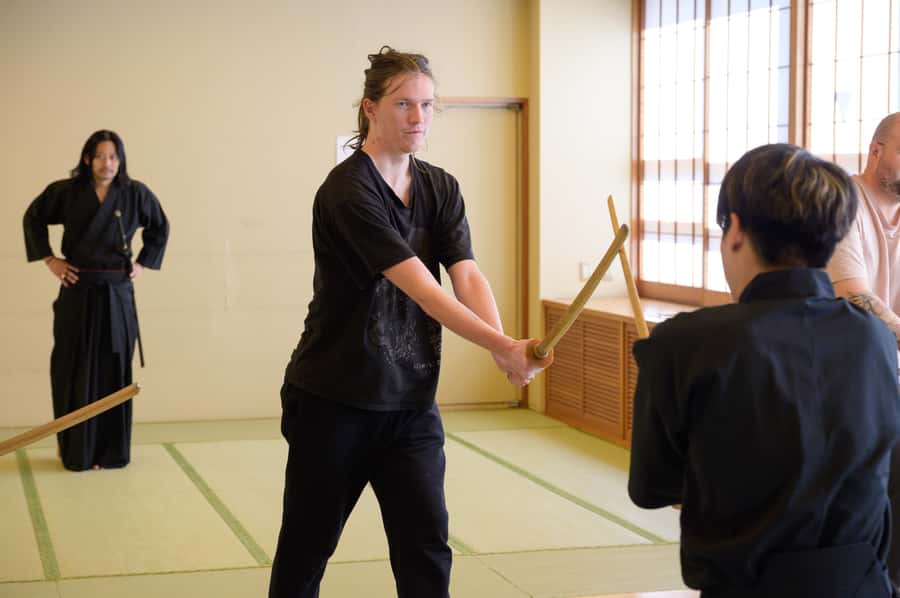
You then learn the basic position of a samurai. The instructor shows you how to stand, where to place your hands, and how to hold the sword. Beginners often focus only on the swing, but the stance and grip are what make the movement controlled.
The basic lessons include:
- Proper grip and hand position
- How to hold the sword safely
- Rest positions
- Basic stance
- Simple swings and strikes
- Defensive movements
- The timing and shape of Tate action
The pace is gradual. You first copy the movement, then repeat it with correction from the instructor. Dai and Kume are praised for giving useful tips and helping participants adjust when something feels awkward. That personal correction is a big part of the value. A video demonstration alone could show you the motion, but it could not tell you why your arms or feet were out of place.
You may also take part in a short meditation or quiet preparation period. One couple described meditation, warm-ups, sword practice, demonstrations, and costume as part of the session. The exact flow can vary by class, but the aim is to shift your attention away from sightseeing and toward controlled movement.
Watching the actors demonstrate real stage-combat skill
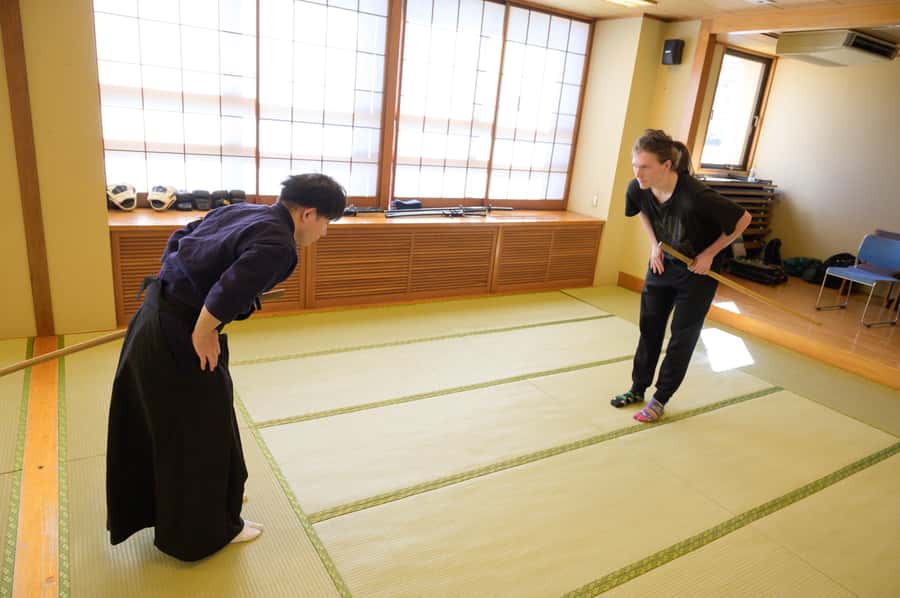
The instructors do not simply explain the sword positions and send you off to practice. They also perform demonstrations. This is one of the most enjoyable parts because the difference between a beginner’s careful swing and a trained action actor’s movement becomes clear at once.
A professional demonstration shows how posture, footwork, timing, and expression work together. The sword motion is only one piece. A convincing samurai scene depends on the pause before a strike, the direction of the body, the reaction of the person opposite you, and the clean finish of each gesture.
You get to watch these details at close range. The display gives the class a bit of theater, but it also helps you understand what you are practicing. Instead of treating the sword as a prop, you begin to see it as part of a full-body performance.
Do not expect a long theatrical show separate from the lesson. The demonstration supports the training. It is there to show the movement at a high level, then give you something to work toward.
A few more Tokyo bookings worth comparing
- Mt Fuji and Hakone 1-Day Bus Tour Return by Bullet Train
★ 5.0 · 26,383 reviews - 1-Day Tokyo Bus Tour
★ 5.0 · 14,250 reviews - Tokyo: TOKYO SKYTREE® Admission ticket
★ 4.5 · 11,192 reviews - Tokyo: teamLab Planets TOKYO Digital Art Museum Entry Ticket
★ 4.6 · 9,779 reviews
Paired practice with a professional samurai actor
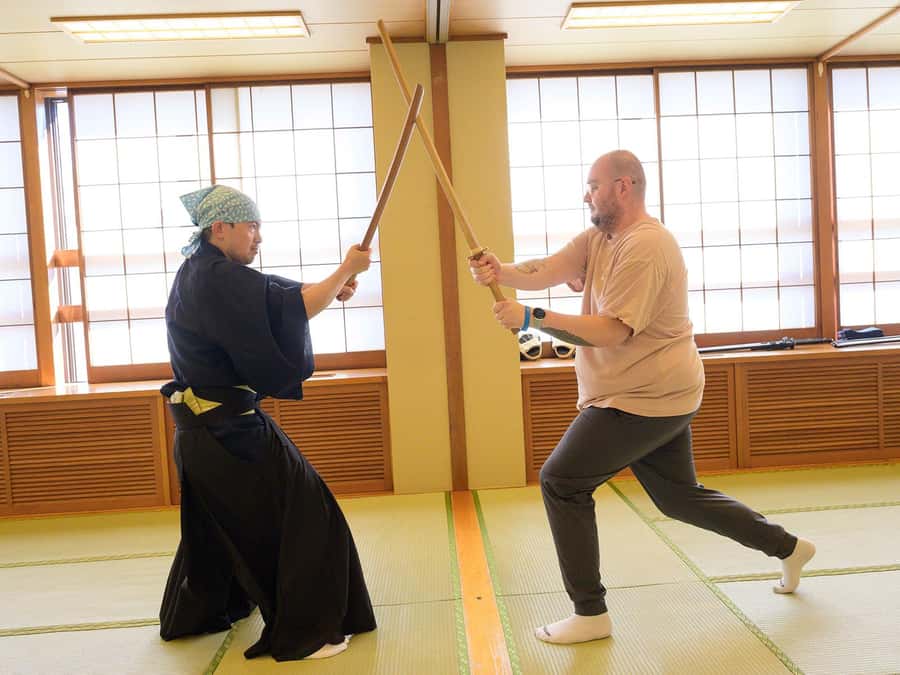
After learning the basic movements, you practice in pairs with a professional samurai. This is the point where the workshop starts to feel like a scene from an action film.
The word spar should not be read as a promise of free-form combat. The lesson uses wooden practice swords and controlled choreography. Your partner guides the sequence, and the focus is on safe movement, timing, and performing the exchange correctly.
This paired work is valuable because sword movement makes more sense when another person is in front of you. You must pay attention to distance, direction, and the other person’s cue. Even a simple defensive motion feels more natural when it follows an incoming action.
It can also be a little demanding. You will need to remember several instructions while moving your arms and feet. If you lose the sequence, stop and reset rather than rushing. The instructors are there to help, and the class is meant to be enjoyable, not a test of memory.
This is where the workshop suits families, couples, and groups particularly well. One family spanning three generations found the activity suitable for everyone, and a couple described the instructors as warm and helpful. The experience has enough structure for beginners while still giving confident participants a chance to sharpen their movement.
Public class or private lesson?
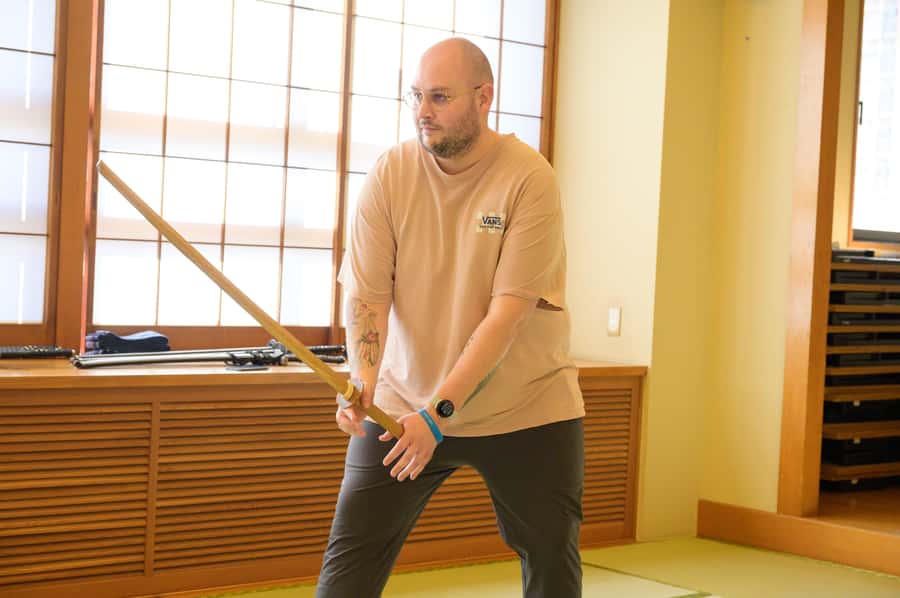
The public course is the more social and affordable choice. You join a class in which aspiring Japanese actors are learning samurai action. After watching part of their training, you practice beside them and interact with the students.
That setting gives you more than a standard tourist demonstration. You are seeing people who are working toward performance skills, not simply watching a scripted display. Their presence may also give the class a lively, shared-training feel.
Group size can vary. One couple happened to have no other participants, so their public session felt almost private. That is possible, but you should not book the public course expecting individual instruction every time.
The private course begins with a short introduction to samurai history and culture. A professional action actor then adjusts the lesson to your level and goals. It is the better choice if you want more detailed correction, have martial arts experience, or already know something about Japanese sword traditions.
The private option may also suit people who feel shy about practicing in front of a group. The public class is friendly, but it still asks you to learn alongside other people. Think about what you want from the session: shared energy and a lower price, or more control and individual attention.
Costume, photographs, and the keepsake factor
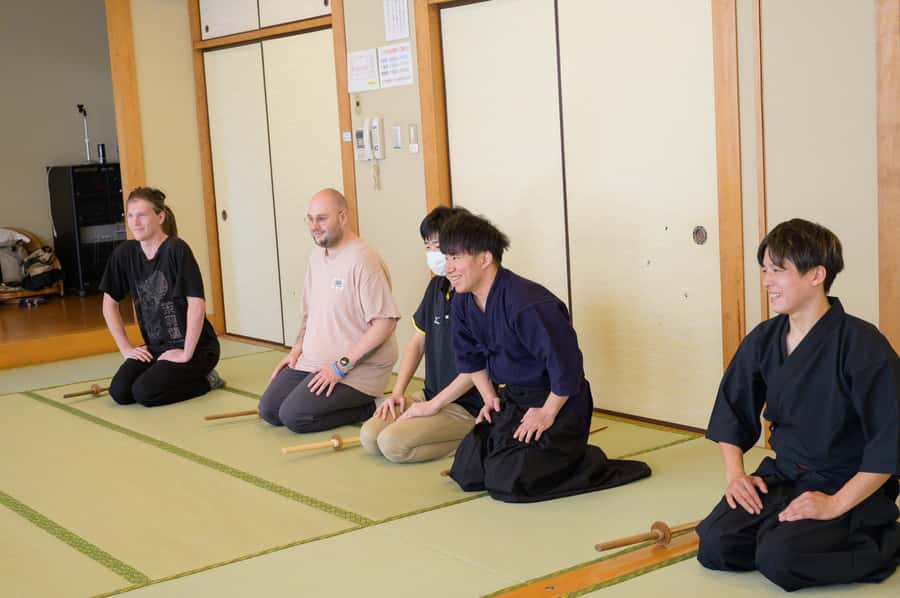
Samurai costume is available as an option, but it is not included in the listed price. Some participants have dressed in samurai clothing during the session, while others have focused on the training itself.
Costume changes the feel of the activity. It makes the final photos more memorable and helps you picture the role, but it can also add time and cost. If you care most about sword technique, treat the clothing as optional. If you are booking this as a family activity or a special Tokyo photo memory, the costume may be worth considering.
The photo session comes at the end. You can pose with the samurai and preserve the experience as a keepsake. It is a simple finish, but a useful one. After practicing unfamiliar movements, you have a clear moment to relax, smile, and take home something more lasting than a few new sword positions.
Bring comfortable clothes even if you plan to use a costume. The activity includes movement before the photo portion, and you should not assume the costume alone will make the session comfortable for physical practice.
Is $24 good value?
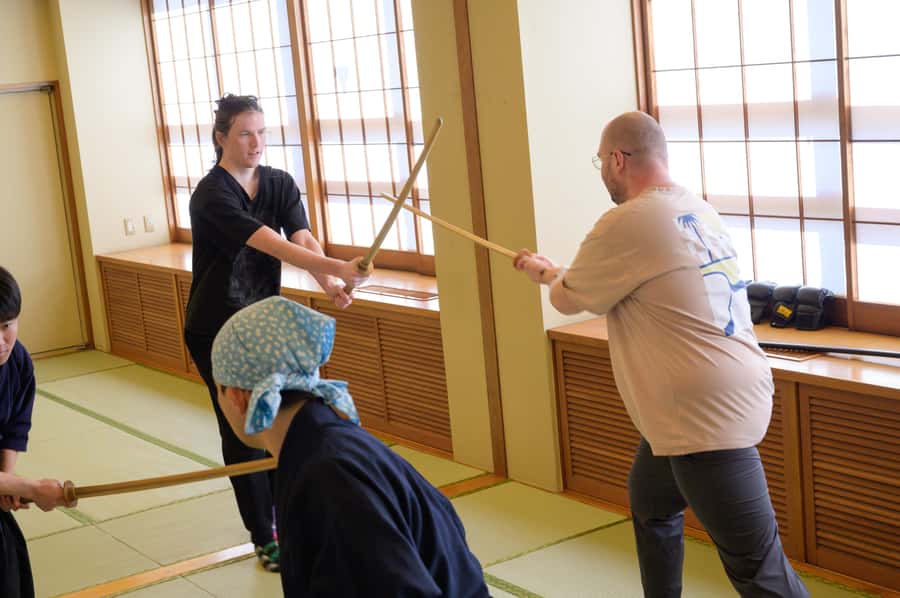
At $24 per person, this is an inexpensive way to add a hands-on cultural activity to a Tokyo itinerary. The public course includes a samurai introduction, live demonstrations, use of wooden swords, basic instruction, paired practice, and photos. You also get direct time with professional action actors rather than only watching a performance.
The value is strongest if you want participation. Many Tokyo cultural attractions ask you to look, listen, and take a picture. Here, you learn a small set of movements and use your body to understand them. That makes the experience easier to remember.
The price does not include transportation, food, drinks, or costume. Since the workshop is in central Tokyo, you can combine it with time around Tokyo Station, Ginza, or Tsukiji, but you need to arrange your own route to the studio.
You should also keep your expectations in proportion. One lesson is an introduction, not a complete course in samurai swordsmanship. You will touch a small part of the culture through stage combat and guided practice. That is enough for a rewarding activity, but not enough to claim serious training.
Who should book this experience?
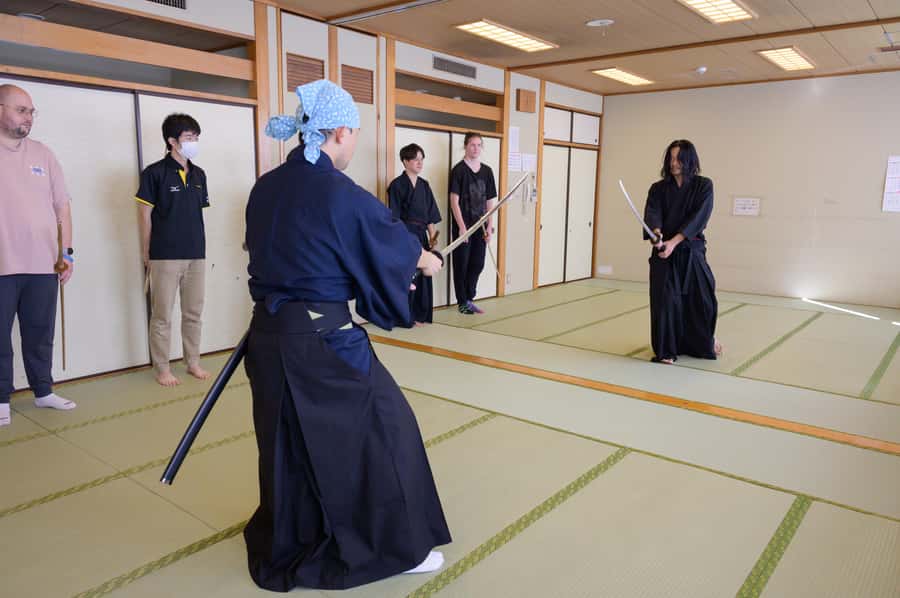
I would recommend it to first-time visitors who want a break from temples, shopping, and observation. It gives you a physical memory of Tokyo and a chance to meet instructors who work in Japanese action performance.
It is a good fit for:
- Couples seeking a playful shared activity
- Families with older children who can follow movement instructions
- Solo visitors who enjoy trying practical cultural activities
- Martial arts students curious about Tate performance
- Film and theater fans interested in stage combat
- People who want costume photos with a samurai theme
It is less suitable if you need a wheelchair-accessible activity, since wheelchair users are not accepted. It is also not recommended for pregnant women, people with back problems, people with vertigo, or anyone with a pre-existing medical condition that could make physical movement unsafe.
The experience does not allow smoking, alcohol, drugs, drones, explosive substances, or electric wheelchairs. Those restrictions are straightforward, but they matter when you are planning a physical workshop rather than a passive tour.
Practical ways to enjoy the lesson
Arrive early and wear closed-toe shoes. Do not schedule the workshop so tightly that a small delay in reaching the studio ruins the rest of your day.
Listen closely during the first explanation of grip and stance. The early details may seem simple, but they shape every later movement. If you are unsure, ask for a correction instead of copying a mistake several times.
Let the instructor set the speed. You may be tempted to swing harder or move faster once the class becomes exciting. Tate relies on control and timing, so a clean, slower movement is more useful than a wild one.
If you are taking the public class, enjoy the shared setting. Training alongside Japanese acting students gives the experience a more genuine working-class feel than a stand-alone photo session. If you want extended attention or have specific martial arts goals, pay more for the private course.
Finally, take the photos. The lesson may be the main purpose, but the picture with Dai or Kume gives you a clear reminder of what you did. Ask about the costume option when booking if that part matters to you.
Should you book the Tokyo samurai adventure?
Book it if you want an affordable, active Tokyo experience with clear instruction, safe practice, and a bit of theater. The warm teaching from Dai and Kume is a major strength, and the chance to train with Japanese acting students makes the public class more than a simple staged photo stop.
Choose the private course if you practice martial arts, want detailed coaching, or prefer a lesson shaped around your own goals. Choose the public course if you want the best value and like meeting people while you learn.
Skip it if you are looking for authentic combat training, cannot take part in physical movement, or dislike costume and performance activities. For everyone else, $24 buys a lively introduction to samurai stage movement and a memorable way to spend part of a Tokyo day.
FAQ
Where does the samurai experience meet?
The meeting point is registered on Google Maps as Samurai Experience Photo Studio ICHI. Search for that name when planning your route.
Where does the activity end?
The session ends back at the meeting point.
How much does the experience cost?
The listed price is $24 per person.
Is the workshop suitable for beginners?
Yes. Beginners are welcome, and the instructors teach basic sword grip, stance, holding, swinging, strikes, and defensive movements.
Do participants use real swords?
No. The lesson uses wooden practice swords, and you do not take part in actual sword fighting.
Can I choose a private lesson?
Yes. You can choose between a public course and a private course. The private lesson is adjusted to your level and goals.
What happens in the public course?
You join a class where aspiring Japanese actors are learning samurai action. After watching their training, you practice alongside them and interact with the Japanese students.
Is samurai clothing included?
No. Samurai costume is not included in the listed price, but it is available as an option.
What should I wear?
Wear comfortable clothing and closed-toe shoes suitable for physical activity. High-heeled shoes are not allowed.
How early should I arrive?
Arrive 15 minutes before the scheduled start so the activity can begin on time.
Is the activity available in English?
Yes. The experience is offered in Japanese and English.
Who should not take part?
The activity is not suitable for pregnant women, people with back problems, wheelchair users, people with vertigo, or people with pre-existing medical conditions.
New on our Tokyo list
- From Tokyo: Mount Fuji & Hakone Full Day Private Tour★ 4.9 · 25 reviews
- Tokyo Spectacular View Day-Cruise in 90 Minutes★ 5.0 · 25 reviews
- Real Tokyo Runner Club : Daikoku Car Meet Night Tour with JDM Car★ 5.0 · 25 reviews
- 2.5 Hour-Guided Cycle Tour in the Central Tokyo★ 5.0 · 25 reviews
- [Self-Drive] Tokyo & Daikoku Custom Car Driving Tour★ 4.9 · 25 reviews
- Tokyo: 2-Hour Night Bike Tour of the City’s Hidden Gems★ 4.9 · 25 reviews
- Ramen Making from Scratch +Akihabara Tour –Cooking Class★ 5.0 · 25 reviews
- Samurai themed Entertainment show in Shinjuku★ 4.5 · 25 reviews
Samurai & Ninja Experiences, compared.
Samurai Ninja Museum Guided tour and Experience
Read our review →
Samurai Sword & Archery Class from Samurai Descendant
Read our review →
Ninja Experience (Family Friendly) at Samurai Ninja Museum TOKYO
Read our review →
Samurai Entertainment Night Show in Kanda Shrine
Read our review →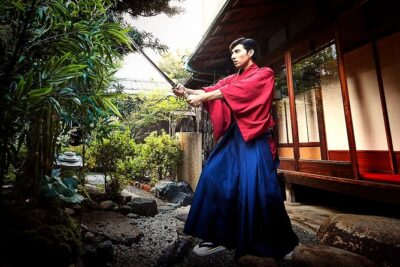
Tokyo Sword Experience – includes Museum Ticket/Ninja Experience
Read our review →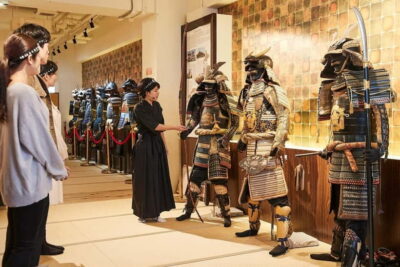
Samurai Ninja Museum Asakusa: Samurai Sword Lesson & Tour
Read our review →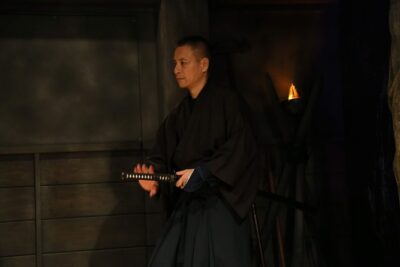
Ninja Samurai 2-hour hands-on lesson by Japanese master in Tokyo
Read our review →Browse the lists this tour appears in