
Reviewed · SAMURAI & NINJA EXPERIENCES
Tokyo: Samurai Experience with a real sword
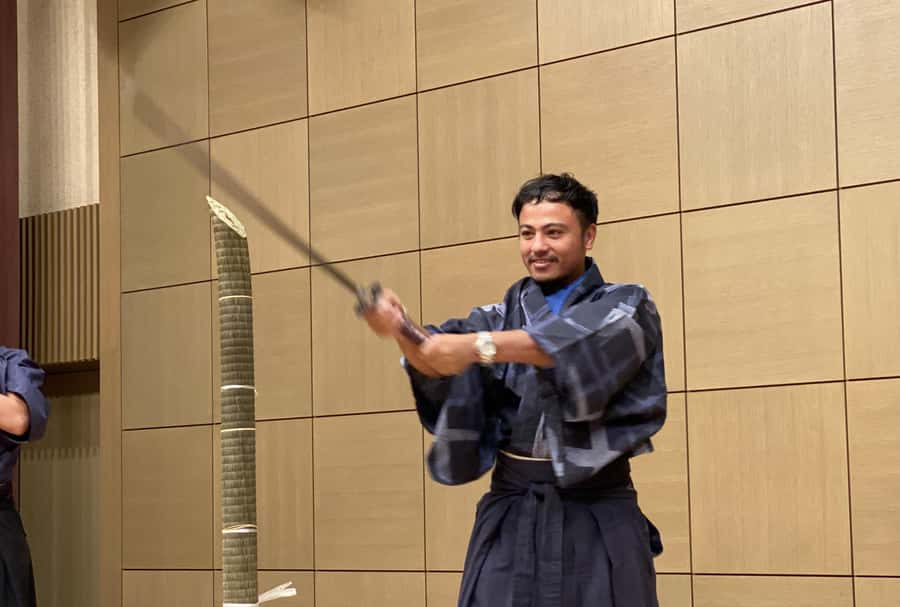
A real sword, traditional clothing, and a controlled sword-to-sword bout make this Tokyo activity far more hands-on than a museum visit. You learn how to draw, handle, and sheath a katana before putting the movements into practice.
I like the careful opening lesson in samurai etiquette and seated zarei, and I like that the session ends with video and photos rather than only a quick costume snapshot. The chance to cut objects with a genuine sword is another rare touch.
The main consideration is that two hours can feel short if you want a full martial-arts course. Cutting with the real sword is limited to participants aged 12 and older, and some instructors may rely on Google Translate for parts of the explanation.
In This Review
- Key points to know before booking
- Why this Tokyo samurai lesson feels different
- Meeting at the station and getting changed
- Zarei and the first rules of the sword
- Watching Shiden-ryu swordsmanship
- The sword-to-sword uchikomi session
- Cutting objects with a genuine samurai sword
- Photos, calligraphy, and the unexpected hospitality
- Is $102 a fair price?
- Who will enjoy this most?
- Practical tips for a smoother two hours
- Should you book the Tokyo samurai experience?
- FAQ
- How long does the samurai experience last?
- Where do I meet the staff?
- Is the activity offered in English?
- Can children cut objects with a real sword?
- What should I bring?
- Who should not book this activity?
Key points to know before booking
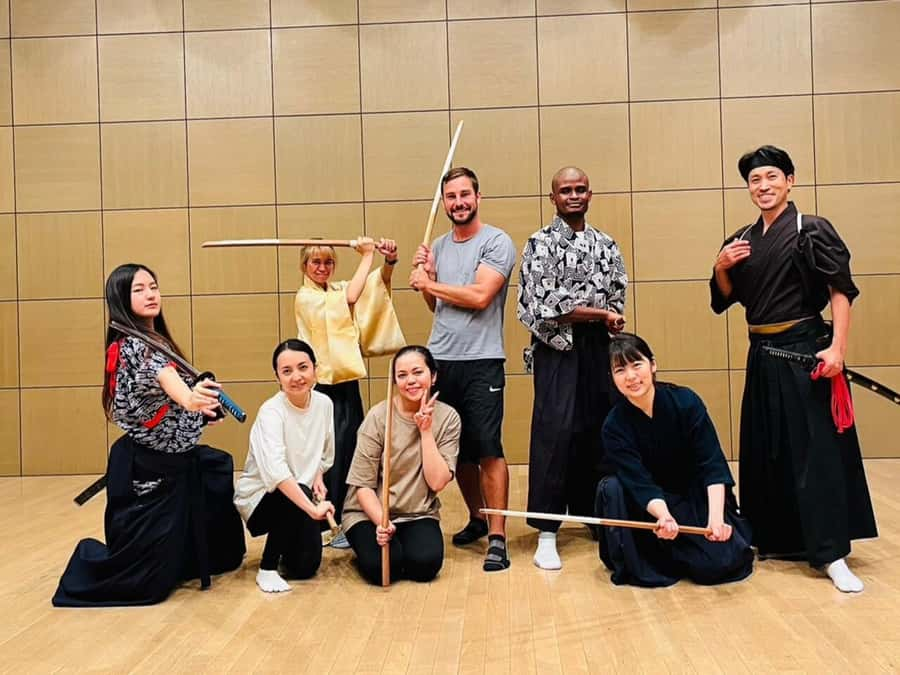
- Real sword practice: Learn basic handling, forms, and cutting techniques with a genuine samurai sword under professional supervision.
- Kimono and hakama included: You change into traditional clothing before the lesson begins, so photos look and feel more convincing.
- Shiden-ryu demonstration: Watch a presentation of iai and swordsmanship before trying the movements yourself.
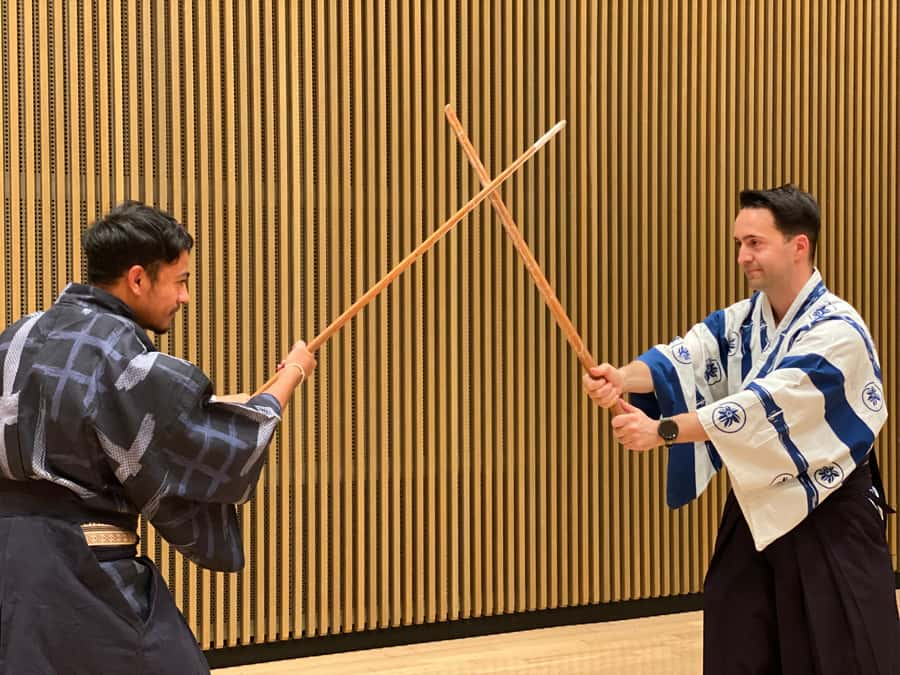
- Sword-to-sword combat: Practice uchikomi, a guided striking exercise that gives the session its theatrical edge.
- Video and photos included: A recording of the experience and commemorative pictures give you something more useful than a short-lived costume rental.
- English support with limits: English-speaking staff are provided, but communication may sometimes involve translation software.
Why this Tokyo samurai lesson feels different
Many costume activities stop once you have tied on a robe and posed with a prop sword. This one goes further. You dress in kimono and hakama, learn formal behavior, watch a sword demonstration, and take part in structured movements with a real blade.
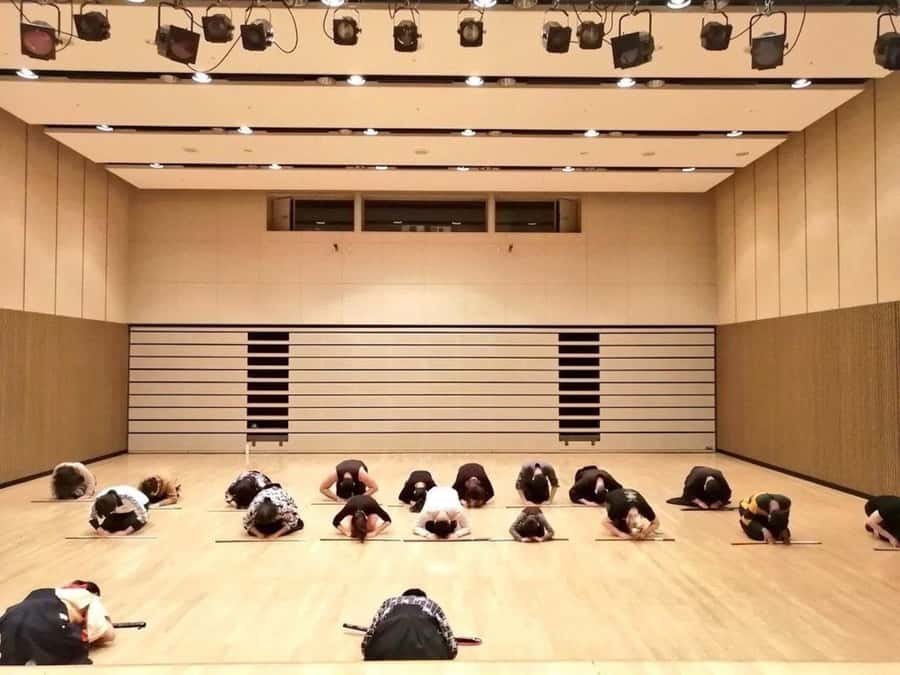
That sequence matters. The clothing sets the mood, but the etiquette gives the session a sense of purpose. Zarei, the seated bow used in the lesson, introduces the idea that samurai swordsmanship is not simply about swinging a weapon. Posture, restraint, attention, and respect all come first.
You also get a chance to learn how a sword is drawn and returned to its sheath. That small action takes control and timing. It is one of the most interesting parts for anyone curious about traditional Japanese martial arts, since it focuses on precision rather than brute force.
The session is designed as an introduction, not a serious course in historical combat. You will learn selected forms and movements in a short period, then use them in a safe, staged exercise. That makes it approachable for first-time participants, but anyone expecting months of training will find the lesson necessarily limited.
More samurai and ninja sessions:
- Tokyo: Samurai Ninja Museum Guided tour and Experience
★ 4.6 · 1,010 reviews - Tokyo: Samurai Sword & Archery Class from Samurai Descendant
★ 5.0 · 603 reviews - Best Samurai Experience in Tokyo
★ 5.0 · 458 reviews
Meeting at the station and getting changed
The stated meeting point is after the station ticket gates. Leave through the west exit and go down to ground level, where you should find a McDonald’s. Look for staff carrying a meeting board.
Arrive 20 minutes early. The meeting location can change within Tokyo depending on the date, so check the final instructions before setting out. This is especially important in Tokyo, where a small station error can cost you more time than expected.
From the meeting point, staff take you to the training center. The activity returns to the original meeting point at the end. Transportation is not listed as a separate included service, so plan to reach the meeting area on your own.
Once you arrive, you receive your kimono and hakama. You should provide your height and weight during booking so the clothing can be prepared properly. Bring comfortable clothes underneath, a change of clothes, and water in a bottle with a secure lid.
The costume is not just for photographs. A hakama changes how you move, especially when stepping, kneeling, and turning. Listen carefully to the staff while getting dressed, and allow enough time to change back at the end.
Zarei and the first rules of the sword
The formal opening introduces samurai etiquette, including zarei. You learn how to sit, bow, and carry yourself before touching the sword.
For me, this is an important part of the activity because it gives context to the physical lesson. The sword is treated as an object requiring care. Even if you have never studied Japanese martial arts, the etiquette helps you understand why the movements are controlled and deliberate.
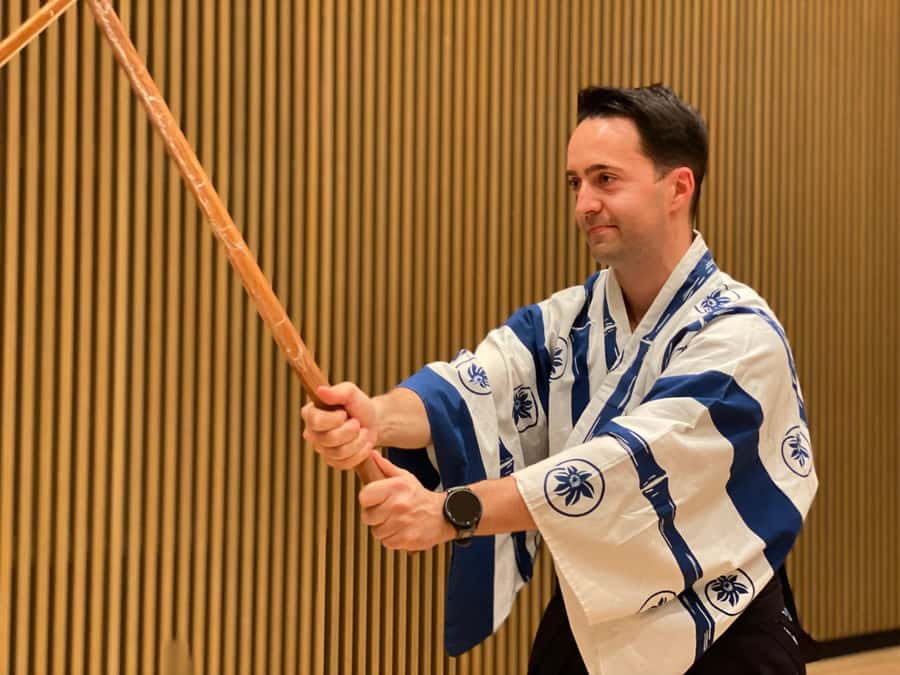
Next comes basic sword handling. You are taught how to hold the weapon, how to position your body, and how to move through simple forms. The lesson also covers drawing and sheathing, skills that look simple until you try to perform them slowly and correctly.
You should not rush this section. The most satisfying part is often noticing how small changes in posture affect the entire movement. Keep your eyes on the instructor, follow the order of each action, and do not add your own flourishes.
The activity includes a professional coach and English-speaking staff. One session described instructor Hiryu as offering useful background on samurai history and philosophy, along with the sword lesson. That extra explanation can make the practice more meaningful, though the exact staff member and content may depend on the date.
Watching Shiden-ryu swordsmanship
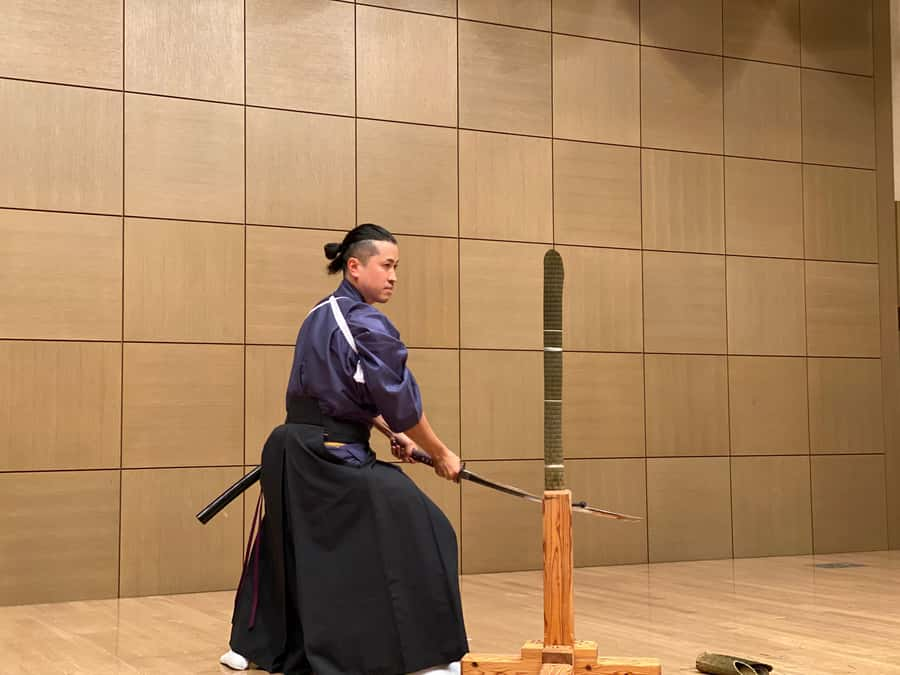
Before your own combat practice, you watch a demonstration of iai and swordsmanship by Shiden-ryu. Iai focuses on drawing and using the sword from its sheath, so the demonstration gives you a clear model for the movements you have just begun to learn.
This presentation is likely to be one of the most polished moments of the two hours. It shows the difference between a beginner copying a form and an experienced practitioner performing it with control.
Pay attention to the pauses. The value of the demonstration is not only the speed of a cut. Foot placement, hand position, the angle of the blade, and the return to a composed stance all matter.
The activity is presented as a lesson and performance, not a historical reenactment. You will not receive a full account of samurai life or a tour of a castle. Instead, you get a focused look at one martial tradition and then try selected parts of it yourself.
A few more Tokyo bookings worth comparing
- Mt Fuji and Hakone 1-Day Bus Tour Return by Bullet Train
★ 5.0 · 26,383 reviews - 1-Day Tokyo Bus Tour
★ 5.0 · 14,250 reviews - Tokyo: TOKYO SKYTREE® Admission ticket
★ 4.5 · 11,192 reviews - Tokyo: teamLab Planets TOKYO Digital Art Museum Entry Ticket
★ 4.6 · 9,779 reviews
The sword-to-sword uchikomi session
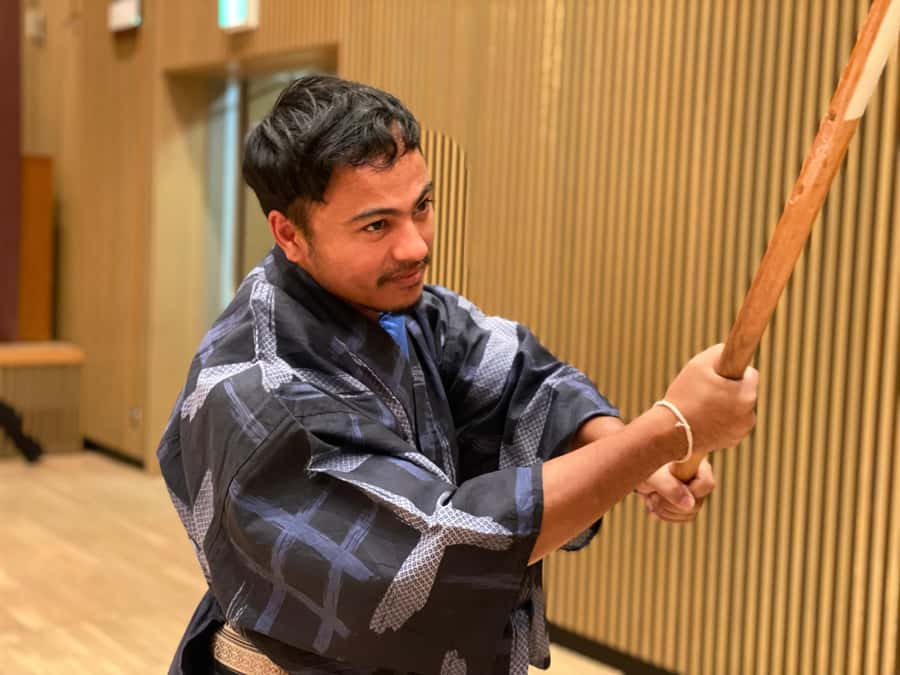
The most playful section is uchikomi, the guided sword-to-sword combat exercise. You practice striking and responding under the instructor’s direction. It has the energy of a staged duel, but the structure keeps the activity manageable for newcomers.
This is not free sparring. Follow the coach’s instructions closely, keep your movements measured, and treat the sword as a serious object. The point is to learn the rhythm and form, not to win a fight.
I like this part because it turns the earlier instruction into something physical. The lesson stops being an explanation of samurai movements and becomes a sequence you can remember through your body.
Still, expectations matter. Two hours does not allow much time for advanced partner work. If your main goal is combat training, this will feel like a brief introduction. If you want a distinctive cultural activity with a dramatic centerpiece, the balance works well.
Wear clothes that allow comfortable movement under the costume. The experience is not suitable for pregnant women or wheelchair users, according to the activity information.
Cutting objects with a genuine samurai sword
Participants aged 12 and older can cut objects with a real sword. The action is recorded on video, so you have a chance to keep a visual record of the most unusual part of the session.
This is the moment that requires the most concentration. Cutting is not simply a matter of force. Your stance, angle, timing, and follow-through all affect the result. Let the instructor set the pace and do exactly what you are shown.
The age restriction is important for families. Younger children may take part in other portions of the activity, but the real-sword cutting segment is only available from age 12.
You should also expect the cutting opportunity to be supervised and limited. The information does not specify the number or type of objects, so do not book this expecting a long series of targets. Think of it as a carefully managed highlight within a wider lesson.
The video is a strong value point. A photograph can show the costume, but footage captures the movement and the sound of the action. Confirm how the recording will be delivered during the session, since the supplied details only state that you can take the video home.
Photos, calligraphy, and the unexpected hospitality
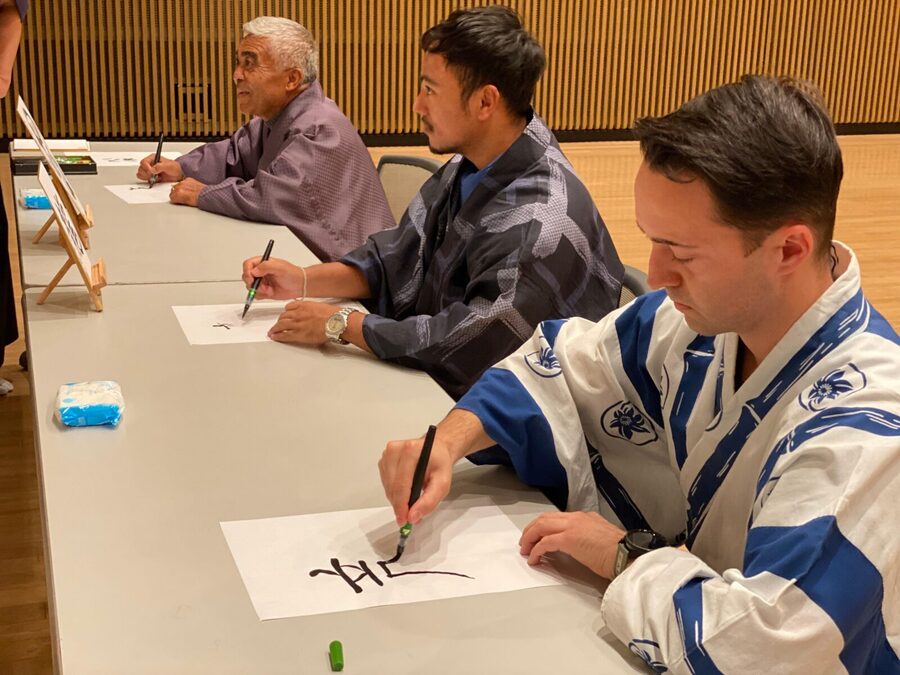
A commemorative photo session is included, along with photography charges. You get a record of yourself in kimono and hakama, with the swordsmanship setting adding more character than a standard rental-shop portrait.
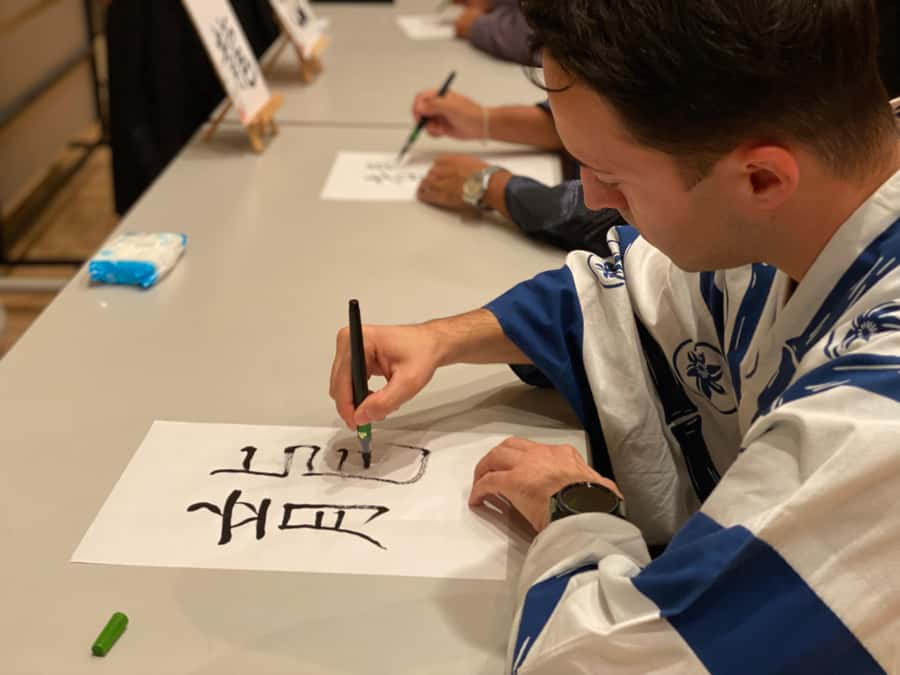
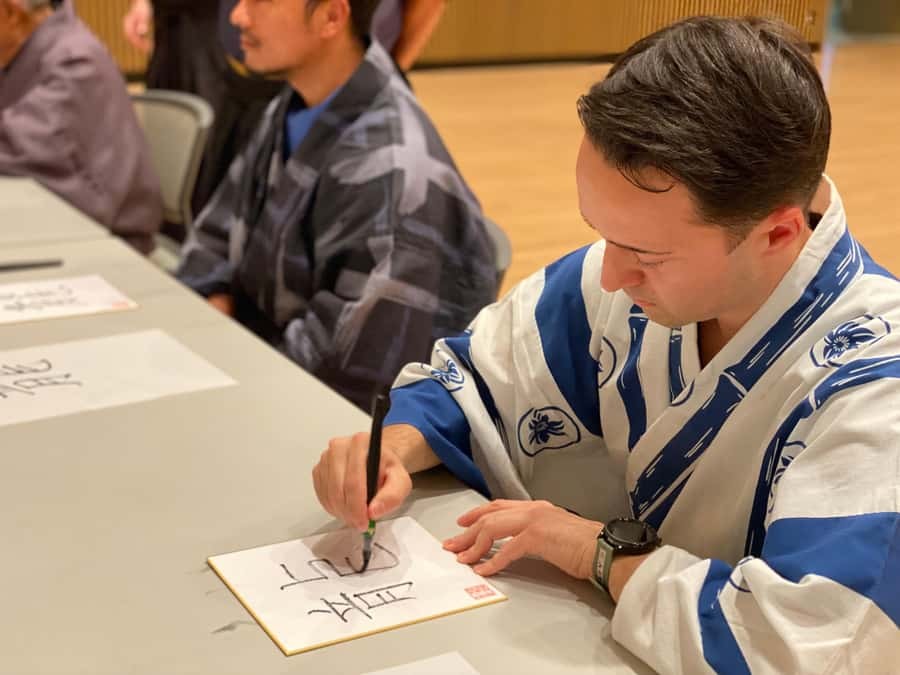
Some sessions have also included calligraphy and a small meal. These extras are not listed as guaranteed parts of every booking, so treat them as possible additions rather than promised features. If offered, they give the activity a broader cultural feel and a quiet change of pace after the sword work.
The meal was described as a pleasant surprise, while the calligraphy gave the couple another way to connect with Japanese tradition. I would ask at the start whether these elements are part of your particular session.
The closing procedure includes zarei again, changing clothes, and a final conclusion at the venue. Ending with the same seated etiquette used at the beginning gives the activity a clear shape: arrival, preparation, practice, presentation, and farewell.
Is $102 a fair price?
At $102 per person, this is not a budget costume photo session. The price covers a professional coach, English-speaking staff, venue fees, experience fees, photography, and the included photo and video elements.
The value depends on what you want from Tokyo. If you only need a kimono photograph, you can likely find cheaper options. If you want a short, organized introduction that combines costume, etiquette, sword forms, partner practice, real-sword cutting, and recorded memories, the price is easier to justify.
You are also paying for supervision. Working with a genuine sword is not a casual prop activity, and professional instruction matters. The venue, staff, equipment, and controlled sequence all help explain the cost.
For a couple, the price buys a shared activity rather than two separate portraits. For a family with teenagers, the age limit on cutting means you should check who can take part in the full program before booking.
The experience has a 4.7 rating from 17 reviews, which suggests strong satisfaction but is still a relatively small sample. I would use that figure as a positive sign, not a guarantee that every session will be identical.
Who will enjoy this most?
You are a good match if you want:
- A hands-on cultural activity rather than a passive demonstration
- A memorable alternative to standard Tokyo sightseeing
- Traditional clothing plus a structured martial-arts lesson
- A souvenir video showing a real physical achievement
- A couple’s activity with plenty of photo opportunities
- A family experience for participants aged 12 and older who meet the activity requirements
It may not suit you if you dislike changing clothes, kneeling, following formal instructions, or handling a sword under close supervision. It is also not suitable for pregnant women or wheelchair users.
English support is available, but do not assume every conversation will be fluent. One session worked through some explanations with Google Translate. That need not ruin the experience, since the movements can be demonstrated, but it is worth knowing if detailed verbal instruction is important to you.
Practical tips for a smoother two hours
Arrive 20 minutes early, especially if you are meeting near a large station. Bring a sealed drink, since an open cup is not suitable around the equipment.
Wear comfortable clothing that is easy to change out of. Leave alcohol for later, and smoking is not allowed. You should also provide accurate height and weight details at booking so the traditional clothing is a better fit.
Keep your schedule flexible after the activity. The advertised duration is two hours, but changing clothes, meeting staff, and returning to the station area can make the experience feel fuller than a simple two-hour class.
Cancellation is free up to 14 days before the scheduled activity for a full refund. That is useful if your Tokyo plans are still shifting, but the deadline is firm enough that you should note it when booking.
Should you book the Tokyo samurai experience?
Book it if you want a compact cultural lesson with real participation. The combination of kimono, zarei, Shiden-ryu swordsmanship, uchikomi practice, real-sword cutting, and recorded photos and video gives you a clear sense of occasion.
I would especially recommend it to couples, older children, and first-time visitors who want something more memorable than another observation deck. The strongest reason to go is not the costume. It is the chance to learn why drawing, holding, and returning a sword require discipline.
Skip it if you want a long martial-arts course, unrestricted sparring, or a fully fluent English lecture throughout. For everyone else, $102 is a reasonable price for a carefully supervised two-hour introduction with tangible souvenirs and a genuine taste of samurai practice.
FAQ
How long does the samurai experience last?
The activity lasts two hours. Starting times vary, so check availability when booking.
Where do I meet the staff?
After exiting the ticket gates, use the station’s west exit and go down to ground level near McDonald’s. Staff should be holding a meeting board. The location can change within Tokyo, so check for updates before the activity.
Is the activity offered in English?
Yes. English-speaking staff and an English instructor are provided. Some hosts may not be fully fluent, and Google Translate may be used for parts of the explanation.
Can children cut objects with a real sword?
The real-sword cutting segment is available only to participants aged 12 and older.
What should I bring?
Bring comfortable clothes, a change of clothes, and water in a bottle with a secure lid. Provide your height and weight during the reservation process for clothing preparation.
Who should not book this activity?
The activity is not suitable for pregnant women or wheelchair users. Smoking is not allowed, and alcohol is not permitted in the vehicle.
New on our Tokyo list
- Sumi-e Experience in a relaxing green tea shop in Tokyo★ 5.0 · 3 reviews
- Tokyo : Kamikaze Street Drift Ride★ 5.0 · 3 reviews
- Private Zen Meditation in English in Shinjuku, Tokyo★ 5.0 · 3 reviews
- Easy for everyone! Now you can play handmade mini shamisen and show off to everyone! Musical instruments, sweets and live music★ 5.0 · 3 reviews
- Onsen Spa in Tokyo and Asakusa Bar Hopping with Local Guide★ 5.0 · 3 reviews
- Tokyo: Private Tsukiji Street Food & Sake with Local Guide★ 5.0 · 3 reviews
- Mt Fuji Exploration Tour with Free Japanese Kusa Mochi from Tokyo★ 4.5 · 3 reviews
- Tokyo Tsukiji Fish Market Walking and Exploring Hidden Gems Tour★ 5.0 · 3 reviews
Samurai & Ninja Experiences, compared.
Samurai Ninja Museum Guided tour and Experience
Read our review →
Samurai Sword & Archery Class from Samurai Descendant
Read our review →
Ninja Experience (Family Friendly) at Samurai Ninja Museum TOKYO
Read our review →
Samurai Entertainment Night Show in Kanda Shrine
Read our review →
Tokyo Sword Experience – includes Museum Ticket/Ninja Experience
Read our review →
Samurai Ninja Museum Asakusa: Samurai Sword Lesson & Tour
Read our review →
Ninja Samurai 2-hour hands-on lesson by Japanese master in Tokyo
Read our review →Browse the lists this tour appears in