
Reviewed · WALKING TOURS
Tokyo Shibuya Crossing & Hidden Streets Walking Tour
Shibuya Crossing is the headline, but the best part of this tour is what comes after the famous scramble. You’ll also find a sobering mural inside Shibuya Station, a rooftop-style urban park, tiny drinking alleys, shopping streets, and the former red-light quarter of Maruyamacho. The tour gives Shibuya a human scale.
I like the small group limit of 12, which makes it easier to hear your guide and ask questions. I also like the practical advice built into the walk. Guides such as Loc, Rio, Gray, Zac, and Daichi have been praised for explaining the area clearly, answering questions, and pointing out places you might skip on your own.
The main caution is the meeting point. SABON in Shibuya Mark City East Mall is not as obvious as a statue or station exit, and some people have spent 20 minutes trying to find it. Shibuya is also hilly, so bring good shoes and expect some uphill walking.
In This Review
- Key points before you book
- Why this Shibuya walk is more useful than a crossing photo stop
- Starting inside Shibuya Mark City
- Taro Okamoto’s Myth of Tomorrow
- Crossing Shibuya Crossing
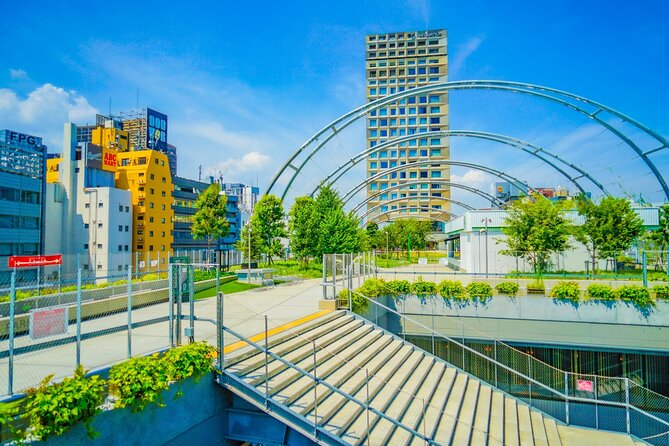
- Miyashita Park’s modern city design
- Nonbee Yokocho and tiny drinking spots
- Center-gai and Shibuya’s youth culture
- Maruyamacho, hills, and the adult side of Shibuya
- Ending at the Hachiko Statue
- The guides make the difference
- Who should book this two-hour walk?
- Should you book the Shibuya Crossing and Hidden Streets Walking Tour?
- FAQ
- How long does the tour last?
- How much does the experience cost?
- How many people can join the tour?
- Where does the tour start?
- Where does the tour end?
- Is Shibuya Crossing included?
- What other places are included?
- Are admission fees included?
- Are tips included?
- Can I cancel for a full refund?
Key points before you book
- See more than Shibuya Crossing: The route adds Miyashita Park, Nonbee Yokocho, Maruyamacho, Center-gai, and the Hachiko Statue.
- Small group of up to 12: You get a more personal walk than on a large coach-style outing.
- Expect strong guide interaction: Loc, Rio, Gray, Zac, Daichi, and Dixce have each received praise for friendly, clear explanations.
- Allow for hills and city heat: The route includes uphill streets, and the pace may need adjusting in humid weather.
- The starting point needs care: Meet at SABON, Shibuya Mark City East Mall, East Mall 3F, not at Hachiko.
- Good value at $25: Admission is free at every stop, so you are paying mainly for navigation, context, and local suggestions.
Why this Shibuya walk is more useful than a crossing photo stop
You can reach Shibuya Crossing without help. The challenge is understanding what surrounds it. The station area is a maze of roads, shopping complexes, narrow lanes, slopes, and changing redevelopment projects. A guide saves you from spending your two hours simply finding the next street.
This walk starts with well-known sights, then moves into places that show how Shibuya works as a neighborhood. You’ll see modern retail, public art, entertainment streets, small bars, and traces of older Tokyo. That mix makes the tour useful early in your stay, since your guide can also suggest places to eat or drink afterward.
The $25 price is fair for a two-hour guided walk in central Tokyo. There are no paid admissions included because the stops are public spaces, but that is not a weakness here. You are paying for the guide’s route, explanations, neighborhood knowledge, and ability to keep the group moving through a complicated district.
The group size matters. With a maximum of 12 people, you should have a reasonable chance to hear the guide in busy streets and ask about restaurants, bars, history, or transport. The actual guide will vary. Names associated with this experience include Loc, Rio, Gray or Grey, Zac, Daichi, and Dixce. The strongest praise has focused on guides who are friendly, easy to talk with, and willing to adjust explanations to the group.
More Shibuya plans:
- Official Street Go-Kart in Shibuya
★ 5.0 · 3,435 reviews - Tokyo: Street Kart Experience in Shibuya
★ 4.9 · 1,484 reviews - Shibuya Meltdown Nightlife Tour: All-You-Can-Drink Bar Hopping
★ 5.0 · 1,058 reviews
Starting inside Shibuya Mark City
The meeting point is SABON Shibuya Mark City, at Shibuya Mark City East Mall, 3F, in Dōgenzaka. This is the one logistical detail I would take seriously. Shibuya Mark City is a large complex, and a shop meeting point is less instantly recognizable than the Hachiko Statue, which is the end point.
Give yourself extra time to locate the store. Check the booking confirmation carefully, use the mall name rather than searching only for Shibuya Crossing, and do not assume the tour begins near Hachiko. A missed meeting is especially frustrating because the route itself is easy to enjoy once you are with the guide.
The tour uses a mobile ticket, and confirmation is sent when you book. The walk lasts about two hours. Since the listed stop times add up to roughly 75 minutes, the remaining time covers walking between sights, introductions, questions, and the guide’s explanations.
Taro Okamoto’s Myth of Tomorrow
The first stop is Myth of Tomorrow, a large mural by Japanese artist Taro Okamoto inside Shibuya Station. The work depicts the horror and destruction of the atomic bombings of Hiroshima and Nagasaki. It is an intense beginning for a neighborhood often associated with fashion, nightlife, and youth culture.
You spend about 10 minutes here, with no admission charge. That may seem brief, but the mural does not need a long visit to make an impression. Your guide can place the artwork in a broader Japanese context before the walk turns toward Shibuya’s more familiar public spaces.
I like this stop because it prevents the tour from becoming a simple parade of photo locations. You get art and difficult history before the crowds and neon take over. Pay attention to the location as well: the mural is part of the station environment, so it shows how serious public art can share space with daily commuting.
Crossing Shibuya Crossing
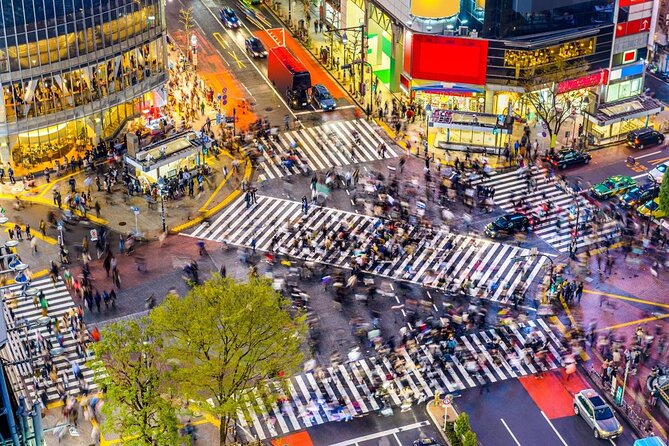
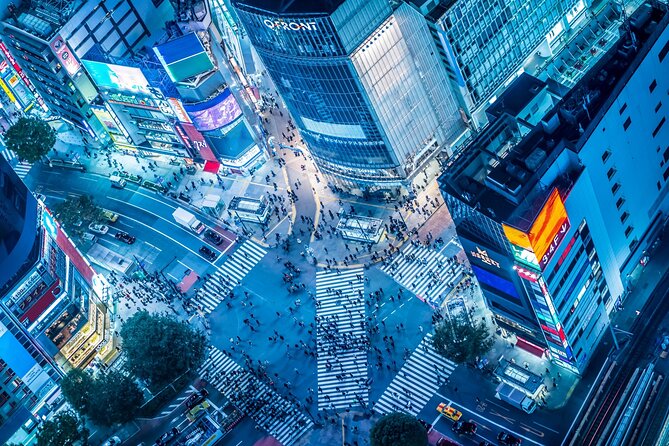
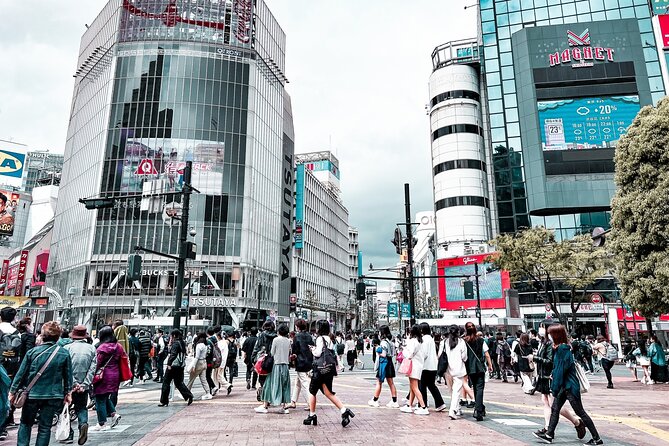
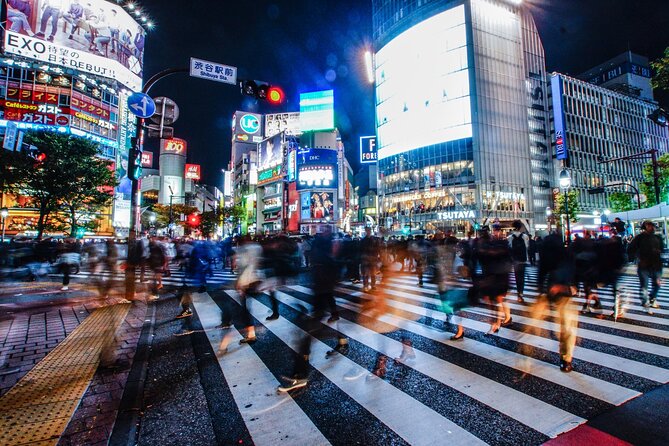
The famous scramble gets about 10 minutes. That includes the chance to watch the intersection and cross it with the group. Shibuya Crossing is one of Tokyo’s most recognizable scenes, and the experience is less about checking a box than noticing the choreography of thousands of people moving at once.
The guide helps you approach the crossing without wasting time or getting separated. You will likely want photos, but try to look up from your phone for a moment. The scale of the intersection, the surrounding screens, and the steady flow of pedestrians are the real attraction.
A comparison with Times Square is understandable, but Shibuya has its own character. The crossing is busy, yet the movement is generally orderly and respectful. The tour does not promise a private viewing platform or a long photography session, so anyone wanting extensive skyline or crossing photos should plan additional time elsewhere.
More walking routes in Tokyo:
- Tokyo Tsukiji Fish Market Food and Culture Walking Tour
★ 5.0 · 3,184 reviews - Tokyo: Imperial Palace and Shogun Historical Walking Tour
★ 5.0 · 2,251 reviews - Tokyo: Shinjuku Local Bar and Izakaya Guided Walking Tour
★ 4.9 · 1,794 reviews - Tokyo: Tsukiji Fish Market Food and Walking tour
★ 5.0 · 1,724 reviews
Miyashita Park’s modern city design
The route then heads to Miyashita Park for about 20 minutes, the longest stop. This is a multi-level sports and recreation facility created through an urban renewal project on the site of an older public park.
Miyashita Park helps explain modern Shibuya better than another shopping street would. It combines open public space with the commercial city around it, showing how Tokyo keeps adapting older urban areas for new uses. Your guide can point out what makes the project unusual and how it fits into the district.
This is also a useful pause in the walk. After the noise of the crossing, Miyashita Park offers a change of pace. The stop is free, and you can use it to ask your guide about other parts of Tokyo’s development or about places to visit later in your trip.
The park is not a traditional garden or an old Tokyo landmark. If you are seeking temples, shrines, or preserved architecture, this part may feel less historic. Its value is in seeing present-day Shibuya and the way public space has been reworked.
Nonbee Yokocho and tiny drinking spots
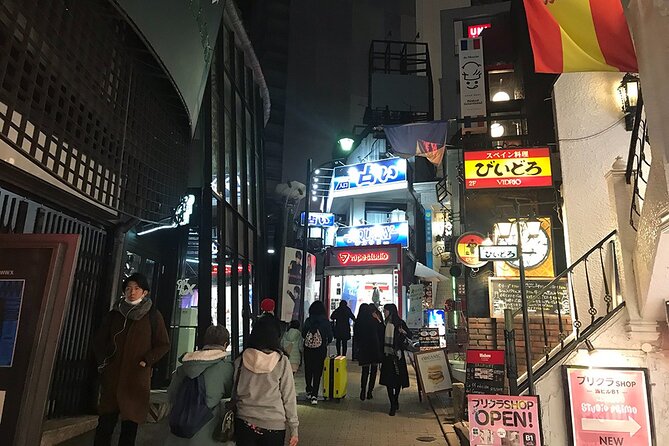
Nonbee Yokocho gets only about five minutes, but it may be one of the most memorable stops. The narrow alley near Shibuya Station is known for very small traditional-style bars and restaurants. Some may seat only three or four people.
This is the kind of place that is easy to miss when you stay on the main roads. The compact spaces and old-fashioned atmosphere offer a sharp contrast with the large station, giant screens, and major stores nearby. Your guide can also explain that parts of this sort of older drinking district may change or disappear as Shibuya continues to redevelop.
Five minutes is enough for an introduction, not a full night out. You should not expect to sit down for a meal during the tour. Instead, treat the stop as a preview, then return later if the alley appeals to you and you find a suitable place open.
Center-gai and Shibuya’s youth culture
The walk continues through Shibuya Center-gai, a pedestrian shopping street at the district’s core. This is where you see the area’s younger, trend-focused side, with fashion, food, entertainment, and constant foot traffic.
The stop lasts about 10 minutes. That is enough for your guide to explain the role of Center-gai and point out shopping or eating areas, but not enough for serious browsing. I would make a mental note of stores and streets that interest you, then come back independently after the tour.
This is a useful part of the route because it connects the grand scale of Shibuya Crossing with the everyday business of the district. You see where people shop, meet friends, eat, and spend an evening. Guides have also been praised for giving food suggestions, so ask specific questions if you want ideas for your own plans.
Maruyamacho, hills, and the adult side of Shibuya
Maruyamacho provides a different view of Shibuya. The neighborhood was once associated with Tokyo’s red-light district and now has an eclectic mix of older traces, nightlife, restaurants, and newer businesses. It is also one of the sections where you should expect uphill walking.
This stop lasts about 10 minutes. The guide’s context is important because the streets may not explain their past on their own. You get a look at how a district can change its public identity while retaining unusual pieces of its earlier character.
Some guides may discuss Shibuya’s love hotels and adult entertainment areas. If that subject interests you, ask directly and respectfully. The tour is not presented as a dedicated nightlife or adult-industry tour, but Maruyamacho gives you a chance to understand that side of the neighborhood.
The hills are a real consideration. One person found the route quite uphill, while another noted that the pace was adjusted for a senior participant and breaks were taken in humid weather. You should still wear comfortable shoes, carry water, and tell the guide if you need a slower pace.
Ending at the Hachiko Statue
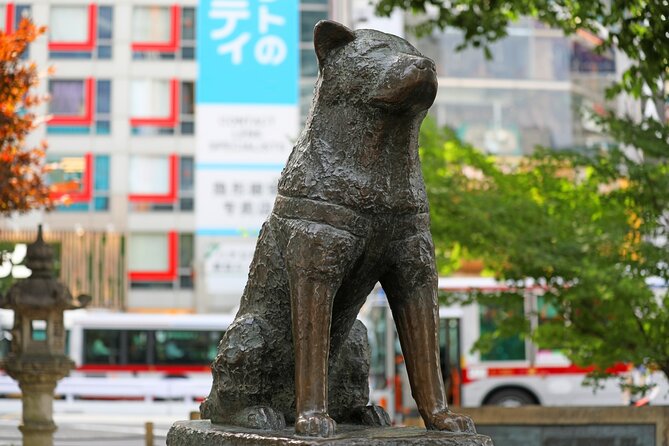
The final stop is the Hachiko Statue outside Shibuya Station, at 2 Chome-1 Dogenzaka. The bronze statue honors Hachiko, the Akita dog remembered for his loyalty. It is one of the city’s most beloved meeting points and a fitting end to a walk that began inside the station complex.
Ending here is practical. You are close to major transport connections and can continue exploring Shibuya on your own. You can also return to the crossing, find Center-gai again, or use the guide’s food and bar recommendations immediately after the tour.
The statue is also the clearest landmark on the route, which makes the less obvious starting point worth remembering. Do not reverse the locations in your mind: you meet near SABON in Mark City and finish at Hachiko.
The guides make the difference
The guide is the heart of this experience. Loc has been praised for making the walk feel like a friend showing you around while still providing detailed answers. Rio has been described as warm and personal, and Gray has been noted for humor, patience, and good local explanations.
Zac has been praised for clear English and for adjusting the walk around the group’s interests. Daichi has a strong interest in regional infrastructure and city planning, which can add useful context to Miyashita Park and Shibuya’s redevelopment. Dixce has also received strong praise for making two hours feel full of information without losing a friendly tone.
The assigned guide is not guaranteed, so I would not book solely to request one particular person. The range of guide styles is part of the experience. Some people want history, some want food ideas, and some want a relaxed orientation before a night in Shibuya. Tell your guide what interests you early.
One piece of feedback raised a concern about a guide not being local, despite the expectation of a local perspective. That is worth keeping in mind. The tour can still be useful when the guide knows the district well, but if having a lifelong local guide is essential to you, ask the operator before booking.
Who should book this two-hour walk?
I would choose this tour for a first visit to Tokyo, especially if you are staying near Shibuya. It gives you a quick orientation and shows you where to return for shopping, food, nightlife, or more photos.
It also works well for repeat visitors. One person who had been to Tokyo four times still found new places in Shibuya, including Myth of Tomorrow, Miyashita Park, Nonbee Yokocho, and Maruyamacho. Shibuya changes quickly, and a guide can help you see beyond the same station-to-crossing route.
The tour suits adults, older visitors who can manage city walking, and most people who use public transport. Service animals are allowed, and the activity is near public transportation. The route is not ideal if you want a slow, private walk with long stops, or if hills and humid weather make two hours of urban walking uncomfortable.
Free cancellation is available up to 24 hours before the start time for a full refund. Cancellations or changes made inside that window are not refunded, and poor weather may lead to a new date or full refund. Tips for the guide are not included.
Should you book the Shibuya Crossing and Hidden Streets Walking Tour?
Book it if you want Shibuya to be more than one crowded intersection. For $25, you get a compact route through public art, modern park design, shopping streets, old bar alleys, nightlife history, and one of Tokyo’s most famous meeting points.
I especially recommend it at the start of a Tokyo stay. You’ll leave with a better sense of direction and a list of places to revisit. Just allow extra time to find the Mark City meeting point, prepare for hills, and treat the five-minute alley stops as introductions rather than full visits.
Skip it if you already know Shibuya well and prefer to explore alone, or if you want a tour focused mainly on food, temples, or paid attractions. For most first-time visitors and repeat visitors who have only passed through Shibuya, this is a well-priced way to see the district’s less obvious sides.
FAQ
How long does the tour last?
The tour lasts approximately two hours.
How much does the experience cost?
The price is $25 per person.
How many people can join the tour?
The group has a maximum of 12 travelers.
Where does the tour start?
It starts at SABON Shibuya Mark City, Shibuya Mark City East Mall, 3F, in Dōgenzaka, Shibuya, Tokyo 150-0043.
Where does the tour end?
The tour ends at the Hachiko Statue at 2 Chome-1 Dogenzaka, Shibuya, Tokyo 150-0043.
Is Shibuya Crossing included?
Yes. The route includes time at Shibuya Crossing and the group crosses the intersection.
What other places are included?
Stops include the Myth of Tomorrow mural, Miyashita Park, Nonbee Yokocho, Shibuya Center-gai, Maruyamacho, and the Hachiko Statue.
Are admission fees included?
Yes. All fees and taxes are included, and the listed stops have no admission charge.
Are tips included?
No. Tips for the guide are not included.
Can I cancel for a full refund?
You can cancel up to 24 hours before the experience start time for a full refund. Cancellations made less than 24 hours before the start time are not refunded.
New on our Tokyo list
- From Tokyo: Mount Fuji & Hakone Full Day Private Tour★ 4.9 · 25 reviews
- Tokyo Spectacular View Day-Cruise in 90 Minutes★ 5.0 · 25 reviews
- Real Tokyo Runner Club : Daikoku Car Meet Night Tour with JDM Car★ 5.0 · 25 reviews
- 2.5 Hour-Guided Cycle Tour in the Central Tokyo★ 5.0 · 25 reviews
- Ramen Making from Scratch +Akihabara Tour –Cooking Class★ 5.0 · 25 reviews
- [Self-Drive] Tokyo & Daikoku Custom Car Driving Tour★ 4.9 · 25 reviews
- Tokyo: 2-Hour Night Bike Tour of the City’s Hidden Gems★ 4.9 · 25 reviews
- Buddha, Bamboo & Zen – Bespoke Kamakura Private Walking Tours★ 5.0 · 25 reviews
Walking Tours, compared.
Tokyo Tsukiji Fish Market Food and Culture Walking Tour
Read our review →
Imperial Palace and Shogun Historical Walking Tour
Read our review →
Shinjuku Local Bar and Izakaya Guided Walking Tour
Read our review →
Asakusa Walking Tour with Sensoji Temple Visit
Read our review →
Tokyo Castle & Imperial PalaceーShogun Walking Tour
Read our review →
Browse the lists this tour appears in