
Reviewed · WALKING TOURS
Tokyo: Shibuya Crossing & Hidden Streets Walking Tour
Shibuya is more than the famous scramble crossing. This tour connects the district’s big neon spectacle with Nonbei Yokocho’s narrow old lanes, Miyashita Park’s fresh urban design, and Maruyama-cho’s nightlife streets. In two hours, you get a quick but useful reading of how Tokyo mixes memory, commerce, youth culture, and daily life.
I like the route for two reasons: the guide gives context instead of just pointing at sights, and the stops are varied enough to keep the walk moving. Guides including Loc, Kumi, Rio, Ryo, Daichi, and Grey have helped visitors with history, local customs, photos, and food suggestions. The main drawback is the tight schedule. Ten minutes at several stops leaves little time for shopping, eating, or lingering.
In This Review
- Key points to know before you book
- Why this two-hour walk works in Shibuya
- Finding SABON inside Mark City
- Nonbei Yokocho: a narrow slice of old Shibuya
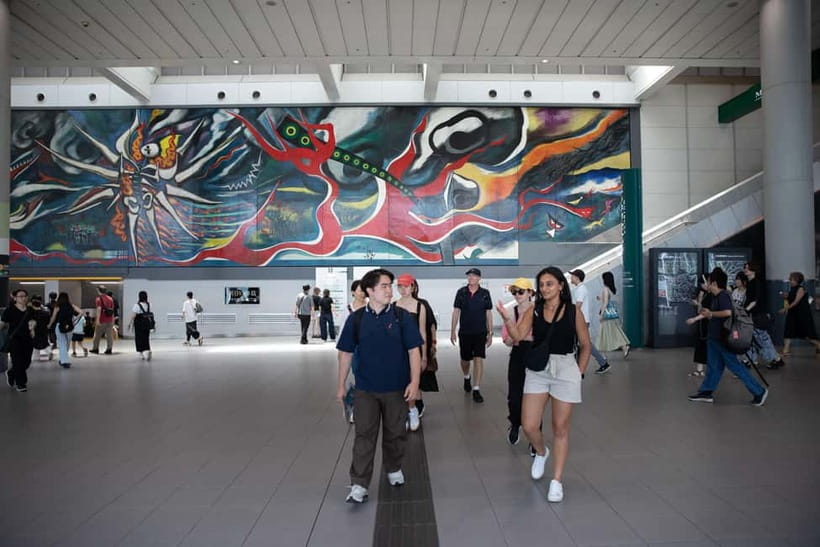
- Myth of Tomorrow and a serious pause
- Shibuya Crossing: guidance at the world-famous scramble
- Miyashita Park: Shibuya’s modern reset button
- Center Gai and the everyday energy of youth culture
- Maruyama-cho: from older streets to nightlife
- Hachiko: a fitting finish beside the station
- The guides are a major part of the value
- Timing, pace, and what to bring
- Who should book this Shibuya walk?
- Should you book it?
- FAQ
- How long does the Shibuya walking tour last?
- What language is the tour conducted in?
- Where does the tour begin?
- Where does the tour finish?
- What places are included on the route?
- What is included in the price?
Key points to know before you book
- Taro Okamoto’s Myth of Tomorrow: Begin or encounter this large, serious mural near Shibuya Station, a thoughtful counterpoint to the district’s flashing advertisements.
- A useful first look at Shibuya: The route covers major sights and quieter side streets without taking up a whole day.
- Nonbei Yokocho adds older Tokyo atmosphere: The tiny alleyways offer a sharp contrast with the huge station and commercial towers.
- Miyashita Park gives the walk a breather: Allowing 20 minutes here makes it the longest stop on the route.
- Guides add practical value: Loc, Kumi, Rio, Ryo, Daichi, Grey, and others have provided local tips on food, shopping, culture, and taking photos.
- The meeting point needs care: SABON Shibuya Mark City is inside Mark City on the third floor, and it can be hard to find on your first day.
Why this two-hour walk works in Shibuya
Shibuya can be tiring to figure out on your own. The station is large, streets change character quickly, and the most famous places are spread across a busy district. A short guided walk gives you a map in your head before you return for shopping, food, nightlife, or a second crossing.
At $22 per person, this is priced as an introduction rather than a full-day cultural tour. I see the value in having an English-speaking guide explain what you are looking at, then point out areas you might otherwise pass without noticing. The tour does not include food, drinks, entrance tickets, or shopping, so the price mainly covers the guide’s time and local knowledge.
That is a fair trade for a first visit, especially if you want to ask questions. Several guides have adjusted the pace or conversation to suit families, teenagers, solo visitors, and people with particular food needs. Grey, for example, has offered vegan food and shopping suggestions, while Loc has been especially helpful with photos and practical advice.
The format is also easy to fit into a packed Tokyo plan. You spend two hours on foot, finish near Hachiko, and can continue exploring from there. Just do not expect an unhurried photo tour or a deep exploration of every neighborhood.
More Shibuya plans:
- Official Street Go-Kart in Shibuya
★ 5.0 · 3,435 reviews - Tokyo: Street Kart Experience in Shibuya
★ 4.9 · 1,484 reviews - Shibuya Meltdown Nightlife Tour: All-You-Can-Drink Bar Hopping
★ 5.0 · 1,058 reviews
Finding SABON inside Mark City
The starting point is SABON Shibuya Mark City, inside the Mark City building on the third floor. This is the part of the experience that deserves the most practical warning. Shibuya Station and Mark City can be confusing even after you have visited Tokyo before, and the meeting point may be difficult to locate if you have just arrived in Japan.
Give yourself extra time. Check the building name and floor before you set out, and keep the coordinates, 35.6586643, 139.6999525, available as a backup. The guide will hold a sign, but you need to arrive before the meeting time rather than relying on a last-minute search.
The walk finishes at the Hachiko Memorial Statue, not back at Mark City. That makes the endpoint convenient for continuing around Shibuya, though you should plan your route afterward rather than assuming you will return to the starting point.
Nonbei Yokocho: a narrow slice of old Shibuya
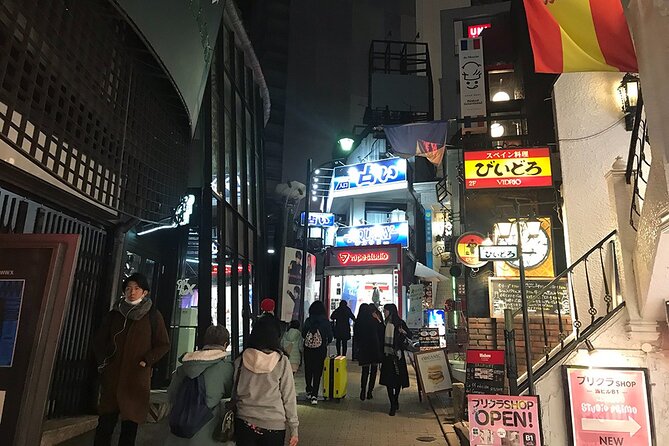
Nonbei Yokocho, often called Drunkard’s Alley, is one of the most characterful stops. Its small lanes and compact eating and drinking spaces feel far removed from the giant screens and wide roads associated with Shibuya.
The guide spends about 10 minutes here, enough to explain the area’s feel and place in local life. I would not treat this as a restaurant visit. The schedule does not provide time for a meal, and the tour price does not include food or drinks. Instead, you get an introduction to a corner that is easy to miss when your attention is fixed on the crossing.
This stop works because it changes the scale of the tour. You begin with a huge transport hub and quickly move into tight lanes where the district feels older and more intimate. The contrast helps you see Shibuya as a layered place, not just a shopping center.
Keep your expectations sensible. Ten minutes is short, and the group is visiting rather than settling into a bar. If you want to eat here, use the tour to get your bearings, then return later on your own.
Myth of Tomorrow and a serious pause
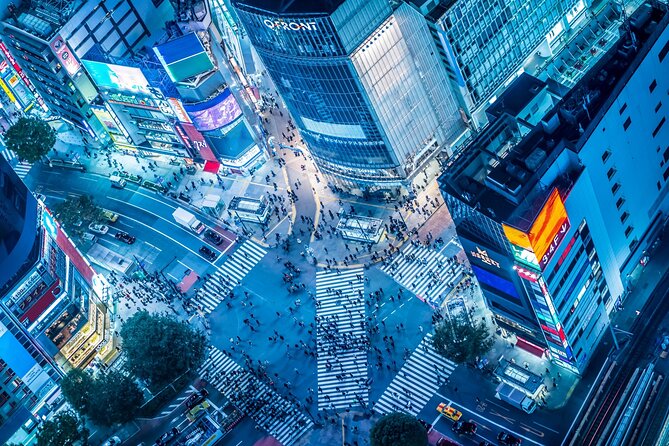
Taro Okamoto’s Myth of Tomorrow brings a different mood to the walk. The mural reflects on the effects of nuclear destruction, while also carrying a message of hope. In a district filled with music, fashion, advertising, and crowds, this is a striking moment of reflection.
The schedule allows around 10 minutes for a visit and photos. That is enough for a guide to explain the mural’s theme and give you time to look closely, but not enough for a long art discussion. The value comes from learning why this work is here and how it changes your understanding of the station area.
I like this inclusion because it prevents the tour from becoming a checklist of photogenic streets. Shibuya’s history and identity are not only about youth trends. This mural asks you to slow down and consider a harder part of modern Japan before the walk returns to its faster pace.
If you are mainly seeking shopping or nightlife, this stop may feel more serious than expected. I would still keep it. It gives the tour an emotional center and makes the later street scenes feel less superficial.
More walking routes in Tokyo:
- Tokyo Tsukiji Fish Market Food and Culture Walking Tour
★ 5.0 · 3,184 reviews - Tokyo: Imperial Palace and Shogun Historical Walking Tour
★ 5.0 · 2,251 reviews - Tokyo: Shinjuku Local Bar and Izakaya Guided Walking Tour
★ 4.9 · 1,794 reviews - Tokyo: Tsukiji Fish Market Food and Walking tour
★ 5.0 · 1,724 reviews
Shibuya Crossing: guidance at the world-famous scramble
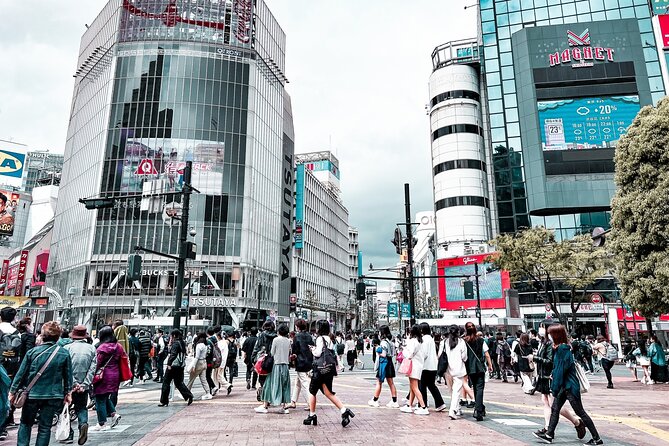
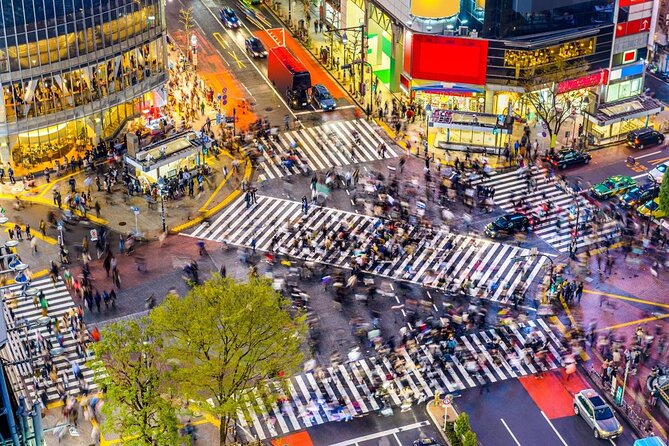
Shibuya Crossing needs little introduction. When the signals change, people move through the intersection from several directions, creating one of Tokyo’s most recognizable scenes. The tour includes a visit and photo stop of about 10 minutes.
A guide is useful here for simple reasons. You get help understanding where to stand, when to cross, and how to take a photo without losing your group. One solo visitor particularly valued Loc’s help with pictures, and a family with children appreciated having the crossing explained rather than being sent into it alone.
Do not expect the tour to provide a private viewpoint or a long photography session. The stop is about experiencing the crossing and understanding its place in Shibuya, not securing the perfect image from every angle. If you want more photos, you can return after the walk.
This is also where the tour’s timing becomes clear. Ten minutes passes quickly, especially if the crossing is crowded or you are asking questions. Enjoy the first crossing, listen to the explanation, and save extended photo hunting for later.
Miyashita Park: Shibuya’s modern reset button
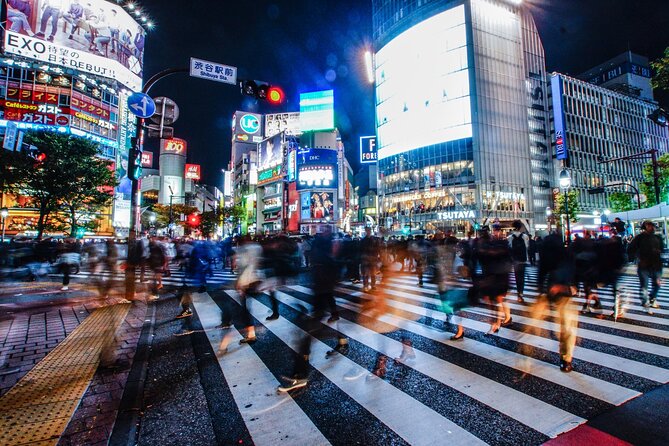
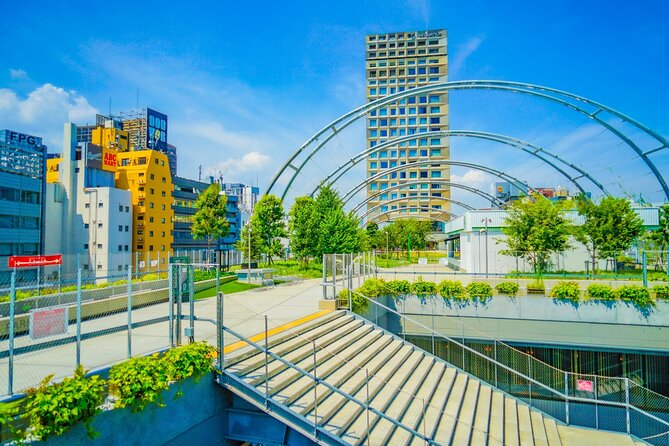
Miyashita Park gets about 20 minutes, making it the longest stop. This multi-level urban park shows a newer side of Shibuya, with public space built into a commercial setting.
After the close lanes of Nonbei Yokocho and the intensity of the crossing, Miyashita Park gives you room to pause. The guide can explain how the park fits into the district’s changing design and point out the modern atmosphere that attracts shoppers and younger crowds.
I find this stop important because it shows that Tokyo’s city planning is not only about towers and train lines. The park offers a place to sit, walk, and reset while remaining part of a dense commercial area. You are seeing how old neighborhoods and new urban projects sit close together.
Twenty minutes is a reasonable amount of time for an orientation, though it is not long enough to explore every corner. If you like architecture, design, or public spaces, note what catches your eye and return later. The tour gives you the introduction; your own follow-up visit can be slower.
Center Gai and the everyday energy of youth culture
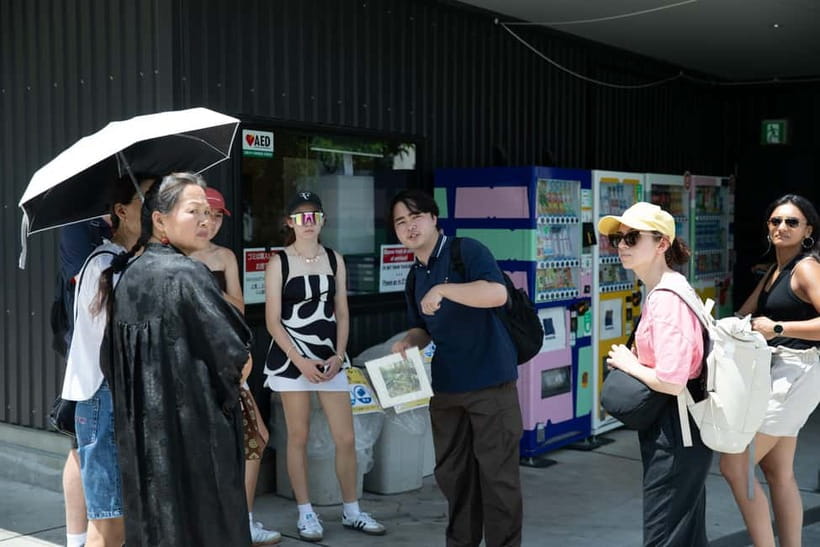
Center Gai brings you into one of Shibuya’s best-known youth-oriented streets. Shops, signs, fashion, food, and nightlife give this area a very different character from the mural and the quieter alley.
The guide spends about 10 minutes here. That short stop is enough to explain the area and its role in Shibuya, but you will not have time to browse seriously. I would treat Center Gai as a street-level introduction, especially useful if this is your first time in the district.
This is also a good place to ask practical questions. Guides have offered suggestions for places to eat, shop, and spend time later in the day. Loc has been praised for giving useful tips about the area, while Grey has helped with vegan food and shopping ideas.
Center Gai can feel crowded and loud, particularly at busy times. That is part of its identity, but it may not suit you if you prefer quiet streets. The benefit of having a guide is that you can understand the scene instead of simply pushing through it.
Maruyama-cho: from older streets to nightlife
Maruyama-cho adds another change of pace. The area has historical streets but is now linked with modern nightlife, giving you a clear example of Shibuya’s ability to change without losing every trace of its past.
The stop lasts about 10 minutes. Your guide can explain what you are seeing and point out the difference between Maruyama-cho and the more commercial parts of Shibuya. You should not expect detailed visits inside nightlife venues, since this is a walking orientation.
This section is particularly useful if you plan to return after dark. The tour gives you a basic sense of the streets before you decide where to eat or go out. It can also help you see that Shibuya is not one single experience. The mood shifts from station crowds to alleyways, parks, shopping streets, and nightlife blocks within a relatively small area.
The short timing is again the limitation. If you want to study buildings or compare restaurants, save that for later. Use the guide’s suggestions, then explore independently.
Hachiko: a fitting finish beside the station
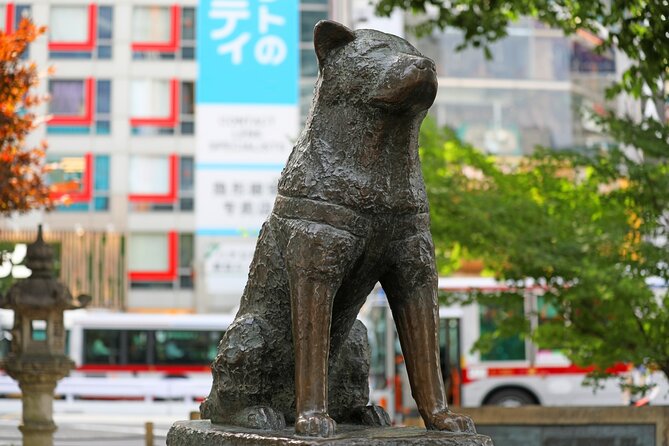
The walk ends at the Hachiko Memorial Statue, one of Shibuya’s most familiar meeting points. Hachiko is known as a symbol of loyalty, and the statue sits in the middle of the district’s constant movement.
Ending here makes practical sense. You finish near the station and one of Tokyo’s easiest landmarks to recognize. It also gives the tour a simple emotional close after the more complex themes of the mural, old alleyways, and changing city design.
Expect a crowded photo area. Hachiko is popular, and the statue is not a quiet monument. Your guide can explain its significance, help place it within Shibuya’s identity, and then leave you ready to continue on your own.
I would use this endpoint as a launch point. From here, you can revisit the crossing, return to Center Gai, look for dinner, or make your way back through the station. The tour does not include a meal, so this is a natural time to use the food advice you received.
The guides are a major part of the value
The listed guide language is English, and the people leading the walks vary. Loc appears frequently in the supplied feedback, along with Kumi, Rio, Ryo, Daichi, Grey, Gray, Zach, Annette, and others.
The strongest pattern is not a single scripted personality. It is the guide’s ability to answer questions and adjust the experience. Loc has been described as friendly, clear, and good at explaining culture and history. Rio and Ryo have helped families and teenagers stay engaged, while Daichi has adjusted the pace to match the group.
That flexibility matters in a two-hour walk. You may want history, food advice, photographs, or a quick introduction before continuing elsewhere. Tell the guide what interests you. A useful question can turn a standard stop into a more personal conversation.
Solo visitors may especially appreciate photo help. Families may value the shorter format and the ability to keep young people moving. First-time visitors can ask about restaurants, shopping areas, and places worth returning to.
The guide quality can vary because different people lead the tour. The repeated praise for communication, warmth, and local explanations is encouraging, but you should still see the experience as a guided introduction rather than a specialist art, architecture, or food tour.
Timing, pace, and what to bring
The tour lasts two hours and includes several walking sections. The itinerary gives 10 minutes to Nonbei Yokocho, Myth of Tomorrow, Shibuya Crossing, Center Gai, and Maruyama-cho, with 20 minutes at Miyashita Park.
That structure keeps the experience lively and focused. It also means you need to stay with the group and avoid arriving late at each stop. This is not a walk where you can wander far from the guide or spend half an hour in one shop.
Wear comfortable shoes and come ready to walk through busy streets. The supplied feedback includes a tour that continued in light rain, so the experience can work in imperfect weather, though the comfort of the walk will depend on conditions. A small umbrella or rain layer is sensible in Tokyo, but that is general preparation rather than a stated tour requirement.
Bring a charged phone if you want photos and directions afterward. You may also want to note restaurant and shopping suggestions as you go. Since the tour finishes in a different place from the meeting point, keep enough battery for navigating later.
Who should book this Shibuya walk?
I would choose this tour if you are visiting Tokyo for the first time, have only a few hours in Shibuya, or want help making sense of the district before exploring alone. It is also a good fit for solo visitors who would like help with photos and for families who prefer a short outing rather than a full-day commitment.
It suits people who enjoy a mix of major sights and side streets. The route includes art, public space, youth culture, old lanes, nightlife streets, and a famous monument. That range gives you a better feel for Shibuya than visiting the crossing alone.
You may want something else if your main goal is food tasting, shopping time, detailed photography, or a long historical lecture. No food or entrance tickets are included, and the short stops leave limited free time.
Booking is flexible: you can cancel up to 24 hours ahead for a full refund, and reserve now while paying later. Check the available starting times, then arrive early at Mark City’s third floor. The meeting point is the one detail most likely to cause trouble.
Should you book it?
At $22, I think this is a sensible buy for a first look at Shibuya. You get the famous crossing, but the real value is the connection between places: the serious mural, the old alley, the modern park, the youth streets, Maruyama-cho, and Hachiko.
Book it if you want a local guide to explain what you are seeing and give you ideas for the rest of your stay. Skip it if you prefer to set your own pace or already know Shibuya well. For most first-time visitors, two focused hours is a useful way to get oriented without surrendering an entire day.
FAQ
How long does the Shibuya walking tour last?
The tour lasts two hours.
What language is the tour conducted in?
The live tour guide speaks English.
Where does the tour begin?
It begins at SABON Shibuya Mark City, inside the Mark City building on the third floor. The guide will be holding a sign.
Where does the tour finish?
The walk ends at the Hachiko Memorial Statue.
What places are included on the route?
The route includes Nonbei Yokocho, Myth of Tomorrow, Shibuya Crossing, Miyashita Park, Center Gai, Maruyama-cho, and Hachiko.
What is included in the price?
The local guide fee is included. Food, drinks, and other additional purchases are not listed as included.
New on our Tokyo list
- From Tokyo: Mount Fuji & Hakone Full Day Private Tour★ 4.9 · 25 reviews
- Tokyo Spectacular View Day-Cruise in 90 Minutes★ 5.0 · 25 reviews
- Real Tokyo Runner Club : Daikoku Car Meet Night Tour with JDM Car★ 5.0 · 25 reviews
- 2.5 Hour-Guided Cycle Tour in the Central Tokyo★ 5.0 · 25 reviews
- Ramen Making from Scratch +Akihabara Tour –Cooking Class★ 5.0 · 25 reviews
- [Self-Drive] Tokyo & Daikoku Custom Car Driving Tour★ 4.9 · 25 reviews
- Tokyo: 2-Hour Night Bike Tour of the City’s Hidden Gems★ 4.9 · 25 reviews
- Buddha, Bamboo & Zen – Bespoke Kamakura Private Walking Tours★ 5.0 · 25 reviews
Walking Tours, compared.

Tokyo Tsukiji Fish Market Food and Culture Walking Tour
Read our review →
Imperial Palace and Shogun Historical Walking Tour
Read our review →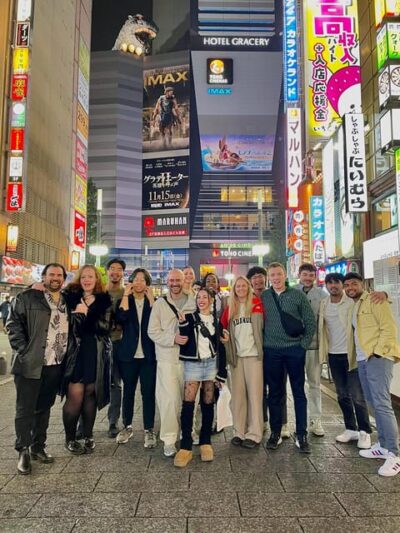
Shinjuku Local Bar and Izakaya Guided Walking Tour
Read our review →
Asakusa Walking Tour with Sensoji Temple Visit
Read our review →
Tokyo Castle & Imperial PalaceーShogun Walking Tour
Read our review →
Browse the lists this tour appears in