Reviewed · GUIDED
Tokyo Small Group Tour with Guide
Tokyo Small Group Tour with Guide is built for one useful purpose: helping you understand the city before you try to tackle it alone. In one long day, you move from the quiet grounds of the Imperial Palace to old Asakusa, then on to Harajuku, Meiji Jingu Shrine, and Shibuya Crossing. It is a broad first look at Tokyo, not a slow visit to one neighborhood.
I like the 15-person group limit, which keeps the guide close enough for questions and explanations. I also like the mix of places: Senso-ji gives you traditional Tokyo, while Harajuku and Shibuya show its modern side. The main drawback is simple: this is a serious walking day. One previous guest counted more than 20,000 steps, so comfortable shoes are not optional.
In This Review
- Key points at a glance
- Why this tour works as a first look at Tokyo
- Starting at Kokyo Gaien and the Imperial Palace
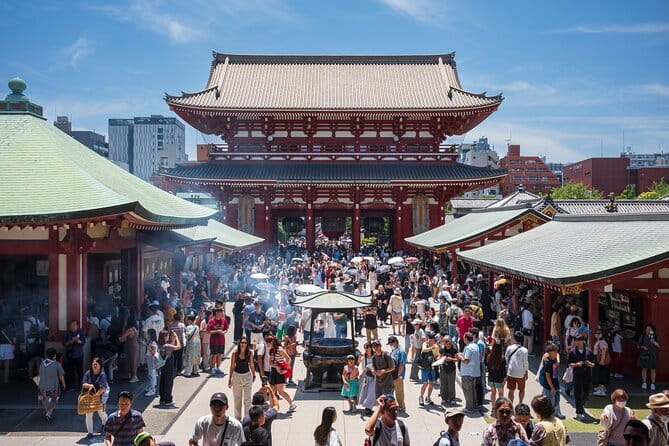
- Three hours in Asakusa, from Nakamise-dori to Senso-ji
- Harajuku and the city’s younger side
- Meiji Jingu, a quieter stop near Harajuku
- Finishing at Shibuya Crossing
- The guide is the main reason to book
- What $99 buys you
- The walking demands deserve serious attention
- Who should choose this Tokyo day tour?
- Should you book it?
- FAQ
- How long does the Tokyo Small Group Tour with Guide last?
- Where does the tour begin?
- Where does the tour end?
- Which places are included?
- How large is the group?
- How much walking should I expect?
- What happens if the weather is poor?
Key points at a glance
- Five major Tokyo stops in one day: See the Imperial Palace area, Asakusa, Harajuku, Meiji Jingu, and Shibuya.
- A useful first-day orientation: The route helps you understand how Tokyo’s old, official, religious, and commercial districts fit together.
- A small group capped at 15: You get more room to hear the guide than on a large coach tour.
- Strong cultural commentary: Guides including Mary, Daniel, Coral, Suzana, and Tomas have been praised for explaining customs, beliefs, history, and daily life.
- A full walking commitment: Plan on 7 to 8 hours, plenty of time on your feet, and a moderate level of fitness.
- Good value at $99: There are no entry fees listed for the stops, so much of the price pays for the guide, route planning, and efficient use of your day.
Why this tour works as a first look at Tokyo
Tokyo can feel like several cities stitched together. The Imperial Palace area is formal and spacious. Asakusa feels older and more openly rooted in religious tradition. Harajuku brings youth culture and fashion, while Shibuya is all movement, signs, rail lines, and crowds.
This tour lets you see those contrasts without spending your first day puzzling over train routes and neighborhood order. You meet at 9:00 a.m. at the Starbucks Coffee in Kokyo Gaien Wadakura Fountain Park, then follow a guide through a planned route. That matters in Tokyo, where a day can disappear quickly when you are trying to work out which station exit to use.
The tour is not designed for deep time at every sight. Instead, it gives you a well-spread introduction. You can later return to the places that caught your attention, perhaps spending more time in Asakusa or revisiting Shibuya after dark.
A few more Tokyo bookings worth comparing
- Mt Fuji and Hakone 1-Day Bus Tour Return by Bullet Train
★ 5.0 · 26,383 reviews - 1-Day Tokyo Bus Tour
★ 5.0 · 14,250 reviews - Tokyo: TOKYO SKYTREE® Admission ticket
★ 4.5 · 11,192 reviews
Starting at Kokyo Gaien and the Imperial Palace
The meeting point is Starbucks Coffee at Kokyo Gaien Wadakura Fountain Park, 3-1 Kōkyogaien in Chiyoda City. You should arrive ready to begin at 9:00 a.m., with comfortable shoes and anything you need for several hours outside.
The first stop is the East Gardens of the Imperial Palace, including the Edo Castle ruin area. You have about an hour here, and admission is listed as free. The gardens provide a calm opening to a busy day, with open paths, formal grounds, and a sense of Tokyo’s former political center.
You also get views of Nijubashi Bridge, one of the best-known palace-area sights. The value of having a guide here is not simply finding the bridge. It is having someone explain what you are looking at and place the palace grounds within Tokyo’s past.
This stop is also a practical warm-up. You are walking, but the pace begins in a quieter setting before the day moves into Asakusa’s packed shopping street and the crowded Shibuya area. If you prefer a slow morning, this is likely the most relaxed part of the route.
Three hours in Asakusa, from Nakamise-dori to Senso-ji
The longest stop is Asakusa, with about three hours set aside. That tells you where much of the day’s cultural focus lies.
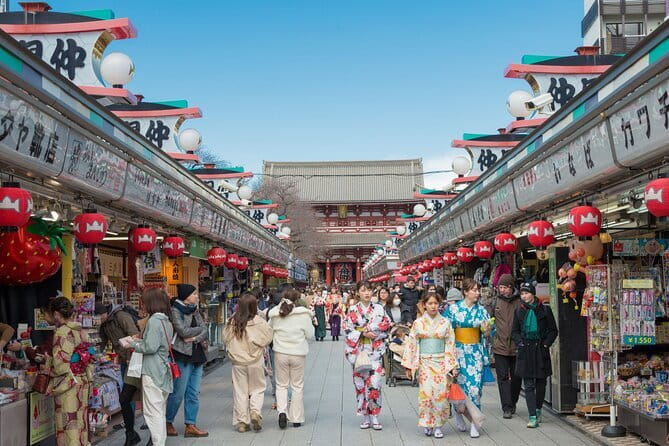
You walk along Nakamise-dori, the approach to Senso-ji Temple. It is one of Tokyo’s most lively pedestrian lanes, lined with shops and traditional-style goods. The street can be crowded, so keep your group and guide in sight. This is not the place to wander far and expect to find the same people again quickly.
Senso-ji is Tokyo’s oldest Buddhist site, and it gives the tour a clear connection to the city’s religious life. A guide can explain customs and beliefs that are easy to miss when you simply take photographs and move on. That cultural background was one of the most praised parts of the experience, especially from visitors who wanted more than a checklist of landmarks.
Three hours gives you room to see the temple area without treating it as a quick photo stop. It also creates the day’s best chance to ask questions. Guides such as Mary have been singled out for explaining Japanese culture, customs, and beliefs in a way that helps a first-time visitor make sense of what is happening.
The tradeoff is that Asakusa may feel crowded and energetic, particularly around Nakamise-dori. If you dislike busy shopping lanes, you may find this section tiring. Still, it is an important contrast with the Imperial Palace and one of the strongest reasons to choose this tour over a route made up only of modern Tokyo sights.
Harajuku and the city’s younger side
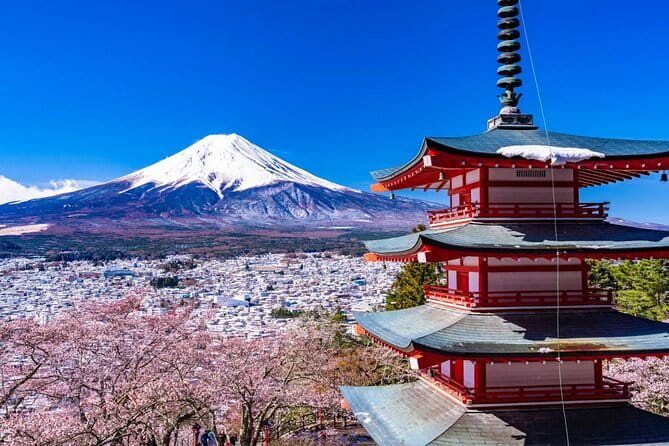
The tour then heads to Harajuku Station for about an hour and a half. Harajuku is known for its colorful, youthful character, and the stop gives you a very different view of Tokyo from the temple district.
The itinerary does not promise a particular shop, café, or fashion experience. That is useful to understand before booking. You are seeing the district itself rather than joining a specialist shopping tour. Your guide provides the context, points out what makes the area distinctive, and keeps the day moving.
I like the placement of Harajuku after Asakusa. You are not just seeing famous places at random. The route creates a strong old-to-new comparison. Senso-ji reflects long-running religious traditions, while Harajuku represents a more current and expressive side of city life.
Because this is a walking tour, you should not expect much time for shopping unless the group schedule allows it. If your main aim is buying clothes, character goods, or snacks, book a separate return visit. Here, the value comes from seeing how different parts of Tokyo feel within the same day.
Same corner of Tokyo, a completely different plan:
- Tokyo: teamLab Planets TOKYO Digital Art Museum Entry Ticket
★ 4.6 · 9,779 reviews - Mt Fuji & Hakone Cruise, Drum Show Bullet Train 1 Day from Tokyo
★ 4.0 · 7,413 reviews - Tokyo: Sumo Show Experience with Chicken Hot Pot and a Photo
★ 4.8 · 6,678 reviews - Tokyo: Shinjuku Food Tour (13 Dishes at 4 Local Eateries)
★ 5.0 · 6,603 reviews
Meiji Jingu, a quieter stop near Harajuku
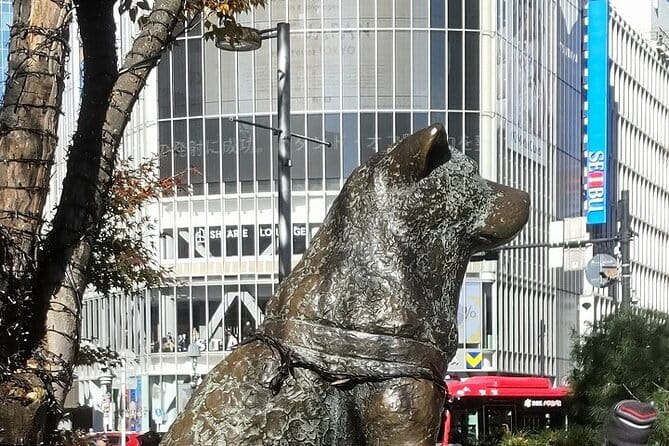
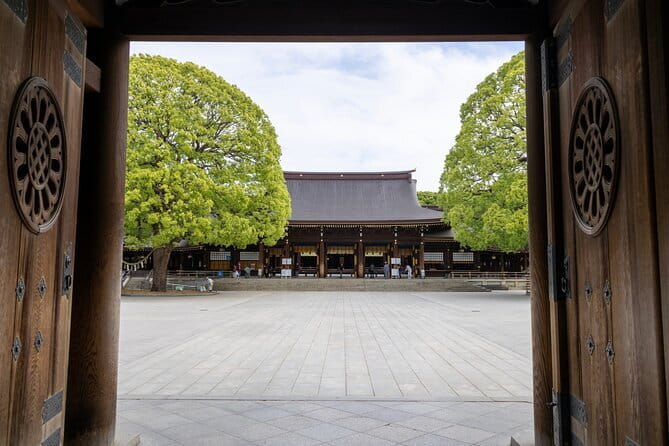
Meiji Jingu Shrine receives about an hour and a half. It is described as Tokyo’s most famous Shinto shrine, and its location gives the tour another important cultural stop before the final visit to Shibuya.
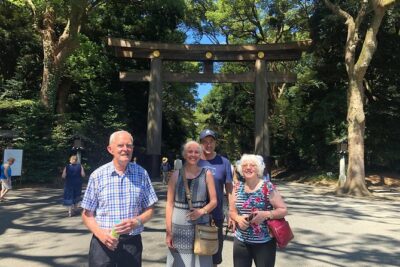
The shrine offers a change of pace from Harajuku. You move from a youthful commercial district to a place associated with Shinto practice and ceremony. This is where a good guide can make a real difference. Customs may not be obvious, and respectful behavior is easier when someone explains what you are seeing.
Several guides have been praised for making these cultural details clear. Coral, for example, was noted for sharing information about Tokyo’s history, culture, and local life in an engaging way. The guide you receive is not guaranteed, but the experience has been led by guides including Coral, Mary, Daniel, Suzana, and Tomas.
The stop is also a useful reminder that Tokyo is not only neon streets and department stores. The city contains large, important religious spaces alongside train stations and shopping districts. You do not need to plan a separate shrine visit during your first day, which makes this portion especially convenient.
Finishing at Shibuya Crossing

The final stop is Shibuya Crossing, with about 30 minutes set aside. The tour ends at Shibuya Station, 2 Chome-24, after you watch the crossing in action.
Half an hour is enough for an introduction and photographs, but not for a full exploration of Shibuya. You should not expect a detailed shopping tour or a long evening in the neighborhood. Instead, this is a clean finish at one of Tokyo’s most recognizable public spaces.
Shibuya Crossing also gives the day a fitting final image. You begin near the Imperial Palace, visit a Buddhist temple and Shinto shrine, pass through Harajuku, and finish among the moving crowds of one of the world’s best-known city intersections.
The end point is practical. You are already at Shibuya Station, with the rest of the district available if you want to continue on your own. The tour does not include a return to the starting point, so plan your evening from Shibuya rather than expecting to go back to Chiyoda.
The guide is the main reason to book
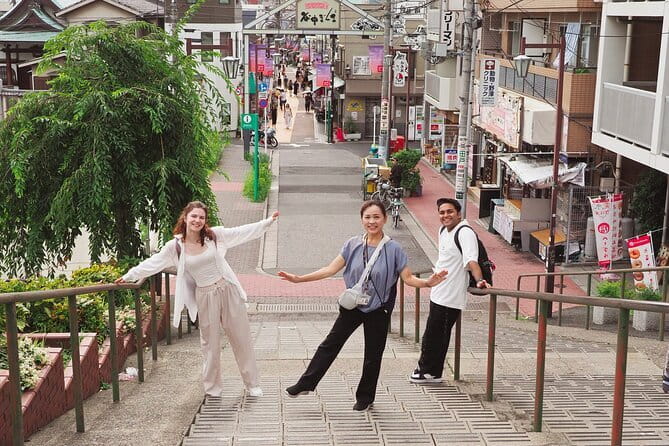
The sights are famous, and you could visit most of them without paying for admission. The guide is what changes this from a sightseeing checklist into a useful introduction.
The strongest praise has gone to guides who explain the meaning behind what you see. Mary has been recognized for connecting Japanese history and culture with customs and beliefs. Daniel has been described as taking the group across Tokyo while supplying a large amount of information. Suzana helped make sense of the city from different angles, including its railway lines. Tomas was praised for explaining things well during a day of more than 20,000 steps.
Those details matter because Tokyo can be visually impressive but hard to interpret. A guide can tell you what deserves attention, answer basic questions, and help you notice links between neighborhoods. The experience has a 4.7 rating from 38 reviews, with 95 percent recommending it, which supports the idea that the guide-led format is its strongest feature.
Guide quality can vary from one departure to another, and the names above are examples of guides who have led the experience, not a promise of assignment. Still, the repeated emphasis on clear explanations, friendliness, and personal attention is encouraging.
What $99 buys you
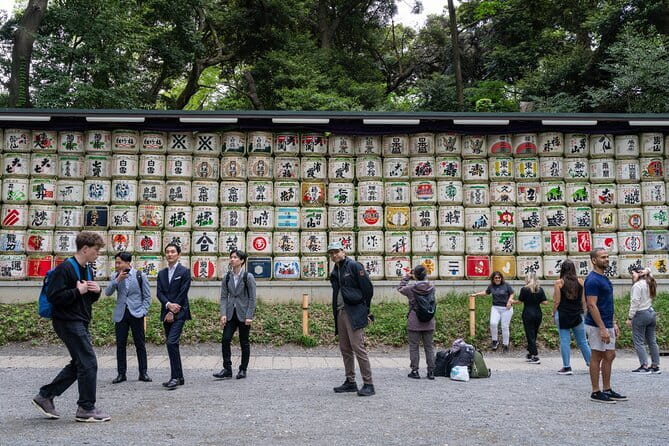
At $99 per person, this is not the cheapest way to walk around Tokyo. The key question is not admission cost, since the listed stops have free entry. You are paying for the route, the guide’s time, group coordination, and the ability to cover several distant parts of the city in one organized day.
For a first visit, that can be fair value. You avoid spending your morning deciding whether to start in Asakusa or at the Imperial Palace, and you get cultural explanations that guidebooks often deliver less naturally. A small group of no more than 15 also gives you a better chance to hear the guide than a large sightseeing group.
The value is weaker if you already know Tokyo well or prefer to move at your own speed. You may want to linger at Senso-ji, stop for lunch in Asakusa, shop in Harajuku, or spend a full evening in Shibuya. This tour gives you a framework, not unlimited free time.
No personal travel insurance is included. That is a normal exclusion, but you should arrange your own coverage if you want it. A mobile ticket is provided, and confirmation arrives when you book.
The walking demands deserve serious attention
This is a 7 to 8 hour activity with a considerable amount of walking. The listed stop times alone add up to about seven hours, before counting movement between districts, pauses, and the transitions that come with a group tour.
Bring comfortable walking shoes. That advice is more important here than it is on many city excursions. The route includes temple approaches, shopping streets, shrine grounds, station areas, and urban sidewalks. One guide-led departure involved more than 20,000 steps, so you should be ready for a full day on your feet.
A moderate fitness level is required. The information provided does not promise a lighter route, private transport, or a shortened version. A previous guide response notes that tours with lighter walking may be available through the provider, but this specific experience is clearly the active option.
Service animals are allowed, and the tour is near public transportation. The details do not specify accessibility arrangements for every stop, so anyone with mobility concerns should confirm the route directly before booking.
Who should choose this Tokyo day tour?
I would choose this tour if you are visiting Tokyo for the first time and want orientation more than freedom. It suits solo visitors, couples, friends, and families who would rather follow a clear plan than manage several train journeys on their opening day.
It is also a good match if you want cultural explanation. Senso-ji and Meiji Jingu are more rewarding when you understand the customs connected with them, and the guides have been praised for making those points accessible.
You may want another option if you have limited stamina, want a relaxed pace, or care mainly about food and shopping. This route covers ground, and the long Asakusa, Harajuku, and shrine sections leave limited time for spontaneous stops.
Book with the weather in mind. The experience requires good weather, and if poor conditions cancel it, you are offered another date or a full refund. You can also cancel for a full refund up to 24 hours before the start time. Changes or cancellations inside that window are not accepted, and the cut-off follows Tokyo local time.
Should you book it?
Book this Tokyo Small Group Tour with Guide if you want to see the city’s major contrasts in one day and have a guide explain what you are seeing. The combination of Imperial Palace grounds, Senso-ji, Harajuku, Meiji Jingu, and Shibuya Crossing gives you a strong first map of Tokyo.
The decision comes down to walking. If 20,000 steps sounds manageable and $99 feels reasonable for a full day of guidance, this is a practical introduction with solid cultural value. If you want long meals, detailed shopping, or the freedom to change plans, use the stops as your own itinerary instead.
FAQ
How long does the Tokyo Small Group Tour with Guide last?
The tour lasts approximately 7 to 8 hours. It starts at 9:00 a.m. and ends at Shibuya Station.
Where does the tour begin?
The meeting point is Starbucks Coffee at Kokyo Gaien Wadakura Fountain Park, 3-1 Kōkyogaien, Chiyoda City, Tokyo 100-0002, Japan.
Where does the tour end?
The tour ends at Shibuya Station, 2 Chome-24, Shibuya, Tokyo 150-0002, after the group watches Shibuya Crossing.
Which places are included?
The route includes the East Gardens of the Imperial Palace and Edo Castle ruin area, Nijubashi Bridge, Asakusa and Senso-ji Temple, Harajuku, Meiji Jingu Shrine, and Shibuya Crossing.
How large is the group?
The tour has a maximum of 15 people.
How much walking should I expect?
There is a considerable amount of walking, and you need a moderate level of physical fitness. Comfortable walking shoes are strongly recommended. One departure involved more than 20,000 steps.
What happens if the weather is poor?
The experience requires good weather. If it is canceled because of poor weather, you will be offered a different date or a full refund. You can also cancel up to 24 hours before the start time for a full refund.
New on our Tokyo list
- From Tokyo: Mount Fuji & Hakone Full Day Private Tour★ 4.9 · 25 reviews
- Tokyo Spectacular View Day-Cruise in 90 Minutes★ 5.0 · 25 reviews
- Real Tokyo Runner Club : Daikoku Car Meet Night Tour with JDM Car★ 5.0 · 25 reviews
- 2.5 Hour-Guided Cycle Tour in the Central Tokyo★ 5.0 · 25 reviews
- Ramen Making from Scratch +Akihabara Tour –Cooking Class★ 5.0 · 25 reviews
- [Self-Drive] Tokyo & Daikoku Custom Car Driving Tour★ 4.9 · 25 reviews
- Tokyo: 2-Hour Night Bike Tour of the City’s Hidden Gems★ 4.9 · 25 reviews
- Samurai themed Entertainment show in Shinjuku★ 4.5 · 25 reviews
Guided, compared.
Tokyo 6hr Private Tour with Government-Licensed Guide
Read our review →
Shinjuku Local Bar and Izakaya Guided Walking Tour
Read our review →
Private City Highlights Tour with Local Guide
Read our review →
Tokyo 4hr Private Tour with Government-Licensed Guide
Read our review →
Samurai Ninja Museum Guided tour and Experience
Read our review →