Reviewed · GUIDED
Tokyo: Tokyo Private Day Tour With Guide
Tokyo is hard to grasp in one day. It is too large, too layered, and too quick-moving. This private tour tackles that problem with a car, a flexible route, and a full circuit from Tsukiji’s food stalls to Shibuya’s famous crossing. You see old temples, imperial grounds, youth culture, electronics, and city views without having to decode every train connection.
I like two things most. First, the custom itinerary lets you slow down for a favorite stop or add a family request, such as anime shops, knife shopping, or a pet café. Second, the private vehicle is a real help for families, older adults, and anyone visiting Tokyo during hot or wet weather. The main drawback is pace: eight major areas in ten hours means you will sample each place rather than explore any one neighborhood at length.
In This Review
- Key points to know before booking
- What kind of Tokyo day is this?
- Tsukiji Outer Market: a tasty start
- Imperial Palace East Gardens: a quieter hour
- Asakusa and Senso-ji: Tokyo’s classic temple district
- Tokyo Skytree: the view costs extra
- Meiji Shrine: forest, torii, and quiet
- Harajuku’s Takeshita Street: pop culture in a tight space
- Shibuya Crossing: a short, famous finale
- Akihabara Electric Town: electronics and anime
- How the private transport changes the day
- The guide makes the difference
- Who gets the best value?
- Practical costs and planning tips
- Should you book this Tokyo tour?
- FAQ
- How long does the Tokyo private tour last?
- How many people can join the private group?
- What locations are included?
- Is Tokyo Skytree admission included?
- Is lunch included?
- Where can pickup and drop-off take place?
- Can I be picked up at an airport or cruise terminal?
- What language is available?
- Can the itinerary be changed?
Key points to know before booking
- Tsukiji starts the day with food: Allow time and cash for sushi, grilled seafood, oysters, tamagoyaki, and other market snacks.
- The route covers Tokyo’s big contrasts: You move from the Imperial Palace and Senso-ji to Akihabara, Harajuku, and Shibuya.
- The private van saves energy: Air-conditioning, bottled water, WiFi, parking, and door-to-door transport are included within Tokyo’s 23 wards.
- Moon and Imran are names worth requesting: Both have guided groups, and the service has also used guides such as Danish and drivers including Abid and Komori.
- The day can bend around your interests: Families have added anime, arcade, claw-machine, gacha, capybara, food, and shopping stops.
- Skytree admission costs extra: The listed price does not include the 350-meter Tembo Deck or 450-meter Tembo Galleria ticket.
What kind of Tokyo day is this?
This is a greatest-hits day, not a slow neighborhood walk. You will cover a lot of ground in a comfortable, air-conditioned vehicle, with roughly an hour at most major stops and about 30 minutes at Shibuya Crossing.
The price is $709 per group of up to five, not per person. For a full group, that works out to about $142 per person before food and Skytree admission. That is not a budget outing, but the calculation changes if you would otherwise pay for several train or taxi journeys, struggle with transfers, or lose time getting between far-flung districts.
I see the strongest value for a family of four or five, a mixed-age group, or first-time visitors who want orientation before exploring Tokyo on their own. A solo visitor or couple who enjoys public transport may find the cost harder to justify.
The vehicle includes private transport, fuel surcharge, parking fees, bottled water, WiFi, passenger insurance, and air-conditioning. Pickup and drop-off are available at hotels, hostels, apartments, Airbnbs, and other addresses inside Tokyo’s 23 wards. Airport and cruise-terminal pickup is not available, and addresses outside the 23 wards cost extra.
The listed activity identifies an English-speaking driver. Some bookings also use a separate personal guide, and guests who received that arrangement found the extra help worthwhile. If you want explanations inside the temples, shrines, and neighborhoods rather than transport and basic commentary, confirm exactly what is included before paying.
A few more Tokyo bookings worth comparing
- Mt Fuji and Hakone 1-Day Bus Tour Return by Bullet Train
★ 5.0 · 26,383 reviews - 1-Day Tokyo Bus Tour
★ 5.0 · 14,250 reviews - Tokyo: TOKYO SKYTREE® Admission ticket
★ 4.5 · 11,192 reviews
Tsukiji Outer Market: a tasty start
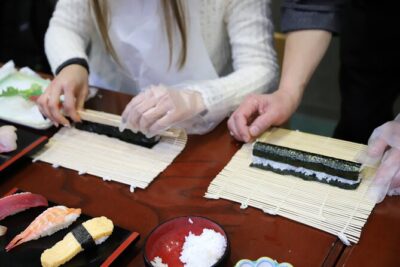
The day begins at Tsukiji Outer Market, where narrow lanes hold seafood sellers, produce shops, prepared foods, and small places serving quick bites. The old inner wholesale market moved to Toyosu, but Tsukiji Outer Market remains a useful place to sample Tokyo’s food culture.
You might find sushi, grilled seafood skewers, oysters, tamagoyaki, and other snacks. This is one stop where cash matters, as the tour specifically advises bringing it. Lunch is not included, so Tsukiji can double as breakfast or an early meal, but you should budget separately for anything you eat.
The one-hour stop gives you enough time to look around and taste a few items. It is not enough for a relaxed food crawl, especially if lines are long or you want to browse every lane. Tell your driver or guide early if food is a major goal, since the flexible format may help protect extra time here.
Imperial Palace East Gardens: a quieter hour
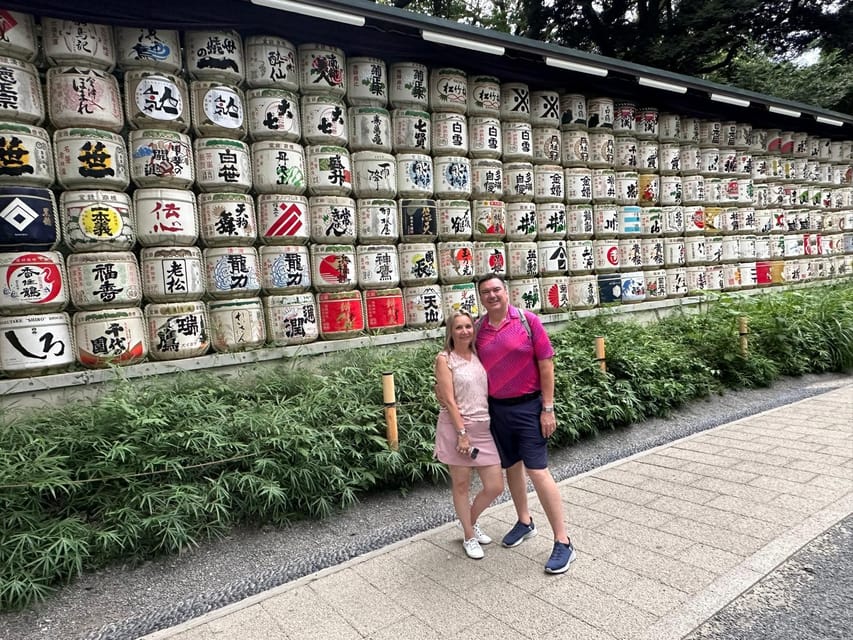
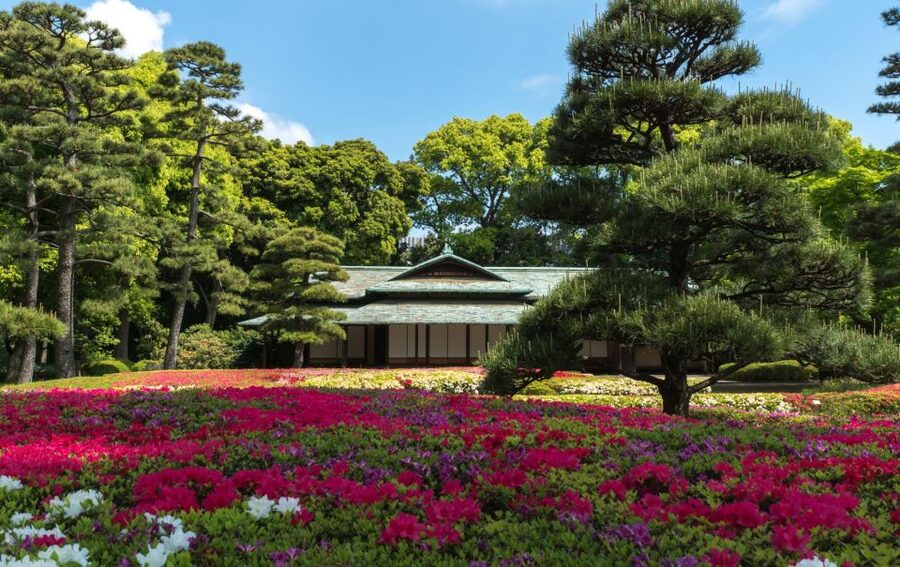
From Tsukiji, the route shifts tone at the East Gardens of the Imperial Palace. Ancient stone walls, moats, seasonal flowers, and the remains of Edo Castle offer a calm break from Tokyo’s traffic and signs.
This is more than a photo stop. Walking among the castle remains helps explain Tokyo’s past without requiring a long museum visit. The gardens also give you a chance to stretch your legs after the drive.
Expect about an hour for photos, free time, and a walk. Wear comfortable shoes because this tour involves repeated walking at temples, markets, shrine grounds, and shopping streets. The gardens are peaceful, but anyone expecting to tour the private palace interiors should note that this itinerary focuses on the East Gardens.
Asakusa and Senso-ji: Tokyo’s classic temple district
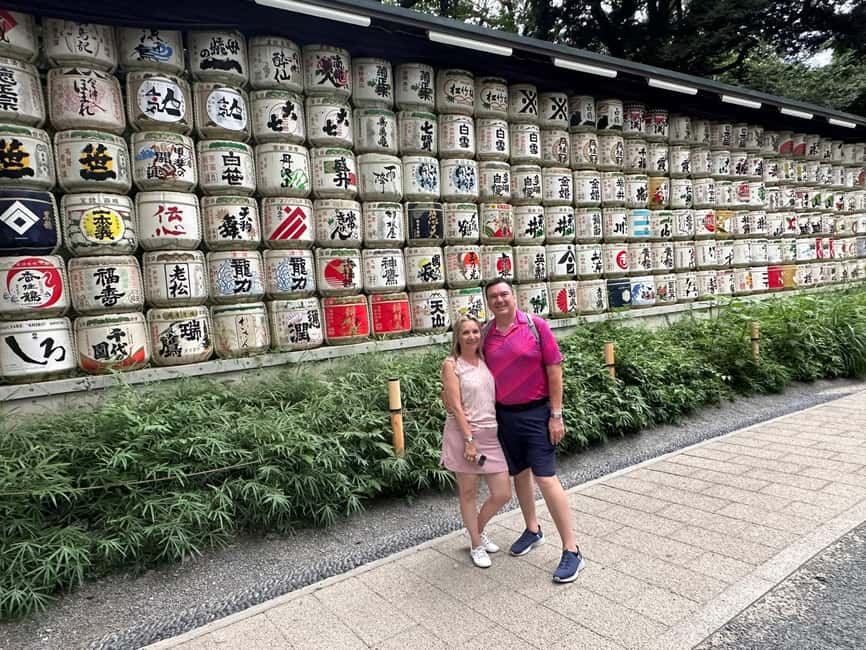
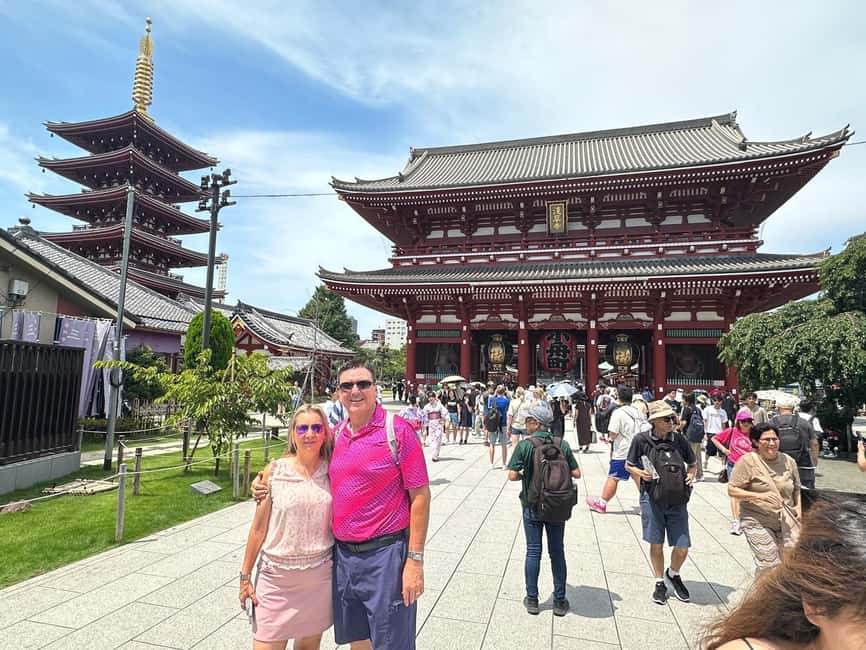
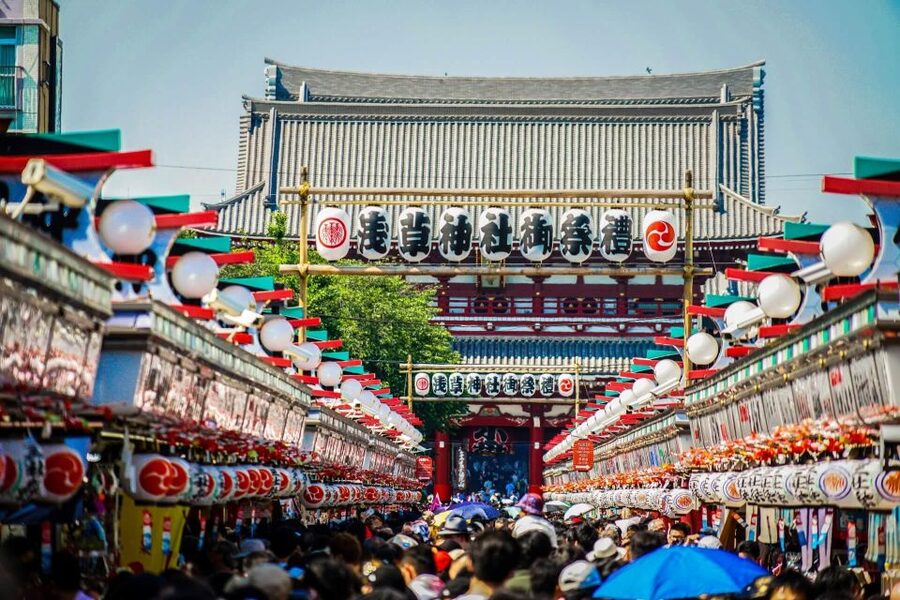
Asakusa brings you to Senso-ji, Tokyo’s oldest temple and one of its most recognizable sights. You enter through Kaminarimon Gate, marked by its huge red lantern, then follow Nakamise Street toward the temple. The approach is lined with shops selling souvenirs, sweets, snacks, and small gifts.
At Senso-ji, you can observe incense burning, prayer, and the steady rhythm of local religious practice. The tour allows time for a visit, photos, shopping, street food, and lunch. That makes Asakusa one of the more flexible sections of the day.
The trade-off is crowding. Kaminarimon and Nakamise can be packed, and an hour passes quickly if you want both the temple and shopping street. Keep your expectations sensible: you will get a clear introduction and time for a few snacks, not an unhurried study of every building.
Lunch is not included. The provider suggests lunch at Senso-ji, at a restaurant on the sixth floor of the Solamachi tower near Skytree, or along Takeshita Street. This choice can be made around your group’s energy and interests.
Same corner of Tokyo, a completely different plan:
- Tokyo: teamLab Planets TOKYO Digital Art Museum Entry Ticket
★ 4.6 · 9,779 reviews - Mt Fuji & Hakone Cruise, Drum Show Bullet Train 1 Day from Tokyo
★ 4.0 · 7,413 reviews - Tokyo: Sumo Show Experience with Chicken Hot Pot and a Photo
★ 4.8 · 6,678 reviews - Tokyo: Shinjuku Food Tour (13 Dishes at 4 Local Eateries)
★ 5.0 · 6,603 reviews
Tokyo Skytree: the view costs extra
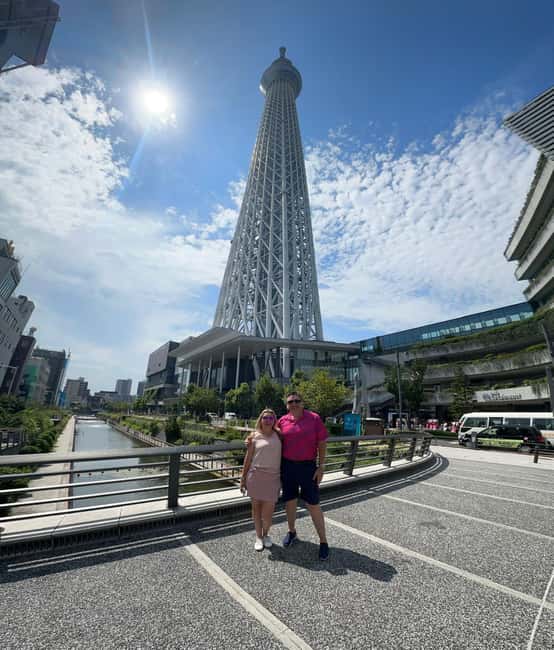
Tokyo Skytree is the day’s main high point, rising 634 meters above the city. The paid observation areas include the Tembo Deck at 350 meters and the Tembo Galleria at 450 meters. Admission is separate, so include that expense when comparing the tour price.
The view helps you understand Tokyo’s size in a way that street level cannot. On a clear day, Mount Fuji may be visible. On hazy or cloudy days, you will still see the vast spread of buildings and major districts, but the view may not have the sharpness shown in promotional photos.
The Skytree complex also has shopping and dining. Since the stop is listed as about an hour, you will need to choose between the observation deck, shops, and a meal. If going to the top is essential, tell the provider before the day so the timing can be checked. A ticket line or weather delay could affect later stops.
Meiji Shrine: forest, torii, and quiet
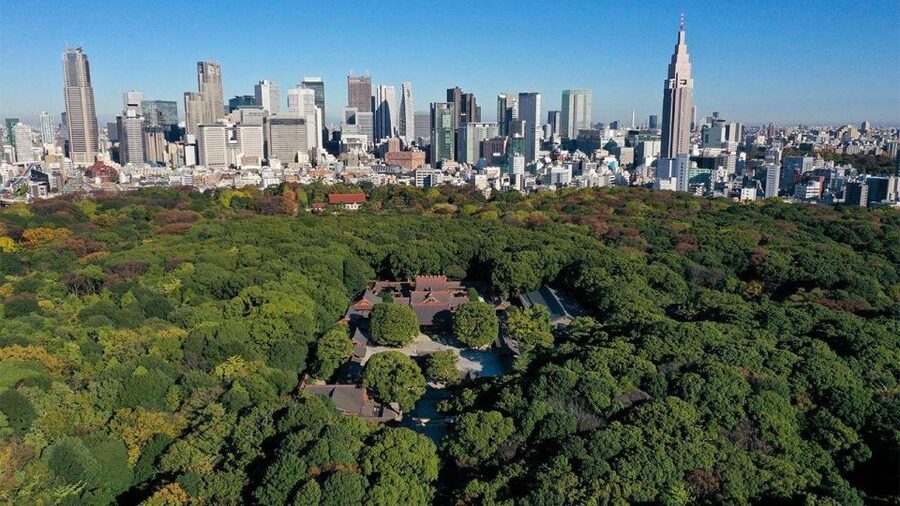
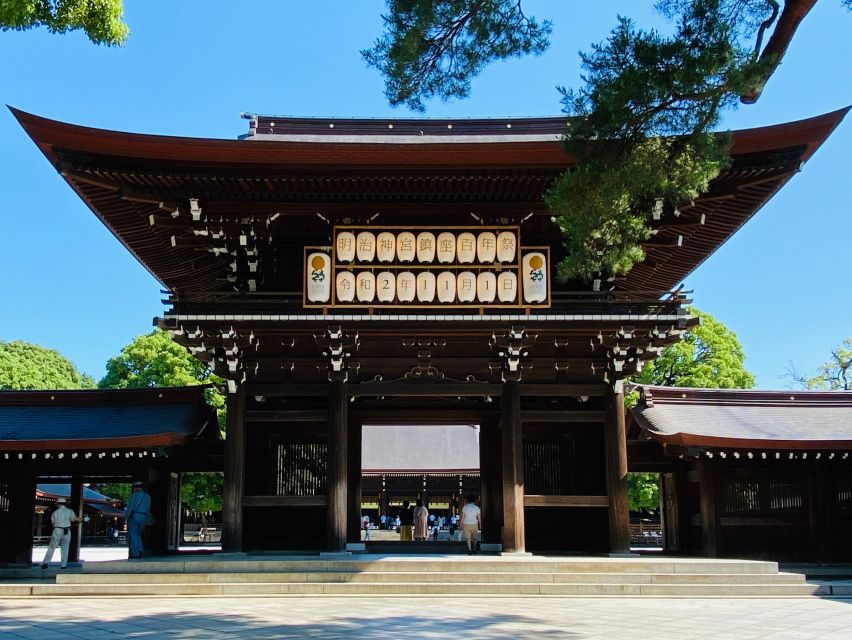
Meiji Jingu Shrine offers the clearest pause from Tokyo’s city noise. Dedicated to Emperor Meiji and Empress Shōken, it sits within a broad wooded setting reached through large torii gates.
You can walk the shrine approach, see traditional rituals, take photos, and spend free time on the grounds. The setting makes this a good place to explain basic shrine customs, and an English-speaking guide can add context as you go.
The itinerary allows about an hour. That is enough for the main path and shrine area, though not for lingering at every turn. The walk can feel longer in summer heat or rain, so comfortable clothing and shoes are essential. One family with mobility needs received route adjustments, but you should still describe any mobility limits when booking.
Harajuku’s Takeshita Street: pop culture in a tight space
Takeshita Street is Tokyo’s loudest contrast to Meiji Jingu. The narrow shopping street is known for youth fashion, quirky stores, sweets, and crepes. You might also find unusual cafés involving cats, dogs, hedgehogs, or other animals, though the itinerary does not promise a particular café.
This stop works well for families and teenagers because it offers more than sightseeing. You can browse, eat, take photos, and look for souvenirs. Several groups have used the tour’s flexibility to add child-friendly interests, including anime-related stops, capybara experiences, arcades, claw machines, and gacha shops.
Takeshita Street can be crowded and visually intense. If you dislike shopping streets, you may prefer more time at Meiji Shrine. If your group has different interests, the private format lets some people shop while others focus on food, provided the schedule still works.
Shibuya Crossing: a short, famous finale
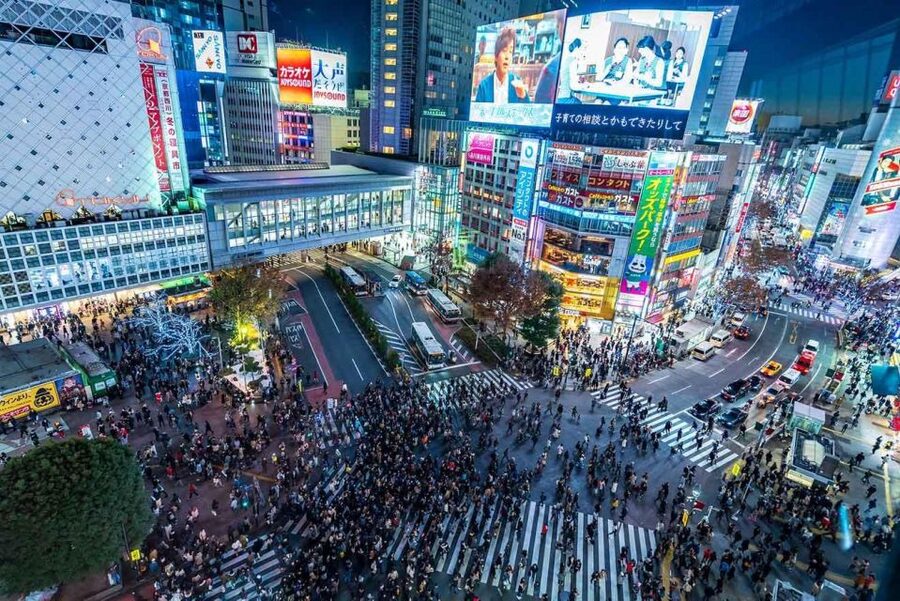
Shibuya Crossing is scheduled for about 30 minutes. When the lights change, pedestrians stream across from several directions beneath giant screens and neon signs. It is a brief stop, but it gives you one of Tokyo’s most recognizable urban scenes.
You will have time for photos and a look around the surrounding shopping and entertainment district. The short visit is useful if you mainly want to see the crossing, but it is not enough for a full Shibuya afternoon. If you want a meal or shopping session here, discuss dropping another stop or ending the tour in Shibuya rather than returning to your hotel.
One practical benefit of a private tour is the possibility of a custom drop-off. A group was able to continue its evening plans at another location rather than return to the hotel. Do not assume this is automatic, but ask when planning your route.
Akihabara Electric Town: electronics and anime
Akihabara is listed as the final major stop, with about an hour for photos, shopping, and walking. The district is known for electronics, anime and manga stores, arcades, themed cafés, claw machines, and gacha shops.
This is a strong addition for families with children, pop-culture fans, and anyone curious about a side of Tokyo that temples and gardens cannot show. It also gives the day a playful finish after the formal atmosphere of Meiji Shrine and the scale of Skytree.
An hour only scratches the surface. Decide in advance if you want electronics, anime, arcades, or cafés, then tell your guide. The route can be adjusted, but you cannot do every store in Akihabara and still visit all the other districts in one day.
How the private transport changes the day
Tokyo’s train system is excellent, but this route crosses the city several times. A private van removes station changes, platform searches, and the need to keep a whole group together underground.
That matters most for families, older adults, and groups with varied walking speeds. The Toyota Vellfire used on one outing was described as clean, spacious, and comfortable, and other groups also found the vehicles cool and well maintained. The driver handles Tokyo traffic while you rest between stops.
There is a catch: a car does not make Tokyo traffic disappear. The provider warns that drivers can be up to 30 minutes late because of highway conditions. The ten-hour duration includes hotel pickup and drop-off, so time spent in traffic comes out of sightseeing time.
You should wait in your hotel lobby five minutes before pickup. The driver is expected to contact you one day before and again one to two hours before arrival. Keep your phone available and confirm the exact meeting point, especially in a large hotel or apartment building.
The guide makes the difference
The strongest part of this experience is not simply having a vehicle. It is having someone who can adjust the day and explain what you are seeing.
Moon is frequently requested for his clear explanations, patience, humor, and ability to keep children interested. Imran has also guided many outings, helping with food choices, cultural questions, photos, shopping, and route changes. Other named team members include Danish, Abid, and Komori.
If you book, request a personal guide by name if possible, but understand that availability is not guaranteed. Also confirm whether a separate guide fee applies, since the transport and English-speaking driver details do not clearly state that a full-time guide is included in the base price.
The best use of a guide is to tell him what matters before pickup. Mention food allergies, child-seat needs, mobility concerns, a wish to shop for knives, a particular anime interest, or a desire for more shrine time. The team has adjusted routes for children, older adults, hot weather, bad weather, and specific family requests.
Who gets the best value?
I would consider this tour for:
- A first full day in Tokyo
- A family of up to five
- A group with older adults or mobility concerns
- Visitors who want major sights without managing the train system
- People with only one free day
- Groups that need an English-speaking local contact for food and shopping help
I would think twice if you prefer long meals, detailed museum visits, or several hours in one neighborhood. Independent visitors who are comfortable with Tokyo trains can build a slower and cheaper day, especially if they skip paid Skytree admission and eat inexpensive market food.
The itinerary is ambitious. Tsukiji, the Imperial Palace East Gardens, Asakusa, Skytree, Meiji Shrine, Harajuku, Shibuya, and Akihabara are not close together. You should see this as an orientation day, then return later to the neighborhoods you like most.
Practical costs and planning tips
The $709 group price includes transport-related costs but not lunch or Skytree admission. Bring cash for market snacks, street food, small purchases, and any temple or shopping needs that may arise. Also budget for lunch at one of the suggested areas.
Wear comfortable shoes and light, practical clothing. You will walk on market lanes, garden paths, shrine approaches, temple grounds, and shopping streets. Tokyo’s summer heat can make the vehicle’s air-conditioning especially valuable.
Free cancellation is available up to 24 hours before departure, and you can reserve now and pay later. Pickup is limited to Tokyo’s 23 wards, with extra charges outside them. Airports and cruise terminals are excluded, so this is not a good same-day arrival or departure solution unless you arrange a separate transfer.
Should you book this Tokyo tour?
Book it if you want to see Tokyo’s main contrasts in one day and value comfort, flexibility, and help with the practical details. A full group of five gets the clearest value, while families and older adults gain the most from private transport.
Skip it if your ideal Tokyo day means lingering over one market, spending half a day in Akihabara, or using trains to keep costs down. If you do book, ask for a personal guide, list your must-see interests, confirm the Skytree plan and any guide supplement, and leave room for traffic. Used that way, this is a smart first-day introduction to a city that can otherwise feel impossible to organize.
FAQ
How long does the Tokyo private tour last?
The tour lasts 10 hours, including hotel pickup and drop-off.
How many people can join the private group?
The listed price covers a private group of up to five people.
What locations are included?
The route includes Tsukiji Outer Market, the Imperial Palace East Gardens, Asakusa and Senso-ji, Tokyo Skytree, Meiji Shrine, Takeshita Street in Harajuku, Shibuya Crossing, and Akihabara Electric Town.
Is Tokyo Skytree admission included?
No. Admission to the 350-meter Tembo Deck and 450-meter Tembo Galleria is not included in the tour price.
Is lunch included?
No. Lunch is not included. Suggested meal areas include Senso-ji, the sixth floor of the Solamachi tower near Tokyo Skytree, and Takeshita Street.
Where can pickup and drop-off take place?
Pickup is available from hotels, hostels, Airbnbs, apartments, and other addresses within Tokyo’s 23 wards. Locations outside the 23 wards cost extra.
Can I be picked up at an airport or cruise terminal?
No. Airport and cruise-terminal pickup services are not provided.
What language is available?
The activity provides an English-speaking driver, and personal guide arrangements may also be available. Confirm the guide setup when booking.
Can the itinerary be changed?
Yes. The tour is described as customizable, and the schedule can be adjusted around interests, walking ability, children, food needs, and shopping requests. Changes still need to fit within the 10-hour tour.
New on our Tokyo list
- From Tokyo: Mount Fuji & Hakone Full Day Private Tour★ 4.9 · 25 reviews
- Tokyo Spectacular View Day-Cruise in 90 Minutes★ 5.0 · 25 reviews
- Real Tokyo Runner Club : Daikoku Car Meet Night Tour with JDM Car★ 5.0 · 25 reviews
- 2.5 Hour-Guided Cycle Tour in the Central Tokyo★ 5.0 · 25 reviews
- Ramen Making from Scratch +Akihabara Tour –Cooking Class★ 5.0 · 25 reviews
- [Self-Drive] Tokyo & Daikoku Custom Car Driving Tour★ 4.9 · 25 reviews
- Tokyo: 2-Hour Night Bike Tour of the City’s Hidden Gems★ 4.9 · 25 reviews
- Samurai themed Entertainment show in Shinjuku★ 4.5 · 25 reviews
Guided, compared.
Tokyo 6hr Private Tour with Government-Licensed Guide
Read our review →
Shinjuku Local Bar and Izakaya Guided Walking Tour
Read our review →
Private City Highlights Tour with Local Guide
Read our review →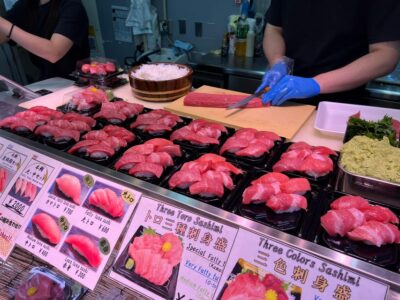
Tokyo 4hr Private Tour with Government-Licensed Guide
Read our review →
Samurai Ninja Museum Guided tour and Experience
Read our review →