
Reviewed · SAMURAI & NINJA EXPERIENCES
Tokyo:Samurai Training : Swords, Bushido & Mental Discipline
Samurai training in Tokyo is not a stage performance or a quick photo stop. At a traditional dojo in Kojimachi, once part of Edo Castle’s inner grounds, you learn etiquette, breathing, sword work, and controlled sparring under instructors such as Oedo and Yukikaze.
I like the way the session joins mental discipline with physical work, rather than treating the sword as a prop. I also like the small size, limited to six people, which gives you real time with the instructor. The main consideration is that the class lasts only two hours, so the program moves at a brisk pace, and some English instruction may be helped by demonstrations and simple explanations.
In This Review
- Key points
- Training in Kojimachi, an Edo Castle setting
- Putting on the uniform and learning samurai etiquette
- Calming the mind with breathing and meditation
- Wooden swords, heavy sticks, and silent walking
- Learning one combat kata
- One-on-one sparring with an instructor
- Matcha, sweets, and a quieter break
- The certificate, samurai photograph, and what you take home
- Is $83 a fair price for two hours?
- Who will enjoy this dojo experience most?
- Practical details to know before booking
- Should you book Tokyo Samurai Training?
- FAQ
- Where does the samurai training take place?
- How long does the experience last?
- Is the class taught in English?
- What is included in the price?
- Do I need previous martial arts experience?
- Are there any restrictions or booking requirements?
Key points
- Kojimachi setting: Train in a Tokyo dojo located in an area once linked to Edo Castle’s inner grounds.
- Bushido before swordplay: Begin with etiquette, breathing, meditation, and the mindset expected in samurai practice.
- More than wooden-sword drills: Add heavy-stick strength work and silent, ninja-style walking to test balance and focus.
- One-on-one practice: Apply a combat kata and basic sword techniques in controlled sparring with an instructor.
- A full cultural package: Wear samurai attire, drink matcha with Japanese sweets, receive a named scroll certificate, and take a commemorative photo.
Training in Kojimachi, an Edo Castle setting
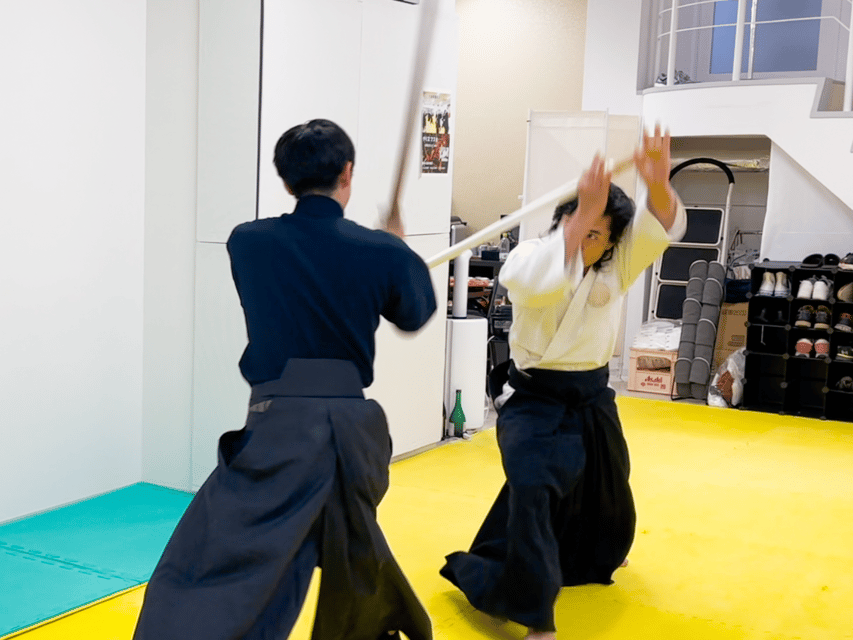
The dojo is in Tokyo’s Kojimachi district, an area presented as part of the former inner grounds of Edo Castle. That setting gives the class useful context. You are not simply handling a wooden sword in a rented studio with no connection to the subject. The place helps explain why discipline, posture, etiquette, and awareness matter so much in samurai practice.
You meet the samurai at the dojo entrance. Look for the samurai nobori flag, which serves as the landmark. Transportation is not included, so allow time to reach the meeting point on your own and arrive ready to remove your shoes. Shoes are not allowed indoors.
The group is limited to six people, with a minimum of two participants required. That is a good size for an activity built around correction and practice. You are less likely to spend the whole session watching someone else, though the class may still feel active and tightly scheduled because of the number of exercises packed into two hours.
More samurai and ninja sessions:
- Tokyo: Samurai Ninja Museum Guided tour and Experience
★ 4.6 · 1,010 reviews - Tokyo: Samurai Sword & Archery Class from Samurai Descendant
★ 5.0 · 603 reviews - Best Samurai Experience in Tokyo
★ 5.0 · 458 reviews
Putting on the uniform and learning samurai etiquette
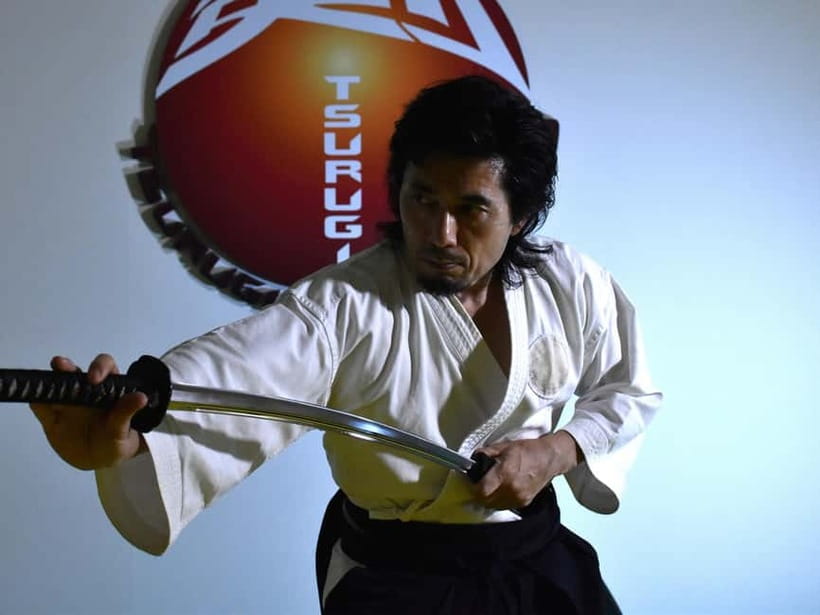
The session includes rental of a samurai uniform. You need to provide everyone’s height and size, listed as S, M, or L, when booking. This is more than a costume change for a photograph. Wearing the uniform helps signal that the class is structured training, with rules about how you stand, move, greet, and handle equipment.
The first lesson covers samurai etiquette and the spirit of Bushido. Bushido is often reduced to a few dramatic ideas about loyalty and courage, but this class approaches it through conduct and self-control. You learn that the way you enter practice, listen, hold yourself, and treat the person opposite you is part of the training.
I find this opening valuable because it gives the sword work a frame. Without it, the session could become a collection of martial arts movements. Here, etiquette creates a sense of purpose before you begin the physical exercises.
The instructors speak English and Japanese. English is available throughout the experience, but you should expect demonstrations to carry some of the teaching. One participant specifically noted that the instructors were not fully fluent in English yet worked hard to communicate clearly and maintain a positive atmosphere. That is useful to know if you need detailed verbal instruction for every movement.
Calming the mind with breathing and meditation
Before the heavier exercises, you work on breathing and meditation. The goal is to quiet the mind and prepare your attention. It is a practical start, not a long spiritual retreat, since the entire activity lasts two hours.
This part may appeal to you even if you have little interest in martial arts. Tokyo sightseeing can put you in a constant rush from station to station, and a few minutes of controlled breathing gives the session a different pace. You learn that samurai training is not only about speed or force. Composure comes first.
The meditation also helps explain the later exercises. Silent walking, sword handling, and sparring all require you to notice where your body is and what the other person is doing. If your attention wanders, the instructor can see it in your posture and timing.
Do not expect a full introduction to Japanese philosophy. The class gives you an accessible foundation, then moves on. For most people, that balance is right. You receive enough context to understand the exercises without spending the whole session listening to a lecture.
Wooden swords, heavy sticks, and silent walking
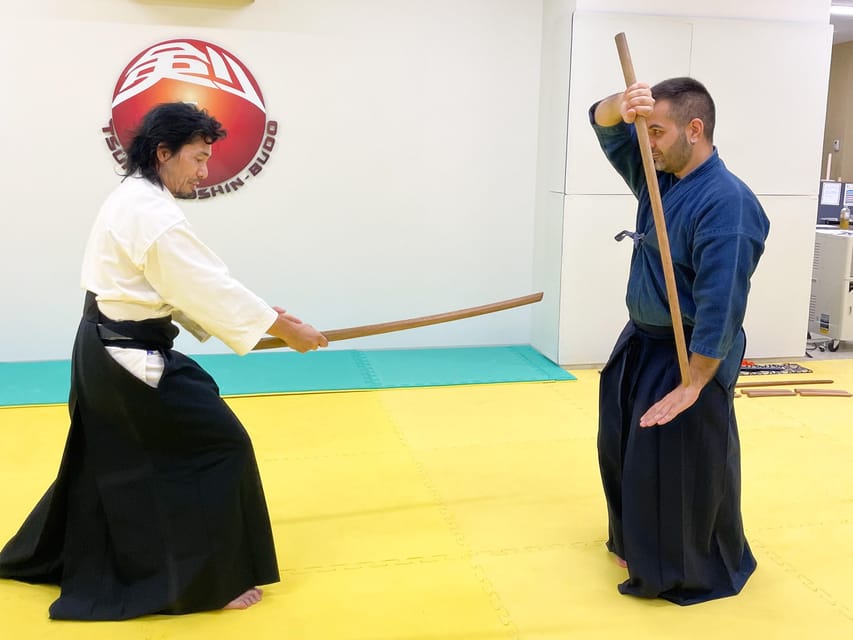
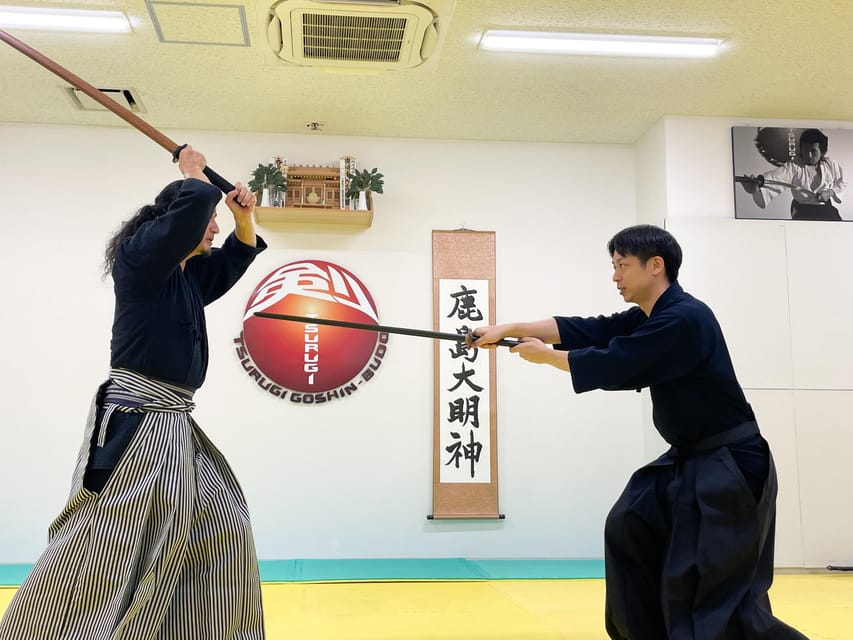
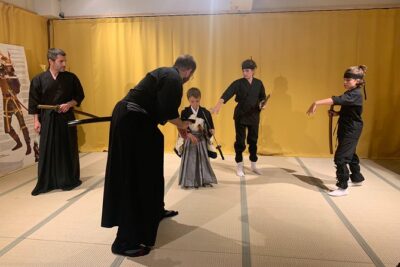
Next come basic wooden-sword drills. The instructor demonstrates how to hold and move the practice sword, then guides you through foundational actions. These exercises are suitable for beginners, but they still demand care. You need to follow directions, keep control of the wooden sword, and stay aware of the people around you.
The heavy practice stick adds a strength element. It is a simple tool, but it changes the feel of the class. You are not only memorizing arm movements. You are working on stability and control while handling more weight, which makes posture and balance easier to understand.
The silent walking exercise brings a surprising change. You move quietly, with attention to your feet, balance, and body position. The activity describes this as similar to ninja-style walking, but the useful part is the focus on awareness rather than fantasy. You learn to reduce unnecessary movement and pay attention to each step.
This sequence is one of the reasons the class feels broader than a basic sword lesson. The sword drills develop coordination, the heavy stick challenges strength, and silent walking works on control. None of these sections alone is a full martial arts course, but together they give you a good sense of how the body and mind work as one.
A few more Tokyo bookings worth comparing
- Mt Fuji and Hakone 1-Day Bus Tour Return by Bullet Train
★ 5.0 · 26,383 reviews - 1-Day Tokyo Bus Tour
★ 5.0 · 14,250 reviews - Tokyo: TOKYO SKYTREE® Admission ticket
★ 4.5 · 11,192 reviews - Tokyo: teamLab Planets TOKYO Digital Art Museum Entry Ticket
★ 4.6 · 9,779 reviews
Learning one combat kata
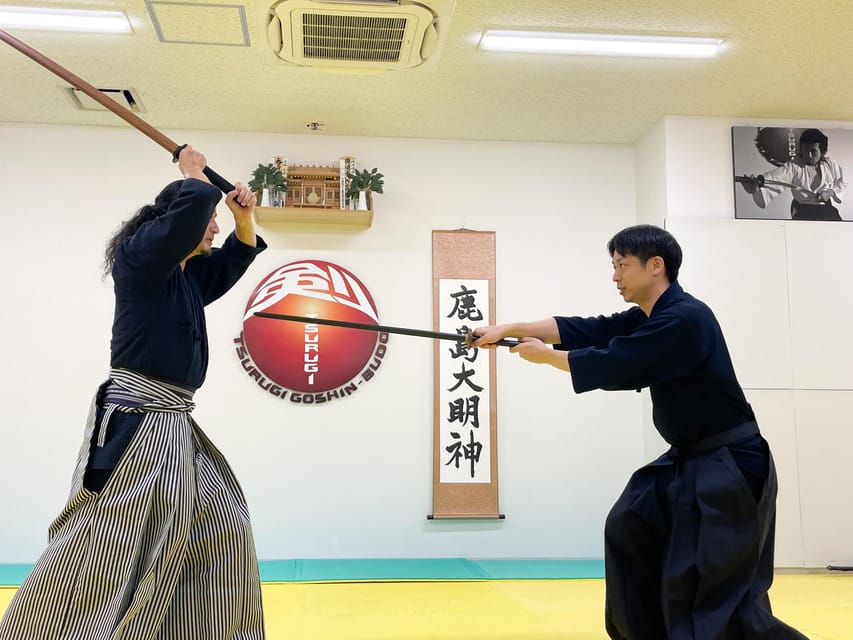
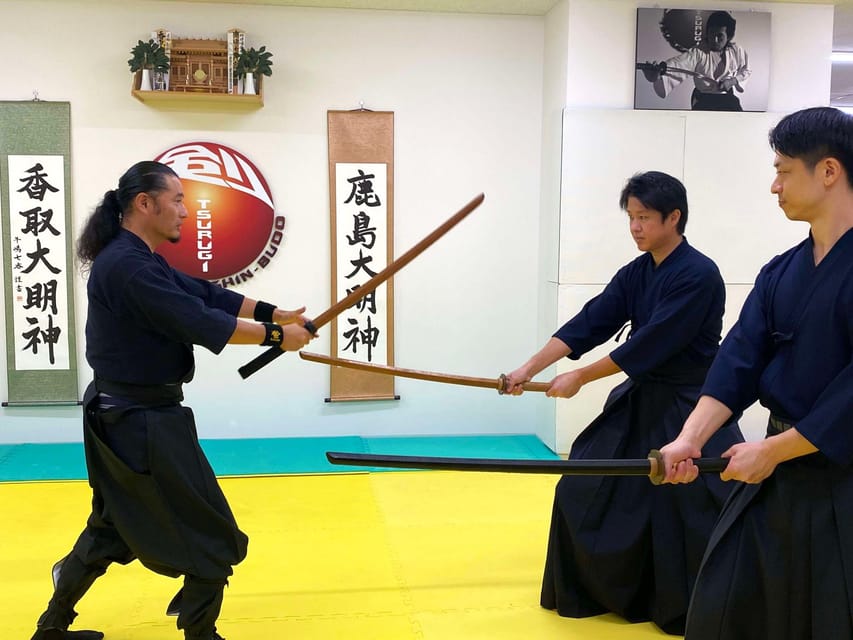
The class then turns to practical sword techniques and one authentic samurai combat kata. A kata is a set sequence of movements. Learning one complete form gives you something concrete to remember after the session, instead of a loose collection of poses.
The instructor demonstrates the technique first, then breaks it into pieces for you to copy. Pay close attention to foot placement and the direction of your movement. Beginners often concentrate so hard on the sword that they forget the lower body. The class is designed to bring those parts together.
The word practical should be understood in context. You are learning controlled training techniques in a dojo, not preparing for real combat or receiving professional weapons instruction. The experience gives you a beginner’s introduction to samurai sword practice, with safety and clear control built into the session.
The review material describes basic katana technique, but the listed activity centers on wooden-sword drills and practice. You should therefore expect a supervised introduction to sword skills rather than extended work with a sharpened blade. The instructor also gives a live sword demonstration, allowing you to see the level of precision behind the movements without putting you in charge of a dangerous weapon.
One-on-one sparring with an instructor
The sparring section is the most active part of the experience. You apply what you have practiced in one-on-one work with an instructor. This is not a free-for-all, and you are not left to guess what to do. The instructor controls the pace and helps you use the technique safely.
For a first-time participant, this is where the earlier lessons begin to make sense. Breathing helps you stay calm. Silent walking helps you control your feet. The sword drills give you a basic movement pattern, while the kata gives you a sequence to recall.
Sparring can also reveal how much concentration the exercises require. It is one thing to perform a movement while standing still and another to respond when an instructor is in front of you. You may feel awkward at first. That is normal for a beginner class, and the small group means you have a better chance of receiving direct guidance.
The activity is not suited to pregnant women or people with a cold. It involves movement, strength work, and sparring, so you should consider your health before booking. No special experience is required, but you do need to follow instructions and remain physically engaged.
Matcha, sweets, and a quieter break
The break includes authentic matcha green tea and traditional Japanese sweets. This gives you a pause after the physical exercises and adds a small food-and-culture element to the class.
I like this break because it changes the rhythm. You move from controlled exertion to a quiet Japanese tea moment, then return to the final training. It also gives you time to absorb what you have learned instead of rushing from the last drill straight into photographs.
Do not book this experience expecting a full tea ceremony. The information describes matcha and sweets during the break, not a formal ceremony with an extended explanation of tea procedure. Think of it as a thoughtful cultural pause within a martial arts class.
The certificate, samurai photograph, and what you take home
At the end, you receive a personalized scroll-style certificate with your name and the techniques you learned. It is a more distinctive keepsake than a standard printed ticket or generic participation card. If you are collecting meaningful souvenirs, the scroll has a clear connection to the activity.
You also have the chance to wear traditional samurai attire for a commemorative photograph. Since the uniform is already part of the session, the photograph feels tied to the training rather than being the entire point of the visit.
The photo opportunity is especially useful for families and couples. One participant described the activity as a strong family bonding experience, and I can see why. You share physical challenges, learn a short form together, and finish with a picture that records the occasion.
Still, keep your expectations sensible. A photo and certificate add value, but they do not replace the training. The best reason to book is the chance to practice etiquette, sword basics, and controlled sparring. The keepsakes are an appealing extra.
Is $83 a fair price for two hours?
At $83 per person, this is not the cheapest cultural activity in Tokyo. The value depends on what you want from your time. You are paying for a small-group lesson, an English-speaking instructor, uniform rental, a live sword demonstration, matcha and sweets, a personalized certificate, and a commemorative photo.
A two-hour session also keeps the commitment manageable. You can fit it into a Tokyo day without giving up an entire afternoon, though you should allow time for transport to and from Kojimachi. The small group matters here. A larger class could make sword practice feel passive, but a maximum of six supports the one-on-one element.
I would consider the price reasonable if you want an active cultural experience rather than a museum visit or a short photo stop. It is less compelling if you are looking for advanced martial arts instruction, a long historical lecture, or extensive time with authentic weapons.
The perfect comparison is not a standard sightseeing attraction. It is a guided activity that combines movement, culture, instruction, and souvenirs. If you value doing something with your hands and body, the price is easier to justify.
Who will enjoy this dojo experience most?
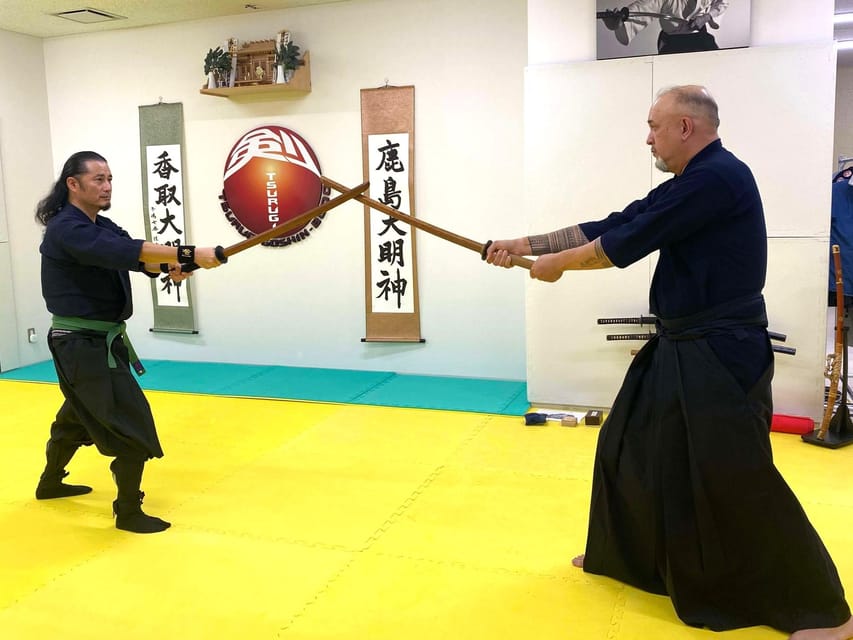
This class suits first-time visitors who want a memorable break from temples, shopping streets, and observation decks. It also works well for families, couples, and small groups who prefer an activity they can share.
You do not need previous sword or martial arts experience. The program is beginner-friendly, and the instructor leads you through the exercises in stages. You should be comfortable with basic physical activity, standing, walking, handling a practice stick, and taking part in controlled sparring.
It is a good fit for you if:
- You want to learn rather than simply watch a performance.
- You enjoy cultural activities with a physical component.
- You like small groups and direct instructor contact.
- You want a certificate and photograph with a clear connection to Japan.
- You are curious about Bushido, etiquette, posture, and mental focus.
It may not suit you if you dislike structured instruction or want to explore at your own pace. The class has a set sequence, and the instructor needs you to listen closely. It also may not be right if you have a condition that makes physical training uncomfortable, or if you are pregnant.
Practical details to know before booking
The experience lasts two hours, and starting times depend on availability. You should check the schedule before building the rest of your Tokyo day around it.
The group requires at least two participants and accepts no more than six. That minimum is important for solo bookers. You may need another participant for the session to run, so check the booking conditions carefully.
Transportation is not included. Meet the samurai at the dojo entrance and use the samurai nobori flag to identify the spot. Remove your shoes before entering, and do not smoke indoors.
Send the height and S, M, or L clothing size for each participant when you book. Since the uniform is included, this simple step helps the dojo prepare the right sizes.
The activity offers free cancellation up to 24 hours before the start time for a full refund. You can also reserve now and pay later, which helps if your Tokyo plans are still shifting.
Should you book Tokyo Samurai Training?
Book this if you want to practice a Japanese tradition, not just photograph one. The strongest parts are the clear progression from etiquette and meditation to sword drills, heavy-stick work, silent walking, kata, and instructor-led sparring.
The class also earns points for its human touch. Oedo and Yukikaze are named as instructors, and the available feedback describes them as friendly, encouraging, and committed to communicating with international participants. You should still expect some teaching through demonstration rather than perfect English conversation.
I would recommend it most strongly for beginners, families, and anyone who wants an active cultural memory from Tokyo. At $83, it offers good value when you count the small group, uniform, instruction, tea, certificate, and photograph. Skip it if you want advanced combat training or a purely historical tour.
For the right visitor, this is two focused hours of Bushido, movement, and Japanese atmosphere, with enough ceremony to feel special and enough practice to keep you involved.
FAQ
Where does the samurai training take place?
The experience takes place at a traditional dojo in Tokyo’s Kojimachi district, an area once part of Edo Castle’s inner grounds. A samurai waits at the entrance, and you should look for the samurai nobori flag.
How long does the experience last?
The training lasts two hours. Starting times vary, so you need to check availability when booking.
Is the class taught in English?
Yes. The instructors provide English and Japanese instruction. The available information notes that demonstrations and a positive teaching approach may help when an instructor’s English is not fully fluent.
What is included in the price?
The price includes samurai uniform rental, an instructor’s live sword demonstration, English guidance on sword skills, Bushido, and samurai history, a personalized scroll certificate, matcha tea, traditional Japanese sweets, and a commemorative samurai photograph.
Do I need previous martial arts experience?
No. The class is beginner-friendly and teaches etiquette, breathing, meditation, wooden-sword basics, heavy-stick training, silent walking, a combat kata, and controlled sparring with an instructor.
Are there any restrictions or booking requirements?
The activity is not suitable for pregnant women or people with a cold. Shoes are not allowed indoors, smoking is not allowed indoors, and you must provide each participant’s height and S, M, or L size for the uniform. A minimum of two participants is required.
New on our Tokyo list
- Sumi-e Experience in a relaxing green tea shop in Tokyo★ 5.0 · 3 reviews
- Tokyo : Kamikaze Street Drift Ride★ 5.0 · 3 reviews
- Private Zen Meditation in English in Shinjuku, Tokyo★ 5.0 · 3 reviews
- Onsen Spa in Tokyo and Asakusa Bar Hopping with Local Guide★ 5.0 · 3 reviews
- Easy for everyone! Now you can play handmade mini shamisen and show off to everyone! Musical instruments, sweets and live music★ 5.0 · 3 reviews
- Tokyo: Private Tsukiji Street Food & Sake with Local Guide★ 5.0 · 3 reviews
- Mt Fuji Exploration Tour with Free Japanese Kusa Mochi from Tokyo★ 4.5 · 3 reviews
- Tokyo Tsukiji Fish Market Walking and Exploring Hidden Gems Tour★ 5.0 · 3 reviews
Samurai & Ninja Experiences, compared.
Samurai Ninja Museum Guided tour and Experience
Read our review →
Samurai Sword & Archery Class from Samurai Descendant
Read our review →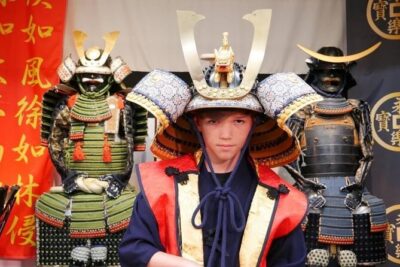
Ninja Experience (Family Friendly) at Samurai Ninja Museum TOKYO
Read our review →
Samurai Entertainment Night Show in Kanda Shrine
Read our review →
Tokyo Sword Experience – includes Museum Ticket/Ninja Experience
Read our review →
Samurai Ninja Museum Asakusa: Samurai Sword Lesson & Tour
Read our review →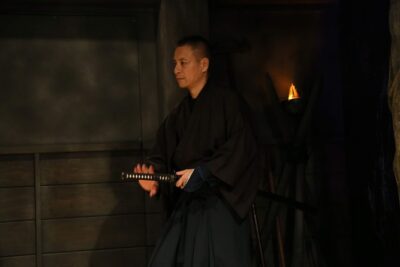
Ninja Samurai 2-hour hands-on lesson by Japanese master in Tokyo
Read our review →Browse the lists this tour appears in